The Natural Form of Gogyo Hidden in Steam
From Bujinkan Santa Monica by Michael
 |
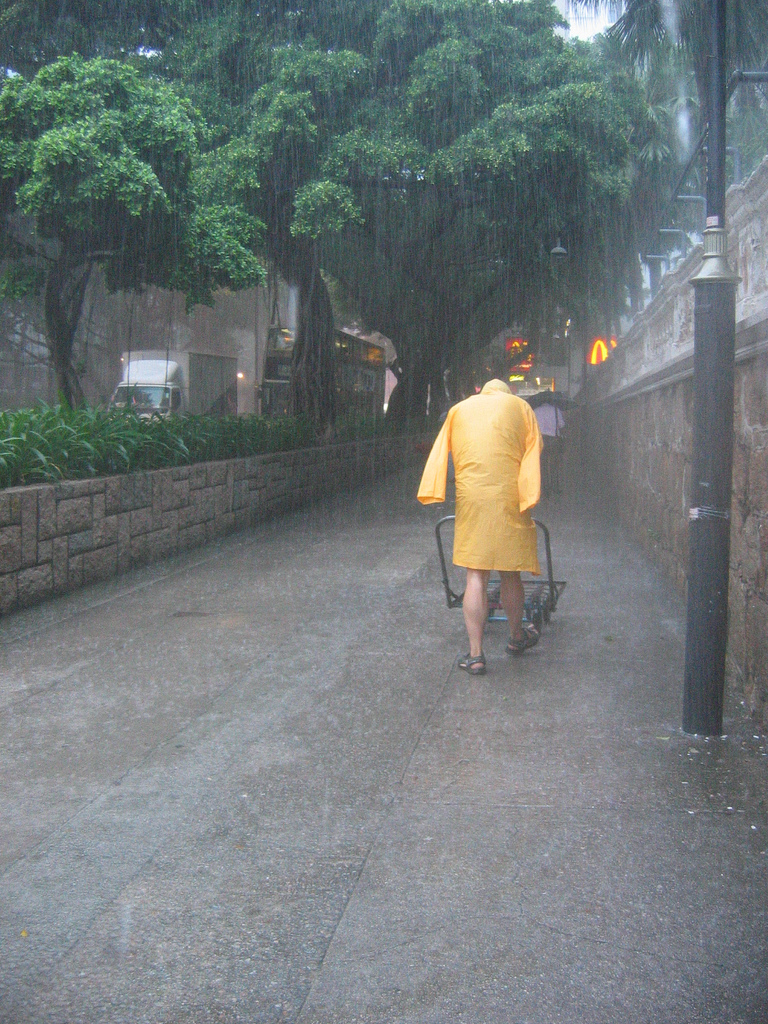
| Steamed Hokkaido potato seller, photo by robizumi |
Yet, it is hard to teach or learn anything without using form as a starting place. How do we resolve this paradox? We can look at one of our basic forms to seek answers to these questions:
Gogyo no kata: why and how does form corrupt our training of this basic concept?
I will give two examples that have far reaching implications in the Bujinkan worldwide.
In the first, it comes from a natural human tendency to take something new and compare or relate to something else we already are familiar with. This happened many years ago in the Bujinkan with the Gogyo. It was the concept that the gogyo should be a spiritual concept like the godai.
Sensei has said this isn't the correct approach:
"We are training with the gogyo no kata: chi, sui, ka, fu, ku. If you think of this as something as religious then that can be a really bad mistake. Some people try to make this a study of "godai no kata" from a religious aspect but then you lose track of the real martial arts. Experience the gogyo no kata as a universal form - the natural form."This seemingly small choice to compare gogyo to godai has travelled the globe and the decades so that the misconception persists very strongly even today. To the extent that people will insist on it. So if I am learning a form from someone who insists on this approach, what am I learning? What is the form in the form?
Form inherently limits freedom. Of thought, of movement. This brings me to my second example.
If you learn any form in a specific way, you end up memorizing it with your mind and body. Then the form gets repeated. A lot. It is supposed to be some kind of practice I guess. Memorizing and repeating form is substituted for real learning.
So if you are shown a new way, or are corrected, it is difficult to change. In the gogyo I see people all over the world perform it in a way that can be traced back to poor understandings from the '80's. I have even watched Sensei try to correct them. Over the years he continues to correct when it comes up. But bad habits die hard.
In my own classes, I sometimes have people join us for training who learned different versions of the gogyo. No problem. I show them my version. Then I ask them to share their version so we can learn something new. But often, everyone is so attached to their own form that they cannot even do another. Even after being shown it repeatedly.
I observed this same lack of flexibility when Sensei corrected the gogyo he saw people doing. They were so trapped in their bad habit, they understood nothing he was saying or showing them in that moment.
Form is a container for ideas that cannot be seen. We can take some feeling from the Sui of gogyo. But what is the essence of water? How do you contain it? Even today science does not comprehend all of its properties. Sensei says he is teaching steam:
"In martial arts it's common sense to think of water as something that flows from high places to low places. But in places you can't see, this water turns into steam and rises up into the heavens."This is a hidden lesson of water. Another is that it does not memorize the form of the landscape it flows over. Every rock and twist of geography, or falls in elevation. Water just flows or changes state as needed.
So if you look at the form that is being shown in class, look further. Sensei says,
"Always understand one step beyond what is being shown. then be able to go on to the next step. Even if a bad person uses some fantastic techniques, you'll always be able to go beyond that and defeat them."Do you see that in the form of gogyo you practice?

 The sign up form is closed now, we need time to sort and prepare. But… You can still come to the Tai Kai and sign up & pay (no extra charge!) at the door, there is no too late date. Yes we have places, just come!


 Ibland får jag frågor från nybörjare som undrar om det är värt att gå på läger, kommer man att kunna hänga med? Kommer jag att förstå någonting? Jag kan förstå att det tyckas vara lite skrämmande att gå på träningsläger för första gången när det är så många högt graderade som också tränar.