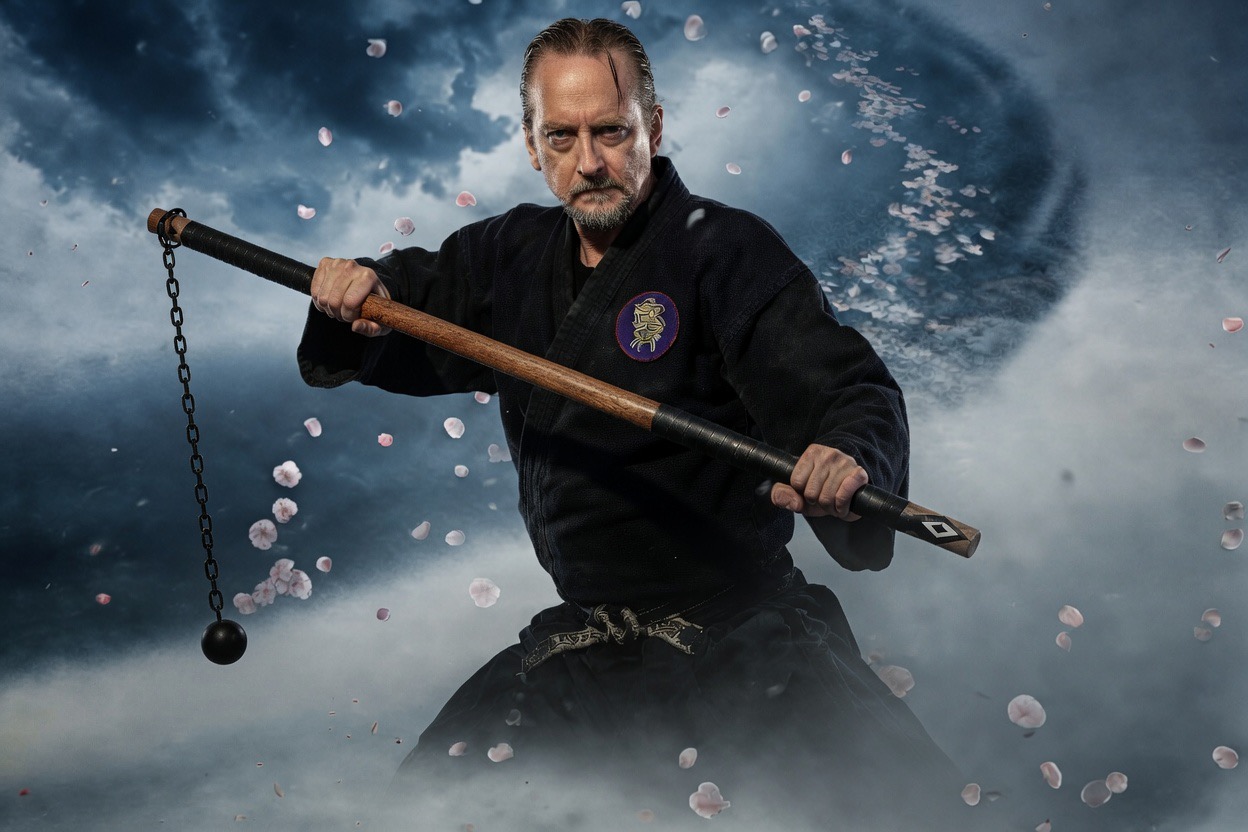
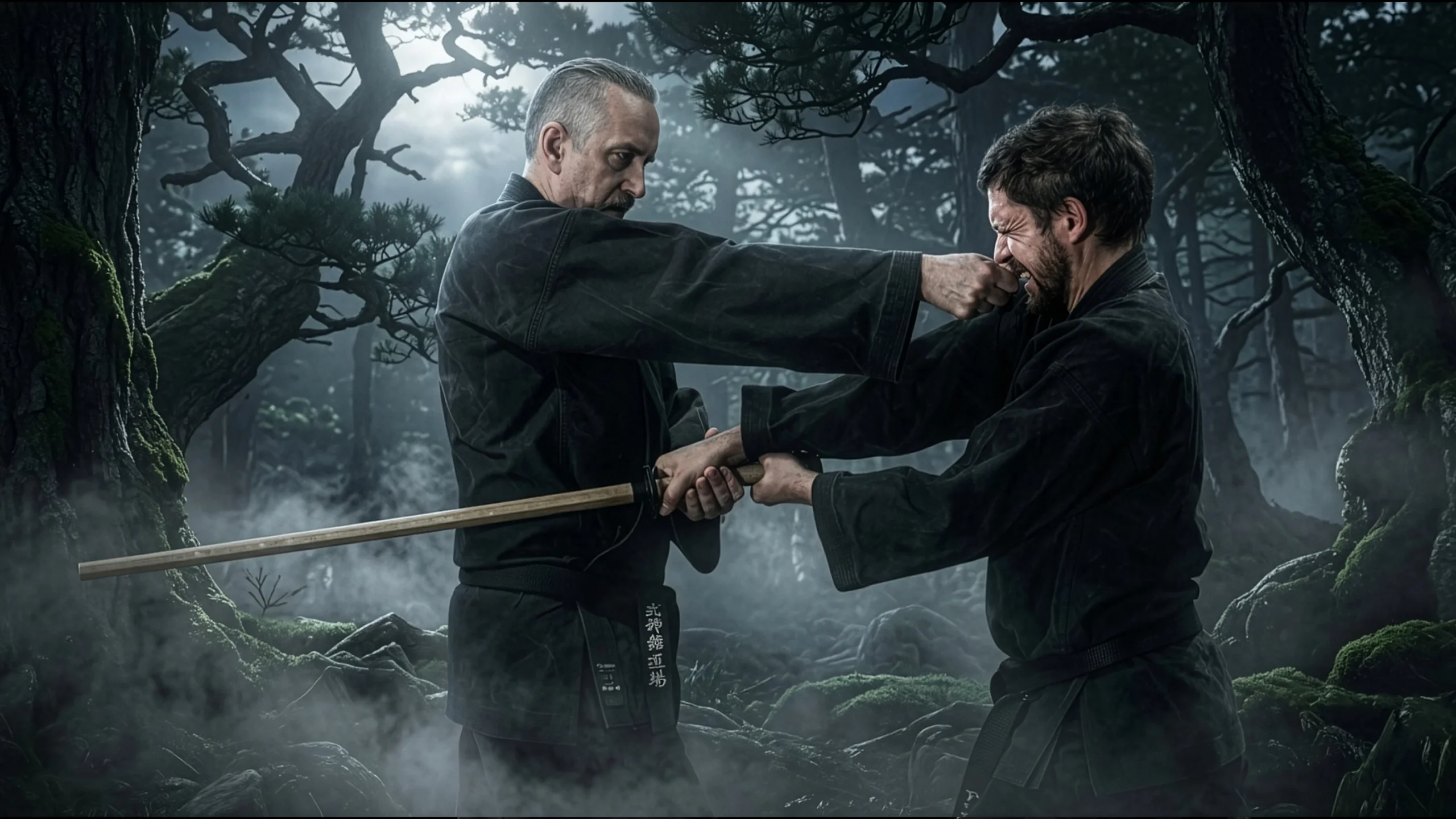
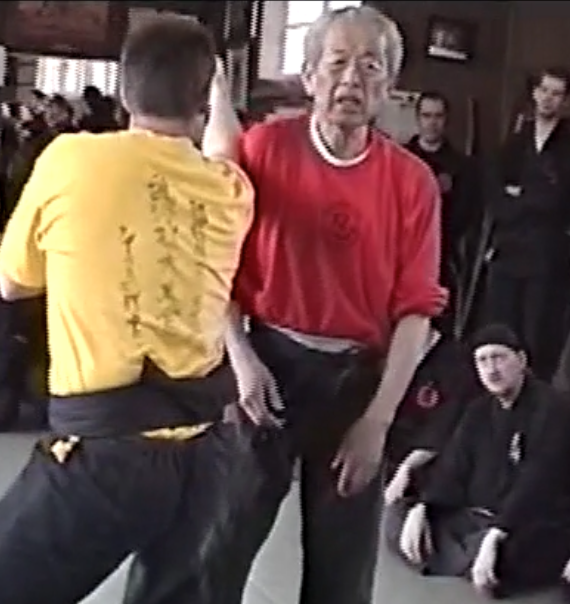
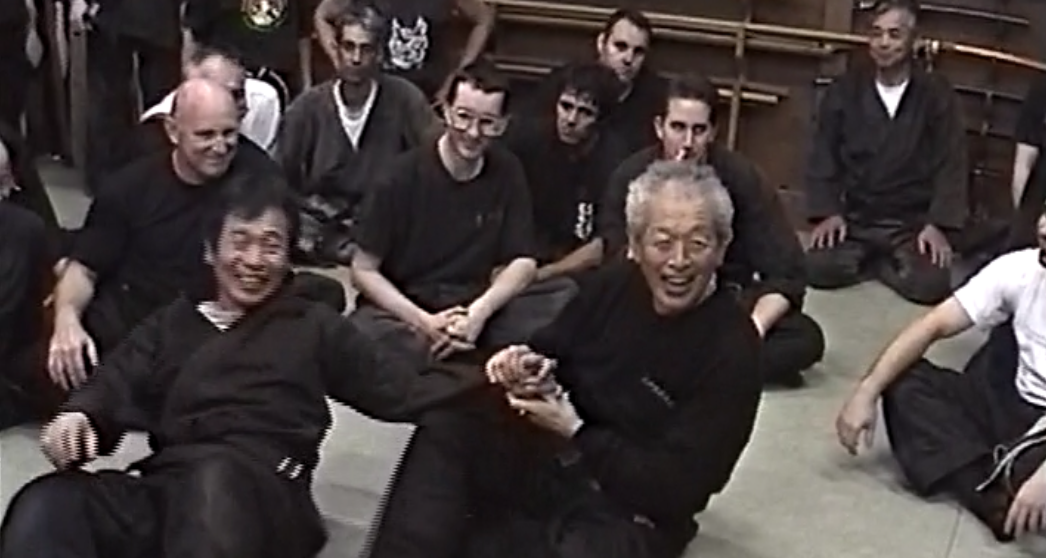
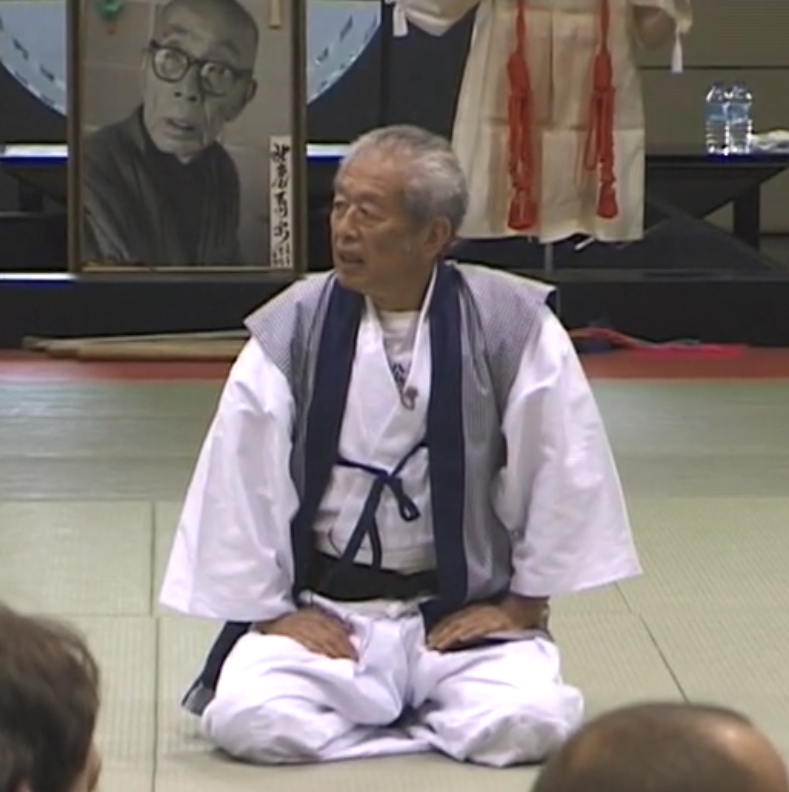
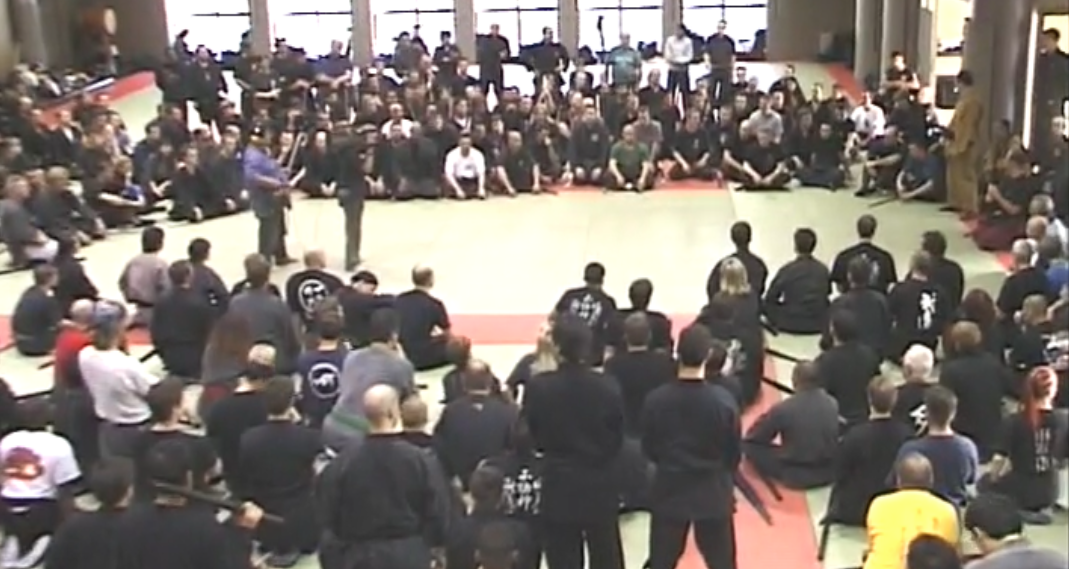
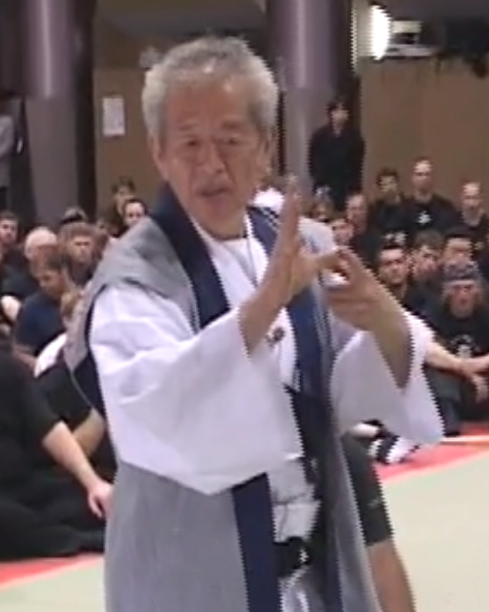
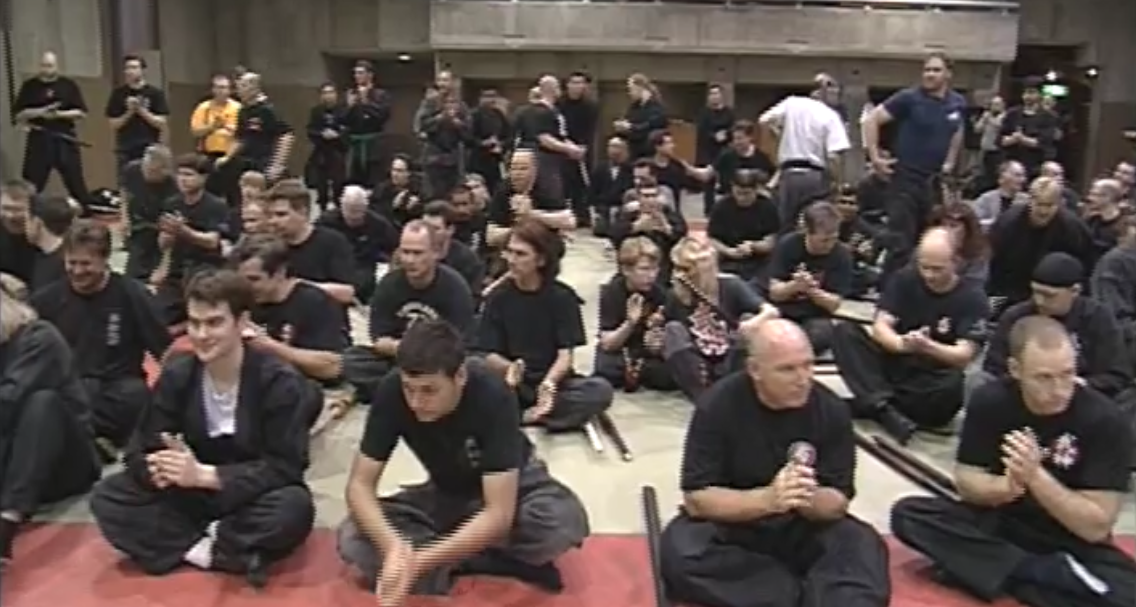
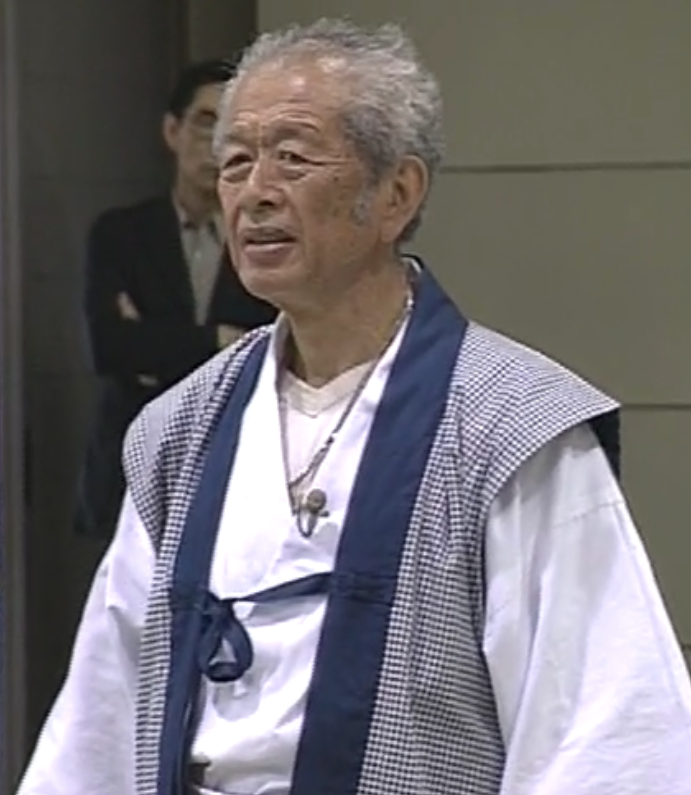
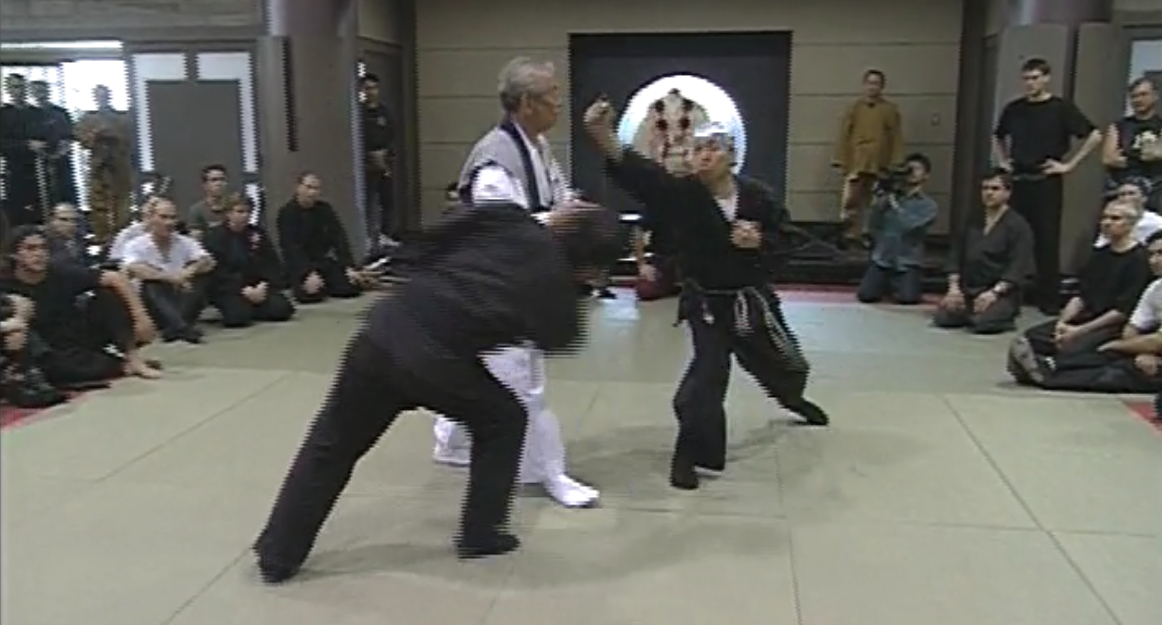
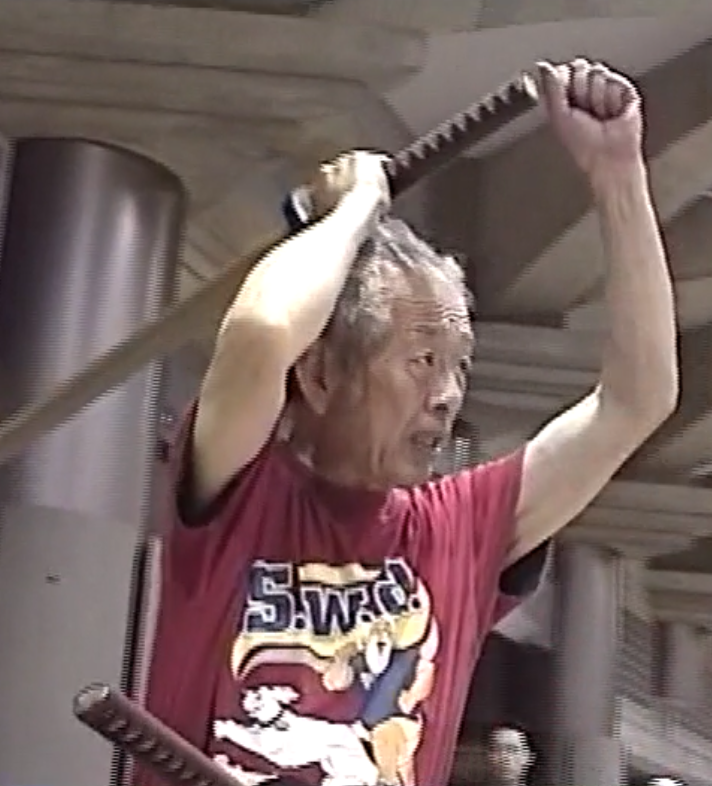
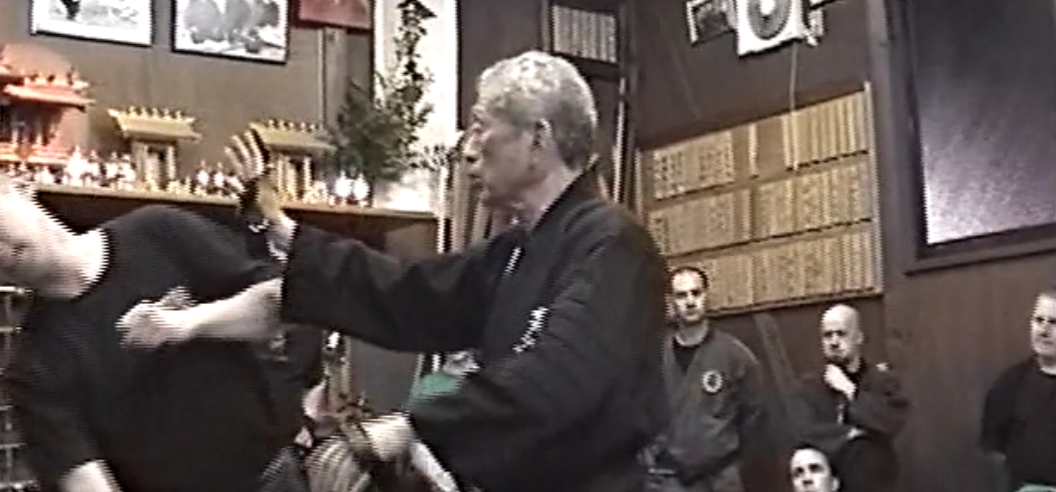
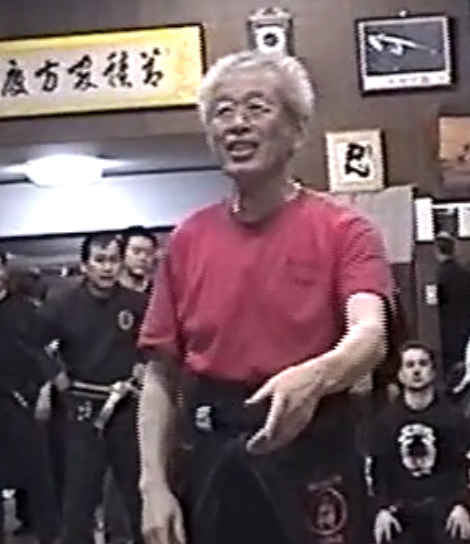
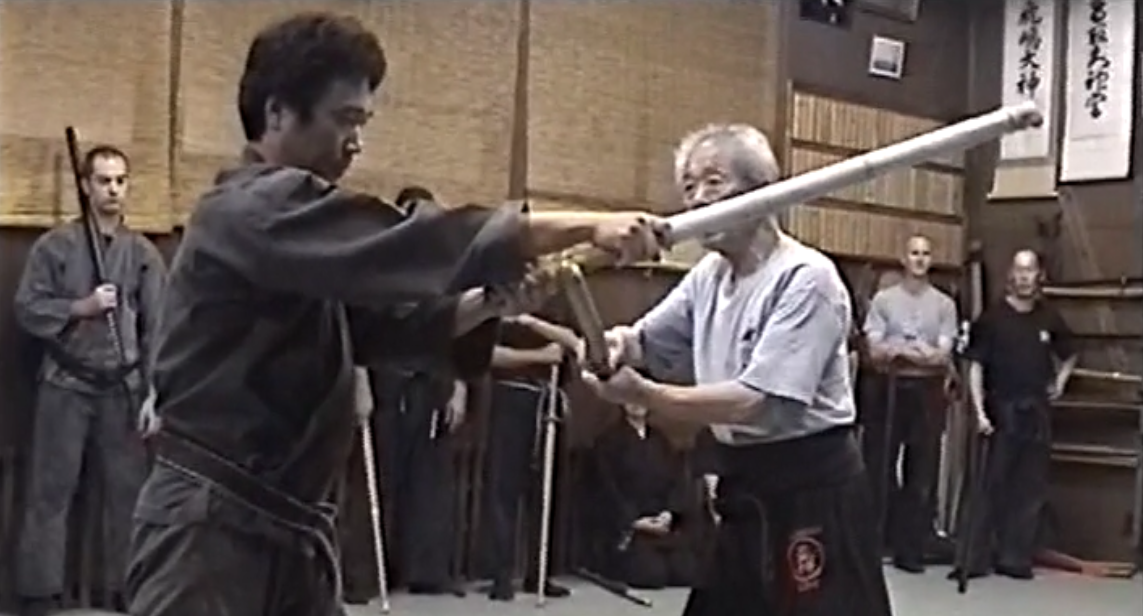
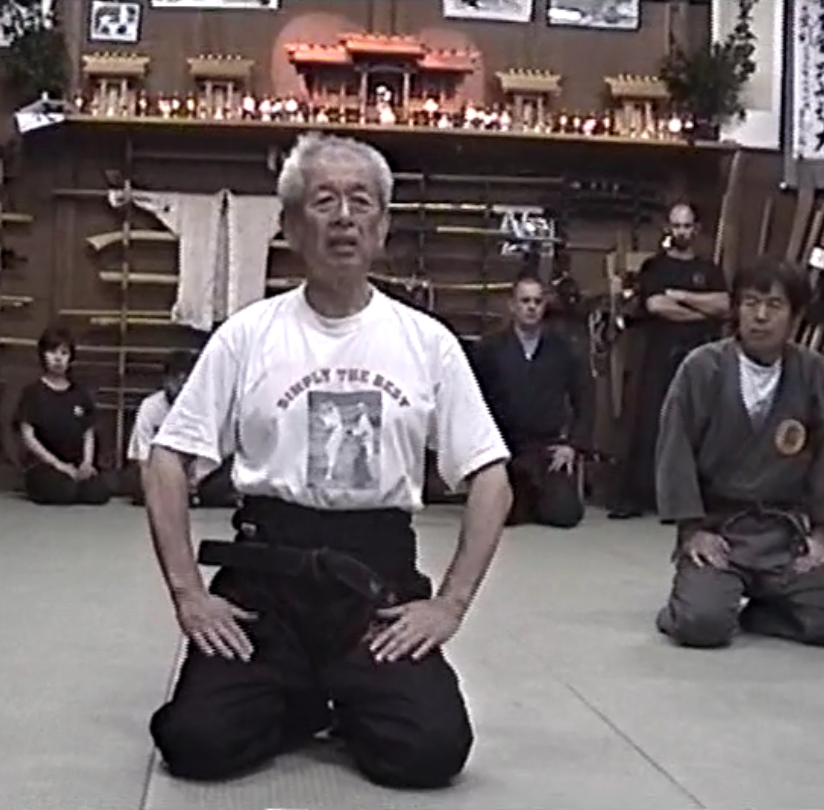
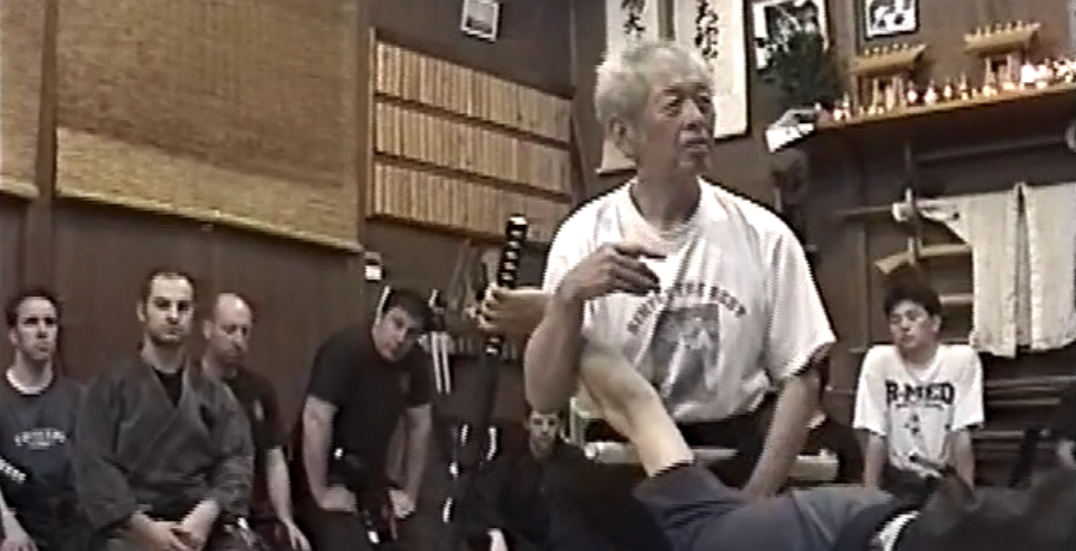
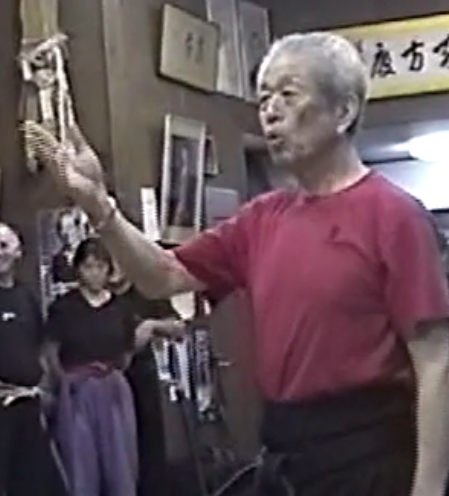
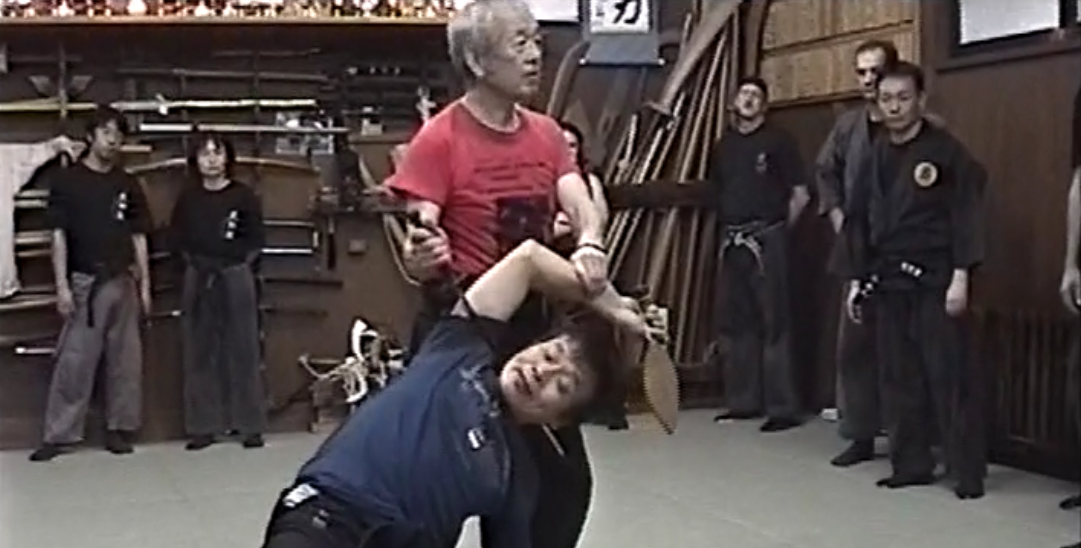
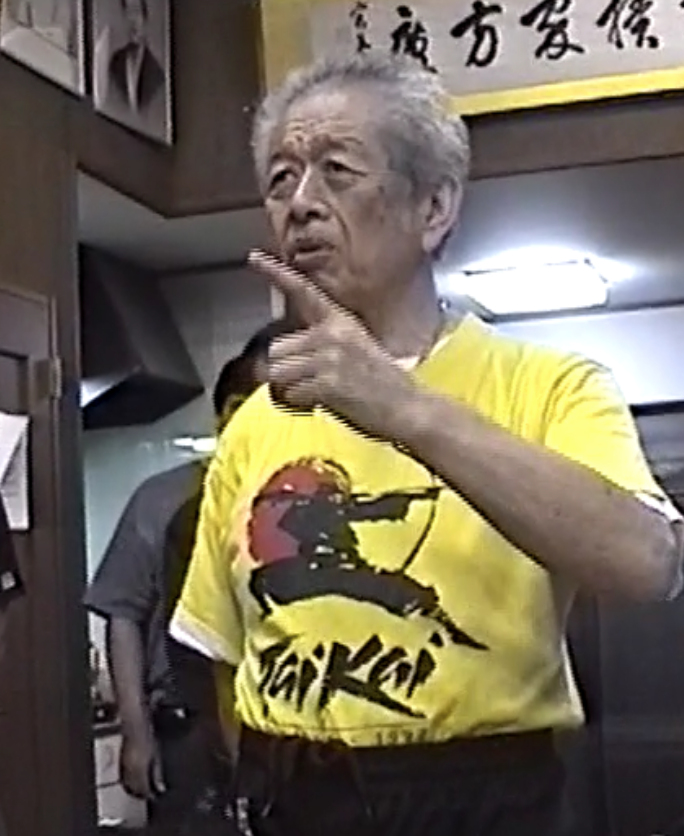
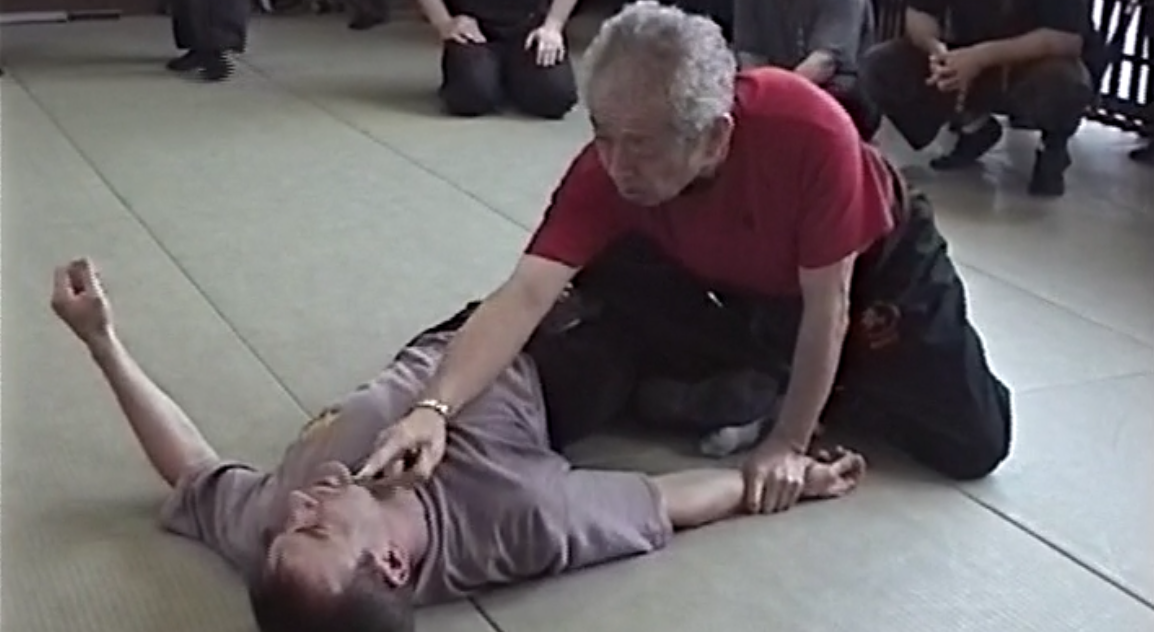
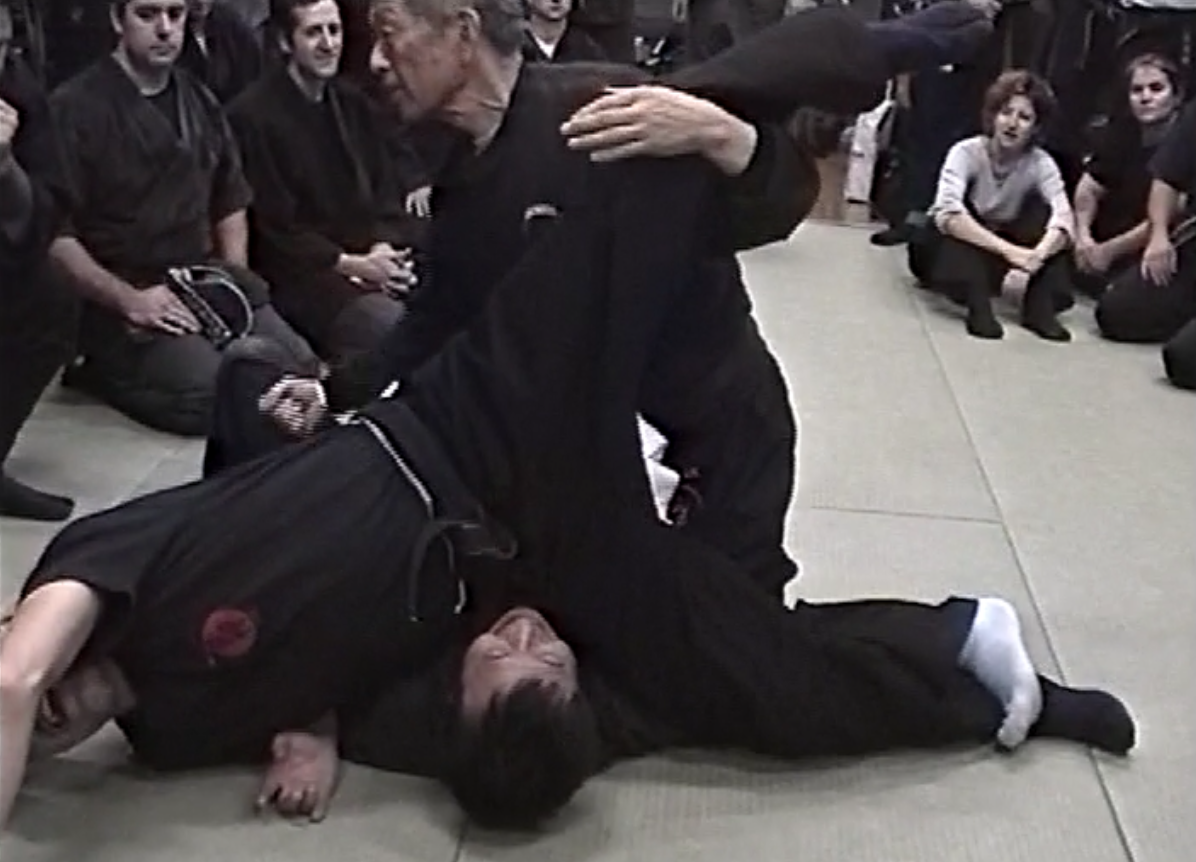
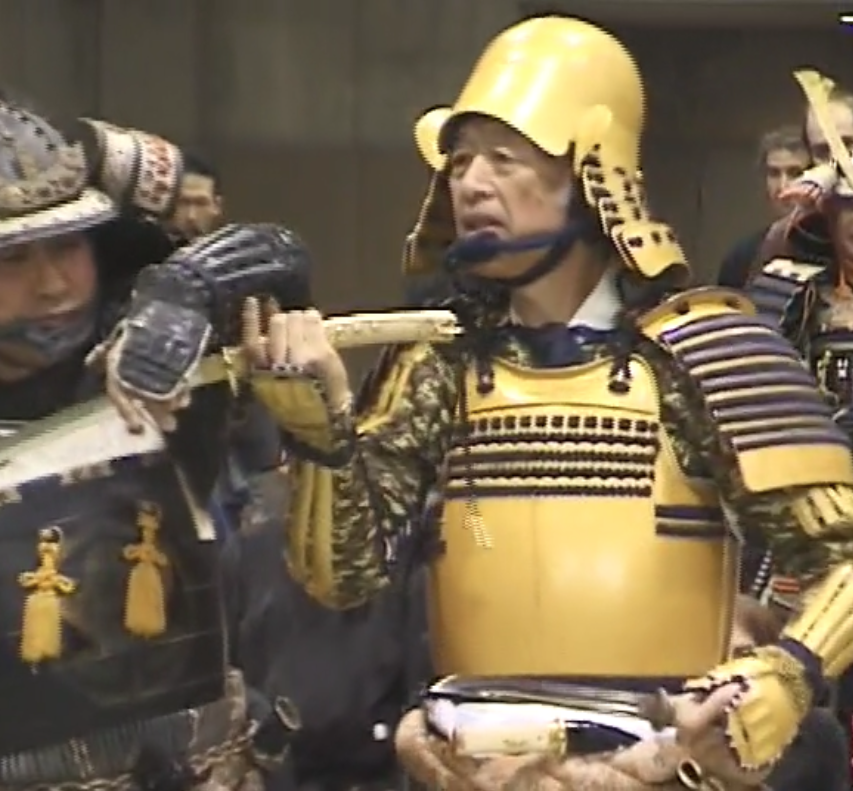
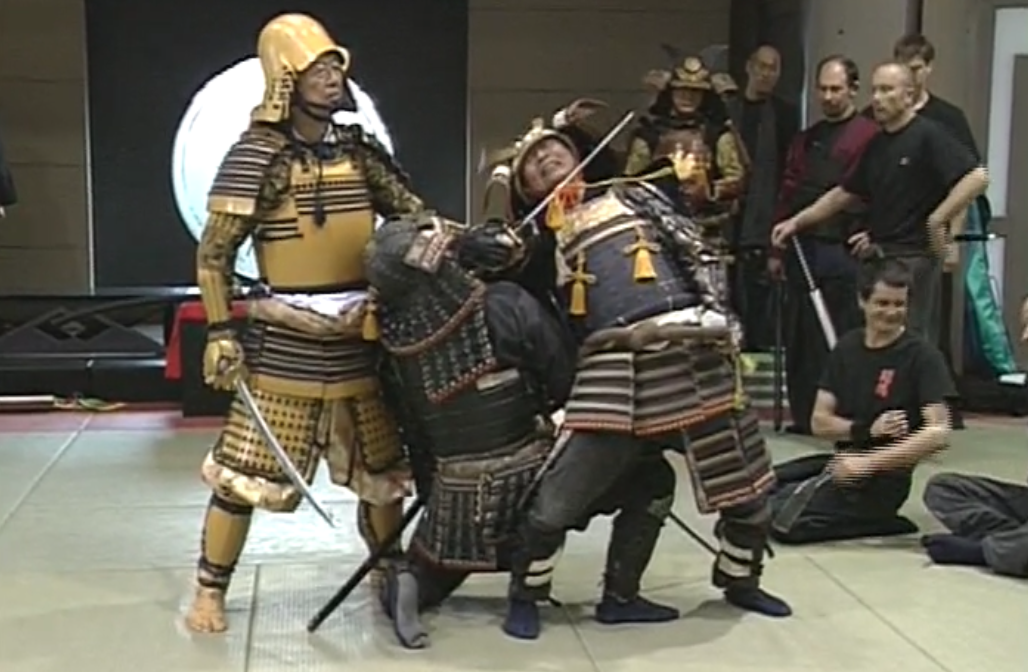
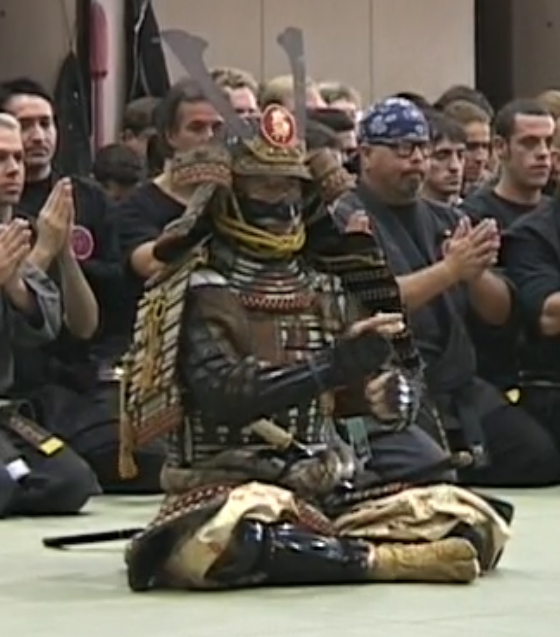
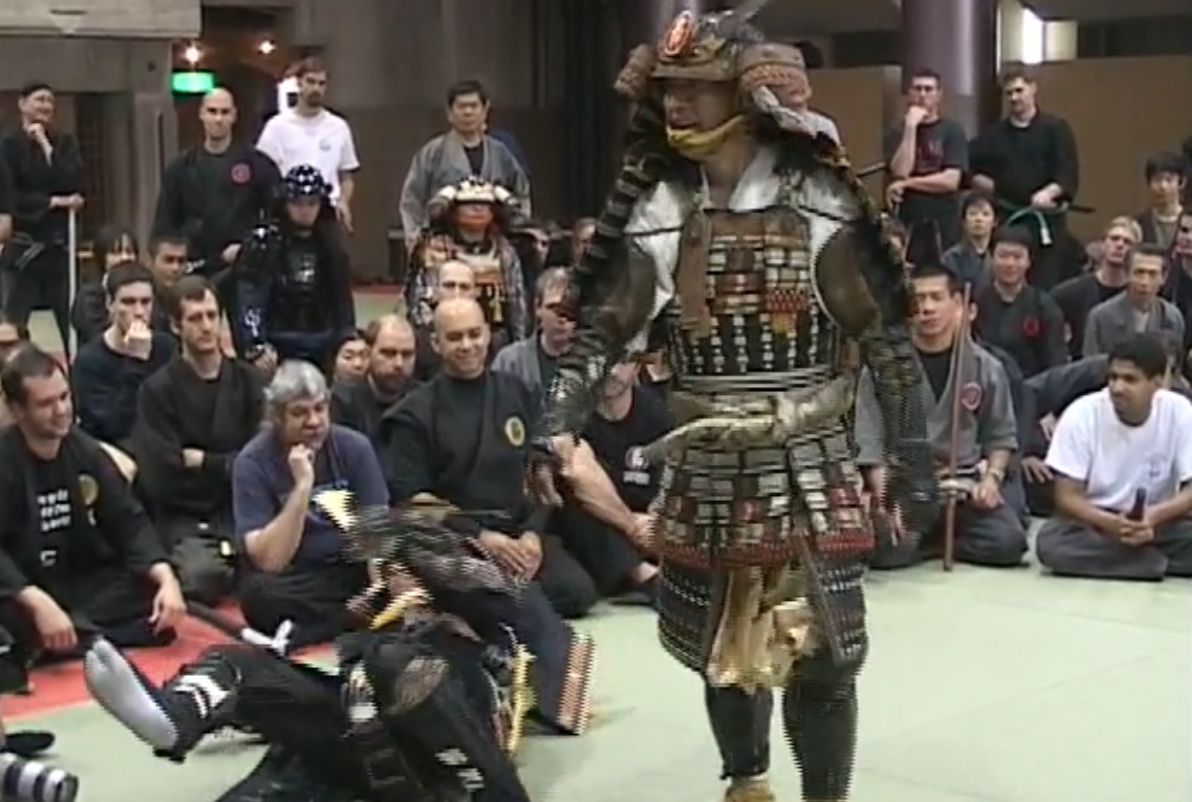
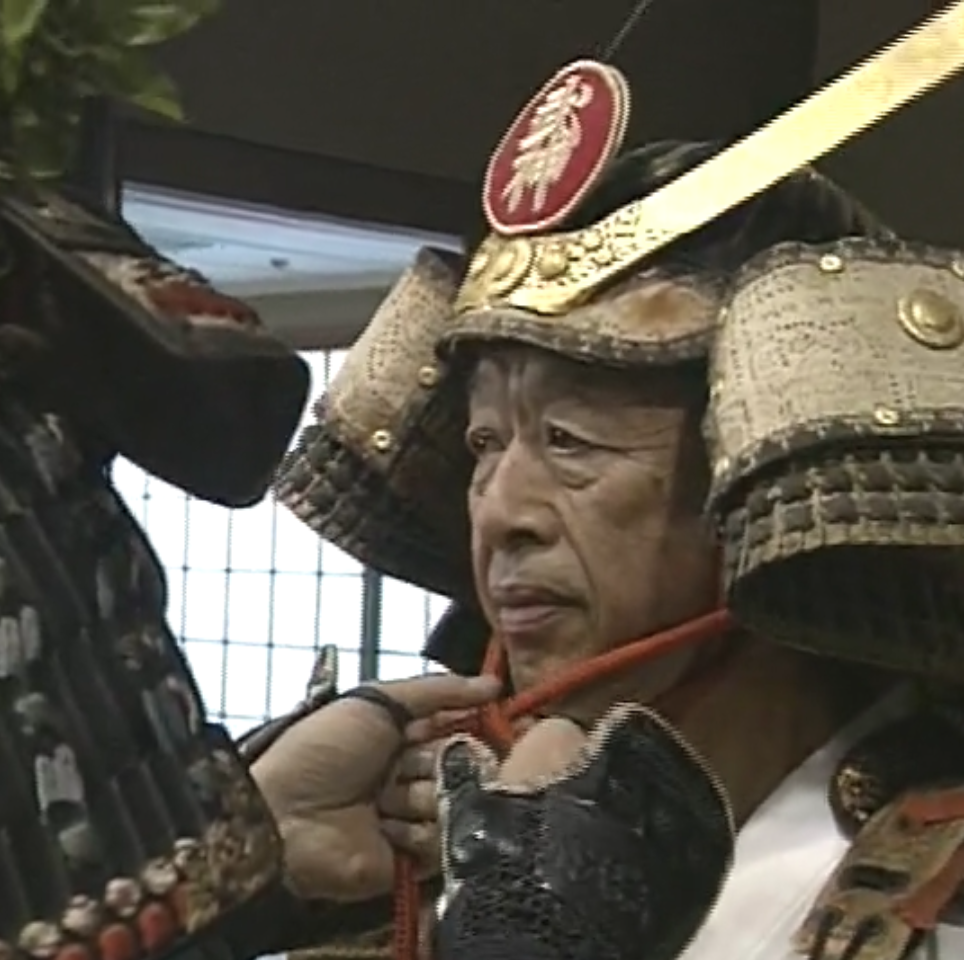
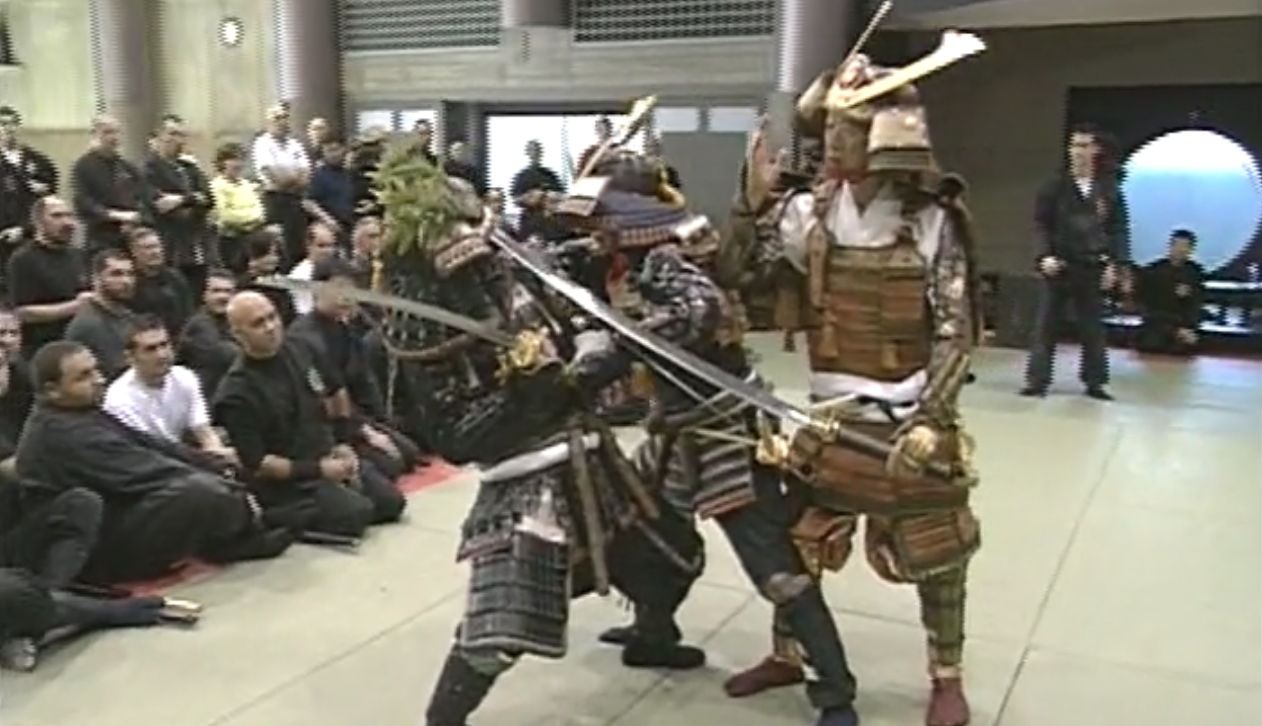
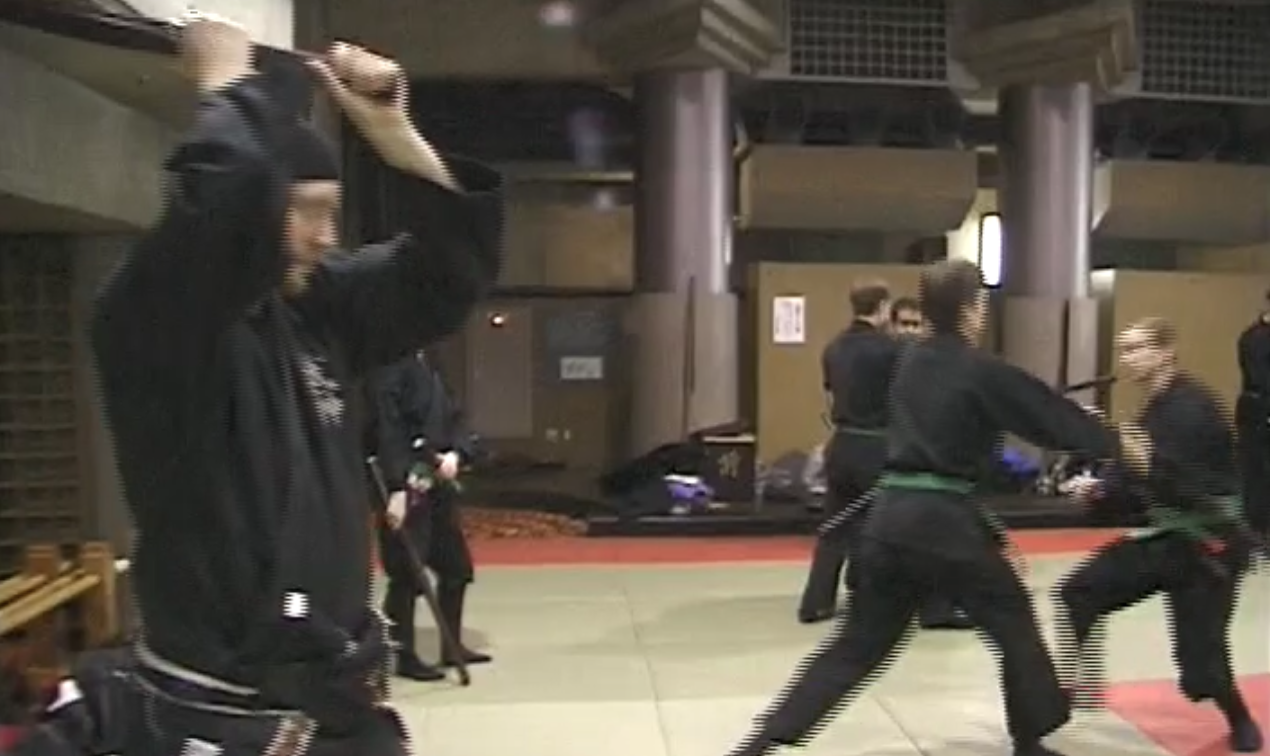
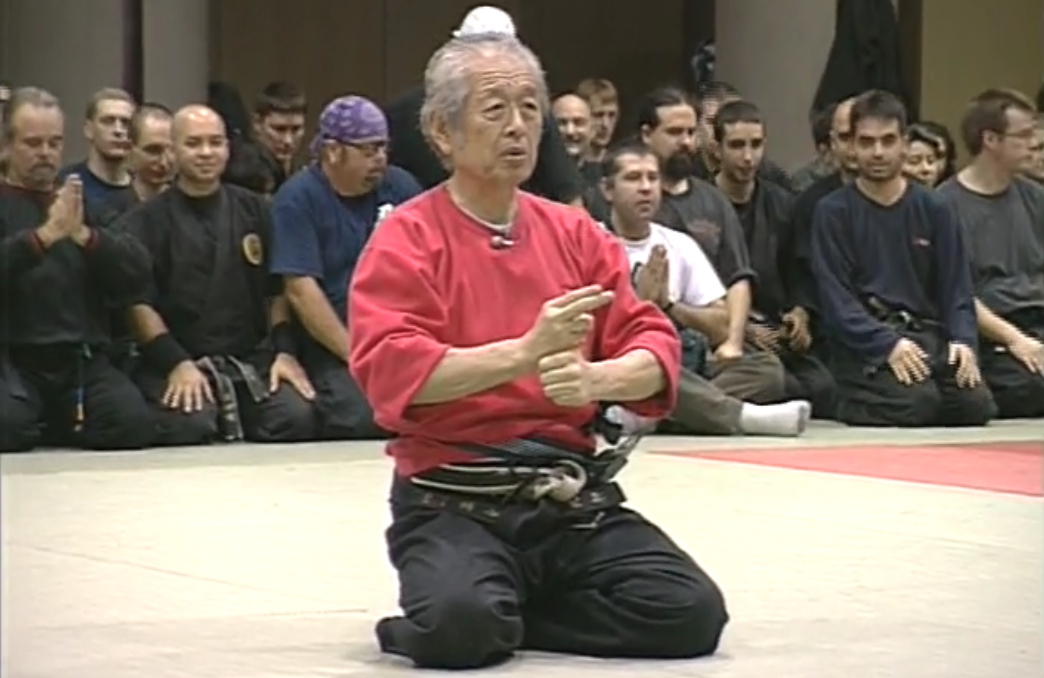
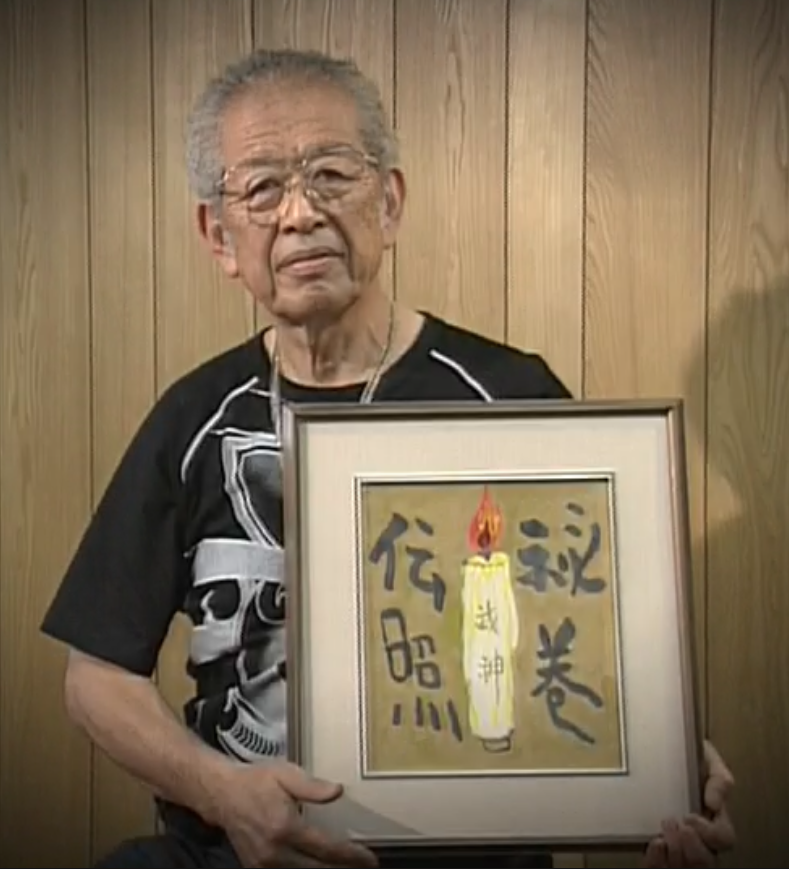
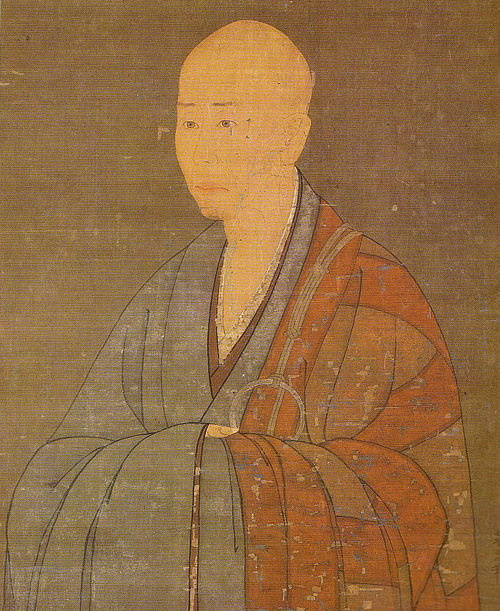
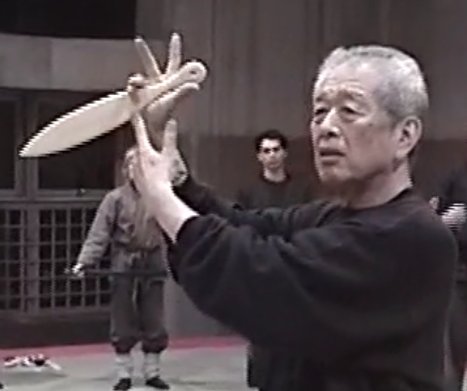
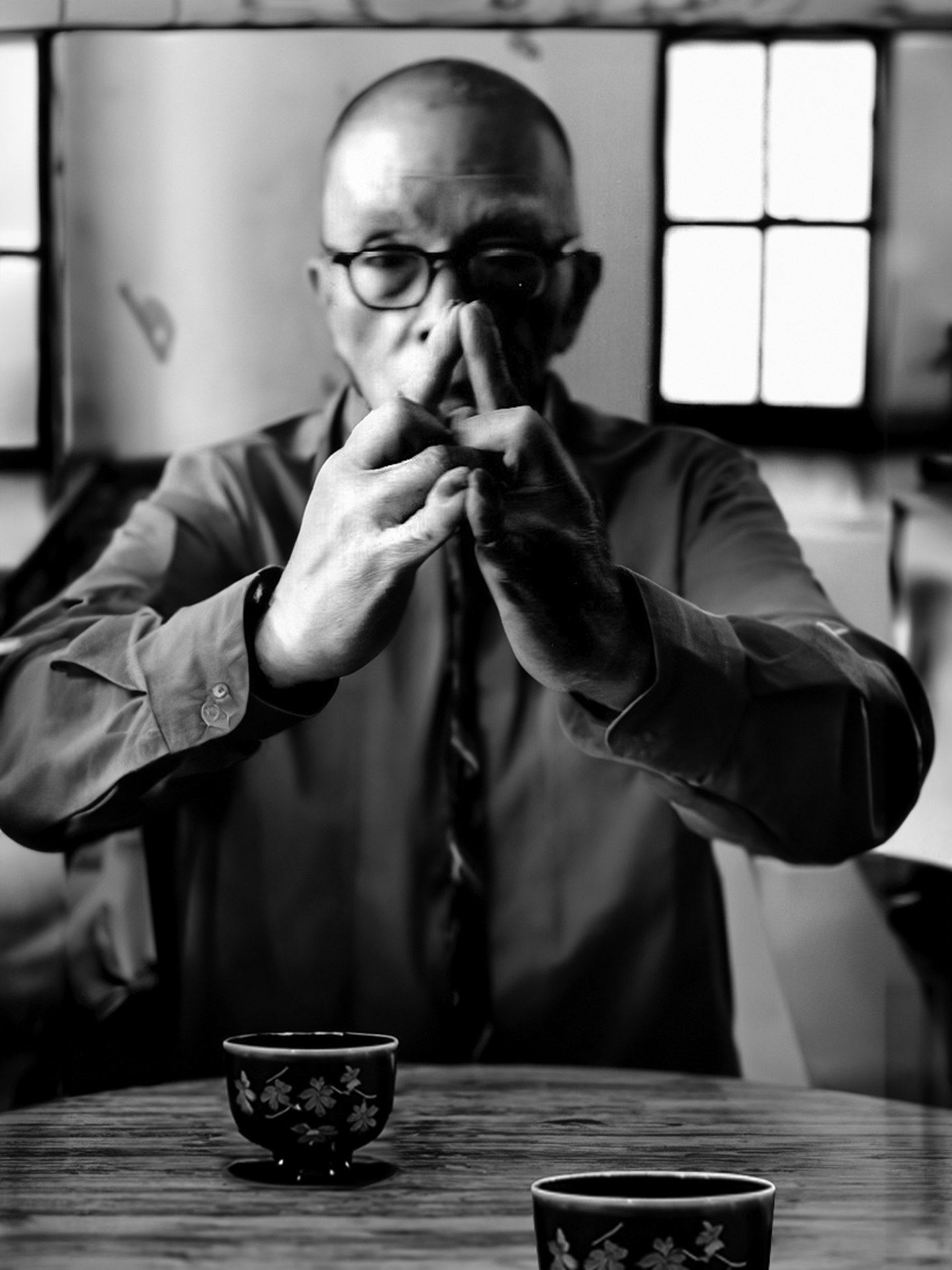
Taka no Mai (Hawk Dance) is an excellent exercise for basic physical strength, and it needs very little space. The side-to-side rock works the legs, but that is not all it trains. Shifting weight over the toes and folding the arms across the body asks for balance on a changing base. The same motion opens the hips, ankles, and spine, so flexibility improves with the strength. Done as a flowing drill rather than a frozen stance, it builds control through the whole body without a large floor or extra equipment.
鷹 (taka) is the everyday Japanese word for a mid-sized bird of prey. The character 鷹 is Chinese. The spoken word taka is Japanese, and it is already in the Man’yōshū, Japan’s oldest poetry anthology. People have guessed that taka comes from 高 (taka, “high”), because the bird flies high; from 猛 (take, “fierce”); or from the idea of a hunting bird raised by hand. None of these guesses is proven. The Nihon Shoki also records an older Korean name from Baekje, 倶知 (kuchi), for the same bird.
The kanji has a different story. In Chinese, 鷹 is linked to 膺 (the breast) and 応 (response). The image is a trained raptor held against the chest in falconry, and used to read omens. That is the history of the written sign, not of the Japanese word taka.
Hawks & Falcons
A hawk and a falcon are not the same bird. A hawk belongs to the hawk family, together with eagles and kites. It hunts by chasing and grabbing, often through trees, and has broader wings. A falcon belongs to a different family. It dives from high up and strikes with its feet. Its wings are long and pointed.
Japanese names keep this split. 鷹 (taka) means hawk-type birds such as the オオタカ (ōtaka, northern goshawk). 隼 (hayabusa) means falcon. 鷲 (washi) means eagle. 鳶 (tobi) means kite. English often calls both hawks and falcons “hawks.” Japanese hunting, 鷹狩 (takagari), used both birds under the one word 鷹 (taka). In ordinary speech, though, 鷹 (taka) is the hawk, not the peregrine falcon.
舞、踊り、舞踊 Mai, Odori, Buyō (Turn, Leap, Dance)
Japanese once split dance in two.
– 舞 (mai) means to turn. The feet slide, the body circles, and the movement follows melody more than a counted beat.
– 踊り (odori) means to leap. The body rises and falls with the music and stays on the rhythm. Festival dancing is odori. Noh and shrine mai are mai.
– 舞踊 (buyō) is a Meiji-era word made from 舞 plus 踊, invented to translate English “dance.” After that, many people stopped saying mai or odori and just said buyō for any Japanese dance.
Interesting side note: 鷹踊 (Taka Odori), a Kagoshima folk dance from Satsuma Town. Same bird in the name, different tradition — almost certainly no connection to our Taka no Mai.
鷹の舞の流れ Taka no Mai no Nagare (The Flow of the Hawk Dance)
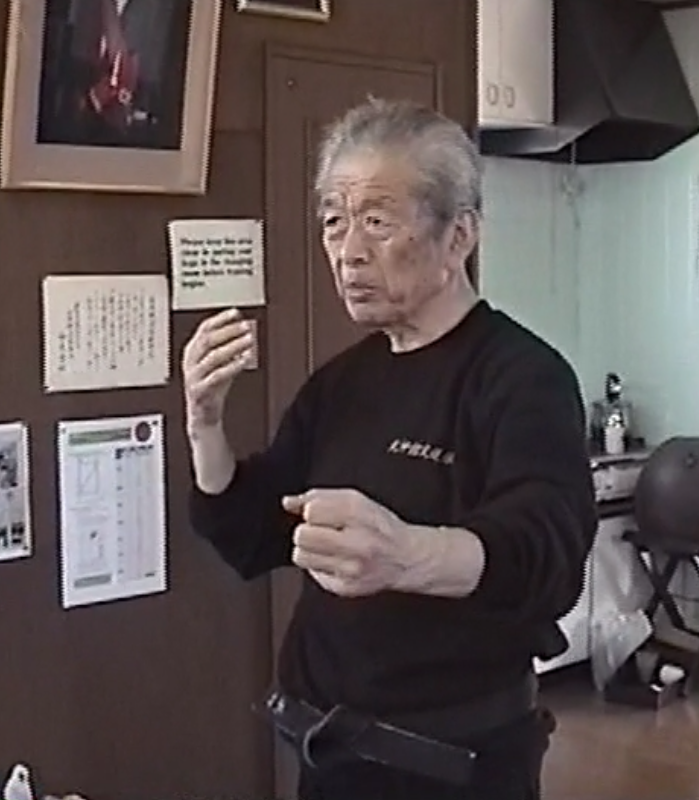
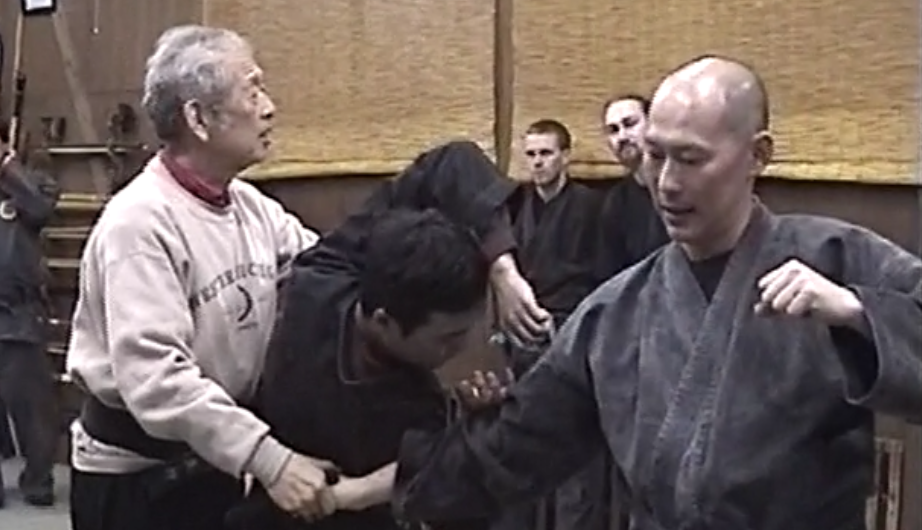
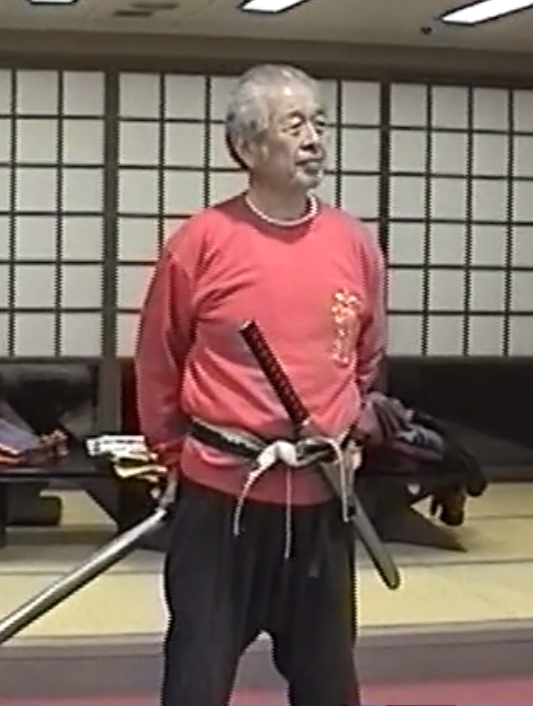
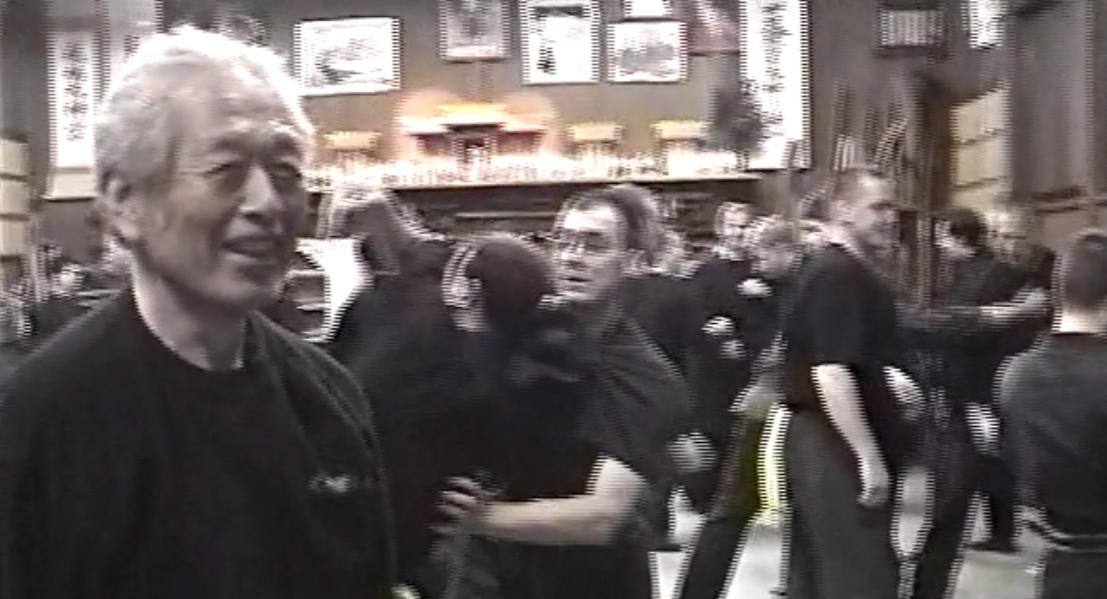
Hawk Dance (Taka no Mai) is an excellent exercise for improving basic physical strength that requires little space. —Sakasai Sensei (Hiden Magazine January 2024)
From Hira-ichimonji no kamae I face forward with both arms straight out to the sides, without standing too deep or too wide in the legs. Then I look straight to the left and move my body weight over my left toes. I fold my right hand to my left shoulder and form a Shikan-ken with my left fist. This is the kamae of a left strike.
Then I move my weight to the right, over my right toes. I look straight to the right as I swing my right hand straight out to the right and bring my left hand to my right shoulder. This is the kamae of a right strike.
Then I move the weight over the left toes as I look to the left and swing the arms to the left. I start rocking left and right in a flowing motion, faster and faster.
Speeding it up may be my own addition to the dance. I do it because it is a balance challenge, it is probably also good practice, and it is more fun. I imagine myself as a sea anemone, just following the current under the water.
鷹の舞 (Taka no Mai) is only named in the kamae section of 天地人略の巻 (TenChiJin Ryaku no Maki), under 平一文字の構 (Hira-ichimonji no kamae). It is one of six training forms listed there. There is no written explanation of how to do it. It is taught by 口伝 (kuden), oral transmission.
体七分目 Tai Shichibunme (The body stops at 70%)
Anyone can do Taka no Mai, the hawk dance. It is easy. Jane Fonda did the same thing: legs slightly bent, arms straight out, little hand circles, rocking left to right — only she had disco.
If it is easy and anyone can do it, I do not think it would even be mentioned in the Bujinkan tradition. So let’s examine the movement.
I have a theory of only putting 70% into anything we do — power, reach, strength, and so on — so that you always have 30% saved in case you need it. But how can you give 70% if you do not know where your 100% is? Let me explain with a few examples.
Taka no Mai Kyokuken Tanren
First, go back to 2009 during a break at Daikomyosai in Ayase Dojo. I was sitting next to Mr T, and I guess he was restless. He started by standing really low. Then he extended really far out to the left. Then he moved over to the other side, keeping his head at the same level. And then he extended really far out to the right, still keeping his head at the same level. I noticed his knees went really far over his toes. And I realized he was practicing his full reach, getting familiar with his 100% limit.
Then I snapped these two pictures, and like most Japanese he said “thank you.” I do not think that meant I could publish his face on social media, which is why I do not show his face.
I also used these two pictures and replaced his face with Keitarō, and asked Grok to make a video of the rocking movement. It was difficult to make the video 100%. The arms swing around at random, half wrong. But the important part, the leg movement, is nearly as I remembered Mr T doing it. He did not rock to the sides as fast as Keitarō. Still, the AI video is 70% correct.
摩利支天法 Marishiten-hō Introduction to the Translation
This translation presents the complete text of a handwritten Japanese manuscript of the Marishiten-hō (摩利支天法), the Ritual Method of Marishiten.
The original is a short manuscript of eleven leaves held by the Treasure Hall of Zentsūji (総本山善通寺), the head temple of the Shingon school in Kagawa Prefecture. It has been digitized from microfilm and is made available through the National Institute of Japanese Literature (国文学研究資料館) under the Kokusho Database, DOI 10.20730/100226119 (catalogue number セ01-0243-004 / 図号 88-50).
The outer cover bears Siddham characters together with the notation 初安. The inner title is clearly 摩利支天法. The text is written in classical Japanese mixed with Kanbun and Siddham script, and includes detailed ritual instructions, mudrās, visualizations, and the traditional dhāraṇī of Marishiten. A colophon records that the present copy was drafted in Genroku 11 (1698) by the elder monk Jōgon of Reiun, on the basis of an earlier transcription made in Kan’ei 5 (1628).
The translation that follows aims to remain as literal as possible to the original wording and structure.
摩利支天法 Marishiten-hō
Invitation: Great Holy Marishiten Bodhisattva. Retinue, class, and the various heavenly hosts.
Making the vow: the Principal Deity, Great Holy Marishiten. Retinue and attendants, the various heavenly hosts, and so on.
Contemplation of the ritual site.
Inside the tower-pavilion there is the character 貞 forming a lotus-leaf seat; upon it there is the character 貞. The character 或 is the great self of all dharmas, the meaning of sovereignty; raising it, it transforms and becomes the form of a heavenly fan. The fan transforms into the Great Holy Marishiten, resembling a female form. The left hand bends the arm upward, the wrist placed before the left breast, making a fist; inside the fist it holds a heavenly fan. The fan is like the one that was before Vimalakīrti in former times.
The woman holds the heavenly fan; in the middle of the fan there is a 卍 Manji character, its form like the auspicious character on the upper part of the Buddha. The character has four curves, and inside each of the four there is a sun form. On that heavenly fan there is a light-flame appearance. The right hand fully extends the arm and stretches the five fingers, the fingertips hanging down, making the wish-granting gesture. To its left and right sides also each there is a 貞 character, both forming lotus-leaf seats; upon them each there is a 卍 Manji character that transforms into heavenly maidens who together hold white fly-whisks and stand in attendance.
Invitation: form the 結身印 Kesshin-in (Body Seal). The seal is like the 大金剛輪印 Daikongōrin-in (Great Vajra-wheel Seal). The two empties twist the two winds sideways, only letting the two empties come and go.
Boundary of the unmoving. Praise of the Four Wisdoms. Empowerment of the principal deity. The preceding 召請印 Shōshō-in (Invitation Seal), only the two-empty mantra, says as above.
Also the mantra says (from the Amoghavajra-translated sūtra, named the heart mantra):
娜莫三去滿多没駄引南一唵引二摩 namaḥ samanta-buddhānām ichi oṃ ni ma
Next, the 安怛祖那印 Antarisona-in (Antardhāna Seal); this means the invisibility seal. With the left hand make an empty palm into a fist; the thumb slightly bent and pinching the tip of the index fingernail like a ring; the lower three fingers grasp into a fist making it tight; and also make a hole in the palm.
In front of one’s own mind, visualize one’s own body entering into the hole of this seal and being hidden. With the right hand, palm flat, rotate rightward stroking this seal and then cover the hole above. Visualize that this seal is the body of Marishiten Bodhisattva; one’s own body is concealed inside the heart of Marishiten Bodhisattva. With one mind concentrate without interruption, recite the preceding root and heart mantras without limiting the number of times. Only with sincere and earnest mind one will certainly obtain the Bodhisattva’s majestic-spirit protection. All enemies and evil people completely will not be able to see; all disasters and difficulties will all obtain liberation.
Correctly and mindfully recite the heart mantra. Contemplation of the syllable wheel.
[Circular diagram of Siddham characters with surrounding notes: unborn and unceasing, nature and characteristics both transcended, speech is itself the real truth, the flowing is unobtainable, self and other both extinguished, cause and effect are non-dual, and so on.]
All dharmas are like water flowing and pouring; in an instant they do not stop; the former is extinguished.
That which is later born is still only the limited view of ignorance; yet in reality all dharmas from the beginning are originally existent, without difference of the three times, without change of the four characteristics. This is called the flowing that is unobtainable. In the gate of original non-arising, the self also fully possesses the other, the other also fully possesses the self; therefore self and other both are extinguished, of one taste and equal. This is the meaning of the 卍 Manji character. When self and other are already non-existent, then the nature and characteristics of self and other also are extinguished; raising it, the nature and characteristics of all dharmas also have no fixed characteristics. This is the meaning of the 卍 Manji character. As for the characteristics of arising and ceasing, characteristics returning to nature is called ceasing; nature giving rise to characteristics is called arising. Nature and characteristics already empty, therefore there is no arising and ceasing. This is the meaning of the 卍 Manji character. All dharmas completely have no arising and no ceasing; therefore the changing words and letters, raising them, are the one real truth. Words and letters, raising them, are true reality; therefore causal practices, raising them, are the resultant virtues. Cause and result are one body; therefore all dharmas unite with original non-arising.
Scattered recitation.
佛眼 大日金或 本尊 Buddha-Eye Mahāvairocana (Golden or) Principal Deity
日天 法施 一字 Sun Deity Dharma Offering One Syllable
Homage to the Buddha.
Dismissal: using the 召請印 Shōshō-in (Invitation Seal), the two empties wave outward. The words say:
Healing illness. Obtaining clear hearing. Extinguishing heavy sins.
According to the original: Drafted on the 13th day of the 10th month of Genroku 11 by the elder bhikṣu of Reiun, Jōgon, age 60.
Copied from the Gokoku-ji original on the 15th day of the third winter month of Kan’ei 5, the year of the Earth Rat. Corrected once in vermilion by Zuishō of Ichinai village in Tanshū, beginning together with the śramaṇa Jakunyo.
Translation Notes
Siddham characters (梵字 / 悉曇文字) Large Siddham (Bonji) characters appear throughout the manuscript, especially in the mantra sections and on the cover. Because they cannot be reproduced accurately in plain text they are marked as [Siddham] or [Siddham groups]. Their phonetic Chinese transcriptions are translated only where the manuscript itself provides readable Sino-Japanese readings.
Phonetic annotations The manuscript contains many small interlinear notes that guide the precise pronunciation of the mantra syllables. The most frequent are:
鼻聲 (bisei) – “nasal sound”: the syllable is to be pronounced with nasalization.
上 (jō) – “rising”: indicates the rising tone.
去 (kyo / ko) – “departing”: indicates the departing tone.
切引 (setsu-in) – “cut and draw out”: the syllable is given a sharp onset and then lengthened.
Other marks such as 引 (lengthen), 合 (combined sound), and numbered sequential markers (四, 五, 八, 九, 十, 十三, etc.) also appear. These numbers are the original phrase counters of the standard multi-phrase dhāraṇī and are rendered in the English line with their conventional Japanese readings (shi, go, hachi, kyū, jū, jū-san, etc.).
Seals (mudrās) The text describes several seals with finger instructions:
結身印 Kesshin-in (Body Seal), said to be like the 大金剛輪印 Daikongōrin-in (Great Vajra-wheel Seal).
安怛祖那印 Antarisona-in (Antardhāna Seal), explicitly called the invisibility seal (隱形).
召請印 Shōshō-in (Invitation Seal), used both for invitation and for dismissal.
卍 Manji The character 卍 is used as a seed symbol on the fan and the attendant seats, and later as the focus of a philosophical contemplation on emptiness and non-duality. It is always written as 卍 Manji.
Colophon The final page records two layers of transmission: a draft made in Genroku 11 (1698) by the elder bhikṣu Jōgon of Reiun (age 60), based on an earlier copy from a Gokoku-ji original made in Kan’ei 5 (1628) and corrected in vermilion by Zuishō of Ichinai village in Tanshū together with the śramaṇa Jakunyo.
I once read that the Amatsu Tatara scrolls themselves were said to have come from the belly of a fish. That single detail made the old Chinese legend of Lü Shang leap off the page. Three thousand years ago, the sage known as Taigong Wang fished for years with a bare thread until a carp rose from the river carrying a book of profound military strategy in its belly.
The parallel is hard to ignore. Both traditions speak of sacred strategic knowledge arriving from the water, sealed inside a fish, and later entrusted to rulers who would shape the destiny of nations. Whether the Amatsu Tatara transmission somehow inherited or echoed this far older current is something we can never prove. Yet the resemblance is striking enough to invite the thought that these two stories may, in some distant way, share a common root.
The Great Straight-Needle Incident
(or: How a Man Caught a Carp Full of Military Secrets)
呂尚 Lǚ Shàng more known as 太公望 Taikōbō in Japan. He lived around 1000 BC
Long ago there lived a man named Lü Shang1, later known as Taigong Wang. He was old, bearded, and thoroughly tired of ordinary life. So he moved to the state of Zhou2, sat down by the Wei River, and began fishing with a thread that had no hook at all.
Just a plain thread. Dangling. For three entire years.
The villagers walked past every day, scratched their heads, and whispered:
“He’s either a profound sage… or he’s completely lost his mind.”
Lü Shang ignored them and kept dangling the thread with the calm of a man who already knew the punchline.
Heaven watched. Heaven waited. Heaven eventually grew impatient and decided to speed things up.
One fine morning a large, slightly offended carp swam up, eyed the useless thread, and thought: “Fine. I see how this works. Bureaucratic destiny it is.”
The carp bit. Lü Shang pulled. And there, inside the fish’s belly, was a book — not a shopping list, not a love letter, but a detailed manual of military strategy containing the very essence of Qimen Dunjia3.
At almost the same moment, King Wen of Zhou woke up from a vivid dream in which a sage was sitting by the Wei River doing something extremely peculiar with a fishing line. He immediately sent messengers.
They found Lü Shang still sitting there, wiping fish scales off an ancient book of battlefield secrets.
“Would you consider becoming our military advisor?” the messengers asked politely.
Lü Shang looked at the book, looked at the river, and shrugged. “I suppose the fish has spoken.”
He joined the Zhou forces. Later, under King Wen’s son King Wu, he helped overthrow the tyrant King Zhou of Shang. The strategies that came out of that carp’s belly proved remarkably effective.
According to later tradition, the same art had first been mastered by the Yellow Emperor, then passed down through Huang Shigong and Zhang Liang, until it was finally perfected by the famous Zhuge Liang.
And that is how a man fishing with no hook, a mildly annoyed carp, and a book of directional military secrets changed the course of a dynasty — while the villagers continued to insist they had known he was special all along.
His personal name is written 呂尚, pronounced Lǚ Shàng in Chinese and Ro Shō in Japanese. In Japan he is far more widely known by the name 太公望 (Taikōbō). ︎
Here is a direct Google Maps link to the Zhouyuan area (周原), the early political center of the Zhou people in present-day Shaanxi, China: https://maps.google.com/?q=34.49,107.84 This points to the core region of the Zhouyuan archaeological site (near Qishan and Fufeng counties, Baoji). ︎
Qimen Dunjia (奇門遁甲) is one of the three classical Chinese divinatory systems known as the “Three Styles” (三式), together with Taiyi and Liuren. It is a complex method of cosmological calculation and strategic divination that combines time, space, direction, and human action. ︎
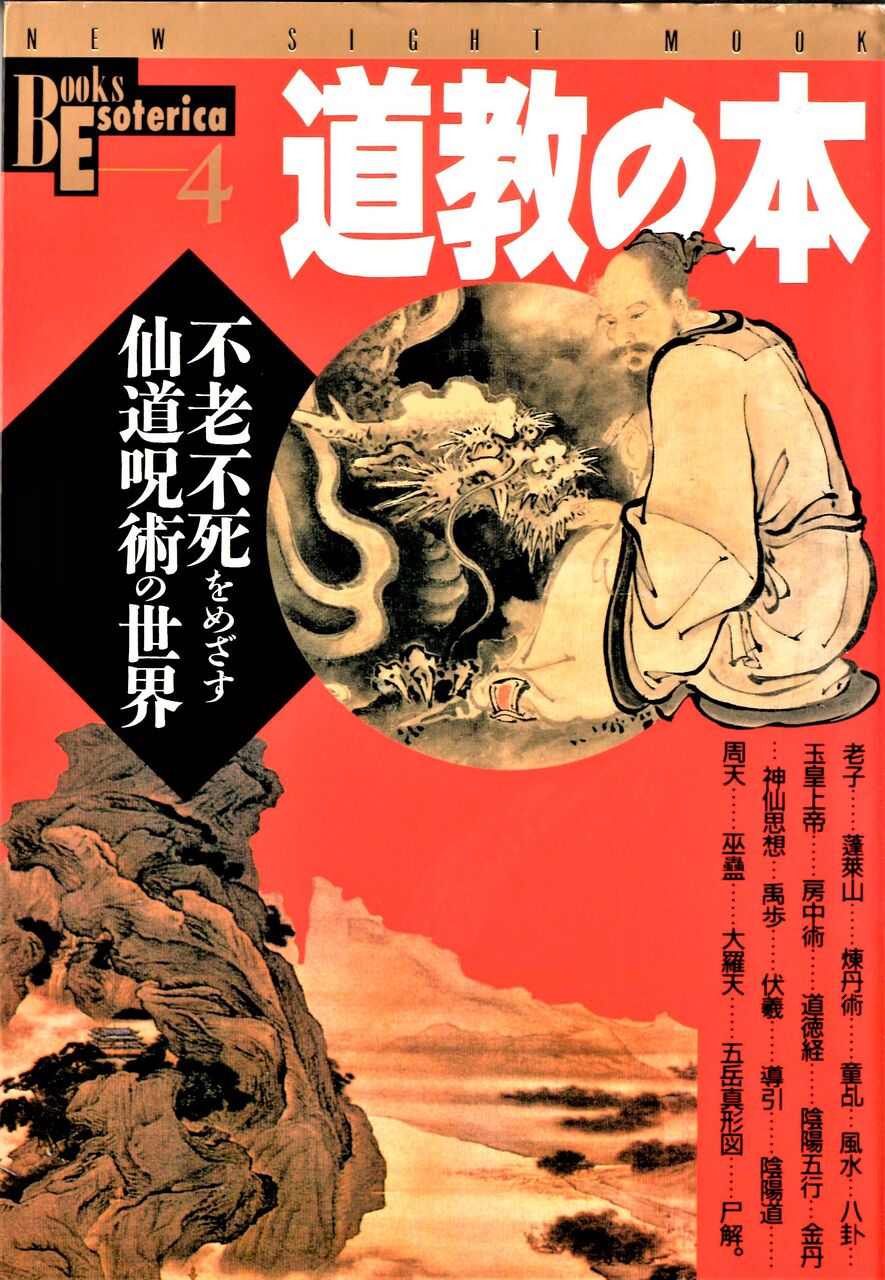
Title 道教の本 ― 不老不死をめざす仙道呪術の世界 (Dōkyō no Hon – Furōfushi o Mezasu Sendō Jujutsu no Sekai)
Series NEW SIGHT MOOK / Books Esoterica 4 (NSMブックス エソテリカ)
Publisher 学習研究社 (Gakken)
Publication date September 19, 1992 (some listings note 1993 reprints)
ISBN 978-4-05-600031-3 (ISBN-10: 405600031X)
Format A5 softcover mook, 223 pages Original price: ¥1,068 (tax included)
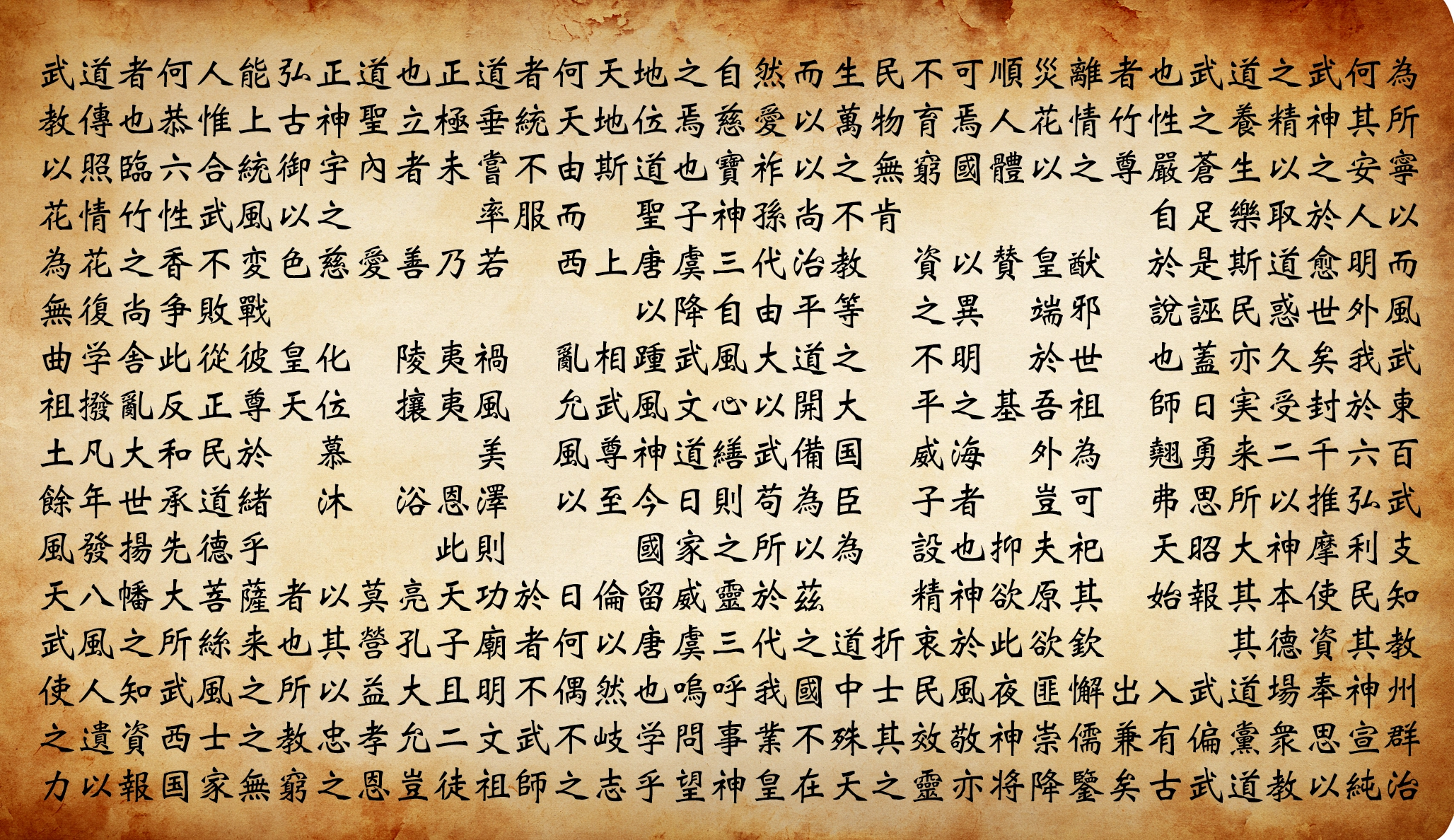
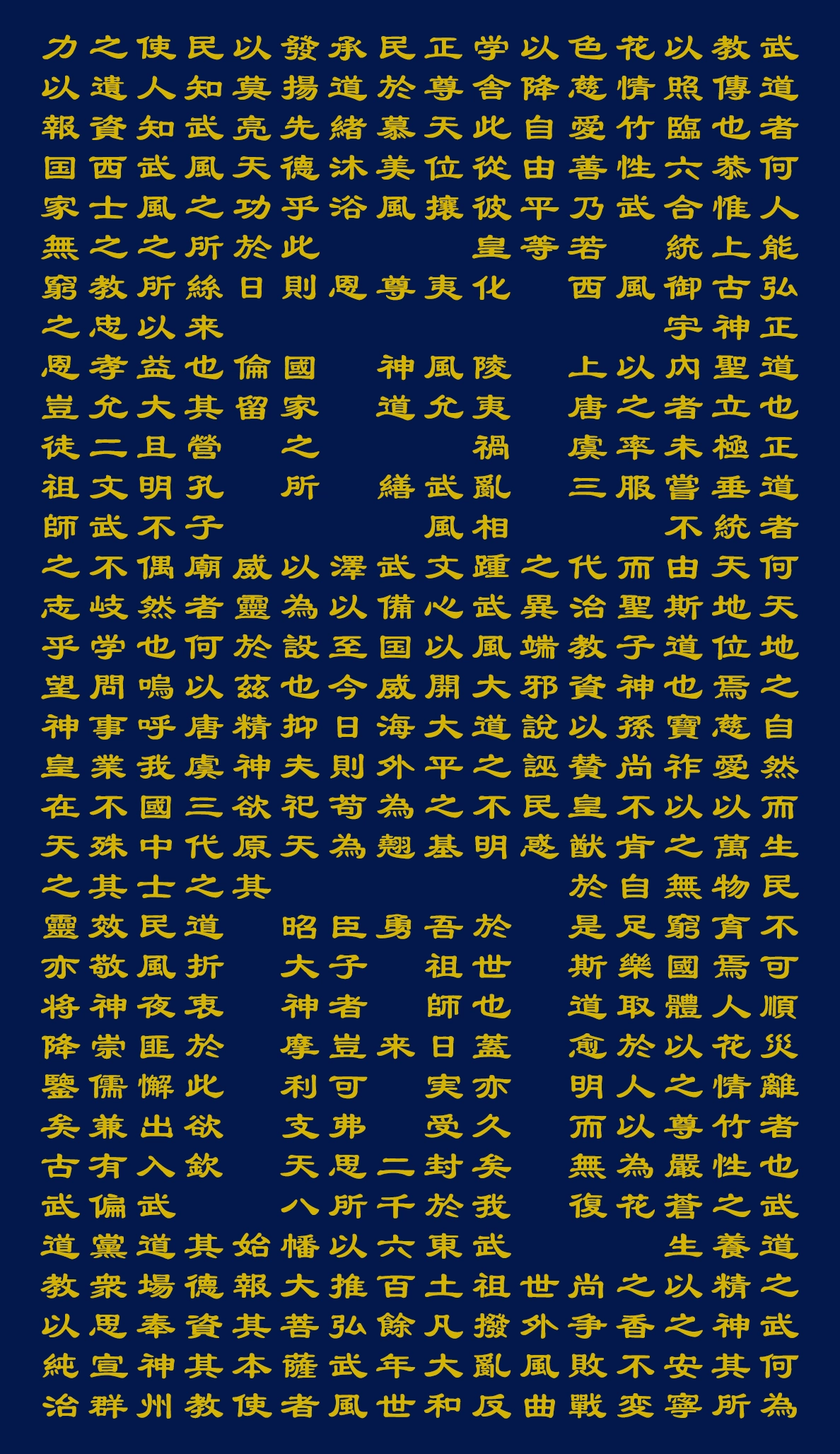
武風 Bufū by Takamatsu Sensei in question is a classical Japanese martial manifesto written in kanbun (漢文) style—formal classical Chinese as traditionally composed and read in Japan. This elevated literary form was commonly used for official proclamations, school founding statements, and philosophical or martial writings that aimed to carry authority and permanence.
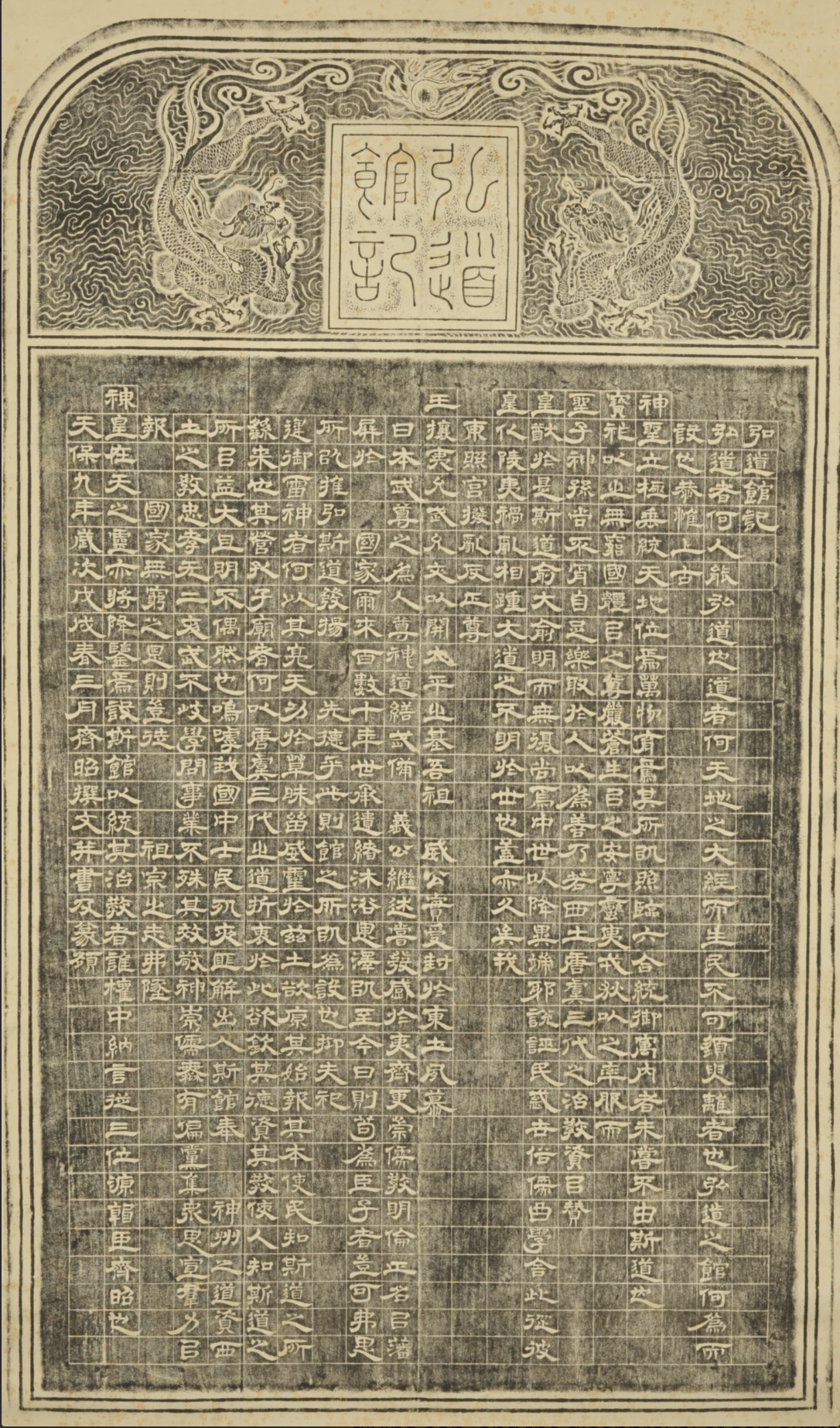
The Bufū document is a deliberate adaptation of the famous Kōdōkan-ki(弘道館記), composed in 1838. The original was written under the name of Tokugawa Nariaki, the ninth lord of the Mito domain, though the actual drafting was largely the work of the prominent Mito scholar Fujita Tōko. The Kōdōkan-ki served as the founding manifesto of the Kōdōkan, the large domain school established in Mito. It defines “the Way” (道) as the natural order of Heaven and Earth that people must never abandon, explains why a school was needed to promote it, and calls upon the domain’s people to uphold loyalty, learning, and proper conduct. The text is one of the most influential expressions of late-Edo Mito learning and the sonnō jōi ideology.
Takamatsu Toshitsugu took this highly respected classical text and systematically rewrote it. He preserved the overall structure, rhetorical patterns, and much of the formal language, but replaced the central concept of “promoting the Way” (弘道) with the martial way and the martial wind (武道 / 武風). Political and Confucian references were transformed into statements about the eternal martial spirit. Tokugawa Ieyasu as the restorer of order became “our martial ancestors,” and the purpose of the domain school became the duty to transmit and uphold true Budō. The result is a martial manifesto clothed in the authoritative language and form of a celebrated late-Edo document.
This kind of rewriting, sometimes called tenka, was a recognised way of giving new ideas historical weight and legitimacy by linking them to respected classical models. By adapting the Kōdōkan-ki, Takamatsu elevated the concept of Bufū—the martial wind or continuous martial spirit—into something that carried the dignity of traditional scholarship while remaining firmly rooted in the warrior tradition.
The colophon at the end makes the personal intention clear. It states that the text was carefully written (or copied) by Takamatsu, the 33rd-generation head of Togakure-ryū, specifically for Hatsumi Masaaki, who would become the 34th generation. This indicates that the document was not a general essay but a formal transmission piece, presented from teacher to successor as part of the living inheritance of the martial way.
In this form, the text functions both as a philosophical statement on the nature of true Budō and as a personal charge from Takamatsu to Hatsumi: to preserve, clarify, and continuously embody the martial wind across generations.
武風 Bufū by Takamatsu Sensei
What is a person of the martial way? It is one who can expand and promote the Correct Way. What is the Correct Way? It is the natural order of Heaven and Earth, from which people receive life, and from which they must never turn away or separate, even for a moment.
What, then, is the “martial” in the martial way? It is that which is taught and transmitted.
Respectfully reflecting: In high antiquity the sacred deities established the ultimate principle and handed down the succession. Heaven and Earth took their proper places, and through their compassionate love all things were nurtured. They cultivated in human beings the feeling of flowers and the upright nature of bamboo, thereby nourishing the spirit. By this they illuminated the six directions and governed the entire realm. Never has this been accomplished by any means other than this Way.
By it the Imperial Throne is made everlasting, by it the national essence is made dignified, by it the people are made peaceful and secure.
The martial wind (Bufū), possessing the feeling of flowers and the nature of bamboo, causes all to submit. Yet even the sacred descendants of the gods were never content to rest in self-satisfaction; they gladly learned from others so that the fragrance of the flower would remain unchanged.
Their benevolent and virtuous character was like that of the ancient sage-emperors of Tang and Yu and the Three Dynasties. Drawing upon this, they assisted the Imperial designs. Thus the Way became ever clearer, and no longer was there ceaseless contention and defeat in battle.
However, after the defeat in war, the heretical doctrines of “freedom” and “equality” deceived the people and confused the world. Foreign winds and distorted learning entered from all sides. The Imperial civilizing influence declined, calamities and disorders followed one upon another, and the great Way of the martial wind became unclear in the world. This has already been long the case.
Our martial ancestors restored order from chaos, revered the Heavenly position, expelled the barbarian winds, and truly united the martial wind with the literary heart, thereby laying the foundation of great peace. Our ancestral teacher, from the day he received investiture in the eastern land, caused all the people of Yamato to admire the beautiful customs, revere the Way of the Gods, and cultivate martial preparedness. The national prestige shone proudly across the seas. For more than two thousand six hundred years the successive generations have inherited the thread of the Way and bathed in its blessings, down to the present day.
Therefore, if one is truly a subject and child of the nation, how can one fail to consider how to promote and expand the martial wind and make manifest the virtue of the ancestors? This is precisely the reason the nation itself exists.
Moreover, the enshrinement of Amaterasu Ōmikami, Marishiten, and Hachiman Daibosatsu is so that the vast sincerity of Heaven’s merit may shine clearly like the sun, and so that their awe-inspiring spiritual power may remain here. In spirit we desire to trace back to the origin and repay the root, so that the people may know from whence the martial wind comes.
The building of Confucian temples is so that the Way of the Tang, Yu and Three Dynasties may be harmonized here. We revere their virtue and draw upon their teaching, so that people may understand that the reason the martial wind grows ever greater and clearer is no accident.
Alas! Let the gentlemen and people throughout our country, day and night without negligence, enter and leave the martial training halls. Uphold the legacy of the Divine Land together with the teachings of the Western scholars. Make loyalty and filial piety one. Keep the literary and the martial undivided. Let learning and practical affairs not diverge. Let the result be reverence for the gods and esteem for Confucianism, free from partiality or faction. Let all with one mind exert their collective strength, so as to repay the boundless grace of the nation.
Is this merely the will of the ancestral teachers alone? We look up and hope that the spirit of the Divine Emperor in Heaven will also look down and bear witness.
The teaching of the ancient martial way is pure and governing.
Written with care by Takamatsu Toshitsugu 33rd Generation Sōke of Togakure-ryū For the 34th Generation Hatsumi Masaaki (with seal)
武道者何人能弘正道也 Directly modelled on the opening of the 1838 Kōdōkan-ki(“弘道者何。人能弘道也”). The substitution of 武道 / 正道 for 弘道 is the central rewriting of the entire piece.
天地之自然而生民不可順災離者也 Adaptation of the classical phrase “天地之大經而生民不可須臾離者也”. “順災” is an unusual wording (possibly a calligraphic or stylistic variant) for the idea of going against or abandoning the natural order.
花情竹性 A refined classical metaphor. “花情” suggests sensitivity and aesthetic feeling; “竹性” suggests uprightness, resilience, and purity. Together they describe the ideal cultivated character.
照臨六合統御宇內 Standard elevated kanbun diction for imperial or divine rule. “六合” = the six directions (heaven, earth, and the four cardinal points); “宇內” = all under heaven.
寶祚以之無窮國體以之尊嚴蒼生以之安寧 Parallel construction typical of formal Sino-Japanese prose. “寶祚” (imperial throne), “國體” (national essence/polity), and “蒼生” (the common people) form a classic triad.
唐虞三代 Tang (Yao) and Yu (Shun) are the legendary sage-emperors; the Three Dynasties are Xia, Shang, and Zhou. A standard Confucian reference to the golden age of ideal government.
自由平等之異端邪說 Strongly charged language. “異端邪說” is a classical term for heterodox or pernicious doctrines. Here it is applied to post-war democratic ideas (“freedom and equality”).
撥亂反正 A classical four-character phrase meaning “to quell disorder and restore correctness.” Originally used of sage-kings or great restorers; here applied to “our martial ancestors.”
天照大神・摩利支天・八幡大菩薩 A deliberate combination of the imperial sun goddess (Amaterasu), the Buddhist warrior deity Marishiten (especially revered by bushi), and Hachiman (god of war). Reflects the syncretic religious world of traditional Japanese martial culture.
文武不岐 Classical ideal of the unity of civil and military virtues (bunbu). The phrase insists that scholarship and martial practice must not be separated — a key theme in both the original Kōdōkan-ki and this martial rewriting.
Kodokanki by Tokugawa Nariaki written in 1838 and monument erected in 1840.
What is “promoting the Way”? It is that a person is able to expand and promote the Way. What is the Way? It is the great constant principle of Heaven and Earth, from which the people are born and which they must never leave even for a moment.
Why was the Hall for Promoting the Way established?
Respectfully reflecting: In high antiquity the sacred and divine established the ultimate principle and handed down the succession. Heaven and Earth took their proper places, and all things were nurtured. That by which they illuminated the six directions and governed all within the universe has never been accomplished by any means other than this Way.
By it the Imperial Throne is made everlasting, by it the national essence is made dignified, by it the common people are made peaceful and secure, and by it the barbarians of the four directions are made to submit.
Yet even the sacred sons and divine grandsons were never content to rest in self-satisfaction; they gladly learned from others in order to cultivate goodness. Just as they drew upon the governing and teaching of the sage-emperors of Tang and Yu and the Three Dynasties of the Western land to assist the Imperial designs, so this Way became ever greater and ever clearer, with nothing further to be added.
From the middle ages onward, however, heretical and pernicious doctrines deceived the people and confused the world. Vulgar Confucians and distorted learning abandoned this and followed that. The Imperial civilizing influence declined, calamities and disorders followed one upon another, and the great Way became unclear in the world. This has already been long the case.
Our Eastern Illuminating Prince (Tokugawa Ieyasu) quelled disorder and restored correctness, revered the Sovereign, expelled the barbarians, and truly united the martial and the civil, thereby laying the foundation of great peace. Our ancestor, Lord Mitsukuni, actually received investiture in the eastern land. From early on he admired the character of Yamato Takeru, revered the Way of the Gods, and cultivated martial preparedness. Lord Tsuna continued this work; inspired by the example of Bo Yi and Shu Qi, he further exalted Confucian teaching, clarified human relationships, and rectified names, thereby serving as a protective barrier for the nation.
For more than a hundred years since then, successive generations have inherited this legacy and bathed in its blessings, down to the present day. Therefore, if one is truly a subject and child of the nation, how can one fail to consider how to promote and expand this Way and make manifest the virtue of the ancestors? This is precisely the reason the Hall has been established.
Moreover, why is Take-mika-zuchi-no-kami enshrined? Because he manifested Heaven’s merit in the age of chaos and left his awe-inspiring spiritual power in this land. We desire to trace back to the origin and repay the root, so that the people may know from whence this Way comes.
Why is a Confucian temple maintained? So that the Way of Tang, Yu and the Three Dynasties may be harmonized here. We revere their virtue and draw upon their teaching, so that people may understand that the reason this Way grows ever greater and clearer is no accident.
Alas! Let the gentlemen and people throughout our country, day and night without negligence, enter and leave this Hall. Uphold the Way of the Divine Land and draw upon the teachings of the Western land. Make loyalty and filial piety one. Keep the literary and the martial undivided. Let learning and practical affairs not diverge in their results. Revere the gods and esteem Confucianism without partiality or faction. Gather the thoughts of the many and exert collective strength, so as to repay the boundless grace of the nation. Then not only will the will of the ancestral lords not fall to the ground, but the spirit of the Divine Emperor in Heaven will also look down and bear witness.
Who is it that has established this Hall in order to unify its governance and teaching? It is the Provisional Middle Counsellor, Junior Third Rank, Minamoto no Ason Nariaki.
Composed, written, and the seal-script title brushed by Nariaki in the third month of spring, the ninth year of Tenpō, the year of the Dog (1838).
Ryūgi-mei, or style names in classical Japanese martial arts, often originated from claims of divine or mythical transmission. Early schools frequently attributed their founding to gods, Buddhas, tengu, or dreams in order to establish authority, reflecting the limited scientific thinking of the period. Others traced their lineage to mythological deities or historical figures such as Shōtoku Taishi or Minamoto no Yoshitsune. Some schools added their own insights and prefixed the character 新 (Shin, “new”), while others used place names, founder’s names, combined styles, or partial titles of famous schools. Style names could also express enlightenment, be bestowed by priests, or reflect the spirit of the age. Together with kata and transmission ranks, these Ryūgi-mei embody the founder’s philosophy and form a core part of Japan’s traditional martial culture.
Ryūgi-mei by Watanabe
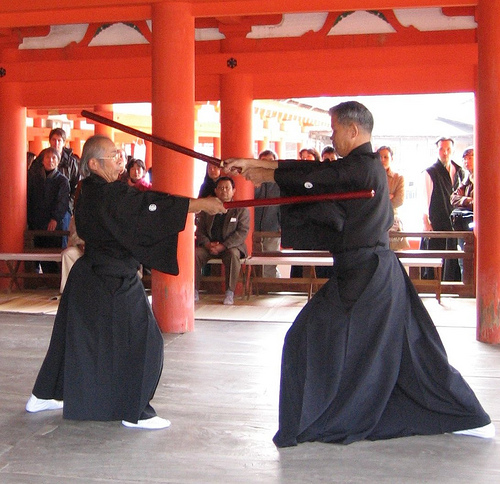
A scene from a martial arts demonstration at Itsukushima Shrine (Wikipedia).
One of the distinctive characteristics of Japanese budō and bujutsu is that each school or style has been given its own unique “ryūgi-mei” (style name). In addition, each style has developed its own unique system of transmission ranks (teaching curriculum) along with the corresponding “den’i meishō” (transmission rank titles). Consequently, the rise and decline of Japanese budō and bujutsu throughout history can also be understood from the increase and decrease in the number of these style names.
During the Edo period, even when limited only to kenjutsu schools (including comprehensive martial arts schools and iaijutsu schools), the number is said to have reached three hundred or even five hundred styles. Today, however, that number has drastically declined, and only a small number of styles still exist. From this fact alone, it can be said that Japanese budō and bujutsu flourished during the Edo period but have declined in the present day. In this paper, I will examine the motives or justifications that earlier generations used when naming their styles, and further discuss the present state of traditional martial arts schools.
In Shinkage-ryū Dōgyō: Sixty Years Memoir, Watanabe outlines the most common motives for the naming of martial arts styles (Ryūgi-mei).
Ryūgi-mei style names can be classified as follows
Styles that claim to have received the deepest secrets through prayer to gods or Buddhas.
Styles that claim to have been founded after receiving transmission from tengu or other mythical beings.
Styles that claim a deity from the mythological age as their founder.
Styles that claim a historical figure as their founder, asserting that they transmit ancient secrets from that person.
Styles that added their own innovations or realizations to an existing style and prefixed the new name with the character “Shin” (New).
Styles named for the purpose of distinguishing themselves from other branches of the same school.
Styles that claimed orthodoxy of a traditional school, added their own realizations, and then changed the style name.
Styles that claimed orthodoxy of a traditional school and added characters expressing that claim to the style name.
Styles that claim to have recovered the sōke (headmastership) previously transferred to another family and restored the original style name.
Styles named after the place where the style originated.
Styles that prefixed a place name to the style name.
Styles that combined several existing styles and gave the result a new name.
Styles that indicated they were derived from an existing style.
Styles named after a famous individual or family name.
Styles that used an alternative name regardless of whether they were derived from another style.
Styles whose name expressed the spiritual realization or level of attainment of the founder.
Styles whose name was bestowed by a Buddhist priest or similar figure.
Styles named after the personal name or art-name (gō) of the founder.
Styles that used homophonous but differently written characters of a famous style’s name.
Styles that prefixed part of the name of a famous style.
Styles that used terms reflecting the trends or spirit of the times.
Styles named after a training hall or organizational body.
Styles that adopted a common or popular name as their official style name.
Styles that abandoned their original name and adopted the name of a famous style.
Styles that arbitrarily used the name of a style that had already become extinct.
Styles that arbitrarily used the name of a completely different existing martial art style.
Other.
The Ryūgi-mei above was from Shinkage-ryū Dōgyō: Sixty Years Memoir by Watanabe.
新陰流兵法 Shinkage-ryū Hyōhō
This lineage belongs to the Owari Yagyū branch of Shinkage-ryū. While the better-known Edo Yagyū line served the Tokugawa shogunate in Edo, the Owari line was established by Yagyū Hyōgo-no-suke Toshitoshi and became the official sword tradition of the Owari Tokugawa domain in Nagoya.
The transmission remained closely linked to the Owari Tokugawa family for generations. In the early 20th century, the last Yagyū heads of this branch—Yagyū Toshichika (19th) and Yagyū Toshinaga (20th)—passed the complete teachings to their senior student Watanabe Tadatoshi (21st). He in turn transmitted everything to his son Watanabe Tadanari (22nd), who founded the Shinkage-ryū Hyōhō Marobashi-kai in 1969. The lineage is now headed by the 23rd generation, Watanabe Tadahisa.
This branch is characterized by its commitment to preserving the full classical curriculum, including Shinkage-ryū kenjutsu, Seigō-ryū Battōjutsu, and related jōjutsu. Central to its teaching is the principle of marobashi (adaptive, continuous movement). Unlike many modern groups, it remains a relatively closed classical transmission focused on historical accuracy and the correct use of the style name “Shinkage-ryū.”
傳系 Denkei
Generation
Title
Real Name
Active Period
Founder
上泉武蔵守 (Kamiizumi Musashi-no-kami)
藤原 秀綱 (Fujiwara Hidetuna)
c. 1508 – 1577
2nd
柳生但馬守 (Yagyū Tajima-no-kami)
平 宗厳 (Taira Munetoshi)
1527 – 1606
3rd
柳生兵庫助 (Yagyū Hyōgo-no-suke)
平 利厳 (Taira Toshitoshi)
1579 – 1650
4th
尾張権大納言 (Owari Gon-dainagon)
徳川 義直 (Tokugawa Yoshinao)
1601 – 1650
5th
柳生兵助 (Yagyū Hyōsuke)
平 厳包 (Taira Toshikane)
mid-17th century
6th
尾張権大納言 (Owari Gon-dainagon)
徳川 光友 (Tokugawa Mitsutomo)
1625 – 1700
7th
尾張権中納言 (Owari Gon-chūnagon)
徳川 綱誠 (Tokugawa Tsunanari)
1652 – 1699
8th
柳生兵庫 (Yagyū Hyōgo)
平 厳延 (Taira Toshinobu)
late 17th – early 18th c.
9th
尾張中納言 (Owari Chūnagon)
徳川 吉通 (Tokugawa Yoshimichi)
1689 – 1713
10th
柳生六郎兵衛 (Yagyū Rokurōbei)
平 厳儔 (Taira Toshitomo)
early–mid 18th century
11th
柳生兵助 (Yagyū Hyōsuke)
平 厳春 (Taira Toshiharu)
mid-18th century
12th
尾張宰相中将 (Owari Saishō Chūjō)
徳川 治行 (Tokugawa Haruyuki)
mid–late 18th century
13th
柳生又右衛門 (Yagyū Mataemon)
平 厳之 (Taira Toshiyuki)
late 18th century
14th
柳生兵助 (Yagyū Hyōsuke)
平 厳久 (Taira Toshihisa)
late 18th – early 19th c.
15th
尾張権大納言 (Owari Gon-dainagon)
徳川 斉朝 (Tokugawa Naritomo)
1793 – 1850
16th
柳生新六 (Yagyū Shinroku)
平 厳政 (Taira Toshimasa)
early–mid 19th century
17th
柳生忠次郎 (Yagyū Chūjirō)
平 厳蕃 (Taira Toshishige)
mid-19th century
18th
尾張中納言 (Owari Chūnagon)
徳川 慶恕 (Tokugawa Yoshikumi)
mid-19th century
19th
柳生三五郎 (Yagyū Sangorō)
平 厳周 (Taira Toshichika)
late 19th – early 20th c.
20th
柳生兵庫 (Yagyū Hyōgo)
平 厳長 (Taira Toshinaga)
early–mid 20th century
21st
渡辺遠山 (Watanabe Tōzan)
源 忠敏 (Minamoto Tadatoshi)
c. 1905 – 1980s
22nd
渡辺転心 (Watanabe Tenshin)
源 忠成 (Minamoto Tadanari)
1941 – present (active)
23rd
渡辺転政 (Watanabe Tensei)
源 忠久 (Minamoto Tadahisa)
late 20th c. – present
Shinkage-ryū Books
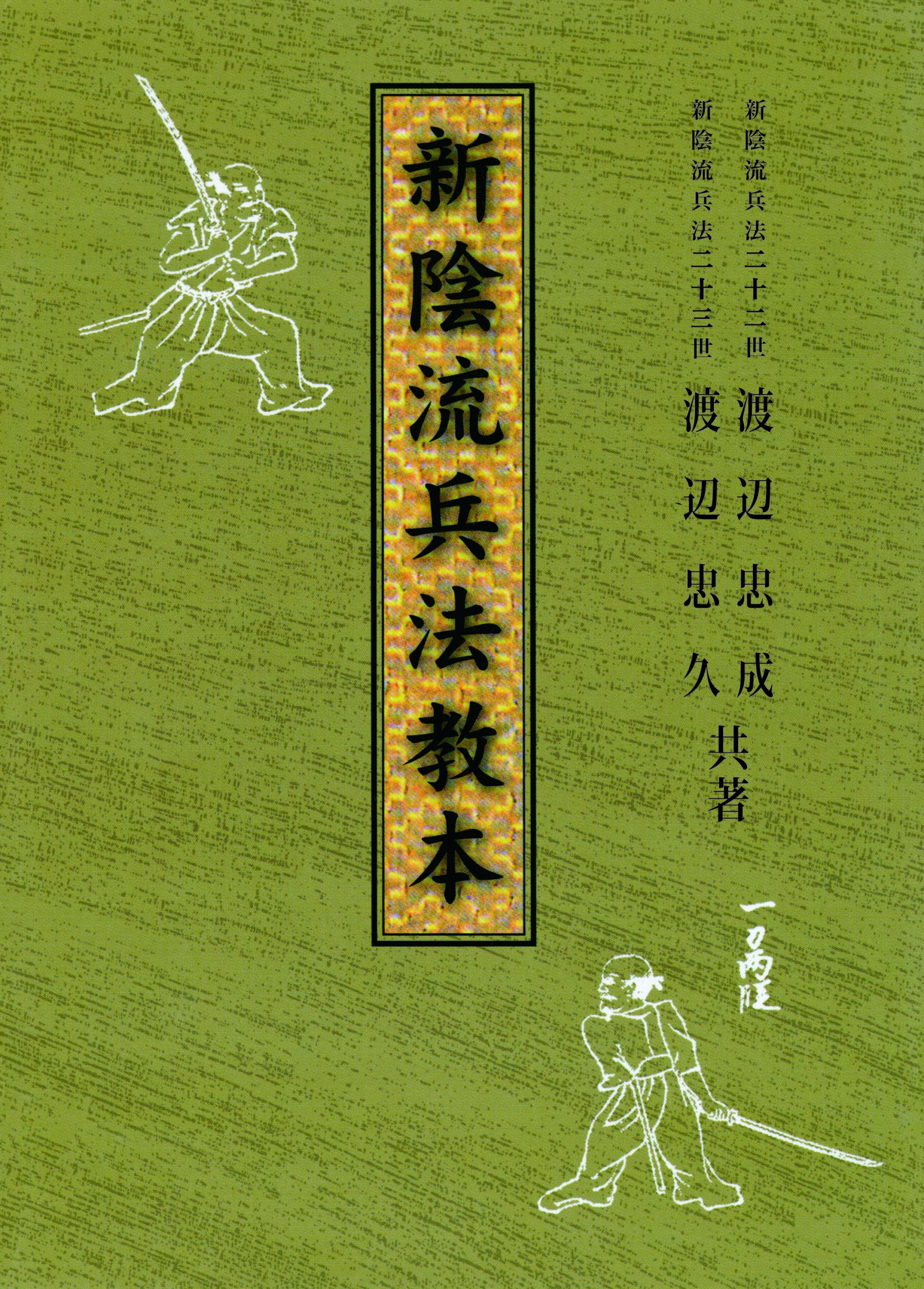
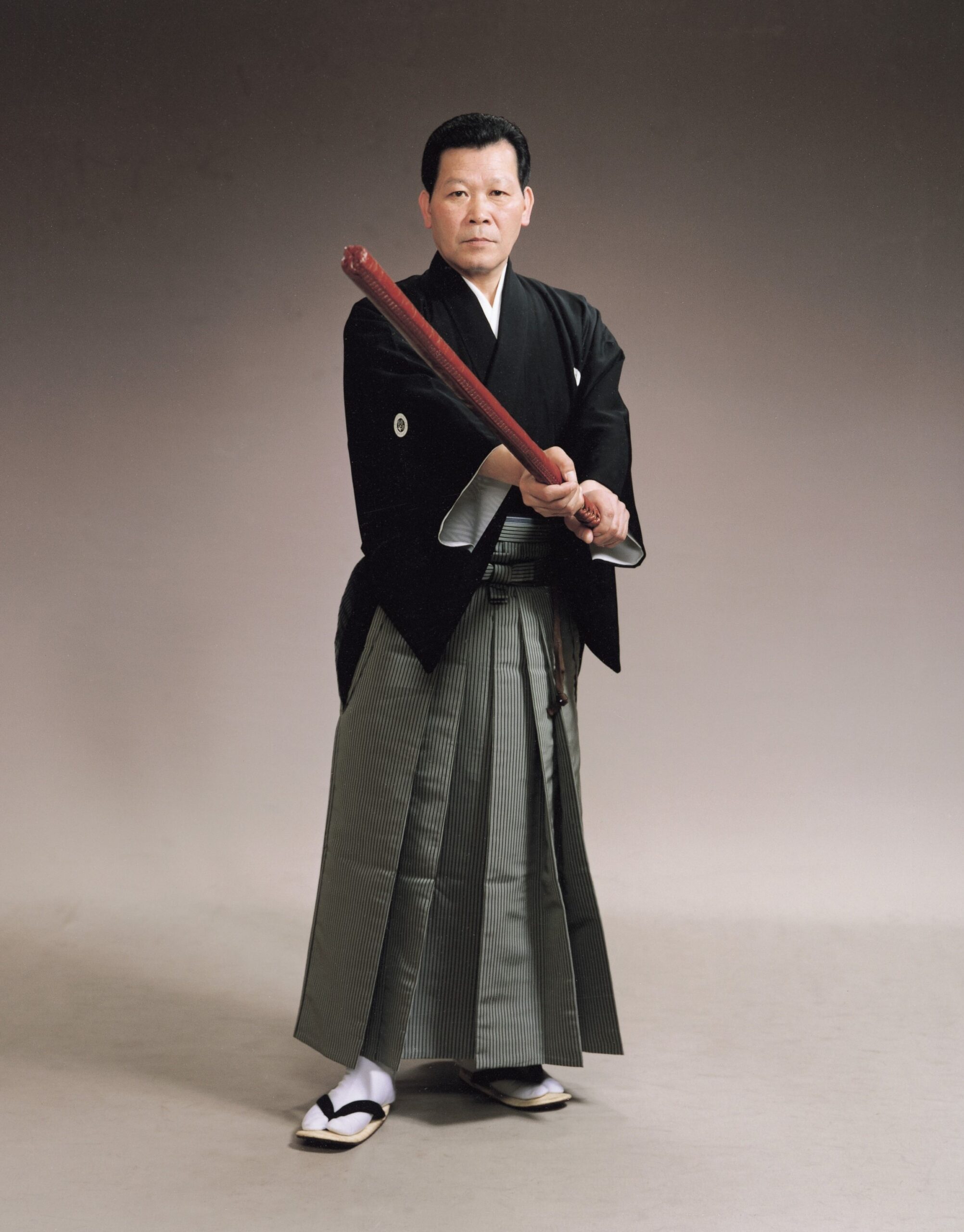
渡辺忠成 (Watanabe Tadanari) 22nd Generation Head of Shinkage-ryū Hyōhō (Also known by the art-name Tenshin 転心)
Watanabe Tadanari was born in Tokyo in 1941. He began training in Shinkage-ryū at the age of seven under his father, Watanabe Tadatoshi (21st generation), who had received the full transmission from the last two heads of the Owari Yagyū line, Yagyū Toshichika and Yagyū Toshinaga.
In January 1969, at the age of 28, he founded the Shinkage-ryū Hyōhō Marobashi-kai (新陰流兵法転会) with the purpose of correctly preserving and transmitting the classical teachings of the school. In 1972 he formally succeeded as the 22nd generation head of Shinkage-ryū Hyōhō. He also holds the positions of 14th generation of Seigō-ryū Battōjutsu and 9th generation of Shinkage-ryū Jōjutsu.
Throughout his career he has emphasized the importance of historical accuracy, particularly regarding the proper use of the style name “Shinkage-ryū” rather than the more popular but, in his view, incorrect designation “Yagyū Shinkage-ryū.” He is the author of several works on the school, including Shinkage-ryū Nyūmon and the autobiographical Shinkage-ryū Dōgyō: Sixty Years Memoir (新陰流道業六十年回顧録), in which he reflects on more than six decades of training and teaching.
He has taught extensively in Japan and has established groups in the United States, Russia, and Poland.
The Dojo is still active today in several locations in Tokyo and Japan, here is more information.
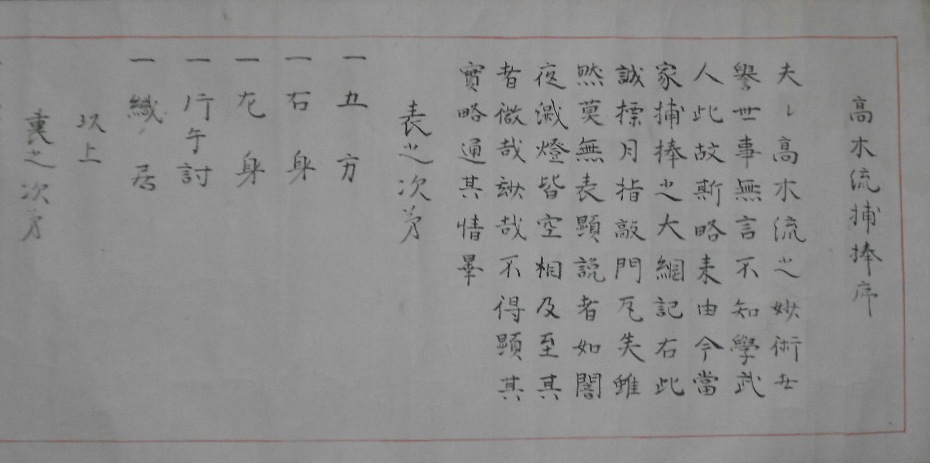
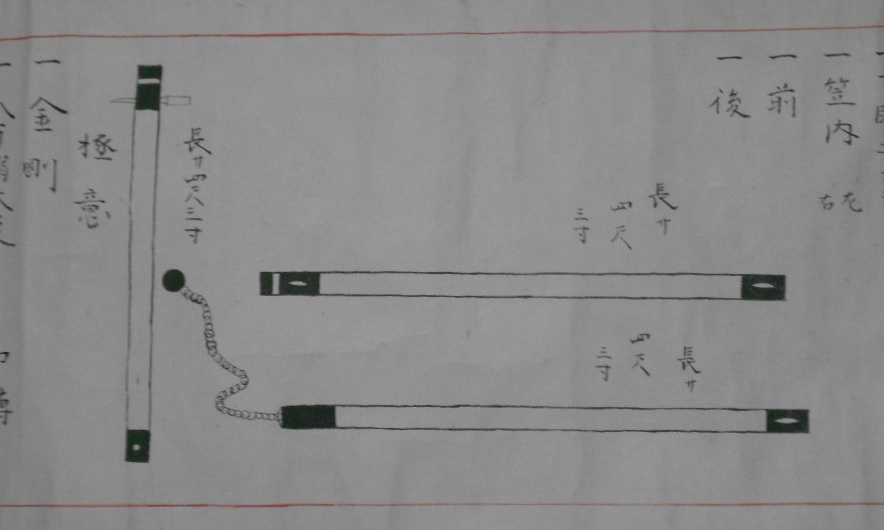
I came across an interesting webpage featuring two photographs from an old scroll titled Takagi-ryū Toribō (Takagi-ryū Cane/Staff Techniques) from 1816.
The author is somewhat skeptical about the historical claims surrounding Kukishin-ryū and Takagi-ryū, but I’m not here to debate that. I simply found the content fascinating and thought it might be of interest to fellow Bujinkan practitioners.
I was surprised to learn that Takagi-ryū includes dedicated cane (jō/toribō) techniques. The scroll itself is quite unique, especially the description of the unusual staff with eye-shaped holes and an inserted tantō.
Note: I only translated parts of the website and the makimono to the best of my knowledge, so the translation may contain some errors or inaccuracies.
If any of you have access to the complete makimono or more information about these techniques, I’d love to see it!
Below is the translated text from the website.
The moon points and knocks at the gate — tiles slip and lose their alignment.
Silent and formless, without outward manifestation, those who try to explain it are like darkness.
A faint lamp in the night — all is emptiness.
Reaching that point, how subtle it is! How dynamic it is!
It cannot be fully revealed. In short, I have conveyed its true essence.
高木流捕棒序 Takagi-ryū Toribō
Now, there exists a certain transmission scroll. Its title is Takagi-ryū Toribō (Takagi-ryū Cane/Staff Techniques), published in the 13th year of the Bunka era (1816). The lineage of successors recorded at the end of the scroll is as follows:
Preface to Takagi-ryū Toribō (Cane / Staff Techniques)
There is no one who would say that the wondrous techniques of Takagi-ryū are not profound. Nevertheless, because of this, people seek new interpretations. Therefore, I now record the great outline of our school’s cane techniques. Truly: The moon points and knocks at the gate — tiles slip and lose their alignment. Silent and formless, without outward manifestation, those who try to explain it are like darkness. A faint lamp in the night — all is emptiness. Reaching that point, how subtle it is! How dynamic it is! It cannot be fully revealed. In short, I have conveyed its true essence.
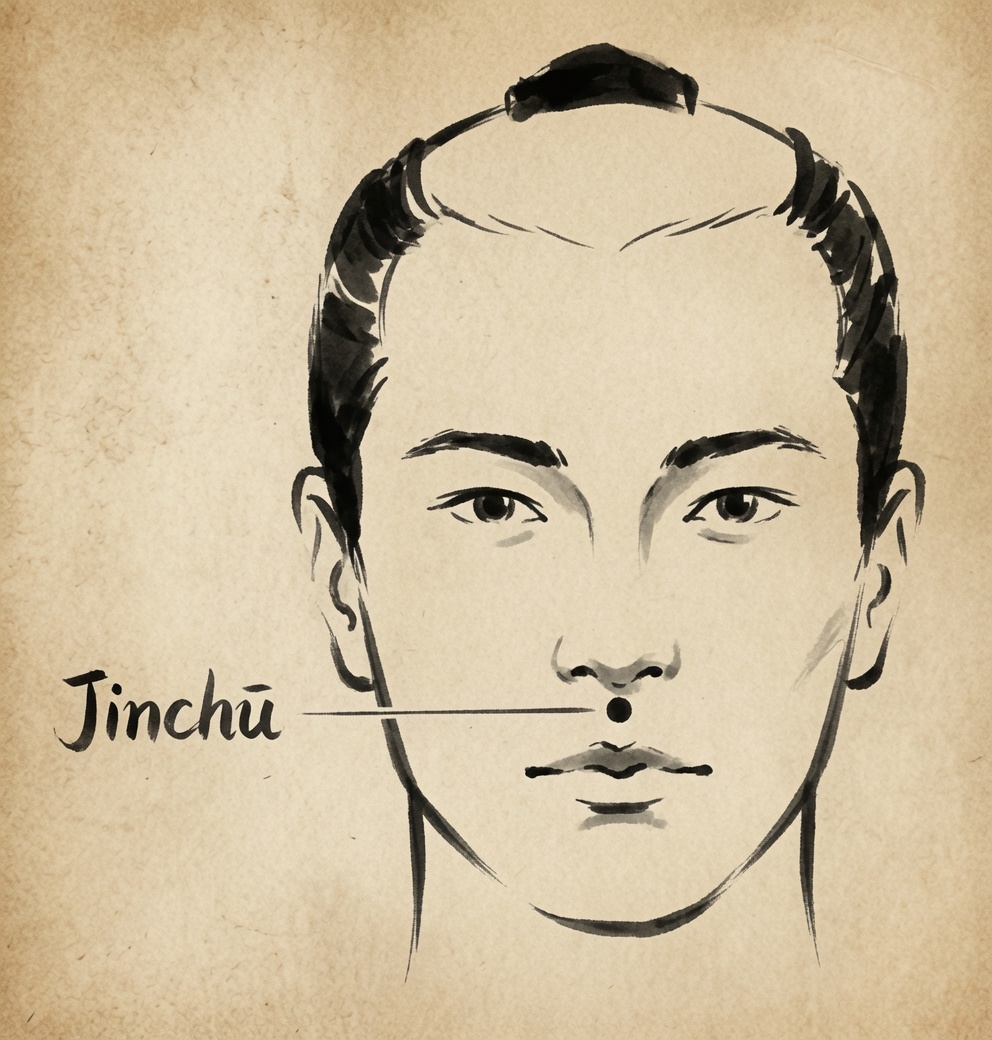
Jinchū Kyūsho ranks among the most frequently documented Kyūsho points in classical Japanese martial arts. People know it as 人中 Jinchū (“Center of the Human”). It appears across numerous Koryū traditions as a precise target in the facial region. Study of this point forms part of the larger system of 当身 Atemi (“Striking the Body”) and 殺活 Satsukatsu (“Killing and Reviving”) methods. Old transmission documents preserve these methods.
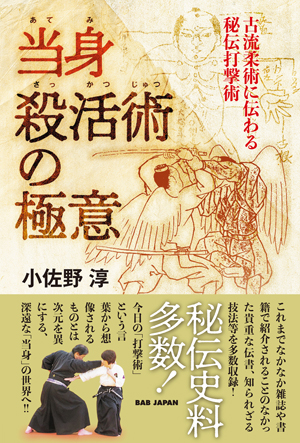
This essay is mostly gathered from the book 当身殺活術の極意 Atemi Satsukatsujutsu no Gokui written by 小佐野 Jun Osano, supplemented with my own experience of Bujinkan training and its nine schools/ryuha. In Bujinkan we often refer to the Kyūsho points from Kotō-ryū.
What Is Jinchū Kyūsho and Where Is It Located?
人中 (Jinchū/philtrum) is a 鬼穴 Ki-ana (Ghost Point) dangerous or “supernatural” vital point that are considered extremely effective or lethal.
Jinchū Kyūsho refers to the philtrum. This vertical groove sits between the base of the nose and the upper lip. Chinese medical texts that reached Japan recorded the corresponding point as 水溝 Suikō (“Water Ditch”). Traditional Chinese Medicine calls it Rénzhōng (GV26). Japanese martial artists adopted the point and renamed it within their own vital-point systems.
Its location makes Jinchū accessible during close-range engagements. These engagements typify Jūjutsu. As a result, practitioners incorporated Jinchū into sequences that combine striking with throws and joint locks. Its position runs along the central facial line. Therefore, it became a practical target in many forms.
Historical Roots of Jinchū Kyūsho in Japanese Martial Traditions
Japanese martial schools received knowledge of Jinchū Kyūsho through Chinese medical theory. This transmission occurred during the early Edo period (1603–1868). Texts such as the 和漢三才図会 Wakan Sansai Zue supplied anatomical maps. Various acupuncture manuals also provided these maps. Koryū masters adapted the maps.
Masters reorganised these points into Japanese systems over generations. They did not treat Jinchū as an independent striking technique. Instead, they integrated it as an auxiliary method. This method disrupts posture or creates openings for Nage (Throwing) and Katame (Grappling). In addition, the approach aligns with the historical emphasis on 神武不殺 Shinbu Fussatsu (“The highest martial skill does not kill”). Many transmission scrolls contain this phrase. Consequently, Jinchū remained part of a controlled and ethical framework.
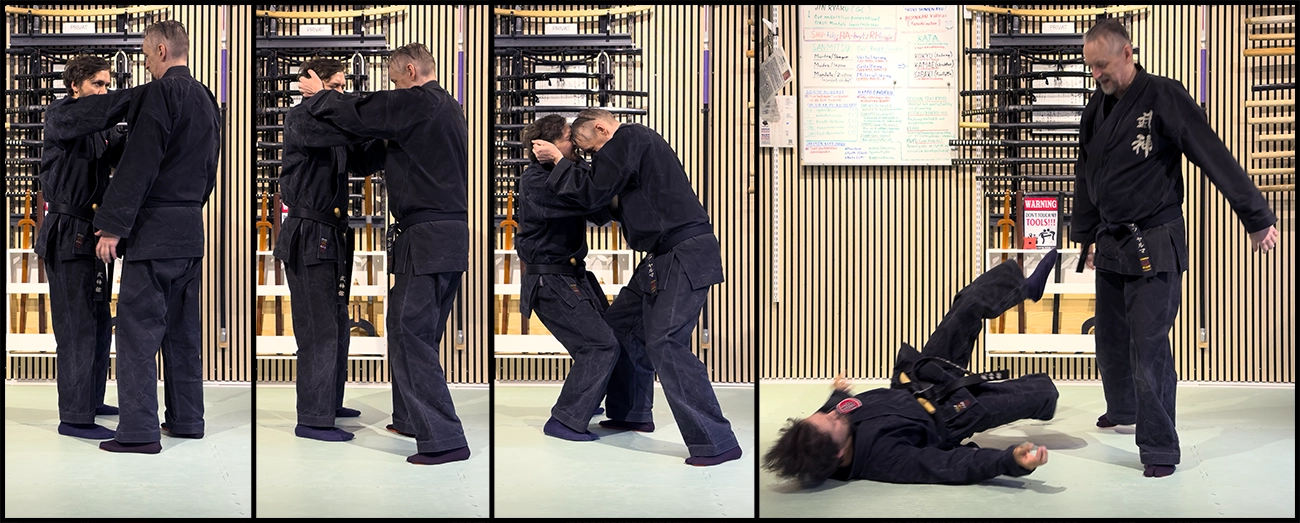
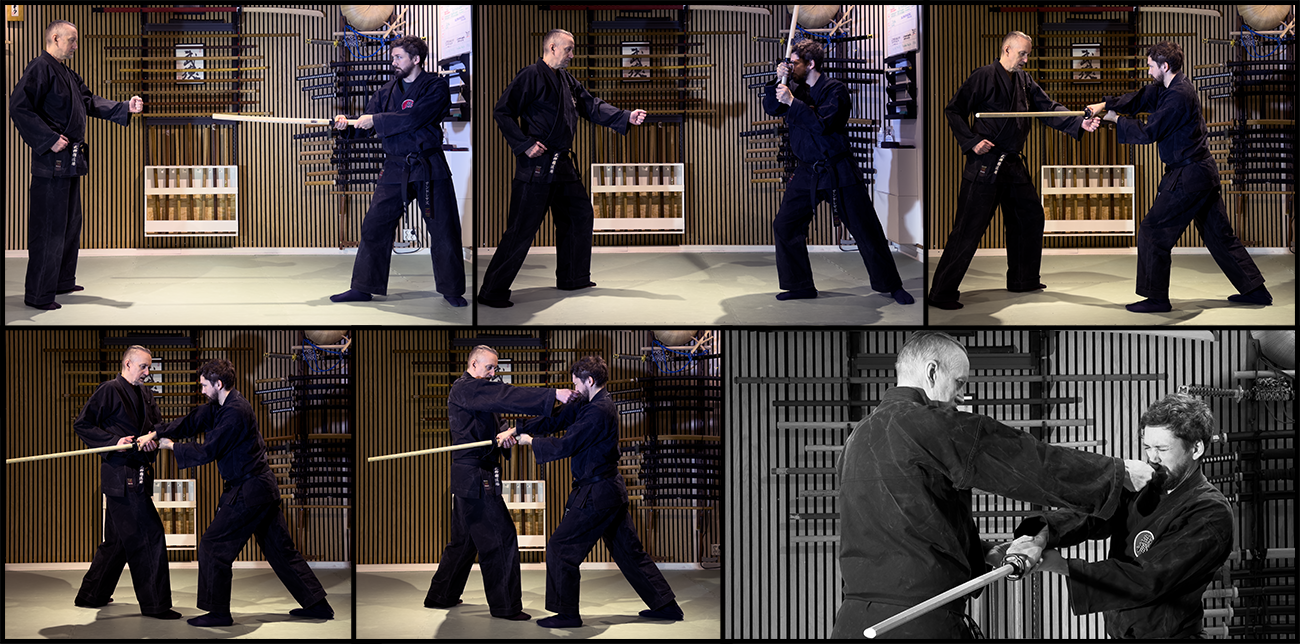
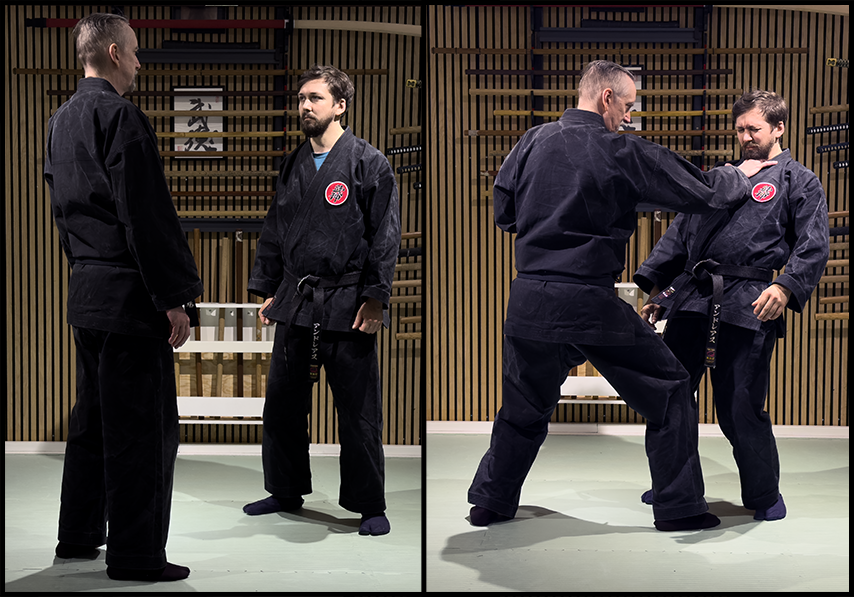
In the technique 神剪 Shinsen from Koto-ryū Ōkuden Kata the Jinchū point is hit with Kikaku-ken.
Jinchū Kyūsho Across Major Koryū Schools
Jinchū Kyūsho appears in the teachings of several established schools. In 楊心流 Yōshin-ryū lineages, including 天神真楊流 Tenjin Shinyō-ryū, it appears in lists of head points. Masters transmitted these lists through secret scrolls and oral instruction. 関口流 Sekiguchi-ryū records Jinchū under the local term すりかけ Surikake. The school includes related facial techniques among its 内術十二 Nai-jutsu Jūni (“Twelve Internal Techniques”) methods.
柴真楊流 Shiba Shinyō-ryū places Jinchū within its classification of thirteen head acute points. 神道六合流 Shintō Rokugō-ryū lists it among points that produce immediate effects. 柳生心眼流兵術 Yagyū Shingan-ryū Heijutsu incorporates similar facial targets within its continuous atemi sequences. These references show consistent recognition of Jinchū across diverse traditions. Moreover, they reveal variation in naming and emphasis. For example, some schools used local names while others retained the standard term.
Jinchū Kyūsho and the Art of Revival (Kappō)
Classical sources pair knowledge of striking points with revival methods. These methods are known as 活法 Kappō (“Resuscitation techniques”). Jinchū receives particular attention. Stimulation of the facial nerve in this area can reduce the immediate effectiveness of standard revival techniques.
Transmission documents therefore stress the need for layered revival protocols. This need arises when the point is involved. The requirement for precise revival knowledge alongside striking methods appears repeatedly in Yōshin-ryū and Tenjin Shinyō-ryū materials. These references reflect the integrated nature of Satsukatsu training. As a result, students had to master both striking and revival together.
In the technique 跋扈 Bakko from Koto-ryū Hekiten Kata the Jinchū point is hit with a Boshi-ken.
Jinchū Kyūsho in the Context of Kyūsho Training
Jinchū Kyūsho represents one element within the broader study of 急所 Kyūsho (“Vital points”). Traditional training did not isolate individual points for separate practice. Students instead learned point locations, effects, and timing. They learned these elements as part of complete Kata sequences. These sequences combined Atemi with throwing and controlling techniques.
The book records that practitioners most often applied Jinchū as 先当て Saki-ate (“Preemptive strike”). They used it to break an opponent’s structure. They also applied it as 後当て Ato-ate (“Finishing strike”) after a throw. The goal was to prevent counterattack. Exact methods of application and the accompanying oral instructions varied between schools. Licensed practitioners alone received these instructions. In particular, the timing of the strike depended on the specific kata.
Integration of Jinchū Kyūsho in Koryū Technique
In the technique 蔽飛 Hetsubi/Henpi from Koto-ryū Chūden Kata the Jinchū point is hit with the left five fingers after unbalancing him.
In practice, Jinchū supported the primary goals of Jūjutsu. It did not replace them. Strong stimulation here could affect facial nerves and coordination. This effect created a momentary opening for more decisive techniques. Historical records caution that the resulting effects made reliable revival more difficult. This difficulty explains why such points stayed within advanced levels of transmission.
The detailed classifications found in Shiba Shinyō-ryū illustrate how seriously masters treated these methods. The warnings preserved in later 史料編 Shiryō-hen documents also show this seriousness. Study of Kyūsho, including Jinchū, formed part of a larger technical and ethical framework. It did not function as an independent striking curriculum. Furthermore, this integrated approach helped preserve the original intent of the art.
Conclusion
Jinchū Kyūsho appears consistently across multiple Koryū schools. This pattern shows how Japanese martial artists systematically adapted external medical knowledge. They turned it into functional combative systems. Its role remained auxiliary. It supported throws and joint locks while demanding careful attention to revival methods.
Modern examination of these traditions reveals both the sophistication and the limitations of the original teachings. Researchers continue to find interest in Jinchū. It exemplifies the integrated approach to atemi and kappō. This approach defined much of classical Jūjutsu. Serious study of Kyūsho as a complete subject offers the clearest path to understanding this aspect of Japanese martial heritage. Researchers gain clearer insight when they avoid isolating individual points. In addition, this broader perspective helps preserve the original technical and ethical balance of the traditions.
Historical Source: From Tenjin Shinyō-ryū to Jūdō, and then to Karate
The Atemi shikatsu methods transmitted by Tenjin Shinyō-ryū Jūjutsu, which enjoyed great prosperity in the late Edo period, have almost completely died out except for seikotsu techniques. Kōdōkan Jūdō, which eliminated Atemi from its technical system, continued practical instruction while theory alone continued independently. Meanwhile, Karate, transmitted from Okinawa to the mainland during the Taishō era, also carried over only solo forms from China to Okinawa and then to the mainland; the essential Atemi theory was supplemented from Kōdōkan Jūdō when kumite was created.
However, from the mid-Shōwa period onward, as competitive Karate spread mainly in universities, attack targets were standardized into jōdan, chūdan, and gedan, expanding from points to areas, rendering knowledge of vital points unnecessary. Vital point knowledge, which is important for self-defense, also became superfluous due to sportification (use of protective gear and controlled contact).
Here, explanations of vital points in Meiji-era Jūdō and in Karate up to the early Shōwa period, which still retained elements of self-defense, are introduced as material for considering the differences between the two.
While Jūdō’s Atemi explanations follow those of classical Jūjutsu, in Karate it is stated that “the opponent is brought to death,” and the free control of killing and reviving has been lost. Of course, there is no explanation of kappō.
In other words, rather than a self-defense art that does not injure the opponent, it has become a killing art that kills the opponent — the result of a complete failure to understand the principles of martial arts.
〇天道 Tentō (Heavenly Path) The area of the frontal bone. Tentō is the top of the head. Tendō is the place on the head where the pulse is struck, commonly called “odori-ko” in children. Striking Tendō strongly causes the three major bones of the head to open and leads to death. There is no revival method. If one faints from striking Tendō, revive with breathing techniques or the inducing revival (Yū no Kappō). It is a vital point that reaches the heart.
〇烏兔 Uto (Crow and Rabbit) The center of the face, between both eyes above the nose. When struck, it causes dizziness and fainting. Striking even one sun away from this point is a vital point that can cause nosebleeds.
〇人中 Jinchū (Human Center / Philtrum) The exact center between the nose and upper lip. Extremely important. When struck strongly, it is difficult to revive even with breathing techniques or revival methods. It affects the facial artery, nerves, bones of the upper jaw, trigeminal nerve, respiratory obstruction, etc. It is a major killing point. Must be handled with extreme caution.
〇カツコン Katsukon The place between the chin and lower lip. This strike is the same as Jinchū. Even if revival methods are applied, they are ineffective. The causes are the same as above.
〇霞 Kasumi (Mist) The temple bones, commonly called “komekami.” Striking here causes severe brain reaction and disturbance of various nerves, leading to fainting.
〇両毛 Ryōmō (Both Hairs) Used frequently in forms together with Kasumi. It is at both corners of the eyes, one sun below Kasumi. Striking here causes fainting in the same way as above.
〇独古 Dokko (Solitary Ancient) The place behind both ears. It is frequently used in forms. It is the area behind the ear. Striking here strongly affects the origin of the ear muscles and the area behind the ear, pressing blood vessels and nerves.
〇秘中 Hichū (Secret Center) This Hichū is the first major killing point used in forms, randori, and pinning techniques. The center of the throat, above the sternum. It drives the windpipe, damages the respiratory organs, and affects the lungs, leading to fainting.
〇松風村雨 Matsukaze Murusame (Pine Wind and Village Rain) Matsukaze (some schools call it Fūgetsu) and Murusame are the left and right sides of the shoulder blade and tongue muscle area (see diagram). The right is Matsukaze, the left is Murusame. These are major killing points.
〇膻中 Danchū (Danzhong) Commonly called “mizuochi.” This strike is at the center of the sternum in the chest. When struck, it causes nerve shock, sudden change in blood circulation, and cessation of breathing, leading to fainting. However, it can be revived with inducing revival, heart revival, back revival, or collar revival.
〇雁下 Kari-shita (Below the Goose) Kari-shita is striking one sun below both nipples in all four directions. The causes of fainting and revival methods are the same as above.
〇稲妻 Inazuma (Lightning) Inazuma refers to the left and right sides of the floating ribs. Commonly called the third rib. The causes of fainting and revival methods are the same as for the abdomen.
〇水月 Suigetsu (Water Moon) Suigetsu is striking directly below the heart at the lower end of the stomach organ. It stimulates the divine pulse and causes fainting due to three causes: brain reaction, nerve shock, and pulse obstruction. Revival is done with artificial respiration. If that does not work, use back revival or inducing revival.
〇明星 Myōjō (Bright Star) Myōjō is kicking or striking one sun and four directions below the navel. It violently affects the large intestine, small intestine, and bladder, causing cessation of breathing. Revival is done with collar revival, scrotum revival, back revival, or artificial respiration.
〇陰囊 In-nō (Scrotum) Striking the scrotum (commonly called testicles) by kicking or thrusting damages the bladder, rectum, testicles, sympathetic nerves, spermatic artery, etc., causing cessation of breathing. Apply scrotum revival. The testicles may enter the abdomen. Must be handled with great care.
〇向骨 Kōkotsu (Facing Bone) Striking Kōkotsu only causes pain throughout the body and does not cause death. If fainting occurs, revive with inducing revival.
〇草靡 Kusanabi (Grass Bending) Kusanabi is striking the place commonly called “tsuchi-fumazu” and the calf as shown in the diagram. The whole body feels pain and one falls.
〇内外踝 Nai-ge-kyō (Inner and Outer Ankle) The ankle is the same as Kōkotsu. Pain reaches the brain but does not cause death. If fainting occurs, apply inducing revival.
〇早打 Hayachi (Early Strike) Hayachi is the place where acupuncturists needle when the shoulders are severely stiff. Striking here sometimes leads to death. In such cases, rub the chest and apply inducing revival or collar revival. Striking here damages the brain, lungs, and ribs, causing cessation of breathing. Must not be needled carelessly. Very important.
〇活 Katsu (Revival) This revival point is slightly to the left in men and to the right in women between the first and sixth or seventh vertebrae of the spine. This revival method is the most frequently used among the thirteen total revival methods.
〇電光 Denkō (Lightning) Denkō: (1) Striking the third thoracic vertebra affects the lungs. (2) Striking the fifth thoracic vertebra affects the heart. (3) Striking the sixth thoracic vertebra causes fainting due to violent shock to the spinal cord center.
〇後稲妻 Go-inazuma (Rear Lightning) Go-inazuma is the place shown in the diagram. Striking here causes pain throughout the body and one falls. Apply yin-yang revival to this place. Details are explained in the revival section.
〇下閨 Gekei (Lower Gate) Gekei is the anus. Explanation regarding this is most essential for jujutsu practitioners and is explained in detail in the revival section of the volume.
〇尺澤 Shaku-taku Shaku-taku is frequently used in forms. It is between the brachioradialis and extensor digitorum muscles. Striking here stimulates the nerves and causes fainting due to unbearable pain. It affects the radial nerve, ulnar nerve, and fascia.
空手の急所解説 Karate Vital Point Explanations
(from ‘Karate Nyūmon’ by Ishiguro Keishichi, Shōwa 43)
〇天道 Tentō (Heavenly Path) The top of the head. Striking here with a forefist, fist, hand blade, etc., can kill the opponent.
〇天倒 Tentō (Heavenly Fall) Commonly also called “odoriko.” Slightly forward from the top of the head. Striking here with a forefist, backfist, hand blade, etc., can kill the opponent.
〇霞 Kasumi (Mist) The temples on both sides. Striking here with a one-finger fist, backfist, hand blade, etc., can kill the opponent.
〇耳 Mimi (Ear) Same effect as Kasumi when attacked in the same way.
〇鳥兔 Uto (Crow and Rabbit) The glabella, the center between the eyes. Striking here with a forefist, backfist, etc., can kill the opponent.
〇晴雲 Seiu (Clear Cloud) Above and below both eyes. Attack here with spear hand, one-finger fist, or half-fist.
〇眼星 Gansei (Eye Star) The center of the eyeball. Attack here with spear hand, one-finger fist, or backfist.
〇人中 Jinchū (Human Center / Philtrum) The groove between the nose and mouth. Attack here with forefist, backfist, one-finger fist, hand blade, etc.
〇下昆 Gekon (Lower Kon) The place between the mouth and lower jaw. Striking here with forefist, one-finger fist, hand blade, etc., can kill the opponent.
〇三日月 Mikazuki (Crescent Moon) The chin. Attack here with forefist, foot hammer, elbow strike, etc.
〇独古 Dokko (Solitary Ancient) Slightly behind the ear in the depression. Attack here with one-finger fist, fist, or hand blade.
〇頸中 Keichū (Neck Center) The hollow at the back of the neck (bon-no-kubo). Striking here with forefist, fist, or one-finger fist can kill the opponent.
〇松風 Matsukaze (Pine Wind) Also called Fūgetsu. The side of the head. Attack with clenched fist, fist, hand blade, elbow strike, etc., and it can kill the opponent.
〇村雨 Murusame (Village Rain) The front side of the neck. Attacking in the same way as Matsukaze can kill the opponent.
〇秘中 Hichū (Secret Center) Commonly called the Adam’s apple. Attack with clenched fist, elbow strike, knee blade, foot kick, etc.
〇膻中 Danchū (Danzhong) The upper end of the breastbone. Attack in the same way as Hichū.
〇胸尖 Kyōsen (Chest Tip) The lower end of the breastbone. Attack in the same way as Hichū.
〇水月 Suigetsu (Water Moon) The solar plexus. Striking here with forefist, spear hand, elbow strike, knee blade, foot kick, etc., can kill the opponent.
〇脇影 Waki-kage (Armpit Shadow) Between the fifth and sixth ribs in the armpit. Striking here with clenched fist, elbow strike, foot kick, etc., can kill the opponent.
〇雁中 Kanchū (Goose Center) Below both nipples. Attack in the same way as Waki-kage.
〇電光 Denkō (Lightning) Also called the flank. Between the seventh ribs on the front side of the upper abdomen. Striking here with forefist, fist, hand blade, or foot kick can kill the opponent.
〇稲妻 Inazuma (Lightning) The front side of the upper abdomen at the lower end of the eleventh and twelfth floating ribs. Attack in the same way as Denkō to kill the opponent.
〇明星 Myōjō (Bright Star) Commonly called the lower Tanden, one sun below the navel. Striking here with forefist or foot can kill the opponent.
〇早打 Hayachi (Early Strike) On the back between the third and fourth ribs, inside the shoulder blade. Attack here with forefist or elbow strike.
〇活殺 Katsusatsu (Killing and Reviving) Between the fifth and sixth vertebrae of the spine. Attack here in the same way as Hayachi to kill the opponent.
〇後電光 Go-denkō (Rear Lightning) The lowest end of the spine, the coccyx. Striking here with forefist or foot kick can kill the opponent.
〇腕馴 Udenare (Arm Training) The middle of the upper back side. Attack here with fist or hand blade.
〇时詰 Hijizume (Elbow Joint) Also called the elbow joint. The outer side of the elbow. Attack in the same way as Udenare.
〇腕関節 Ude-kansetsu (Elbow Joint) Twist or break the elbow joint, or attack with fist or hand blade.
〇小手 Kote (Forearm) The forearm. Scissor or snap it, or attack with fist, hand blade, or elbow strike.
〇内小捕 Uchi-kote (Inner Forearm Capture) Also called the pulse point. Attack here with forefist, one-finger fist, or fist.
〇外小捕 Soto-kote (Outer Forearm Capture) The opposite side of the pulse point. Attack in the same way as Uchi-kote.
〇手甲 Tekō (Back of the Hand) The back of the hand. Attack in the same way as Uchi-kote.
〇金的 Kinteki (Golden Target) Also called Tsurigane. The testicles. Striking here with forefist, knee blade, foot kick, or clenched fist can kill the opponent.
〇夜光 Yakō (Night Light) The front inner side of the upper thigh. Attack with forefist or foot kick.
〇伏兎 Fukuto (Crouching Rabbit) The front outer side of the lower thigh. Attack in the same way as Yakō.
〇膝関節 Shitsu-kansetsu (Knee Joint) Attack the knee joint with foot kick or stomp break.
〇向骨 Kōkotsu (Facing Bone) The front center of the shin bone. Attack with forefist or foot kick.
〇內踝 Nai-ka (Inner Ankle) Just below the inner ankle bone on the inner side of the tarsal bones. Attack here with hammer fist or hand blade.
〇甲利 Kōri (Top of the Foot) The top of the foot. Attack with stomping crush, etc.
〇草隠 Kusagakure (Grass Hidden) Slightly to the outer side from the top of the foot. Attack in the same way as Kōri.
〇尾胝 Bitai (Coccyx) The lowest end of the sacrum. Attack here with knee blade.
〇後稲妻 Go-inazuma (Rear Lightning) The upper center of the back side of the thigh. Attack with forefist or kick.
〇草靡 Kusanabi (Grass Bending) The center of the back side of the lower leg. Attack with foot kick, etc.
小佐野淳 Osano Jun
Born in Fujiyoshida City, Yamanashi Prefecture. While a student, studied Chinese martial arts and classical Jūjutsu at the Chigasaki branch of the All-Japan Chinese Kenpō Federation. In 1982, founded the Kobudō Shidōsho Suigetsu Juku. While teaching at Suigetsu Juku, trained in bujutsu transmitted in various former domains. Served as certified instructor, council member, auditor, and public relations director of the International Budo-in. Received the Budō Kōrō-shō (Martial Arts Meritorious Service Award) from the International Budo-in in 1992. Founded the International Suigetsu Juku Bujutsu Association in 2002 and assumed the positions of president and supreme instructor. Honorary advisor to the Jinmō Kenpō Association, Changhua County, Taiwan. Vice president of the Matsudaira-han Bunbu Gakkō Budōkai. Author of numerous books and papers.
当身殺活術の極意 〜古流柔術に伝わる秘伝打撃術〜 by 小佐野淳
Publisher : BABジャパン Publication date : August 22, 2025 Language : Japanese Print length : 300 pages ISBN-10 : 4814207301 ISBN-13 : 978-4814207305 Item Weight : 280 g Dimensions : 7.4 x 5 x 0.79 inches
The theme in 2004 was Roppō Kuji no Biken. Below is a summarisation by Grok of the transcripts from the 10 Hikan Densho DVD’s and Daikomyōsai DVD from this year.
In the January–February 2004 training sessions at the Honbu Dojo, Masaaki Hatsumi Soke continued to explore the year’s core theme of Roppō Kuji no Biken—the secret sword of the six laws and nine syllables—while deeply grounding everything in Budo no Kiso, the fundamentals of martial arts. The sword remained the primary focus, but he constantly showed how the same principles apply to all weapons, to taijutsu, and to daily life. He began by speaking directly to viewers of the ongoing video series, explaining that the recordings were now moving into volume 11 after the first ten tapes. He wanted everyone—whether they practice budo or not—to understand the correct way to watch and absorb the material. He emphasized that war and peace are not separate[1]; they are deeply connected. This connection, he said, is extremely important. He pointed to the kanji for peace (平, hei/heiwa) and traced its meaning through Japanese history: the 平家物語 Heike Monogatari Tale of the Heike, the rise and fall of the Genji and Heike clans, the 太平記 Taiheiki chronicle, and even the 平成 Heisei era (8 January 1989 to 30 April 2019). The same character also echoes the sound of soldier or troops (兵, hei)[2], and in older usage it described states of battle or balanced equilibrium. In budo, he explained, body techniques, weapons, nature—everything is linked. Recognizing this interconnectedness reveals a vital part of the art. He urged people to view the tapes as essential teachings for living itself, not just for martial study.
The eighteen arts of culture and war—these are all connected too. It’s not about the number 18 as a digit, you know; that character 1 and 8, during battles, people often say 一か八か “Ichika Bachika“—putting everything on the line in a do-or-die match. So, when it comes to the 武芸十八般 Bugei Jūhappan, budo of the eighteen arts, even if you’re analyzing them, don’t analyze—don’t do that kind of thing. Instead, put the word “Ichika Batchika” first, and from there, creative fighting comes alive, I think that’s better. If you take that as the premise and proceed, then something like the intent of war emerges, or something like that.
January 6 and 13’th and February 3, 13, 17, and 20’th 2004
During the demonstrations, Hatsumi showed practical sword work with a strong emphasis on body integration. He explained that the sharpest cutting happens at the tip’s three-sun point. He stressed that real sword technique uses the whole body, not just the blade alone. It is not about mechanically swinging the sword; it is about driving forward with taijutsu principles embedded in every motion. He demonstrated controlling with the tsuba or hilt, hooking and pressing to create openings, and flowing naturally without fixed patterns. He repeatedly returned to the state of zero: eliminate all conscious intention of what to do or how to act. In that zero state, responses to incoming attacks—whether punches, kicks, or cuts—arise spontaneously. He showed how to meet force with minimal effort, redirecting or suppressing without tension, and letting the opponent’s momentum become the decisive factor.
戦 争 も 平 和 も つ な が っ て い る と い う こ と 。 こ れ が と て も 大 事 な ん で す ね 。 Sensō mo heiwa mo tsunagatte iru to iu koto. Kore ga totemo daiji nan desu ne.
War and peace are connected. This is extremely important.
He encouraged the group to express even one small insight after each session, because everything is connected from a single point. One genuine expression from any person can link to the whole. He reminded everyone that every participant is a teacher in their own way. A student described an unexpected throw straight downward instead of sideways, feeling a terrifying unpredictability where nothing went as anticipated. Hatsumi connected this sensation to the effectiveness of guerrilla tactics or terrorism: the moment something defies expectation, it becomes powerful. Cultivating that kind of unpredictable feeling through training allows it to be applied in many different situations.
ゼ ロ の 状 態 で ね 、 そ こ で 何 を と か 、 や ろ う と か っ て 意 識 全 部 な く す こ と ね 。 Zero no jōtai de ne, soko de nani o toka, yarō toka tte ishiki zenbu nakusu koto ne.
In the state of zero, eliminate all consciousness of what to do or trying to do something.
Throughout the sessions Hatsumi maintained that budo is not about separating skills into categories or analyzing the eighteen arts of culture and war. Instead, approach everything with total commitment—the spirit of “all or nothing.” Even in times of peace, human beings are always engaged in some form of struggle, internal or external. Training in budo reveals that war and peace are the same. In that realization lies true life. He invited the group to keep watching the video series with this perspective, because once the connection between war and peace is understood, the images take on a completely different meaning. The training was practical and direct, blending sword fundamentals with broader budo principles, always pointing back to interconnectedness, zero awareness, whole-body feeling, and the unity of apparent opposites.
February 22, 24, 27, 29’th and March 2, 5’th 2004
In the February 22–March 5, 2004 training sessions at the Honbu Dojo, Masaaki Hatsumi Soke continued deepening the year’s focus on Roppō Kuji no Biken (the secret sword of the six laws and nine syllables) and Budo no Kiso (fundamentals of budo), with heavy emphasis on sword work integrated with taijutsu principles. He demonstrated how to meet incoming cuts—especially to the body or shoulder—by entering precisely without clashing, using the elbow to redirect or press while controlling the opponent’s line of attack. He explained that standing techniques differ completely from ground or seated scenarios, and that armor changes everything: even a direct shoulder cut with a sword may not penetrate effectively, requiring subtle entries to exploit gaps or vulnerabilities.
だ か ら 決 ま っ て ね え か ら ね 、 教 え ら れ ね え ん だ か ら な 。 Dakara kimatte nē kara ne, oshierarenē n da kara na.
Because it’s not fixed, that’s why it can’t be taught (in a rigid way).
Hatsumi stressed adaptability and the absence of fixed patterns. When an opponent cuts, the defender must avoid predetermined blocks or counters; instead, respond fluidly from zero intention. He showed variations on controlling the sword arm—pressing with the shoulder, shifting grip, or flowing into throws—always emphasizing whole-body use over isolated hand or blade action. Techniques like yubi kudaki (finger crushing) appeared in transitions, but he reminded everyone to execute gently to avoid unnecessary pain while still achieving control. He demonstrated how to drop or pin an opponent by rolling pressure upward along the arm with the knee, gradually increasing discomfort without relying on brute force, and warned that careless application could lead to serious injury.
こ こ 肘 で い か ね え と ダ メ だ よ 。 Koko hiji de ikanē to dame da yo.
You have to go with the elbow here; otherwise it won’t work.
Throughout, he reinforced that nothing should be decided in advance—fixing a technique mentally leads to failure in real combat. Responses must remain open and creative, allowing variations to emerge naturally from the moment. He linked this to broader survival awareness: recognize when something works, when it doesn’t, and when to shift entirely. Demonstrations included close-range entries against punches or grabs, using shoulder movement to disrupt balance and create openings, then flowing into control or throws. He encouraged the group to practice these shifts repeatedly, noting that even small adjustments (like changing direction or pressure) make everything unpredictable and effective.
The training blended sword fundamentals with taijutsu, always circling back to interconnectedness—body, weapon, intent, and environment—and the necessity of zero-state awareness where conscious effort disappears. Hatsumi kept the sessions practical and exploratory, praising progress while urging deeper feeling and non-attachment to rigid forms.
March 7, 9, 12, 16’th 2004
In the March 7–16, 2004 training sessions at the Honbu Dojo, Masaaki Hatsumi Soke continued to explore the year’s themes of Roppō Kuji no Biken (the secret sword of the six laws and nine syllables) and Budo no Kiso (fundamentals of budo), with a strong focus on sword handling integrated with whole-body taijutsu. He demonstrated how to enter against incoming cuts—especially to the body or shoulder—by using precise timing and body alignment rather than direct blocks. He explained that the defender must press or redirect with the elbow or shoulder to control the opponent’s line, preventing them from completing the cut while creating openings for counter-movement. Techniques emphasized flowing entries, shoulder-driven redirects, and using the entire body to disrupt balance without relying solely on the hands or blade.
二 刀 を 使 う た め に は ね 、 一 刀 を 使 わ な い こ と ね 。 Nitō o tsukau tame ni wa ne, ittō o tsukawanai koto ne.
To use two swords, you must not use one sword.
Hatsumi repeatedly stressed the importance of non-fixed responses and zero intention. Nothing should be decided in advance; fixing a technique mentally leads to failure in real situations. He showed variations on controlling the sword arm—pressing, shifting grip, or flowing into throws—always highlighting that true effectiveness comes from whole-body connection rather than isolated action. He linked these ideas to Miyamoto Musashi’s two-sword style (nitō-ryū), explaining that using two swords truly begins with not using one sword at all—meaning the practitioner must master single-sword principles so deeply that dual wielding emerges naturally from the same zero-state awareness.
こ う い う 感 覚 は ね 、 自 分 で は な か な か 味 わ え な い か ら ね 。 Kō iu kan kaku wa ne, jibun de wa naka naka ajiwaenai kara ne.
This kind of feeling is something you can rarely experience by yourself.
He encouraged studying the unique feeling that arises only when receiving techniques directly from another person. Self-practice can improve form, but the subtle sensation of being moved or controlled requires direct transmission from teacher to student. Demonstrations included close-range entries against grabs or strikes, using shoulder movement to unbalance, then transitioning into control or drops. He showed how to manipulate space so the opponent feels pinned or spun without obvious force, often with no audible sword clash—creating a silent, decisive cut or redirection.
The sessions maintained a practical, exploratory tone, blending sword fundamentals with taijutsu to underscore whole-body connection, zero-state awareness, and the unity of apparent opposites—body and blade, intent and non-intent, self and environment. Hatsumi guided participants toward trusting intuitive feeling over rigid patterns, fostering deeper internal awareness through direct experience and shared practice.
March 19, 21, 23, 26, 30’th and April 6, 11’th 2004
In the March 19–April 11, 2004 training sessions at the Honbu Dojo, Masaaki Hatsumi Soke continued refining sword principles within the year’s Roppō Kuji no Biken and Budo no Kiso themes, but shifted focus toward extremely close-range, intimate control and the hidden dangers of seemingly gentle techniques. He demonstrated how to enter against grabs or cuts by releasing one hand while maintaining contact with the other, using subtle body turns and shoulder pressure to redirect force without obvious exertion. He showed variations on finger control (yubi kudaki) and arm manipulation, stressing that techniques must remain soft and non-committal at first—never fully committing to one path—so the opponent cannot predict or counter effectively. He explained that true two-sword mastery (nitō-ryū) paradoxically begins with not using a single sword at all, meaning the practitioner must embody single-sword awareness so completely that dual wielding flows naturally from the same unified state without separate effort.
二 刀 を 使 う た め に は ね 、 一 刀 を 使 わ な い こ と ね 。 Nitō o tsukau tame ni wa ne, ittō o tsukawanai koto ne.
To use two swords, you must not use one sword.
A major emphasis was on the irreplaceable nature of direct, personal transmission. Hatsumi pointed out that certain profound sensations—particularly the feeling of being moved, controlled, or redirected—cannot be fully grasped through solo practice or watching others. These experiences only arise when receiving the technique directly from another person, especially the teacher, making one-to-one interaction essential for internalizing the subtle, wordless understanding that underlies real effectiveness. He urged the group to study this unique feeling closely, as it forms the bridge between visible form and invisible reality.
剣 を 回 す だ け じ ゃ な い 。 切 れ 。 剣 で も っ て 巻 き 上 げ る ん だ 。 Ken o mawasu dake ja nai. Kire. Ken de motte makiageru n da.
It’s not just turning the sword. Cut. You spin him up with the sword.
He demonstrated how to exploit pockets or clothing in close quarters—grabbing for money, hidden weapons like shuriken, or other items—turning the opponent’s possessions into tools against them or simply assessing resources before deciding whether to continue. He humorously noted that if there’s no money, there’s no need to bother, adding that he wouldn’t act in certain cases for exactly that reason. These examples highlighted that budo extends far beyond sport or kata: it involves practical street-level awareness, improvisation, and survival intelligence.
Hatsumi also showed how to generate silent, decisive outcomes with the sword—no audible clash or dramatic motion—by manipulating space so the opponent feels spun or pinned without force. He warned repeatedly about the hidden lethality of techniques that appear gentle: what looks harmless can easily break fingers, loosen teeth, or cause serious injury if applied carelessly. He demonstrated strikes to the base of the teeth (rather than the chin) for maximum disruption with minimal visible effort, but cautioned against overdoing it, recounting past incidents where similar applications led to dental damage. The sessions maintained a balance of serious instruction and humor, with Hatsumi guiding participants toward trusting intuitive, moment-to-moment adaptation over rigid planning or visible power.
April 1-3 Takamatsu 33 Anniversary Taikai 2004
Day 1 (April 1’st 2004)
In the 2004 Takamatsu Memorial Taikai (Day 1) in Japan, Masaaki Hatsumi Soke opened by framing the year’s theme—Roppō Kuji no Biken (the secret sword of the six laws and nine syllables)—through a deep esoteric lens. He connected Miyamoto Musashi‘s Go Rin no Sho (five elements: earth, water, fire, wind, void) to Mikkyō (esoteric Buddhism), adding a sixth element: 識 (shiki, consciousness/perception). He explained that in Mikkyō, the six great elements encompass the totality of Buddhist reality, while in budo this becomes a complete view of martial essence. Ninjas, he said, “endure the body, endure the mind, endure the form, and endure consciousness practicing through six generations rather than five to fully grasp this holistic understanding.”
忍 者 は そ の 身 を 忍 び 心 を 忍 び 式 を 忍 ぶ と 言 い ま し て ね 、 識 を 忍 む と … 五 代 じ ゃ な く て 六 代 ま で で す ね 、 え ー 、 修 行 し た と 。 Ninja wa sono mi o shinobi kokoro o shinobi shiki o shinobu to iimashite ne, shiki o shinomu to… go-dai ja nakute roku-dai made desu ne, ē, shugyō shita to.
Ninjas are said to endure the body, endure the mind, endure the form, and endure consciousness… not five generations, but six generations of practice.
Hatsumi emphasized that the seminar would center on the practical reality of long and short swords, urging participants to truly grasp their essence beyond theory. He demonstrated hidden-weapon integration—shukō (finger claws), shuriken, and other concealed tools—while keeping them invisible to the opponent. He showed how to squeeze or control with minimal visible action (e.g., toe/fingernail pressure while moving), making the opponent unable to see or predict the source of control. He stressed that even without direct hand contact, techniques can succeed by entering the right spatial angle or timing.
A unique point was the concept of “up-down” dynamics in pinning or dropping: once pressure rises, immediately drop straight down for decisive effect (“Up! Down. Die.”). He linked this to silent, unseen dominance—opponents cannot retaliate because they never perceive the true point of control. Hatsumi also highlighted the importance of 識を忍ぶ Shiki o shinobu (enduring consciousness) as the highest level of awareness, where perception itself becomes a tool to endure and transcend ordinary limits. The training blended sword work with taijutsu, hidden weapons, and spatial manipulation, always returning to the idea that real mastery lies in what cannot be seen or anticipated.
Day 2 (April 2’nd 2004)
In the second day of the 2004 Takamatsu Memorial Taikai in Japan (April 2, coinciding with the 33rd anniversary of Takamatsu Toshitsugu’s passing), Masaaki Hatsumi Soke opened with a solemn yet joyful acknowledgment of the occasion. He expressed confidence that Takamatsu Sensei would be pleased to see so many international participants gathered in support of the Bujinkan. He reflected on the significance of the 33rd memorial, noting it as a pivotal moment for the Bujinkan to protect its essence and traditions moving forward, especially as higher ranks like 15th dan would emerge in the future.
Takamatsu Sensei would be extremely pleased to see so many coming from around the world like this.
He reminded the group of the longstanding rules of transmission within the nine ryūha—passed down as 一子相伝 Isshi Sōden (one-to-one inheritance from teacher to single successor) with strict, unchanging guidelines. These rules, he clarified, apply not just to the Bujinkan as a whole but specifically to the nine traditions themselves.
昔 か ら で す ね 。 代 々 の 誓 い の 一 子 相 伝 で ね 。 決 ま っ た ル ー ル が あ り ま す 。 Mukashi kara desu ne. Dayo no chikai no isshi sōden de ne. Kimatta rūru ga arimasu.
It’s been this way since ancient times. It’s one-to-one transmission with generational vows. There are fixed rules.
Training focused on practical, adaptive sword work with hidden or improvised tools. Hatsumi demonstrated close-in entries and controls, showing how to attach shukō (finger claws), hidden weapons, or leverage devices (teko / fulcrums) to fingertips, toes, forearms, or elsewhere—imagining armor, metal fans (tessen), or other everyday items as extensions of movement. He encouraged practicing these integrations to make techniques more versatile and unpredictable, even when no weapon is visibly drawn.
He also showed how a metal fan or similar rigid object could cut or strike effectively when used with proper body mechanics (“金属扇 it can cut, you see, when you use like this”). The emphasis was on imagining and embodying multiple possibilities in real-time—attaching tools mentally and physically to adapt without fixed form.
The day closed with appreciation for the group’s effort and a call to continue tomorrow, maintaining a reverent yet lively atmosphere honoring Takamatsu Sensei’s legacy through living, evolving practice.
Day 3 (April 3’rd 2004)
In the third and final day of the 2004 Takamatsu Memorial Taikai in Japan, Masaaki Hatsumi Soke brought the event to a close with a reflective tone, honoring the occasion as the 33rd anniversary of Takamatsu Toshitsugu’s passing (April 2). He expressed deep appreciation for the international gathering, believing Takamatsu Sensei would be profoundly pleased to see so many people from around the world supporting and preserving the Bujinkan. He spoke of the importance of safeguarding the tradition moving forward, especially as higher ranks such as 15th dan would begin to appear, and reiterated the ancient, inviolable rules of transmission within the nine ryūha—passed as isshi sōden (one-to-one inheritance) with strict, generational vows that remain unchanged.
You have to use the whole body to do this properly.
Training continued with sword work emphasizing leverage, body integration, and hidden-tool adaptation. Hatsumi demonstrated how to switch grips or reverse the blade mid-motion, using the whole body to redirect or drop the opponent without relying solely on arm strength. He showed techniques where contact is optional or minimal—entering angles where hands may not even reach the target yet still achieve control (from earlier context, but here applied in new variations). He encouraged imagining attachments like shikō, hidden weapons, or fulcrums on fingertips, toes, or forearms to multiply options —turning everyday or concealed items into extensions of movement.
エ ク ス カ リ バ ー の 剣 だ と か ね 、 日 本 の 名 刀 だ と か ね 、 そ の 関 係 が ね 、 よ く わ か っ て く る と 思 う ね 。 Ekusukaribā no ken da to ka ne, Nihon no meitō da to ka ne, sono kankei ga ne, yoku wakatte kuru to omou ne.
Swords like Excalibur, or Japan’s famous named blades—their connection becomes clear, I think.
A unique thread was the deeper symbolic meaning of the sword itself. Hatsumi connected the practice to legendary blades like Excalibur and Japan’s 名刀 Meitō (famous swords), suggesting that understanding the sword’s true nature reveals connections between East and West, and between the physical weapon and higher dimensions. He implied that even dying by the sword does not end life in the deeper sense—there is a continuity beyond physical form.
The day ended with warm gratitude for the group’s effort and an invitation to enjoy the evening, leaving participants with a sense of reverence for Takamatsu Sensei’s legacy, the sacred responsibility of transmission, and the sword as both a tool and a symbol of transcendence.
April 18, 20, 23, 25, 27, 30’th and May 2, 7, 11’th 2004
The April-May 2004 training session with Hatsumi Sōke focuses on fluid, non-forced taijutsu control, where initial contact remains soft and playful, allowing natural balance-taking without early or habitual gripping. He demonstrates receiving attacks lightly, trapping the opponent’s arm against his own leg or body so both arms become vulnerable through subtle shifts, emphasizing that no position is ever fixed—everything adapts instantly via body awareness and spatial flow rather than premeditated technique.
体と空間で入る。で決めてないんだよ決めてるようにやってけど、全然決まってない。 Karada to kūkan de hairu. De kimetenai n da yo kimeteru yō ni yatte kedo, zenzen kimattenai.
“Enter with body and space. Nothing is decided, even though it looks decided, it’s completely undecided.”
Hatsumi repeatedly stresses holding only when truly necessary; routine grabbing fails in real scenarios. He shows body attachment—sticking so the opponent cannot escape—enabling the practitioner’s body to follow the attacker’s momentum, creating openings for redirection, strikes, or throws. In drills, he illustrates raising arms with tsuba-like lifts or tsuki motions to meet rather than flee force, teaching that true control arises from joining the movement. He contrasts two pushing variations (one pressing from above while securing below, the other releasing to redirect), noting their distinct feelings and the need for separate practice.
逃げられないから。体もついてくるんですよ。これがとっても大事だってことを覚えてる。 Nige rarenai kara. Karada mo tsuite kuru n desu yo. Kore ga tottemo daiji da tte koto o oboeteru.
“Because you can’t escape. The body comes along too. Remember this is extremely important.”
He teaches using the opponent as a shield against further threats by turning their body while maintaining control. With weapons, he explores deceptive handle positioning to confuse timing before finishing with short blades, and insists on abandoning conscious intent to cut or strike—deliberate effort telegraphs action and invites evasion. Effective technique emerges when the body moves without trying, integrating naturally into the flow. Demonstrations include minimal hidden elbow/wrist motions for covering or redirecting, targeting wrists/hands over heads to open thrust lines, and physiological cues like feeling pulse points for artery targeting.
Throughout, he highlights researching versatile strikes—even from weak grips—that drop opponents effectively, and whole-body redirection over isolated hand actions. He concludes that genuine budō requires full bodily absorption of principles, beyond mere mental or emotional understanding; only then does unified mind-heart-body awareness enable hapō ken and fearless adaptation in Bujinkan budō taijutsu.
May 14, 21, 28’th and June 4, 11, 18, 25’th 2004
The May 2004 training session with Hatsumi Sōke emphasizes intuitive sensory awareness over visible technique, particularly through elbow usage and subtle finger control to create control without obvious effort. He demonstrates how the elbow draws close to the head or target area to enable quick, hidden redirection, stressing that one must study this feeling deeply so the opponent cannot read intentions. He shows hooking and releasing in rapid succession, using the elbow’s reversal to transmit force or endure pressure while flowing naturally, even when space limits large movements—simply lowering with the hand suffices to disrupt vision or balance.
肘を使えることよく覚えてる、こうですよ。 Hiji o tsukaeru koto yoku oboeteru, kō desu yo.
“Remember well how to use the elbow, like this.”
Hatsumi teaches avoiding any display of technique to the opponent, as revealing it invites counters; instead, movements should remain unpredictable and zero-intent, relying on spatial gaps rather than power or specific grips. He illustrates finger positioning to press or hook minimally, creating openings where the next threat—real or potential—cannot be anticipated, and how releasing a hold mid-motion keeps the opponent off-balance. In multi-angle scenarios, he controls both sides simultaneously or switches freely, even after letting go with the hands, as the greater flow persists.
相手は自分自身を忘れさせるね。 Aite wa jibun jishin o wasuresaseru ne.
“Make the opponent forget themselves.”
He highlights using centrifugal force from legs or body rotation to make the opponent forget themselves, dispersing their power to achieve stability and balance. Demonstrations include pulling clothing alongside the hand to double the hold before kicking, timing strikes to exploit weight shifts so the opponent cannot brace, and employing hidden elements—like concealed tools or deceptive releases—to exploit momentary vulnerabilities. He stresses that real encounters involve luck and unpredictability; no skill guarantees survival if fortune turns, urging constant caution and appreciation of life’s fragility, akin to historical references like kuji-in for mental resilience.
Throughout, the focus remains on sensory study—feeling which hand the opponent uses, sensing openings instinctively, and adapting without calculation—so actions emerge automatically, rendering the practitioner hard to counter while maintaining effortless versatility.
July 2, 6, 9, 20, 23’th and August 6, 8, 10’th 2004
The July-August 2004 training session with Hatsumi Sōke centers on precise entry methods and the use of natural force in taijutsu, with strong emphasis on entering in directions that prevent counters and control the opponent without direct grabbing. He repeatedly demonstrates that the way of entering is crucial: one must absolutely avoid flowing into the opponent’s striking path. Instead, enter while opening spaces and pressing points so the opponent cannot hit effectively. He shows not taking the arm or technique directly but opening it, then using the elbow to strike key points sharply—causing a collapse or “パタン Patan[3]”—followed by throws, often three times in sequence. He warns that such actions are dangerous, so stop immediately after demonstration, and stresses releasing holds quickly.
入り方が大事だな。入り方が。絶対にぶ流れる方向には入ってないとダメだ。 Iri-kata ga daiji da na. Iri-kata ga. Zettai ni bu-nagareru hōkō ni wa haittenai to dame da.
“The way of entering is important. The way of entering. You absolutely must not enter in the direction where it flows into the opponent’s path.”
Hatsumi explains that current training teaches more than isolated body techniques; it conveys larger natural power and natural force. By tuning into this, one understands true fighting survival. He demonstrates pressing while directing the opponent to perform specific actions, and shows how the same movements adapt across contexts, including with weapons drawn but still usable in flow. In later segments, he illustrates armor considerations: practice as if wearing yoroi changes movement entirely—body enters openings instead of hands, keeping spaces open during entry, and power points shift accordingly. Techniques evolve generationally based on clothing, equipment, and cultural factors, making engineering and folkloric study essential. He positions Bujinkan as preserving a cultural heritage for humanity, not promoting violence, but safeguarding life through mindful transmission.
自然力 を 教え て いる わけ です 、 自然力 。 Shizen-ryoku o oshiete iru wake desu, shizen-ryoku.
“We are teaching natural power, natural force.”
He teaches residual awareness (zanshin) as extremely important, maintaining it fully to the end. Demonstrations include pulling downward on armor-like grips to expose vulnerabilities, sticking the body to incoming force without hand reliance, chaining responses naturally to zero resistance, and searching openings carefully since armor (or everyday items like pockets with objects) blocks many entries and creates new “armor” effects. Movements must adapt to these variables without force, using space and air instead of weapons alone.
世界 遺産 と して やって る わけ ね 。 Sekai isan to shite yatteru wake ne.
“We are doing this as a world heritage.”
August 15, 20’th and September 10. 17, 24, 28’th and October 1’st 2004
The August-October 2004 training session with Hatsumi Sōke concentrates on body-based suppression of the opponent’s structure and movement, using shoulder, elbow, and hip pressure to create multiple blockages and drops without relying solely on hand grips. He demonstrates pressing various body parts to inhibit natural motion—such as squeezing shoulders to cause immediate collapse or discomfort—while explaining that different points produce distinctly different effects even if the hand position looks similar. He stresses that the body itself comes along in the technique, making suppression feel total and inescapable, and shows how opening spaces or shifting angles allows follow-up control, like turning the opponent sideways or dropping them by leveraging the whole torso rather than isolated limbs.
キックはなるべくかわすってことを覚えておいてください。実戦の場合ね。 Kikku wa narubeku kawasu tte koto o oboete oite kudasai. Jissen no baai ne.
“Remember to evade kicks as much as possible. In real combat situations.”
Hatsumi repeatedly highlights avoiding direct hand evasion of kicks due to high risk in real scenarios—especially against shoes or hard impacts—urging practitioners to evade or redirect kicks primarily with the body instead of hands whenever possible. He teaches that hand blocks invite greater danger, so training should prioritize whole-body movement to handle strong kicks safely. In sword-related drills, he explains that swords have multiple aspects or “three” or “five” elements (referring to edges, flats, guards, etc.), demonstrating how to enter close, use the body to stick or ride incoming cuts, and apply strikes or controls at the nearest point with feeling rather than calculation. He shows resting the sword or tool on the opponent’s structure to control without grabbing shoulders forcefully, allowing access to weapons or further actions while the opponent remains immobilized.
剣はやっぱり五つあるということを覚えておいてね。 Ken wa yappari itsutsu aru to iu koto o oboete oite ne.
“Remember that the sword has five aspects/elements.”
He emphasizes that in serious fights or life-or-death encounters, adaptation to changing circumstances is crucial—respond according to what arises rather than fixed patterns. Techniques are not just about striking down the opponent; they involve variations (such as from shuko tools) where the goal shifts to knocking down or disrupting balance using the waist and full body, not merely hitting with hands. He demonstrates quick, body-driven drops (“daan” sound effect) to fell the opponent rapidly, noting how entering properly lets the practitioner move freely while the opponent cannot respond or escape.
打ち倒すばかりじゃない。 Uchi taosu bakari ja nai.
“It’s not just about striking down the opponent.”
October 3, 8, 10, 15, 24, 29’th and November 5, 7’th 2004
The October-November 2004 training session with Hatsumi Sōke focuses on the principle of “wrapping up” or compression without initial force, where the practitioner starts from emptiness and gradually envelops the opponent as they commit to an attack. He demonstrates entering with no preconceived grab, allowing the opponent’s punch or movement to create an opening that he then takes away by walking forward—disrupting balance through hip-driven motion rather than arm strength alone. The elbows connect deeply to the hips for full-body leverage, making resistance futile even against stronger opponents, as the technique uses the attacker’s own extension to straighten and expose their structure.
男 性 で も 女 性 で も な い 。 命 を 守 る 。 キ ー プ す る 。 Dansei de mo josei de mo nai. Inochi o mamoru. Keep suru.
“Neither masculine nor feminine. It protects life. It keeps/preserves it.”
Hatsumi stresses that techniques transcend gender, strength, or weakness—neither masculine nor feminine, but a method to preserve life (“命の技 Inochi o mamoru.”). He shows using the entire body to attach and control rather than isolated hands or fingertips; avoid thinking of “taking” with the hand first—instead, stick fully so the opponent becomes like a puppet or doll, unable to move freely. Demonstrations include leg trapping combined with upper-body wrapping, where pulling one limb draws the opponent in for a sudden drop (“パーン!” Pā n! (see note 3)), and maintaining free hand use throughout for ongoing options without locking into one grip.
鎧を着る時。鎧だと相手の、重心を、壊す意味においてとっても大事なんだよ。 Yoroi o kiru toki. Yoroi da to aite no, jūshin o, kowasu imi ni oite tottemo daiji nan da yo.
“When wearing armor. In armor, this is extremely important for the purpose of destroying the opponent’s center of gravity.”
He explains that true effectiveness arises from not forcing or resisting—simply taking what’s available in the moment, like fishing without targeting a specific catch. In armor contexts, this wrapping becomes vital for destroying the opponent’s center of gravity without immediate grabs; position the body correctly first, then use all limbs naturally to restrict movement. He notes how the opponent ends up with their back turned or head exposed, unable to take proper ukemi, as if caught in a typhoon’s void—nothing to grasp, everything pulled away progressively. Weapons integrate seamlessly once control is established, but training emphasizes unarmed foundation so armed applications feel natural and terrifyingly efficient.
気持ちでわかるね。だから殴ってきたらこれでこれでもいいね。 Kimochi de wakaru ne. Dakara nagutte kitara kore de kore de mo ii ne.
“It becomes understandable through feeling. So when they punch, this or that works fine.”
Throughout, he encourages feeling the opponent’s intent intuitively (“気持ちでわかる Kimochi de Wakaru”), avoiding over-muscular effort, and practicing to keep hands always ready while the body envelops completely for total suppression.
November 19, 26, 28’th and December 5, 10, 17, 19’th 2004
The November-December 2004 training session with Hatsumi Sōke centers on the effective, everyday integration of small improvised weapons (spoons, chopsticks, shuriken, bo shuriken, or any handheld object) into taijutsu, emphasizing that true combat utility comes from subtle finger-level control rather than overt strength. He demonstrates hooking or attaching with minimal contact—often one finger—then shifting the entire dynamic so the opponent collapses or opens without forceful gripping; dropping the tool mid-sequence allows quick follow-ups like repeated light cuts (“キュッ、キュッ、キュッ”) or presses, always with warnings to be careful due to danger.
“Don’t think about becoming strong. Next, remember space well. It’s not about strong or weak.”
Hatsumi stresses avoiding the mindset of “becoming strong”—focus instead on space awareness and lightness, where power is irrelevant and technique emerges from zero intention. He shows how even a single incoming action creates cascading effects: pressing or redirecting leads the opponent to return or fall naturally, changing direction mid-flow without fixed forms or sequences—everything resets to zero. Practitioners must feel and exploit the “escape” direction the opponent chooses, turning their strongest evasion into a counter collision point where they crash into control.
逃 が し て く れ る 方 向 に 逃 げ る と 、 そ こ を 押 さ え ら れ て く る ん で す ね 。 Nigashite kureru hōkō ni nigeru to, soko o osaerarete kuru n desu ne.
“If you escape in the direction they let you escape to, that spot gets pressed/controlled.”
He describes this as a modern, essential martial sensation for changing times—countering without meeting force head-on, using the opponent’s commitment against them like an iridescent jewel (tamamushi) illusion that appears solid but shifts unpredictably. Demonstrations include armor-specific entries: slipping under maedare (front apron) to open gaps, targeting ears for painful control without full grabs, or using short ninja-to angles from below to hook and disrupt rather than clash directly—reversing cuts risks self-injury if the opponent turns.
Throughout, he teaches that weapons become truly usable only after mastering this spatial, non-grasping sensation—train until control feels automatic and natural, where the opponent “fits” into suppression themselves without deliberate force. The goal is not destruction but effortless dominance through awareness of openings, direction changes, and improvised tools in real scenarios.
Sō desu yo ne. Koko de oshiero tte itta tte, oshierarenai ne. Osowatte nani mo nai ne. Kō iu kankaku made renshū shinakucha dame, dekiru made ne.
“That’s right. Even if I say teach here, it can’t be taught. Being taught, there’s nothing. You must practice up to this sensation, until you can do it.”
Daikomyōsai (November 30, December 1-2’nd 2004) Origins of Budo
Day 1 (November 30’th 2004)
The 2004 Daikomyosai Day 1 training with Hatsumi Sōke centers on studying budō from the perspective of wearing armor, with participants instructed to train as if in armor even without wearing it physically, to grasp how it alters movement, balance, and technique. He explains that armor restricts normal walking, requiring hip-driven steps for effective motion, especially with weapons like bayonets or guns. He demonstrates that strikes and evasions change significantly in armor, such as using the kote area differently and hooking without heavy grabbing. With swords, he shows close-range control, keeping the body attached while maintaining full balance, and using proximity to hook and drop the opponent.
ヨロイの中で体が動けるようにすることね。 Yoroi no naka de karada ga ugokeru yō ni suru koto ne.
“Make it so your body can move inside the armor.”
He stresses separating body movement from armor restriction for safety during strikes, adapting to the opponent’s attacks, and noting that grappling in armor differs greatly from regular training—falling in armor creates obstacles rather than clean ukemi. In demonstrations, he illustrates entering and controlling with minimal grip, allowing freedom to change techniques, and using a light, thread-like connection. For incoming punches, he covers and redirects while emphasizing whole-body involvement. He concludes that simple techniques offer infinite applications, advising against overcomplicating or using fancy movements so one can move freely.
複雑なことを考えすぎなくていい。派手なことをしすぎない。 Fukuzatsu na koto o kangaesugi nakute ii. Hade na koto o shisuginai.
“You don’t have to think too much about complicated things. Don’t do too much fancy stuff.”
Day 2 (December 1’st 2004)
The 2004 Daikomyosai Day 2 training with Hatsumi Sōke continues exploring budō through the lens of armor, focusing on how the weight and structure of yoroi amplify striking momentum and presence even with light contact. He demonstrates that armored strikes draw power from the entire body, creating doubled movement and a strong sense of force without deep impact transmission. He explains that armor adds resistance similar to moving through water, demanding taijutsu that adapts fluidly to the worn environment and situation.
片手の場合だとこうやって伸ばすだけ。俺撃ってんじゃねえのね。 Kata-te no baai da to kō yatte nobasu dake. Ore utten ja nē no ne.
“In the one-handed case, just extend like this. I’m not the one striking, right?”
Hatsumi shows simultaneous drawing of the yoroidoshi (armor-piercing dagger) during a strike to integrate weapon use seamlessly. In one-handed sword scenarios, he illustrates extending the blade without overcommitting to avoid disadvantage, emphasizing controlled stopping points over excessive cutting. He teaches using armor components like shoulder drapes as built-in shields that protect while allowing counters. He demonstrates dropping an opponent’s sword with secondary blade techniques and stresses precise sword angle and positioning—small adjustments prevent being cut while enabling safe returns. He warns against cutting too far past the target, as it creates vulnerability, and highlights that proper positioning and minimal overextension keep the exchange favorable.
切りすぎないからいいよね。切りすぎないとまた不利なんです。 Kirisuginai kara ii yo ne. Kirisuginai to mata furi na n desu.
“It’s good because you don’t cut too much. If you cut too much, it becomes disadvantageous again.”
Day 3 (December 2’nd 2004)
The 2004 Daikomyosai Day 3 training with Hatsumi Sōke concludes the armor-focused seminar, emphasizing practical sword use in armored combat and the lifelong depth required to understand true bushido. He demonstrates a specialized tachi (long sword) with double-edged sections for situational adaptability, showing that certain parts do not cut while others do, allowing strikes from unexpected angles or weak points. He stresses entering from unseen or unpredictable directions and targeting vulnerabilities rather than forcing powerful cuts. He explains that picking up objects or moving in armor requires knee bending and proper leg positioning for stability.
少し勉強したぐらいでは、日本の武士道は分かりません。一生勉強しないとね。 Sukoshi benkyō shita gurai de wa, Nihon no bushidō wa wakarimasen. Isshō benkyō shinai to ne.
“Unless you study very well, you’re not going to understand Japanese bushido. It takes your whole life to really understand.”
Throughout, he highlights that superficial study cannot grasp Japanese bushido—it demands a lifetime of dedicated practice. In the closing segment, he announces a significant change: from now on, 15th dan holders will bring their students to Japan for godan (5th dan) tests conducted in his presence, turning the grading into a direct, witnessed evaluation rather than remote or delegated processes. He performs multiple successful godan tests on the spot, describing the events as miraculous and proof of genuine phenomena within the Bujinkan, not imitation or staging. He refutes online claims that the godan test is fake by demonstrating its authenticity live. He ends by thanking participants, encouraging continued training with this spirit, and noting that the seminar is not yet over—practice should continue.
これから15段の人がみんな国から連れてきて、俺の前でみんな15段のテストをしてくれる。 Kore kara jūgo-dan no hito ga minna kuni kara tsurete kite, ore no mae de minna jūgo-dan no tesuto o shite kureru.
“From now on, the 15th dan people will bring their students from their countries, and everyone will do the 15th dan test in front of me.”
武神館に奇跡があるんです。このようにね、私が演出したわけじゃありません。 Bujinkan ni kiseki ga aru n desu. Kono yō ni ne, watashi ga enshutsu shita wake ja arimasen.
“There are miracles in the Bujinkan. Like this—it’s not something I staged or planned.”
Footnotes
He was referring to Lev Tolstoy‘s book War and Peace. ︎
Heitai (兵隊) is a Japanese term literally meaning ‘soldier’ or ‘troops,’ derived from ‘hei’ (soldier) and ‘tai’ (unit or group). It denotes enlisted men or privates in the Imperial Japanese Army (IJA), primarily those in infantry roles. The term’s primary historical usage refers to these enlisted soldiers serving from the Meiji Restoration in 1868 through the dissolution of the IJA in 1945. ︎
He explicitly said: “これでパタンってやりますよ。これでパタンってやりますよ。肘で。” ( Kore de patan tte yarimasu yo. Kore de patan tte yarimasu yo. Hiji de. ) This translates roughly to: “With this, I do ‘patan’. With this, I do ‘patan’. With the elbow.” The word “patan” (パタン) is not an English word—it’s a Japanese onomatopoeia (giongo/gitaigo). In Japanese sound-effect usage (common in manga, anime, martial arts descriptions, and everyday speech), “patan” (or “patan tte”) mimics a light, sudden, floppy collapse or fall—often something dropping limply, like a book slamming shut, a person flopping down weakly, or a body/structure giving way instantly with a soft “thud” or “flop” sound. It’s lighter and more abrupt than heavier impacts like “batan” (which is a louder slam or heavy fall) or “dosun/zushin” (deep thuds). ︎
The theme in 2003 was Juppō Sesshō. Below is a summarisation by Grok of the transcripts from the 10 Hikan Densho DVD’s and Daikomyōsai DVD from this year.
The room is quiet except for the soft echo of footsteps and the occasional creak of the wooden floor as Hatsumi Sōke begins to speak. He stands near a simple drawing he has made himself, and right away he points to the center of it: a candle flame burning steadily. “This is a picture that I drew,” he says, “but in the center the candle’s fire is lit.” His voice is calm, almost gentle, but carries the weight of someone who has spent decades thinking about these things.
秘巻伝照 Hikan Denshō (The secret scrolls are transmitted and illuminated)
He moves into the idea of 秘伝伝照 hiden denshō (secret transmission)1. In Christianity they speak of the holy fire, he notes, but fire in general is “regarded as a symbol of something important.” Whether it is the sun’s light or the candle’s light, “all things that shine and disappear.” Yet while the flame is shining, he continues, “this is very important as a key to expressing the next life.” He pauses, then draws a connection to the kanji for “tree” 木 ki (tree), explaining that the character contains the “machine of opportunity” or “machine of season.” A true transmitter of the tradition, he says, “knows the essence of fire very well” and treats precious things with great care.
The tone shifts slightly as he describes the dual nature of fire. Far away it is warm, illuminating everything around you clearly. But get too close—“when the fire approaches, it becomes hot, you get burned, or in some cases you die.” That is why, he explains, the old saying exists: an insect clinging to a horse’s tail can travel a thousand ri, but “insects often fly straight into the flame.” He believes the two images overlap in a meaningful way.
虎擲龍拏十方折衝秘文 KOTEKI RYŌDA JUPPŌ SESSHŌ
Bujinkan Theme 2003 Kunai, Kyoketsu Shoge, Sword and Juppō Sesshō
For those who protect tradition, he stresses, “nothing is more important than cherishing the brilliance of the fire, knowing it well, looking at it well.” This leads to what he calls 武風一貫 Bufū Ikkan (martial wind consistency), but he immediately corrects himself with a small smile in his voice: “That 武風一貫 Bufū Ikkan (martial wind consistency) is not wind. 風貌 fūbō (demeanor).” Maintaining the demeanor of a warrior consistently, he says, is “one important undertaking” for creating “a fragrant adult person” in the next generation.
January 7, 12, 14, 19 and 21’st 2003
He then announces that from this time onward he will use the phrase 秘伝伝承 hiden denshō (secret transmission). It implies something that shines and radiates. “One technique, one weapon, or basic firing… shine like light and, within that light, 心技体 Shin-Gi-Tai (mind-technique-body) emerge together.” He wants the students to see that everything is deeply connected, so they can look “more broadly and more deeply.”
Later, after a brief exchange in another language and some music, he returns to the concept of 守破離 Shu-Ha-Ri (guard-break-separate). He mentions an old waka poem: “Both the one who strikes and the one who is struck are merely playing in a dream.”[2] He explains that in true martial tradition, “separation” does not mean actually leaving. “While protecting tradition, not separating from it, being in that place, cherishing the connection, giving eternal life force to the next generation—that is tradition.”
The session continues with short instructions and demonstrations, but the heart of his words remains that same quiet, insistent message: transmission is not just passing on techniques. It is protecting a living flame—something that gives life when handled with wisdom, and destroys when approached carelessly. The way he speaks makes it clear he has lived with that fire for a very long time.
January 24, 28, 31 and February 2’nd 2003
The training hall carries the familiar rhythm of focused practice—feet shifting, breath steady, the quiet clack of weapons or hands meeting in controlled exchanges. Hatsumi Sōke moves among the students, his voice calm and measured as he guides them through the day’s work. The theme this winter is clear: 十方折衝 Juppō Sesshō (ten directions collision / mutual striking from all sides), the principle of engaging an opponent from every angle, using the kunai against an unarmed attacker or someone armed with a sword.
その相手が一番弱いと思う時に攻撃する Sono aite ga ichiban yowai to omou toki ni kōgeki suru
When you think that the opponent is at their weakest moment, attack.
He speaks of timing with precision. “In that state,” he says, “when you think the opponent is weakest, attack.”[3] He demonstrates a subtle change in grip: “Take that key and switch it. Yes, OK—bring it back with the thumb, or bring it back with the index finger.” He pauses to make sure they understand: “Keep this in mind. Please practice this a little. With this thumb… yes, bring it back like this.”
The movement is deliberate and slow. “Because it’s budō,” he explains, “slowly match the body and do it like this.” He warns against relying only on the fingers: “Thinking to return with the finger is absolutely no good. It seems like returning with the finger, but it’s not the finger.” Instead, “in the natural way of the body, do it like this.” He draws a contrast: “It’s different from sleight of hand. Properly ride on the body. Naturally so that it comes to the body even when talking.”
柔体術が完全にできて初めて右が生きる Jūtai-jutsu ga kanzen ni dekite hajimete migi ga ikiru
Only when jūtai-jutsu is perfected does the right side become live.
He continues correcting and encouraging. “Yes, OK. I’ll hide it with this. Slowly like this… and like this.” A student echoes the idea in English, and Hatsumi nods, stressing the whole body: “You are not using this. You are using the body. When 柔体術 jūtai-jutsu (soft body techniques) is perfected, only then does the right side come alive.” The receiving side must be fully activated to make the kunai effective against sword or empty hands.
He observes the students’ attempts. “Everyone tries to take from below,” he notes, “but practice opening like this. They come here, yes, here.” He demonstrates control: “Here you are good. The person is coming, right? Mine.” He reinforces: “Here it’s not used. The body is used. When jūtai-jutsu is complete, the right side lives.”
He touches on the deeper structure of 守破離 shu-ha-ri (guard-break-separate), a concept long valued in the arts. He quotes an old waka poem: “Both the one who strikes and the one who is struck are merely playing in a dream.” He clarifies that true separation is not abandonment: “While protecting tradition, not separating from it, being in that place, cherishing the connection, giving eternal life force to the next generation—that is tradition.”
The session remains patient and repetitive, filled with small adjustments and quiet reminders. His message stays steady: in 十方折衝 Juppō Sesshō, the kunai is not merely a tool—it is an expression of the whole body, the right timing, and the living connection between attacker and defender. The way he speaks makes it clear that every movement carries this deeper understanding.
February 4, 7, 9 and 11’th 2003
The dojo hums with focused practice—feet shifting on the tatami, breath steady, hands meeting in controlled exchanges. Hatsumi Sōke moves through the group, his voice calm and direct as he guides the students deeper into the session. The theme remains 十方折衝 Juppō Sesshō (ten directions collision), the kunai used against an unarmed opponent or someone with a sword, and today the focus sharpens on grip changes, hidden angles, and the moment of decision.
その相手が一番弱いと思う時に攻撃する Sono aite ga ichiban yowai to omou toki ni kōgeki suru
When you think the opponent is weakest, attack
He emphasizes timing and vulnerability. When you think the opponent is weakest, attack. He demonstrates a subtle shift: Bring it back with the thumb, or bring it back with the index finger. He insists they internalize it: Keep this in mind.
The pace is deliberate. Because it’s budō, slowly match the body and do it like this. He cautions against finger-only thinking: Thinking to return with the finger is absolutely no good. It seems like returning with the finger, but it’s not the finger. Instead, In the natural way of the body, do it like this.
柔体術が完全にできて初めて右が生きてる Jūtai-jutsu ga kanzen ni dekite hajimete migi ga ikiteru
When jūtai-jutsu is perfected, only then does the right side come alive.
He demonstrates hiding and control. I’ll hide it with this, slowly like this… and like this. The right side must activate fully: When jūtai-jutsu is perfected, only then does the right side come alive.
He observes patterns: Everyone tries to take from below, but practice opening like this. He stresses whole-body coverage: Cover both arms like this.
The session is direct and repetitive, filled with small corrections and encouragement. His message is clear: in Juppō Sesshō with the kunai, timing must be precise, the body must move naturally, and the right side must live through perfected jūtai-jutsu. The attack comes from the unseen angle, the grip shifts subtly, and the transmission lives in the moment of application.
February 16, 18 and 21’st 2003
The training continues with a steady, focused energy—students working in close pairs, the kunai moving in controlled arcs, the sound of breath and quiet corrections filling the air. Hatsumi Sōke guides them through the practical application of 十方折衝 Juppō Sesshō (ten directions collision), emphasizing the kunai’s versatility against unarmed opponents or those with swords.
動きは体から流れるように Ugoki wa karada kara nagareru yō ni
The movement must flow from the body.
He stresses the importance of natural redirection. “Bring it back with the thumb,” he instructs, “or bring it back with the index finger.” He urges careful practice: “Keep this in mind. Please practice this a little.” The movement must flow from the body: “Because it’s budō, slowly match the body and do it like this.” He warns against finger-only reliance: “Thinking to return with the finger is absolutely no good. It’s not the finger.” Instead, “in the natural way of the body, do it like this.”
He demonstrates control and concealment. “I’ll hide it with this. Slowly like this… and like this.” He reinforces the need for full-body integration: “When 柔体術 jūtai-jutsu (soft body techniques) is perfected, only then does the right side come alive.” The receiving side must be alive to make the kunai effective.
受け側が生きてこそ、クナイが効く Uke-gawa ga ikite koso, kunai ga kiku
The receiving side must be alive to make the kunai effective.
He points out common tendencies: “Everyone tries to take from below, but practice opening like this.” He shows how to cover and guard: “Cover both arms like this. Learn this method of covering or guarding your hands.” A student translates: “I’m not just using any technique here. I’m just controlling them.” Hatsumi nods, emphasizing the third dimension: “So this is the third dimension.”
He returns to the idea of freedom with the weapon: “Even if it’s not drawn, you can still use it.” He stresses using space rather than force: “Don’t think of drawing this with your hand. You have to use the space to draw it.” He guides them to control without full commitment: “So you’ve got him tied up in a way that he doesn’t really understand.” A student adds: “He doesn’t understand how he’s being tied up.”
ただコントロールしているだけだ Tada kontorōru shite iru dake da
I’m just controlling them.
The session remains direct and practical, with Hatsumi correcting grips, angles, and timing. His message is clear: in Juppō Sesshō, the kunai is not about brute force or visible action. It is about natural body movement, precise timing, and controlling the opponent from unseen angles. The right side must be alive, the weapon used freely even when undrawn, and the technique must remain invisible to the opponent. The transmission lives in these subtle, integrated moments.
February 23, 25 and March 7 and 11’th 2003
The training hall resonates with the quiet intensity of repetition—students pairing off, kunai shifting in tight arcs, breath synchronized with movement. Hatsumi Sōke moves among them, his voice steady as he refines the day’s focus on 十方折衝 Juppō Sesshō (ten directions collision), exploring the kunai’s role in close control against unarmed opponents or swordsmen.
これが温身術なんだよ。十方殺生の動きね Kore ga Onshin-jutsu nanda yo. Juppō Sesshō no ugoki ne
This is Onshin-jutsu. The movement of ten directions killing/life-giving.
He stresses adaptability and the unseen. “Even if it’s not drawn, you can still use it,” he explains, showing how the kunai remains effective without full extension. He emphasizes space over force: “Don’t think of drawing this with your hand. You have to use the space to draw it.” He guides them to concealment and redirection: “So you’ve got him tied up in a way that he doesn’t really understand.” A student adds: “He doesn’t understand how he’s being tied up.”
そういうことが大事、取っても大事なのだから、精神的な Sō iu koto ga daiji, totte mo daiji na no dakara, seishinteki na
Such things are important, extremely important, because they are spiritual
He highlights mental control and demeanor. “So that’s why I got these hints from Sensei,” a translator relays, “and after that I didn’t worry about thinking on my own as much.” Hatsumi nods, underscoring the spiritual dimension: Such things are important, extremely important, because they are spiritual. He continues: That’s why he often said everything is in the realm of the spirit.
He speaks of composure in conflict. A student recalls Takamatsu-sensei’s example: someone steps on your foot on a crowded train. Instead of reacting with anger, respond gently: “Oh, your foot happened to come on top of mine.” The aggressor “shrivels up” with shame rather than escalating. The point is non-mirroring—respond with calm, not reaction.
だから、なんでも精神の世界だってよくおっしゃってたけどね Dakara, nan demo seishin no sekai datte yoku osshatte ta kedo ne
That’s why he often said everything is in the realm of the spirit.
The session remains practical, with Hatsumi correcting grips, angles, and intent. He encourages freedom: “You can use anything.” The message stands out: in Juppō Sesshō, the kunai thrives on space, subtlety, and mental composure. The body moves naturally, the weapon is used even undrawn, and the spirit remains unshaken. Transmission is not just physical—it is a calm, spiritual presence that controls without force.
March 18 and 25’th and April 1, 8 and 11’th 2003
In this March-April 2003 training session at the Honbu Dojo, Masaaki Hatsumi Soke emphasized the profound, non-physical essence of true budo beyond mere weapon handling or technique execution. While demonstrating with tools like the kunai, kyoketsu-shoge, kodachi, and ropes, he stressed controlling 空間 Kūkan (space and air) as the core of effectiveness—making the opponent “cut the air” while rendering their movements ineffective or self-defeating. He described creating a vacuum-like draw that pulls the attacker in involuntarily, likening it to magnetic forces (N and S poles) or sucking the opponent into a trap without relying on strength, grabbing, or direct confrontation.
完 全 と 不 完 全 の 中 で 人 間 は 生 き て る Kanzen to fukanzen no naka de ningen wa ikiteru
Humans live in between perfect and not perfect.
Hatsumi highlighted living between perfection and imperfection, where humans exist, and urged practitioners to forget self-existence, erase presence in space, and operate from a state of zero or void (無 Mū). This leads to 大光明 Daikōmyō (great bright light) emerging from nothingness—like sparks from colliding hearts or objects—rooted in sincerity まごころ Magokoro, love, and true intention rather than conscious technique. He warned that over-teaching or spoon-feeding students can hinder their independent survival ability, as real understanding arises from personal feeling and repeated experience, often only grasped after being “done to.”
無 の 中 の 光 だ よ ね 。 四 季 花 見 つ う 大 光 明 だ よ ね Mu no naka no hikari da yo ne. Shiki hana mi tsuu daikōmyō da yo ne
It’s the light within nothingness. The great bright light of viewing flowers in the four seasons.
He connected arts across disciplines (painting in air, dancing in space) and referenced historical and cultural figures like Yokoyama Taikan[4] and Takamatsu Sensei to illustrate timeless principles. In combat, redirect not the weapon but the opponent’s ki or intention; evade their consciousness itself. Weapons become “friends” for playful, dexterous use—switching grips, hiding, improvising—turning everyday objects into extensions of free movement. Ultimately, survival in a borderless, high-stakes world demands this intuitive, heart-centered awareness to never lose.
ま ご こ ろ ね 。「 大 切 な も の は ま ご こ ろ 」 と か 「 愛 」 と 「 ま ご こ ろ 」、 愛 、 こ れ が 大 事 Magokoro ne. ‘Taisetsu na mono wa magokoro’ toka ‘ai’ to ‘magokoro’, ai, kore ga daiji.
Sincerity/magokoro. ‘The most important thing is magokoro’ or ‘love and magokoro’—love and sincerity; these are what matter.
April 15 and 18’th and May 2, 6 and 9’th 2003
In this April-May 2003 session at the Honbu Dojo, Masaaki Hatsumi Soke continued exploring weapons like the kyoketsu-shoge (with its blade, rope/chain, and ring), ropes, chains, and related tools, shifting emphasis from overt tying or grabbing to subtle control through space (空間) and timing. He demonstrated receiving attacks by creating traps where the opponent enters involuntarily—often by presenting openings or using minimal movements to hook, redirect, or ensnare without force. Key ideas included not thinking about “tying up” or “grabbing” the opponent; instead, use wrapping, hooking, or enveloping sensations to make them self-entangle, lose balance, or become immobilized naturally.
無 理 し ち ゃ っ ち ゃ 、 も う 無 理 は 効 か な い 、 こ う い う 強 い 人 に は ね Muri shichatcha, mō muri wa kikanai, kō iu tsuyoi hito ni wa ne.
If you force it, it won’t work anymore—against truly strong people like this.
Hatsumi stressed 自然 Shizen (natural movement), avoiding haste or visible effort—let the opponent’s momentum carry them into disadvantageous positions, such as falling while “cutting” themselves or being unable to rise. Legs and footwork play crucial roles in stopping, dropping, or controlling distance without pulling weapons out prematurely. He advised covering or enveloping the opponent (like wrapping a bee so it can’t sting) to neutralize threats, even if they carry swords or other arms—preventing draws or effective use by controlling posture, space, and intent early.
相 手 に 空 間 を 持 た せ る こ と で 空 間 を 持 た せ る Aite ni kūkan o motaseru koto de kūkan o motaseru.
By giving the opponent space, you make them hold space (trapping them in it).
Advanced concepts emerged toward the end: true mastery reaches 神業 Kamiwaza (divine/god-like techniques), appearing unearthly or inexplicable because they operate from nothingness or zero effort, controlling everything without apparent action. This ties into 護身道 Goshindo (protective divine path) as an ancient way of preserving life through non-struggle. He highlighted the importance of deep feeling/sensitivity (感, kan), where multiple meanings of the kanji reflect nuanced perception—emotional, tactile, intuitive—essential for understanding beyond words or fixed forms. Practitioners must absorb these through repeated exposure and personal internalization to pass them on authentically to future generations, avoiding rigid fixation that shrinks true knowledge.
以 心 伝 心 っ て ね 。 Ishin denshin tte ne.
It’s ishin denshin (transmission from heart/mind to heart/mind).
Hatsumi reiterated that over-explaining or forcing techniques backfires; real growth comes from feeling the “nothing” or void in movement, where opponents confuse themselves. Translation challenges arise because Japanese concepts like “kan” carry layered meanings hard to convey precisely, even among natives—echoing the difficulty of transmitting Takamatsu Sensei’s vast, unfixed teachings without diminishing them.
May 11, 13, 20, 23, 27 and 30’th 2003
In this May 2003 training segment at the Honbu Dojo (May 11–30), Masaaki Hatsumi Soke opened with reflections on preserving authentic budo transmission. He stressed the critical importance of value (価値) and point (ポイント)—core essences or pivotal elements—framed in yin-yang terms as foundational to true understanding. He expressed intent to personally oversee future book projects to ensure accurate representation of Takamatsu Sensei’s teachings, avoiding misinterpretations by outsiders or those who add personal spins. Hatsumi emphasized teaching only what Takamatsu Sensei imparted—nothing of his own invention, which he dismissed as worthless—because personal creations lead to failure. He urged students to catch his intended meaning precisely, treasure the pure points received, and pass them on worldwide without dilution, even if only one person truly grasps them.
俺 は い ぬ ち を か け て 、 ず っ と き て る ん だ よ Ore wa inochi o kakete, zutto kite ru n da yo.
I’ve staked my life on this and kept coming all along.
He noted that knowing too much often corrupts people (e.g., alcohol, gambling, desires), so in budo it’s better not to “know” intellectually or seek to understand everything; remain in a state of not-knowing to stay pure. Takamatsu Sensei’s vast knowledge was never rigidly fixed, allowing it to remain expansive—fixing or structuring it shrinks its depth. Practice must flow from this unfixed, heart-to-heart transmission (以心伝心), not ego or personal development.
自 分 の も の を 教 え た ら ね 、 失 敗 す る Jibun no mono o oshieta ra ne, shippai suru.
If you teach your own things, you’ll fail.
Demonstrations focused on kunai (and possibly related tools), emphasizing center (中心) in space—finding one’s own spatial center and the opponent’s, using the body to create shields (盾) or cushions in space without force or contact. Techniques involved subtle hooking, redirecting, floating the opponent (e.g., lifting waist/hips without grabbing), enveloping attacks, and controlling from multiple angles/directions. He illustrated making “shields” in space to block intrusion (linking to ninjutsu’s 頓 character as shield-like protection), covering all sides naturally, and using posture changes, butt/end of the weapon, or minimal movements to neutralize strikes or chokes. Emphasis was on feeling/sensation (感覚) over visible technique—opponents self-entangle or lose balance when drawn in, with the practitioner remaining soft, centered, and unattached.
知 っ て か ら 人 間 っ て い う の は 悪 く な る ん だ よ Shitte kara ningen tte iu no wa waruku naru n da yo.
Once people know [too much], they become bad/corrupted.
Hatsumi highlighted that true control arises when the self becomes the center of space, enabling effortless, omnidirectional coverage—like a perpetual shield—where attacks can’t penetrate effectively.
July 11 and 29’th and September 9 and 30’th 2003
In this July–September 2003 session at the Honbu Dojo, Masaaki Hatsumi Soke focused on foundational principles of evasion, attraction, and integration in combat, using demonstrations that incorporated body movement, weapons (e.g., swords, kunai), and kicks. He described extending an “antenna” in all directions (四方八方 Shihō Happō) to sense and envelop attacks without grabbing or direct avoidance—instead, wrapping or attaching to the opponent’s action naturally, becoming an extension of their movement. This creates a magnetic-like attraction in space (空間の磁気 Kūkan no Jikite), not Newtonian gravity but an invisible pull akin to fields or forces drawing things together.
こ っ ち に ね 、 こ れ 四 方 八 方 に こ れ ア ン テ ナ 張 る ん だ よ Kocchi ni ne, kore shihō happō ni kore antena haru n da yo.
Extend antennas in all four directions and eight ways here.
Hatsumi referenced 天地陰陽の構え (tenchi in’yō no kamae, heaven-earth yin-yang posture) as a key stance for this, linking it to concepts like 玉壺流電 (possibly alluding to flowing electric/current-like energy in a vessel/jade pot style) and preparatory elements such as silent “koto” (琴なき) to initiate techniques. He emphasized riding the natural rhythm (リズム Rizumu) of the encounter—matching the opponent’s timing like a player syncing perfectly with music—rather than imposing one’s own or letting it run off-beat. Techniques must flow on the opponent’s momentum 十方殺生の実 Juppō Sesshō no Jitsu (rhythm, referenced in context of Kotoki Rodan or similar), avoiding forced or rushed execution that creates openings (隙 Suki).
空 間 の 磁 気 て い う ん や な Kūkan no jiki te iu n ya na.
It’s called the magnetism of space.
Practical points included drawing weapons fluidly in the moment of contact (short or long swords), maintaining no gaps even when handling tools, covering vulnerabilities, and using subtle entries to control or counter (e.g., inserting under kicks, redirecting to expose necks or joints). He stressed feeling the space push or pull, with the practitioner often appearing passive while the opponent self-attaches or collapses into disadvantage. Demonstrations showed soft, enveloping body use to neutralize strikes, create unseen threats (e.g., hidden weapon paths leading to elbows or stabs), and achieve omnidirectional coverage without tension.
Hatsumi connected these to broader martial traditions, including influences from Chinese kenpo (where Takamatsu Sensei excelled internationally), and urged practitioners to internalize the “unseen” or intuitive feel over visible form—making opponents feel an inexplicable pressure or attachment leading to imbalance.
October 21’st, November 18’th and December 16’th 2003
In this October–December 2003 training period at the Honbu Dojo, Masaaki Hatsumi Soke delved into subtle, intention-based control and deception in combat, using weapons like shuriken (hand-thrown blades), swords, and bare hands. Demonstrations emphasized gentle yet psychologically penetrating techniques—such as feinting toward the eyes without actual contact, creating a strong feeling or intention that registers in the opponent’s mind while the physical action remains soft or absent. He explained this as psychological rather than purely physical: the opponent senses the threat in their eyes or perception, but no real harm occurs because the intent is held back.
刺 そ う と 思 っ て 力 を 入 れ る と ね 、 相 手 に 意 識 が わ か っ ち ゃ う Sasō to omotte chikara o ireru to ne, aite ni ishiki ga wakacchau.
If you think ‘stab’ and put power into it, the opponent senses your intention.
Key principles included avoiding overt intention when using tools like shuriken—don’t think “stab” or “throw hard”, as conscious effort telegraphs the move and allows escape. Instead, release casually or naturally, letting the weapon flow effortlessly like water or a floating sensation, making it invisible or unpredictable. This ties into 水見刃 Mizukiri-ha (“water-cutting blade” or blinding card analogy): point and release lightly rather than force a launch, achieving better accuracy and subtlety.
It’s the opposite of common sense. That’s why the opponent falls into the trap.
Hatsumi highlighted flowing with the opponent’s rhythm and expectations, then doing the opposite of common sense—e.g., in 一の構え Ichi no kamae (“one posture” or straight-line stance), a foundational Togakure-ryū kenjutsu position, appearing short/vulnerable draws the attacker in, only to exploit the opening with redirection, distance control, or counters that avoid injury. He called his approach ずるい Zurui “sneaky” or “unfair” in a positive sense—breaking rigid rules to survive without harm, akin to 嘘も方便 Usomo Hōben (“a lie is also expedient/means to an end”)[5], a Buddhist concept where skillful means (even deception) serve higher compassion or protection when motivated correctly. Life and real combat demand this adaptive “cleverness” rather than rigid adherence to “by-the-book” norms.
ず る い の 、 と っ て も 俺 の や り 方 は ね 。 ず る い か ら 、 あ の 、 怪 我 し な い の は (Zurui no, totemo ore no yarikata wa ne. Zurui kara, ano, kega shinai no wa.
It’s sneaky—my way is really sneaky. Because it’s sneaky, there’s no injury.
He stressed readiness from any angle (e.g., one-two-three strikes flowing into kicks or throws), maintaining natural distance, and embodying a yūgen-like subtlety (“幽玄の世界 Yūgen no Sekai—the profound, mysterious, elegant realm of depth and nuance, evoking Ono no Komachi’s poetic aesthetic applied to budo) [6]. The practitioner floats weightlessly, aligns naturally with the opponent’s flow without forcing, and wins by not clashing directly—creating openings through misdirection and psychological pressure.
Daikomyōsai (December 2-4’th 2003) Budo of Zero
In the 2003 Daikomyosai seminar—titled “Budo of Zero” and loosely connected to the year’s overarching Juppō Sesshō theme—Masaaki Hatsumi Soke structured the event as a three-day gathering. Each day followed the same rhythm: a two-hour morning training session, a break for lunch, and then another two-hour afternoon session. This consistent daily format allowed participants to immerse deeply in the material without the pressure of a single long marathon day. Hatsumi used the occasion to reflect on more than twenty-one years of traveling abroad to teach Bujinkan material, noting that he had now deliberately ended those international journeys. The decision marked a turning point: he wanted the group to witness, through his own example, what dedicated training looks like when the focus returns entirely to the home dojo and external obligations fall away. Rather than announce a single overarching theme for the entire seminar, he stated plainly that there would be no fixed theme. The absence of a rigid framework gave the days an open, exploratory quality while still allowing every demonstration and correction to circle back repeatedly to the same essential principles.
相 手 を 多 め に 利 用 す る こ と ね 。 人 間 を ね 。 そ れ を 神 通 の 実 と い う ね 。 Aite o ōme ni riyō suru koto ne. Ningen o ne. Sore o jintsū no mi to iu ne.
Use the opponent a lot more. Use human beings. That is called the reality of divine penetration
Across the six training hours spread over the three days, Hatsumi guided live demonstrations that wove together unarmed techniques, joint manipulations, redirects, and the practical use of hidden or improvised weapons. He returned again and again to the concept of “zero” as the true center of budo. This zero is not mere absence or passivity; it is the precise point where personal agenda, conscious effort, and fixed intention completely dissolve. He explained that authentic technique arises only when the practitioner stops trying to force outcomes or manufacture movements. Any attempt to “make” something happen—through tension, over-planning, or visible exertion—immediately breaks the flow and reveals the flaw. Instead, the defender must allow the opponent’s own actions, momentum, and energy to become the primary driver of the encounter. Hatsumi described this as using the opponent far more than oneself, turning the attacker into the active agent of their own neutralization. He called this principle “the reality of divine penetration[7],” a term that captures how the defender can let the incoming force pass through harmlessly or redirect itself without the need for direct opposition or overpowering strength.
相 手 に 隠 れ る こ と も 覚 え る ね 。 Aite ni kakureru koto mo oboeru ne.
Learn to hide within the opponent as well.
A recurring instruction was to learn how to “hide within the opponent.” Rather than positioning oneself as a separate, opposing entity, the practitioner should blend so seamlessly with the attacker’s movement and perception that no clear target remains. In practice this looked like subtle entries that placed the defender alongside or behind the incoming line of force, causing the opponent to strike at empty space or to overcommit and unbalance themselves. Hatsumi extended this idea to scenarios with multiple attackers, emphasizing that the principle never changes regardless of numbers. Whether facing one person or many, the same zero-point awareness applies: the defender does not need to recalculate or shift strategy because the dynamic at the core remains identical. He encouraged everyone to recognize that literally everything in the environment—opponents’ bodies, the surrounding space, incidental objects—can be utilized if the mind stays unattached and responsive. This mindset of total availability is what allows the practitioner to adapt instantaneously without preconceived patterns.
Hatsumi also placed strong emphasis on moving beyond reliance on sight and hearing. He repeatedly told the group to stop depending on visual tracking of the opponent’s limbs or listening for audible cues such as footsteps or breathing shifts. Instead, true awareness comes through sensation distributed across the entire body and spirit. He demonstrated this by softening his own posture, relaxing the gaze, and responding to incoming pressure through subtle shifts in balance and contact rather than deliberate blocks or counters. In one sequence he showed how a light touch at the right moment could redirect a powerful grab or strike without any muscular tightening. Techniques such as omote gyaku appeared frequently as entry points, but he stressed that the real learning lay in controlling direction and posture in multiple ways afterward, always without force. The goal was to internalize the feeling so completely that action flowed naturally from the whole being rather than from isolated parts or premeditated plans.
視 覚 、 聴 覚 に 頼 ら な い で ね 。 体 全 体 を 感 で も っ て ね 。 Shikaku, chōkaku ni tayoranai de ne. Karada zentai o kan de motte ne.
Don’t rely on your eyes or ears. Rely on the whole body through feeling.
Weapons, especially small concealed ones like shuriken, featured prominently in the demonstrations. Hatsumi pointed out that these tools become truly effective only when the user understands exactly how to employ them in the instant of need, without hesitation or overthinking. The shinobi approach, he explained, involves treating a wide range of implements as natural extensions of movement rather than as specialized or sacred objects. He urged the group to practice inserting control at the precise moment the opponent advances, using the attacker’s own limbs or forward drive to create exploitable openings. In several instances he verbally highlighted dangerous anatomical targets—the base of the skull, the lower spine—then immediately clarified that the purpose of naming them was to build awareness of vulnerability without ever intending actual harm. The caution itself became part of the lesson: by acknowledging risk while maintaining restraint, the practitioner develops both precision and compassion.
Throughout the three days Hatsumi maintained a tone of gentle humor and encouragement. At one point he remarked that the training had gone very well because no one had died, a wry observation that highlighted his consistent priority on intelligent, non-destructive practice that achieves decisive control without unnecessary escalation. He praised the participants for their effort, noting that technical skill was already well established among those present. From this foundation, he said, the deeper work now lay in cultivating the internal feeling of budo itself. Everyone should continue practicing in a manner that places sensation above external form, allowing the body and spirit to respond as a single, unified whole. He closed the seminar by reinforcing the value of this quality of awareness: cherish the direct experience that emerges when sight and hearing are set aside, and let the ongoing practice become the true guide.
危 な い っ て 言 っ て お く 。 Abunai tte itte oku.
I’m saying it’s dangerous (so aim there, but don’t actually do it).
The Daikomyosai carried a sense of both culmination and quiet transition. Hatsumi described the event as especially meaningful because it marked the final taikai in its previous format. The lack of a prescribed theme allowed each day’s sessions to breathe freely while still converging on the same unchanging truths: erase personal intention, conceal oneself within the opponent’s flow, utilize every element without force, depend on whole-body feeling rather than fragmented senses, and hold zero as the unchanging center regardless of external conditions. Through repeated live examples—joint entries, weapon handling, multi-attacker drills, and subtle redirects—Hatsumi illustrated that genuine budo is never about stockpiling techniques or dominating through strength. It is about removing the separation between self and other until movement arises spontaneously, effortlessly, and inevitably from the still point of zero. The three days of training closed with a clear message: keep returning to this depth of feeling, value the intuitive connection that arises beyond ordinary perception, and allow the practice to continue teaching itself.
い い 稽 古 を し て く だ さ い ま し た 、 皆 さ ん ね 。 Ii keiko o shite kudasaimashita, minasan ne.
You all did really good training.
Footnotes
I also hear him say “Hiden Denshō”, but the painting says 秘巻伝照 Hikan Denshō, the same as the DVD series (28 volumes from trainings in 2003-2006), The secret scrolls are transmitted in such a way that they shine forth / become illuminated in the practitioner. ︎
打つ人も 打たれる人も もろともに ただ一時の 夢の戯れ Utsu hito mo / utaruru hito mo / morotomo ni / tada hitotoki no / yume no tawamure “Both the one who strikes / and the one who is struck / together / are merely / a momentary play in a dream.” The poem Hatsumi Sōke is quoting is a well-known waka (Japanese poem) attributed to the Rinzai Zen monk Muso Kokushi (夢窓国師, 1275–1351), also known as Muso Soseki. It is often cited in Zen and martial arts contexts to illustrate impermanence (mujō) and non-duality. ︎
This is a classic Hatsumi teaching on 機の法 ki no hō (the law of opportunity) or 機を見る ki o miru (seeing the opportunity). In Juppō Sesshō it emphasizes not attacking mechanically or predictably, but waiting for the precise instant when the opponent’s balance, intent, or structure is momentarily broken — then striking decisively. It’s about reading the “weak point in time” rather than just a physical weak point. ︎
横山大観 Yokoyama Taikan; born Sakai Hidemaro, November 2, 1868 – February 26, 1958) was one of Japan’s most influential and celebrated painters of the modern era. He was a leading figure in the Nihonga movement (traditional Japanese-style painting), which sought to revitalize and innovate upon classical techniques while incorporating some Western influences. ︎
A Japanese proverb literally meaning “a lie is also an expedient means” or “even a lie can be a skillful method.” It originates from Buddhist teachings, particularly the concept of 方便 (hōben), which translates the Sanskrit “upāya” (means/method to approach/attain truth). In Buddhism (e.g., the Lotus Sutra’s “three carts, burning house” parable), a compassionate “white lie” or skillful device is used by the Buddha/wise teacher to guide beings toward enlightenment or safety when direct truth would not be understood or accepted. ︎
幽玄 (yūgen) is a profound aesthetic ideal in Japanese traditional arts, especially Noh theater (能楽), refined by Zeami Motokiyo (世阿弥) in the 14th–15th centuries. It describes a subtle, mysterious, elegant beauty that is deep, elusive, and hard to express in words — evoking a sense of profound depth, quiet grace, and hidden resonance beneath the surface. “Yū” suggests something faint/obscure/distant, and “gen” implies profound/mysterious/dark. ︎
“the reality of divine penetration”: そ れ を 神 通 の 実 と い う ね (Sore o jintsū no mi to iu ne). “神通” (jintsū) refers to supernatural or divine powers/penetration (a Buddhist term for miraculous abilities or insight that penetrates reality). “の実” (no mi) means “the fruit” or “the reality/essence” of something. So the English interpreter rendered it naturally as “the reality of divine penetration,” which captures the idea of penetrating/using the opponent’s own force or existence as if with divine/supernatural efficacy. ︎
九鬼神傳天地言文七期宇宙論 Kuki Shinden Tenchi Genmon Shichiki Uchū-ron (Kuki Tradition: Words of Heaven and Earth – Seven-Era Cosmology Treatise) I asked Grok to summarise the Kuki Documents seven eras.
The two middle kanji on the left is older and difficult to find on a computer.
Kuki Divine Transmission: Words of Heaven and Earth – Kuki Documents seven eras
The Kuki Documents (九鬼文書 Kuki Bunsho) present one of the most expansive and intriguing visions in Japanese esoteric tradition: a seven-era cosmic history that stretches from pre-creation preparation to modern and future fulfillment. Preserved through the alleged secret transmissions of the 九鬼 Kuki family—descendants of the ancient 中臣 Nakatomi (Nakatomi clan)—these documents claim to reveal a divine chronology far older and more detailed than the official accounts found in the 古事記 Kojiki (Records of Ancient Matters, 712 CE) and 日本書紀 Nihon Shoki (Chronicles of Japan, 720 CE).
While mainstream Japanese mythology begins with the emergence of heaven and earth and quickly progresses to the creation of the islands by 伊弉諾 Izanagi (Male Who Invites) and 伊弉冉 Izanami (Female Who Invites), the Kuki framework uses vast symbolic timescales built around 世 yo/se (reign/era) and 代 dai (generation). Large numbers incorporating 万 yorozu (myriad) express immense antiquity rather than precise chronology, creating a profound sense of cosmic depth. The narrative centers 出雲 Izumo (Izumo) as the primordial power, reinterprets major deities as successive emperors, and envisions a global divine kingship.
This article outlines the seven broad eras as described in 三浦一郎 Miura Ichirō’s 九鬼文書の研究 Kuki Bunsho no Kenkyū (Research on the Kuki Documents), drawing from core texts such as 神史略 Shinshi Ryaku (Outline of Divine History), 神代系譜 Jindai Keifu (Genealogy of the Age of the Gods), and 天地言文 Tenchi Genmon (Words of Heaven and Earth).
1. Era of Creation Preparation (造化準備時代 – Zōka Junbi Jidai)
母止津和太良世乃大神 Mototsu Watarase no Ōkami (Primordial Crossing-Well-World Great Deity)
The absolute beginning unfolds before any manifest universe. Dominated by the root deity 母止津和太良世乃大神 Mototsu Watarase no Ōkami (Primordial Crossing-Well-World Great Deity), this phase assembles the foundational principles of existence: the seeds of yin-yang duality, potential forms, and the blueprint for all reality.
It spans 23 世 (23 reigns/eras), each containing multiple generations (代) passed through name-inheritance (襲名 shūmei), over a symbolic period of approximately 23,000 years. The Kuki Documents detail this as an extended lineage starting with 母止津和太良世乃大神 Mototsu Watarase no Ōkami (Primordial Crossing-Well-World Great Deity) and progressing through successive divine entities that lay the invisible groundwork. No galaxies, stars, or earth yet exist; everything remains in latent potential. This preparatory stage establishes the cosmic framework, with exhaustive genealogies tracing the unfolding of primordial order.
Readers familiar with modern cosmology may find an intriguing parallel here to the Big Bang theory, which describes the universe emerging from an infinitely dense, hot singularity around 13.8 billion years ago. In the Kuki tradition, this era evokes a similar “pre-manifest” state—pure potential before expansion and structure—though on a vastly different symbolic scale. The ~23,000-year figure (likely not literal but derived from myriad-based symbolism) also echoes ancient astronomical concepts like Earth’s axial precession cycle (~25,772 years in modern measurements), a “wobble” that ancient observers noted as a fundamental cosmic rhythm.
2. Era of Creation / Formation (造化時代 – Zōka Jidai)
天津日身光 Amatsu Mihikari (Heavenly Sun Body Light)
The universe takes shape. Primordial light deities such as 天津日身光 Amatsu Mihikari (Heavenly Sun Body Light) emerge, followed by the classic creator triad—天津御中主神 Amenominakanushi (Heavenly Sovereign of the Central Heaven), 高御産巣日神 Takamimusubi (High Producing Wondrous Deity), and 神産巣日神 Kamimusubi (Divine Producing Wondrous Deity)—and the establishment of yin-yang harmony.
This era encompasses 13 世 (13 reigns/eras), with each reign often containing multiple generations (up to 24 代 in some lineages), totaling around 312 generations over a symbolic duration of roughly 50,000 years. The focus lies on cosmic architecture: the formation of galaxies, the ignition of stars, the separation of heaven and earth, and the unfolding of the heavenly generations 天神七代 Tenshin Nanayo (Seven Generations of the Heavenly Gods). Creation here is portrayed as a prolonged, multi-layered process rather than a single swift act.
The Kuki Documents expand this phase far beyond the compact sequence found in the Kojiki and Nihon Shoki, where the heavenly generations appear as only seven brief divine pairs before 伊弉諾 Izanagi (Male Who Invites) and 伊弉冉 Izanami (Female Who Invites). By embedding 天神七代 Tenshin Nanayo (Seven Generations of the Heavenly Gods) within a vastly longer generational lineage, the tradition emphasizes a gradual, deliberate unfolding of cosmic order across immense symbolic time.
3. Era of Divine Emperors Repairing and Solidifying Creation (修理固成の神皇時代 – Shūri Kosei no Shin’ō Jidai)
天津御中主神 Amenominakanushi (Heavenly Sovereign of the Central Heaven)
With the cosmos now formed, divine rulers turn to the task of repairing and stabilizing it. This era begins with 天津御中主神 Amenominakanushi (Heavenly Sovereign of the Central Heaven) as the first heavenly emperor and continues through 伊弉諾 Izanagi (Male Who Invites).
It comprises 12 世 (12 reigns/eras), encompassing approximately 144 generations (代) over a symbolic duration of around 20,000 years. The primary focus is on repairing any imbalances in the newly created heaven-earth structure, solidifying yin-yang harmony, and establishing the foundational principles of divine governance across the ordered cosmos.
In this phase, 伊弉諾 Izanagi (Male Who Invites) and 伊弉冉 Izanami (Female Who Invites) appear as key stabilizers rather than the primary originators of the Japanese islands. The famous spear-churning episode for land-birth (国産み kuniumi), so central in the Kojiki and Nihon Shoki, is not emphasized as the defining act here. Instead, the Kuki Documents present Izanagi and Izanami within a much broader sequence of divine repair and consolidation, extending their role across long chains of generational inheritance.
This approach reflects the tradition’s overall expansion: what mainstream chronicles treat as a relatively swift transition from primordial creation to island formation is reframed as part of an ongoing, deliberate process of cosmic refinement that spans immense symbolic time.
4. Era of Divine Emperors Ruling All Nations (万国統治神皇時代 – Bankoku Tōchi Shin’ō Jidai)
須佐之男命 Susanoo no Mikoto (Swift-Impetuous Male Deity)
This era represents the golden age of universal divine kingship, where the gods exercise direct rule over the entire world. 須佐之男命 Susanoo (Swift-Impetuous Male Deity) and 大国主命 Ōkuninushi (Great Land Master) are elevated to the status of world kings, with 出雲 Izumo (Izumo) established as the central seat of power.
The period spans 7 世 (7 reigns/eras), encompassing roughly 49 generations (代) over a symbolic duration of approximately 8,000 years. 天照大御神 Amaterasu Ōmikami (Great Heaven-Illuminating Deity), 月読命 Tsukuyomi no Mikoto (Moon-Reading Deity), and 須佐之男命 Susanoo (Swift-Impetuous Male Deity) are reinterpreted as three successive emperors of the Izumo line rather than siblings born from 伊弉諾 Izanagi (Male Who Invites).
Divine governance extends across continents and nations, encompassing what the documents describe as a truly global dominion. The era culminates in the famous 国譲り kuniyuzuri (Nation-Yielding or Transfer of the Land), a pivotal transition that preserves the heavenly legitimacy of the Izumo lineage even as authority shifts toward the emerging Yamato line.
In contrast to the Kojiki and Nihon Shoki, which portray 須佐之男命 Susanoo (Swift-Impetuous Male Deity) primarily as a disruptive figure exiled from the heavenly realm, the Kuki tradition places him at the heart of a world-spanning imperial order. This reframing underscores the Izumo-centric cosmology of the documents, presenting the age as one of harmonious, far-reaching divine rule rather than regional or Japan-focused mythology.
5. Era of the Ugayafukiaezu Dynasty (ウガヤフキアエズ王朝時代 – Ugayafukiaezu Ōchō Jidai)
鸕鶴草葺不合尊 Ugayafukiaezu no Mikoto (Reed-Floating Young Prince Who Did Not Fully Cover the Roof) the father of 神武天皇 Jinmu Tennō
This transitional period, often described as a “floating reed” or “reed-floating” age, bridges the vast era of universal divine kingship and the more recognizable human historical timeline. It is centered on 鸕鶴草葺不合尊 Ugayafukiaezu no Mikoto (Reed-Floating Young Prince Who Did Not Fully Cover the Roof).
The era consists of a single overarching 世 (reign/era) that contains 73 generations (代), spanning a symbolic duration of roughly 1,200 years. Authority during this phase is decentralized and fluid—divine and proto-human figures move through a period of wandering, less structured rule, and gradual consolidation of lineage continuity.
鸕鶴草葺不合尊 Ugayafukiaezu no Mikoto (Reed-Floating Young Prince Who Did Not Fully Cover the Roof) serves as the pivotal figure, acting as the father of 神武天皇 Jinmu Tennō (Emperor Jimmu), the first human emperor in the official chronicles. In the Kuki tradition, this dynasty maintains unbroken descent from the preceding divine world-kings while preparing the ground for the shift toward earthly imperial succession.
Unlike the Kojiki and Nihon Shoki, which treat the interval between the gods’ age and Emperor Jimmu as relatively brief and mythically condensed, the Kuki Documents insert this extended generational layer. The 73 generations emphasize persistence of divine bloodline and subtle transmission of authority, even as centralized cosmic rule gives way to more localized or migratory governance.
This “floating” quality—evoking reeds adrift on water—symbolizes a liminal phase: the divine order is no longer all-encompassing, yet full human historical structure has not yet solidified. It functions as the crucial link preserving the legitimacy of the Izumo-Yamato dual lineage into the subsequent era.
6. Era from Emperor Jimmu Onward (神武天皇以降の時代 – Jinmu Tennō Ikō no Jidai)
神武天皇 Jinmu Tennō (Emperor Jimmu) the first Emperor of Japan.
This era marks the transition into what is conventionally regarded as human history, beginning with 神武天皇 Jinmu Tennō (Emperor Jimmu), traditionally dated to his enthronement on February 11, 660 BCE and recognized in official chronicles as the first emperor of Japan.
The defining feature of this period, according to the Kuki Documents, is the establishment of 両統迭立 ryōtō tetchitsu (dual alternating succession or two-line alternation) between the 大和 Yamato (Yamato) and 出雲 Izumo (Izumo) royal lines. 神武天皇 Jinmu Tennō (Emperor Jimmu) subdues and incorporates the Izumo lineage—descended from 大物主神 Ōmononushi no Kami (Great Deity Who Possesses the Land)—rather than completely supplanting it. This integration preserves the heavenly legitimacy of the Izumo line while allowing Yamato to assume primary earthly rule.
The era extends through all subsequent recorded Japanese history, encompassing the reigns of the imperial line as documented in the Kojiki, Nihon Shoki, and later annals. However, the Kuki tradition reframes these events as a continuation of the ancient divine kingship rather than a clean break from the Age of the Gods. The 中臣 Nakatomi (Nakatomi clan) — and later the 九鬼 Kuki (Kuki family) as their direct descendants — are positioned as the hereditary guardians of secret transmissions, including imperial rituals, spiritual techniques, martial arts knowledge, and hidden genealogical records.
Key elements emphasized in this phase include:
Ongoing protection and transmission of the divine essence through the dual-line system.
The role of the Nakatomi/Kuki lineage in managing palace rituals (宮中祭祀 kyūchū saishi) and preserving esoteric knowledge (秘伝 hiden) that mainstream chronicles omit or obscure.
A view of Japanese history not as a linear progression from myth to history, but as the earthly expression of the primordial Izumo-Yamato cosmic order established in earlier eras.
As of January 2026, this unbroken lineage (万世一系 bansei ikkei) remains central to Japan’s official tradition. The current emperor is 徳仁 Naruhito (Naruhito Tennō), recognized as the 126th emperor, counted from 神武天皇 Jinmu Tennō (Emperor Jimmu) as the first. On February 11, 2026 — National Foundation Day (建国記念の日 Kenkoku Kinen no Hi) — Japan will enter the 2686th year since the legendary founding by Emperor Jimmu in 660 BCE. This date, celebrated annually with flag-raising ceremonies, shrine visits, and quiet reflections on national origins, underscores the enduring symbolic continuity of the imperial institution in the Kuki tradition’s view.
In this way, the Kuki Documents present the entire historical period—from Jimmu through medieval, early modern, and into contemporary times—as the unfolding of a single, unbroken divine mandate, with the imperial line embodying the legacy of the world-ruling gods of the previous eras.
7. Extension into Modern and Future Times (現代・未来への延長 – Gendai / Mirai e no Encho)
德仁天皇 Naruhito Tennō is the 126’th and current Emperor of Japan.
This phase is described as the ongoing extension and culmination of the divine chronology into the present era and what lies ahead. It is not numbered as a separate “世” (reign/era) with its own generations or successions like the previous periods, but presented as the living realization of the preparatory work across the preceding six eras.
The documents state that the primordial cosmic order — established through the vast lineages of creation, repair, global divine kingship, and dual Izumo-Yamato succession — continues to unfold in the modern world and will reach its ultimate purpose in the future. This involves:
The restoration of true divine harmony and spiritual order on earth.
The reawakening and full manifestation of the hidden transmissions preserved by the 中臣 Nakatomi (Nakatomi) and 九鬼 Kuki (Kuki family) lineages, including secret rituals, talismans (such as those for ghost-gate protection), and spiritual techniques.
A unification or alignment of the world under principles rooted in the ancient Japanese divine centrality and the legitimacy of the imperial line as the earthly expression of heavenly rule.
The resolution of imbalances between spiritual authority and material forces, leading to a renewed cosmic state where the divine mandate is fulfilled.
The texts imply that the modern age serves as the transitional ground for this restoration, with the ongoing imperial succession embodying the legacy of the world-ruling gods from earlier eras. Future events are framed as the natural outcome of the long preparatory process: a return to primordial harmony, the completion of the divine plan, and the realization of universal spiritual order. No specific mechanisms, timelines, or cataclysmic sequences are detailed; the emphasis remains on the inevitable fulfillment of the ancient blueprint through spiritual renewal.
Conclusion of Kuki Documents seven eras
The Kuki Documents (九鬼文書, Kuki Bunsho), as interpreted in Miura Ichirō’s research, present a vast cosmic narrative that culminates in the modern and future extension of the divine plan. While the earlier eras focus on primordial preparation, formation, stabilization, global divine rule, transitional bridging, and the historical unfolding from 神武天皇 Jinmu Tennō (Emperor Jimmu) onward, the final phase carries forward into contemporary Japan and anticipates a restorative fulfillment.
This living continuation ties the ancient mythology directly to the present imperial institution. According to official Japanese tradition (maintained by the Imperial Household Agency), the current emperor is 徳仁 Naruhito (Naruhito Tennō), who acceded to the throne on May 1, 2019, following the abdication of his father, 明仁 Akihito (Emperor Emeritus Akihito). Naruhito is recognized as the 126th emperor in the unbroken lineage (万世一系 bansei ikkei), counted from the legendary 神武天皇 Jinmu Tennō (Emperor Jimmu) as the first.
Emperor Jimmu’s enthronement is traditionally dated to February 11, 660 BCE (converted to the Gregorian calendar from ancient chronicles like the 日本書紀 Nihon Shoki). Japan commemorates this as National Foundation Day (建国記念の日 Kenkoku Kinen no Hi), a public holiday observed every year on February 11. In 2026, this means Japan will celebrate National Foundation Day on Wednesday, February 11 — a day off for most people, with government offices, schools, and many businesses closed. Observances typically include flag-raising ceremonies, quiet family reflections, shrine visits (especially at Kashihara Shrine in Nara, traditionally associated with Jimmu’s site), and some local events or parades. The holiday emphasizes national origins, unity, and patriotism in a subdued, reflective manner rather than large-scale festivities.
Footnote: Kuki Documents seven eras
高松寿嗣 Takamatsu Toshitsugu (1889–1972)
The original Kuki Documents (九鬼文書) — the ancient scrolls preserved by the Kuki family — were destroyed in the wartime firebombings of 1945 (昭和20年), during the Allied air raids on Tokyo and other cities. Miura Ichirō had accessed and excerpted key portions in the early 1940s (around 1940–1941), making his book the primary surviving source of direct quotes from texts like Shinshi Ryaku, Jindai Keifu, and Tenchi Genmon.
Before the originals were lost, 高松寿嗣 Takamatsu Toshitsugu (1889–1972) — a prominent martial arts master in the Kukishin-ryū lineage — had been granted access to the documents by Kuki Takaharu. Takamatsu made his own copies and notes during this period.
After the 1945 destruction, Takamatsu recopied the contents from his pre-existing copies (rather than purely from memory), incorporating additional notes and cross-references with other Kukishin-related documents he already possessed from the Ishitani line. In 1947 (some sources cite 1949), he returned a complete reconstructed set of these scrolls to the Kuki family, ensuring the tradition’s survival in secondary form.
This chain — Miura’s pre-war transcription, the 1945 burning, and Takamatsu’s postwar restoration — explains why the Kuki Documents today exist only through excerpts, copies, and reconstructions.
三浦一郎 Miura Ichirō
三浦一郎 Miura Ichirō (1914 – 2006 ) was a Japanese scholar of Western history and essayist. He was a former professor at Ibaraki University and a professor emeritus at Sophia University.
After attending the elementary school attached to Toshima Normal School in Tokyo and the former Musashino High School , he graduated from the Department of Western History at the University of Tokyo .
After the war , he worked as a teacher at the new Seikei High School , then became an assistant professor at Ibaraki University , a professor at the same university in 1966 , a professor at Sophia University in 1970, a special professor at the same university in 1980, an
九鬼文書の研究 Kuki Bunsho no Kenkyū by 三浦一郎 Miura Ichirō.
Publisher : 八幡書店 Publication date : 1 February 1999
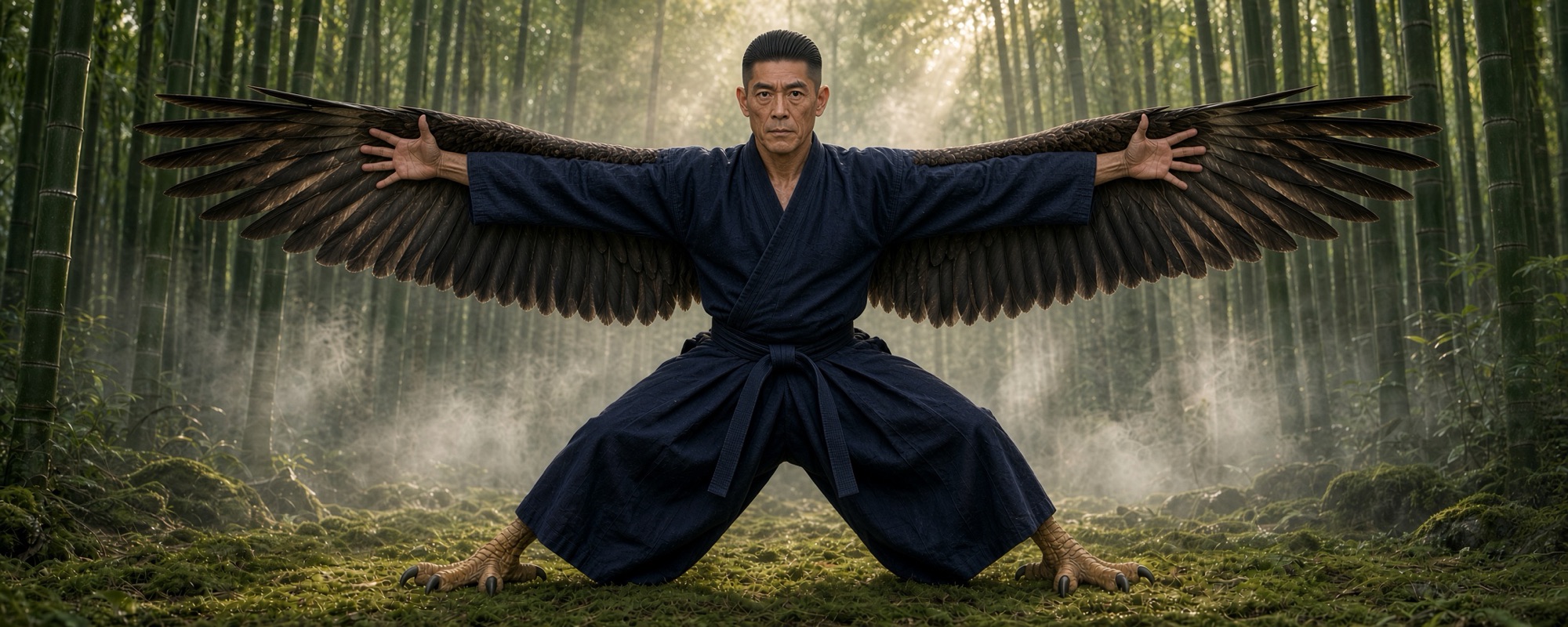
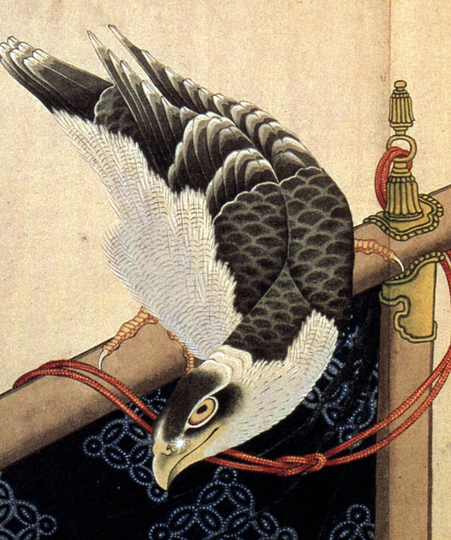
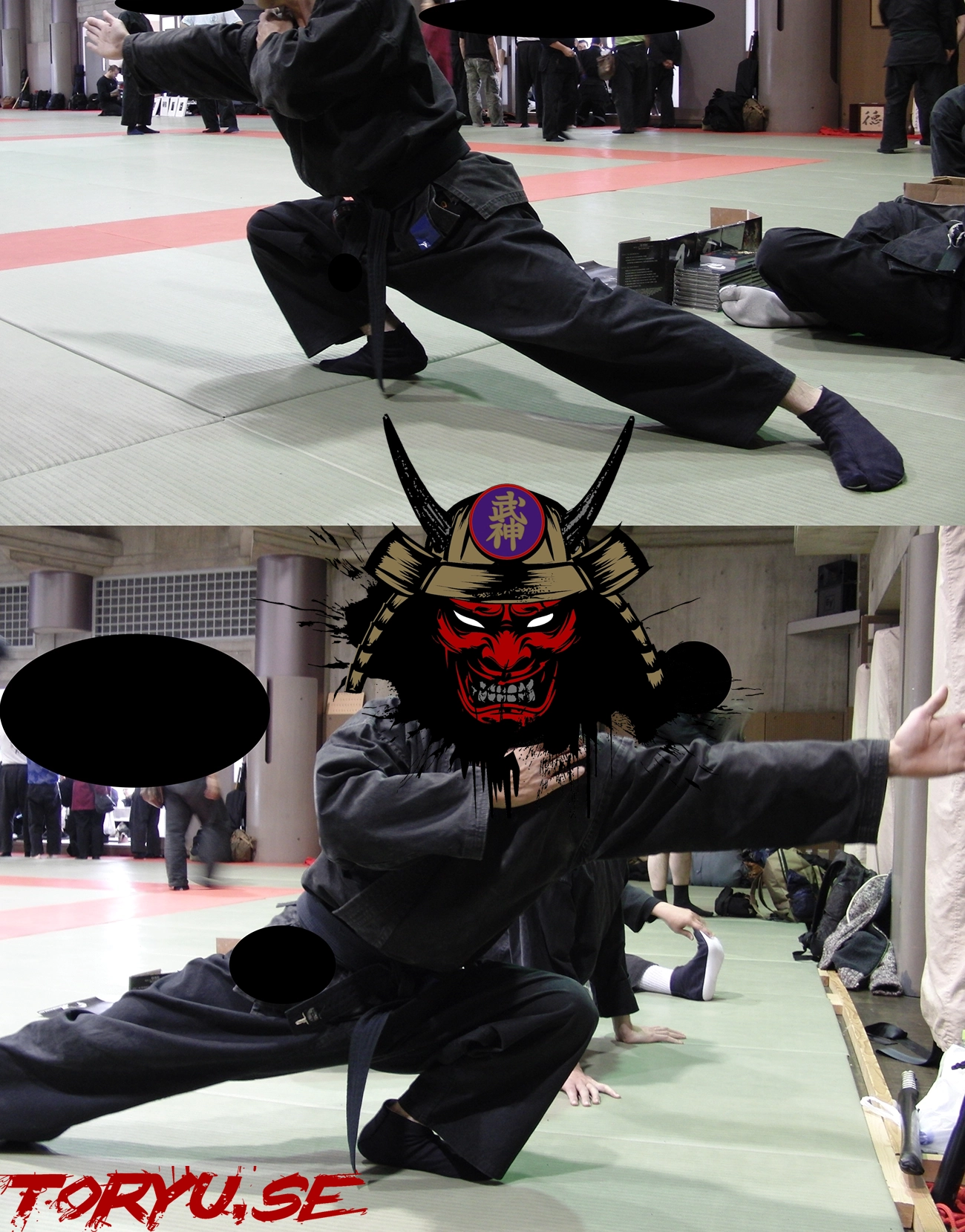
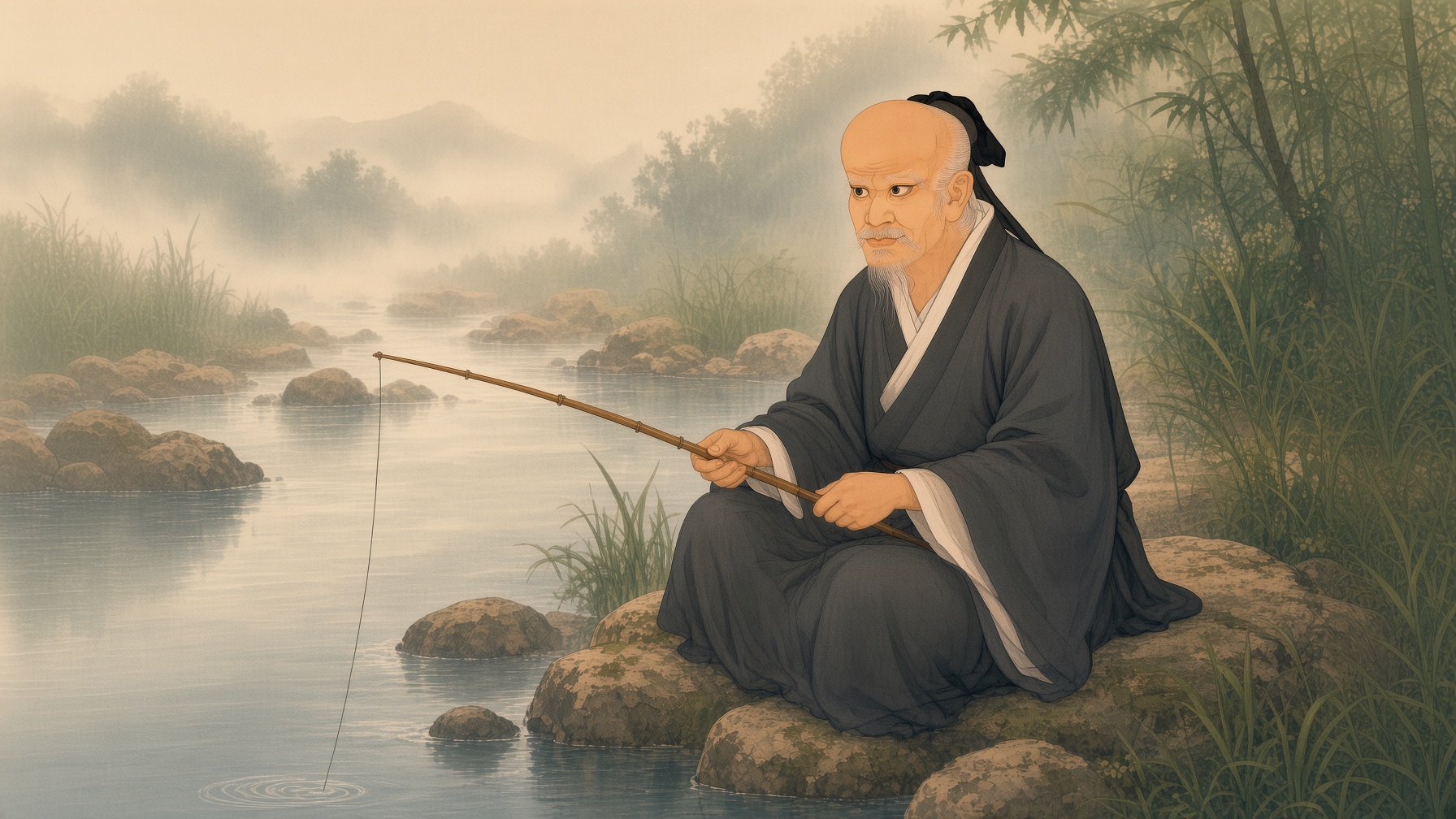

 ︎
︎