Skip to content

2026: The Fiery Gallop Begins – Farewell to the Wood Snake Year

From 武神館兜龍 Bujinkan Toryu by Toryu

2026: The Fiery Gallop Begins – Farewell to the Wood Snake Year

I hadn’t originally planned to write this end-of-year blog post, but as I scrolled through my saved photos and earlier entries, the memories came flooding back. So here’s a chronological summary of my training highlights from 2025 – a year I truly dedicated to deepening my practice – and one that has already inspired me to look forward to the fiery energies of the 2026 Year of the Fire Horse.

2025 Year Review

This year, I chose to focus intensively on Koto-ryū Koppōjutsu. I began with the Shoden Kata in January, moved on to Hekito Kata in March, Chūden Kata in April, and completed the transmission with Okuden Kata in June. For each technique, I took photographs and noted my own observations and insights. Those who purchased a membership through me can access all of this material on Bujinkan.online – you’re most welcome to explore it.

I made two memorable trips to Japan: Trip #52 in March and Trip #53 in September, both filled with invaluable training alongside the masters at Hombu Dojo.

In May, we celebrated Bujinkan’s 50 years in Europe with a wonderfully organised Taikai hosted by Bujinkan Dojo Norrköping. I was honoured to be one of the three invited instructors and taught Gikan-ryū Koppō Taijutsu as I had learnt it from Noguchi Sensei.

October brought my 60th birthday, which I marked with my own Kanreki Taikai. I invited a select group of close friends without publicising their names, keeping the event intimate and personal. It turned out beautifully – exactly the celebration I had hoped for. As planned, I covered half the seminar costs myself, and it was well worth it. The videos from the event are now available to watch for free on bujinkan.tv – do take a look, like, and subscribe if you enjoy them!

In December, I travelled to Paris for the Nagato Taikai, brilliantly organised by Bruno, my good friend Baubak, and their dojo. Many thanks for a fantastic event.

The following weekend, I was invited to teach at the Bujinkan 40-Year Anniversary in Norrköping – another memorable gathering with old and new training friends.

That, in essence, sums up my training year in 2025: a year of focused study, inspiring travel, meaningful events, and cherished connections. Thank you to everyone who shared the journey with me.

For 2026, I currently have no large-scale events planned. My main focus will be two trips to Japan—one in spring and one in fall—along with continuing the monthly TANRENKAI training sessions. Everything else will be decided as the year unfolds.

Toryu Tanrenkai

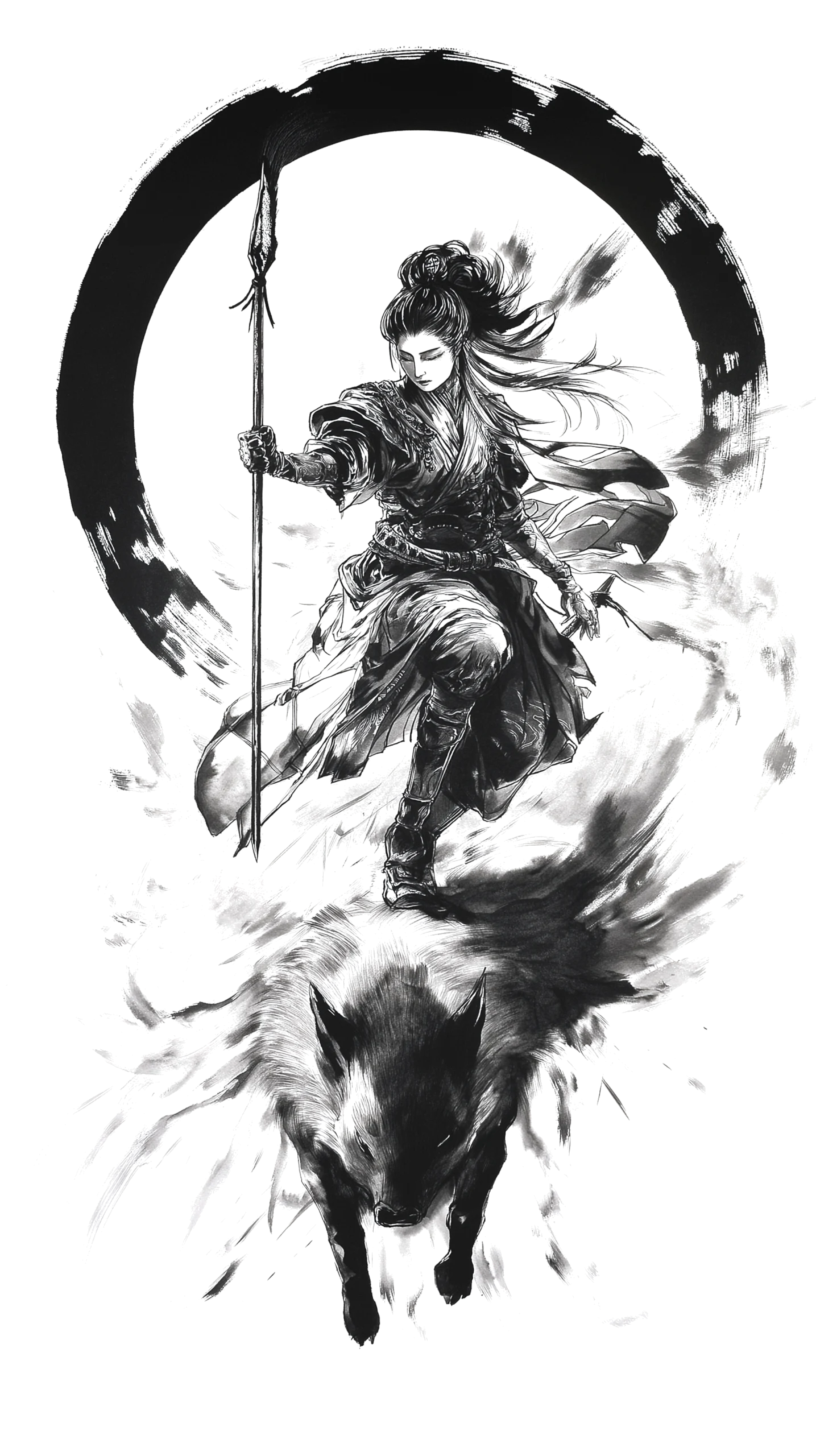
The Year of the Fire Horse 2026

The Year of the Horse 2026 (丙午 Bingu) is the 44th year in the 60-year Japanese Jikkan Jūnishi cycle. The Horse (午 Uma) is the seventh animal of the twelve in the “Eto” (Japanese Zodiac). 2025 was the Year of the Wood Snake (乙巳Kinoto-mi) transitioning to the Year of the Horse in 2026.

The Fire Horse Year 2026: This year will be marked by the element of Fire (火 Hi), symbolising passion, energy, and transformation. The Horse, a sign of freedom, strength, and independence, combines with fire energies to create a period of dynamic movement and bold initiatives. People born in this year are often expected to be charismatic, adventurous, and naturally inclined towards leadership and creative breakthroughs.

Jikkan Jūnishi: The Japanese zodiac is based on a sexagesimal cycle combining the ten heavenly stems (Jikkan) with the twelve earthly branches (Jūnishi). The year 2026 is associated with:

  • Heavenly Stem: 丙 (Hei) – The positive fire element.
  • Earthly Branch: 午 (Go) – The Horse.

Astrological Implications in the Year of the Fire Horse 2026

The Fire Horse year brings a time of intense activity and change. It is a year where courage, passion, and swift action are rewarded. This can be an excellent period for taking risks, launching new projects, or breaking free from old patterns. The Horse year may also bring a certain restlessness, where it is important to channel the energy constructively and avoid impulsive decisions.

In Greek mythology, the sun god Helios (sometimes identified with Apollo) drives his chariot across the sky, pulled by four immortal horses that breathe fire: Pyrois (fire), Eous (dawn), Aethon (blazing) and Phlegon (flaming). Their fiery manes symbolise the intense heat of the sun.

The war god Ares also has fire-breathing horses – Aithon, Phlogios, Konabos and Phobos – that spew flames from their nostrils as they pull his battle chariot.

In Norse mythology, Skinfaxi (“shining mane”) is the horse that pulls the chariot of Dagr (Day). His mane radiates such a brilliant light that it illuminates the entire world – a form of fiery glow that banishes darkness.

Cultural Aspects in the Year of the Fire Horse 2026

In Japan and East Asia, the horse carries strong symbolism of speed, honour, and freedom. It is often associated with warriors and journeys, and in mythology it represents powerful forward momentum. The Horse year can thus be seen as a time to conquer new territories – both external and internal – and to find strength in challenges that demand courage and endurance.

My Web Site Projects

Yes, I do manage quite a few websites – each one a little piece of my budō journey. Here are some highlights and statistics from 2025.

TORYU.SE My personal website and the one closest to my heart. This year I published 32 blog posts, mostly excerpts I found fascinating from old ninjutsu history books that I’ve translated from Japanese. There are many more books waiting, so I’ll happily continue this project into next year and beyond.
27.11k unique visitors in the past 30 days (Cloudflare).

BUJINKAN.ONLINE My Bujinkan knowledge base, shared with friends and anyone who chooses their membership through me. In 2025 I added over 100 new articles – it now holds 833 published pieces. I hope you find it useful and enjoyable.
4.37k unique visitors in the past 30 days (Cloudflare).

TANRENKAI.COM My newest project, launched in November. This site is dedicated to monthly Saturday training workshops (Tanrenkai). With my shift-work schedule it’s been hard to keep weekday training consistent, so from 2026 I’ll focus on one high-quality Saturday session per month. Themes and dates will always be announced here.
2.57k unique visitors in the past 30 days (Cloudflare).

KAIGOZAN.SE The website for the dojo I founded 35 years ago. After 32 years in one location we moved 18 months ago, but the new place didn’t work out as hoped. Regular training relied heavily on me being present every week, which my shifts made difficult. Rather than let tensions arise, I decided to pause the old structure and start fresh. From 2026 we’ll hold one focused training per month on Saturdays (see tanrenkai.se). I’m very open to restarting weekday sessions and welcoming beginners again – if one or two committed instructors step forward to share the responsibility. For now, I’ll happily lead the monthly Saturdays myself.
12.73k unique visitors in the past 30 days (Cloudflare).

BUDOSHOP.SE The place to buy videos I’ve produced since the 1990s – from seminars I organised and my own training events. We’ve come a long way from manually copying VHS tapes, through VideoCDs and DVDs, to today’s downloadable videos. More than 100 titles available – do have a look.
22.33k unique visitors in the past 30 days (Cloudflare).

NINZINE.COM A collection of the best Bujinkan and ninjutsu articles I’ve found over the years. It began in the early 1990s with 1.44 MB floppy disks shared via Compuserve and the Moko no Tora BBS. In 2005 I moved it online, and now it holds exactly 2005 articles – a nice coincidence!
26.37k unique visitors in the past 30 days (Cloudflare).

BUJINKAN.ME A simple list of upcoming Bujinkan seminars worldwide. I prioritise events with Japanese Shihan, but I’m happy to include others too – just send me a public link (no login-required pages).
10.99k unique visitors in the past 30 days (Cloudflare).

YUDANSHABOOK.COM The site for the only book I’m truly proud of. I’m told many respected dojo instructors keep it as a reference for their students – that means a lot to me.
9.01k unique visitors in the past 30 days (Cloudflare).

TAIKAI.SE (formerly Kaigousuru Taikai) Home of some legendary events we ran in the early 2000s (ask your teacher!). After the unforgettable 2007 Taikai we switched to every five years: 2015 (Kaigozan 25 years), 2020 (Kaigozan 30 years), 2025 (Toryū Kanreki). The next – and final – one I’ll ever organise is planned for October 2030.
7.48k unique visitors in the past 30 days (Cloudflare).

INSTAGRAM/toryu_se 832 posts, 1,309 followers.

X.COM/kesshi 333 followers

FACEBOOK.COM/KGZDojo I stepped away more than ten years ago (after refusing to hand over passport details). Now that I’m allowed back, I’ll start sharing again – at least until the next disagreement! 554 followers.

Closing Words: The Year of the Horse 2026 promises to be a year of fiery opportunities and personal expansion. With the Fire Horse energies, there will be many chances to grow through passion, to break free from the past, and to gallop towards the future with confidence and drive.

2026 Bingu

Happy New Year & Happy Training!

/Toryu

The post 2026: The Fiery Gallop Begins – Farewell to the Wood Snake Year appeared first on 武神館兜龍 Bujinkan Toryu.…
2026: The Fiery Gallop Begins – Farewell to the Wood Snake Year

From 武神館兜龍 Bujinkan Toryu by Toryu

2026: The Fiery Gallop Begins – Farewell to the Wood Snake Year

I hadn’t originally planned to write this end-of-year blog post, but as I scrolled through my saved photos and earlier entries, the memories came flooding back. So here’s a chronological summary of my training highlights from 2025 – a year I truly dedicated to deepening my practice – and one that has already inspired me to look forward to the fiery energies of the 2026 Year of the Fire Horse.

2025 Year Review

This year, I chose to focus intensively on Koto-ryū Koppōjutsu. I began with the Shoden Kata in January, moved on to Hekito Kata in March, Chūden Kata in April, and completed the transmission with Okuden Kata in June. For each technique, I took photographs and noted my own observations and insights. Those who purchased a membership through me can access all of this material on Bujinkan.online – you’re most welcome to explore it.

I made two memorable trips to Japan: Trip #52 in March and Trip #53 in September, both filled with invaluable training alongside the masters at Hombu Dojo.

In May, we celebrated Bujinkan’s 50 years in Europe with a wonderfully organised Taikai hosted by Bujinkan Dojo Norrköping. I was honoured to be one of the three invited instructors and taught Gikan-ryū Koppō Taijutsu as I had learnt it from Noguchi Sensei.

October brought my 60th birthday, which I marked with my own Kanreki Taikai. I invited a select group of close friends without publicising their names, keeping the event intimate and personal. It turned out beautifully – exactly the celebration I had hoped for. As planned, I covered half the seminar costs myself, and it was well worth it. The videos from the event are now available to watch for free on bujinkan.tv – do take a look, like, and subscribe if you enjoy them!

In December, I travelled to Paris for the Nagato Taikai, brilliantly organised by Bruno, my good friend Baubak, and their dojo. Many thanks for a fantastic event.

The following weekend, I was invited to teach at the Bujinkan 40-Year Anniversary in Norrköping – another memorable gathering with old and new training friends.

That, in essence, sums up my training year in 2025: a year of focused study, inspiring travel, meaningful events, and cherished connections. Thank you to everyone who shared the journey with me.

For 2026, I currently have no large-scale events planned. My main focus will be two trips to Japan—one in spring and one in fall—along with continuing the monthly TANRENKAI training sessions. Everything else will be decided as the year unfolds.

Toryu Tanrenkai

The Year of the Fire Horse 2026

The Year of the Horse 2026 (丙午 Bingu) is the 44th year in the 60-year Japanese Jikkan Jūnishi cycle. The Horse (午 Uma) is the seventh animal of the twelve in the “Eto” (Japanese Zodiac). 2025 was the Year of the Wood Snake (乙巳Kinoto-mi) transitioning to the Year of the Horse in 2026.

The Fire Horse Year 2026: This year will be marked by the element of Fire (火 Hi), symbolising passion, energy, and transformation. The Horse, a sign of freedom, strength, and independence, combines with fire energies to create a period of dynamic movement and bold initiatives. People born in this year are often expected to be charismatic, adventurous, and naturally inclined towards leadership and creative breakthroughs.

Jikkan Jūnishi: The Japanese zodiac is based on a sexagesimal cycle combining the ten heavenly stems (Jikkan) with the twelve earthly branches (Jūnishi). The year 2026 is associated with:

  • Heavenly Stem: 丙 (Hei) – The positive fire element.
  • Earthly Branch: 午 (Go) – The Horse.

Astrological Implications in the Year of the Fire Horse 2026

The Fire Horse year brings a time of intense activity and change. It is a year where courage, passion, and swift action are rewarded. This can be an excellent period for taking risks, launching new projects, or breaking free from old patterns. The Horse year may also bring a certain restlessness, where it is important to channel the energy constructively and avoid impulsive decisions.

In Greek mythology, the sun god Helios (sometimes identified with Apollo) drives his chariot across the sky, pulled by four immortal horses that breathe fire: Pyrois (fire), Eous (dawn), Aethon (blazing) and Phlegon (flaming). Their fiery manes symbolise the intense heat of the sun.

The war god Ares also has fire-breathing horses – Aithon, Phlogios, Konabos and Phobos – that spew flames from their nostrils as they pull his battle chariot.

In Norse mythology, Skinfaxi (“shining mane”) is the horse that pulls the chariot of Dagr (Day). His mane radiates such a brilliant light that it illuminates the entire world – a form of fiery glow that banishes darkness.

Cultural Aspects in the Year of the Fire Horse 2026

In Japan and East Asia, the horse carries strong symbolism of speed, honour, and freedom. It is often associated with warriors and journeys, and in mythology it represents powerful forward momentum. The Horse year can thus be seen as a time to conquer new territories – both external and internal – and to find strength in challenges that demand courage and endurance.

My Web Site Projects

Yes, I do manage quite a few websites – each one a little piece of my budō journey. Here are some highlights and statistics from 2025.

TORYU.SE My personal website and the one closest to my heart. This year I published 32 blog posts, mostly excerpts I found fascinating from old ninjutsu history books that I’ve translated from Japanese. There are many more books waiting, so I’ll happily continue this project into next year and beyond.
27.11k unique visitors in the past 30 days (Cloudflare).

BUJINKAN.ONLINE My Bujinkan knowledge base, shared with friends and anyone who chooses their membership through me. In 2025 I added over 100 new articles – it now holds 833 published pieces. I hope you find it useful and enjoyable.
4.37k unique visitors in the past 30 days (Cloudflare).

TANRENKAI.COM My newest project, launched in November. This site is dedicated to monthly Saturday training workshops (Tanrenkai). With my shift-work schedule it’s been hard to keep weekday training consistent, so from 2026 I’ll focus on one high-quality Saturday session per month. Themes and dates will always be announced here.
2.57k unique visitors in the past 30 days (Cloudflare).

KAIGOZAN.SE The website for the dojo I founded 35 years ago. After 32 years in one location we moved 18 months ago, but the new place didn’t work out as hoped. Regular training relied heavily on me being present every week, which my shifts made difficult. Rather than let tensions arise, I decided to pause the old structure and start fresh. From 2026 we’ll hold one focused training per month on Saturdays (see tanrenkai.se). I’m very open to restarting weekday sessions and welcoming beginners again – if one or two committed instructors step forward to share the responsibility. For now, I’ll happily lead the monthly Saturdays myself.
12.73k unique visitors in the past 30 days (Cloudflare).

BUDOSHOP.SE The place to buy videos I’ve produced since the 1990s – from seminars I organised and my own training events. We’ve come a long way from manually copying VHS tapes, through VideoCDs and DVDs, to today’s downloadable videos. More than 100 titles available – do have a look.
22.33k unique visitors in the past 30 days (Cloudflare).

NINZINE.COM A collection of the best Bujinkan and ninjutsu articles I’ve found over the years. It began in the early 1990s with 1.44 MB floppy disks shared via Compuserve and the Moko no Tora BBS. In 2005 I moved it online, and now it holds exactly 2005 articles – a nice coincidence!
26.37k unique visitors in the past 30 days (Cloudflare).

BUJINKAN.ME A simple list of upcoming Bujinkan seminars worldwide. I prioritise events with Japanese Shihan, but I’m happy to include others too – just send me a public link (no login-required pages).
10.99k unique visitors in the past 30 days (Cloudflare).

YUDANSHABOOK.COM The site for the only book I’m truly proud of. I’m told many respected dojo instructors keep it as a reference for their students – that means a lot to me.
9.01k unique visitors in the past 30 days (Cloudflare).

TAIKAI.SE (formerly Kaigousuru Taikai) Home of some legendary events we ran in the early 2000s (ask your teacher!). After the unforgettable 2007 Taikai we switched to every five years: 2015 (Kaigozan 25 years), 2020 (Kaigozan 30 years), 2025 (Toryū Kanreki). The next – and final – one I’ll ever organise is planned for October 2030.
7.48k unique visitors in the past 30 days (Cloudflare).

INSTAGRAM/toryu_se 832 posts, 1,309 followers.

X.COM/kesshi 333 followers

FACEBOOK.COM/KGZDojo I stepped away more than ten years ago (after refusing to hand over passport details). Now that I’m allowed back, I’ll start sharing again – at least until the next disagreement! 554 followers.

Closing Words: The Year of the Horse 2026 promises to be a year of fiery opportunities and personal expansion. With the Fire Horse energies, there will be many chances to grow through passion, to break free from the past, and to gallop towards the future with confidence and drive.

2026 Bingu

Happy New Year & Happy Training!

/Toryu

The post 2026: The Fiery Gallop Begins – Farewell to the Wood Snake Year appeared first on 武神館兜龍 Bujinkan Toryu.…
Bujinkan Ranks: The Circular Path of Mastery Through Three Triads

From 武神館兜龍 Bujinkan Toryu by Toryu

Bujinkan Ranks: The Circular Path of Mastery Through Three Triads

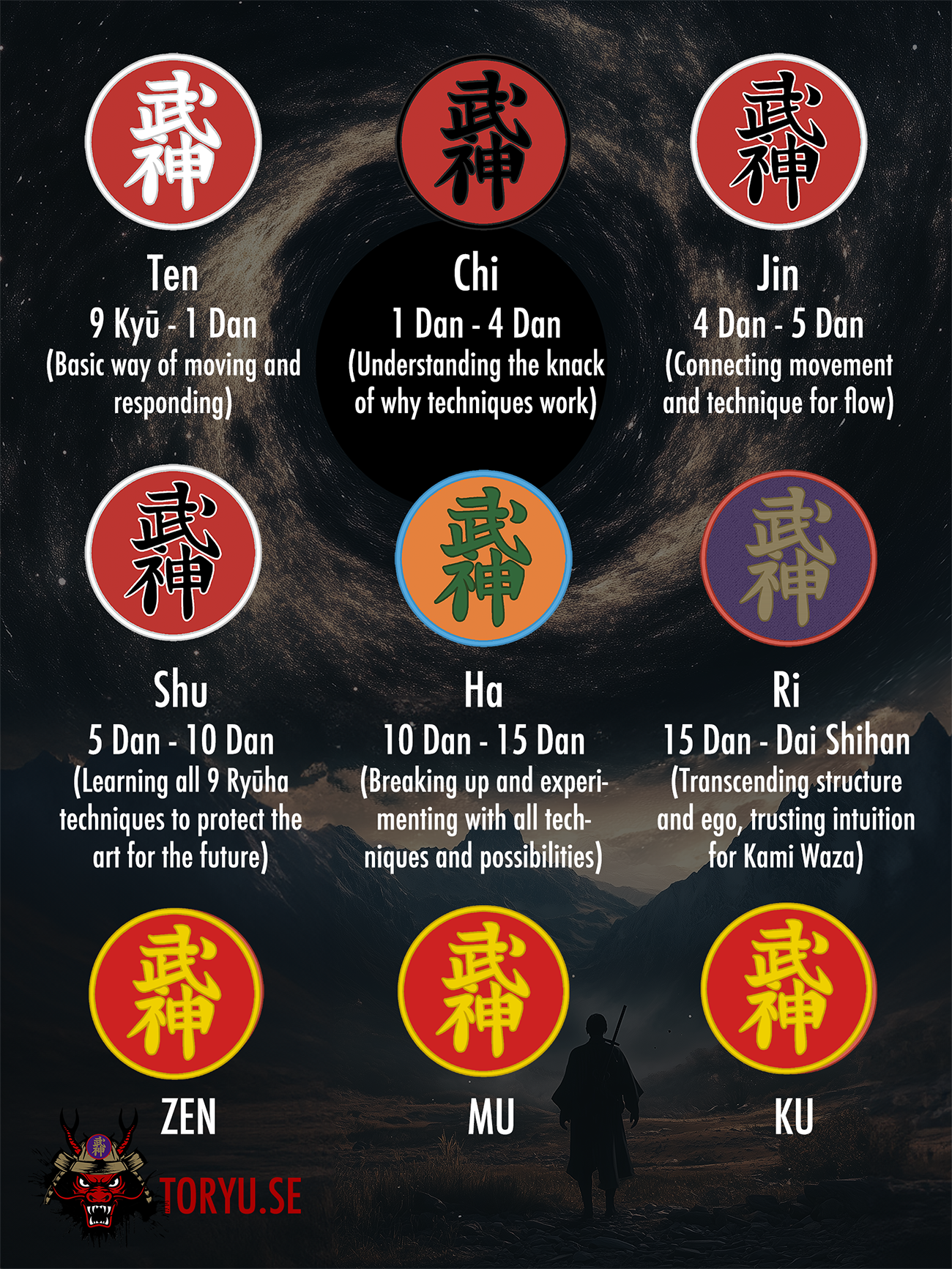
Bujinkan ranks shape more than just skill for me as a practitioner. They reflect a profound evolution, echoing the ninja’s circular wisdom of body, mind, and spirit. In our dojo, we distill this into three triads: 天地人 Ten-Chi-Jin, 守破離 Shu-Ha-Ri, and a mysterious third I call 禅空無 Zen-Ku-Mu. Together, these nine stages form a circle, with the final triad as zero—the ultimate enlightenment. Here’s how I see this progression shaping our ranks, starting anew at each milestone.

天地人 Ten-Chi-Jin: The Foundation of Movement, Technique, and Flow

The first triad, 天地人 Ten-Chi-Jin (Heaven-Earth-Man). Builds the ninja’s foundation from 9th Kyū to 5th Dan, culminating at the 師導士 Shidōshi (teacher) level.

天 Ten (Heaven) – Movement (9th Kyū to 1st Dan)

We begin with movement—learning to shift, roll, respond. It’s fluid, like the sky’s rhythm. These beginner *Bujinkan ranks* from 9th Kyū to 1st Dan should hone awareness and flow. A natural base to launch into Chi upon earning 1st Dan.

地 Chi (Earth) – Techniques (1st Dan to 4th Dan)

Once 1st Dan is received, we ground ourselves in techniques—strikes, locks, throws. Understanding the knack of why they work, like earth’s stability. From 1st to 4th Dan, these ranks should sharpen precision and adaptability, preparing us for Jin.

人 Jin (Man) – Integration (4th Dan to 5th Dan)

At 4th Dan, we dive into 人 Jin, blending movement and technique via the Jin Ryaku no Maki. An introduction to the 9 Ryūha’s selected *Waza*. It’s about grasping the flow, intuiting harmony. By 5th Dan, 士道師 Shidōshi embody this seamless unity.

天地人 Ten-Chi-Jin cycles from raw motion to refined flow, a loop we master as teachers.


守破離 Shu-Ha-Ri: The Evolution of Mastery

From 5th Dan to 大師範 Dai Shihan, 守破離 Shu-Ha-Ri (Protect-Break-Leave) spirals us through mastery, each stage igniting at a new rank.

守 Shu (Protect) – 5th Dan to 10th Dan

With 5th Dan earned, we enter 守 Shu, learning all 9 Ryūha techniques. Taijutsu, weapons like swords and staffs—exactly as intended to protect the art’s future. These ranks from 5th to 10th Dan test depth and fidelity, preserving our ninja legacy.

破 Ha (Break Up) – 10th Dan to 15th Dan

At 10th Dan, 破 Ha unlocks freedom—breaking and experimenting with all techniques to forge endless connections and possibilities. I’d love these ranks to showcase creativity, adapting Waza like a ninja’s cunning through to 15th Dan.

離 Ri (Leave) – 15th Dan to Dai Shihan

Reaching 15th Dan, 離 Ri transcends structure and ego. 大師範 Dai Shihan trust intuition for Kami Waza. Divine techniques—acting perfectly in the moment without thought, a departure into pure essence.

守破離 Shu-Ha-Ri refines us, a spiral beyond the dojo’s walls.


禅空無 Zen-Ku-Mu: The Circle of Zero

Beyond ranks lies my third triad: 禅空無 Zen-Ku-Mu (Absolute-Space-Void). Unbound by ranks—a circular mystery for the enlightened, where nine stages become zero.

禅 Zen (Absolute)

Unity of all.

“Root and sky entwine,
Nothing holds the endless now,
Circle turns to none.”

空 Ku (Space)

Boundless possibility.

“Wind carves the silence,
Void dances in open fields,
One step, none remain.”

無 Mu (Void)

Pre-action stillness.

“Shadow cloaks the flame,
Space hums where no foot has stirred,
Zero breathes alive.”


Conclusion: Bujinkan Ranks as Nine to Zero

I see Bujinkan ranks as a circle: 天地人 Ten-Chi-Jin (three) builds the base. 守破離 Shu-Ha-Ri (three) evolves it. And 禅空無 Zen-Ku-Mu (three) completes the nine, circling to zero. Kyū flows into Dans, Dans spiral through the 9 Ryūha and beyond, and the rare master returns to nothing—a living haiku with a smirk. Where are you on this path?

Thanks to Grok 3 Beta for the help.

The post Bujinkan Ranks: The Circular Path of Mastery Through Three Triads appeared first on 武神館兜龍 Bujinkan Toryu.…

忍の朝の儀式: Ninja Morning Rituals

From 武神館兜龍 Bujinkan Toryu by Toryu

忍の朝の儀式: Ninja Morning Rituals

Ninja morning rituals are fascinating practices rooted in ancient Japanese traditions that combine physical discipline, spiritual focus, and esoteric techniques. These routines were designed to empower practitioners with clarity, strength, and divine protection, often invoking deities like 摩利支天 Marishiten, a guardian of light, prosperity, and invisibility.

Takamatsu Sensei’s Daily Discipline

In a 1966 article published in 武道春秋 (Budo Shunju Magazine) titled Shinden Shura Roppō , Takamatsu Sensei shared his daily morning ritual:

  • He went to bed by 9 PM every night.
  • At 6:30 AM, he performed a cold water massage , a practice he maintained for 40 years without fail. This contributed to his remarkable health and resilience, ensuring he never fell ill.

As a Dai-Ajari head priest in Kumano Shugendo, Takamatsu Sensei likely incorporated prayer or meditation into his routine. The title of Dai-Ajari is reserved for those who complete extreme endurance feats, such as the Ōmine Sennichikaihōgyō (one-thousand days of trekking on Mt. Ōmine) and the Shimugyō (nine days without food, water, sleep, or rest).

Hatsumi Sōke once mentioned receiving the same Mikkyō rank as Takamatsu Sensei during training at the Honbu Dojo. While unclear if he attained the title “Dai Ajari,” this highlights their shared commitment to spiritual and physical mastery.

For Shimugyō, preparation is key. Practitioners must follow precise dietary guidelines months in advance to survive the nine-day fast. Adherence to these instructions ensures survival despite the body’s typical limitations.


Kuji Goshin Hō: A Ninja Morning Rituals Routine from 1812

The 九字護身法 (Kuji Goshin Hō) , documented by Gyochi in 1812, outlines a morning ritual performed immediately after waking:

  1. Wash your hands, face, and mouth with water to purify yourself.
  2. Face north and exhale forcefully to expel 濁気 (Dakuki), or unclean spirit.
  3. Turn to face east , open your mouth, and take three deep breaths to absorb fresh, clean energy.
  4. Clack your teeth together 36 times , matching the rhythm of your relaxed pulse. This helps the spirit descend into your body and calms the mind.

Kuji Hiden: An Ancient Practice Linked to Marishiten

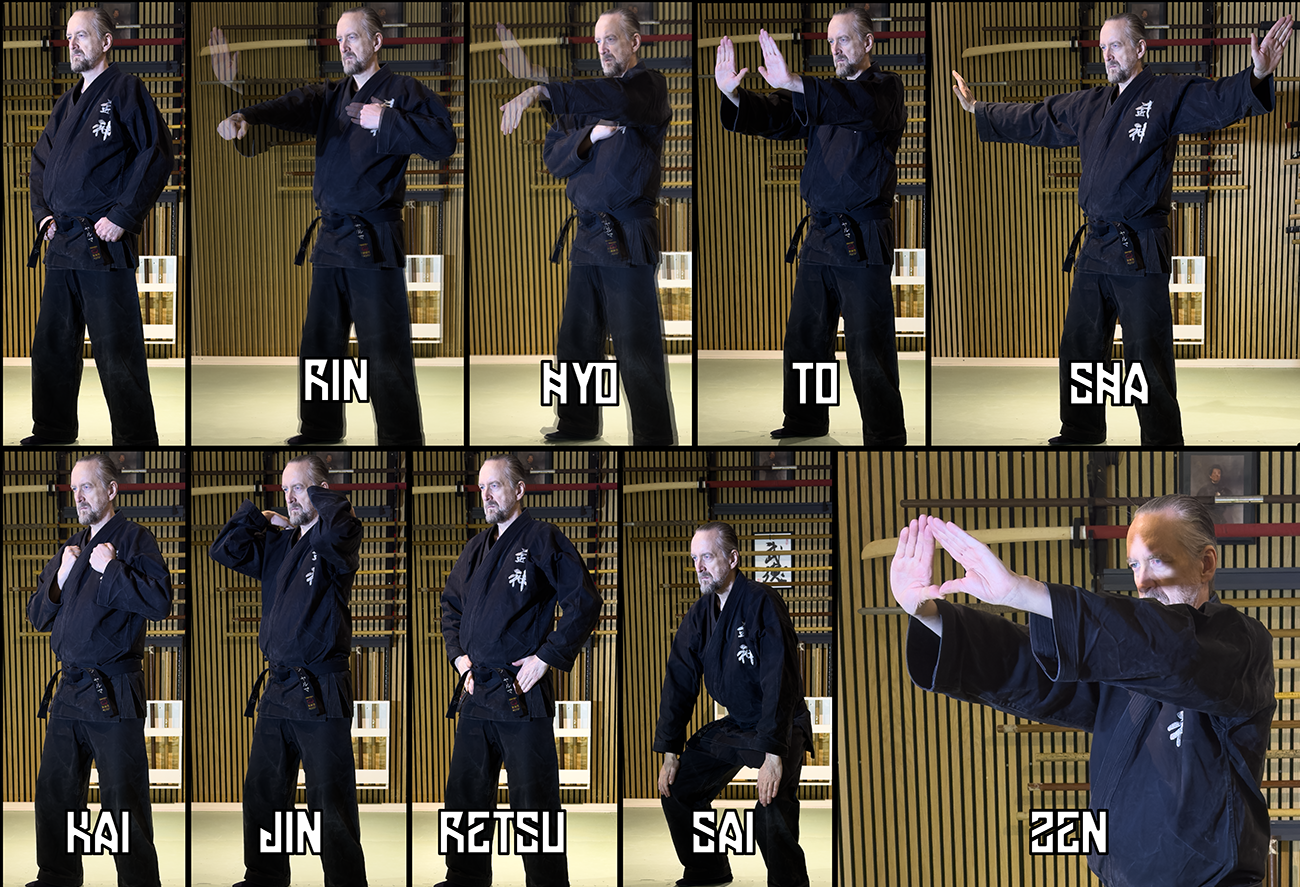
Another morning routine, described in 九字秘傳 (Kuji Hiden) by 宮井安泰 (Miyai Yasutai) in 1787, traces its origins back to 太公望 (Taikōbō) “Grand Duke Wang” (also known as 姜子牙 Jiang Ziya, 1128–1015 BCE), who taught the fundamentals of Kuji to his students. This practice involves facing the rising sun and performing specific hand gestures while chanting incantations:

Face the first rays of sunrise (or the eastern ridge-line in the mountains, or the horizon in flatlands).

  1. Place your left palm on your chest and extend your right hand forward, palm down. Curl your fingers as if beckoning someone and chant RIN .
  2. Place your right hand above your heart and extend your left hand forward. Lower your left hand, curl your fingers, and chant HYŌ .
  3. Turn your palms forward at chest height and chant .
  4. Move your palms to the left and right sides and chant SHA .
  5. Close your hands into fists and press them to your chest while chanting KAI .
  6. Touch both shoulders with your fingers and chant JIN .
  7. Place both palms on your hips and chant RETSU .
  8. Put both palms on your knees and chant ZAI .
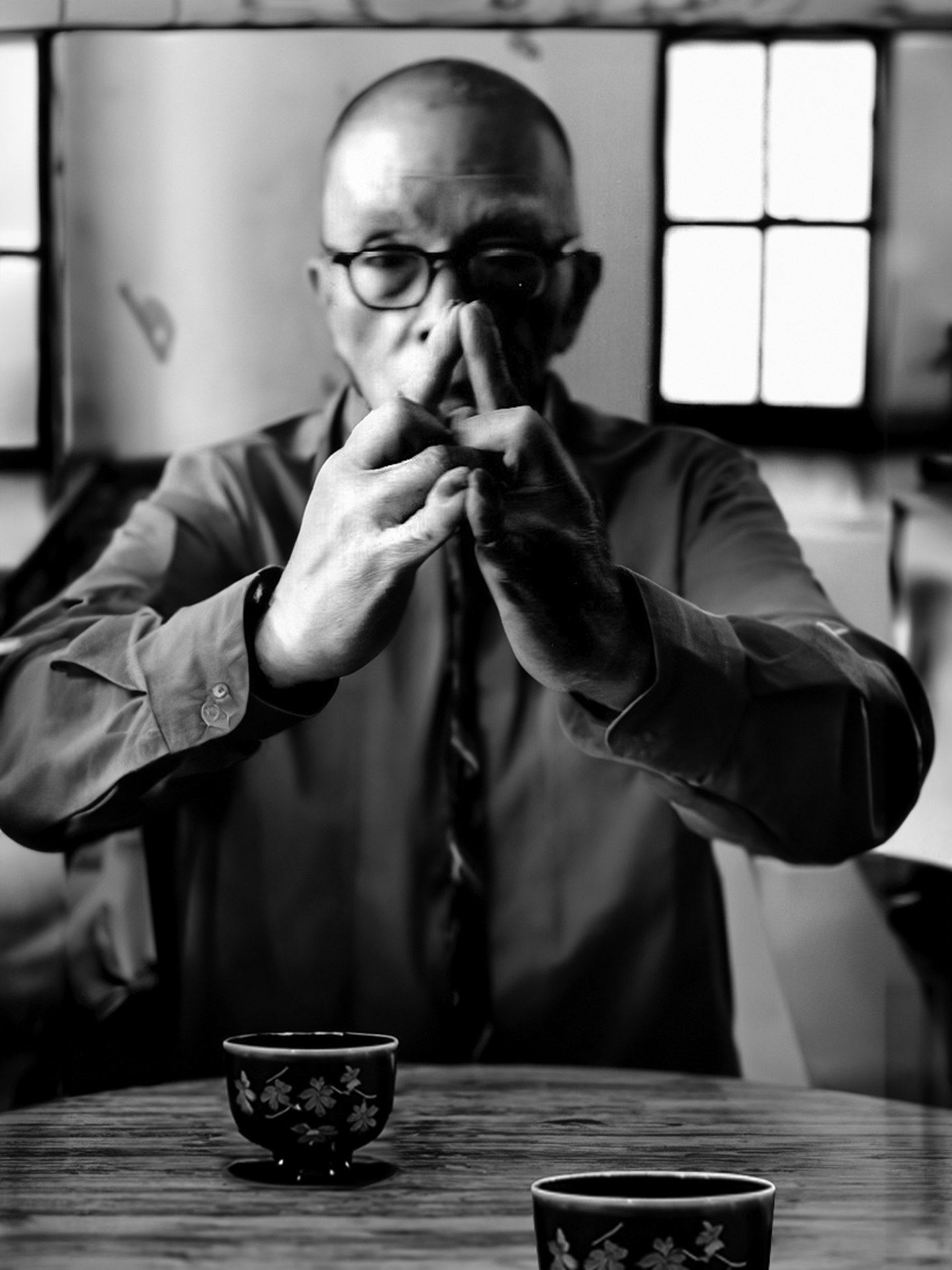
  9. Raise your palms to form 斗衝 (Dozu)—a triangle shape with your thumbs and index fingers—and chant ZEN .

The Role of Marishiten in Warrior Practices

摩利支天 (Marishiten) is a revered deity in Japanese warrior culture, symbolizing light, protection, and prosperity. Warriors practiced Marishiten-hō , invoking her/his power for:

  • Invisibility in battle : To evade enemies.
  • Victory and success : By illuminating their path and guiding them.
  • Wealth and good fortune : Beyond martial contexts.

Staring at the sunrise was a symbolic act of connecting with Marishiten’s radiant energy. This practice reflects the deep spiritual connection between warriors and celestial forces, emphasizing harmony with nature and divine empowerment.

The post 忍の朝の儀式: Ninja Morning Rituals appeared first on 武神館兜龍 Bujinkan Toryu.…

Banpenfugyō: Cultivating Adaptability and Cognitive Flexibility

From 武神館兜龍 Bujinkan Toryu by Toryu

Introduction

The Japanese concept of 万変不驚  Banpenfugyō, often associated with martial arts, encapsulates the essence of adaptability and cognitive flexibility. In the heat of a physical confrontation, it beckons martial artists to relinquish preconceived techniques and allow an intuitive, divine power to guide their actions. This essay delves into the philosophy of Banpenfugyō within the context of Bujinkan Budō Taijutsu, exploring how it trains practitioners to seamlessly adapt and respond to ever-changing situations.

Banpenfugyō: Unpredictability in Action

In the world of Bujinkan Budō Taijutsu, Banpenfugyō stands as a guiding principle, urging martial artists to shed the constraints of predetermined techniques. Instead of meticulously planning one’s moves, practitioners are encouraged to embrace spontaneity and allow techniques to unfold naturally during combat.

The title of this essay, “Banpenfugyō,” perfectly encapsulates this concept, emphasizing the need to remain unfazed by the unpredictability of any situation.

“In the midst of battle, one must become one with the chaos, for only then can true mastery be achieved.”

– Miyamoto Musashi
Banpenfugyo Sannindori

Training in Henka: The Path to Adaptability

At the heart of Banpenfugyō lies the practice of Henka, where the martial artist evolves and adapts fundamental techniques, transforming them to suit the ever-changing demands of combat. 

This process not only hones physical skills but also sharpens cognitive flexibility. By constantly varying their responses to attacks, practitioners become more adaptable, capable of reacting effectively to unforeseen circumstances.

Cognitive Flexibility: The Mind’s Role

While physical prowess is crucial in martial arts, cognitive flexibility plays an equally vital role. Martial artists must cultivate the ability to think and adapt swiftly in high-pressure situations. 

The philosophy of Banpenfugyō, as practiced in Bujinkan Budō Taijutsu, instills this mental agility, enabling martial artists to respond intuitively and harmoniously with the flow of combat.

“Adaptability is the essence of victory. The rigid are easily broken.”

– Takeda Shingen
The Divine Power within Banpenfugyō

The Divine Power within Banpenfugyō

Banpenfugyō also teaches martial artists to acknowledge a divine, intuitive force at play. When techniques seem to emerge effortlessly, it’s not just luck but an understanding that something greater guides their actions. 

Surrendering to this force and allowing it to guide one’s movements can lead to remarkable outcomes.

Application Beyond Combat: Life’s Lessons

The teachings of Banpenfugyō extend far beyond the dojo. Martial artists who embrace this philosophy find themselves better equipped to navigate the challenges of everyday life. 

Decision-making becomes more fluid, problem-solving more intuitive, and stress more manageable.

A warrior’s strength lies not only in technique but in the ability to harmonize with the unexpected.

– Hattori Hanzo

Banpenfugyō in the Honbu Dojo

During a conversation with Nagato Sōke, the concept of the Mandela Effect (false memory) was raised. In response, he displayed the essence of Banpenfugyō, the martial arts philosophy of adaptability and cognitive flexibility. With a direct and impactful statement, he asserted, “You must know, Banpenfugyō!” 

This brief yet profound message emphasized the importance of understanding and adapting to life’s ever-changing and unpredictable nature. The ensuing laughter didn’t diminish the gravity of his message but rather highlighted the deep wisdom within it. 

Nagato Sōke’s response encapsulated the core of Banpenfugyō, encouraging martial artists to embrace the unknown, adapt intuitively, and recognize that true mastery involves harmonizing with the unpredictable, both in martial arts and in life.

Banpenfugyō in the Honbu Dojo

Banpenfugyō, rooted in the physical realm of combat, transcends into a philosophy for living.

Footnotes

  • 万変不驚 BANPENFUGYŌ (10,000 changes – no surprise): This term embodies the concept of adaptability in the face of myriad changes. It encourages martial artists to remain unfazed and intuitive in combat, allowing techniques to flow naturally. The painting above the mirror in our Dojo was painted by Hatsumi Sōke.
  • 変化 HENKA (Change): Henka refers to the practice of adapting and evolving fundamental techniques to respond effectively to varying combat scenarios.
  • The Mandela Effect is an observed phenomenon in which a large segment of the population misremembers a significant event or shares a memory of an event that did not actually occur.  I’m sure you will find many things you remembered wrong, look it up!

The post Banpenfugyō: Cultivating Adaptability and Cognitive Flexibility appeared first on 武神館兜龍 Bujinkan Toryu.…

Mastering Fudōshin: Cultivating Equanimity in the Face of Danger

From 武神館兜龍 Bujinkan Toryu by Toryu

In the world of martial arts, one concept stands out as the embodiment of inner strength and unwavering composure in the face of immediate danger: Mastering Fudōshin (不動心). This essay explores the Japanese concept of Fudōshin, delving into its significance for martial artists and the art of staying calm in perilous situations. Fear, often considered a negative emotion, is, in fact, a valuable ally that we must learn to control. This essay outlines the importance of fear, methods to prepare and train oneself to avoid freezing or panicking, and how achieving an equanimity state can lead to making life-saving decisions amid chaos.

The Essence of Mastering Fudōshin

Fudōshin, or “Immovable Mind,” is the cornerstone of martial arts philosophy. This concept has its roots in ancient Japan, where warriors, known as samurai, sought not only physical prowess but also mental fortitude. Fudōshin encapsulates the idea of maintaining inner peace and mental resilience, regardless of external circumstances. It is the ability to stay rooted, composed, and ready to act with precision and clarity even when faced with chaos and danger.

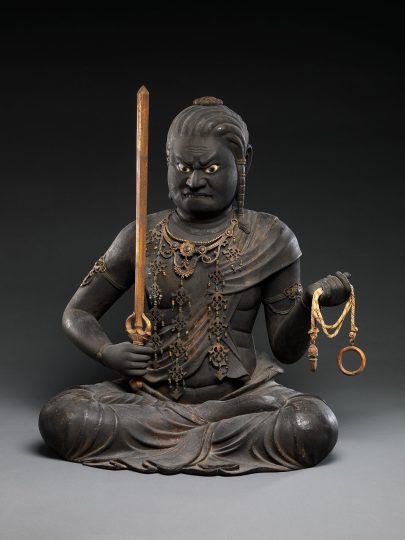
Fudō Myōō is found in Shingon Buddhism as a guardian deity, (and patron of martial arts) who is portrayed as carrying a sword in his right hand (to cut through delusions and ignorance) and a rope in his left (to bind “evil forces” and violent or uncontrolled passions and emotions). Despite a fearsome appearance, his attributes of benevolence and servitude to living beings are symbolized by a hairstyle associated with the servant class.

The Paradox of Fear

Fear, often seen as a hindrance, is, in reality, a primal instinct that has evolved to keep us safe. It is the body’s alarm system, triggering a surge of adrenaline and heightened awareness in response to perceived threats. Far from being a negative force, fear can be harnessed as a powerful ally when managed correctly. It heightens our senses, sharpens our focus, and prepares our bodies for action.

Embracing Fear: The First Step

To harness the power of fear, one must first acknowledge its presence. In the martial arts, fear is not denied or suppressed; instead, it is accepted as a natural and necessary response to danger. By recognizing fear, martial artists can begin to control it, preventing it from overwhelming their thoughts and actions.

“In the heat of battle, fear is a beacon that guides us towards survival and victory.”

– Miyamoto Musashi (1584-1645)

The Role of Training

Preparation and training are essential components of mastering Fudōshin. Through rigorous training and repetitive exposure to controlled stressors, martial artists learn to condition their bodies and minds to react calmly under pressure. This training involves not only physical techniques but also mental exercises that foster mental fortitude.

Avoiding the Freeze Response

One of the most detrimental reactions in high-stress situations is the freeze response. When faced with immediate danger, individuals may become paralyzed, unable to take action. Fudōshin training focuses on minimizing this reaction by instilling automatic responses and honing decision-making skills through continuous practice.

The Path to Equanimity

Equanimity is the foundation upon which Fudōshin thrives. It enables martial artists to make rational choices in critical moments, benefiting not only themselves but also those around them. Achieving equanimity requires cultivating mindfulness and mental resilience.

“Fear is not the enemy; it is the catalyst for our greatest feats of courage.”

– Tsukahara Bokuden (1489-1571)

Mindfulness and Self-awareness

Mindfulness, a key aspect of mastering Fudōshin, involves being fully present in the moment, acknowledging one’s emotions, and maintaining self-awareness. Through mindfulness practices, martial artists can observe their thoughts and feelings without judgment, allowing them to respond to stressors more effectively.

Mental Resilience

Mental resilience is the ability to bounce back from adversity and maintain composure under pressure. Martial artists develop mental resilience through meditation, visualization, and mental conditioning exercises. These practices help them build emotional strength and adaptability, crucial qualities in high-stress situations.

Preparing for the Unpredictable

In the chaos of a dangerous situation, preparation can make the difference between life and death. Martial artists recognize the importance of thorough preparation and train relentlessly to be ready for the unexpected. Here are some key aspects of preparation:

Physical Conditioning

Physical fitness is a fundamental component of preparation. Martial artists train their bodies to be strong, agile, and flexible, ensuring they have the physical capacity to respond effectively in danger.

Scenario-Based Training

Scenario-based training involves simulating real-life, high-stress situations. By repeatedly exposing themselves to these scenarios, martial artists develop the ability to remain calm and make quick, informed decisions.

Mental Rehearsal

Mental rehearsal, often referred to as “visualization,” is a technique where individuals mentally practice various scenarios. This helps them prepare mentally and emotionally for challenging situations.

Knowledge and Skill Acquisition

In addition to physical training, martial artists acquire knowledge and skills relevant to their discipline. Understanding the principles of combat, strategy, and self-defense is essential for making informed decisions in critical moments.

不動無悟 Fudō Mugo Mudra

不動無悟 “Fudō Mugo” is a sacred Mudra that encapsulates the ancient wisdom of Japanese warriors. With a simple yet profound gesture, they harmonized mind and body, finding instant serenity and unwavering focus in the face of stress. By clasping their hands together and uttering this phrase, these warriors invoked a powerful sense of calm and inner strength. This ritual not only harnessed fear as a source of clarity but also embodied the essence of Fudōshin, the “Immovable Mind.”

  • 不動 (Fudo): Translation: “Immovable” or “Unshakable”
    Etymology: 不 (Fu): This character means “not” or “un-,” indicating negation or the absence of something. 動 (Dō): This character means “move” or “motion.” It suggests action or change. Combined, 不動 (Fudo) represents something that cannot be moved or remains steadfast, which aligns with the concept of Fudōshin (不動心) discussed earlier.
  • 無悟 (Mugo): Translation: “Without Awareness” or “Unconscious”
    Etymology: 無 (Mu): This character means “without” or “lack of.” 悟 (Go): This character means “awareness” or “enlightenment.” Together, 無悟 (Mugo) signifies a state of being without conscious awareness or enlightenment, which is in line with the aim of calming the mind and emotions during moments of stress.

The Power of Equanimity in Decision-Making

Equanimity is the linchpin of effective decision-making in high-stress situations. It allows martial artists to evaluate their options objectively and choose the most appropriate course of action. Here’s how equanimity influences decision-making:

Clarity of Thought

Equanimity clears the mind of distractions and emotional turbulence. When fear is under control, martial artists can think with clarity, assessing the situation and determining the best response.

Adaptability

Equanimity fosters adaptability. In rapidly changing and chaotic environments, being able to adjust one’s tactics and strategies is crucial. Martial artists with equanimity can adapt on the fly, increasing their chances of success.

Confidence

Equanimity instills confidence. When martial artists trust in their ability to remain calm and make sound decisions, they approach dangerous situations with a sense of self-assuredness that can be a decisive advantage.

“To master Fudōshin is to become one with the storm, unwavering amidst its fury.”

– Yagyū Munenori (1571-1646)

Mastering Fudōshin Footnotes

  • 不動心 (Fudōshin): Literally “Immovable Mind.” 不 (fu) means “not,” 動 (dō) means “move,” and 心 (shin) means “mind” or “heart.”
  • 武道 (Budō): The term “Budō” translates to “Martial Way” or “Way of the Warrior” and encompasses various Japanese martial arts disciplines.
  • 武士道 (Bushidō): Bushidō, or “Way of the Warrior,” is a code of conduct and ethics followed by samurai, emphasizing virtues such as loyalty, honor, and self-discipline.
  • 恐怖 (Kyōfu): The Japanese term for “fear.” 恐 (kyō) means “fear,” and 怖 (fu) means “dread” or “terror.”
  • 冷静沈着 (Reisei chinchaku): This phrase translates to “calm and composed” and is a key aspect of achieving Fudōshin.

The post Mastering Fudōshin: Cultivating Equanimity in the Face of Danger appeared first on 武神館兜龍 Bujinkan Toryu.…

Ten-Chi-Jin: A Comparison of Eastern and Western Philosophies

From 武神館兜龍 Bujinkan Toryu by Toryu

The Japanese concept of TenChiJin is a fundamental principle in martial arts that represents the interconnectedness of heaven, earth, and man. In this article, we will explore the origins of Ten, Chi, Jin in Hinduism and its comparison with Western philosophies like the Christian trinity.

Ten-Chi-Jin: Origins and Meaning

Ten, Chi, Jin is a concept that originated in Japan but has its roots in Hinduism. In Hinduism, the Trimurti represents the three aspects of the divine: Brahma (the creator), Vishnu (the preserver), and Shiva (the destroyer). Similarly, Ten, Chi, Jin represents the three dimensions of existence: 天 Ten (heaven), 地 Chi (earth), and 人 Jin (man).

Ten represents the divine or spiritual realm, while Chi represents the physical or material world. Jin represents humanity and the connection between the spiritual and physical realms. The concept of Ten, Chi, Jin emphasizes the interdependence and harmony between these three aspects of existence.

Ten-Chi-Jin and Western Philosophies

While Ten, Chi, Jin has its roots in Hinduism, there are similarities between this concept and Western philosophies like the Christian trinity. The Christian trinity represents the belief in one God in three persons: the Father, the Son, and the Holy Spirit.

Similarly, Ten, Chi, Jin recognizes the interconnectedness of three distinct entities. In both concepts, there is an emphasis on the importance of the balance and harmony between these entities.

However, there are also differences between these concepts. The Christian trinity emphasizes the unity of the three persons, while Ten, Chi, Jin recognizes the individuality of each element.

Ten-Chi-Jin

Ten-Chi-Jin in Martial Arts

In martial arts, the concept of Ten, Chi, Jin is fundamental. Martial artists use this principle to understand the interconnectedness between their physical techniques, their mental focus, and their spiritual development.

For example, a punch can be seen as a manifestation of Jin, as it is a physical expression of the power that comes from both heaven (Ten) and earth (Chi). By understanding this concept, martial artists can learn to balance their physical techniques with their mental and spiritual development, leading to a more holistic approach to their practice.

The Importance of Balance and Harmony

One of the key aspects of Ten, Chi, Jin is the emphasis on balance and harmony. Martial artists who understand this concept can learn to balance their physical techniques with their mental and spiritual development. By doing so, they can become more effective practitioners, not just in their physical techniques but also in their overall approach to martial arts.

Conclusion

In conclusion, Ten, Chi, Jin is a fundamental concept in Japanese martial arts that represents the interconnectedness of heaven, earth, and man. While it has its roots in Hinduism, there are similarities between this concept and Western philosophies like the Christian trinity. By understanding this concept, martial artists can learn to balance their physical techniques with their mental and spiritual development, leading to a more holistic approach to their practice. The key to success in martial arts lies in achieving balance and harmony between these three aspects of existence.

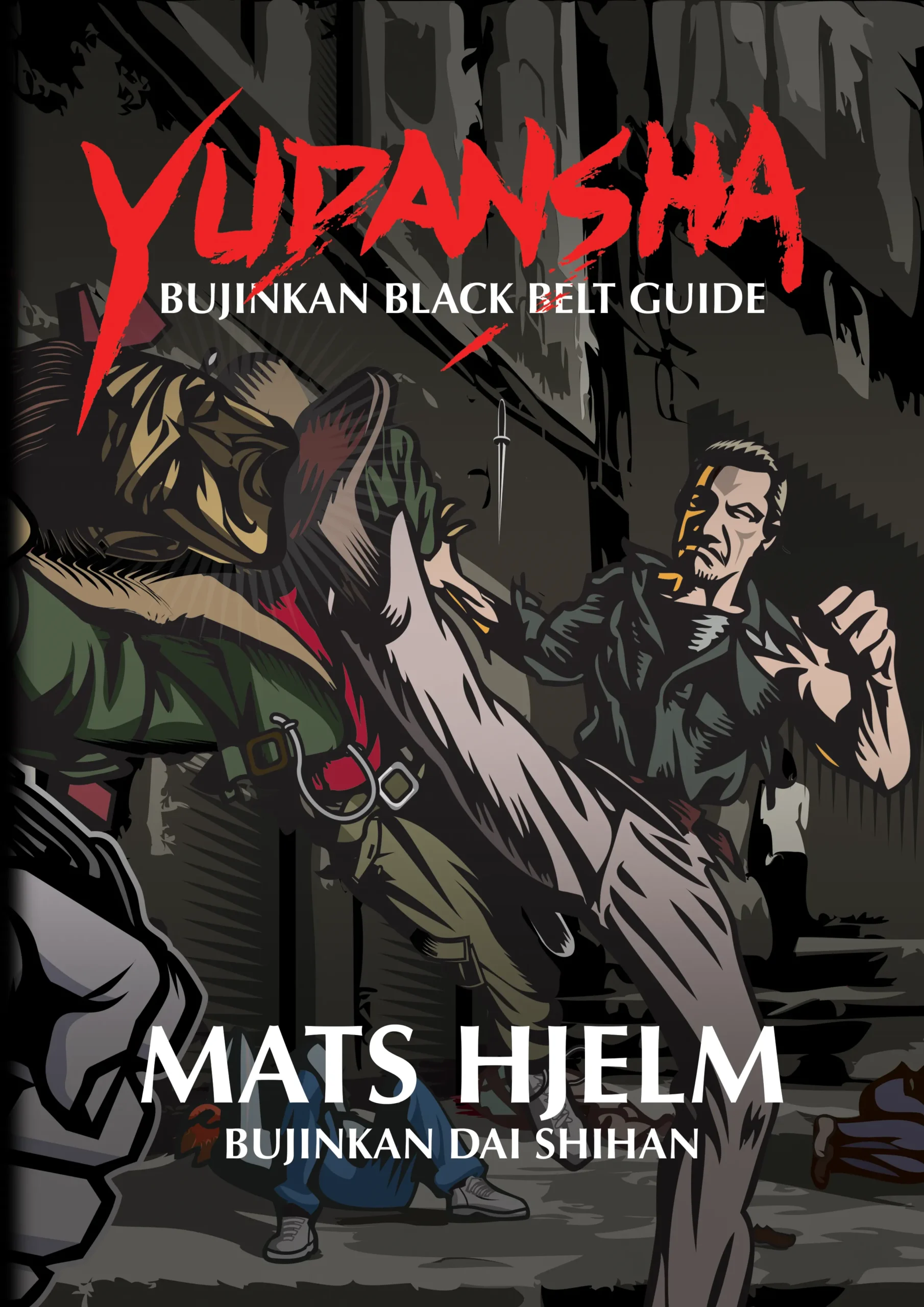
Yudansha – Bujinkan Black Belt Guide

Discover the essential techniques of Bujinkan Dojo with Mats Hjelm’s “Yudansha.” This comprehensive manual is based on the Japanese concept of Ten, Chi, Jin, providing a practical and holistic approach to mastering this ancient martial art.

With detailed descriptions and accompanying photographs, “Yudansha” offers a step-by-step guide to striking, throwing, grappling, and weapons techniques. But it’s more than just a technique manual – it’s a guide to personal growth and spiritual development.

By applying the Ten, Chi, Jin principle to your training, you’ll not only become a more skilled martial artist but also a more balanced and harmonious person. Whether you’re a beginner or an experienced practitioner, “Yudansha” is an essential addition to your library. Order your copy today and take the first step on your journey to mastery.

The post Ten-Chi-Jin: A Comparison of Eastern and Western Philosophies appeared first on 武神館兜龍 Bujinkan Toryu.…

Bojutsu vs Kenjutsu vs Bojutsu vs Kenjutsu…

From 8þ Kabutoshimen by admin

20130710-170506.jpg
Cutting against his arm

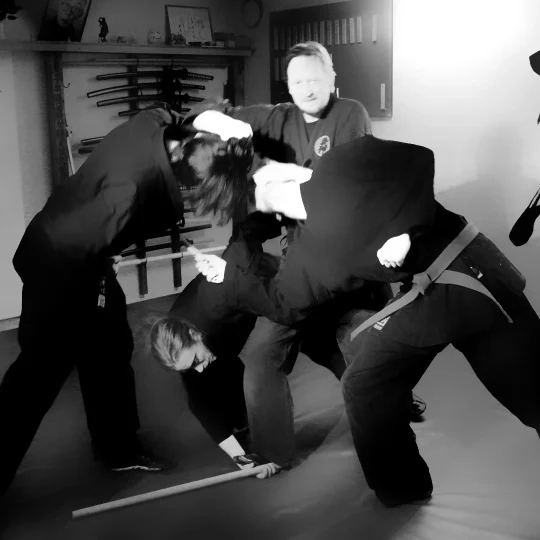
This summer like most summers we train a lot more with long weapons since the dojo is too small to really use long weapons properly. This summer we train Bojutsu against Kenjutsu (long staff against sword). I think I teach and train a little different than most Bujinkan teachers out there, but I can’t really say maybe there is those who approach the training like I do. Let me explain.

Kote haneage followed by Haneage

First of all you learn how to use the staff, spinning and striking etc, this is mostly solo-training. Then you learn the Keiko Sabaki Kata (movement practice techniques) in my dojo we only practice one technique for the whole two hour class. Some students really have problems with coordination, others capture it quicker. In this first step I don’t mention distance, timing or anything except which strikes and blocks to make. This can also be solo-training and done alone against an imagined opponent.

Second I take the sword and we focus on how to handle the situation the best way with a sword. If he is attacking me with the staff I immediately counter him by stepping forward. I’m not gonna step backwards defending myself all the time, when he steps in to strike me in his preferred distance out of my reach; I boldly step in at the same time and block the staff and get even closer into my preferred distance so I can cut him with the sword. As I see it this is the only chance I have against a longer weapon, there is no point of running backwards.

Catching the staff and Tsuki

Thirdly I take the staff again. I attack the kenjutsu-ka fully (not really, but almost) and make sure he does a good block, and as he block I don’t stay frozen or try to push harder on him. As I strike I’m already prepared for the next movement when he comes in and try to cut me, I move out to my distance and do the next strike.

Then I take the sword again and try to avoid being hit from this point in the technique, by blocking and countering again. I’m not really gonna give up or run away. If I can cut I will cut.

Then again I take the staff and try to deal with this really difficult opponent, I avoid his cut and counter him until the end of the technique where I make it impossible for him to do anything. Then the technique is finished without changing the sequences of the strikes, the only thing that is flexible is the distance and the timing. And this is where the true training comes in.

Then at the end of the class we record a short demo to video which will be available for download later. This is how we spend our two hour trainings at Kaigozan Dojo this summer.

No henka, no variations, true to the technique.

Kote haneage as he try to cut my left arm

I always thought quality is better than quantity. It is amazing how cleverly these techniques is made up, it is so much more than executing the strikes rapidly against a rather passive opponent. If the opponent (sword-guy) is good and understand how to use the sword there is really not many options to change the technique and do something different, the possibility for henka becomes very narrow, what you can change is very small details. For me this is what henka means, you failed your initial technique and need to adapt because of miscalculation.

I know there are those out there only doing henka-training, but how do you do henka training only, henka of what? If you try to train yourself into intuition without basic foundation you are doing something I don’t understand. You weren’t born out from nowhere, someone did something very basic with someone and you was born. How do you henka anything into existence?

Victory ending of the technique

If anyone is interesting I’m doing three more one day Bojutsu mini-seminars this summer.

Happy Training!

/Mats

The post Bojutsu vs Kenjutsu vs Bojutsu vs Kenjutsu… appeared first on 8þ Kabutoshimen.…