Roppō Kuji no Biken (Bujinkan Theme 2004)
From 武神館兜龍 Bujinkan Toryu by Toryu
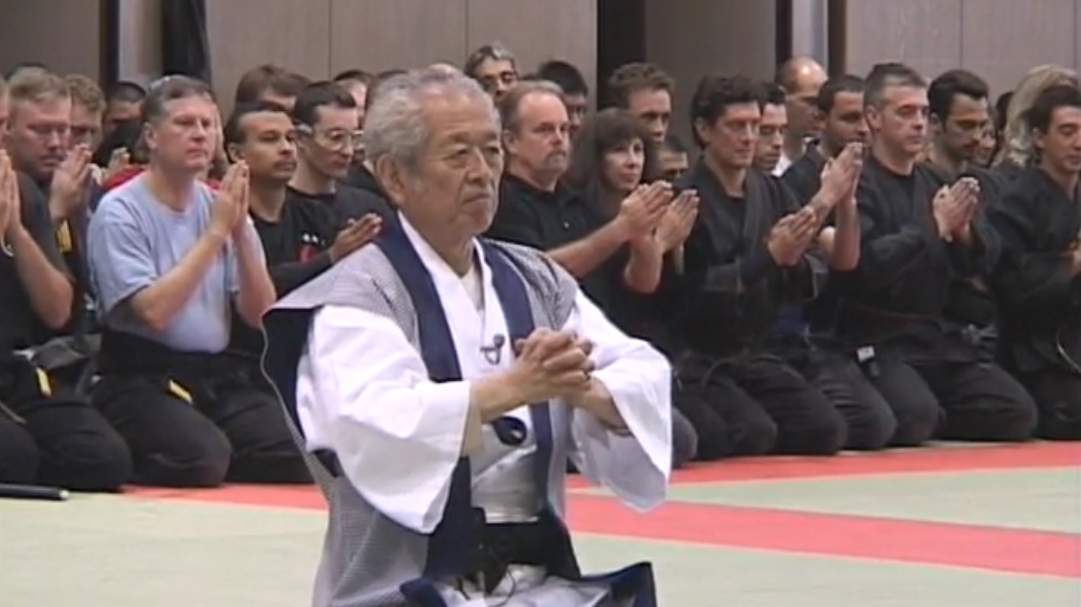
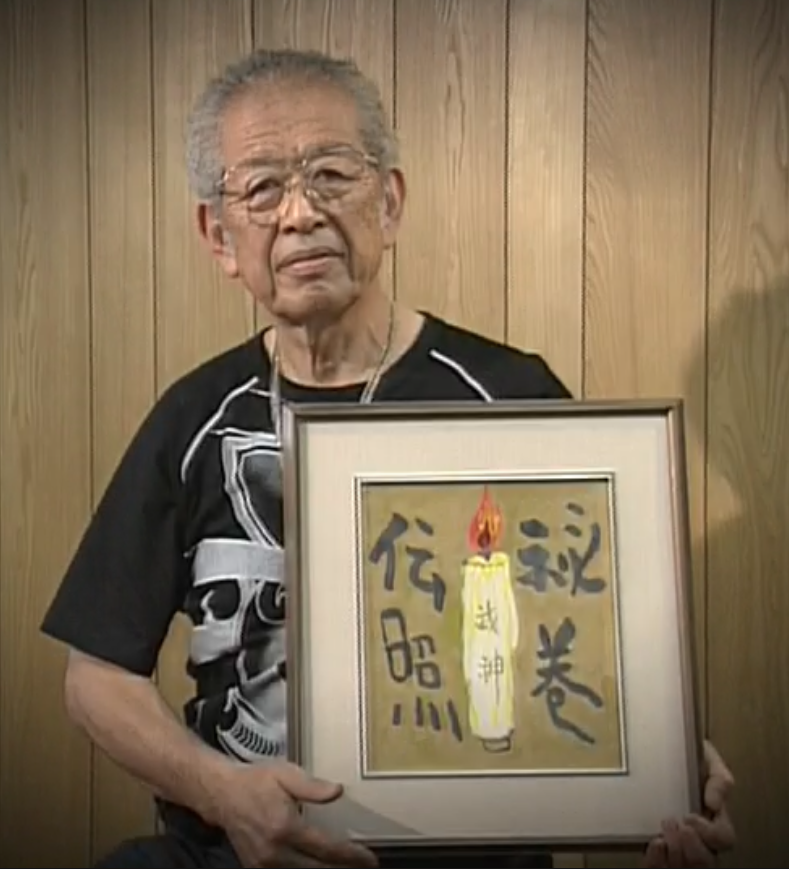
The theme in 2004 was Roppō Kuji no Biken. Below is a summarisation by Grok of the transcripts from the 10 Hikan Densho DVD’s and Daikomyōsai DVD from this year.
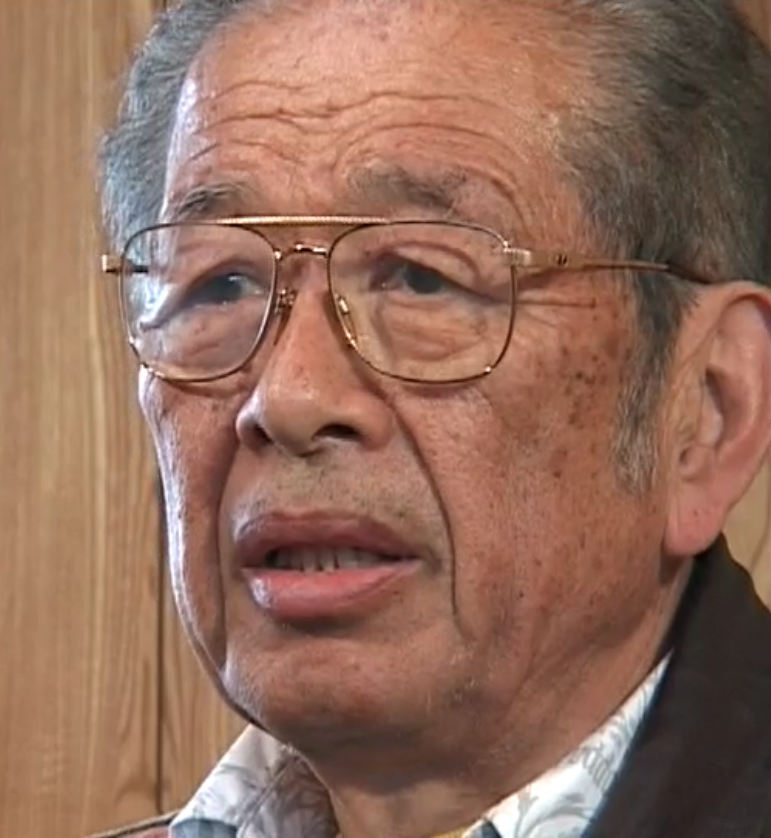
In the January–February 2004 training sessions at the Honbu Dojo, Masaaki Hatsumi Soke continued to explore the year’s core theme of Roppō Kuji no Biken—the secret sword of the six laws and nine syllables—while deeply grounding everything in Budo no Kiso, the fundamentals of martial arts. The sword remained the primary focus, but he constantly showed how the same principles apply to all weapons, to taijutsu, and to daily life. He began by speaking directly to viewers of the ongoing video series, explaining that the recordings were now moving into volume 11 after the first ten tapes. He wanted everyone—whether they practice budo or not—to understand the correct way to watch and absorb the material. He emphasized that war and peace are not separate[1]; they are deeply connected. This connection, he said, is extremely important. He pointed to the kanji for peace (平, hei/heiwa) and traced its meaning through Japanese history: the 平家物語 Heike Monogatari Tale of the Heike, the rise and fall of the Genji and Heike clans, the 太平記 Taiheiki chronicle, and even the 平成 Heisei era (8 January 1989 to 30 April 2019). The same character also echoes the sound of soldier or troops (兵, hei)[2], and in older usage it described states of battle or balanced equilibrium. In budo, he explained, body techniques, weapons, nature—everything is linked. Recognizing this interconnectedness reveals a vital part of the art. He urged people to view the tapes as essential teachings for living itself, not just for martial study.
The eighteen arts of culture and war—these are all connected too. It’s not about the number 18 as a digit, you know; that character 1 and 8, during battles, people often say 一か八か “Ichika Bachika“—putting everything on the line in a do-or-die match. So, when it comes to the 武芸十八般 Bugei Jūhappan, budo of the eighteen arts, even if you’re analyzing them, don’t analyze—don’t do that kind of thing. Instead, put the word “Ichika Batchika” first, and from there, creative fighting comes alive, I think that’s better. If you take that as the premise and proceed, then something like the intent of war emerges, or something like that.
January 6 and 13’th and February 3, 13, 17, and 20’th 2004
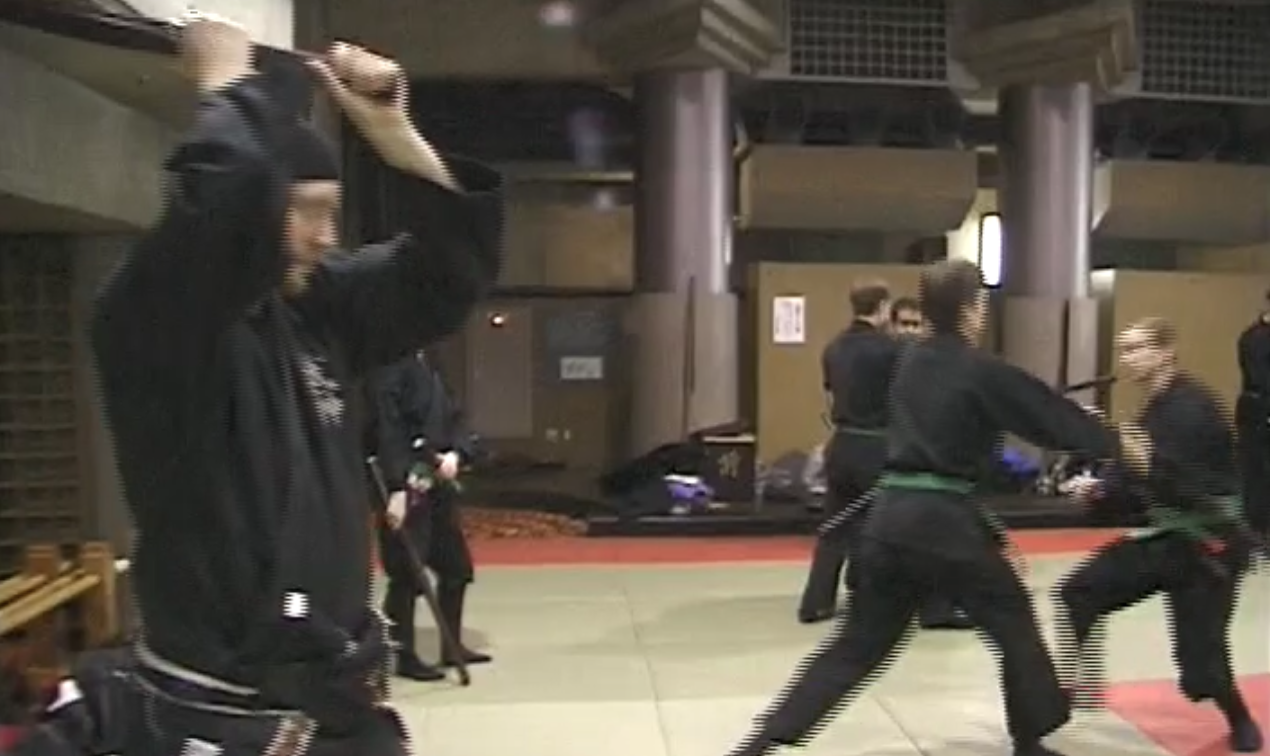
During the demonstrations, Hatsumi showed practical sword work with a strong emphasis on body integration. He explained that the sharpest cutting happens at the tip’s three-sun point. He stressed that real sword technique uses the whole body, not just the blade alone. It is not about mechanically swinging the sword; it is about driving forward with taijutsu principles embedded in every motion. He demonstrated controlling with the tsuba or hilt, hooking and pressing to create openings, and flowing naturally without fixed patterns. He repeatedly returned to the state of zero: eliminate all conscious intention of what to do or how to act. In that zero state, responses to incoming attacks—whether punches, kicks, or cuts—arise spontaneously. He showed how to meet force with minimal effort, redirecting or suppressing without tension, and letting the opponent’s momentum become the decisive factor.
戦 争 も 平 和 も つ な が っ て い る と い う こ と 。 こ れ が と て も 大 事 な ん で す ね 。
Sensō mo heiwa mo tsunagatte iru to iu koto. Kore ga totemo daiji nan desu ne.War and peace are connected. This is extremely important.
He encouraged the group to express even one small insight after each session, because everything is connected from a single point. One genuine expression from any person can link to the whole. He reminded everyone that every participant is a teacher in their own way. A student described an unexpected throw straight downward instead of sideways, feeling a terrifying unpredictability where nothing went as anticipated. Hatsumi connected this sensation to the effectiveness of guerrilla tactics or terrorism: the moment something defies expectation, it becomes powerful. Cultivating that kind of unpredictable feeling through training allows it to be applied in many different situations.
ゼ ロ の 状 態 で ね 、 そ こ で 何 を と か 、 や ろ う と か っ て 意 識 全 部 な く す こ と ね 。
Zero no jōtai de ne, soko de nani o toka, yarō toka tte ishiki zenbu nakusu koto ne.In the state of zero, eliminate all consciousness of what to do or trying to do something.
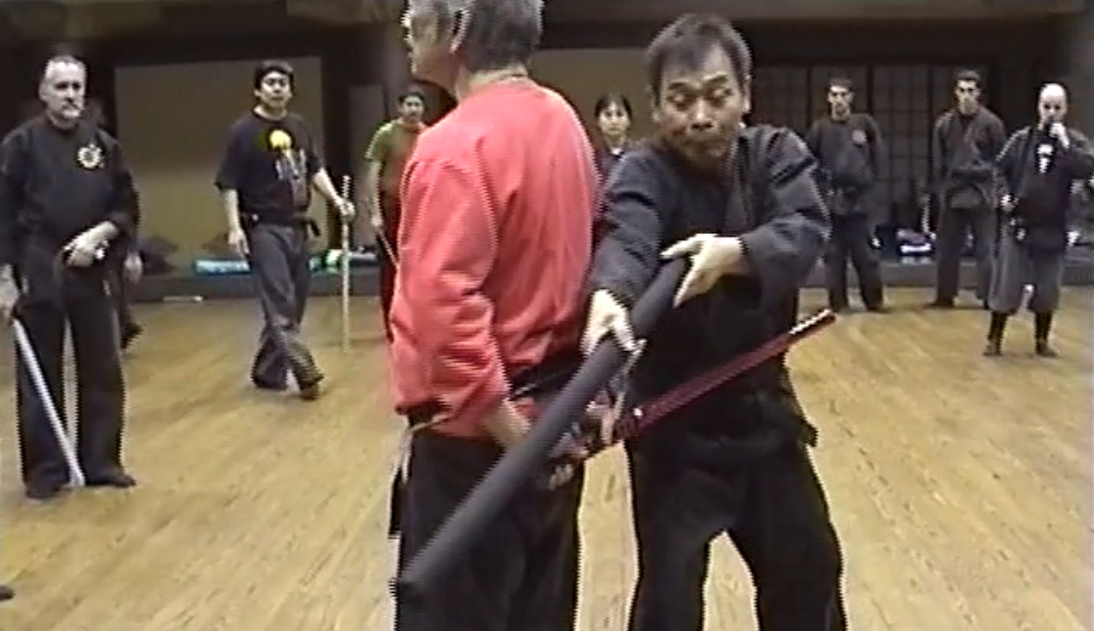
Throughout the sessions Hatsumi maintained that budo is not about separating skills into categories or analyzing the eighteen arts of culture and war. Instead, approach everything with total commitment—the spirit of “all or nothing.” Even in times of peace, human beings are always engaged in some form of struggle, internal or external. Training in budo reveals that war and peace are the same. In that realization lies true life. He invited the group to keep watching the video series with this perspective, because once the connection between war and peace is understood, the images take on a completely different meaning. The training was practical and direct, blending sword fundamentals with broader budo principles, always pointing back to interconnectedness, zero awareness, whole-body feeling, and the unity of apparent opposites.
February 22, 24, 27, 29’th and March 2, 5’th 2004
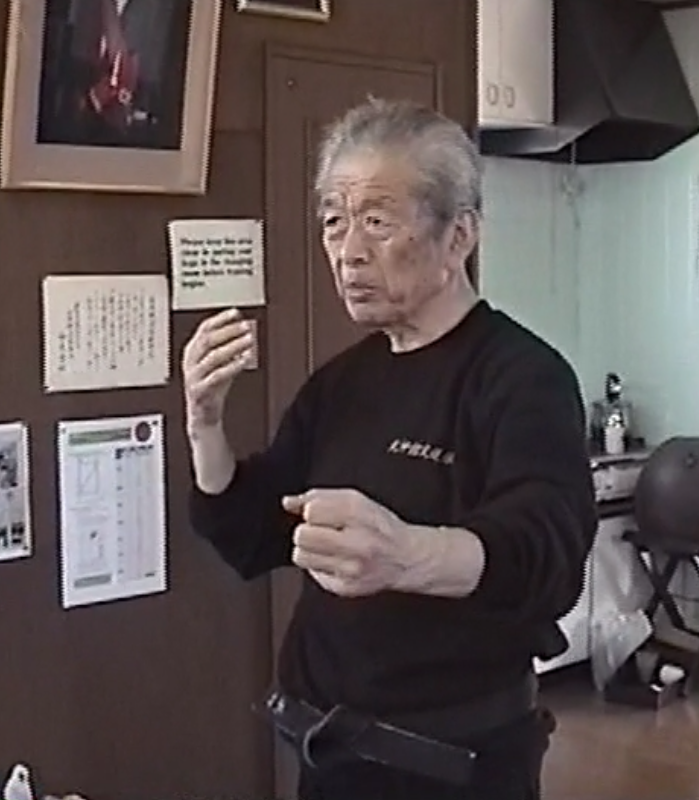
In the February 22–March 5, 2004 training sessions at the Honbu Dojo, Masaaki Hatsumi Soke continued deepening the year’s focus on Roppō Kuji no Biken (the secret sword of the six laws and nine syllables) and Budo no Kiso (fundamentals of budo), with heavy emphasis on sword work integrated with taijutsu principles. He demonstrated how to meet incoming cuts—especially to the body or shoulder—by entering precisely without clashing, using the elbow to redirect or press while controlling the opponent’s line of attack. He explained that standing techniques differ completely from ground or seated scenarios, and that armor changes everything: even a direct shoulder cut with a sword may not penetrate effectively, requiring subtle entries to exploit gaps or vulnerabilities.
だ か ら 決 ま っ て ね え か ら ね 、 教 え ら れ ね え ん だ か ら な 。
Dakara kimatte nē kara ne, oshierarenē n da kara na.Because it’s not fixed, that’s why it can’t be taught (in a rigid way).
Hatsumi stressed adaptability and the absence of fixed patterns. When an opponent cuts, the defender must avoid predetermined blocks or counters; instead, respond fluidly from zero intention. He showed variations on controlling the sword arm—pressing with the shoulder, shifting grip, or flowing into throws—always emphasizing whole-body use over isolated hand or blade action. Techniques like yubi kudaki (finger crushing) appeared in transitions, but he reminded everyone to execute gently to avoid unnecessary pain while still achieving control. He demonstrated how to drop or pin an opponent by rolling pressure upward along the arm with the knee, gradually increasing discomfort without relying on brute force, and warned that careless application could lead to serious injury.
こ こ 肘 で い か ね え と ダ メ だ よ 。
Koko hiji de ikanē to dame da yo.You have to go with the elbow here; otherwise it won’t work.
Throughout, he reinforced that nothing should be decided in advance—fixing a technique mentally leads to failure in real combat. Responses must remain open and creative, allowing variations to emerge naturally from the moment. He linked this to broader survival awareness: recognize when something works, when it doesn’t, and when to shift entirely. Demonstrations included close-range entries against punches or grabs, using shoulder movement to disrupt balance and create openings, then flowing into control or throws. He encouraged the group to practice these shifts repeatedly, noting that even small adjustments (like changing direction or pressure) make everything unpredictable and effective.
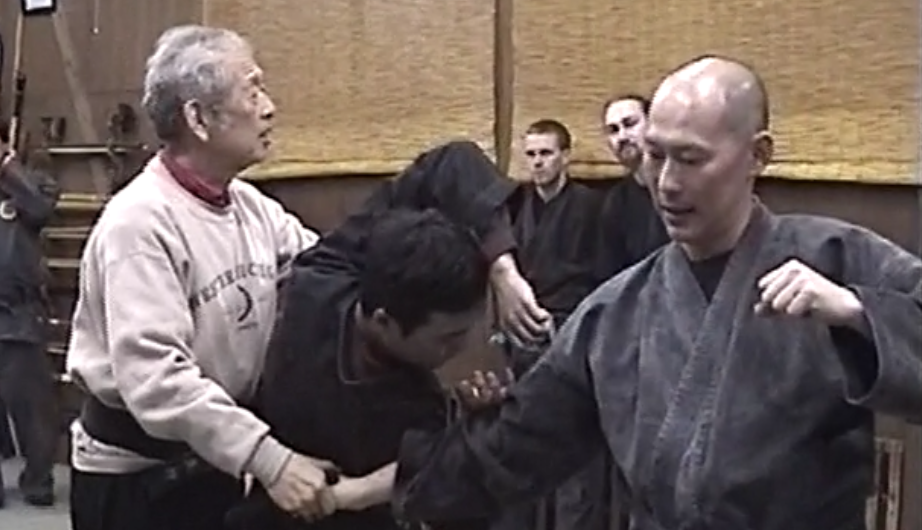
The training blended sword fundamentals with taijutsu, always circling back to interconnectedness—body, weapon, intent, and environment—and the necessity of zero-state awareness where conscious effort disappears. Hatsumi kept the sessions practical and exploratory, praising progress while urging deeper feeling and non-attachment to rigid forms.
March 7, 9, 12, 16’th 2004
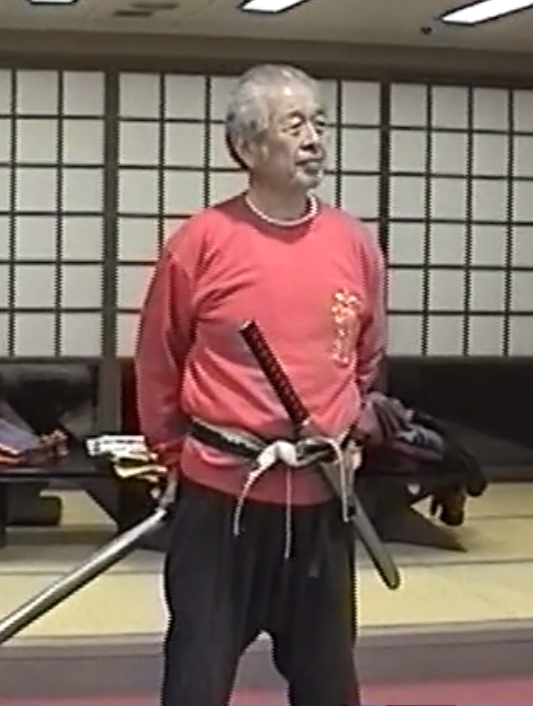
In the March 7–16, 2004 training sessions at the Honbu Dojo, Masaaki Hatsumi Soke continued to explore the year’s themes of Roppō Kuji no Biken (the secret sword of the six laws and nine syllables) and Budo no Kiso (fundamentals of budo), with a strong focus on sword handling integrated with whole-body taijutsu. He demonstrated how to enter against incoming cuts—especially to the body or shoulder—by using precise timing and body alignment rather than direct blocks. He explained that the defender must press or redirect with the elbow or shoulder to control the opponent’s line, preventing them from completing the cut while creating openings for counter-movement. Techniques emphasized flowing entries, shoulder-driven redirects, and using the entire body to disrupt balance without relying solely on the hands or blade.
二 刀 を 使 う た め に は ね 、 一 刀 を 使 わ な い こ と ね 。
Nitō o tsukau tame ni wa ne, ittō o tsukawanai koto ne.To use two swords, you must not use one sword.
Hatsumi repeatedly stressed the importance of non-fixed responses and zero intention. Nothing should be decided in advance; fixing a technique mentally leads to failure in real situations. He showed variations on controlling the sword arm—pressing, shifting grip, or flowing into throws—always highlighting that true effectiveness comes from whole-body connection rather than isolated action. He linked these ideas to Miyamoto Musashi’s two-sword style (nitō-ryū), explaining that using two swords truly begins with not using one sword at all—meaning the practitioner must master single-sword principles so deeply that dual wielding emerges naturally from the same zero-state awareness.
こ う い う 感 覚 は ね 、 自 分 で は な か な か 味 わ え な い か ら ね 。
Kō iu kan kaku wa ne, jibun de wa naka naka ajiwaenai kara ne.This kind of feeling is something you can rarely experience by yourself.
He encouraged studying the unique feeling that arises only when receiving techniques directly from another person. Self-practice can improve form, but the subtle sensation of being moved or controlled requires direct transmission from teacher to student. Demonstrations included close-range entries against grabs or strikes, using shoulder movement to unbalance, then transitioning into control or drops. He showed how to manipulate space so the opponent feels pinned or spun without obvious force, often with no audible sword clash—creating a silent, decisive cut or redirection.
The sessions maintained a practical, exploratory tone, blending sword fundamentals with taijutsu to underscore whole-body connection, zero-state awareness, and the unity of apparent opposites—body and blade, intent and non-intent, self and environment. Hatsumi guided participants toward trusting intuitive feeling over rigid patterns, fostering deeper internal awareness through direct experience and shared practice.
March 19, 21, 23, 26, 30’th and April 6, 11’th 2004
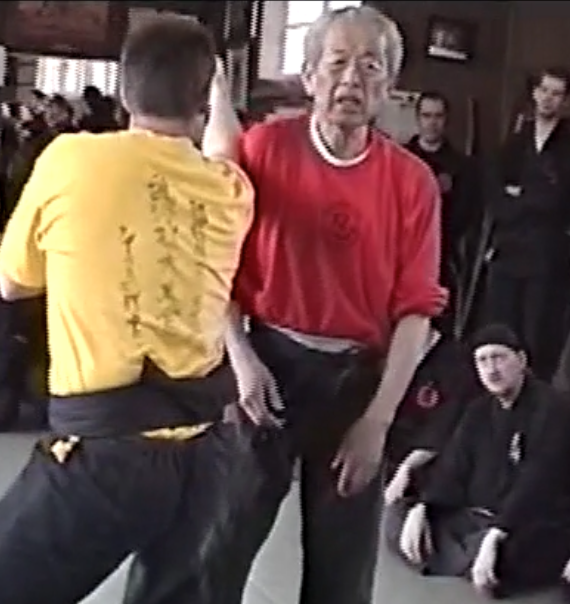
In the March 19–April 11, 2004 training sessions at the Honbu Dojo, Masaaki Hatsumi Soke continued refining sword principles within the year’s Roppō Kuji no Biken and Budo no Kiso themes, but shifted focus toward extremely close-range, intimate control and the hidden dangers of seemingly gentle techniques. He demonstrated how to enter against grabs or cuts by releasing one hand while maintaining contact with the other, using subtle body turns and shoulder pressure to redirect force without obvious exertion. He showed variations on finger control (yubi kudaki) and arm manipulation, stressing that techniques must remain soft and non-committal at first—never fully committing to one path—so the opponent cannot predict or counter effectively. He explained that true two-sword mastery (nitō-ryū) paradoxically begins with not using a single sword at all, meaning the practitioner must embody single-sword awareness so completely that dual wielding flows naturally from the same unified state without separate effort.
二 刀 を 使 う た め に は ね 、 一 刀 を 使 わ な い こ と ね 。
Nitō o tsukau tame ni wa ne, ittō o tsukawanai koto ne.To use two swords, you must not use one sword.
A major emphasis was on the irreplaceable nature of direct, personal transmission. Hatsumi pointed out that certain profound sensations—particularly the feeling of being moved, controlled, or redirected—cannot be fully grasped through solo practice or watching others. These experiences only arise when receiving the technique directly from another person, especially the teacher, making one-to-one interaction essential for internalizing the subtle, wordless understanding that underlies real effectiveness. He urged the group to study this unique feeling closely, as it forms the bridge between visible form and invisible reality.
剣 を 回 す だ け じ ゃ な い 。 切 れ 。 剣 で も っ て 巻 き 上 げ る ん だ 。
Ken o mawasu dake ja nai. Kire. Ken de motte makiageru n da.It’s not just turning the sword. Cut. You spin him up with the sword.
He demonstrated how to exploit pockets or clothing in close quarters—grabbing for money, hidden weapons like shuriken, or other items—turning the opponent’s possessions into tools against them or simply assessing resources before deciding whether to continue. He humorously noted that if there’s no money, there’s no need to bother, adding that he wouldn’t act in certain cases for exactly that reason. These examples highlighted that budo extends far beyond sport or kata: it involves practical street-level awareness, improvisation, and survival intelligence.
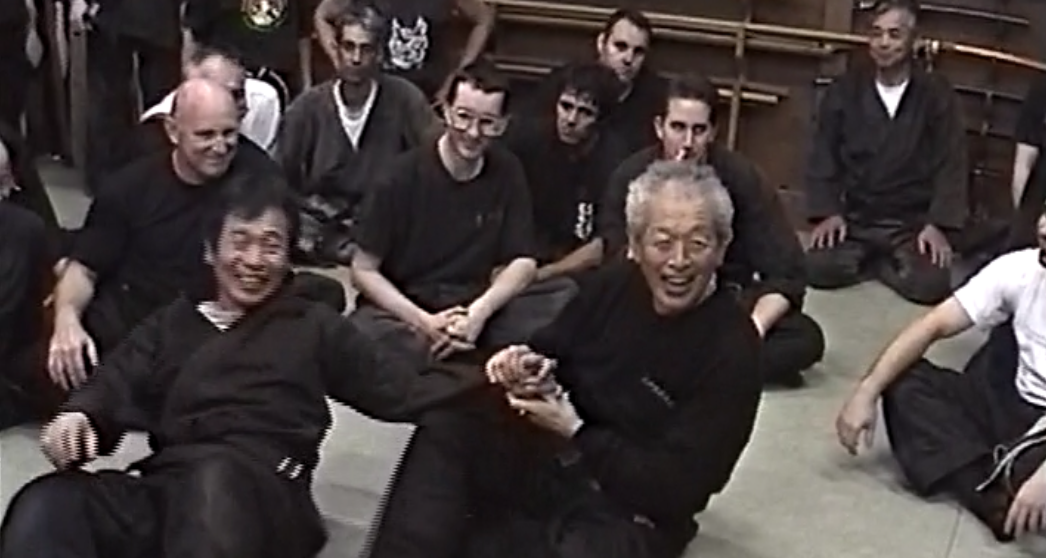
Hatsumi also showed how to generate silent, decisive outcomes with the sword—no audible clash or dramatic motion—by manipulating space so the opponent feels spun or pinned without force. He warned repeatedly about the hidden lethality of techniques that appear gentle: what looks harmless can easily break fingers, loosen teeth, or cause serious injury if applied carelessly. He demonstrated strikes to the base of the teeth (rather than the chin) for maximum disruption with minimal visible effort, but cautioned against overdoing it, recounting past incidents where similar applications led to dental damage. The sessions maintained a balance of serious instruction and humor, with Hatsumi guiding participants toward trusting intuitive, moment-to-moment adaptation over rigid planning or visible power.
April 1-3 Takamatsu 33 Anniversary Taikai 2004
Day 1 (April 1’st 2004)
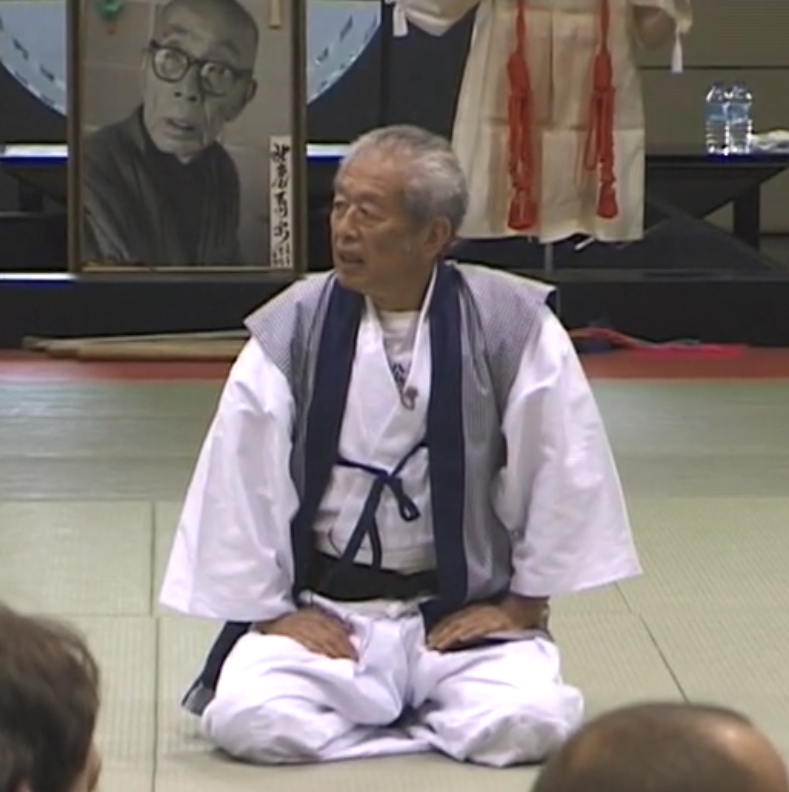
In the 2004 Takamatsu Memorial Taikai (Day 1) in Japan, Masaaki Hatsumi Soke opened by framing the year’s theme—Roppō Kuji no Biken (the secret sword of the six laws and nine syllables)—through a deep esoteric lens. He connected Miyamoto Musashi‘s Go Rin no Sho (five elements: earth, water, fire, wind, void) to Mikkyō (esoteric Buddhism), adding a sixth element: 識 (shiki, consciousness/perception). He explained that in Mikkyō, the six great elements encompass the totality of Buddhist reality, while in budo this becomes a complete view of martial essence. Ninjas, he said, “endure the body, endure the mind, endure the form, and endure consciousness practicing through six generations rather than five to fully grasp this holistic understanding.”
忍 者 は そ の 身 を 忍 び 心 を 忍 び 式 を 忍 ぶ と 言 い ま し て ね 、 識 を 忍 む と … 五 代 じ ゃ な く て 六 代 ま で で す ね 、 え ー 、 修 行 し た と 。
Ninja wa sono mi o shinobi kokoro o shinobi shiki o shinobu to iimashite ne, shiki o shinomu to… go-dai ja nakute roku-dai made desu ne, ē, shugyō shita to.Ninjas are said to endure the body, endure the mind, endure the form, and endure consciousness… not five generations, but six generations of practice.
Hatsumi emphasized that the seminar would center on the practical reality of long and short swords, urging participants to truly grasp their essence beyond theory. He demonstrated hidden-weapon integration—shukō (finger claws), shuriken, and other concealed tools—while keeping them invisible to the opponent. He showed how to squeeze or control with minimal visible action (e.g., toe/fingernail pressure while moving), making the opponent unable to see or predict the source of control. He stressed that even without direct hand contact, techniques can succeed by entering the right spatial angle or timing.
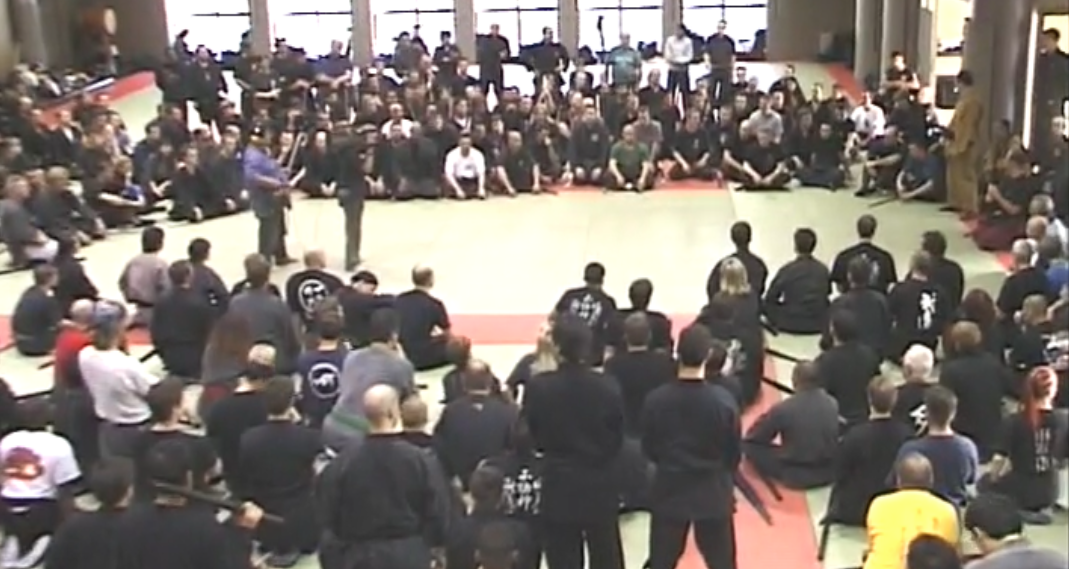
A unique point was the concept of “up-down” dynamics in pinning or dropping: once pressure rises, immediately drop straight down for decisive effect (“Up! Down. Die.”). He linked this to silent, unseen dominance—opponents cannot retaliate because they never perceive the true point of control. Hatsumi also highlighted the importance of 識を忍ぶ Shiki o shinobu (enduring consciousness) as the highest level of awareness, where perception itself becomes a tool to endure and transcend ordinary limits. The training blended sword work with taijutsu, hidden weapons, and spatial manipulation, always returning to the idea that real mastery lies in what cannot be seen or anticipated.
Day 2 (April 2’nd 2004)
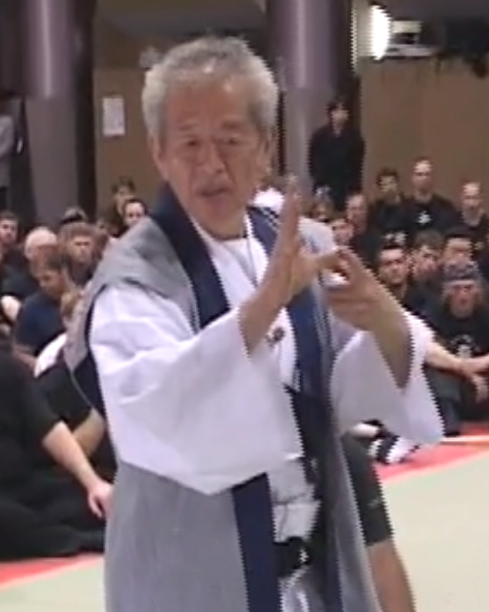
In the second day of the 2004 Takamatsu Memorial Taikai in Japan (April 2, coinciding with the 33rd anniversary of Takamatsu Toshitsugu’s passing), Masaaki Hatsumi Soke opened with a solemn yet joyful acknowledgment of the occasion. He expressed confidence that Takamatsu Sensei would be pleased to see so many international participants gathered in support of the Bujinkan. He reflected on the significance of the 33rd memorial, noting it as a pivotal moment for the Bujinkan to protect its essence and traditions moving forward, especially as higher ranks like 15th dan would emerge in the future.
高 松 先 生 も こ の よ う に 世 界 か ら 来 て い た だ い て 大 変 喜 ん で い る と 思 い ま す 。
Takamatsu Sensei mo kono yō ni sekai kara kite itadaite taihen yorokonde iru to omoimasu.Takamatsu Sensei would be extremely pleased to see so many coming from around the world like this.
He reminded the group of the longstanding rules of transmission within the nine ryūha—passed down as 一子相伝 Isshi Sōden (one-to-one inheritance from teacher to single successor) with strict, unchanging guidelines. These rules, he clarified, apply not just to the Bujinkan as a whole but specifically to the nine traditions themselves.
昔 か ら で す ね 。 代 々 の 誓 い の 一 子 相 伝 で ね 。 決 ま っ た ル ー ル が あ り ま す 。
Mukashi kara desu ne. Dayo no chikai no isshi sōden de ne. Kimatta rūru ga arimasu.It’s been this way since ancient times. It’s one-to-one transmission with generational vows. There are fixed rules.
Training focused on practical, adaptive sword work with hidden or improvised tools. Hatsumi demonstrated close-in entries and controls, showing how to attach shukō (finger claws), hidden weapons, or leverage devices (teko / fulcrums) to fingertips, toes, forearms, or elsewhere—imagining armor, metal fans (tessen), or other everyday items as extensions of movement. He encouraged practicing these integrations to make techniques more versatile and unpredictable, even when no weapon is visibly drawn.
He also showed how a metal fan or similar rigid object could cut or strike effectively when used with proper body mechanics (“金属扇 it can cut, you see, when you use like this”). The emphasis was on imagining and embodying multiple possibilities in real-time—attaching tools mentally and physically to adapt without fixed form.
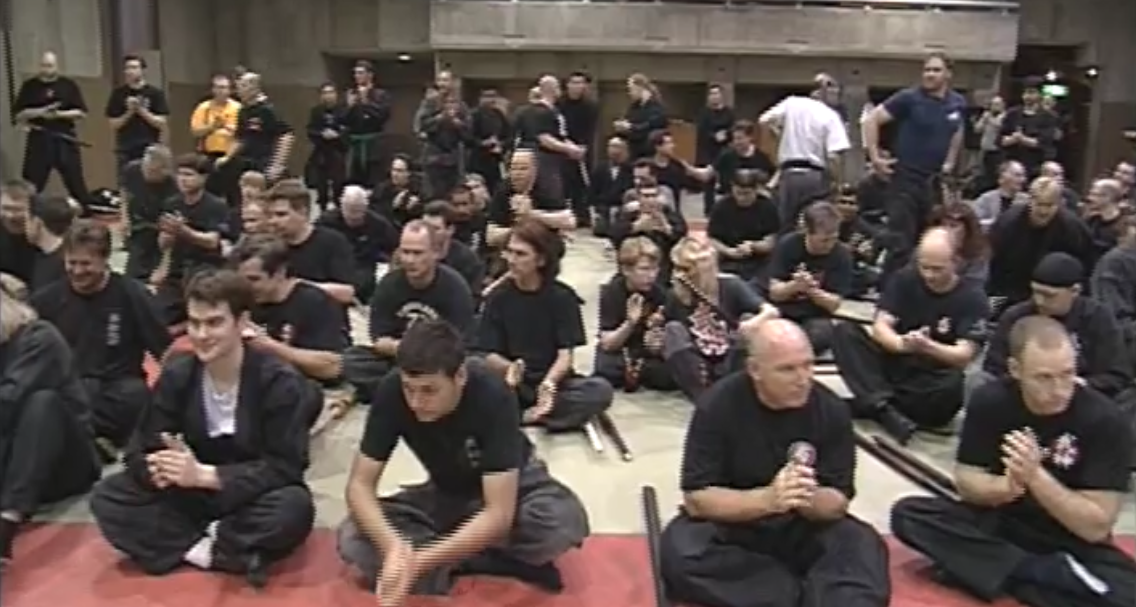
The day closed with appreciation for the group’s effort and a call to continue tomorrow, maintaining a reverent yet lively atmosphere honoring Takamatsu Sensei’s legacy through living, evolving practice.
Day 3 (April 3’rd 2004)
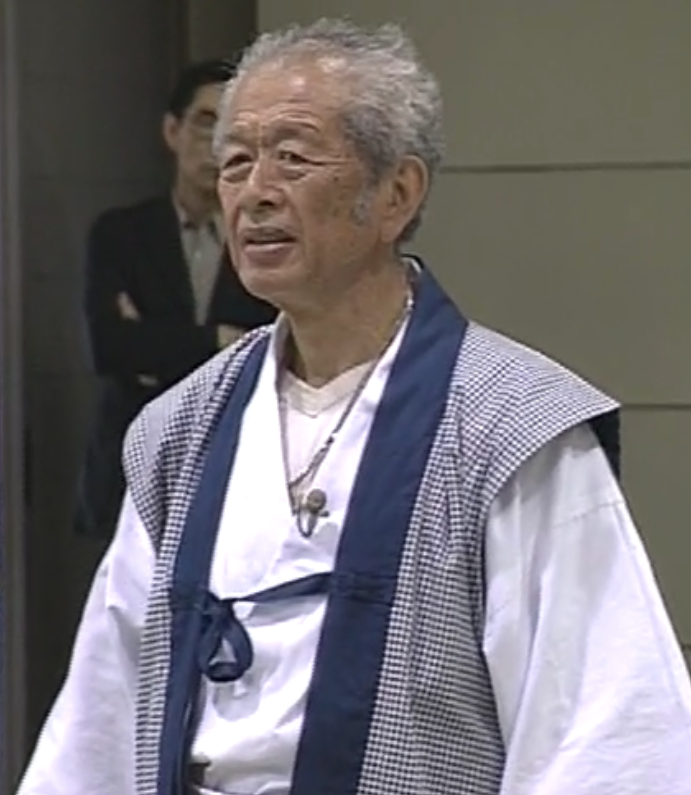
In the third and final day of the 2004 Takamatsu Memorial Taikai in Japan, Masaaki Hatsumi Soke brought the event to a close with a reflective tone, honoring the occasion as the 33rd anniversary of Takamatsu Toshitsugu’s passing (April 2). He expressed deep appreciation for the international gathering, believing Takamatsu Sensei would be profoundly pleased to see so many people from around the world supporting and preserving the Bujinkan. He spoke of the importance of safeguarding the tradition moving forward, especially as higher ranks such as 15th dan would begin to appear, and reiterated the ancient, inviolable rules of transmission within the nine ryūha—passed as isshi sōden (one-to-one inheritance) with strict, generational vows that remain unchanged.
体 で や っ と こ う や っ て 行 く 。
Karada de yatto kō yatte iku.You have to use the whole body to do this properly.
Training continued with sword work emphasizing leverage, body integration, and hidden-tool adaptation. Hatsumi demonstrated how to switch grips or reverse the blade mid-motion, using the whole body to redirect or drop the opponent without relying solely on arm strength. He showed techniques where contact is optional or minimal—entering angles where hands may not even reach the target yet still achieve control (from earlier context, but here applied in new variations). He encouraged imagining attachments like shikō, hidden weapons, or fulcrums on fingertips, toes, or forearms to multiply options —turning everyday or concealed items into extensions of movement.
エ ク ス カ リ バ ー の 剣 だ と か ね 、 日 本 の 名 刀 だ と か ね 、 そ の 関 係 が ね 、 よ く わ か っ て く る と 思 う ね 。
Ekusukaribā no ken da to ka ne, Nihon no meitō da to ka ne, sono kankei ga ne, yoku wakatte kuru to omou ne.Swords like Excalibur, or Japan’s famous named blades—their connection becomes clear, I think.
A unique thread was the deeper symbolic meaning of the sword itself. Hatsumi connected the practice to legendary blades like Excalibur and Japan’s 名刀 Meitō (famous swords), suggesting that understanding the sword’s true nature reveals connections between East and West, and between the physical weapon and higher dimensions. He implied that even dying by the sword does not end life in the deeper sense—there is a continuity beyond physical form.
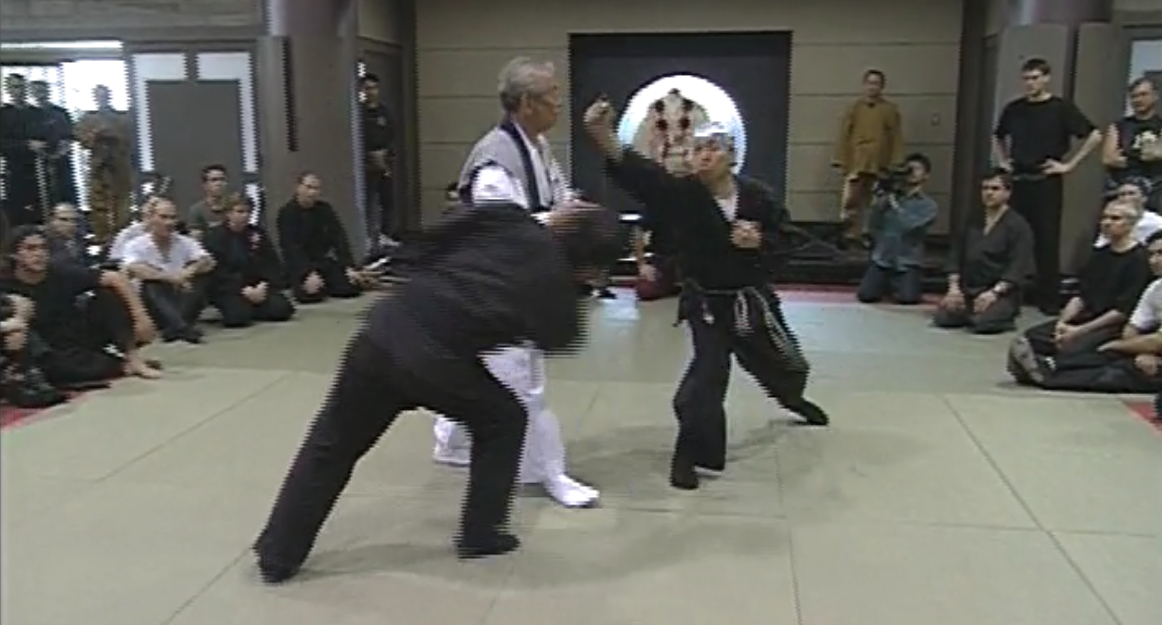
The day ended with warm gratitude for the group’s effort and an invitation to enjoy the evening, leaving participants with a sense of reverence for Takamatsu Sensei’s legacy, the sacred responsibility of transmission, and the sword as both a tool and a symbol of transcendence.
い い ト レ ー ニ ン グ し て く れ ま し た 。
Ii torēningu shite kuremashita.You did very good training.
April 18, 20, 23, 25, 27, 30’th and May 2, 7, 11’th 2004
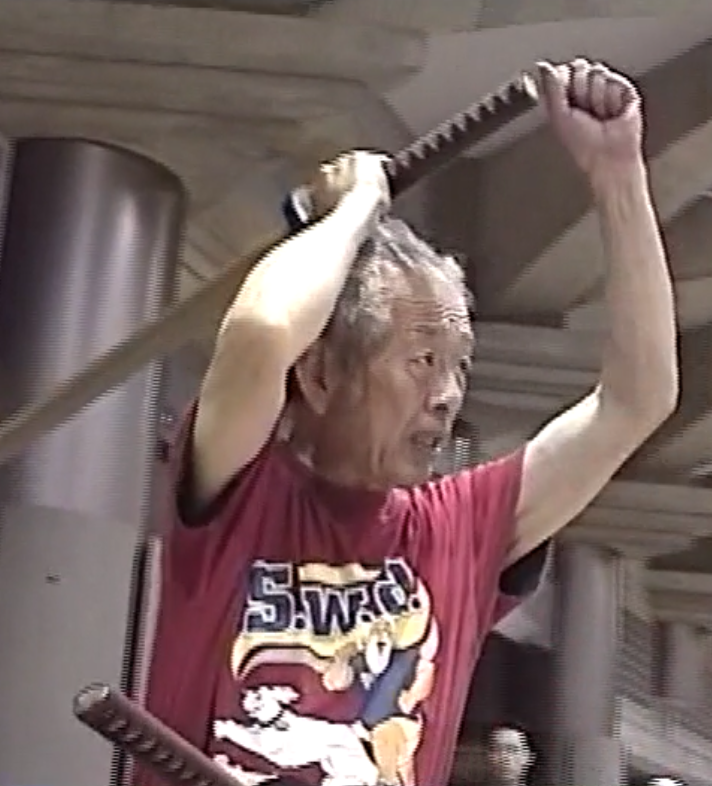
The April-May 2004 training session with Hatsumi Sōke focuses on fluid, non-forced taijutsu control, where initial contact remains soft and playful, allowing natural balance-taking without early or habitual gripping. He demonstrates receiving attacks lightly, trapping the opponent’s arm against his own leg or body so both arms become vulnerable through subtle shifts, emphasizing that no position is ever fixed—everything adapts instantly via body awareness and spatial flow rather than premeditated technique.
体と空間で入る。で決めてないんだよ決めてるようにやってけど、全然決まってない。
Karada to kūkan de hairu. De kimetenai n da yo kimeteru yō ni yatte kedo, zenzen kimattenai.“Enter with body and space. Nothing is decided, even though it looks decided, it’s completely undecided.”
Hatsumi repeatedly stresses holding only when truly necessary; routine grabbing fails in real scenarios. He shows body attachment—sticking so the opponent cannot escape—enabling the practitioner’s body to follow the attacker’s momentum, creating openings for redirection, strikes, or throws. In drills, he illustrates raising arms with tsuba-like lifts or tsuki motions to meet rather than flee force, teaching that true control arises from joining the movement. He contrasts two pushing variations (one pressing from above while securing below, the other releasing to redirect), noting their distinct feelings and the need for separate practice.
逃げられないから。体もついてくるんですよ。これがとっても大事だってことを覚えてる。
Nige rarenai kara. Karada mo tsuite kuru n desu yo. Kore ga tottemo daiji da tte koto o oboeteru.“Because you can’t escape. The body comes along too. Remember this is extremely important.”
He teaches using the opponent as a shield against further threats by turning their body while maintaining control. With weapons, he explores deceptive handle positioning to confuse timing before finishing with short blades, and insists on abandoning conscious intent to cut or strike—deliberate effort telegraphs action and invites evasion. Effective technique emerges when the body moves without trying, integrating naturally into the flow. Demonstrations include minimal hidden elbow/wrist motions for covering or redirecting, targeting wrists/hands over heads to open thrust lines, and physiological cues like feeling pulse points for artery targeting.
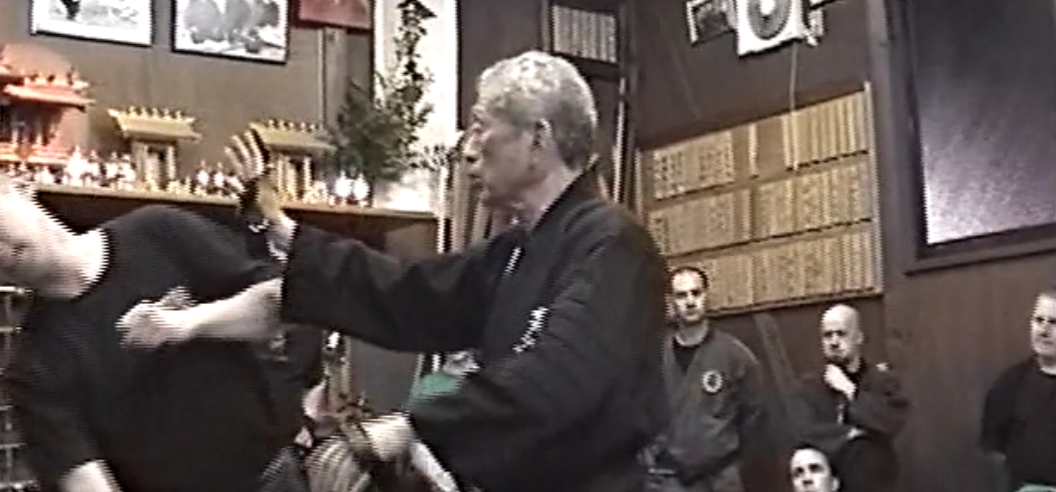
Throughout, he highlights researching versatile strikes—even from weak grips—that drop opponents effectively, and whole-body redirection over isolated hand actions. He concludes that genuine budō requires full bodily absorption of principles, beyond mere mental or emotional understanding; only then does unified mind-heart-body awareness enable hapō ken and fearless adaptation in Bujinkan budō taijutsu.
May 14, 21, 28’th and June 4, 11, 18, 25’th 2004
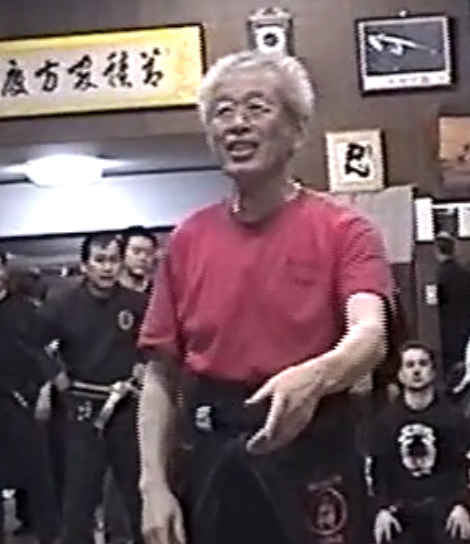
The May 2004 training session with Hatsumi Sōke emphasizes intuitive sensory awareness over visible technique, particularly through elbow usage and subtle finger control to create control without obvious effort. He demonstrates how the elbow draws close to the head or target area to enable quick, hidden redirection, stressing that one must study this feeling deeply so the opponent cannot read intentions. He shows hooking and releasing in rapid succession, using the elbow’s reversal to transmit force or endure pressure while flowing naturally, even when space limits large movements—simply lowering with the hand suffices to disrupt vision or balance.
肘を使えることよく覚えてる、こうですよ。
Hiji o tsukaeru koto yoku oboeteru, kō desu yo.“Remember well how to use the elbow, like this.”
Hatsumi teaches avoiding any display of technique to the opponent, as revealing it invites counters; instead, movements should remain unpredictable and zero-intent, relying on spatial gaps rather than power or specific grips. He illustrates finger positioning to press or hook minimally, creating openings where the next threat—real or potential—cannot be anticipated, and how releasing a hold mid-motion keeps the opponent off-balance. In multi-angle scenarios, he controls both sides simultaneously or switches freely, even after letting go with the hands, as the greater flow persists.
相手は自分自身を忘れさせるね。
Aite wa jibun jishin o wasuresaseru ne.“Make the opponent forget themselves.”
He highlights using centrifugal force from legs or body rotation to make the opponent forget themselves, dispersing their power to achieve stability and balance. Demonstrations include pulling clothing alongside the hand to double the hold before kicking, timing strikes to exploit weight shifts so the opponent cannot brace, and employing hidden elements—like concealed tools or deceptive releases—to exploit momentary vulnerabilities. He stresses that real encounters involve luck and unpredictability; no skill guarantees survival if fortune turns, urging constant caution and appreciation of life’s fragility, akin to historical references like kuji-in for mental resilience.
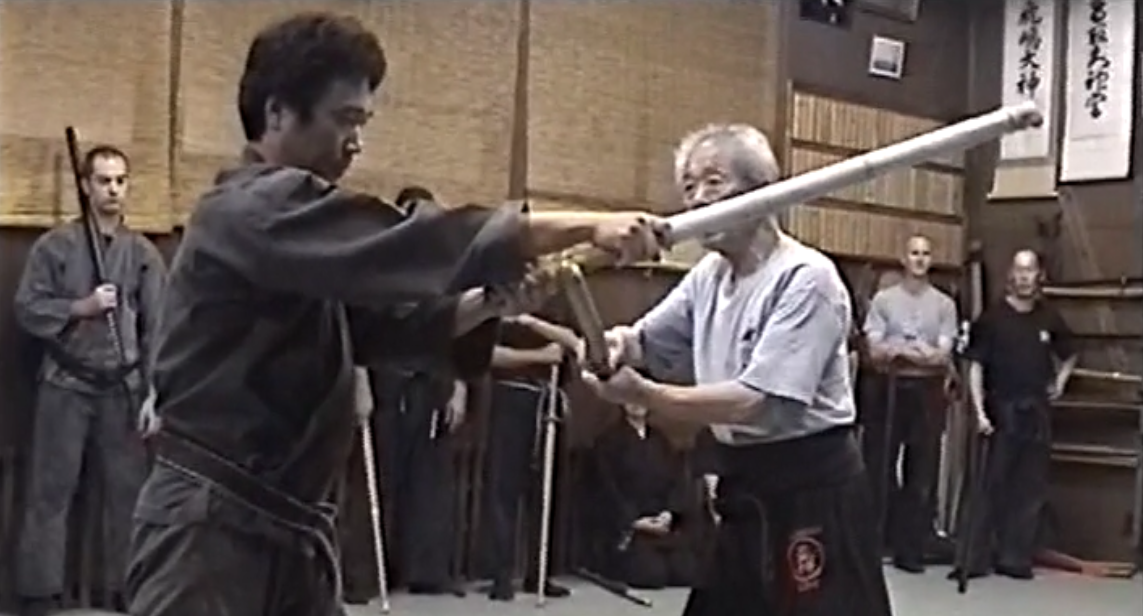
Throughout, the focus remains on sensory study—feeling which hand the opponent uses, sensing openings instinctively, and adapting without calculation—so actions emerge automatically, rendering the practitioner hard to counter while maintaining effortless versatility.
July 2, 6, 9, 20, 23’th and August 6, 8, 10’th 2004
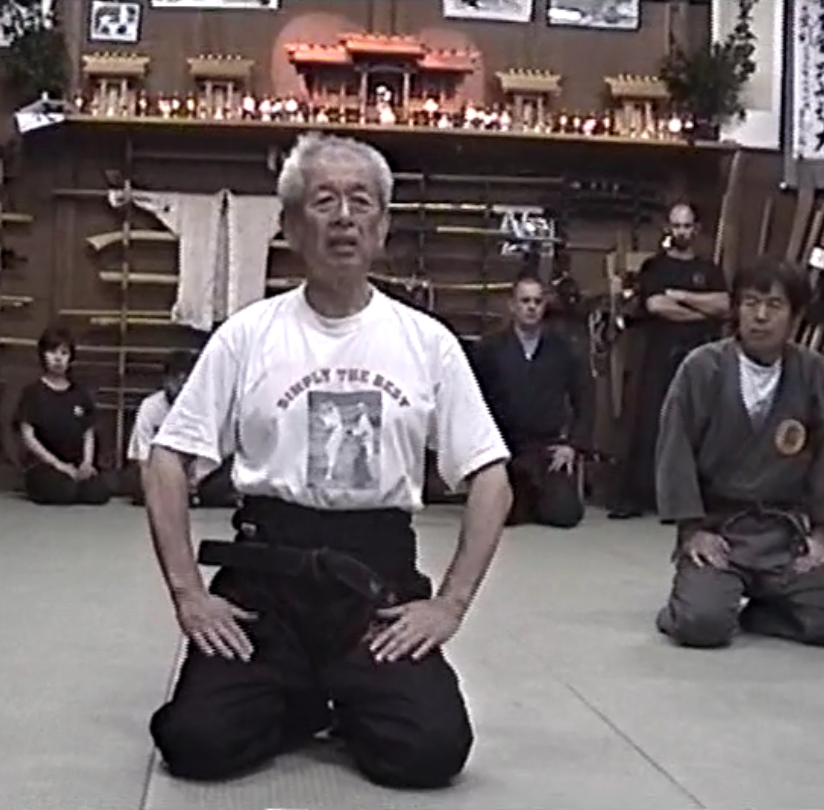
The July-August 2004 training session with Hatsumi Sōke centers on precise entry methods and the use of natural force in taijutsu, with strong emphasis on entering in directions that prevent counters and control the opponent without direct grabbing. He repeatedly demonstrates that the way of entering is crucial: one must absolutely avoid flowing into the opponent’s striking path. Instead, enter while opening spaces and pressing points so the opponent cannot hit effectively. He shows not taking the arm or technique directly but opening it, then using the elbow to strike key points sharply—causing a collapse or “パタン Patan[3]”—followed by throws, often three times in sequence. He warns that such actions are dangerous, so stop immediately after demonstration, and stresses releasing holds quickly.
入り方が大事だな。入り方が。絶対にぶ流れる方向には入ってないとダメだ。
Iri-kata ga daiji da na. Iri-kata ga. Zettai ni bu-nagareru hōkō ni wa haittenai to dame da.“The way of entering is important. The way of entering. You absolutely must not enter in the direction where it flows into the opponent’s path.”
Hatsumi explains that current training teaches more than isolated body techniques; it conveys larger natural power and natural force. By tuning into this, one understands true fighting survival. He demonstrates pressing while directing the opponent to perform specific actions, and shows how the same movements adapt across contexts, including with weapons drawn but still usable in flow. In later segments, he illustrates armor considerations: practice as if wearing yoroi changes movement entirely—body enters openings instead of hands, keeping spaces open during entry, and power points shift accordingly. Techniques evolve generationally based on clothing, equipment, and cultural factors, making engineering and folkloric study essential. He positions Bujinkan as preserving a cultural heritage for humanity, not promoting violence, but safeguarding life through mindful transmission.
自然力 を 教え て いる わけ です 、 自然力 。
Shizen-ryoku o oshiete iru wake desu, shizen-ryoku.“We are teaching natural power, natural force.”
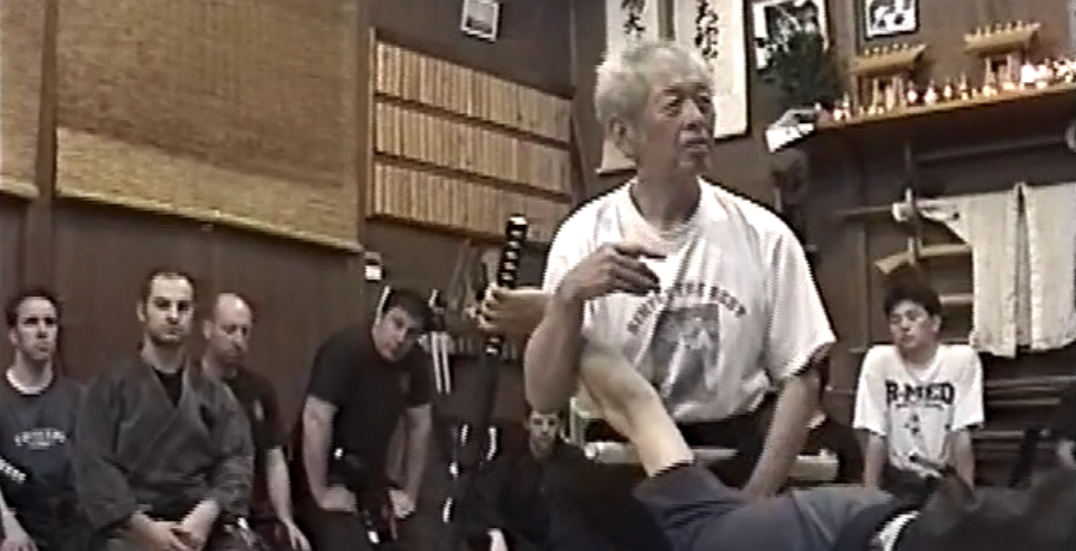
He teaches residual awareness (zanshin) as extremely important, maintaining it fully to the end. Demonstrations include pulling downward on armor-like grips to expose vulnerabilities, sticking the body to incoming force without hand reliance, chaining responses naturally to zero resistance, and searching openings carefully since armor (or everyday items like pockets with objects) blocks many entries and creates new “armor” effects. Movements must adapt to these variables without force, using space and air instead of weapons alone.
世界 遺産 と して やって る わけ ね 。
Sekai isan to shite yatteru wake ne.“We are doing this as a world heritage.”
August 15, 20’th and September 10. 17, 24, 28’th and October 1’st 2004
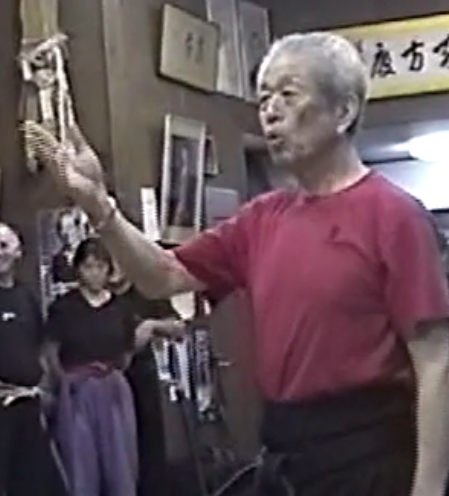
The August-October 2004 training session with Hatsumi Sōke concentrates on body-based suppression of the opponent’s structure and movement, using shoulder, elbow, and hip pressure to create multiple blockages and drops without relying solely on hand grips. He demonstrates pressing various body parts to inhibit natural motion—such as squeezing shoulders to cause immediate collapse or discomfort—while explaining that different points produce distinctly different effects even if the hand position looks similar. He stresses that the body itself comes along in the technique, making suppression feel total and inescapable, and shows how opening spaces or shifting angles allows follow-up control, like turning the opponent sideways or dropping them by leveraging the whole torso rather than isolated limbs.
キックはなるべくかわすってことを覚えておいてください。実戦の場合ね。
Kikku wa narubeku kawasu tte koto o oboete oite kudasai. Jissen no baai ne.“Remember to evade kicks as much as possible. In real combat situations.”
Hatsumi repeatedly highlights avoiding direct hand evasion of kicks due to high risk in real scenarios—especially against shoes or hard impacts—urging practitioners to evade or redirect kicks primarily with the body instead of hands whenever possible. He teaches that hand blocks invite greater danger, so training should prioritize whole-body movement to handle strong kicks safely. In sword-related drills, he explains that swords have multiple aspects or “three” or “five” elements (referring to edges, flats, guards, etc.), demonstrating how to enter close, use the body to stick or ride incoming cuts, and apply strikes or controls at the nearest point with feeling rather than calculation. He shows resting the sword or tool on the opponent’s structure to control without grabbing shoulders forcefully, allowing access to weapons or further actions while the opponent remains immobilized.
剣はやっぱり五つあるということを覚えておいてね。
Ken wa yappari itsutsu aru to iu koto o oboete oite ne.“Remember that the sword has five aspects/elements.”
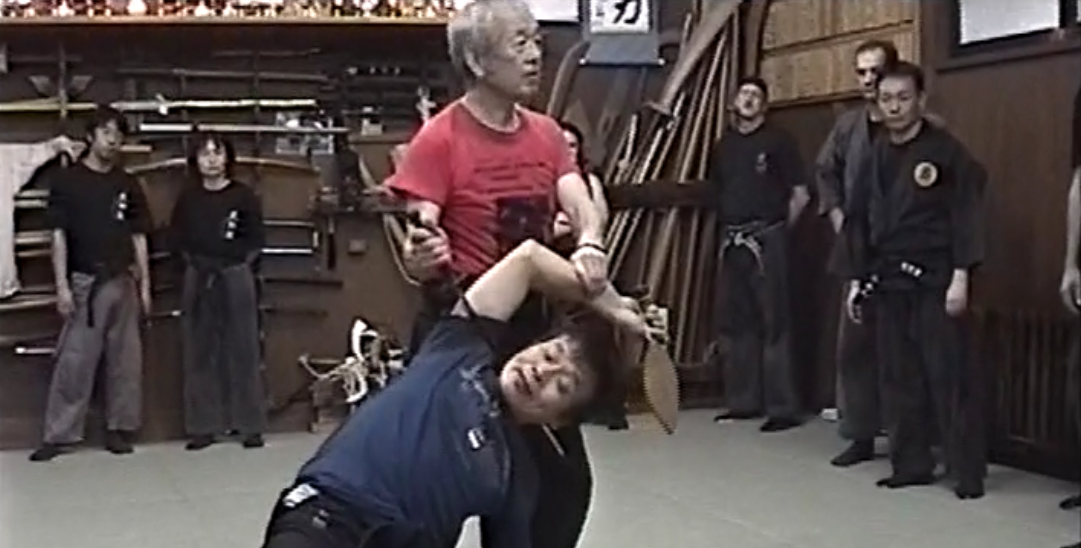
He emphasizes that in serious fights or life-or-death encounters, adaptation to changing circumstances is crucial—respond according to what arises rather than fixed patterns. Techniques are not just about striking down the opponent; they involve variations (such as from shuko tools) where the goal shifts to knocking down or disrupting balance using the waist and full body, not merely hitting with hands. He demonstrates quick, body-driven drops (“daan” sound effect) to fell the opponent rapidly, noting how entering properly lets the practitioner move freely while the opponent cannot respond or escape.
打ち倒すばかりじゃない。
Uchi taosu bakari ja nai.“It’s not just about striking down the opponent.”
October 3, 8, 10, 15, 24, 29’th and November 5, 7’th 2004
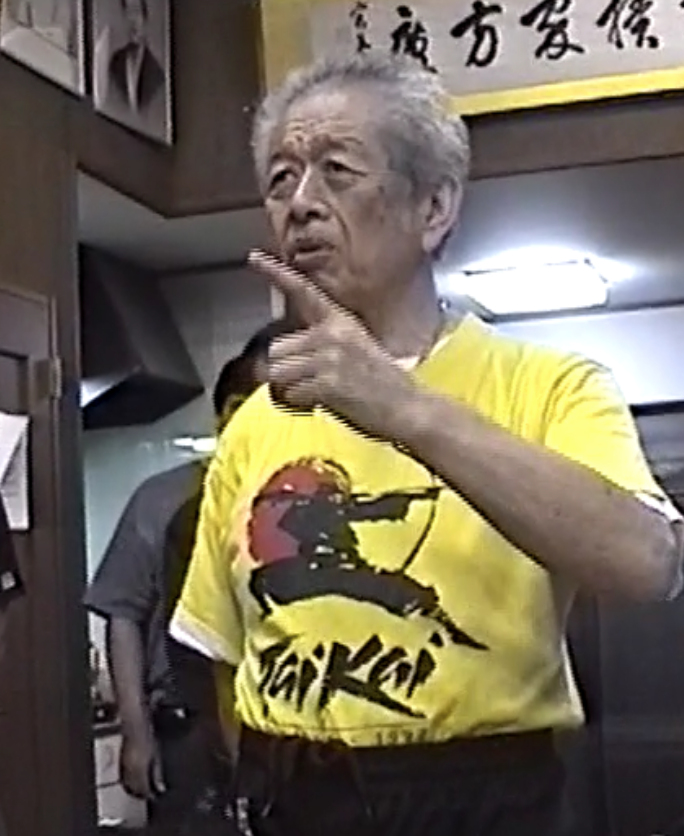
The October-November 2004 training session with Hatsumi Sōke focuses on the principle of “wrapping up” or compression without initial force, where the practitioner starts from emptiness and gradually envelops the opponent as they commit to an attack. He demonstrates entering with no preconceived grab, allowing the opponent’s punch or movement to create an opening that he then takes away by walking forward—disrupting balance through hip-driven motion rather than arm strength alone. The elbows connect deeply to the hips for full-body leverage, making resistance futile even against stronger opponents, as the technique uses the attacker’s own extension to straighten and expose their structure.
男 性 で も 女 性 で も な い 。 命 を 守 る 。 キ ー プ す る 。
Dansei de mo josei de mo nai. Inochi o mamoru. Keep suru.“Neither masculine nor feminine. It protects life. It keeps/preserves it.”
Hatsumi stresses that techniques transcend gender, strength, or weakness—neither masculine nor feminine, but a method to preserve life (“命の技 Inochi o mamoru.”). He shows using the entire body to attach and control rather than isolated hands or fingertips; avoid thinking of “taking” with the hand first—instead, stick fully so the opponent becomes like a puppet or doll, unable to move freely. Demonstrations include leg trapping combined with upper-body wrapping, where pulling one limb draws the opponent in for a sudden drop (“パーン!” Pā n! (see note 3)), and maintaining free hand use throughout for ongoing options without locking into one grip.
鎧を着る時。鎧だと相手の、重心を、壊す意味においてとっても大事なんだよ。
Yoroi o kiru toki. Yoroi da to aite no, jūshin o, kowasu imi ni oite tottemo daiji nan da yo.“When wearing armor. In armor, this is extremely important for the purpose of destroying the opponent’s center of gravity.”
He explains that true effectiveness arises from not forcing or resisting—simply taking what’s available in the moment, like fishing without targeting a specific catch. In armor contexts, this wrapping becomes vital for destroying the opponent’s center of gravity without immediate grabs; position the body correctly first, then use all limbs naturally to restrict movement. He notes how the opponent ends up with their back turned or head exposed, unable to take proper ukemi, as if caught in a typhoon’s void—nothing to grasp, everything pulled away progressively. Weapons integrate seamlessly once control is established, but training emphasizes unarmed foundation so armed applications feel natural and terrifyingly efficient.
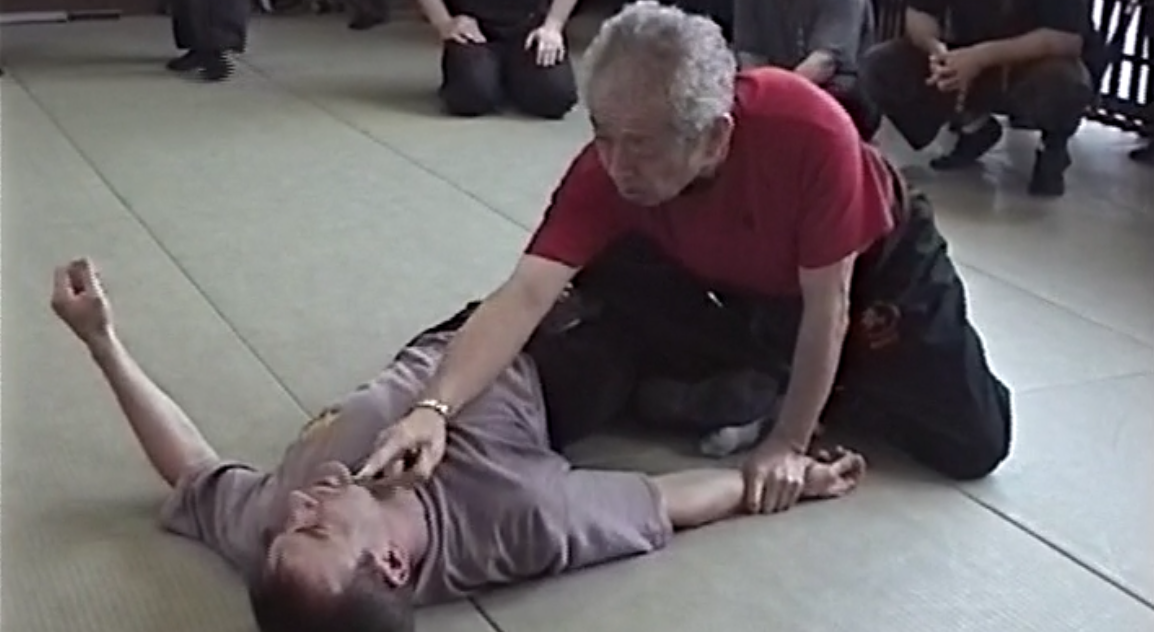
気持ちでわかるね。だから殴ってきたらこれでこれでもいいね。
Kimochi de wakaru ne. Dakara nagutte kitara kore de kore de mo ii ne.“It becomes understandable through feeling. So when they punch, this or that works fine.”
Throughout, he encourages feeling the opponent’s intent intuitively (“気持ちでわかる Kimochi de Wakaru”), avoiding over-muscular effort, and practicing to keep hands always ready while the body envelops completely for total suppression.
November 19, 26, 28’th and December 5, 10, 17, 19’th 2004
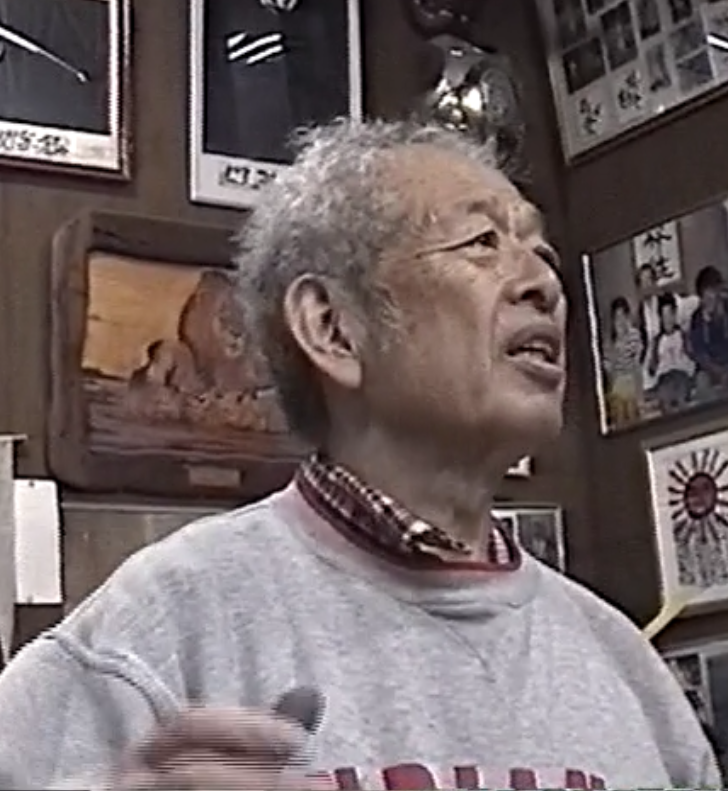
The November-December 2004 training session with Hatsumi Sōke centers on the effective, everyday integration of small improvised weapons (spoons, chopsticks, shuriken, bo shuriken, or any handheld object) into taijutsu, emphasizing that true combat utility comes from subtle finger-level control rather than overt strength. He demonstrates hooking or attaching with minimal contact—often one finger—then shifting the entire dynamic so the opponent collapses or opens without forceful gripping; dropping the tool mid-sequence allows quick follow-ups like repeated light cuts (“キュッ、キュッ、キュッ”) or presses, always with warnings to be careful due to danger.
強 く な ろ う と 思 わ な い で ね 。 今 度 ね 、 空 間 よ く 覚 え る こ と ね 。 強 い 弱 い じ ゃ な く て ね 。
Tsuyoku narō to omowanaide ne. Kondo ne, kūkan yoku oboeru koto ne. Tsuyoi yowai ja nakute ne.“Don’t think about becoming strong. Next, remember space well. It’s not about strong or weak.”
Hatsumi stresses avoiding the mindset of “becoming strong”—focus instead on space awareness and lightness, where power is irrelevant and technique emerges from zero intention. He shows how even a single incoming action creates cascading effects: pressing or redirecting leads the opponent to return or fall naturally, changing direction mid-flow without fixed forms or sequences—everything resets to zero. Practitioners must feel and exploit the “escape” direction the opponent chooses, turning their strongest evasion into a counter collision point where they crash into control.
逃 が し て く れ る 方 向 に 逃 げ る と 、 そ こ を 押 さ え ら れ て く る ん で す ね 。
Nigashite kureru hōkō ni nigeru to, soko o osaerarete kuru n desu ne.“If you escape in the direction they let you escape to, that spot gets pressed/controlled.”
He describes this as a modern, essential martial sensation for changing times—countering without meeting force head-on, using the opponent’s commitment against them like an iridescent jewel (tamamushi) illusion that appears solid but shifts unpredictably. Demonstrations include armor-specific entries: slipping under maedare (front apron) to open gaps, targeting ears for painful control without full grabs, or using short ninja-to angles from below to hook and disrupt rather than clash directly—reversing cuts risks self-injury if the opponent turns.
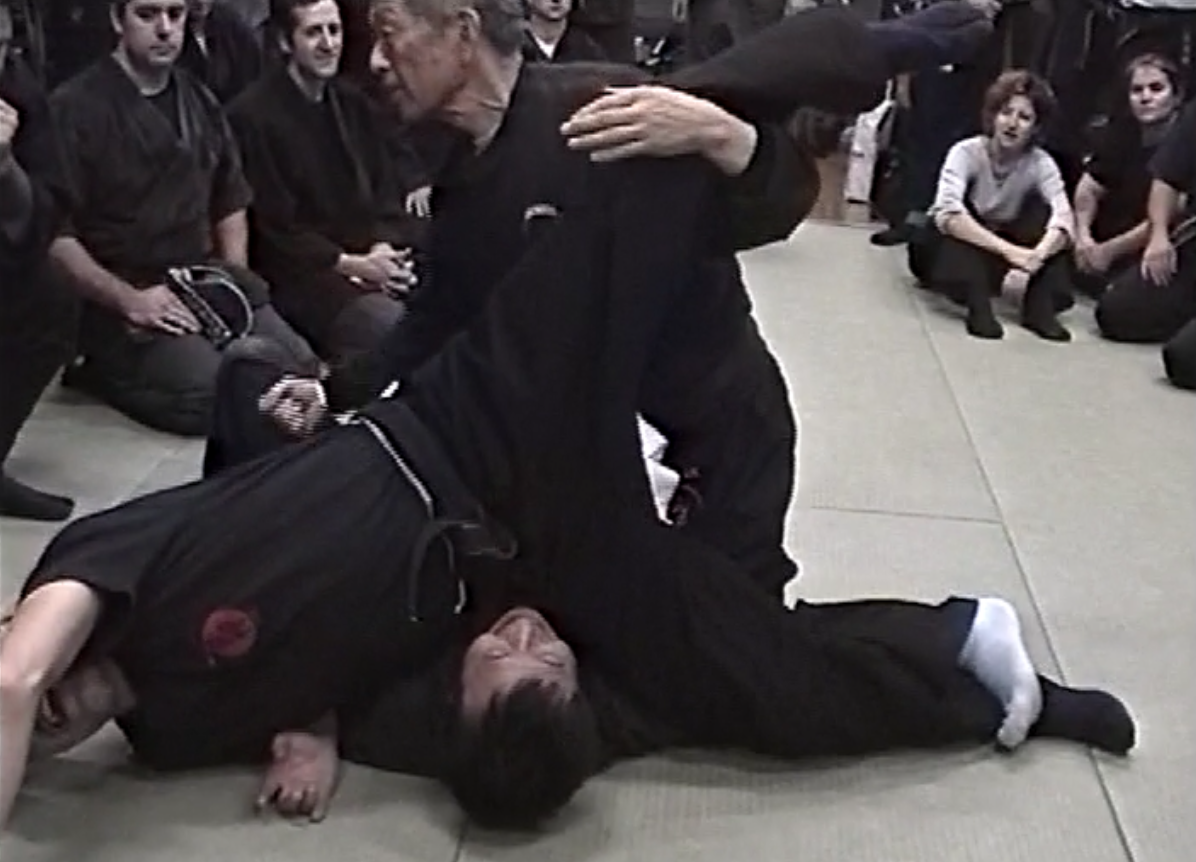
Throughout, he teaches that weapons become truly usable only after mastering this spatial, non-grasping sensation—train until control feels automatic and natural, where the opponent “fits” into suppression themselves without deliberate force. The goal is not destruction but effortless dominance through awareness of openings, direction changes, and improvised tools in real scenarios.
そうですよね。ここで教えろっていったって、教えられないね。教わって何もないね。こういう感覚まで練習しなくちゃだめ、できるまでね。
Sō desu yo ne. Koko de oshiero tte itta tte, oshierarenai ne. Osowatte nani mo nai ne. Kō iu kankaku made renshū shinakucha dame, dekiru made ne.
“That’s right. Even if I say teach here, it can’t be taught. Being taught, there’s nothing. You must practice up to this sensation, until you can do it.”
Daikomyōsai (November 30, December 1-2’nd 2004) Origins of Budo
Day 1 (November 30’th 2004)
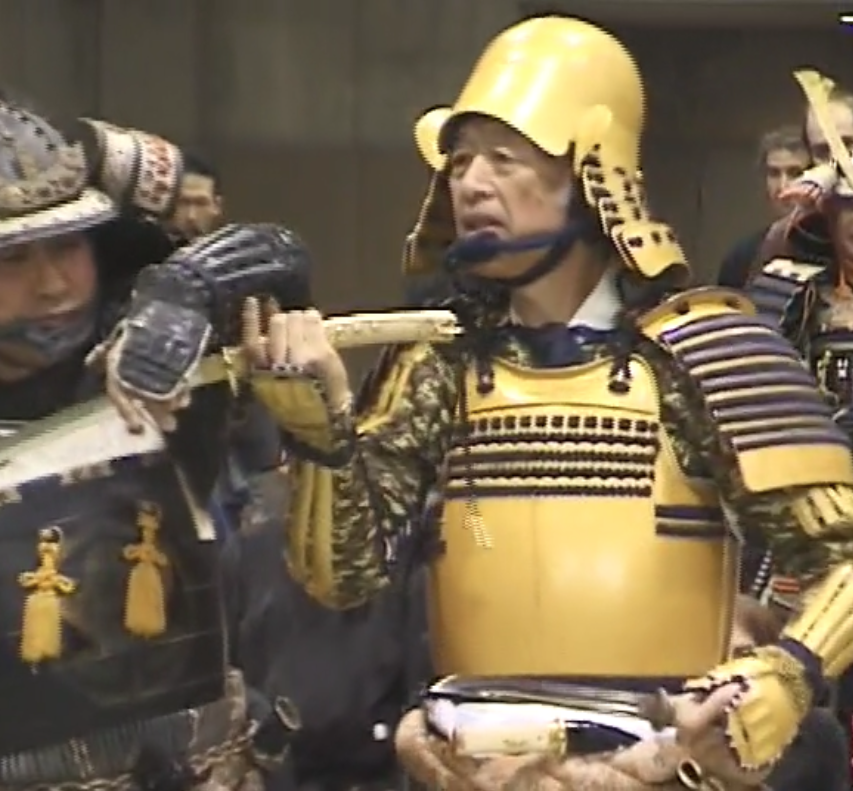
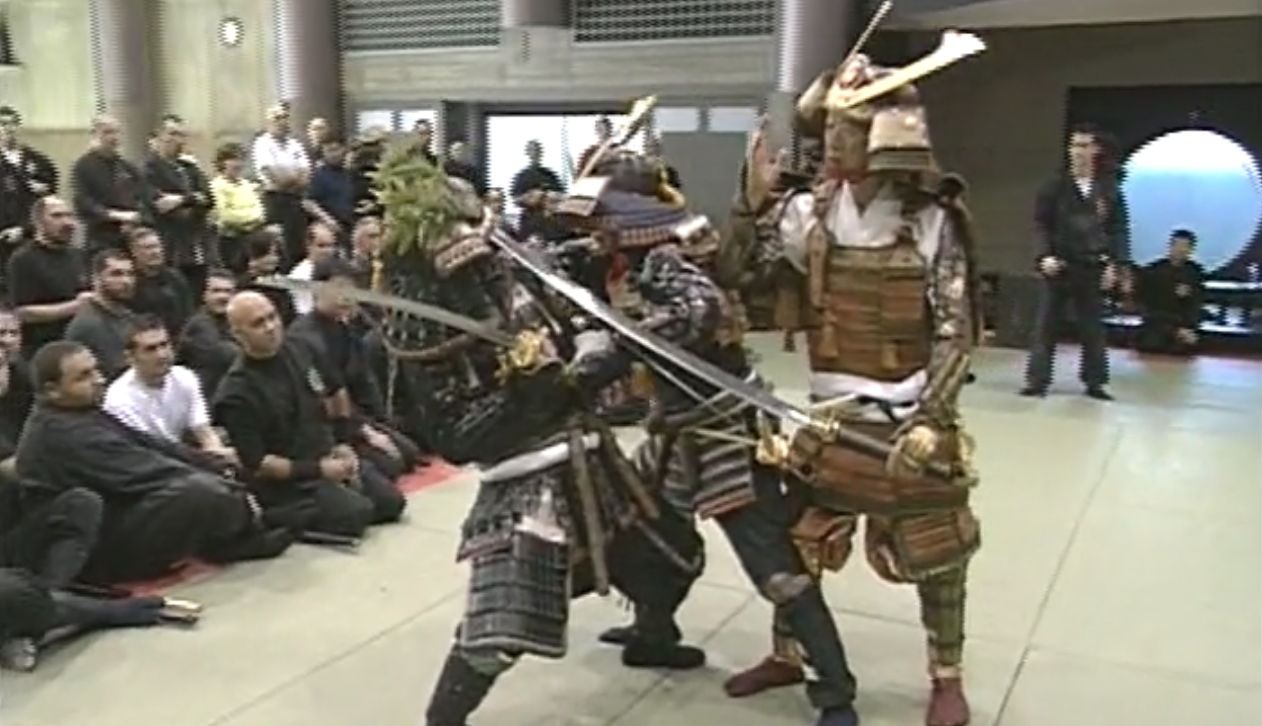
The 2004 Daikomyosai Day 1 training with Hatsumi Sōke centers on studying budō from the perspective of wearing armor, with participants instructed to train as if in armor even without wearing it physically, to grasp how it alters movement, balance, and technique. He explains that armor restricts normal walking, requiring hip-driven steps for effective motion, especially with weapons like bayonets or guns. He demonstrates that strikes and evasions change significantly in armor, such as using the kote area differently and hooking without heavy grabbing. With swords, he shows close-range control, keeping the body attached while maintaining full balance, and using proximity to hook and drop the opponent.
ヨロイの中で体が動けるようにすることね。
Yoroi no naka de karada ga ugokeru yō ni suru koto ne.“Make it so your body can move inside the armor.”
He stresses separating body movement from armor restriction for safety during strikes, adapting to the opponent’s attacks, and noting that grappling in armor differs greatly from regular training—falling in armor creates obstacles rather than clean ukemi. In demonstrations, he illustrates entering and controlling with minimal grip, allowing freedom to change techniques, and using a light, thread-like connection. For incoming punches, he covers and redirects while emphasizing whole-body involvement. He concludes that simple techniques offer infinite applications, advising against overcomplicating or using fancy movements so one can move freely.
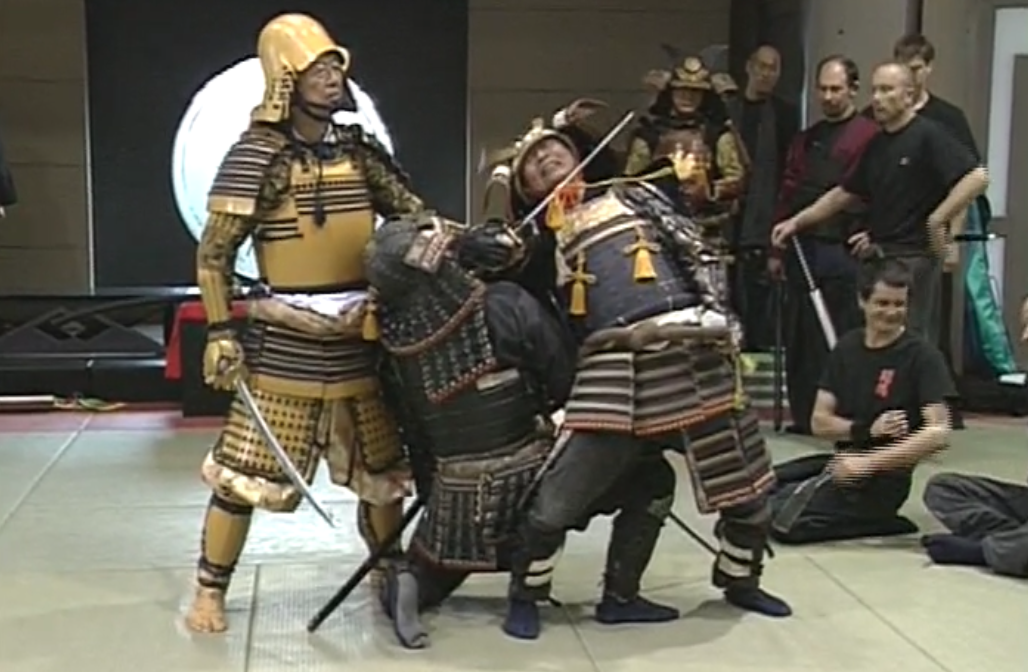
複雑なことを考えすぎなくていい。派手なことをしすぎない。
Fukuzatsu na koto o kangaesugi nakute ii. Hade na koto o shisuginai.“You don’t have to think too much about complicated things. Don’t do too much fancy stuff.”
Day 2 (December 1’st 2004)
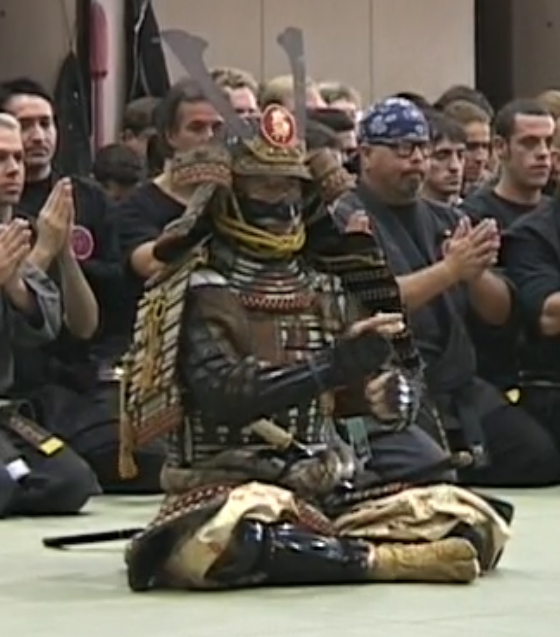
The 2004 Daikomyosai Day 2 training with Hatsumi Sōke continues exploring budō through the lens of armor, focusing on how the weight and structure of yoroi amplify striking momentum and presence even with light contact. He demonstrates that armored strikes draw power from the entire body, creating doubled movement and a strong sense of force without deep impact transmission. He explains that armor adds resistance similar to moving through water, demanding taijutsu that adapts fluidly to the worn environment and situation.
片手の場合だとこうやって伸ばすだけ。俺撃ってんじゃねえのね。
Kata-te no baai da to kō yatte nobasu dake. Ore utten ja nē no ne.“In the one-handed case, just extend like this. I’m not the one striking, right?”
Hatsumi shows simultaneous drawing of the yoroidoshi (armor-piercing dagger) during a strike to integrate weapon use seamlessly. In one-handed sword scenarios, he illustrates extending the blade without overcommitting to avoid disadvantage, emphasizing controlled stopping points over excessive cutting. He teaches using armor components like shoulder drapes as built-in shields that protect while allowing counters. He demonstrates dropping an opponent’s sword with secondary blade techniques and stresses precise sword angle and positioning—small adjustments prevent being cut while enabling safe returns. He warns against cutting too far past the target, as it creates vulnerability, and highlights that proper positioning and minimal overextension keep the exchange favorable.
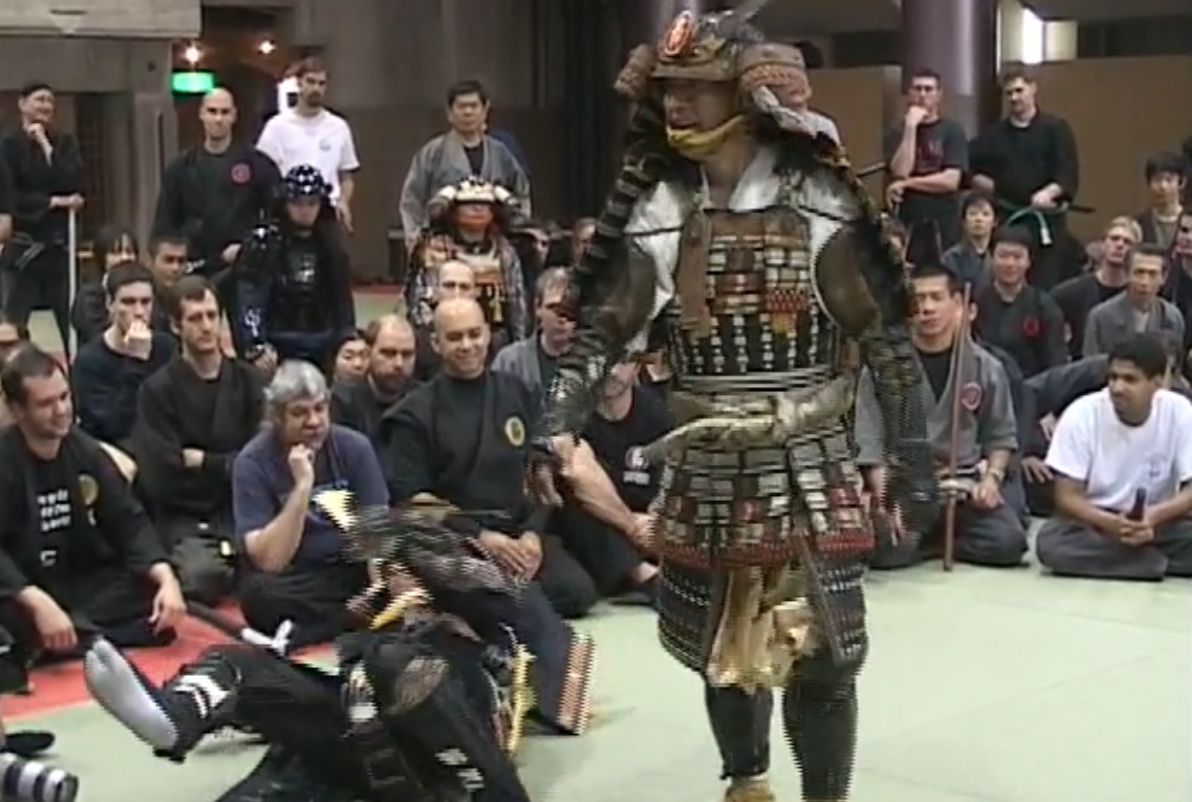
切りすぎないからいいよね。切りすぎないとまた不利なんです。
Kirisuginai kara ii yo ne. Kirisuginai to mata furi na n desu.“It’s good because you don’t cut too much. If you cut too much, it becomes disadvantageous again.”
Day 3 (December 2’nd 2004)
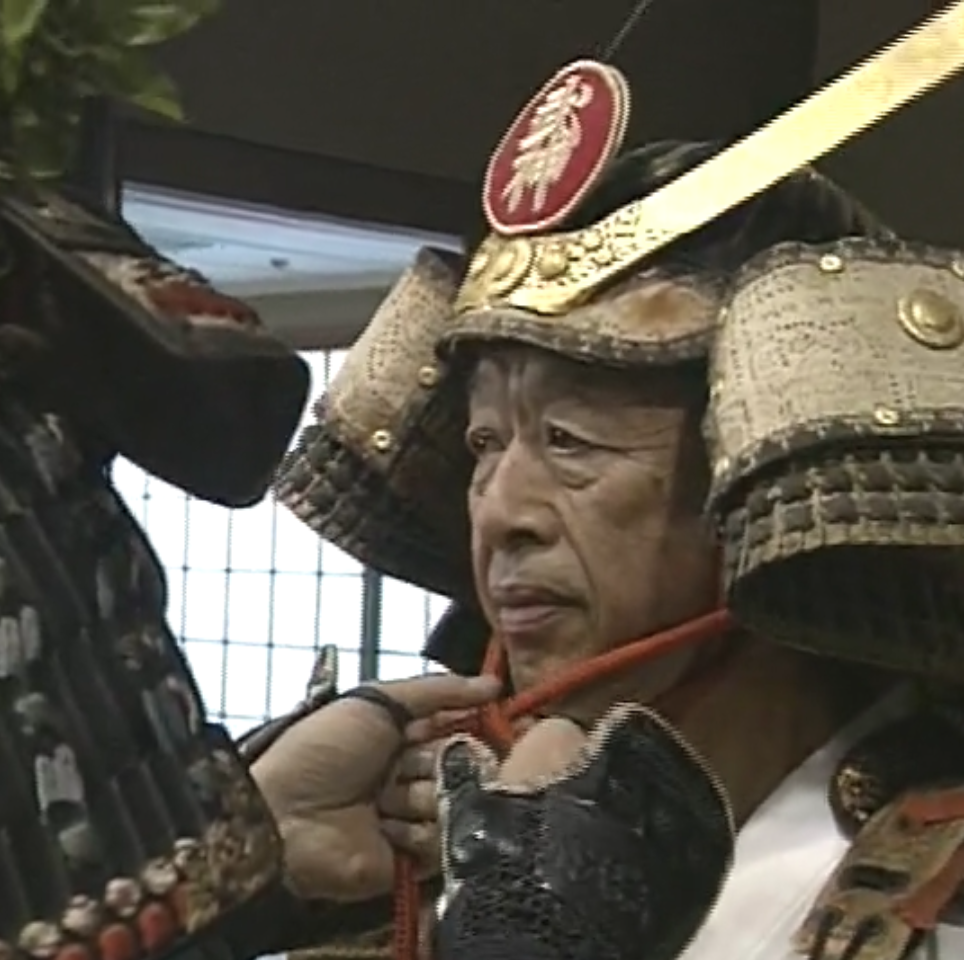
The 2004 Daikomyosai Day 3 training with Hatsumi Sōke concludes the armor-focused seminar, emphasizing practical sword use in armored combat and the lifelong depth required to understand true bushido. He demonstrates a specialized tachi (long sword) with double-edged sections for situational adaptability, showing that certain parts do not cut while others do, allowing strikes from unexpected angles or weak points. He stresses entering from unseen or unpredictable directions and targeting vulnerabilities rather than forcing powerful cuts. He explains that picking up objects or moving in armor requires knee bending and proper leg positioning for stability.
少し勉強したぐらいでは、日本の武士道は分かりません。一生勉強しないとね。
Sukoshi benkyō shita gurai de wa, Nihon no bushidō wa wakarimasen. Isshō benkyō shinai to ne.“Unless you study very well, you’re not going to understand Japanese bushido. It takes your whole life to really understand.”
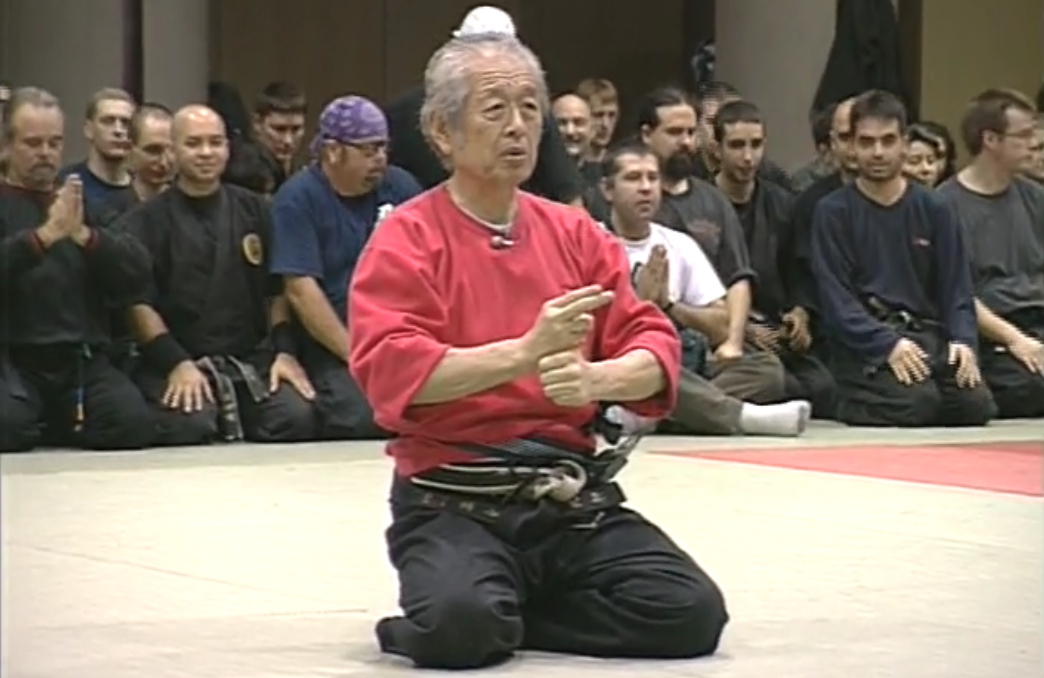
Throughout, he highlights that superficial study cannot grasp Japanese bushido—it demands a lifetime of dedicated practice. In the closing segment, he announces a significant change: from now on, 15th dan holders will bring their students to Japan for godan (5th dan) tests conducted in his presence, turning the grading into a direct, witnessed evaluation rather than remote or delegated processes. He performs multiple successful godan tests on the spot, describing the events as miraculous and proof of genuine phenomena within the Bujinkan, not imitation or staging. He refutes online claims that the godan test is fake by demonstrating its authenticity live. He ends by thanking participants, encouraging continued training with this spirit, and noting that the seminar is not yet over—practice should continue.
これから15段の人がみんな国から連れてきて、俺の前でみんな15段のテストをしてくれる。
Kore kara jūgo-dan no hito ga minna kuni kara tsurete kite, ore no mae de minna jūgo-dan no tesuto o shite kureru.“From now on, the 15th dan people will bring their students from their countries, and everyone will do the 15th dan test in front of me.”
武神館に奇跡があるんです。このようにね、私が演出したわけじゃありません。
Bujinkan ni kiseki ga aru n desu. Kono yō ni ne, watashi ga enshutsu shita wake ja arimasen.“There are miracles in the Bujinkan. Like this—it’s not something I staged or planned.”
Footnotes
- He was referring to Lev Tolstoy‘s book War and Peace.
 ︎
︎ - Heitai (兵隊) is a Japanese term literally meaning ‘soldier’ or ‘troops,’ derived from ‘hei’ (soldier) and ‘tai’ (unit or group). It denotes enlisted men or privates in the Imperial Japanese Army (IJA), primarily those in infantry roles. The term’s primary historical usage refers to these enlisted soldiers serving from the Meiji Restoration in 1868 through the dissolution of the IJA in 1945. ︎
- He explicitly said: “これでパタンってやりますよ。これでパタンってやりますよ。肘で。” ( Kore de patan tte yarimasu yo. Kore de patan tte yarimasu yo. Hiji de. ) This translates roughly to: “With this, I do ‘patan’. With this, I do ‘patan’. With the elbow.”
The word “patan” (パタン) is not an English word—it’s a Japanese onomatopoeia (giongo/gitaigo). In Japanese sound-effect usage (common in manga, anime, martial arts descriptions, and everyday speech), “patan” (or “patan tte”) mimics a light, sudden, floppy collapse or fall—often something dropping limply, like a book slamming shut, a person flopping down weakly, or a body/structure giving way instantly with a soft “thud” or “flop” sound. It’s lighter and more abrupt than heavier impacts like “batan” (which is a louder slam or heavy fall) or “dosun/zushin” (deep thuds).︎
The post Roppō Kuji no Biken (Bujinkan Theme 2004) appeared first on 武神館兜龍 Bujinkan Toryu.…


 …
…