Skip to content

Good Gasshō: Japan Report Eleven 令和6年

From Bujinkan Santa Monica by Michael


Before I got to Gasshō, I began my morning commuting to 菊川駅 Kikukawa station. I was on my way to visit 井上刃物 Inoue Hamono. I had some questions to ask and maybe some items to purchase. 

At the shop they sell Japanese woodworking tools. Their business has been around since the Meiji era. It is currently run by third and fourth generation family members 井上 時 夫 Inoue Tokio, and 井上 真 俊 Inoue Masatoshi.

Some tools they sell include: 鉋 kan’na (planes); 彫刻鑿 chokoku nomi (carving chisels); 玄能 Gen’nō (hammers); 鋸 nokogiri (hand saws); and all variety of 刃物 hamono for specific use cases.

They even had 尺 shaku and 寸 sun measuring squares. They also displayed a collection of cute 源氏鶴亀 墨壺 genji tsurukame sumitsubo (turtle and crane ink pots). These are used like the chalk lines that I grew up using in construction to snap lines on lumber.

After running some more errands, I ended up walking to 両国駅 Ryōgoku Station. I caught the train from there all the way to Nodashi. It was time for class with Furuta Sensei.

Gasshō With Furuta Sensei

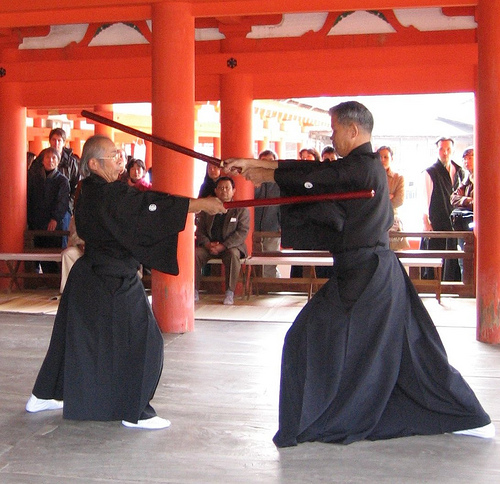
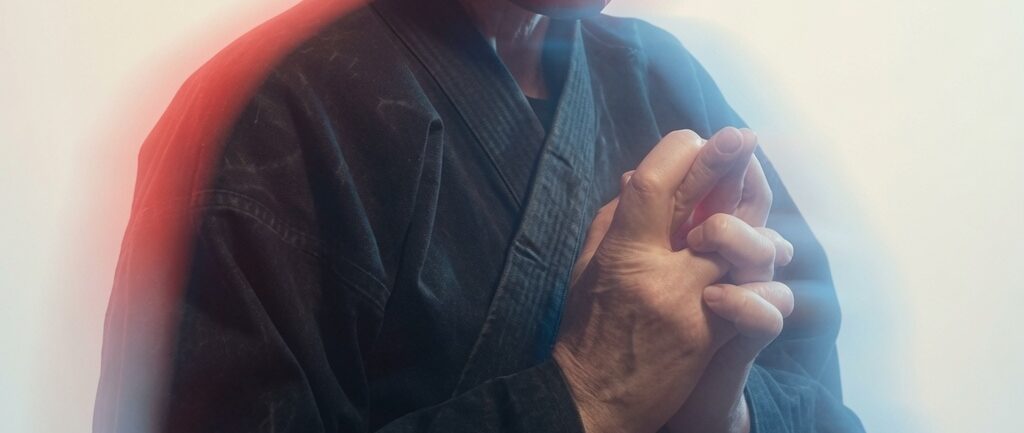
He started class with 天略宇宙合掌 Ten Ryaku Uchū Gasshō. It is a both kamae and a mudra. He went into the physical nature of the kamae first.

The drill he used came in three variations. First, as the attack comes in, you don’t move. You must have 不動心 fudōshin. Hold your ground and the shape of the kamae acts like a wedge to redirect the strike away from your center.

For the second he said we should “go.” Furuta Sensei likes to practice his English, so he said the first variation was “stay,” and second was “go”. In this case the Gasshō becomes a fist and strikes first.

In the third part of the drill, you open up your Gasshō to receive the attack. This is an example of 引力 inryoku that comes from 天地陰陽之構 Tenchi In’yō no Kamae.

This led into some philosophical discussion about Gasshō. The meaning of the mudra is quite deep. It includes all of the elements, yin and yang, and the whole universe in a praying posture. He even told us how to hold our hands for a kyojitsu that he described as a form of “dark energy”.

During a break, Furuta Sensei brought me over to the picture of Takamatsu Sensei hanging near the genkan. It is the photo where he holds the bō with a fierce expression. Furuta said that Hatsumi Sensei had written 天略宇宙合掌 Ten Ryaku Uchū Gasshō in the margins of the photograph.

He finished class with knife attack and defense. Using the same principles of Gasshō to defend and redirect. Or, you might draw your own blade to shield. Of course Furuta had many knives and threw them around the dojo.

If you were a bystander, watch out! He threw one at me and I managed to draw my own knife to deflect it and that made him happy. This is the joy of training with Furuta Sensei.

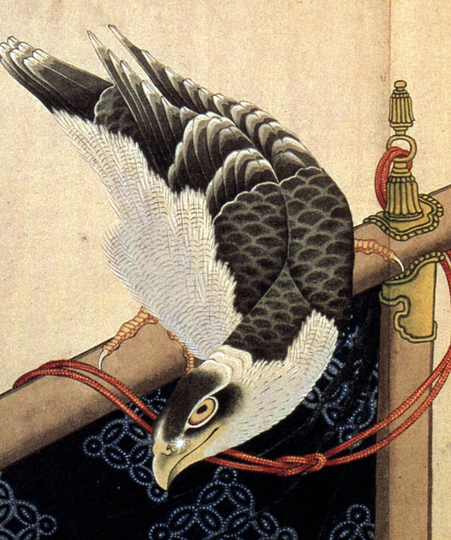
Hokusai

After class, I visited the 北斎美術館, Hokusai Museum. This museum opened in 2016 and I had it on my list every time I visited Japan. But I never could go because I didn’t want to miss anything at the dojo.

The museum was built on the site of the 津軽氏 Tsugaru family Daimyō residence from the Edo period. There is a story that Hokusai was commissioned to paint a folding screen with horses by the feudal lord. This prompted Hokusai to return to Sumida and finish out his days in Edo.

Hokusai was known for his woodblock and ukiyo-e prints, but he worked in many different styles and mediums during his life. He started as a young boy and produced tens of thousands of paintings. He had a remarkable ability to capture the essence of his subjects.

He is considered a master in all of the art world. During the period of “Japonsime” he was a great influence on European artists such as Van Gogh and Monet. Some of these artists borrowed or copied the style and technique of his ukiyo-e.

One of his most famous works is 神奈川沖浪裏, the great wave off Kanagawa. The wave is seen cresting in the foreground over Mt Fuji in the back. This image is one of the most famous in all of Japanese art, even into the modern day.

The museum building was designed by Kazuyo Sejima. The shape is five interlocking volumes clad with an aluminum facade. It has a similar presence in the neighborhood as the Disney Concert hall in Los Angeles where I live.

I was surprised by an animatronic depiction of Hokusai in his studio. He is wrapped in a kotatsu and crouched over a painting on the tatami. His daughter assists him with the water and ink. This scene brought nostalgia of my many pleasant afternoons watching Hatsumi Sensei absorbed in his own painting.

I loved the interactive nature of the museum. You can flip through reproductions of his sketchbooks. Not only is the artistic technique incredible, but Hokusai depicted all aspects of Japanese life and culture from that era. It is a historic record of the dress, customs, and even weapons that can inform our study of the Bujinkan Martial arts.

Much Like Hatsumi Sensei, Hokusai always thought his next work would be better. I think every artist feels that. Hokusai wrote a Haiku just before his death,

人魂で
行く気散じや
夏野原
Even as a ghost
I shall lightly tread
the summer fields

Every visit to Japan feels like a gift. I learn so much in training and from the culture. I hope to tread lightly before my spirit reaches the summer fields. Up next, Japan Report Twelve 令和6年.

 …

九鬼神傳天地言文七期宇宙論 Kuki Shinden Tenchi Genmon Shichiki Uchū-ron

From 武神館兜龍 Bujinkan Toryu by Toryu
九鬼神傳天地言文七期宇宙論 Kuki Shinden Tenchi Genmon Shichiki Uchū-ron

九鬼神傳天地言文七期宇宙論 Kuki Shinden Tenchi Genmon Shichiki Uchū-ron (Kuki Tradition: Words of Heaven and Earth – Seven-Era Cosmology Treatise) I asked Grok to summarise the Kuki Documents seven eras.

Kuki Divine Transmission: Words of Heaven and Earth – Kuki Documents seven eras

The Kuki Documents (九鬼文書 Kuki Bunsho) present one of the most expansive and intriguing visions in Japanese esoteric tradition: a seven-era cosmic history that stretches from pre-creation preparation to modern and future fulfillment. Preserved through the alleged secret transmissions of the 九鬼 Kuki family—descendants of the ancient 中臣 Nakatomi (Nakatomi clan)—these documents claim to reveal a divine chronology far older and more detailed than the official accounts found in the 古事記 Kojiki (Records of Ancient Matters, 712 CE) and 日本書紀 Nihon Shoki (Chronicles of Japan, 720 CE).

While mainstream Japanese mythology begins with the emergence of heaven and earth and quickly progresses to the creation of the islands by 伊弉諾 Izanagi (Male Who Invites) and 伊弉冉 Izanami (Female Who Invites), the Kuki framework uses vast symbolic timescales built around 世 yo/se (reign/era) and 代 dai (generation). Large numbers incorporating 万 yorozu (myriad) express immense antiquity rather than precise chronology, creating a profound sense of cosmic depth. The narrative centers 出雲 Izumo (Izumo) as the primordial power, reinterprets major deities as successive emperors, and envisions a global divine kingship.

This article outlines the seven broad eras as described in 三浦一郎 Miura Ichirō’s 九鬼文書の研究 Kuki Bunsho no Kenkyū (Research on the Kuki Documents), drawing from core texts such as 神史略 Shinshi Ryaku (Outline of Divine History), 神代系譜 Jindai Keifu (Genealogy of the Age of the Gods), and 天地言文 Tenchi Genmon (Words of Heaven and Earth).

1. Era of Creation Preparation (造化準備時代 – Zōka Junbi Jidai)

The absolute beginning unfolds before any manifest universe. Dominated by the root deity 母止津和太良世乃大神 Mototsu Watarase no Ōkami (Primordial Crossing-Well-World Great Deity), this phase assembles the foundational principles of existence: the seeds of yin-yang duality, potential forms, and the blueprint for all reality.

It spans 23 世 (23 reigns/eras), each containing multiple generations (代) passed through name-inheritance (襲名 shūmei), over a symbolic period of approximately 23,000 years. The Kuki Documents detail this as an extended lineage starting with 母止津和太良世乃大神 Mototsu Watarase no Ōkami (Primordial Crossing-Well-World Great Deity) and progressing through successive divine entities that lay the invisible groundwork. No galaxies, stars, or earth yet exist; everything remains in latent potential. This preparatory stage establishes the cosmic framework, with exhaustive genealogies tracing the unfolding of primordial order.

Readers familiar with modern cosmology may find an intriguing parallel here to the Big Bang theory, which describes the universe emerging from an infinitely dense, hot singularity around 13.8 billion years ago. In the Kuki tradition, this era evokes a similar “pre-manifest” state—pure potential before expansion and structure—though on a vastly different symbolic scale. The ~23,000-year figure (likely not literal but derived from myriad-based symbolism) also echoes ancient astronomical concepts like Earth’s axial precession cycle (~25,772 years in modern measurements), a “wobble” that ancient observers noted as a fundamental cosmic rhythm.

2. Era of Creation / Formation (造化時代 – Zōka Jidai)

The universe takes shape. Primordial light deities such as 天津日身光 Amatsu Mihikari (Heavenly Sun Body Light) emerge, followed by the classic creator triad—天津御中主神 Amenominakanushi (Heavenly Sovereign of the Central Heaven), 高御産巣日神 Takamimusubi (High Producing Wondrous Deity), and 神産巣日神 Kamimusubi (Divine Producing Wondrous Deity)—and the establishment of yin-yang harmony.

This era encompasses 13 世 (13 reigns/eras), with each reign often containing multiple generations (up to 24 代 in some lineages), totaling around 312 generations over a symbolic duration of roughly 50,000 years. The focus lies on cosmic architecture: the formation of galaxies, the ignition of stars, the separation of heaven and earth, and the unfolding of the heavenly generations 天神七代 Tenshin Nanayo (Seven Generations of the Heavenly Gods). Creation here is portrayed as a prolonged, multi-layered process rather than a single swift act.

The Kuki Documents expand this phase far beyond the compact sequence found in the Kojiki and Nihon Shoki, where the heavenly generations appear as only seven brief divine pairs before 伊弉諾 Izanagi (Male Who Invites) and 伊弉冉 Izanami (Female Who Invites). By embedding 天神七代 Tenshin Nanayo (Seven Generations of the Heavenly Gods) within a vastly longer generational lineage, the tradition emphasizes a gradual, deliberate unfolding of cosmic order across immense symbolic time.

3. Era of Divine Emperors Repairing and Solidifying Creation (修理固成の神皇時代 – Shūri Kosei no Shin’ō Jidai)

With the cosmos now formed, divine rulers turn to the task of repairing and stabilizing it. This era begins with 天津御中主神 Amenominakanushi (Heavenly Sovereign of the Central Heaven) as the first heavenly emperor and continues through 伊弉諾 Izanagi (Male Who Invites).

It comprises 12 世 (12 reigns/eras), encompassing approximately 144 generations (代) over a symbolic duration of around 20,000 years. The primary focus is on repairing any imbalances in the newly created heaven-earth structure, solidifying yin-yang harmony, and establishing the foundational principles of divine governance across the ordered cosmos.

In this phase, 伊弉諾 Izanagi (Male Who Invites) and 伊弉冉 Izanami (Female Who Invites) appear as key stabilizers rather than the primary originators of the Japanese islands. The famous spear-churning episode for land-birth (国産み kuniumi), so central in the Kojiki and Nihon Shoki, is not emphasized as the defining act here. Instead, the Kuki Documents present Izanagi and Izanami within a much broader sequence of divine repair and consolidation, extending their role across long chains of generational inheritance.

This approach reflects the tradition’s overall expansion: what mainstream chronicles treat as a relatively swift transition from primordial creation to island formation is reframed as part of an ongoing, deliberate process of cosmic refinement that spans immense symbolic time.

4. Era of Divine Emperors Ruling All Nations (万国統治神皇時代 – Bankoku Tōchi Shin’ō Jidai)

This era represents the golden age of universal divine kingship, where the gods exercise direct rule over the entire world. 須佐之男命 Susanoo (Swift-Impetuous Male Deity) and 大国主命 Ōkuninushi (Great Land Master) are elevated to the status of world kings, with 出雲 Izumo (Izumo) established as the central seat of power.

The period spans 7 世 (7 reigns/eras), encompassing roughly 49 generations (代) over a symbolic duration of approximately 8,000 years. 天照大御神 Amaterasu Ōmikami (Great Heaven-Illuminating Deity), 月読命 Tsukuyomi no Mikoto (Moon-Reading Deity), and 須佐之男命 Susanoo (Swift-Impetuous Male Deity) are reinterpreted as three successive emperors of the Izumo line rather than siblings born from 伊弉諾 Izanagi (Male Who Invites).

Divine governance extends across continents and nations, encompassing what the documents describe as a truly global dominion. The era culminates in the famous 国譲り kuniyuzuri (Nation-Yielding or Transfer of the Land), a pivotal transition that preserves the heavenly legitimacy of the Izumo lineage even as authority shifts toward the emerging Yamato line.

In contrast to the Kojiki and Nihon Shoki, which portray 須佐之男命 Susanoo (Swift-Impetuous Male Deity) primarily as a disruptive figure exiled from the heavenly realm, the Kuki tradition places him at the heart of a world-spanning imperial order. This reframing underscores the Izumo-centric cosmology of the documents, presenting the age as one of harmonious, far-reaching divine rule rather than regional or Japan-focused mythology.

5. Era of the Ugayafukiaezu Dynasty (ウガヤフキアエズ王朝時代 – Ugayafukiaezu Ōchō Jidai)

This transitional period, often described as a “floating reed” or “reed-floating” age, bridges the vast era of universal divine kingship and the more recognizable human historical timeline. It is centered on 鸕鶴草葺不合尊 Ugayafukiaezu no Mikoto (Reed-Floating Young Prince Who Did Not Fully Cover the Roof).

The era consists of a single overarching 世 (reign/era) that contains 73 generations (代), spanning a symbolic duration of roughly 1,200 years. Authority during this phase is decentralized and fluid—divine and proto-human figures move through a period of wandering, less structured rule, and gradual consolidation of lineage continuity.

鸕鶴草葺不合尊 Ugayafukiaezu no Mikoto (Reed-Floating Young Prince Who Did Not Fully Cover the Roof) serves as the pivotal figure, acting as the father of 神武天皇 Jinmu Tennō (Emperor Jimmu), the first human emperor in the official chronicles. In the Kuki tradition, this dynasty maintains unbroken descent from the preceding divine world-kings while preparing the ground for the shift toward earthly imperial succession.

Unlike the Kojiki and Nihon Shoki, which treat the interval between the gods’ age and Emperor Jimmu as relatively brief and mythically condensed, the Kuki Documents insert this extended generational layer. The 73 generations emphasize persistence of divine bloodline and subtle transmission of authority, even as centralized cosmic rule gives way to more localized or migratory governance.

This “floating” quality—evoking reeds adrift on water—symbolizes a liminal phase: the divine order is no longer all-encompassing, yet full human historical structure has not yet solidified. It functions as the crucial link preserving the legitimacy of the Izumo-Yamato dual lineage into the subsequent era.

6. Era from Emperor Jimmu Onward (神武天皇以降の時代 – Jinmu Tennō Ikō no Jidai)

This era marks the transition into what is conventionally regarded as human history, beginning with 神武天皇 Jinmu Tennō (Emperor Jimmu), traditionally dated to his enthronement on February 11, 660 BCE and recognized in official chronicles as the first emperor of Japan.

The defining feature of this period, according to the Kuki Documents, is the establishment of 両統迭立 ryōtō tetchitsu (dual alternating succession or two-line alternation) between the 大和 Yamato (Yamato) and 出雲 Izumo (Izumo) royal lines. 神武天皇 Jinmu Tennō (Emperor Jimmu) subdues and incorporates the Izumo lineage—descended from 大物主神 Ōmononushi no Kami (Great Deity Who Possesses the Land)—rather than completely supplanting it. This integration preserves the heavenly legitimacy of the Izumo line while allowing Yamato to assume primary earthly rule.

The era extends through all subsequent recorded Japanese history, encompassing the reigns of the imperial line as documented in the Kojiki, Nihon Shoki, and later annals. However, the Kuki tradition reframes these events as a continuation of the ancient divine kingship rather than a clean break from the Age of the Gods. The 中臣 Nakatomi (Nakatomi clan) — and later the 九鬼 Kuki (Kuki family) as their direct descendants — are positioned as the hereditary guardians of secret transmissions, including imperial rituals, spiritual techniques, martial arts knowledge, and hidden genealogical records.

Key elements emphasized in this phase include:

  • Ongoing protection and transmission of the divine essence through the dual-line system.
  • The role of the Nakatomi/Kuki lineage in managing palace rituals (宮中祭祀 kyūchū saishi) and preserving esoteric knowledge (秘伝 hiden) that mainstream chronicles omit or obscure.
  • A view of Japanese history not as a linear progression from myth to history, but as the earthly expression of the primordial Izumo-Yamato cosmic order established in earlier eras.

As of January 2026, this unbroken lineage (万世一系 bansei ikkei) remains central to Japan’s official tradition. The current emperor is 徳仁 Naruhito (Naruhito Tennō), recognized as the 126th emperor, counted from 神武天皇 Jinmu Tennō (Emperor Jimmu) as the first. On February 11, 2026 — National Foundation Day (建国記念の日 Kenkoku Kinen no Hi) — Japan will enter the 2686th year since the legendary founding by Emperor Jimmu in 660 BCE. This date, celebrated annually with flag-raising ceremonies, shrine visits, and quiet reflections on national origins, underscores the enduring symbolic continuity of the imperial institution in the Kuki tradition’s view.

In this way, the Kuki Documents present the entire historical period—from Jimmu through medieval, early modern, and into contemporary times—as the unfolding of a single, unbroken divine mandate, with the imperial line embodying the legacy of the world-ruling gods of the previous eras.

7. Extension into Modern and Future Times (現代・未来への延長 – Gendai / Mirai e no Encho)

This phase is described as the ongoing extension and culmination of the divine chronology into the present era and what lies ahead. It is not numbered as a separate “世” (reign/era) with its own generations or successions like the previous periods, but presented as the living realization of the preparatory work across the preceding six eras.

The documents state that the primordial cosmic order — established through the vast lineages of creation, repair, global divine kingship, and dual Izumo-Yamato succession — continues to unfold in the modern world and will reach its ultimate purpose in the future. This involves:

  • The restoration of true divine harmony and spiritual order on earth.
  • The reawakening and full manifestation of the hidden transmissions preserved by the 中臣 Nakatomi (Nakatomi) and 九鬼 Kuki (Kuki family) lineages, including secret rituals, talismans (such as those for ghost-gate protection), and spiritual techniques.
  • A unification or alignment of the world under principles rooted in the ancient Japanese divine centrality and the legitimacy of the imperial line as the earthly expression of heavenly rule.
  • The resolution of imbalances between spiritual authority and material forces, leading to a renewed cosmic state where the divine mandate is fulfilled.

The texts imply that the modern age serves as the transitional ground for this restoration, with the ongoing imperial succession embodying the legacy of the world-ruling gods from earlier eras. Future events are framed as the natural outcome of the long preparatory process: a return to primordial harmony, the completion of the divine plan, and the realization of universal spiritual order. No specific mechanisms, timelines, or cataclysmic sequences are detailed; the emphasis remains on the inevitable fulfillment of the ancient blueprint through spiritual renewal.

Conclusion of Kuki Documents seven eras

The Kuki Documents (九鬼文書, Kuki Bunsho), as interpreted in Miura Ichirō’s research, present a vast cosmic narrative that culminates in the modern and future extension of the divine plan. While the earlier eras focus on primordial preparation, formation, stabilization, global divine rule, transitional bridging, and the historical unfolding from 神武天皇 Jinmu Tennō (Emperor Jimmu) onward, the final phase carries forward into contemporary Japan and anticipates a restorative fulfillment.

This living continuation ties the ancient mythology directly to the present imperial institution. According to official Japanese tradition (maintained by the Imperial Household Agency), the current emperor is 徳仁 Naruhito (Naruhito Tennō), who acceded to the throne on May 1, 2019, following the abdication of his father, 明仁 Akihito (Emperor Emeritus Akihito). Naruhito is recognized as the 126th emperor in the unbroken lineage (万世一系 bansei ikkei), counted from the legendary 神武天皇 Jinmu Tennō (Emperor Jimmu) as the first.

Emperor Jimmu’s enthronement is traditionally dated to February 11, 660 BCE (converted to the Gregorian calendar from ancient chronicles like the 日本書紀 Nihon Shoki). Japan commemorates this as National Foundation Day (建国記念の日 Kenkoku Kinen no Hi), a public holiday observed every year on February 11. In 2026, this means Japan will celebrate National Foundation Day on Wednesday, February 11 — a day off for most people, with government offices, schools, and many businesses closed. Observances typically include flag-raising ceremonies, quiet family reflections, shrine visits (especially at Kashihara Shrine in Nara, traditionally associated with Jimmu’s site), and some local events or parades. The holiday emphasizes national origins, unity, and patriotism in a subdued, reflective manner rather than large-scale festivities.

Footnote: Kuki Documents seven eras

The original Kuki Documents (九鬼文書) — the ancient scrolls preserved by the Kuki family — were destroyed in the wartime firebombings of 1945 (昭和20年), during the Allied air raids on Tokyo and other cities. Miura Ichirō had accessed and excerpted key portions in the early 1940s (around 1940–1941), making his book the primary surviving source of direct quotes from texts like Shinshi Ryaku, Jindai Keifu, and Tenchi Genmon.

Before the originals were lost, 高松寿嗣 Takamatsu Toshitsugu (1889–1972) — a prominent martial arts master in the Kukishin-ryū lineage — had been granted access to the documents by Kuki Takaharu. Takamatsu made his own copies and notes during this period.

After the 1945 destruction, Takamatsu recopied the contents from his pre-existing copies (rather than purely from memory), incorporating additional notes and cross-references with other Kukishin-related documents he already possessed from the Ishitani line. In 1947 (some sources cite 1949), he returned a complete reconstructed set of these scrolls to the Kuki family, ensuring the tradition’s survival in secondary form.

This chain — Miura’s pre-war transcription, the 1945 burning, and Takamatsu’s postwar restoration — explains why the Kuki Documents today exist only through excerpts, copies, and reconstructions.


三浦一郎 Miura Ichirō

三浦一郎 Miura Ichirō (1914 – 2006 ) was a Japanese scholar of Western history and essayist. He was a former professor at Ibaraki University and a professor emeritus at Sophia University.

After attending the elementary school attached to Toshima Normal School in Tokyo and the former Musashino High School , he graduated from the Department of Western History at the University of Tokyo .

After the war , he worked as a teacher at the new Seikei High School , then became an assistant professor at Ibaraki University , a professor at the same university in 1966 , a professor at Sophia University in 1970, a special professor at the same university in 1980, an

九鬼文書の研究 Kuki Bunsho no Kenkyū by 三浦一郎 Miura Ichirō.

Publisher ‏ : ‎ 八幡書店
Publication date ‏ : ‎ 1 February 1999

ISBN-10 ‏ : ‎ 4893502018
ISBN-13 ‏ : ‎ 978-4893502018

The post 九鬼神傳天地言文七期宇宙論 Kuki Shinden Tenchi Genmon Shichiki Uchū-ron appeared first on 武神館兜龍 Bujinkan Toryu.…

九鬼神傳天眞兵法心劔活機論 Kuki Shinden Tenshin Heihō Shinken Kappō-ron

From 武神館兜龍 Bujinkan Toryu by Toryu

九鬼神傳天眞兵法心劔活機論 Kuki Shinden Tenshin Heihō Shinken Kappō-ron

九鬼天眞兵法心劔活機論 Kuki Tenshin Heihō Shinken Kappō-ron (Kuki Tradition Thesis on the Living Mechanisms of the Heart Sword in the Heavenly True Art of War) (Page 143-144, 154-155, 156) from the book 九鬼文書の研究 Kuki Bunsho no Kenkyū by 三浦一郎 Miura Ichirō.

TENSHIN HEIHŌ SHINKEN KAPPŌ-RON ①

天眞兵法心劔活機論(一) Tenshin Heihō Shinken Kappō-ron (Thesis on the Living Mechanisms of the Heart Sword in the Heavenly True Art of War – Part 1)

At the head of the volume, in remarkably skilled calligraphy, twenty-six lines of divine generation characters totaling three hundred twenty-seven characters are lined up, and at the very end it states:

“In the thirteenth year of 舒明 Jōmei (A.D. 641), year kinoe-ushi, month ki-shi day, re Atsu, small virtue crown bearer (kaō).”

This is a copy from approximately one thousand three hundred years ago, but likely a re-copying of an earlier version. The main text appears to be considerably ancient, though at the end there are traces of separate paper having been attached midway to list the names of successive transmitters. This form is common across all volumes.

Up to

“second year of Genkō (A.D. 1332), third month auspicious day, Kuki Yakushi-maru Takazane (kaō)”

and

“second year of Jōji (A.D. 1366), fifth month auspicious day, Kuki Umanosuke Takayoshi (kaō)”

the signatures are on the same paper as the main text. However, from

“second year of Kentoku (A.D. 1451), year kanoto-i, second month auspicious day, Kuki Yamashiro-no-kami Takamoto”

onward, the nine clans signed successively on attached paper. For reference, listing the names of successive transmitters after the first three:

  • 九鬼大和守隆次 Kuki Yamato-no-kami Takatsugu – 永享3年 Eikyō 3 (A.D. 1431)
  • 九鬼山城守泰隆 Kuki Yamashiro-no-kami Yasutaka – 文明8年 Bunmei 8 (A.D. 1476)
  • 九鬼山城守定隆 Kuki Yamashiro-no-kami Sadataka – 大永3年 Daiei 3 (A.D. 1523)
  • 九鬼彌五郎澄隆 Kuki Yagorō Sumitaka – 女禄4年 Eiroku 4 (A.D. 1561)
  • 九鬼大隅守嘉隆 Kuki Ōsumi-no-kami Yoshitaka – 慶長14年 Keichō 14 (A.D. 1609)
  • 九鬼大隅守守隆 Kuki Ōsumi-no-kami Moritaka – 元和8年 Genna 8 (A.D. 1622)
  • 九鬼志摩守良隆 Kuki Shima-no-kami Yoshitaka – 寛永18年 Kan’ei 18 (A.D. 1641)
  • 九鬼大隅守隆常 Kuki Ōsumi-no-kami Takatsune – 万治2年 Manji 2 (A.D. 1659)
  • 九鬼鍋三郎隆幸 Kuki Nabe-saburō Takayuki – 天和3年 Tenwa 3 (A.D. 1683)

And it ends there.

As for the content, simply raising the headings gives the following:

  • 剣法之妙理 Kenpō no Myōri (Profound Principles of Sword Method)
  • 風陣投剣遍 Fūjin Tōken Hen (Wind Formation Throwing Sword Complete / All)
  • 秘鎗遍 Hikyō Hen (Secret Spear Complete / All)
  • 薙刀妙風遍 Naginata Myōfū Hen (Naginata Wonderful Wind Complete / All)
  • 棒之眞論 Bō no Shinron (True Thesis of the Staff)
  • 半棒 Hanbō (Half Staff)
  • 眞之心妙剣 Shin no Shin Myōken (True Heart Wonderful Sword)
  • 閃鋒 Senpō (Flash Edge / Sudden Point)

TENSHIN HEIHŌ SHINKEN KAPPŌ-RON ②

天眞兵法心劔活機論() Tenshin Heihō Shinken Kappō-ron (Thesis on the Living Mechanisms of the Heart Sword in the Heavenly True Art of War – Part 2)

This is something like a detailed explanation of the aforementioned twenty-first volume. To the single sentence lining up several hundred characters of divine generation script, kana has been added and annotations provided. There are signatures of the small virtue crown bearer and Yakushi-maru. At the volume end, the names of about ten successive transmitters are listed. The content generally explains what is raised below (whereas the volume raised in the twenty-first contains no explanations, only the catalog).

秘想劍遍 Hishōken Hen (Secret Idea Sword Complete / All)

  • 夢想劍 Musōken (Dream Idea Sword)
  • 浦波 Uranami (Beach Wave)
  • 竹割 Takewari (Bamboo Split)
  • 一文字 Ichimonji (Straight Line / Horizontal Cut)
  • 天狗飛 Tenguhi (Tengu Flight)
  • 燕返 Tsubame-gaeshi (Swallow Return)
  • 無音劍 Muonken (No Sound Sword)

風陣投劍遍 Fūjin Tōken Hen (Wind Formation Throwing Sword Complete / All)

  • 一文字 Ichimonji (Straight Line / Horizontal Cut)
  • 魔風 Mafū (Demon Wind)
  • 飛鳥投 Tobidori-nage (Flying Bird Throw)

秘鎗遍 Hikyō Hen (Secret Spear Complete / All)

  • 十文字 Jūmonji (Ten Lines / Cross Cut)
  • 天返 Ten-gaeshi (Heaven Return)
  • 左右 Saryū (Left Right)
  • 小手調 Kote-chō (Small Hand Tune)
  • 大海 Daikai (Great Sea)
  • 切返 Kirigaehi (Cut Return)
  • 心之突 Shin no tsuki (Heart Thrust)

薙刀妙風遍 Naginata Myōfū Hen (Naginata Wonderful Wind Complete / All)

  • 切込 Kirikomi (Cut In)
  • 車返 Kuruma-gaeshi (Wheel Return)
  • 切上 Kiriage (Cut Up)
  • 風車 Fūsha (Wind Wheel)
  • 天之形 Ten no katachi (Heaven Shape)
  • 地之形 Chi no katachi (Earth Shape)
  • 人之形 Jin no katachi (Person Shape)

棒之眞論 Bō no Shinron (True Thesis of the Staff)

  • 付込 Tsukikomi (Attach In / Thrust Insertion)
  • 跳上又ハ廻シ Haneage mata wa mawashi (Leap Up or Rotate)
  • 太刀落又ハ逆一文字 Tachi-otoshi mata wa gyaku ichimonji (Sword Drop or Reverse Straight Line)
  • 拂 Harai (Sweep)
  • 撃留平一文字 Uchi-tome hira ichimonji (Strike Retain Flat One Character)
  • 五輪碎又入身 Gorin-sai mata wa irimi (Five Wheels Crush or Enter Body)
  • 天地人勝身 Tenchi-jin shōshin (Heaven Earth Person Victory Body)
  • 前虚水烏 Mae kyo suiu (Front Void Water Crow)
  • 兩小手當返 Ryō-kote ate-gaeshi (Both Small Hand Strike Return)
  • 五法 Gohō (Five Laws)
  • 差合 Sashiai (Difference Match / Alignment)
  • 靏之一足 Tsuru no is-soku (Net One Foot)
  • 船張 Funabari (Ship Stretch)
  • 裾落 Suso-otoshi (Hem Fall)
  • 一本杉 Ippon-sugi (One Cedar)
  • 蔭之一本 Kage no ippon (Shade One Cedar)
  • 瀧落シ Taki-otoshi (Waterfall Drop)
  • 虚空 Kokū (Void)
  • 笠之内 Kasa no uchi (Under Umbrella)
  • 浦波(搦とも云フ) Uranami (tangle tomo iu) (Beach Wave – also called Tangle)
  • 左右 Saryū (Left Right)

半棒 Hanbō (Half Staff)

  • 當込 Ate-komi (Strike In)
  • 腰折 Koshi-ori (Hip Fold)
  • 當返 Ate-gaeshi (Strike Return)
  • 突込 Tsuki-komi (Thrust In)
  • 桐之一葉 Kiri no ichiyō (Paulownia One Leaf)
  • 裾絡ミ Suso-karami (Hem Entangle)
  • 搦捕 Karami-tori (Tangle Capture)
  • 五輪碎 Gorin-sai (Five Wheels Crush)

眞之秘術心妙劍 Shin no Hijutsu Shin Myōken (True Secret Technique Heart Wonderful Sword)

  • 護身術數遍 Goshinjutsu sūhen (Body Protection Technique Several All)
  • 長透貫 Chō tōkan (Long Penetrate Through)
  • 眞妙劍 Shin Myōken (True Wonderful Sword)

閃鋒 Senpō (Flash Edge)

  • 遠撃淵 En-geki-en (Distant Strike Abyss)
  • 獅子飛躍 Shishi hiyaku (Lion Leap)

TENSHIN HEIHŌ SHINKEN KAPPŌ-RON ③

天眞兵法心劔活機論(三) Tenshin Heihō Shinken Kappō-ron (Thesis on the Living Mechanisms of the Heart Sword in the Heavenly True Art of War – Part 3)

This is a sister volume to the aforementioned twenty-first and twenty-eighth. The first three lines at the beginning are recorded in divine generation characters. Next follows the evidence and explanation of the small virtue crown bearer’s reverent copying. Then, the imperial oath texts of the two deities Amatsuhikone-no-mikoto and Ame no Oshihi-no-mikoto are recorded in divine generation characters, two segments of two lines each. Next again is the evidence and explanation of the small virtue crown bearer’s reverent copying. Then comes the record of Yakushi-maru Takazane, followed by the same Yakushi-maru’s “reverent writing” explanation of the “Three Treasures Three Heavens,” as well as the evidence and explanation of this volume’s heading, the Heavenly True Military Method Heart Sword Living Opportunity Thesis (in divine character text). Next, a catalog similar to the previous volume is presented, and at the volume end a long passage of martial way ultimate intent is recorded, concluding with one song, after which Yakushi-maru’s reverent copying is repeatedly inscribed.


三浦一郎 Miura Ichirō (1914 – 2006 ) was a Japanese scholar of Western history and essayist. He was a former professor at Ibaraki University and a professor emeritus at Sophia University.

After attending the elementary school attached to Toshima Normal School in Tokyo and the former Musashino High School , he graduated from the Department of Western History at the University of Tokyo .

After the war , he worked as a teacher at the new Seikei High School , then became an assistant professor at Ibaraki University , a professor at the same university in 1966 , a professor at Sophia University in 1970, a special professor at the same university in 1980, and a professor emeritus at the same university after retiring in 1985. He specializes in ancient Greek and Western history, and his book “World History Anecdotes” was published in the Kadokawa Bunko series and became popular.

九鬼文書の研究 Kuki Bunsho no Kenkyū by 三浦一郎 Miura Ichirō.

Publisher ‏ : ‎ 八幡書店
Publication date ‏ : ‎ 1 February 1999

ISBN-10 ‏ : ‎ 4893502018
ISBN-13 ‏ : ‎ 978-4893502018

The post 九鬼神傳天眞兵法心劔活機論 Kuki Shinden Tenshin Heihō Shinken Kappō-ron appeared first on 武神館兜龍 Bujinkan Toryu.…

2026: The Fiery Gallop Begins – Farewell to the Wood Snake Year

From 武神館兜龍 Bujinkan Toryu by Toryu

2026: The Fiery Gallop Begins – Farewell to the Wood Snake Year

I hadn’t originally planned to write this end-of-year blog post, but as I scrolled through my saved photos and earlier entries, the memories came flooding back. So here’s a chronological summary of my training highlights from 2025 – a year I truly dedicated to deepening my practice – and one that has already inspired me to look forward to the fiery energies of the 2026 Year of the Fire Horse.

2025 Year Review

This year, I chose to focus intensively on Koto-ryū Koppōjutsu. I began with the Shoden Kata in January, moved on to Hekito Kata in March, Chūden Kata in April, and completed the transmission with Okuden Kata in June. For each technique, I took photographs and noted my own observations and insights. Those who purchased a membership through me can access all of this material on Bujinkan.online – you’re most welcome to explore it.

I made two memorable trips to Japan: Trip #52 in March and Trip #53 in September, both filled with invaluable training alongside the masters at Hombu Dojo.

In May, we celebrated Bujinkan’s 50 years in Europe with a wonderfully organised Taikai hosted by Bujinkan Dojo Norrköping. I was honoured to be one of the three invited instructors and taught Gikan-ryū Koppō Taijutsu as I had learnt it from Noguchi Sensei.

October brought my 60th birthday, which I marked with my own Kanreki Taikai. I invited a select group of close friends without publicising their names, keeping the event intimate and personal. It turned out beautifully – exactly the celebration I had hoped for. As planned, I covered half the seminar costs myself, and it was well worth it. The videos from the event are now available to watch for free on bujinkan.tv – do take a look, like, and subscribe if you enjoy them!

In December, I travelled to Paris for the Nagato Taikai, brilliantly organised by Bruno, my good friend Baubak, and their dojo. Many thanks for a fantastic event.

The following weekend, I was invited to teach at the Bujinkan 40-Year Anniversary in Norrköping – another memorable gathering with old and new training friends.

That, in essence, sums up my training year in 2025: a year of focused study, inspiring travel, meaningful events, and cherished connections. Thank you to everyone who shared the journey with me.

For 2026, I currently have no large-scale events planned. My main focus will be two trips to Japan—one in spring and one in fall—along with continuing the monthly TANRENKAI training sessions. Everything else will be decided as the year unfolds.

Toryu Tanrenkai

The Year of the Fire Horse 2026

The Year of the Horse 2026 (丙午 Bingu) is the 44th year in the 60-year Japanese Jikkan Jūnishi cycle. The Horse (午 Uma) is the seventh animal of the twelve in the “Eto” (Japanese Zodiac). 2025 was the Year of the Wood Snake (乙巳Kinoto-mi) transitioning to the Year of the Horse in 2026.

The Fire Horse Year 2026: This year will be marked by the element of Fire (火 Hi), symbolising passion, energy, and transformation. The Horse, a sign of freedom, strength, and independence, combines with fire energies to create a period of dynamic movement and bold initiatives. People born in this year are often expected to be charismatic, adventurous, and naturally inclined towards leadership and creative breakthroughs.

Jikkan Jūnishi: The Japanese zodiac is based on a sexagesimal cycle combining the ten heavenly stems (Jikkan) with the twelve earthly branches (Jūnishi). The year 2026 is associated with:

  • Heavenly Stem: 丙 (Hei) – The positive fire element.
  • Earthly Branch: 午 (Go) – The Horse.

Astrological Implications in the Year of the Fire Horse 2026

The Fire Horse year brings a time of intense activity and change. It is a year where courage, passion, and swift action are rewarded. This can be an excellent period for taking risks, launching new projects, or breaking free from old patterns. The Horse year may also bring a certain restlessness, where it is important to channel the energy constructively and avoid impulsive decisions.

In Greek mythology, the sun god Helios (sometimes identified with Apollo) drives his chariot across the sky, pulled by four immortal horses that breathe fire: Pyrois (fire), Eous (dawn), Aethon (blazing) and Phlegon (flaming). Their fiery manes symbolise the intense heat of the sun.

The war god Ares also has fire-breathing horses – Aithon, Phlogios, Konabos and Phobos – that spew flames from their nostrils as they pull his battle chariot.

In Norse mythology, Skinfaxi (“shining mane”) is the horse that pulls the chariot of Dagr (Day). His mane radiates such a brilliant light that it illuminates the entire world – a form of fiery glow that banishes darkness.

Cultural Aspects in the Year of the Fire Horse 2026

In Japan and East Asia, the horse carries strong symbolism of speed, honour, and freedom. It is often associated with warriors and journeys, and in mythology it represents powerful forward momentum. The Horse year can thus be seen as a time to conquer new territories – both external and internal – and to find strength in challenges that demand courage and endurance.

My Web Site Projects

Yes, I do manage quite a few websites – each one a little piece of my budō journey. Here are some highlights and statistics from 2025.

TORYU.SE My personal website and the one closest to my heart. This year I published 32 blog posts, mostly excerpts I found fascinating from old ninjutsu history books that I’ve translated from Japanese. There are many more books waiting, so I’ll happily continue this project into next year and beyond.
27.11k unique visitors in the past 30 days (Cloudflare).

BUJINKAN.ONLINE My Bujinkan knowledge base, shared with friends and anyone who chooses their membership through me. In 2025 I added over 100 new articles – it now holds 833 published pieces. I hope you find it useful and enjoyable.
4.37k unique visitors in the past 30 days (Cloudflare).

TANRENKAI.COM My newest project, launched in November. This site is dedicated to monthly Saturday training workshops (Tanrenkai). With my shift-work schedule it’s been hard to keep weekday training consistent, so from 2026 I’ll focus on one high-quality Saturday session per month. Themes and dates will always be announced here.
2.57k unique visitors in the past 30 days (Cloudflare).

KAIGOZAN.SE The website for the dojo I founded 35 years ago. After 32 years in one location we moved 18 months ago, but the new place didn’t work out as hoped. Regular training relied heavily on me being present every week, which my shifts made difficult. Rather than let tensions arise, I decided to pause the old structure and start fresh. From 2026 we’ll hold one focused training per month on Saturdays (see tanrenkai.se). I’m very open to restarting weekday sessions and welcoming beginners again – if one or two committed instructors step forward to share the responsibility. For now, I’ll happily lead the monthly Saturdays myself.
12.73k unique visitors in the past 30 days (Cloudflare).

BUDOSHOP.SE The place to buy videos I’ve produced since the 1990s – from seminars I organised and my own training events. We’ve come a long way from manually copying VHS tapes, through VideoCDs and DVDs, to today’s downloadable videos. More than 100 titles available – do have a look.
22.33k unique visitors in the past 30 days (Cloudflare).

NINZINE.COM A collection of the best Bujinkan and ninjutsu articles I’ve found over the years. It began in the early 1990s with 1.44 MB floppy disks shared via Compuserve and the Moko no Tora BBS. In 2005 I moved it online, and now it holds exactly 2005 articles – a nice coincidence!
26.37k unique visitors in the past 30 days (Cloudflare).

BUJINKAN.ME A simple list of upcoming Bujinkan seminars worldwide. I prioritise events with Japanese Shihan, but I’m happy to include others too – just send me a public link (no login-required pages).
10.99k unique visitors in the past 30 days (Cloudflare).

YUDANSHABOOK.COM The site for the only book I’m truly proud of. I’m told many respected dojo instructors keep it as a reference for their students – that means a lot to me.
9.01k unique visitors in the past 30 days (Cloudflare).

TAIKAI.SE (formerly Kaigousuru Taikai) Home of some legendary events we ran in the early 2000s (ask your teacher!). After the unforgettable 2007 Taikai we switched to every five years: 2015 (Kaigozan 25 years), 2020 (Kaigozan 30 years), 2025 (Toryū Kanreki). The next – and final – one I’ll ever organise is planned for October 2030.
7.48k unique visitors in the past 30 days (Cloudflare).

INSTAGRAM/toryu_se 832 posts, 1,309 followers.

X.COM/kesshi 333 followers

FACEBOOK.COM/KGZDojo I stepped away more than ten years ago (after refusing to hand over passport details). Now that I’m allowed back, I’ll start sharing again – at least until the next disagreement! 554 followers.

Closing Words: The Year of the Horse 2026 promises to be a year of fiery opportunities and personal expansion. With the Fire Horse energies, there will be many chances to grow through passion, to break free from the past, and to gallop towards the future with confidence and drive.

2026 Bingu

Happy New Year & Happy Training!

/Toryu

The post 2026: The Fiery Gallop Begins – Farewell to the Wood Snake Year appeared first on 武神館兜龍 Bujinkan Toryu.…

2026: The Fiery Gallop Begins – Farewell to the Wood Snake Year

From 武神館兜龍 Bujinkan Toryu by Toryu

2026: The Fiery Gallop Begins – Farewell to the Wood Snake Year

I hadn’t originally planned to write this end-of-year blog post, but as I scrolled through my saved photos and earlier entries, the memories came flooding back. So here’s a chronological summary of my training highlights from 2025 – a year I truly dedicated to deepening my practice – and one that has already inspired me to look forward to the fiery energies of the 2026 Year of the Fire Horse.

2025 Year Review

This year, I chose to focus intensively on Koto-ryū Koppōjutsu. I began with the Shoden Kata in January, moved on to Hekito Kata in March, Chūden Kata in April, and completed the transmission with Okuden Kata in June. For each technique, I took photographs and noted my own observations and insights. Those who purchased a membership through me can access all of this material on Bujinkan.online – you’re most welcome to explore it.

I made two memorable trips to Japan: Trip #52 in March and Trip #53 in September, both filled with invaluable training alongside the masters at Hombu Dojo.

In May, we celebrated Bujinkan’s 50 years in Europe with a wonderfully organised Taikai hosted by Bujinkan Dojo Norrköping. I was honoured to be one of the three invited instructors and taught Gikan-ryū Koppō Taijutsu as I had learnt it from Noguchi Sensei.

October brought my 60th birthday, which I marked with my own Kanreki Taikai. I invited a select group of close friends without publicising their names, keeping the event intimate and personal. It turned out beautifully – exactly the celebration I had hoped for. As planned, I covered half the seminar costs myself, and it was well worth it. The videos from the event are now available to watch for free on bujinkan.tv – do take a look, like, and subscribe if you enjoy them!

In December, I travelled to Paris for the Nagato Taikai, brilliantly organised by Bruno, my good friend Baubak, and their dojo. Many thanks for a fantastic event.

The following weekend, I was invited to teach at the Bujinkan 40-Year Anniversary in Norrköping – another memorable gathering with old and new training friends.

That, in essence, sums up my training year in 2025: a year of focused study, inspiring travel, meaningful events, and cherished connections. Thank you to everyone who shared the journey with me.

For 2026, I currently have no large-scale events planned. My main focus will be two trips to Japan—one in spring and one in fall—along with continuing the monthly TANRENKAI training sessions. Everything else will be decided as the year unfolds.

Toryu Tanrenkai

The Year of the Fire Horse 2026

The Year of the Horse 2026 (丙午 Bingu) is the 44th year in the 60-year Japanese Jikkan Jūnishi cycle. The Horse (午 Uma) is the seventh animal of the twelve in the “Eto” (Japanese Zodiac). 2025 was the Year of the Wood Snake (乙巳Kinoto-mi) transitioning to the Year of the Horse in 2026.

The Fire Horse Year 2026: This year will be marked by the element of Fire (火 Hi), symbolising passion, energy, and transformation. The Horse, a sign of freedom, strength, and independence, combines with fire energies to create a period of dynamic movement and bold initiatives. People born in this year are often expected to be charismatic, adventurous, and naturally inclined towards leadership and creative breakthroughs.

Jikkan Jūnishi: The Japanese zodiac is based on a sexagesimal cycle combining the ten heavenly stems (Jikkan) with the twelve earthly branches (Jūnishi). The year 2026 is associated with:

  • Heavenly Stem: 丙 (Hei) – The positive fire element.
  • Earthly Branch: 午 (Go) – The Horse.

Astrological Implications in the Year of the Fire Horse 2026

The Fire Horse year brings a time of intense activity and change. It is a year where courage, passion, and swift action are rewarded. This can be an excellent period for taking risks, launching new projects, or breaking free from old patterns. The Horse year may also bring a certain restlessness, where it is important to channel the energy constructively and avoid impulsive decisions.

In Greek mythology, the sun god Helios (sometimes identified with Apollo) drives his chariot across the sky, pulled by four immortal horses that breathe fire: Pyrois (fire), Eous (dawn), Aethon (blazing) and Phlegon (flaming). Their fiery manes symbolise the intense heat of the sun.

The war god Ares also has fire-breathing horses – Aithon, Phlogios, Konabos and Phobos – that spew flames from their nostrils as they pull his battle chariot.

In Norse mythology, Skinfaxi (“shining mane”) is the horse that pulls the chariot of Dagr (Day). His mane radiates such a brilliant light that it illuminates the entire world – a form of fiery glow that banishes darkness.

Cultural Aspects in the Year of the Fire Horse 2026

In Japan and East Asia, the horse carries strong symbolism of speed, honour, and freedom. It is often associated with warriors and journeys, and in mythology it represents powerful forward momentum. The Horse year can thus be seen as a time to conquer new territories – both external and internal – and to find strength in challenges that demand courage and endurance.

My Web Site Projects

Yes, I do manage quite a few websites – each one a little piece of my budō journey. Here are some highlights and statistics from 2025.

TORYU.SE My personal website and the one closest to my heart. This year I published 32 blog posts, mostly excerpts I found fascinating from old ninjutsu history books that I’ve translated from Japanese. There are many more books waiting, so I’ll happily continue this project into next year and beyond.
27.11k unique visitors in the past 30 days (Cloudflare).

BUJINKAN.ONLINE My Bujinkan knowledge base, shared with friends and anyone who chooses their membership through me. In 2025 I added over 100 new articles – it now holds 833 published pieces. I hope you find it useful and enjoyable.
4.37k unique visitors in the past 30 days (Cloudflare).

TANRENKAI.COM My newest project, launched in November. This site is dedicated to monthly Saturday training workshops (Tanrenkai). With my shift-work schedule it’s been hard to keep weekday training consistent, so from 2026 I’ll focus on one high-quality Saturday session per month. Themes and dates will always be announced here.
2.57k unique visitors in the past 30 days (Cloudflare).

KAIGOZAN.SE The website for the dojo I founded 35 years ago. After 32 years in one location we moved 18 months ago, but the new place didn’t work out as hoped. Regular training relied heavily on me being present every week, which my shifts made difficult. Rather than let tensions arise, I decided to pause the old structure and start fresh. From 2026 we’ll hold one focused training per month on Saturdays (see tanrenkai.se). I’m very open to restarting weekday sessions and welcoming beginners again – if one or two committed instructors step forward to share the responsibility. For now, I’ll happily lead the monthly Saturdays myself.
12.73k unique visitors in the past 30 days (Cloudflare).

BUDOSHOP.SE The place to buy videos I’ve produced since the 1990s – from seminars I organised and my own training events. We’ve come a long way from manually copying VHS tapes, through VideoCDs and DVDs, to today’s downloadable videos. More than 100 titles available – do have a look.
22.33k unique visitors in the past 30 days (Cloudflare).

NINZINE.COM A collection of the best Bujinkan and ninjutsu articles I’ve found over the years. It began in the early 1990s with 1.44 MB floppy disks shared via Compuserve and the Moko no Tora BBS. In 2005 I moved it online, and now it holds exactly 2005 articles – a nice coincidence!
26.37k unique visitors in the past 30 days (Cloudflare).

BUJINKAN.ME A simple list of upcoming Bujinkan seminars worldwide. I prioritise events with Japanese Shihan, but I’m happy to include others too – just send me a public link (no login-required pages).
10.99k unique visitors in the past 30 days (Cloudflare).

YUDANSHABOOK.COM The site for the only book I’m truly proud of. I’m told many respected dojo instructors keep it as a reference for their students – that means a lot to me.
9.01k unique visitors in the past 30 days (Cloudflare).

TAIKAI.SE (formerly Kaigousuru Taikai) Home of some legendary events we ran in the early 2000s (ask your teacher!). After the unforgettable 2007 Taikai we switched to every five years: 2015 (Kaigozan 25 years), 2020 (Kaigozan 30 years), 2025 (Toryū Kanreki). The next – and final – one I’ll ever organise is planned for October 2030.
7.48k unique visitors in the past 30 days (Cloudflare).

INSTAGRAM/toryu_se 832 posts, 1,309 followers.

X.COM/kesshi 333 followers

FACEBOOK.COM/KGZDojo I stepped away more than ten years ago (after refusing to hand over passport details). Now that I’m allowed back, I’ll start sharing again – at least until the next disagreement! 554 followers.

Closing Words: The Year of the Horse 2026 promises to be a year of fiery opportunities and personal expansion. With the Fire Horse energies, there will be many chances to grow through passion, to break free from the past, and to gallop towards the future with confidence and drive.

2026 Bingu

Happy New Year & Happy Training!

/Toryu

The post 2026: The Fiery Gallop Begins – Farewell to the Wood Snake Year appeared first on 武神館兜龍 Bujinkan Toryu.…
九鬼宗門體術活法論 Kuki Shūmon Taijutsu Kappō-ron

From 武神館兜龍 Bujinkan Toryu by Toryu

九鬼宗門體術活法論 Kuki Shūmon Taijutsu Kappō-ron

九鬼宗門體術活法論 Kuki Shūmon Taijutsu Kappō-ron (Kuki Tradition Body Technique Revival Method Thesis) (Page 150-152) from the book 九鬼文書の研究 Kuki Bunsho no Kenkyū by 三浦一郎 Miura Ichirō.

At the beginning of the scroll, the following is written:

Kuki Shūmon Taijutsu Kappō-ron

“Thesis on 體術 Taijutsu (Body Techniques) and 活法 Kappō (Revival Methods)—namely, the five secret transmissions of 柔 Jū (flexibility), 火 Hi (fire), 水 Mizu (water), 馬 Uma (horse), 鐡 Tetsu (iron)—copied by the 小徳冠者 Shōtoku kansha (the humble crown-bearing transmitter of minor virtue) over many days.”

The next five lines, consisting of fifty-two characters, are written in divine generation characters. Following that is a long passage explaining the mindset required for the martial way and the origin of this volume, which states:

“In the third month of the seventh year of Tenshō (March1579), Sadataka transmits [this scroll] with the words: ‘This family treasure volume of the divinely transmitted teachings of our tradition is hereby granted unto thee as an excellent embodiment [of the art].’ Thus it is said.”

Then, on an auspicious day in the fifth month of the second year of Bunroku (May1594), Kuki Yagorō Sumitaka (kaō).

Thereafter, the following matters are described in detail.

水法 Suibō (Water Methods)

  • 無水之法 Musui no hō (Method of No Water / Techniques Without Reliance on Water)
  • 急流前知 Kyūryū zenchi (Foreknowledge of Rapids / Predicting Swift Currents)
  • 水中活自在法 Suichū katsu jizai-hō (Free and Alive Movement in Water / Unrestricted Vital Techniques in Water)

火中戰略 Kachū senryaku (Strategy in Fire / Tactics Amid Flames)

  • 火伏之法 Hi-fuse no hō (Fire-Subduing Method)
  • 火攻戰法 Kōkō senpō (Fire Attack Warfare Methods)
  • 火薬之秘法 Kayaku no hihō (Secret Methods of Gunpowder)

馬術 Bajutsu (Horsemanship)

  • 片手縄之法 Kata-te nawa no hō (One-Hand Rope Method)
  • 馬首一足 Bashu is-soku (Horse Head One Foot / Controlling the Horse with One Foot at the Head)
  • 荒馬止之法 Aramashi tome no hō (Method of Stopping a Wild Horse)
  • 神風飛術 Kamikaze hijutsu (Divine Wind Flight Technique) 口傳 kuden (oral transmission)
  • 敵隱之術 Teki-on no jutsu (Enemy Concealment Technique) 口傳 kuden (oral transmission)
  • 水馬 Suima (Water Horse) 口傳 kuden (oral transmission)
  • 火中風陣遍 Kachū fūjin hen (Wind Formation in Fire – Complete) 口傳 kuden (oral transmission)

「鐵」板 “Tetsu” ban (Iron Plate; oral part unclear due to insect damage, presumed 鐵)

  • 如風 Nyofū (Like the Wind) 口傳 kuden (oral transmission)
  • 如雷 Nyorai (Like Thunder) 口傳 kuden (oral transmission)

體術剛者捕 Taijutsu gōsha tori (Body Techniques for Capturing Strong Opponents)

  • 震捕 Shin tori (Shake Capture)
  • 當搦 Atari karami (Strike Tangle)
  • 拳流 Ken-ryū (Fist Flow)
  • 逆捕 Gyaku tori (Reverse Capture)
  • 膝車 Hisha-guruma (Knee Wheel)
  • 膽碎 Tan sai (Gall Crush)
  • 馬止 Uma-dome (Horse Stop)
  • 腕折 Ude-ori (Arm Fold)
  • 面部 Menbu (Face Part)
  • 逆投捕 Gyaku-nage tori (Reverse Throw Capture)
  • 天狗捕 Tengu tori (Tengu Capture)
  • 扇子捕 Sensu tori (Fan Capture)

活理法 Katsuri-hō (Living Principle Methods)

  • 片胸捕 Kata-mune tori (One-Chest Capture)
  • 兩胸捕 Ryōmune tori (Both-Chest Capture)
  • 亂打 Ran-da (Random Strikes)
  • 玻後碎 Haigo sai (Back Crush / Glass-Back Crush)
  • 片手車 Kata-te guruma (One-Hand Wheel)
  • 山落 Yama-otoshi (Mountain Drop)
  • 袖車 Sode guruma (Sleeve Wheel)
  • 衣返 Kinu-gaeshi (Garment Return)
  • 拍子按 Hyōshi-osae (Rhythm Press)
  • 獄石落 Goku-seki-otoshi (Prison Stone Drop)
  • 月之輪 Tsuki no wa (Moon Wheel)
  • 寫鳥 Utsushi-dori (Copy Bird)

眞之活法 Shin no kappō (True Living Methods)

  • 腰車 Koshi-guruma (Hip Wheel)
  • 四ツ手 Yotsu-te (Four Hands)
  • 洞返 Hora-gaeshi (Cave Return)
  • 松葉返 Matsuba-gaeshi (Pine Needle Return)
  • 腕流 Ude-nagashi (Arm Flow)
  • 鵠 Kugui (Swan)
  • 水流 Mizu-nagashi (Water Flow)
  • 柳雪 Yanagi-yuki (Willow Snow)
  • 燕返 Tsubakura-gaeshi (Swallow Return)
  • 小蝶投 Ko-chō-nage (Small Butterfly Throw)
  • 瓢墜 Hyō-zui (Gourd Fall)
  • 風車 Fūsha (Wind Wheel)

智劍之法 Chiken no hō (Wisdom Sword Methods)

  • 鬼殺 Oni-goroshi (Demon Kill)
  • 鬼碎 Oni-sai (Demon Crush)
  • 五輪落 Gorin-otoshi (Five Wheels Drop)
  • 片手投 Kata-te-nage (One-Hand Throw)
  • 鐵碎 Tetsu-sai (Iron Crush)
  • 竹折 Take-ori (Bamboo Fold)
  • 地獄投 Jigoku-nage (Hell Throw)

夢心之活法 Musshin no kappō (Dream-Heart Living Methods)

  • 水車 Suisha (Water Wheel)
  • 阪落 Saka-otoshi (Slope Drop)
  • 來落 Ki-otoshi (Come Drop)
  • 逆投 Gyaku-nage (Reverse Throw)
  • 雨落 Ama-otoshi (Rain Drop)
  • 瀧落 Taki-otoshi (Waterfall Drop)
  • 駒返 Koma-gaeshi (Colt Return)

神之活法 Kami no kappō (Divine Living Methods)

  • 片手落 Kata-te-otoshi (One-Hand Drop)
  • 一女字 Ichi-joji (One Woman Character)
  • 沈按 Chin-atsu (Sinking Press)
  • 入身 Iri-mi (Entering Body)
  • 後捕 Ato-tori (Back Capture)
  • 飛鳥 Tobitori (Flying Bird)
  • 夢想 Musō (Dream Thought)

歌一首あり Uta isshu ari (One song is included)

極意 Gokui (Ultimate Intent)

  • 天狗當 Tengu atari (Tengu Strike)
  • 仁中之當 Jin-chū no atari (Benevolence-Middle Strike)
  • 流星之當 Ryūsei no atari (Meteor Strike)
  • 落花之當 Rakka no atari (Falling Flower Strike)
  • 極樂之當 Gokuraku no atari (Paradise Strike)
  • 村雨之當 Murasame no atari (Village Rain Strike)
  • 水月之當 Suigetsu no atari (Water Moon Strike)
  • 月影之當 Gekkō no atari (Moon Shadow Strike)
  • 稻妻之當 Inazuma no atari (Lightning Strike)
  • 明星之當 Myōjō no atari (Morning Star Strike)
  • 下段之當 Gedan no atari (Lower Segment Strike)
  • 眞之當 Shin no atari (True Strike)
  • 生死鑑知法 Shōji kanchi-hō (Life-Death Mirror Discernment Method)
  • 活法八活 Kappō hachikatsu (Living Methods Eight Revivals)
  • 二人捕附 Ninintori-tsuke (Two-Person Capture Attachment)
  • 四方詰 Shihō-zume (Four Directions Pack)
  • 八方詰 Happō-zume (Eight Directions Pack)
  • 勝身 Shōshin (Victory Body)
  • 袖筒 Sode-zutsu (Sleeve Tube)
  • 火術 Kajutsu (Fire Techniques)
  • 隠水之法 On-sui no hō (Hidden Water Method)
  • 隱草之術 On-sō no jutsu (Hidden Grass Technique)
  • 隱火之術 On-bi no jutsu (Hidden Fire Technique)

Below, the names of five successive transmitters are listed.


三浦一郎 Miura Ichirō (1914 – 2006 ) was a Japanese scholar of Western history and essayist. He was a former professor at Ibaraki University and a professor emeritus at Sophia University.

After attending the elementary school attached to Toshima Normal School in Tokyo and the former Musashino High School , he graduated from the Department of Western History at the University of Tokyo .

After the war , he worked as a teacher at the new Seikei High School , then became an assistant professor at Ibaraki University , a professor at the same university in 1966 , a professor at Sophia University in 1970, a special professor at the same university in 1980, and a professor emeritus at the same university after retiring in 1985. He specializes in ancient Greek and Western history, and his book “World History Anecdotes” was published in the Kadokawa Bunko series and became popular.

九鬼文書の研究 Kuki Bunsho no Kenkyū by 三浦一郎 Miura Ichirō.

Publisher ‏ : ‎ 八幡書店
Publication date ‏ : ‎ 1 February 1999

ISBN-10 ‏ : ‎ 4893502018
ISBN-13 ‏ : ‎ 978-4893502018

The post 九鬼宗門體術活法論 Kuki Shūmon Taijutsu Kappō-ron appeared first on 武神館兜龍 Bujinkan Toryu.…
棒手裏剣 Bō Shuriken Training in Japan Report Ten 令和6年

From Bujinkan Santa Monica by Michael

A few Shuriken at Nagase Sensei's House

I woke up early because I had to ride four different trains to go to a 棒手裏剣 Bō Shuriken training session with 菅 祐寿 Kan Hirotoshi. If you haven’t met him, he is the son of Kan Sensei and has become an expert with shuriken. In fact, they were training for the 棒手裏剣競技世界大会 Bō Shuriken world championships, so I might learn something! 

Kan Hirotoshi interview about Bō Shuriken

During the practice session, I interviewed him with some basic questions.
Q: How did you get interested in shuriken?
A: While doing Bujinkan practice, the shuriken is included as part of the training.
Q: Why do you like shuriken so much?
A: It’s the result you get. You know whether it sticks or not, that result comes out, and that teaches you something very good.

Michael with 菅 祐寿 Kan Hirotoshi and new Shuriken friends

They were training in the basement of a building that was converted into a dojo. There were just 5 of us there but each person was working on their own throwing style. The type that Hiro was throwing were 火箸型 Hibashi-gata with a square shaft. But he also had some that he designed himself that are hexagonal.

In 2022, I went into some detail about this shuriken design. He told me some secrets about the design, but I promised not to reveal them. I asked him about the design,

Q: What inspired you to make this design?
A: Ah. Well, like I mentioned earlier, I wanted to lighten the back end a bit. But it was hard to shave it down, so I made a little hole… I wanted to make the weight at the back lighter, and also, in terms of balance, I felt that this part would be difficult to use if it was too thin.
Q: Do you still practice Bujinkan?
A: Yes, at the Tezuka-dojo
Q: Do you use shuriken with your taijutsu?
A: Well, you see, all the training is the same. That’s why we use shuriken in our taijutsu and use our taijutsu to throw shuriken.

This last question inspired him to demonstrate. He showed doing a normal sanshin tsuki, but the finish was with a shuriken throw. Then he did the same with Jūmonji. And he finished with all types of ukemi while throwing.

Q: What do you hope people take away from training with bō shuriken?
A: Well, I want people to enjoy it with a lighthearted feeling. Don’t give up right away if it becomes difficult… a little practice will surely bring results, so please keep practicing and enjoy it. And have fun if possible…

Hiro’s throws were light. Even when done from long distance across the dojo, the throws were light and on target. And then it was my turn to throw.

I tried the light feeling, but many of my shuriken hit flat and fell to the floor. Then I went to my normal power throws and they all stuck. One of the other students there also threw this way. They told me he was a student of Nagase Sensei, so that made sense.

My main goal for going was to make a connection with Kan and his training there. Hopefully in the future my students and I can visit. And I think he would like to encourage more Bujinkan students to join in.

We all went to lunch together. And then I had to catch four trains back to 千葉県 Chiba-ken. I didn’t want to be late for my class with Nagase Sensei. 

愚痴壺 Guchi tsubo rant

One time I asked one of my students to demonstrate a technique. He read 日撃 nichigeki from the text to demonstrate. He found the text confusing. This is common because the densho does not contain the full technique!

The full technique is densho PLUS kuden, or direct transmission from a teacher. This can only occur if the connection of our lineage is unbroken, from the founders of the art down to Soke Hatsumi, and then to the teachers who train with him. If your teacher does not train with Soke, you will probably be missing something!

I can always tell when I see videos or demonstrations from teachers who have not trained with Soke. Because they do the technique wrong. It is obvious they learned it from a video or from trying to decipher the text.

Bō Shuriken with Nagase Sensei

It had just started raining when I arrived at Nagase Sensei’s house. He had set up shuriken targets in the garage. The sound of the rain on the metal roof muffled the chunk and clanging sounds of the spikes of steel as we threw them.

The garage was small, but he had two shuriken targets set at one end. And he had two shelves full of shuriken. These were all varieties, different schools, types, and lengths. He even had random things like knives, tent spikes, and scissors.

There were about five or six of us there. Each student was working on their own skills. But many were exploring an underhanded 三心 sanshin style throw.

At first, I didn’t do that well. But Nagase Sensei began to give great instruction. It was about walking and throwing. People often start from a static position. But he said that was unrealistic. In actual combat you would already be moving. He said that in a real situation, you wouldn’t start by taking up kamae. It would just come out from the walk.

Watching him do this, and get in a rhythm with the walk, I was able to get in a rhythm myself. And I started to have success. The thunk sound of striking true is satisfying.

He showed us the way to release the shuriken from the palm using the word 滑らす suberasu. He demonstrated quarter spin and half spin. Then he showed overhand and underhand. He also did side release and no look versions from behind.

He showed some senban. He did this to emphasize that it is not a failure when the shuriken don’t stick in the target. Senban are not meant to stick, they are meant to distract your opponent so you can escape. bō shuriken function the same way. Nagase Sensei said, that if you hit them in the face with a metal spike, it will still cause damage.

He next focused on aim. You should be able to hit a specific target. He had us call out our targets: right and left; high; middle; and low. I tried this with the 逆打ち gyaku-uchi version (starting with my back to the target) and I hit every one! This made Nagase Sensei very happy. He said it was Nagase style!

During one moment, he used some shuriken that were nearly one 尺 shaku in length. They hit with such force, that they pierced the tatami target. He called me over to look behind where the spikes were poking through.

He finished by showing shuriken connected to sword drawing. Then he even threw the scissors and a tent spike. I told him he was a very dangerous man. He laughed and said, “dangerous man… I know!”

I feel very lucky that I was invited to this training. I think it happened naturally because of the relationship I have developed with him over the years. More Japan updates coming soon. 


九鬼文書 KUKI MONJO (Kuki Documents)

From 武神館兜龍 Bujinkan Toryu by Toryu

九鬼文書 KUKI MONJO (Kuki Documents)

The 九鬼文書 Kuki Documents (Kukami Monjo) are a collection of ancient Japanese texts (often classified as koshi kodensho or ancient historical transmissions) preserved by the Kuki family, tracing back to the 中臣 Nakatomi and 藤原 Fujiwara clans. They encompass cosmology, genealogy, Shinto rituals, martial arts, medicine, and historical narratives from creation to the Meiji era, originally in 神世文字 kamiyo moji (divine era script) and later transcribed into kanbun by 藤原不比等 Fujiwara no Fuhito. The texts have been annotated across generations, with additions noted via signatures 花押 kao.

The documents are not a single book but a corpus expanded over time. Based on the provided text, the core research compilation is 天津蹈鞴秘文遍 Amatsu-tatara-hibumi Hifumi (lit. “Secret Text of the Heavenly Bellows Hifumi”), a 36-volume work by 高松寿嗣 Takamatsu Toshitsugu, who added prefaces and commentary. This draws from the broader Kuki corpus, including historical, esoteric, and technical sections.

In the 1930s, Takamatsu was permitted to copy all the scrolls from the Kuki family. During World War II, the original Kuki documents were destroyed in U.S. bombing raids. In 1947, Takamatsu returned a complete set of his copies to the Kuki family. Because the surviving documents cannot be carbon-dated earlier than 1947, many historians consider them forgeries. In all honesty, we don’t really know for certain. What is well documented is that Takamatsu copied genuine old scrolls that were subsequently destroyed in the war and then returned his copies to the family.

External sources confirm the Kuki Documents as a multi-volume archive (e.g., ~55 volumes total across Shintoism, martial arts, and Shugendo; or grouped into 34 volumes under “国体歴史篇” [National Polity History], “神殿秘宝篇” [Shrine Treasures], and “兵法武教篇” [Military Strategy and Martial Teachings]). However, the text focuses on the 36-volume Amatsu-tatara-hibumi Hifumi, so the index below prioritizes that, structured hierarchically like a book table of contents. I’ve listed all named volumes/sections with original kanji, romaji (Hepburn style), volume counts, and brief notes from the text for context. Subsections are inferred where described.

天津蹈鞴秘文遍 Amatsu-tatara-hibumi Hifumi

Total Volumes: 36
Overview: A comprehensive exegesis of Kuki secrets, blending history, mysticism, martial arts, and healing. Divided into thematic volumes.

Document NameVolumesDescription
九鬼秘文史論
Kuki Hifumi Shiron
3Historical discourse on Kuki secret texts
九鬼宗門神秘観静遍
Kuki Shūmon Shinpi Kanjō Hen
2Mystical views of the Kuki sect
・The divination and prophetic rites of the great deity Konjin of the Ushitora direction)
・Esoteric yin-yang divination of the highest order, plus Shinto spells, curses, and binding/repelling rituals said to have been handed down directly from the storm god Susanoo
九鬼神籬遍
Kuki Himorogi Hen
3On temporary sacred enclosures
・Diagnosis of diseases, their causes, and medicinal treatments using herbs, minerals, etc.
・Methods of applying moxa cautery, detailed locations and functions of acupuncture/meridian points
九鬼宝鏡秘伝
Kuki Hōkyō Hiden
4Secret transmissions of the Kuki treasure mirror
九鬼築城之巻
Kuki Chikujō no Maki
1Castle construction
九鬼鉄砲火薬遍
Kuki Teppō Kayaku Hen
1Firearms and gunpowder techniques
九鬼剣法秘想遍
Kuki Kenpō Hizō Hen
1Secret swordsmanship contemplations
九鬼薙刀秘勝遍
Kuki Naginata Hishō Hen
1Secret naginata techniques
九鬼柔体術活法遍
Kuki Jūtai Jutsu Katsuhō Hen
3Flexible body arts and revival methods

Subtotal: 3 + 2 + 3 + 4 + 1 + 1 + 1 + 1 + 3 = 19 volumes (text notes 36 total, implying additional unenumerated sections or expansions).

Broader Kuki Corpus References (From Annotations and Expansions)

The Kuki Documents include generational additions (e.g., by Kuki Takazane [九鬼隆真, 1st gen.], Yoshitaka [嘉隆, 9th], etc., and Fujiwara/熊野 collaborators like Takechimaro [武智麻呂], Morotada [師尹], etc.). Key foundational texts mentioned:

Document NameNotes
中臣神司秘法遍之二
Nakatomi Kami Tsukasa Hihō Hen no Ni
Preface credits 天児屋根命 and descendants
神史略
Shinshi Ryaku
Abbreviated divine history
神代系譜
Kamiyo Keifu
Divine-era pedigrees
天地言文
Tenchi Genbun
Words of heaven and earth
国体歴史篇
Kokutai Rekishi Hen
7-period cosmic-to-modern history
神殿秘宝篇
Shinden Hihō Hen
Shrine secrets and treasures
兵法武教篇
Heihō Bukyō Hen
Military strategy and martial teachings
中臣神道
Nakatomi Shintō
Nakatomi Shinto rites
大中臣神字
Ōnakatomi Shinji
Great Nakatomi divine script
九鬼神字
Kuki Shinji
Kuki divine characters
九鬼数学
Kuki Sūgaku
Kuki mathematics/esoterics
鬼門祝詞
Kimon Norito
Ghost-gate incantations
九鬼神流軍学・兵法
Kuki Shinryū Gun-gaku / Heihō
Kuki Shinryū military science & strategy
武教・武術
Bukyō / Bujutsu
Martial teachings and arts
九鬼華道・茶道
Kuki Kadō / Sadō
Kuki flower arrangement & tea ceremony
宝鏡秘伝
Hōkyō Hiden
Treasure-mirror secrets
九鬼神医法
Kuki Shin’i Hō
Kuki divine medicine
鍼灸法・薬草
Shinkyū Hō / Yakusō
Acupuncture/moxibustion & medicinal herbs
勾玉の伝承
Magatama no Denshō
Magatama lore
熊野修験道
Kumano Shugendō
Kumano ascetic practices
渡来秘法
Tōrai Hihō
Immigrant secret rites
金剛秘法
Kongō Hihō
Vajra esoteric teachings

Additional Thematic Sections (Secret Transmissions in Kuki Lore)

These are embedded across volumes, often as addenda:

  • 中臣神道 (Nakatomi Shintō): Nakatomi Shinto rites.
  • 大中臣神字 (Ōnakatomi Shinji): Great Nakatomi divine script.
  • 九鬼神字 (Kuki Shinji): Kuki divine characters.
  • 九鬼数学 (Kuki Sūgaku): Kuki mathematics/esoterics.
  • 鬼門祝詞 (Kimon Norito): Ghost gate incantations.
  • 九鬼神流軍学・兵法 (Kuki Shinryū Gun’gaku · Hōhō): Kuki divine flow military science and strategy.
  • 武教・武術 (Bukyō · Bujutsu): Martial teachings and arts.
  • 九鬼華道・茶道 (Kuki Kadō · Sadō): Kuki flower and tea paths.
  • 宝鏡秘伝 (Hōkyō Hiden): Treasure mirror secrets (cross-referenced).
  • 九鬼神医法 (Kuki Shin’i Hō): Kuki divine medicine.
  • 鍼灸法・薬草 (Shin Kyū Hō · Kusuri Gusa): Acupuncture/moxibustion and herbs.
  • 熊野修験道 (Kumano Shugendō): Kumano ascetic paths.
  • 渡来秘法 (Toraibi Hihō): Immigrant secret rites.
  • 金剛秘法 (Kongō Hihō): Vajra (diamond) esoterics.

This index captures all explicitly named elements from the text, formatted as a hierarchical table of contents. The 7-period historical framework (第一期: 造化準備時代 / Daiichi-ki: Zōka Junbi Jidai, etc.) spans the corpus but isn’t volume-specific. For deeper study, referenced books like Kiyohiko Wagō’s 九鬼神伝全書 (Kuki Shinden Zensho) compile further details.

The post 九鬼文書 KUKI MONJO (Kuki Documents) appeared first on 武神館兜龍 Bujinkan Toryu.…
CAPÍTULO 5 El vuelo de la mariposa 蝶の飛行Chō no hikō

From Gassho by Unryu Blog

 CAPÍTULO 5

El vuelo de la mariposa 蝶の飛行Chō no hikō


Todo está en continua transformación y conlleva una belleza innata de máxima consideración.

Los periodos de transformación en las artes marciales que Hatsumi Sensei aprendió de Takamatsu Sensei son infinitos y complejos llenos de momentos tormentosos y también momentos de mucha dulzura.

Si estudiamos los periodos turbulentos del Japón (sengoku jidai) y revisamos detenidamente los conflictos de luchas por el poder y la enorme cantidad de alianzas creadas con intenciones poco pacíficas y de falta de honestidad es fácil comprender cómo es la vida humana. Luchas, alianzas falsas, pasos sigilosos con intenciones poco agradables y un largo etc.

Al mismo tiempo es maravillosa la capacidad de los seres humanos de poder hacer el cambio y llenarse de honestidad, de eliminar las luchas para que la paz brille con su propia luz y dar pasos honorables con hermosas intenciones y un largo etc.

De manera introductiva al arte floral japonés, llamado ikebana se sostiene sobre algunos aspectos básicos. Algunos de ellos son:

1.respetar la naturaleza

2. Elegir la forma.

3. Elección del color

4. Decoración con objetos

5. Elección del recipiente

6.Perspectiva


Estos aspectos podemos asociarlos a los seis grandes movimientos Rokudai (agua, tierra, fuego, aire, éter y conciencia).

Recordemos que las artes cada artista expone sus pensamientos, tal cual en las artes marciales.

Veamos el kihon happo, son un tesoro ciertamente, aunque también lo son el conglomerado de técnicas de los diversos ryu incluso de algunos que se desconocen y que muchas veces se practican sus técnicas sin saber su origen y se describen bajo el tutelaje de algún ryu conocido.

Esto es parte de la transformación del arte del Soke.

Expresaba sus pensamientos con sus acciones desmontando sus propios embalajes y creando alquimia metafórica, un lenguaje al alcance de muy pocos.

Llevó el arte a lo simple, bello y práctico.

17 de noviembre de 2025

Pedro/unryu


History of Ninjutsu: On Forming Hand Seals for Mental Unity

From 武神館兜龍 Bujinkan Toryu by Toryu

History of Ninjutsu: On Forming Hand Seals for Mental Unity


印を結ぶは精神の統一 In o musubu wa seishin no tōitsu (On Forming Hand Seals for Mental Unity) (Page 171) from the book 忍術秘錄 Ninjutsu Hiroku by 藤田西湖著 Fujita Seiko.

On Forming Hand Seals for Mental Unity

The mysterious technique of forming hand seals is considered one of the most fascinating aspects of ninjutsu (忍術, ninjutsu), but in truth, it is akin to the great invention of wireless telegraphy. It is said that by focusing one’s mind, a person can, through mental action alone, freely manipulate an opponent.

The art of forming hand seals is, in essence, a method to unify one’s spirit and build the conviction of inevitable victory. Even in the most desperate situations, when all seems lost, it hones the resolve to remain unshaken, to calm others in the midst of flashing swords, to sharpen the mind’s eye, and to devise a way to carve a path forward.

There is no one stronger than a person who does not fear death. The secret of martial arts lies in finding a way out, maintaining a cool gaze within the enemy’s encirclement, and opening a path to survival. It is said that Shukaku (孔明, Shukaku), seeing Yūshi (遊子, Yūshi) at the bridge gate, played the koto to skillfully repel the cunning Chūtai (仲題, Chūtai).

This is the same profound truth: forming hand seals is akin to playing the koto, a matter of the heart. Only when this unshaken focus is achieved can the marvelous techniques of ninjutsu succeed.

As a method of mental unification, ancient ninja traditions dictate that the ninja first chant a mantra and form hand seals. Through this, the practitioner gains mental stability, ties their spirit to faith, and strengthens their confidence.

Since ancient times, 真言宗 Shingon-shū has taught the integration of the three secrets: body, speech, and mind. In Shingon doctrine, it is said that when these three are perfectly aligned, one can achieve instant enlightenment. In the way of the ninja, the body is linked to hand seals, speech to mantras, and mind to contemplation.

When seals, mantras, and contemplation align, it is said that divine power is immediately manifested. Thus, even ninjutsu, systematically developed, relies on divine and Buddhist principles. Seeking divine protection by aligning oneself rightly was undoubtedly the sole spiritual pillar for ninja who ventured into perilous situations.

The Nine-Character Protection Method

Since ancient times, there has been a method called the 九字護身法 Kuji Goshinhō, regarded as a crucial principle of the nine characters in military strategy.

“It is said: The matter of the nine characters is a great method for protecting the mind and is not a trivial thing. To practice this method, one must first, every morning, wash hands and rinse the mouth, face north to expel impure breath, turn east to clear the mouth, draw breath inward, and inhale life three times. Then, strike the teeth thirty-six times, calm the mind, and practice this method.

Whether traveling, in the mountains, fields, during night journeys, in confined rooms, or in solitude, if one performs this diligently, their own power will instantly increase, and all enemies, demons, foxes, and beasts will be unable to seize opportunities or cause obstructions.

Believe in this mysterious and unfathomable secret method without doubt, and practice it with utmost sincerity. However, as this is a sacred method, if the practitioner lacks the virtues of benevolence, compassion, loyalty, and filial piety, or indulges in unlawful and unjust acts, it will yield no results and may even bring calamity. If one’s heart is honest, pure, and upright, fears the way of heaven, does not betray the way of humanity, values their family duties, and practices this method sincerely, they will surely gain benefits, avoid all disasters such as thieves, water, fire, and other troubles, and find peace and protection. This method is meant to guide laypeople and reflects the teachings of a master.

The great principle of the nine characters in military strategy, bestowed by Ōmarimon-ten (大摩利文算天, Ōmarimon-ten), strengthens body and mind, enhances power, repels enemies, subdues demons, destroys evil spirits, malevolent ghosts, and monsters, removes all dangers and difficulties, and fulfills all desires to perfection. Those who practice it devoutly and for a long time will surely experience its efficacy.”

It is written that Buddhas and gods protect and aid virtuous men and women, but those who live for selfish desires with impure hearts will not receive this merit. This truth is the essence of the samurai spirit and martial arts.

Regarding the formation of these seals, there are nine distinct methods, inspired by the Kuji (nine characters). These are: Dokko-in (独鈷印, Dokko-in), Dai-kongōrin-in (大金剛輪印, Dai-kongōrin-in), Gai-shishi-in (外獅子印, Gai-shishi-in), Nai-shishi-in (内獅子印, Nai-shishi-in), Gai-baku-in (外縛印, Gai-baku-in), Nai-baku-in (内縛印, Nai-baku-in), Chiken-in (智拳印, Chiken-in), Nichirin-in (日輪印, Nichirin-in), and Ongyō-in (隠形印, Ongyō-in).

Finally, there is the universal seal for cutting the nine-character seals. These correspond to the well-known nine characters: “Rin pyō tō sha kai jin retsu zai zen”. They are illustrated as follows:

Rin: Dokko-in (独鈷印, Dokko-in), Turbid Air Seal
The right hand is clasped inward, with the index fingers raised and joined.
Amaterasu Ōmikami (天照皇大神, Amaterasu Ōmikami), Bishamon-ten (毘沙門天, Bishamon-ten)

Pyō: Dai-kongōrin-in (大金剛輪印, Dai-kongōrin-in), Great Diamond Wheel Seal
Both hands are clasped inward, index fingers lowered, entwined with the middle fingers.
Shō Hachiman Daijin (正八幡大神, Shō Hachiman Daijin), Jūichimen Kannon (十一面観世音, Jūichimen Kannon)

: Gai-shishi-in (外獅子印, Gai-shishi-in), Outer Lion Seal
The left and right middle fingers entwine the index fingers, with thumbs, ring fingers, and pinkies raised and joined.
Kasuga Daimyōjin (春日大明神, Kasuga Daimyōjin), Nyoirin Kannon (如意輪観世音, Nyoirin Kannon)

Sha: Nai-shishi-in (内獅子印, Nai-shishi-in), Inner Lion Seal
The left and right middle fingers entwine the ring fingers, with thumbs, index fingers, and pinkies raised and joined.
Kamo Myōjin (加茂明神, Kamo Myōjin), Fudō Myōō (不動明王, Fudō Myōō)

Kai: Gai-baku-in (外縛印, Gai-baku-in), Outer Binding Seal
Both hands are clasped outward.
Inari Daimyōjin (稲荷大明神, Inari Daimyōjin), Aizen Myōō (愛染明王, Aizen Myōō)

Jin: Nai-baku-in (内縛印, Nai-baku-in), Inner Binding Seal
All ten fingers are clasped inward.
Sumiyoshi Daimyōjin (住吉大明神, Sumiyoshi Daimyōjin), Shō Kannon (正観世音, Shō Kannon)

Retsu: Chiken-in (智拳印, Chiken-in), Wisdom Fist Seal
The left hand’s four fingers are clasped, index finger raised, and the right hand grasps the left index finger as such.
Niu Daimyōjin (丹生大明神, Niu Daimyōjin), Amida Nyorai (阿弥陀如来, Amida Nyorai)

Zai: Nichirin-in (日輪印, Nichirin-in), Sun Wheel Seal
The thumbs and index fingers of both hands touch at the tips, with the other four fingers spread apart.
Nitten-shi (日天子, Nitten-shi), Jigoku Bosatsu (躋勒菩薩, Jigoku Bosatsu)

Zen: Ongyō-in (隠形印, Ongyō-in), Hidden Form Seal
The left hand is clenched hollowly and placed over the right hand.
Marishi-ten (摩利支天, Marishi-ten), Monju Bosatsu (文殊菩薩, Monju Bosatsu)

With a sword seal formed, one chants the nine characters while moving as described.


藤田西湖著 Fujita Seiko (1899–1966), 14th-generation Kōga-ryū ninjutsu heir (after Wada Taremasa of the Kōga 21 Families), real name Fujita Yūji, used “Fujita Isamu” in books and “Seiko” as painter pen name. Nicknamed “last ninja,” he inherited Kōga-ryū ninjutsu, Nanban Satsuma-ryū kenpō, Daien-ryū jōjutsu, Shingetsu-ryū shurikenjutsu, and Ichiden-ryū torijutsu from youth.

Born in Asakusa, Tokyo; graduated Nihon University (religious studies). Worked as reporter; taught military science at Army Toyama School, Army/Navy War Colleges. Pre-war, aided Army Nakano School prep; post-opening, lectured on Kōga-ryū-based spiritualism and taught Nanban Satsuma-ryū kenpō (never full Kōga-ryū).

Pre-war, taught Nanban Satsuma-ryū to Konishi Yasuhiro (Shintō Jinen-ryū founder); post-war, to Mabuni Kenwa (Shitō-ryū), Kikuchi Kazuo (Seishin-ryū), others. Iwata Manzō inherited all styles except Kōga-ryū.

忍術秘錄 Ninjutsu Hiroku by 藤田西湖著 Fujita Seiko.

First Edition Printed : 1936 by Chiyoda Shoin
311 pages

The post History of Ninjutsu: On Forming Hand Seals for Mental Unity appeared first on 武神館兜龍 Bujinkan Toryu.…