Skip to content

Utsuru 映る: Is Your Mind Reflected in Your Taijutsu?

From Bujinkan Santa Monica by Bujinkan Santa Monica

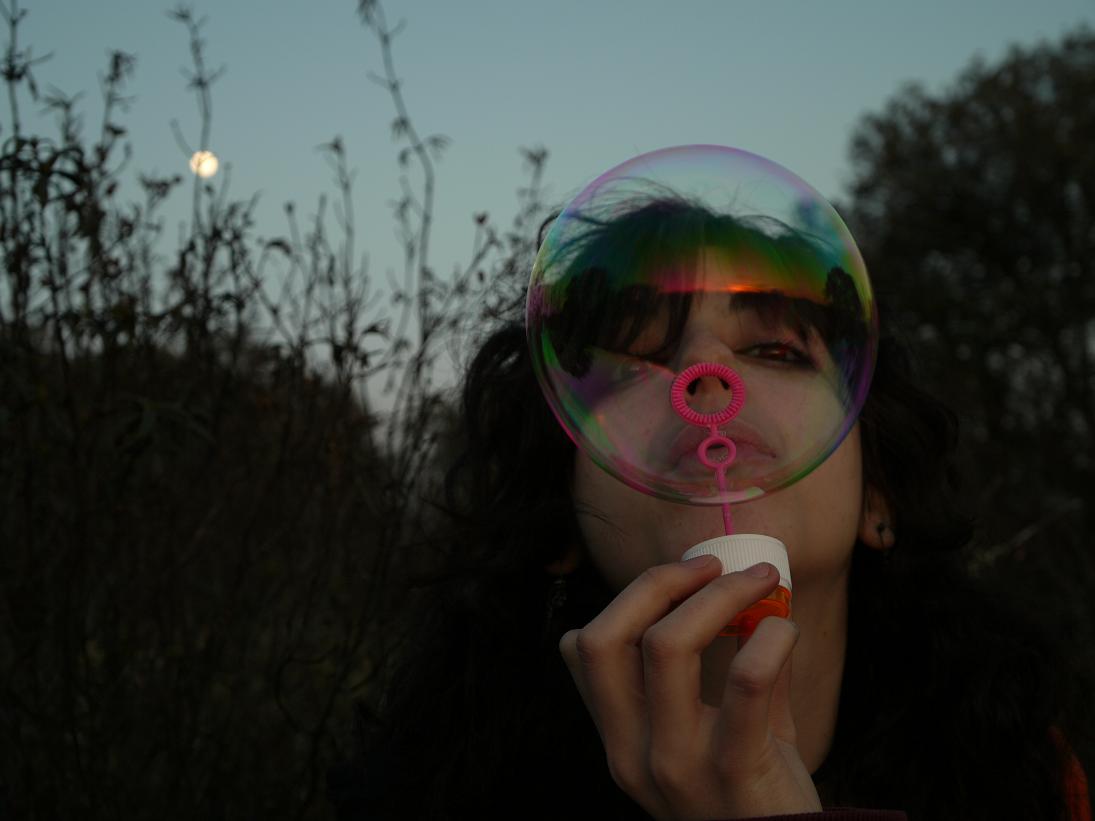
Dusk, Moon with Sunset Reflected in a Bubble. photo by arhadetruit
What have you been studying for the Bujinkan yearly theme of 2011? It seems that every year we start out on a journey of exploration. At the beginning of the year our minds seek something concrete to study. And Hatsumi Sensei puts something out there for us to consider. But as the year goes on, the theme evolves so that by the end of the year it feels like something else entirely.

However frustrating this may be for those of us who don't live in Japan to try to keep up, this is a very natural way of learning. And it is a lesson in itself. This year started out with Kihon Happo, but has transitioned to also include 万変不驚 Banpenfugyo and Juppo Happo.

There are many ways to look at Banpen Fugyo (Infinite change, No surprise). But how do you train on this? A very simple but profound example can be found in nature when we observe the reflection of the moon. I wrote about this before in my post "Ninpo and Mu: Waxing and Waning Like the Moon" but with this year's theme I think there is more to consider.

In Japanese there is an idea that can be expressed as utsuru 移る. This word has many interesting meanings for training, Like: shift;  move;  change;  drift;  catch (cold, fire);  pass into or to change the target of interest or concern. Or written another way, utsuru 映る - to be reflected;  to harmonize with.
"The mind is like the moon on the water
Form is like the reflection in a mirror

This verse suggests that the mentality proper for the martial arts is that of the moon’s abiding in the water. It is also the reflection of your body abiding in the mirror. Man’s mind moves to an object like the moon moves to the water. How spontaneously this happens!"
Yagyū Munenori translated by William Scott Wilson
The light from the moon can be considered like our shifting focus. If the water is disturbed (or changed) the reflection does not disappear, it rides on the ripples of change and as the water settles it remains pure and clear. Our focus never falters, only the water was disturbed.

Whether in everyday life or in a fight, no matter what happens, our focus should remain clear and undisturbed.

The moon can also be reflected in more than one place. Here in a puddle, in a cup of tea, and there in the lake… all at the same time. Our attention can shift but take in anything. It comes out from it's source at the clear center to be reflected everywhere.
"Enlightenment is like the moon reflected on the water.
The moon does not get wet, nor is the water broken.
Although its light is wide and great,
The moon is reflected even in a puddle an inch wide.
The whole moon and the entire sky
Are reflected in one dewdrop on the grass."
Dogen (1200-1253)
Violence in a fight happens very fast. But this does not have to present any problem for us. Our minds can move as fast as light from the moon. Yagyū explains that "… man’s mind moves to an object as quickly as the moon pierces the water." If you cover your teacup with your hand and then remove it, how quickly is the moon reflected?

What we train with our taijutsu is the ability to flow with this natural state. As natural as a moon's reflection. As Yagyū describes, "When the mind moves, the body will move there as well. If the mind goes, the body will go. The body itself follows the mind."

Of course if your heart and focus are unclear, then the movement of your body will be unnatural and slow. Please look at the moon tonight and consider that people in Japan have the same moonlight reflecting in their eyes. Try to catch that feeling in your training!


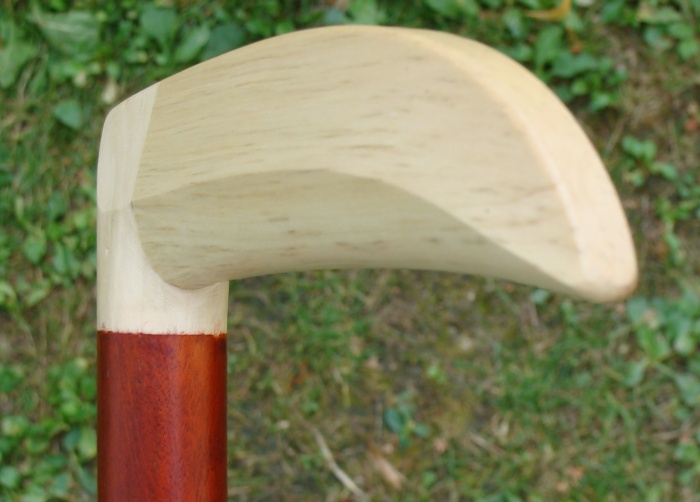
Naginata in bokken bag

From Paart Budo Buki by buki stolar


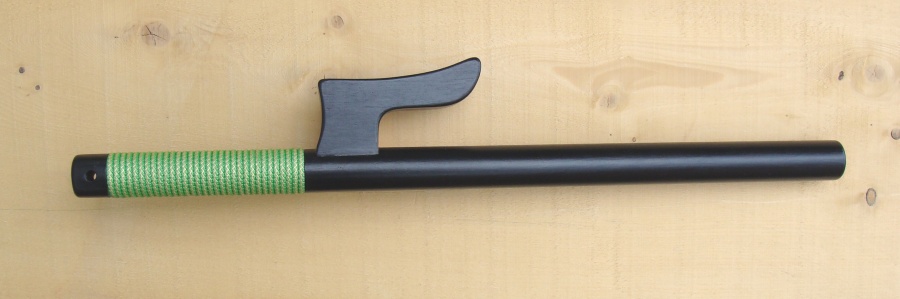
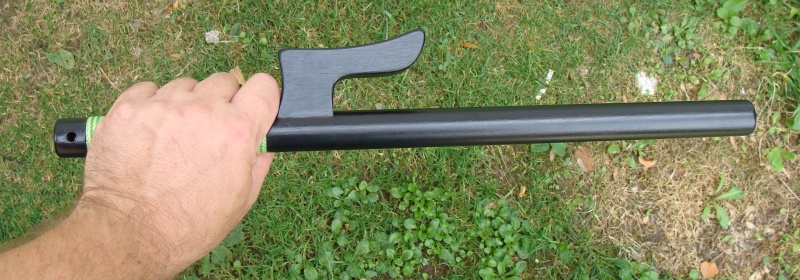
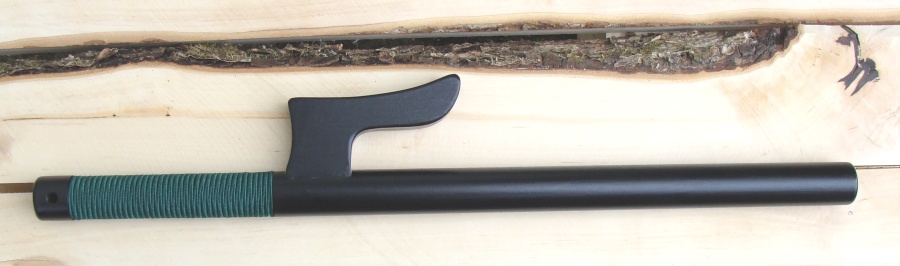
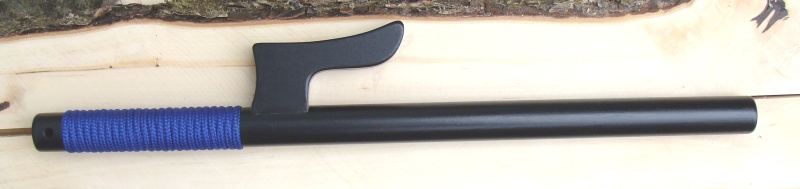
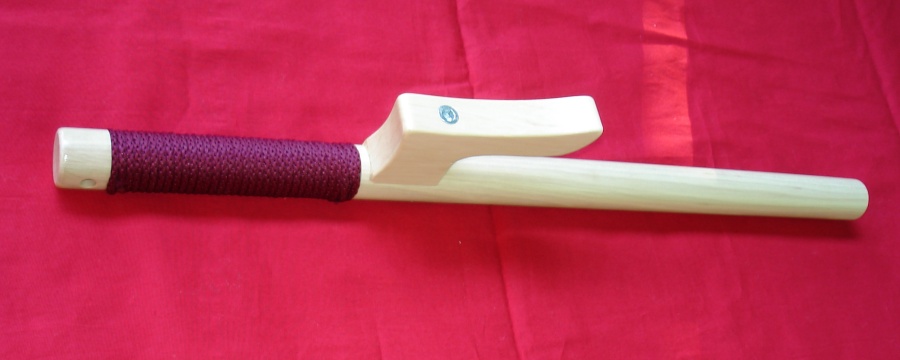
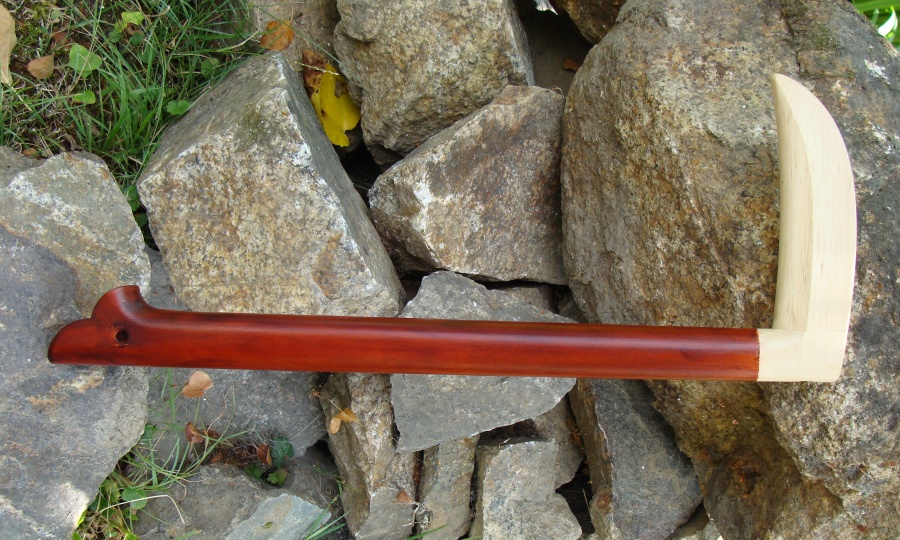
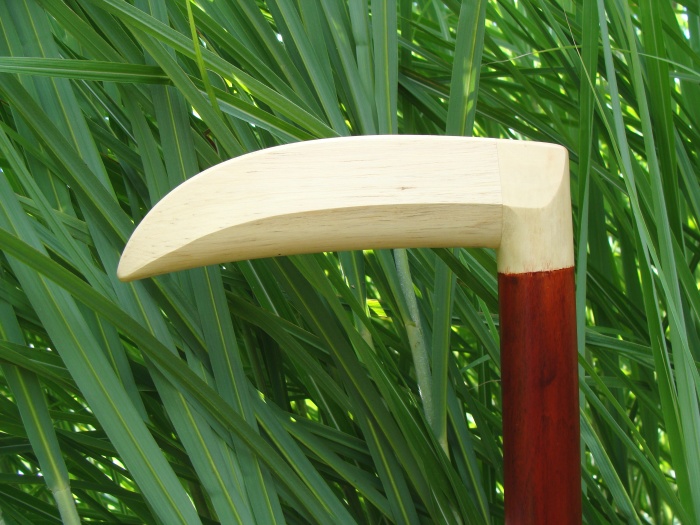
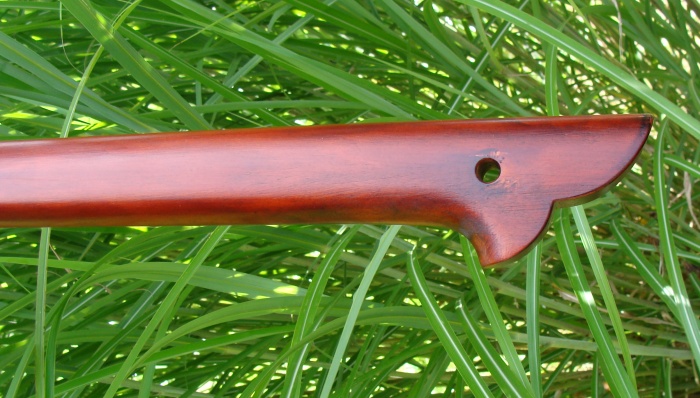
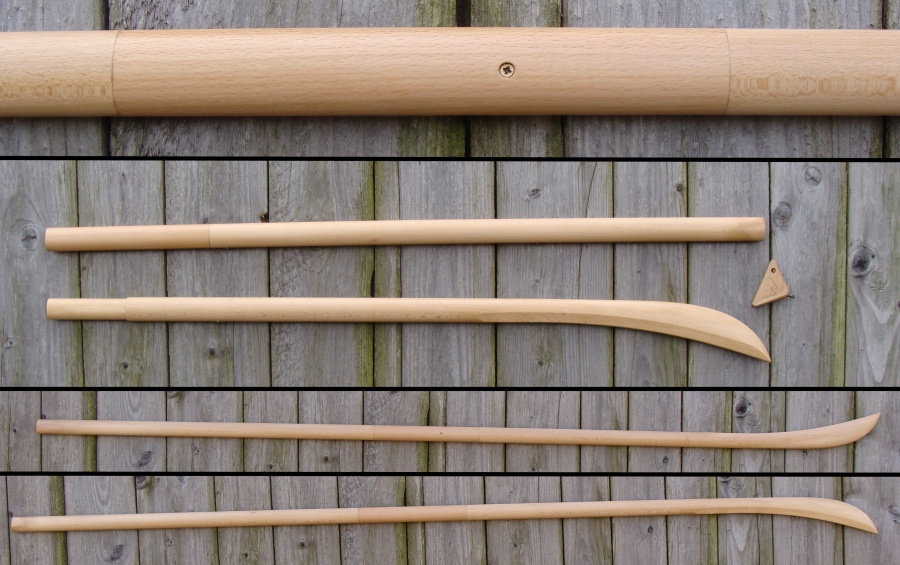
Here are my dear friends, in front of you is probably the first naginata in two pieces, which can be purchased for training.

I spent a long time to realize these idea, mostly by trying to find a manufacturer of metal tube that would be ideal for this type of joint. 
So here I must thank to sensei Erwin Steinhauser, Shibucho of KomeiJyuku Austria Honbu Dojo, which was first revised my Naginata, and made from her Naginata from two pieces. In this way, I was directed to create an elliptical diameter metal pipe, instead of seeking the manufacturer of such tubes
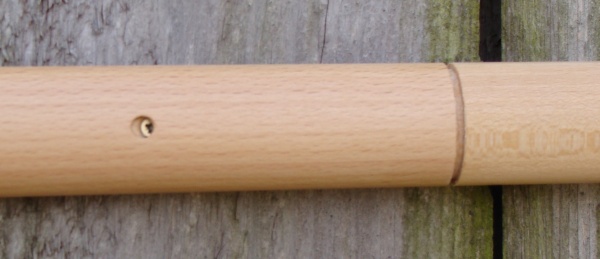
Only in this way is possible to make a connection, which is as sturdy as the Naginata from one piece.
I think that what you see in the picture's, the best solution for those who want Naginata in the bag for Bokken


in the picture below, you can find the special screwdriver that I made for this nginata
For securing naginata, it is necessary to twist the screw out, for one or two rounds, while the bolt head is aligned with the surface naginata shaft


little trick is that the screws that serve to fortify the compound stays in  piece which is connected externally, so it will not happen to lose the screw


消体 Shotai: You Cannot Divide Nature

From Bujinkan Santa Monica by Bujinkan Santa Monica

Chikuhō no kodomotachi (Chikuho’s Children) by Ken Domon
Hatsumi Sensei writes that sensing the true nature of things (消体 shotai) like budo and nature, shows that they are connected and cannot be divided. He explains this by way of photography:
"The mon 門 (gate), or shumon 宗門(religion), and bumon 武門(martial), are captured beautifully by the shutter of the famous cameraman Ken Domon."
Ken Domon, in advocating realism, said: "Realistic photography in the true sense brings us directly to reality. Photographic expression is an attempt at a truthful presentation of reality — in other words, it is a crystallisation of man's anger, his happiness and his sadness."

Domon famously defined his goal as a photographer as "the direct connection between camera and motif."

Domon's method of photographing temples was to stay at the location for some time before taking the first photo. He would then begin photographing based not on a systematic, scholarly approach to the subject, but based on how his feelings towards the subjects moved him to record them.
Profile of Ken Domon (土門 拳, Domon Ken, 25 October 1909 – 15 September 1990):
One of the most renowned Japanese photographers of the twentieth century. He is most celebrated as a photojournalist, though he may have been most prolific as a photographer of Buddhist temples and statuary.

Born in Sakata City, Yamagata Prefecture, in 1935 Domon joined Nihon Kobo, an organization that produced news photographs. He later worked as an independent photojournalist recording the tremendous changes taking place in Japan until he was stricken by cerebral thrombosis in 1979. During his career he produced many photographic collections including Bunraku (1972), Hiroshima (1958), Fubo (1953) and Koji Junrei (five volumes, 1963-75). Reflecting on the inadvertent role he played during WWII producing propaganda photographs, he became a main proponent of the postwar photographic realism movement that focused on society and the lives of ordinary people, and his powerful works influenced many amateur photographers of the age. Declaring his love of Japan and the Japanese people, Domon changed his focus and attempted to capture the essence of his photographic subjects. The photographs he took of Buddhist images both prior to and during WWII remain among the most highly acclaimed of his works and are thought to exemplify his photographic aesthetic. Before his death in 1990, Domon donated the entire body of his works to the city of his birth, and in 1983, the city of Sakata honored him by opening the Ken Domon Memorial Photographic Museum.

I hope you can find inspiration in photography and art as well as budo!


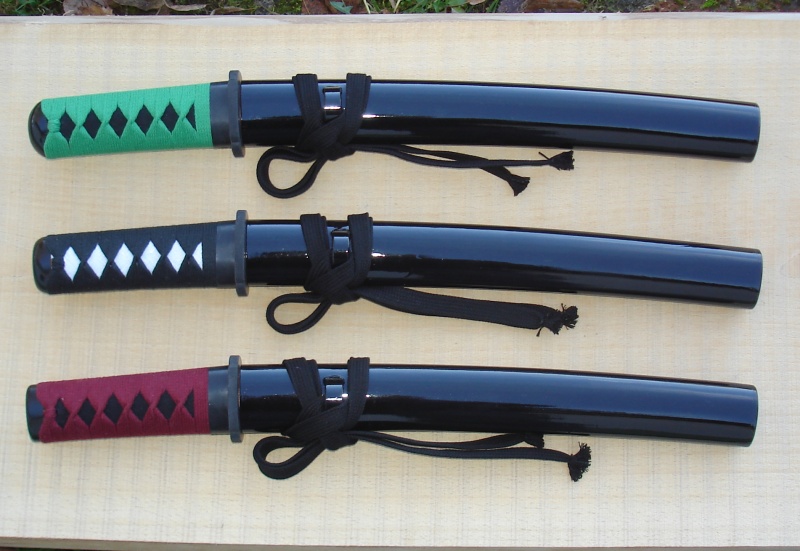
wooden Tanto

From Paart Budo Buki by buki stolar

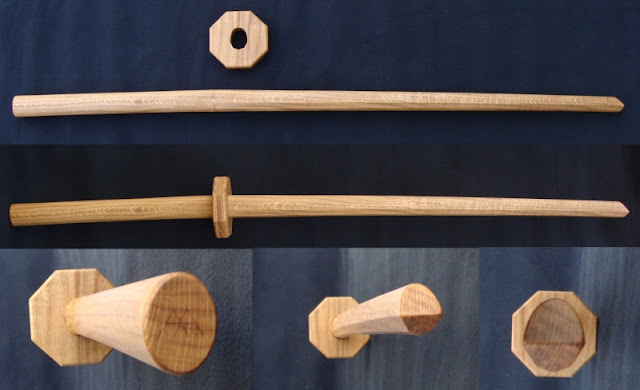
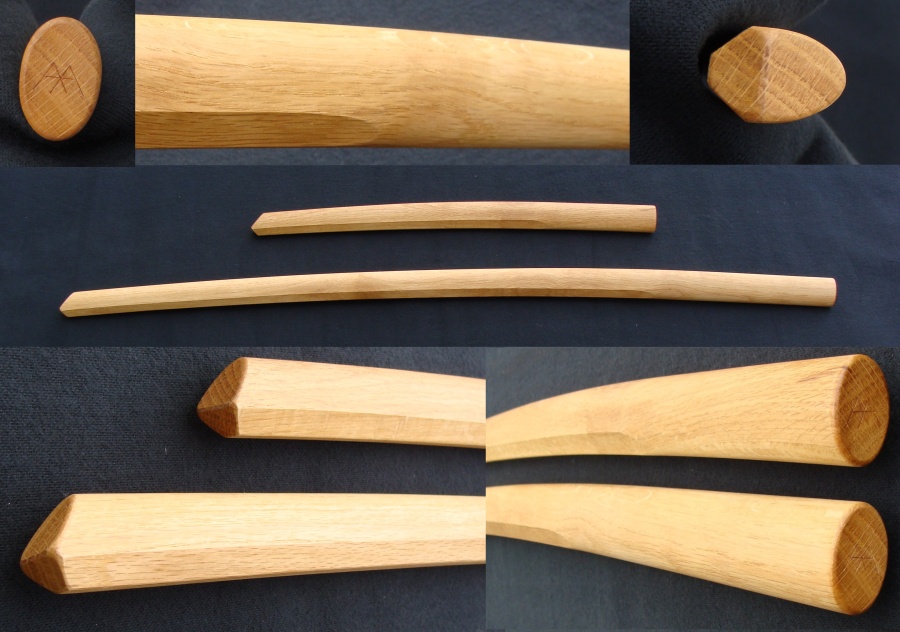
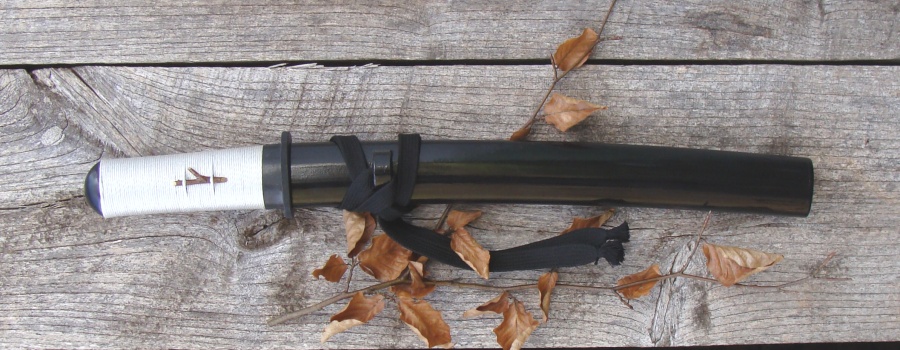
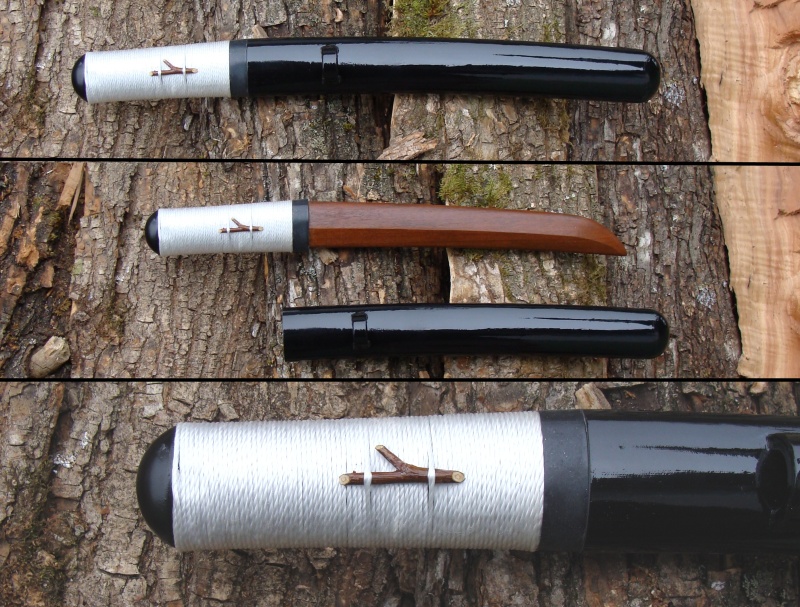
Here is few pictures of my wooden O- tanto's, with saya  and ito maki


tanto with white Jabara ito have also wooden menuki, that was first time that i put menuki on any of my bokken's or tanto's, but it hepen to be very nice and natural for this kind of wooden buki


All this O-Tanto's have Hishigamis under itomaki wrap, 
shape of blade and kissaki is very similar to original look tantos from that time.

When you order Tanto from me you could chose lenght of blade, lenght of tsuka, size and shape of tsuba , and as you se colour of ito maki.
If I don't have colour of ito maki which you like to have, you could buy it somewhere else and send it to me to wrap your tanto


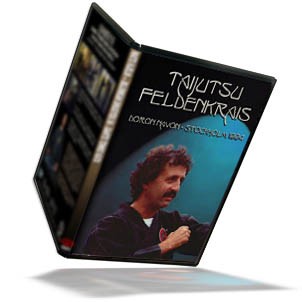
TAIJUTSU & FELDENKRAIS with DORON NAVON

From Budoshop by BUDOSHOP.SE

52 minutes, 354 Mb for $14.99

Also available on VideoCD

Doron Navon from Israel started training with Hatsumi Sensei in 1968 long before the “ninja-boom”. While in Japan he was also introduced to the Feldenkrais method by the Israeli physicist Moshe Feldenkrais who was an accomplished Martial Artist that came to Japan for a shorter visit. When Doron came back home to Israel in 1974 he deepened his knowledge in the Feldenkrais method directly under Dr Moshe Feldenkrais.

Doron says that the Feldenkrais method is a shortcut to the godan test. This has been confirmed by both Hatsumi Sensei and many other who have studied Taijutsu and Feldenkrais.

This video was recorded in 1994 in Stockholm. It was originally released on VHS and then later as a VCD / Video CD in 2003 by BUDOSHOP.SE hence the quality is VCD PAL (352×288), playing time is 52 minutes. It has been remastered and converted so that it plays nice on iPod, iPad, iPhone, PC, Mac, or any other device that can play standard h.264 videos. It is not DVD quality!

Sample clip

http://www.youtube.com/watch?v=GL5ecJvJddA

About the download

Click here for more information about our download files and how it works!

Doron Navon – Taijutsu and Feldenkrais 1994 (Trailer)

From Uploads by shugyou by shugyou

Doron Navon from Israel started training with Hatsumi Sensei in the late 60 s long before the "ninja-boom". When he came home from Japan 1974 he had so many injuries that he could hardly move for a long time. He was introduced to Dr. Moshe Feldenkrais who founded the Feldenkrais Method, and learned this method directly from him. Doron says that the Feldenkrais method is a shortcut to the godan test. This has been confirmed by both Hatsumi Sensei and many other who have studied Taijutsu and Feldenkrais. This video was originally released as a VCD / Video CD in 2003 by BUDOSHOP.SE hence the quality is VCD PAL (352x288), playing time is 52 minutes. It has been remastered and converted so that it plays nice on iPod, iPad, iPhone, PC, Mac, or any other device that can play standard h.264 videos. It is not DVD quality store.payloadz.com
From: shugyou
Views: 3527
9 ratings
Time: 01:25 More in Howto & Style

The Demon Motif in Kukishin Ryu: Part II of II

From The Magick & The Mundane » Bujinkan by Shawn Gray

I. Recap

In the first part of this article we looked at some early uses of the term “demon” in the West in order to help us more fully understand some of the things that Sensei refers to when he talks about the demon motif in connection with the Bujinkan martial arts tradition of Kukishin-ryū (九鬼神流). We also looked into some psychological principles derived from the demon idea and how those principles can be used to make our lives happier and more balanced. In this final part of the article, we will look at principles of Japanese geomancy (fuu-sui, 風水) related to the demon motif, and give some very brief hints as to some ideas for application of these principles to the Kukishin-ryū taijutsu techniques Kimon (鬼門) and Ura Kimon (裏鬼門).

II. Geomancy

Geomancy is an ancient earth-based system of divination. The most commonly-known Eastern method of geomancy is the Chinese system of Feng-shui (pronounced fung-shway). The Japanese equivalent, known as “Fuu-sui” uses the same kanji characters as the Chinese system – the character for wind and the character for water (風水). The topic of geomancy as a whole goes far beyond the scope of this article, but in very basic terms it refers to the use of geography (both directions and location/placement of geographical features) in divination.

Kimon Line

Edo Castle -> Ayase -> Noda -> Mitsukaido

A) SouthWest to NorthEast

One of the geomantic aspects which is connected with Kukishin-ryū is the cardinal direction known as Kimon (鬼門) – “Demon Gate.” This term originates in the Sengaikyo document, which was written in China during Japan’s Warring States Period, the Sengoku-jidai, “a time of social upheaval, political intrigue, and nearly constant military conflict that lasted roughly from the middle of the 15th century to the beginning of the 17th century”. Most Bujinkan practitioners are probably more familiar with the pressure point (kyusho, 急所) of the same name, which is located on the chest muscle structure a few centimeters above the nipple. This pressure point actually derives its name from a direction, or trajectory, on the Fuu-sui compass the direction of Kimon (鬼門), which is associated with the Northeast. Traditionally, the center of the Fuu-sui compass is located at the political center the land. In the case of Japan, from the Edo Period onward, this was Edo Castle (Edo, 江戸, is the old name of Tokyo), so the direction of Kimon in this case would be a line drawn in a Northeast direction from Edo Castle. Moving along the line North-East, one moves towards the Kimon. One interesting point to note before moving on is that Hatsumi Sensei’s weekly Tuesday classes at the Tokyo Budokan are in Ayase, which lies in the Northeast direction from Edo Castle, as does the Bujinkan Honbu Dojo in the town of Noda if you move farther out in the direction of the Kimon, as does Hatsumi Sensei’s home in Mitsukaido if you move yet farther out from the center along that same Northeast line. (This is not an exact straight line of course, but close enough to make it interesting.)

B) Geopolitical Expansion of the Early Japanese

Were Tengu actually early Russians?

Another interesting point comes when we look at the overall geographic orientation of the Japanese islands themselves – they are generally oriented in a Southwest – Northeast configuration. One image comes to mind of the early invaders of these islands (the ancestors of modern Japanese) fighting the native Ainu population back up to their retreat in the northern island of Hokkaido as they fought their way up from the Southwest corner of the island chain up to the Northeast – a procession from the Ura Kimon to Kimon. Yet another image that comes to mind is that of the red-faced, big-nosed Tengu demon which, according to one theory, may originate from early skirmishes with or sightings of the long-nosed, red-faced peoples of what is now Russia as the Japanese invaders moved up into the Northeast end of the island chain. The reason that the Kimon was drawn from SouthWest to NorthEast may have been because, to the ancestors of the modern Japanese people who settled the islands, expanding from the SouthWest to the NorthEast, their rivals and enemies would have been the Ainu and the inhabitants of what is now Russia, to the far NorthEast. This is the direction from which their enemies would have attacked, and the direction in which the ancient Japanese had to expand in order to secure the islands for themselves. Another, more modern, example of the term is used in relation to the general Northeast direction of the Joban Line, a Japan Rail train line. This line is sometimes referred to as “the railway Kimon” because of its extension out from central Tokyo in a Northeast direction.

C) Sensei’s Garden

SW Corner

NE Corner

During a visit to Sensei’s country home in 2004, he treated me to a tour of his garden, pointing out the significance of each object not only in and of itself, but in its relationship to the objects around it and its position in the garden as a whole. One of the impressive features of this garden is an imposing stone monument located at the Southwest corner. Engraved into the stone are the characters for “Kuki”, and mounted upon it is a large demon mask. This stone demon monument stands at the Southwest corner, as a guard of the garden. Conversely, at the Northeast corner of the garden, almost hidden away in the grass behind a greenhouse, sits a rather unimposing rock with a couple of terra-cotta figurines standing in front of it. When asked if I understood this, I had to scratch my head and admit that I didn’t really see the significance. Sensei then made a joke related to the shape of the rock, which I then realized bore a striking resemblance to female genitalia. The clay terra-cotta figurines had exaggerated genitalia as well, marking this corner of the garden as a place of fertility and creation. Sensei said that traditionally, when a child was born to a family, they would fire off arrows into the Northeast in celebration. The juxtaposition of the opposing corners was quite striking – on one side, the ferocious guardian; on the other, the generative forces at work.

III. Kimon in Taijutsu

Sweden 2005 - Photo by Mats Hjelm

The Kimon and Ura Kimon techniques of the Kukishin-ryū tradition come from its Dakentaijutsu section. This section of the tradition’s curriculum deals with grappling in Japanese samurai armour, known as yoroi (鎧). As one can imagine, and as anyone who has actually worn and moved around in it knows very well, Japanese armour is heavy, awkward, and restricting in and of itself, let alone in a battlefield situation where there would have been weapons, opponents, and obstacles all around. Once someone in armour fell to the ground, it was a difficult and dangerous exercise to get up again, and in many situations one was probably considered quite lucky if he were able to get back onto his own two feet alive. Thus, it was paramount for one to maintain his own balance while fighting in armour, and equally advantageous to study the ways of unbalancing an armoured opponent.

In the first part of this article, we discussed the classical (Platonic) idea of demons and how the generic term (daemon or daimon) can refer to a part of the psyche which is neither good nor evil. Long after Plato, in Medieval Europe, several grimoires were written (such as The Lesser Key of Solomon) that describe demons as unbalanced (and unbalancing) forces. From a taijutsu perspective, if we interpret the idea of Kimon (“Demon Gate”) as a gateway for unbalancing force, its application to armoured taijutsu movement takes on a new meaning – both with regard to unbalancing someone else and to maintaining one’s own balance as well. (Also remember to think about this in terms of psychological balance…) The Kimon is an extremely effective point to use when taking the balance of someone in armour. It is a point where, when force is properly applied (right amount, right angle, etc.), the opponent’s balance can be taken quite easily. And as mentioned above, an unbalanced opponent is pretty close to a dead opponent, especially if he is wearing heavy armour.

Noguchi Sensei in Yoroi

When practicing in the dojo, the Kimon kyusho pressure point on the chest is often attacked with a painful thumb strike known as a boushiken (棒指拳). However, looking at the technique from a classical perspective where yoroi armour is being worn, the Kimon would be covered by the yoroi and thus protected from the thumb strike. In fact, striking with the thumb to this area in such a case would more likely damage the thumb of the striker than the Kimon of the opponent. Because of this, when looking at the Kimon and Ura Kimon techniques of Kukishin-ryū, it is best to not think only of the Kimon kyusho itself, but to consider the direction, or line of balance, in which the defender enters the attacker’s space and the direction in which the attacker is taken off balance.

Actual taijutsu techniques are much better explored in the physical realm under the guidance of a qualified instructor than in the realm of text on web blogs, so I am not going to go into a description of the techniques here, but if you mentally superimpose the fuu-sui compass directions on either the horizontal or vertical planes when practicing these techniques, you will be sure to notice interesting correlations to the Northeast/Southwest directions and the concepts of Kimon and Ura Kimon. The picture on the right above is one that I took of Noguchi Sensei wearing armour at a Daikomyosai a few years ago. I’ve drawn an arrow on the photo to point out the NorthEast and SouthWest “corners of balance”. If we were squaring off with an opponent wearing armour like this, the Kimon would be at his left chest/shoulder, in the direction of the arrow pointing to the NE. By striking or pushing in this direction, upward against the chest/shoulder, the opponent’s balance would be taken to his left back side – the Kimon direction. Conversely, if we were to take the opponent’s right wrist or forearm and draw it forward and down, in the direction of the SW, the SouthWest direction of the compass, his balance would be broken to his right front side. This would be an example of the Ura Kimon direction. I hope this illustration helps you to understand Kimon vs. Ura Kimon  in this context.

Best wishes in your study of Kukishin-ryū taijutsu, and I hope you have found this two-part article on the demon motif in Kukishin-ryū to have been helpful and informative.