Skip to content

What if I Give Everyone in the World Bujinkan Rank?

From Bujinkan Santa Monica by Michael

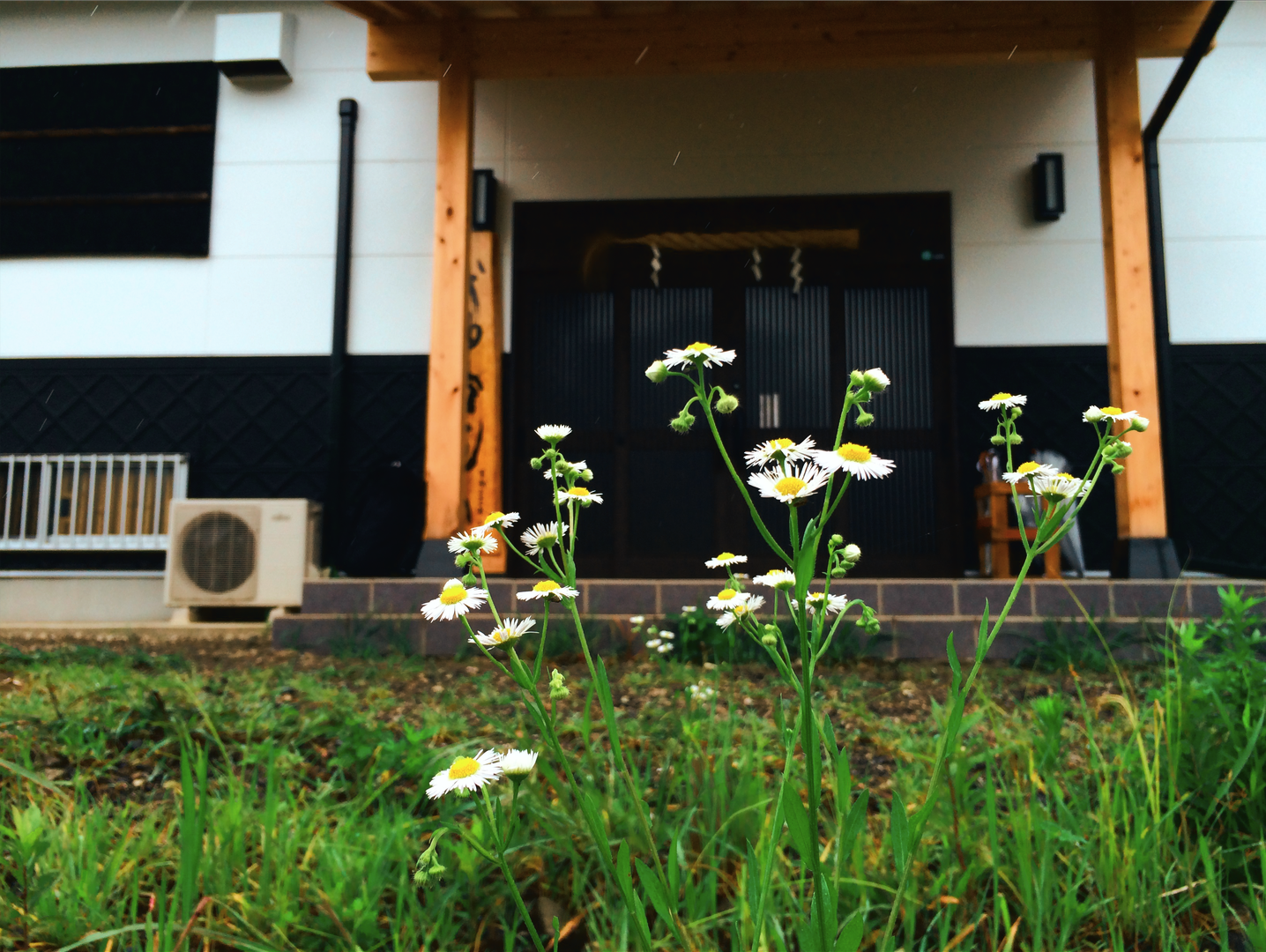
The Crowded Path to 弁天堂 Benten-dō, photo by Michael Glenn
This could be one of my silly or offensive posts. But, you may already know my personal feelings about Bujinkan Rank. Or, about how long it takes to get a Bujinkan Black Belt.

I remember when Hatsumi Sensei marked the occasion when he awarded the 3000th godan. We all stood and applauded. That was some years ago. He recently said there were 400,000 Bujinkan members worldwide. That seems like a lot.

So what if I just promote everyone in the world? I'll make up my own rank and promote everyone because I think my (fake) numbers may surprise you. I'll call my fake rank the "Rojodojo Bujinkan Level."

Out of an estimated 7 billion people on earth, what is Your Rojodojo Bujinkan level?

(my made up levels are not proven by science, so don’t check my math too close)

Rojodojo Bujinkan level 0


  • about 5 billion people (about 70% of the population)
  • These are people who have never heard of martial arts or don’t care

Rojodojo Bujinkan level 1


  • about a billion people (about 15% of the population)
  • People who like martial arts movies.
  • Maybe learned a technique from their friend.
  • Called a dojo once to check prices.

Rojodojo Bujinkan level 2


  • about 100 million people (about 1.5% of the population)
  • People who took a martial arts class when they were a kid.
  • Or studied a couple weeks at the gym.
  • Maybe they bought a book.

Rojodojo Bujinkan level 3


  • about 10 million people (about 0.15% of the population)
  • Someone who achieved rank in a martial art or studied more seriously as an adult.
  • Still probably never heard of the Bujinkan.

Rojodojo Bujinkan level 4


  • about a million people
  • These people are actively studying a martial art.
  • Some have even heard of the Bujinkan.

Rojodojo Bujinkan level 5


  • about 100,000 people
  • People who actively study the Bujinkan.
Hatsumi Sensei says it’s more than this, but most Bujinkan members haven’t even trained once this month. And to me, once a month is not very active.

Rojodojo Bujinkan level 6


  • about 10,000 people
  • Have reached Shidoshi level or close to it.
  • Some even run their own dojos.
  • Maybe they visit Japan occasionally.

Rojodojo Bujinkan level 7


  • about a thousand people
  • Jugodan ranks.
  • There may be more or less, but it’s growing close to this number. 
  • Some are actively training/teaching. Some are not.
  • Some have died and we miss them.

Rojodojo Bujinkan level 8


  • about 100 people
  • Shihan.
  • People who are top rank and actually know what they are doing.
That’s 100 people in the whole world!

Rojodojo Bujinkan level 9


  • about 10 people
  • the teachers I train with in Japan.

Rojodojo Bujinkan level 10


  • Hatsumi Sensei
(since this is my list, I can put whoever I want on top)

You might notice that if someone is one or two levels above you, they seem cool. Three levels above and they start to seem a bit strange. If you examine someone four or five levels above, they are just crazy. Anybody above that, you should just run away from them.

Going the other direction, people one level below you seem ignorant. Two levels below are assholes. Beyond that, are they even alive? I mean can they fog a mirror?

Do you think my numbers are even close? Where do you fit in there?

How to Use 精神 Seishin to Rearrange the Body

From Bujinkan Santa Monica by Michael
Michael Glenn visits 鬼の子の木 by 熊澤 未来子。Ichigayatamachi, Tokyo
I watched as Hatsumi Sensei brought his really big, central European opponent to his knees. He did this somehow without force. Even on his knees, the guy was almost as tall as Soke.

Then Soke snapped a sharp kick to a kyusho on the man’s leg. He yelped like a hurt pony. As he twisted to get away from the pain, we all saw that it was a trap that Hatsumi Sensei had set to pin the guy’s other leg.

How does Hatsumi Sensei break down bigger opponents so easily?

Maybe you’ve heard Hatsumi Sensei’s recommendation that we drop technique. Or not to focus on technique. Or that technique is a trap.

For many people who attend a martial arts class, this seems counter intuitive. We came to class for a reason. Why would we be there if not to learn technique?

Many martial artists get stuck at this level. They are happy obsessing over their technique and endless variations of it. You know the type, the ones who argue endlessly about the “correct” way to do kihon. Or which lineage is the “real” one.

Soke has in mind a larger purpose for budo. The purpose of growing human potential. We come together in the pursuit of martial arts to polish each other’s hearts and be polished.

But the mirror of the heart gets clouded by thoughts of technique, rank, of winning or losing, of honor or proving oneself. To study with a clear mind you must drop all of these thoughts. Kakusan Shidō, founder of Tōkei-ji said,
“If the mind does not rest on anything, there is no clouding, and talk of polishing is but a fancy.”
This is the approach of the pure spirit of 精神 seishin. Seishin is the spirit or soul, heart or mind. This is the part of you that defines yourself. Hatsumi Sensei says,
精神が己であり、己が精神でありまして、精神から離れた己はなく、己から離れた精神もないわけです。
Seishin is the self, the self is found in seishin. There is no self apart from seishin, and this is why seishin doesn’t exist without the self.
In martial arts study, we try to teach this part of ourselves through the physical means of budo. Fighting your way to enlightenment may seem odd to an outsider. But combat has a stark clarity. And it quickly cuts through the noise of ego to hit your body and affect your spirit.

There is even a ninja secret to protect the spirit. Have the perseverance of Ninniku Seishin: "hiding spirit" hide your intentions, don't show off everything, be patient, wait and endure to succeed. This is how you protect seishin.

One of Takamatsu Sensei’s teachers, Toda Shinryuken, The 32nd Soke of 戸隠流忍法 Togakure Ryū Ninpō, said,
 己を空にして, また体に配す
One must empty oneself and then arrange the body again. 
Arrange the body again? What does that rearrangement look like? This cannot be explained or even thought about. It is what Soke wants us to study with the Bujinkan theme for 2015. Hatsumi Sensei has not even spoken much about it, because it really is beyond thought, beyond words.
“Think the unthinkable. How to think the unthinkable? Be without thoughts, this is the secret of meditation” Dogen Zenji
This is also the secret for the student in the dojo. Have you ever had training like this? Try it next time and you might see what your teacher is really teaching beyond techniques.

八方睨み Happonirami: Stop Staring at Me!

From Bujinkan Santa Monica by Michael

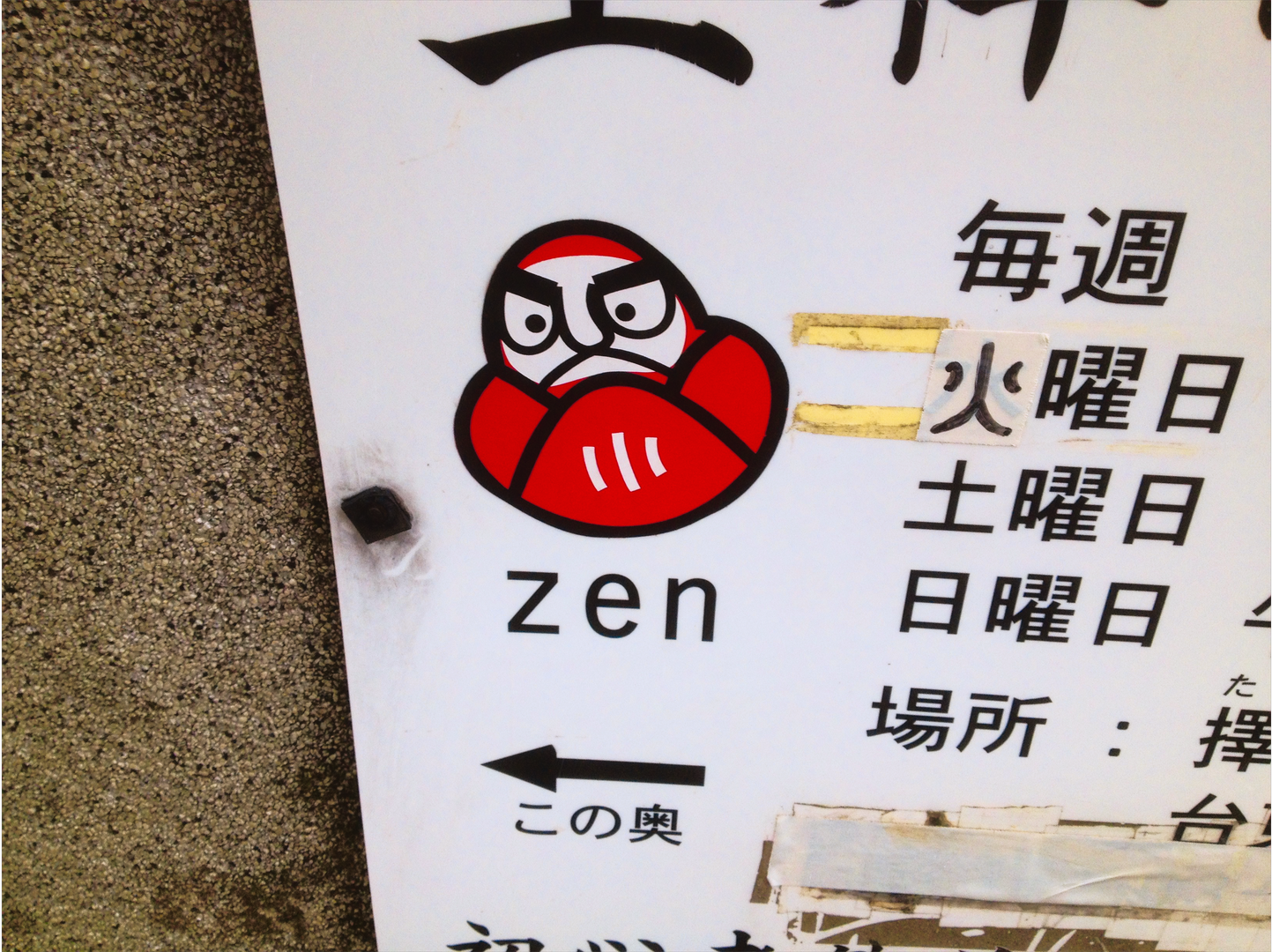
Daruma with 八方睨み Happonirami eyes, which way is zen? photo by Michael Glenn
I grew up in the southwest United States. Where the desert sky is so big that at night you feel like you can run away from the moon. This feeling grows while driving very fast. You feel as if you are pulling away, but then you look back and the moon is following you.

In Japanese there is the phrase 八方睨み happonirami, which means staring in all directions. There are many famous paintings of dragons and phoenixes with eyes that follow the viewer.

Maybe you’ve seen a creepy picture like this. No matter where you stand it seems to be looking at you. Hatsumi Sensei has even painted Daruma this way.

But happonirami is also a way to ward off evil. By watching in all directions, you are vigilant and can see the enemy approach. How do we do this?

One key is to not look at any one thing or dwell on technique. Unfocus. One day Hatsumi Sensei told us,
“Don’t look at the attack. Don’t watch it. If you try to evade, block, and take a kamae you will be too slow. Be like stardust in the sky.”
If you go stargazing (放心状態 houshinjoutai), you become abstracted or dazed out. You lose the self and any technique along with it. Your mind can be empty and clear like the starlight.

But don’t focus on attacking or defending. Don’t let your gaze fall on any one spot. If you do, your mind becomes cloudy.

Another day Soke told us,
“You're not looking at a specific place to kick. You're feeling where to kick. In budo you don't use your eyes to look at a specific place.”
In Bujinkan training and in all martial arts, there is the problem of perspective. When you study something deeply, you get too close to it. You don’t see the bigger picture that might be obvious to someone on the outside.

We have a phrase in English that says when you have a hammer, every problem looks like a nail. Or, if you hold a gun in your hand, every argument looks like a target. Someone who doesn’t have a hammer, gun, or martial arts will find a different solution that could be better.

Most fights are over something that only the combatants care about. Anybody watching the fight might just be amused. That is why the crowd gathers.

Arguments occur because people get attached to their position. Instead, don’t take any position, or you take one that allows you to see a bigger picture… Like 傍目八目 okamehachimoku, which means having the perspective of a bystander. Or, 岡目八目 okamehachimoku, that suggests you can see in all directions from the top of a hill.

Have this distance or perspective to see the big picture. For example, if you watch sports you often see more than the players do. Some people even yell at the TV because they saw an opportunity to score that the players didn’t see.

We have a ninpo gokui in our Kukishin Ryu Densho about the moon,

    月影の いたらぬ里は なけれども 眺むる人の 心にぞすむ
    Tsukikage no itaranu sato wa nakeredomo nagamuru hito no kokoro ni zosumu.
    

    Though the moon shines all over the world

    Leaving no corner in darkness,

    Only those who gaze upon the moon

    Appreciate its serene light.


Make your technique soft like moonlight. Disappear like stardust. Not only will you see from a great distance above everything, but you take on the ephemeral quality of magic and nothingness.

鬼角拳 Kikaku Ken Makes Me Laugh

From Bujinkan Santa Monica by Michael

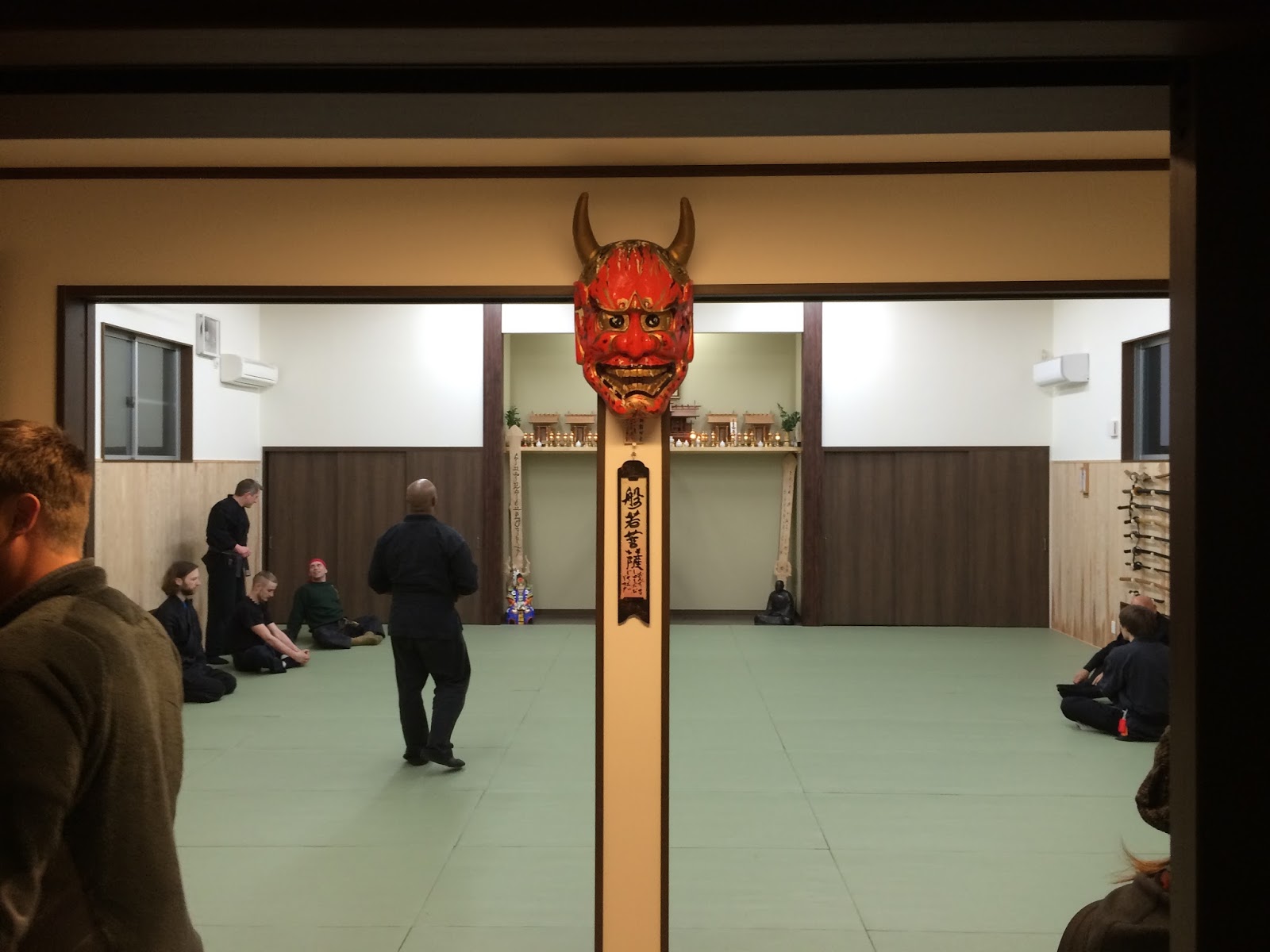
Demon greeting in the new Bujinkan Hombu Dojo, photo by Michael Glenn
The other night, I gave each of my students a Glasgow kiss. They didn’t like it. This is a slang term for a headbutt.

If you subscribe to my training notes (if you aren't a subscriber yet, you miss a LOT of free Bujinkan notes), you know that we are currently studying 宝拳十六法 Hōken Juroppō in my basics class. These are the 16 striking treasures of the Bujinkan curriculum.

The Bujinkan name (or slang) for headbutt is 鬼角拳 Kikaku Ken. To help everyone visualize why this strike has the name that translates as demon horn fist, I brought a small oni mask for everyone to see where his horns are located. It may even be technically correct to grimace like an oni while delivering this strike.

The 鬼 Oni, or demon is not the same type of demon that westerners fear. Oni are associated with wild energy and bodily strength. They can be positive or negative.

You will see many people in the Bujinkan who embody both qualities. Like the Japanese expression, 鬼面仏心 kimenbusshin, the face of a devil but the heart of Buddha. This is the stern expression you see on a warrior while his heart is tender and compassionate.

Hatsumi Sensei said that
“In the Bujinkan now we have really reached the time of demons (oni). When you say demon many people think of an image of something that is very wild. But it is not like that. Oni are very important creatures in Japan given to us by the gods to protect justice. I am sure that there will be more demons in the future of the Bujinkan to look after the world.” 
This why I laugh out loud every time I headbutt someone. One year, when Hatsumi Sensei set the yearly theme as Kukishin ryu, he wrote a scroll to hang in the (old) hombu. It read 九鬼大笑 kuki taishou... 9 demons, hearty laughter.

Most depictions of Oni in masks, sculpture, or painting show them with a very large and scary smile. This is because they know a secret. Laughter is the only thing that will defeat our biggest enemy... ourselves. The inner demons float away on a smile.

Bujinkan 妙音術 Myō-on jutsu, a Mysterious Sound in the Kukan

From Bujinkan Santa Monica by Michael

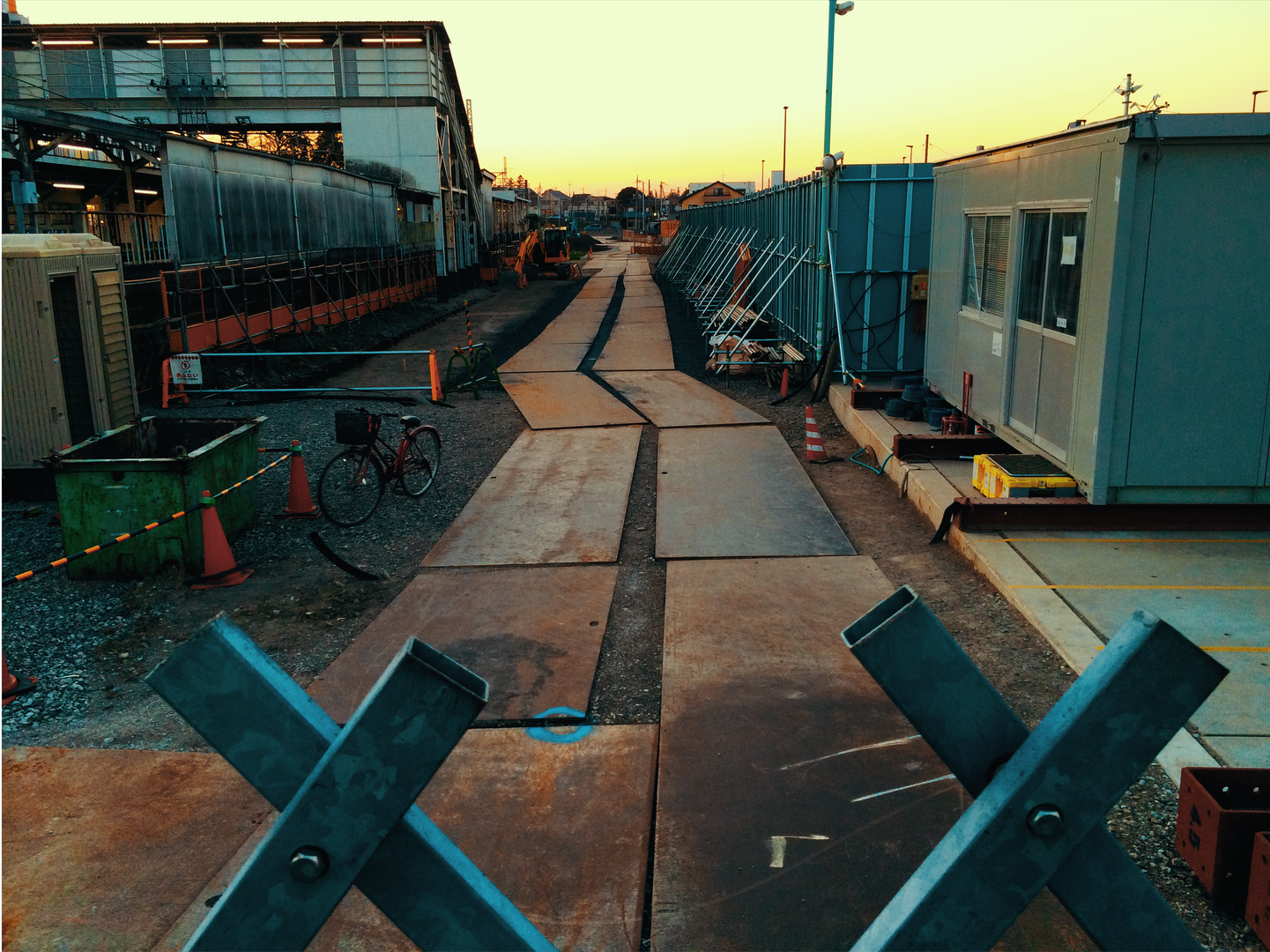
The old bike path to the Bujinkan hombu dojo is gone, photo by Michael Glenn
Last week we were making a video of 折倒 Settō for my Bujinkan class. This is a simple Kotō Ryū kata that many have experienced. But this time the expression of it was different. My opponents were collapsing and flying away as if by an unseen force!

I was fortunate to study this kata in Japan last month with more than one teacher. They were generous with the pain. Below I describe how when I did it with Hatsumi Sensei, he gave me a gift that has opened up a new understanding of taijutsu.

Everyone knows that proper taijutsu is not supposed to be muscled or forced. You should drop the power out to do it well. I wrote about that here Releasing the Power of 力を抜くChikara o Nuku

The key in that idea is expressing power or force, then releasing it. But the surprise for me was what Hatsumi Sensei said last month. He told us to put your intention in the kukan, then remove it (空間と退かす).

Maybe you’ve heard the expression that nature abhors a vacuum. In Physics this means that empty space will quickly be filled. When you remove your own muscle or intention from the technique something will replace it.

Hatsumi Sensei has suggested this year (and last) that we power our taijutsu with shizenryoku or the power of nature. Natural forces will rush in to fill the gaps we leave in the kukan. He even gave a name to one force that can appear when you remove your intention: 妙音術 Myō-on jutsu.

I won’t try to explain 妙音 Myō-on too much. Except that it is a vibration of mysterious sound that comes from what Soke calls 自然観 shizenkan. This view of nature or natural philosophy is connected to mythology and 五行 five element theory 

In religion it is associated with 妙音樂天 heavenly music from サラスヴァティー Sarasvatī who in Japan is expressed as 妙音弁才天 Myō-on Benzaiten holding a biwa (traditional Japanese lute).

This kind of metaphysics gets really esoteric. But one practical result for our training arises from this. In the very next sentence after using the word 妙音術 Myō-on jutsu, Soke said,
万物すべて武器 banbutsu subete buki
This means everything is a weapon. Don't be stuck on the idea that only weapons are weapons. In this way the mysterious sound of the Kukan can be your weapon.

The Stunning Effect of 気分 Kibun in Hatsumi Sensei’s Class Last Week

From Bujinkan Santa Monica by Michael

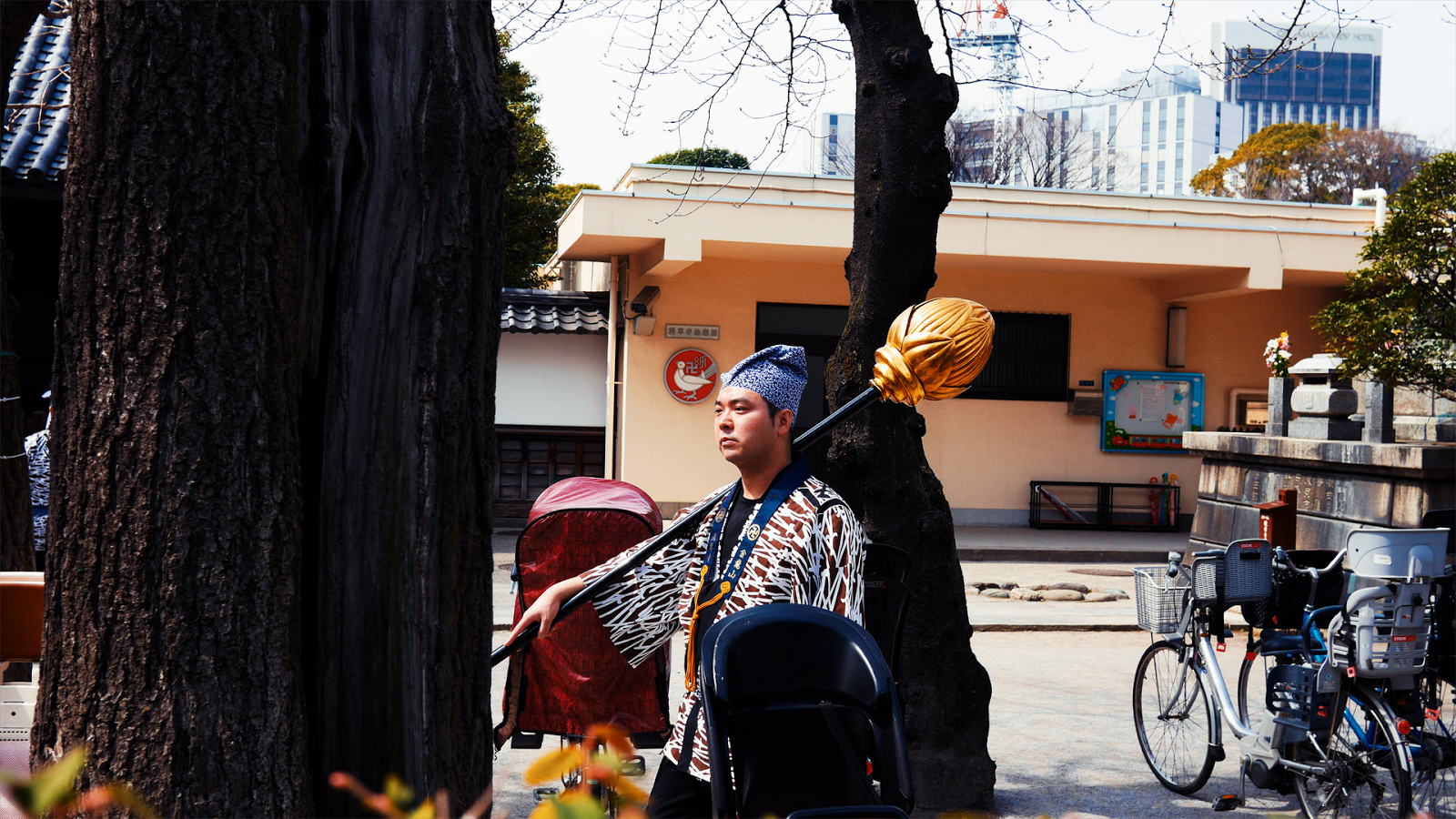
The lotus bearer from 金龍の舞 kinryu no mai. photo by Michael Glenn
Hatsumi Sensei did not move. The attacker with the sword missed him completely. I watched the next demo more carefully. His feet literally did not move at all. Yet he was not cut.

Maybe some of you have witnessed this strange event in person. If you have, you know how weird it can be when you try the same thing with your training partner. Most of us cannot repeat this.

After Soke demonstrates, you try it, and you get cut every time. Or, you must leap out of the way. But never can you repeat what he did.

I have seen him demonstrate this in class many times over the years. And I have to be honest, I always thought it was fake. I just chalked it up to a bad cut from the attacker.

But after last week’s training, I’m not so sure anymore. Soke shared something with me personally that I did not consider when I judged the previous demonstrations. I’ll try to describe what he showed me.

Here is what Soke told us that night. He said that normally when we evade, we do so with our minds gauging the distance or the angle of the attack. We’ve all been learning this since we were born. Our eyes process the physical properties of the incoming attack, and we duck or dodge.

But Hatsumi Sensei said That if you think about trying to evade, it’s already too late. Instead, he was using a kyojitsu of the kukan. The whole space and everything in it is controlled with kyojitsu. He controls the attack before it occurs, and there is no need to evade.

How do you do this? Well, what I felt when he asked me to attack him was a blankness or an absence. It was bizarre. Like having your memory erased. He just was not there. Yet I was thrown quite hard.

Hatsumi Sensei then said, you are being controlled by 気分 kibun rather than anything physical. Kibun is the mood or atmosphere. You may even translate it as the spirit of the moment.

This is the kyojitsu he applied on me, or rather, the entire kukan. And if his attacker with the sword experienced the same thing, I can understand why he missed. How do you cut absence or emptiness?

Instead of judging the bizarre appearance of what I witnessed in Soke’s classes, maybe I should realize I didn’t have all the information. I was lucky that Hatsumi Sensei chose to demonstrate on me personally to show me this part of the puzzle. Now I have a lot to work on at home to harness this power of moody kukan.

The Ura Side of Bujinkan Sakkijutsu

From Bujinkan Santa Monica by Michael

金龍の舞 kinryu no mai, 浅草寺 Sensō-ji, Tokyo. photo by Michael Glenn
This is one of those Bujinkan training trips where I will be sore for the entire trip. Besides the normal beatings at the hands of my training partners, Hatsumi Sensei, Senou Sensei, Noguchi Sensei, and Nagato Sensei have all seen to it that they personally roughed me up.

For members of Rojodojo, I made a video: Bujinkan Japan Training Report: Kinryu Edition  Because...

Yesterday, I went to see 金龍の舞 kinryu no mai. Dance of the golden dragon. This is a rare sight… the sensoji temple also has the name 金龍山 kinryuzan. According to legend. the fisherman who founded the place saw a golden dragon swoop down out of the sky and create a forest in one night.

Eight guys carry the dragon and the 9th guy carries a lotus flower. This is symbolic of the dragon's dual nature. Although the dragon is fierce while attacking, it also protects.

Hatsumi Sensei has been saying the same thing for many years. In fact, on Tuesday night, he showed us this dual nature against his attackers. During one throw, he said he was trying to protect, but those who do not accept it defeat themselves.

He also shared what he called the ura side of 殺気術 sakkijutsu. This exposes the dual nature of sakki and requires a feeling of sutemi. Hatsumi Sensei used a baseball analogy where instead of going for a home run, you bunt.

When you bunt in baseball, you receive a fast moving ball and deaden it with your bat to slow it down. Your opponents chase a slow rolling ball while the runners advance at fast speed. It's a way of controlling the tempo of an attack.

Hatsumi Sensei said 勝負 shoubu, victory or defeat, is already decided before the fight begins. Then everything moves in slow motion for the opponent. He cannot stop it from happening. All he can do is witness his own demise.

This may come as a shock or surprise. And that is what defeats the attacker rather than any physical technique. Soke said he is like the monkey who puts his hand in the jar to grab the food, but then can't pull his fist out.

This is why Soke told us to release, or set ourselves free from 技術 gijutsu or the technical qualities of fighting. Technical skills are like the monkey trap. Soke said,
People think that they perform techniques with their own power, but they don't know that it's the kami that drive their bodies.
If you move with your own intention, then you can't use the power of kami.

And this power, this ura side of sakki, allows you to dissipate any attack. Imagine the arrows turning to flowers before Siddhartha. What Soke did in one class this week was cause his attacker to defeat himself by trying to help the attacker or even protect him.

Hatsumi Sensei told us this was for the "jugodan" test. When I became a 15th dan, I began to feel Soke's warning that the jugodans are constantly taking the sakki test. Anytime, anywhere. It does not only exist in the dojo. This is why we need to discover the ura of sakkijutsu that Hatsumi Sensei was teaching at Ayase.

The Golden Dragon (kinryuu son 金龍尊) is often mentioned in the Suvarna- prabhasa-sutra "Golden Light Sutra". This is where the idea of the 四天王 shitenno comes from. Soke has referenced this with 4 Japanese shihan and also used it as a nickname for some European shihan.

These four kings are supposed to protect the head of the kingdom. But only if the ruler is just. This is why Soke tells us to only teach people with a good heart. If you do not have a good heart you will never be able to harness the power of the ura side of Bujinkan Sakkijutsu.


In Bujinkan Ninpo, We Live or Die with 空 Ku

From Bujinkan Santa Monica by Michael

Shide at 稲荷神社, 南柏 Minami Kashiwa. photo by Michael Glenn
In the following account, I describe a night when I killed somebody. The intention rose up my body, filled it, and took over. Then I struck him down. He never saw it coming.

Before you report me to the authorities, make sure you read all I have to say about that night.

Life and death can flip in an instant. They both exist in the same moment. What separates the two?

One moment you are full of life. You were born, grew up, and live with the choices you make every day. You have dreams and goals for your future. But all of your history and all of your future can be taken from you right now.

Life. Death. One and the same.

In our Bujinkan training, we have strategies to deal with this. I previously wrote about one of these that Hatsumi Sensei calls 過去現在未来之術 Kako Genzai Mirai no Jutsu. This is an art of existing in the moment between life and death.

Life or death only happens in the present moment which is ephemeral and very small. In fact, it is a moment of zero. It is like a 要 kaname of life and death.

That night I killed somebody symbolically. Hatsumi Sensei asked me to give the godan test. The guy never saw it coming, and I killed him with my sword cut. But it was also a moment in which I existed. That same moment of life or death. And I killed myself along with my victim.

Hatsumi Sensei commented, “In ninpo taijutsu you have to become 重いで空 omoide ku,  heavy with emptiness.” But he also changed the meaning by using 思いで空 omoide ku, which means thinking, imagining, or feeling emptiness. Empty your mind of life or death in this moment of zero.

If you want to know more, you can watch the latest video I made about 過去現在未来 Kako Genzai Mirai. In the video, I also show how to find the pivot point on your sword.

The Invisible Barrier of 銛盤手裏剣 Senban Shuriken

From Bujinkan Santa Monica by Michael

Wall and Trees 鎮護堂 Chingo dou, Asakusa, Japan. Photo by Michael Glenn
There is a secret hidden in 銛盤手裏剣 senban shuriken. I have seen the word senban written in many ways, such as 銛盤、 施盤、or 旋盤。All of these project different meanings.

As you know, Hatsumi Sensei often uses wordplay to expose different truths. And he wrote senban for us with different kanji that reveal a secret. But first let me tell you why you should care.

There are invisible barriers in our training. Here is one you may not know about:

As a Bujinkan student, you may come to stand on the edge of your own humanity, look down to the light side, and the dark side. And there you will find yourself. You might love or hate what you see. That’s a terrible beauty of training.

When I was young, I was not smart. I secretly ordered some senban shuriken through the mail because my parents would never have allowed me to possess ninja weapons. I had to wait everyday by the mailbox to get the mail before my parents did.

When my shuriken arrived, I quickly removed them from the package to test them out. I chose a tree in the yard for a target. I had no idea what I was doing.

I was poor in ability and aim, but the big mistake was my choice of a target. The tree stood in front of a stone wall. Every time I missed, the senban slammed into the wall.

Within 15 minutes, the metal points were dull and bent.

Now, 30 years later, I see many students make the same mistakes I did. One of the biggest and worst mistakes is like choosing a bad shuriken target. You choose the wrong reason for your training.

I made that mistake too. It was difficult to fix. I almost didn’t recover.

Why do you train? Do you even know? Have you chosen a bad reason or target?

Soke recently demonstrated 閃万飛低 senban hitei. This was a way of writing senban I had not seen. My translation is not the best, but you may read it as 10,000 flashes flying low. Imagine the flashes from a storm of metal shuriken flying in every direction.

This image can lead us to an enlightened direction. The flash of inspiration (閃き) can appear from 10,000 directions (meaning from anywhere and everywhere). But you may only perceive it by flying low, or training with humility.

If you cannot, you are the target. Your life is like a storm of 10,000 senban. And every shuriken will be aimed at you.

This is one of the invisible barriers of the Bujinkan. To truly understand our art you must erase the self. It seems like that is simple advice. Don’t be a target. Become zero.

But your reason for training appears from your own ego. That means it already is, or will become a barrier to understanding the Bujinkan. You have to let it go.

The problem is not the desire to train. The problem is that no one puts in honest effort to remove these barriers. Most people don’t get past their original motivation and they give up the idea of trying. An then so many Bujinkan students merely half-ass their training. Or they quit.

I see this in every dojo across the Bujinkan. I see it in my own students. I see it in myself.

Real Bujinkan training is not a game. It is not playing ninja. It is hard work.

If you want to to know what I work on in my own training, you can sign up for my weekly training notes: http://eepurl.com/cD5v6

So what is your reason? if you’re going to get serious about training , you have to have your “why” squared away. You have to welcome the storm of shuriken that you will face. And mentally, never give yourself the option to quit.

Hatsumi Sensei explains one ninja senban tactic like this: 心して前万に投げること、大秘なり This big secret is like carefully throwing away all of the bad parts of yourself. Then you will be invisible to the enemy behind a storm of shuriken.

The Distance Secret for Shaping Kukan

From Bujinkan Santa Monica by Michael

Vending Machines, Matsudo photo by Michael Glenn
I used to have a friend who was so beautiful. She had a classical face like you would see in a Renaissance painting. Her brown skin was rich in color and smooth. She always had a bright smile for me. Then one day, I met her at the grocery store and she had deep wolverine style wounds across her face.

She had gotten into a fight with another woman who clawed her face. The scars were deep, and never went away. She never smiled the same after that. This sad story demonstrates the raw savage power of 蝦蛄拳 shako ken

Hatsumi Sensei taught us some secrets hidden within shako ken in a recent Friday night class at the Bujinkan Hombu dojo. He showed us how to use it not just to attack directly, but to shape kukan.

He held the claw up like 刀匿礮姿 tōtoku hyōshi in the space. Most of us can understand the obvious shape that brings to the kukan. The hand and arm project out from one side toward the attacker and you pivot around it as a shield. That is a very important detail that many people have yet to learn. But I email everything I learn first, so get your email here

But Soke was not teaching only about shielding. He kept trying to get us to understand a deeper, more hidden strategy. One that he has tried to teach for years.

Hatsumi Sensei use the word 片方 katahou. This is a way of shaping the kukan to one side or the other depending on the needs of the moment. Sensei said you should,
“Create Distance with one side and then take the other. There’s no need to create technique or throw the opponent. Because you have created the correct distance. Remember this waza of the kukan.”
Anyone who has trained much with Hatsumi Sensei will recognize this strategy. He often influences one side of the body to affect the other. And it usually is the opposite from whatever surface technique we might be studying in that moment.

That same night, I think Hatsumi Sensei could tell that I wasn't getting it. He told me,
"I've been teaching this kind of kurai dori for 42 years. Whether only in this fight, or in any of the seasons, I move with that time."
To drive home this point he demonstrated on me, and he said,
"There are many ways of holding this. You don't need to grab. You don't need to throw. 空間を梃子 kukan wo teko you use the lever of the kukan. Take it right here. Bring your shoulder down. It's not with the intention of throwing."
During the class break, Hatsumi Sensei painted a picture for me of a beautiful woman with long hair covering one side of her face as she looks back at me over her shoulder. When I look back through my memory, I think of my friend and the way her smile became more wistful and hesitant after the damage to her face.