Skip to content

Hatsumi Sensei Shares Some Ninjutsu 文化 Bunka with Class

From Bujinkan Santa Monica by Michael
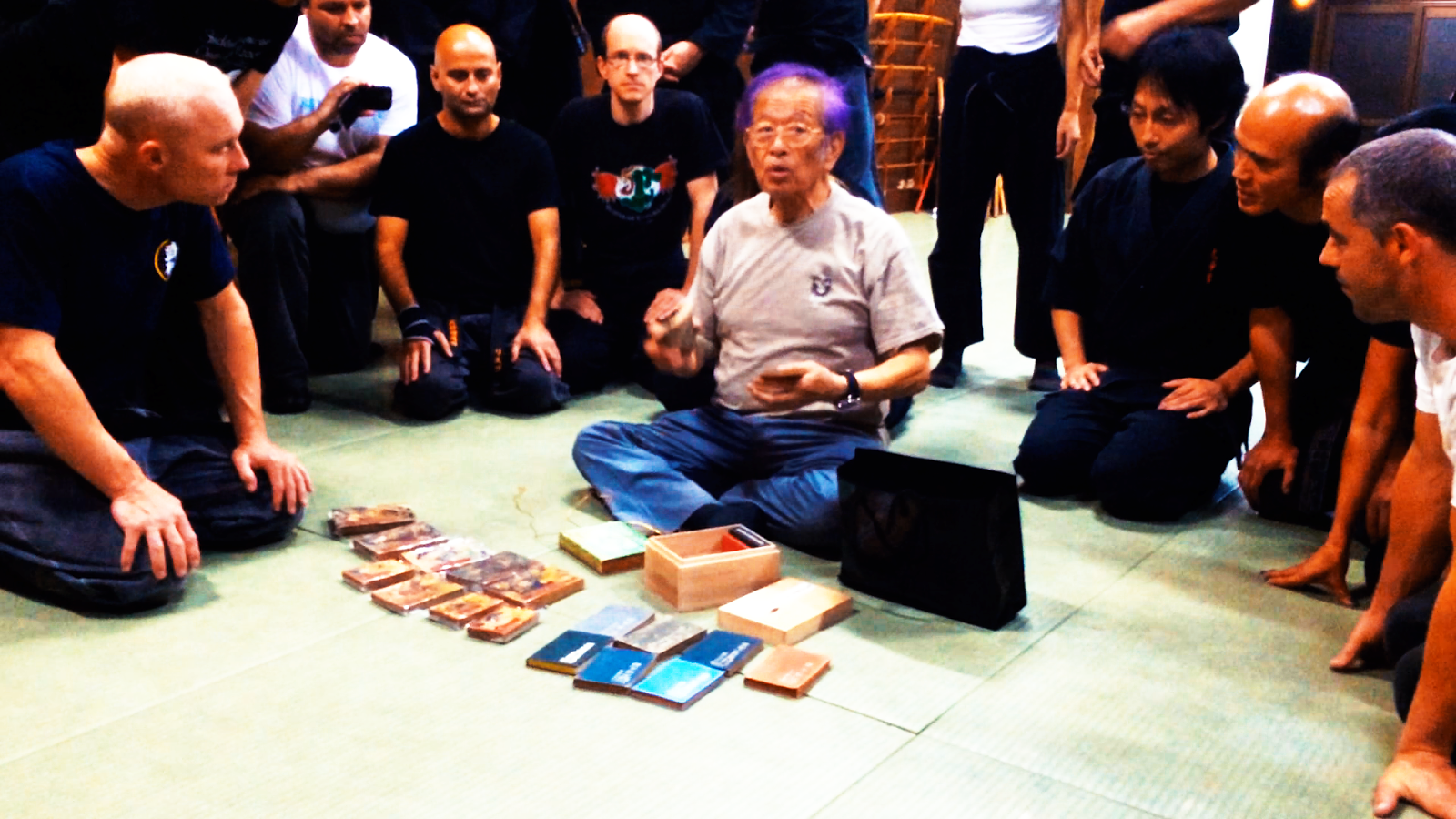
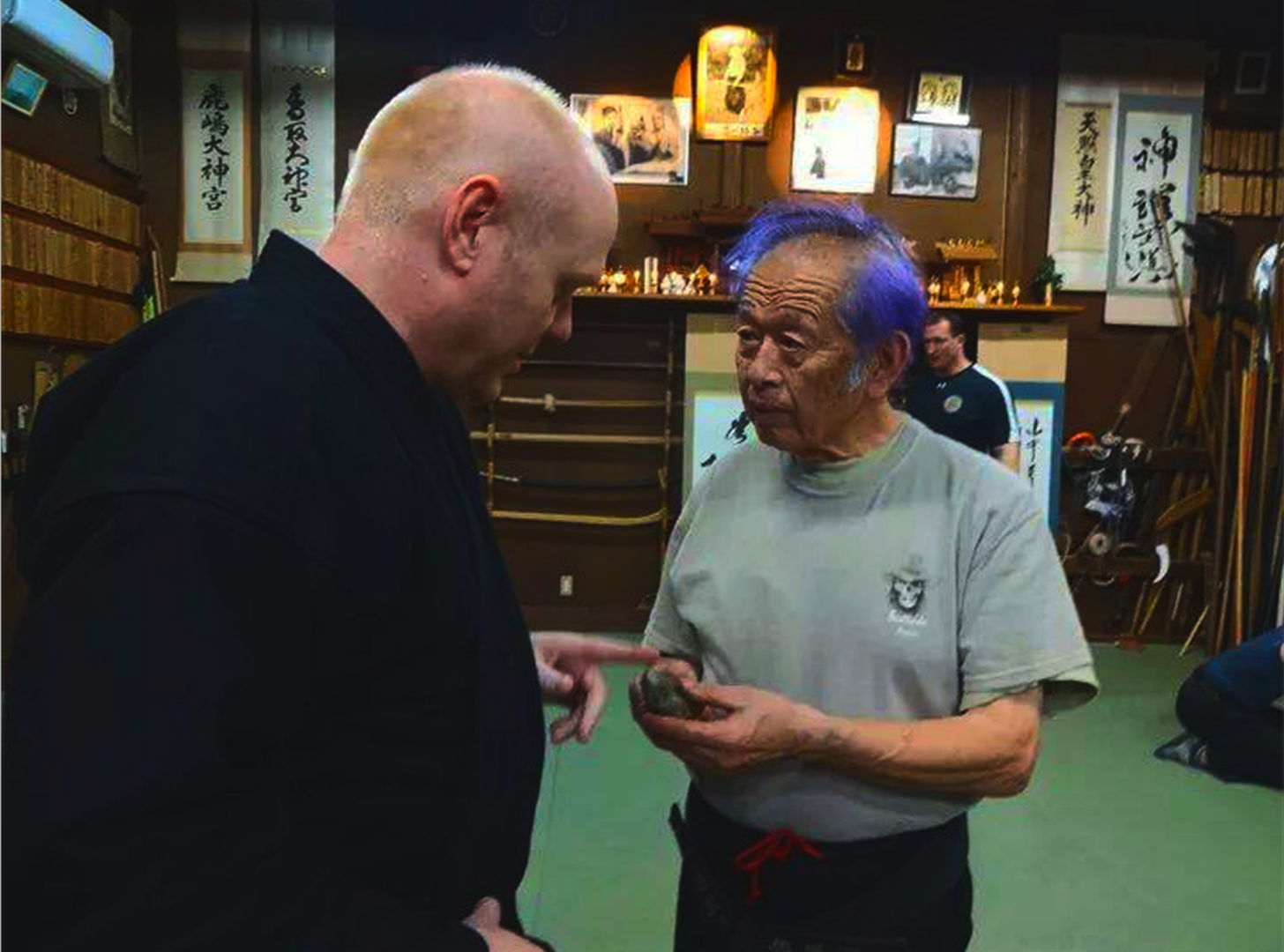
Hatsumi Sensei Shares with us, photo by Michael Glenn
Last week Hatsumi Sensei set a tone for class that was subtle but very important. It started in a way that I have experienced before with Soke, with a show and tell before class. He brought out a sack full of books to show us.

Soke said these books were tales of ninjutsu 名人 meijin. They were mostly children's books and many were illustrated budo legends. But something was different about these from ordinary comics or manga.

Before I explain the difference, let me describe an experience from my own life that has the same echoes. It is an experience that is natural as you age, but the pace of change in our current era make it extreme. In my lifetime, a major change is the internet and smart phones.

Lately, I've been thinking a lot about this in relation to the experience of learning, training and daily life itself. Many people younger than me did not experience life before cellphones and the internet. They may not know that it had a different quality.

You had to learn differently. Train differently. Find and connect with teachers differently. This made your entire way of thinking.. different.

I have observed the effects of this change in younger students in the Bujinkan. Some aspects of it are really wonderful and Hatsumi Sensei embraces change like no one else. But our art was born of a different time and manner of training.

When I was a kid, I couldn't just look stuff up. I couldn't easily call or text my friends. We had to agree to meet (physically) somewhere ahead of time. Or just find each other.

That happened. Even with my own Bujinkan teacher, I followed my instincts and just found him. There was no website, or even a flyer with a phone number.

This may seem like silly "old man" nostalgia. But really, life was different. You HAD to learn stuff differently. Very few bother to learn this way anymore. Or experience the world through the interface of instinct and their senses.

When I teach Bujinkan, people struggle to remember the littlest things. And their first instinct is to reach for their phone to look it up.

But let's get back to class last week and Soke's books.

Many of these books came from when Hatsumi Sensei and Noguchi Sensei were children. Soke said to Noguchi, "you probably read these as a child…" and Noguchi said, "yes, then we would go outside for ちゃんばら chanbara with sticks" (play sword fights).

Hatsumi Sensei was a bit nostalgic when he spoke of reading these kind of books by candlelight. He said it was before television and children were riveted to these stories. Hearing him speak about this in person rekindled my own sense memories and childhood feelings of a time before things changed.

In Hatsumi Sensei's lifetime there have been enormous changes. Both for Japan and the world. The way people live in the world and interface with it for learning is not the same as that kind of candlelight inspiration from his childhood.

That night in the Hombu dojo he told us that Japan used to have this kind of warrior culture and it is important to preserve it. He said that the Bujinkan has it's own 文化 bunka or cultural heritage. He said we have to preserve these things because they represent and express the abundance of humanity.

One of the special things about martial arts training is that it HAS to be learned in the old way. With your mind, body, and heart working together. And it can only be passed down from a connection from teachers to students through their lives, experiences, and personal histories.

I come to Japan and train with teachers who lived in a time when the Japanese warrior culture was still alive as part of the fabric of their childhoods. And some of my teachers trained with Takamatsu Sensei which takes the thread of connection back even further into ages before internet, TV, radio, cars, telephones…

Back to a time when all they had for training was found in nature, the denshou, or in a teacher's heart.

What did the warriors learn then? And how did they learn it? This is the core of our Bujinkan heritage. Thank you Hatsumi Sensei for sharing that with us.

Senou Sensei Taught a Wonderful Class Today

From Bujinkan Santa Monica by Michael

I arrived early to the dojo because I'm like that, and I helped Senou Sensei cut some fresh 榊 sakaki for the shelf behind us.

When he unlocked the dojo, he walked in and was a bit emotional. He took some time examining everything because things were different. He told me it had been nearly two years since he had taught here.

Then he taught a great class. He told everyone there that all of the good thoughts from people in the Bujinkan had helped him to regain his health.

師恩 Shion: a Teacher’s Grace and Kindness Inspires Our Bujinkan Training

From Bujinkan Santa Monica by Michael

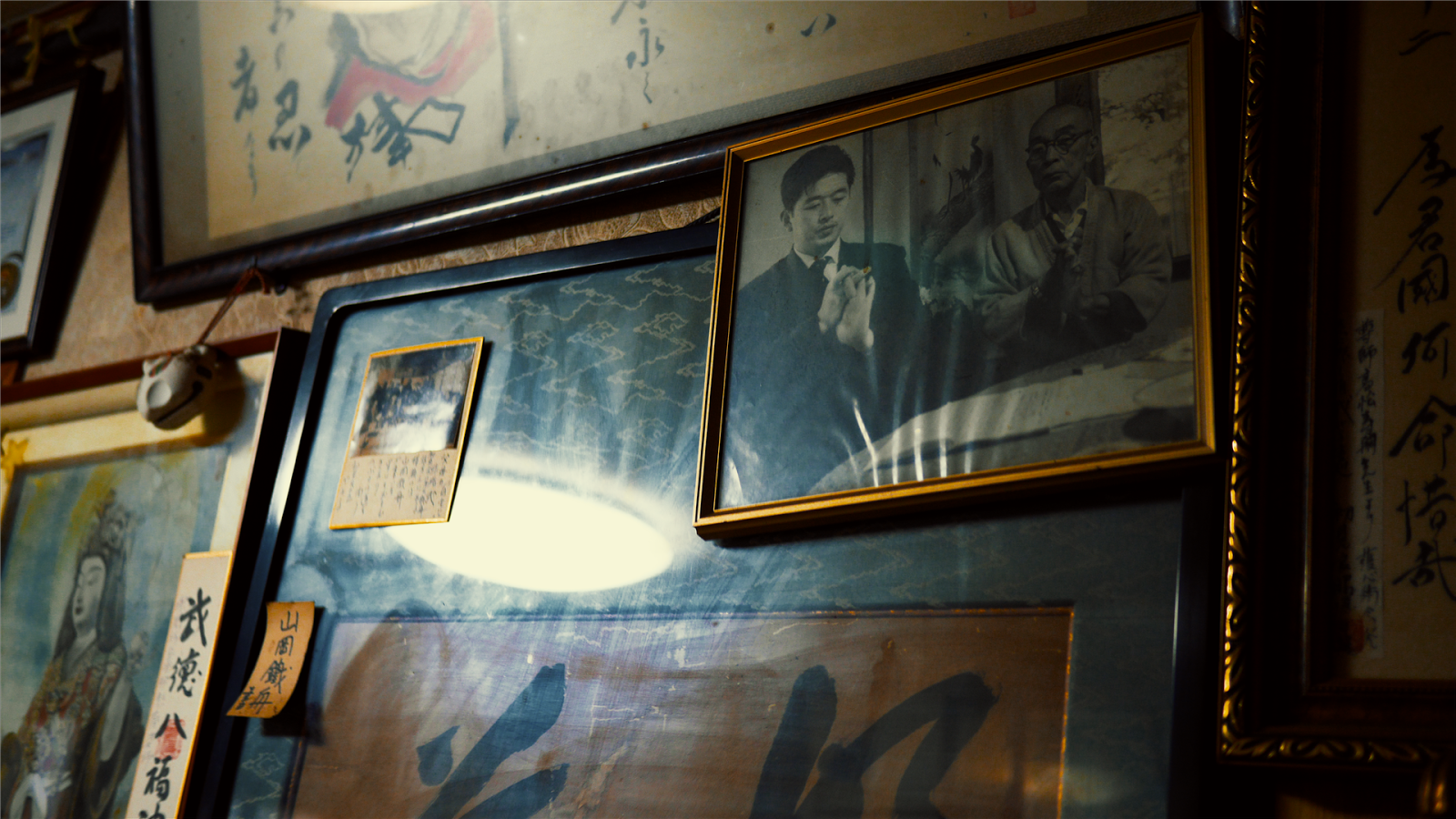
師恩 Shion on the wall in Soke's house. photo by Michael Glenn
I want to give you a clue for how to study in the Bujinkan. This clue I will share below comes directly from Hatsumi Sensei. But first, let me tell you why your teacher may not even know this.

Some teachers follow the teachings of Hatsumi Sensei, but many do not. Many have their own ideas about how the Bujinkan should be taught or transmitted. This is a mistake that many who claim to follow Soke will make without even knowing it.

They develop their own curriculum and make their students learn and study in ways that have never been part of the Bujinkan. This includes many lost people who think they can recreate the early training of the old days. If you weren't there, then you don't know. But I guess you can make stuff up.

Bujinkan arts are taught very differently from other martial arts and that is quite intentional. It is a natural strategy that Hatsumi Sensei has chosen. And if you don't understand it, there is a reason for that as well.

Hatsumi Sensei is an artist. How do artists learn from one another? Primarily by inspiration. If you have ever been inspired, think about the energy that put into your mind, your heart, or your body. This energy moves you to act.

Hatsumi Sensei says that beyond even heart to heart transmission is 絵心伝心 eshin (egokoro) denshin. This is artistic inspiration passed from one artist to another. This happens instinctively for artists, but it cannot be put in any training manual.

Like many things Soke tells us, this is a play on words relating artistic inspiration to 以心伝心 ishindenshin which is a mutual and natural understanding between people that borders on telepathy. This is when you can give somebody a glance and they know exactly what you mean.

This artistic inspiration and mutual understanding guided me to Hatsumi Sensei's dojo in the first place. We didn't know each other and had never spoke. But our hearts communicated across time, culture, and distance to bring us together.

Soke says that this is the path of Budo. Nothing needs to be explained or said. By training with and being in the presence of such a teacher, you just get it.

This is how I study Bujinkan. I use 画心 gashin or an artistic instinct that I have developed and received from many years of being inspired by my teachers. And I repay their 師恩 shion (a teacher's grace and kindness) with gratitude by sharing this inspiration with my students.

A New Bujinkan 初段 Shodan in my Dojo

From Bujinkan Santa Monica by Michael

Richard chats with Peter Crocoll
I went to Arizona last weekend for training. This was more than just a normal training trip. One of my long-time students, Richard, was going for his initiation to shodan.

In many dojos, a Bujinkan 初段 shodan  is not really treated as such a big deal. In most of the Bujinkan it requires at least a few years of study and a proficiency with the basics. But in my dojo and my teacher's dojo, we see it as an important event in a student's journey. So we approach this threshold with certain key ideas.
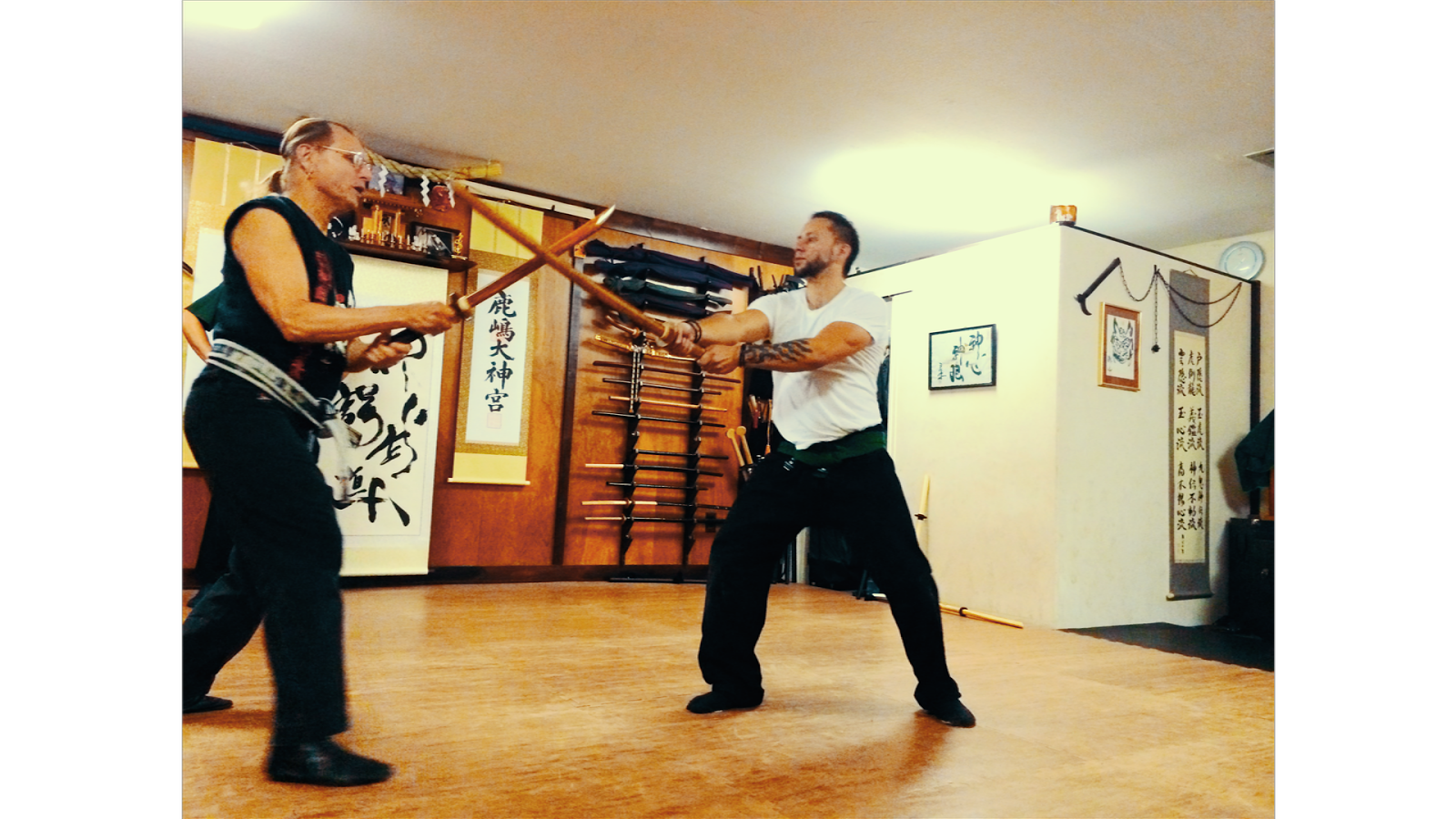
Peter Uses a Ninja-to on Richard
To begin with, skill and technical ability are important. Richard had to demonstrate this, but by the time I put any student up for shodan, I already know very well what he is capable of. So we only look at technique to make sure the student knows for himself what he is AND is not capable of.

The next part has to do with the personal journey. How or why did you start? Why do you keep going? For most of us, these reasons change as we grow in the art. Richard's path to his shodan was not straight or direct, but it was natural like life.
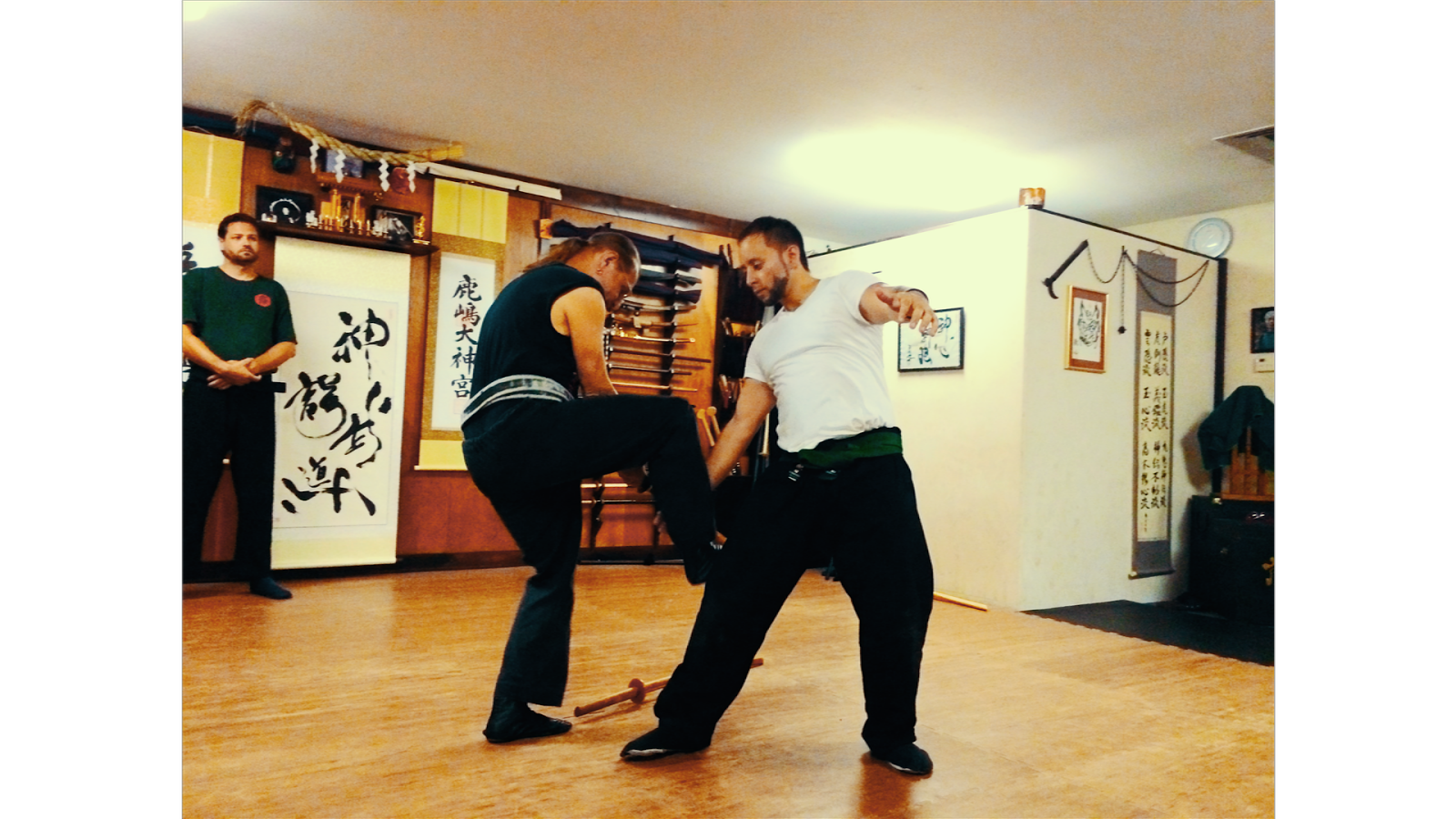
Peter Disarms Richard
Then there is the connection to our history. The student should be able to trace a direct line from his own training back through his teachers to Hatsumi Sensei and the history of the art in Japan. The more direct this connection the better. Lucky for Richard, he was surrounded by many people who have trained with Hatsumi Sensei in Japan directly and some who have been doing so for decades.

The importance of 忍 nin in our study cannot be overestimated. We often think of nin as perseverance. And it is.
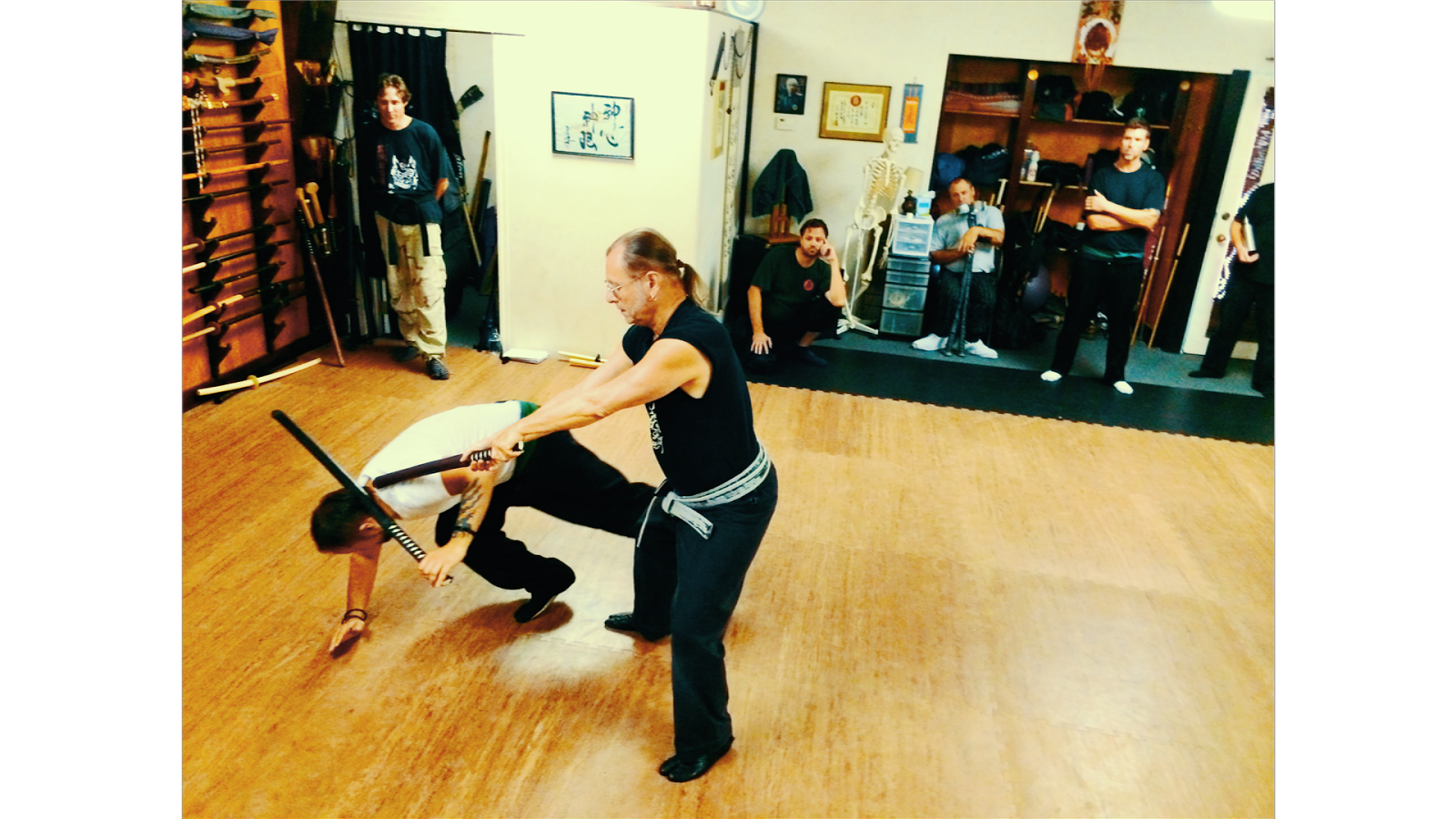
Peter Cuts Richard Down
But some deeper meanings arise as you advance in training. The character for nin has the sword over the heart. This has been suggested to mean that even under the threat of the sword, the heart will persevere.

You may also find your heart reflected in the polish of the sword. It might be a way to hold your own blade or you may find it reflected in your enemy's weapon. But your heart can be made clear by the polishing done in the dojo.
Richard relaxed and happy before the storm
When you have completely polished the mirror (your heart) it is absolutely clear of dirt or imperfections. So then perseverance is easy, because there is nothing there. You reflect your enemies back to themselves. You embody nothingness and you are not a target. There is nothing to attack or defend and endurance is a matter of sutemi.

This idea takes us well beyond shodan. But this weekend all of us who were there to help Richard were there to be nothing but a mirror for him. Our job was to remove our agendas or egos from the process so that he would only find himself reflected back.
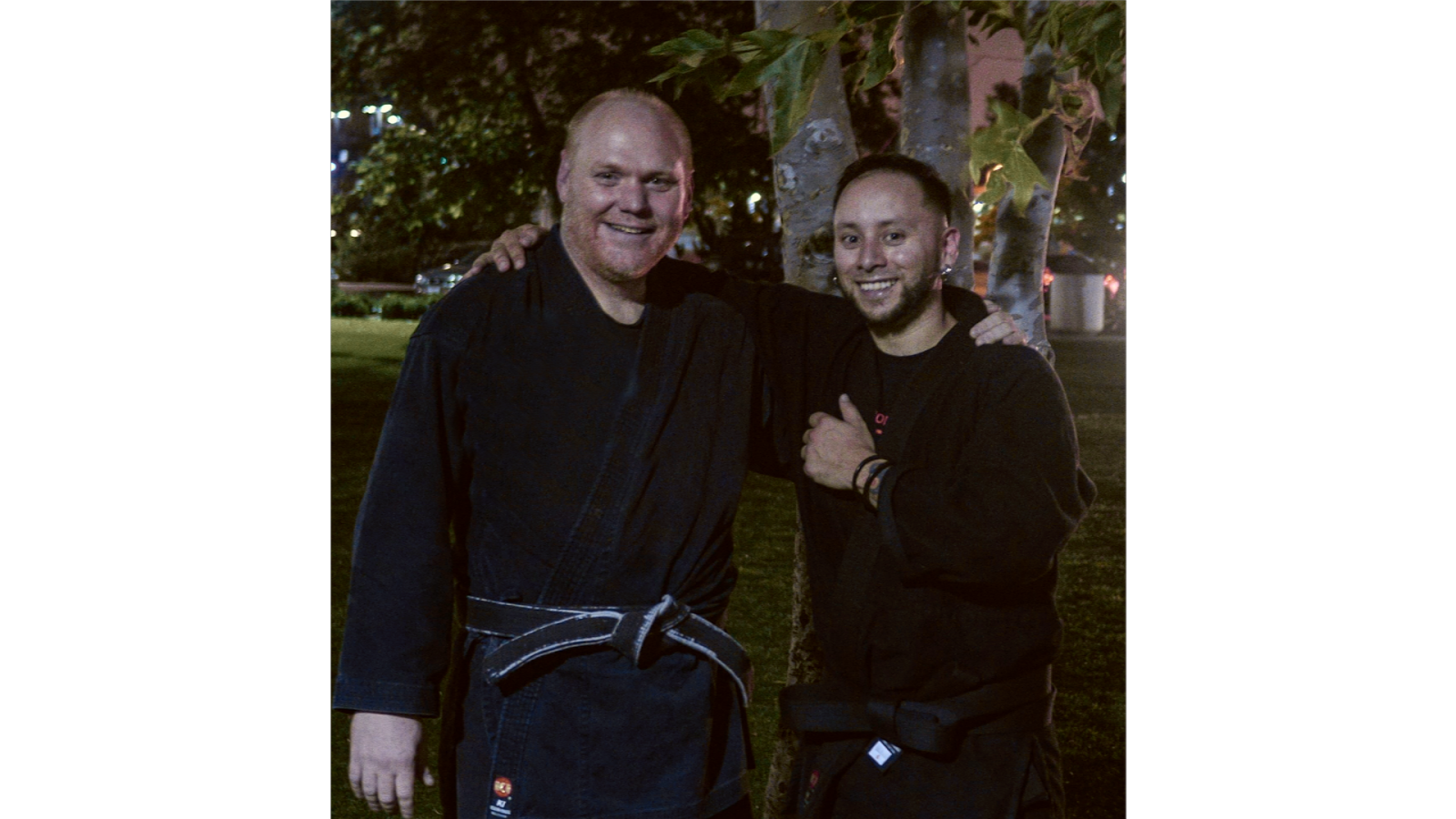
Michael Glenn and Richard with his new shodan
Congratulations Richard! Thank you for training with me all these years.

Quick! Change Your Bujinkan Training with 早替わりHayagawari

From Bujinkan Santa Monica by Michael

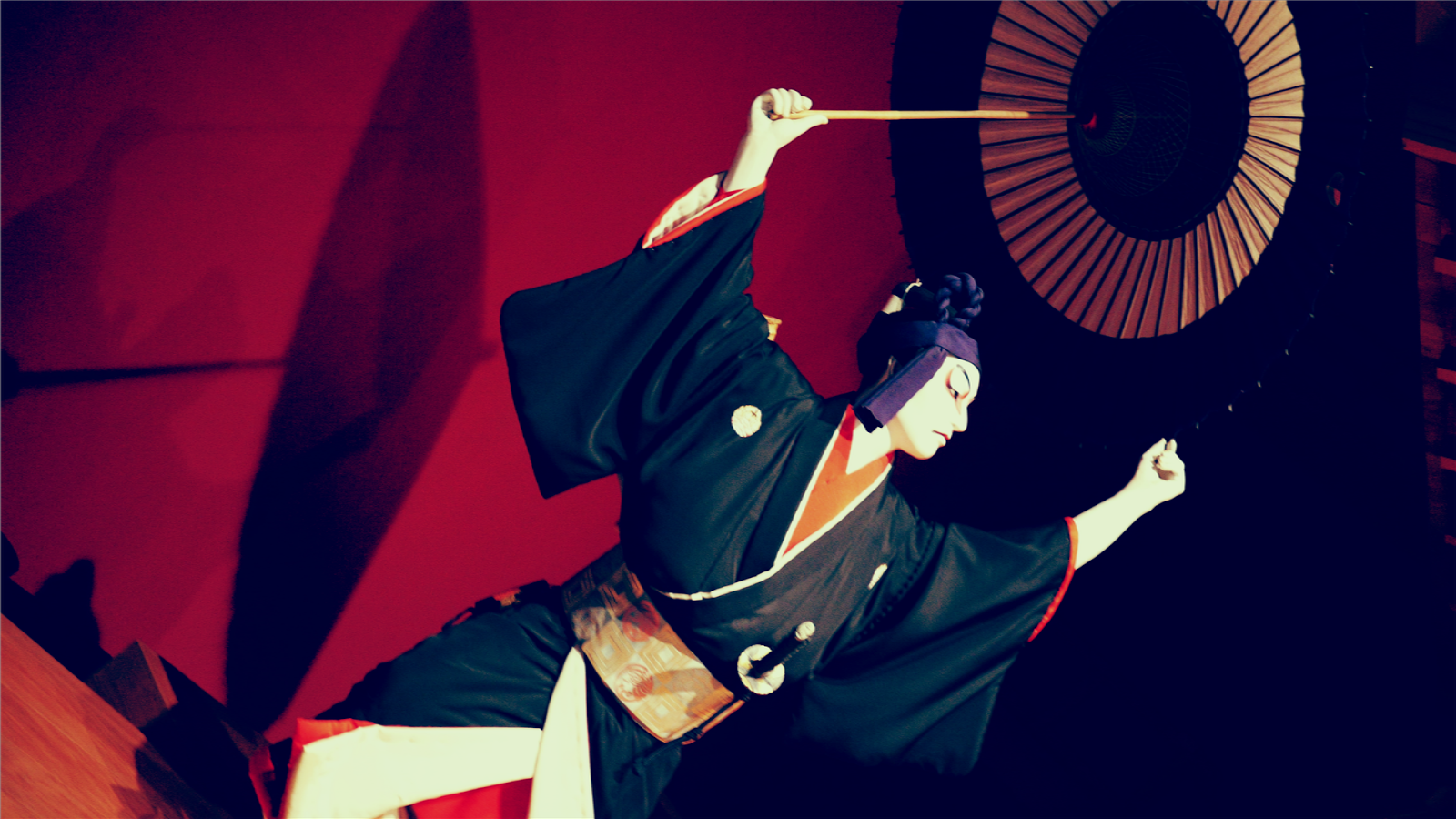
Kabuki Performer, photo by Michael Glenn
One of our Bujinkan gokui comes from the secret writings of Shinden Fudo ryu and it says, 
豹変して必ず勝つ hyohen-shite kanarazu katsu. 
"Sudden change will always prevail." This kind of change suggests sutemi or discarding the self.

Hatsumi Sensei tells us that this kind of change can come from the unconscious. He uses the expression 早替わり hayagawari to describe this quick change.  And it can lead to a complete transformation in combat, your Bujinkan training, or even your own life.

What is 早替わりhayagawari? Like many of the references Soke gives to us, it originates from Kabuki theater. It is a quick change technique for actors on stage. The tricks they used allowed them to quickly change from one occupation to another, male to female, young to old, good to evil, etc.

Sometimes actors would even play more than one character in a play. Then they would need tricks called 外連 keren to make a quick change on stage, or hayagawari. They might have one costume hidden under the layers of another. Or, the actor could add makeup to quickly transform his face. Actors used different masks over the face, or even 後面 ushiromen which were masks on the back of the head.

All of this calls to mind the ninja techniques of 変装術 hensojutsu. There were a number of stock characters the ninja might employ like a craftsman, priest or monk, traveling entertainer, or even a samurai! A quick change of mannerism, accent, language, or attitude could complete and really sell the effect.

Add to this other kabuki/ninja effects like 宙乗り chûnori, and you could fly. Or the tricks used for rapid appearance or disappearance of the actor. I saw a demo of some of these last April in 墨田区 Sumida and I was reminded of Ninja disappearing tricks I have learned over the years.

One secret to all of this is that by adopting the outward, physical change, there is an inward change that occurs. This is a secret for life. We learn it as children with our play and the art of pretending to be something you are not. Fake it till you make it.

If you want change in your training, or in your life, use sutemi and discard the self. Act the part. Take on the role. Learn your lines. Before you know it you will achieve 早替わりhayagawari. You might be more surprised than anyone else at how quickly you transform.

Hidden Weapons of the Unconscious

From Bujinkan Santa Monica by Michael

Black Market at 江戸東京博物館, Edo Tōkyō Hakubutsukan. photo by Michael Glenn
One of the secrets to understanding this year's theme of 神韻武導 Shingin Budo  is the ability to find the hints and openings hidden everywhere. These are like the lingering sound of a bell that hangs in the air after it has been rung. If you did not hear the original strike of the bell, would you know what you were hearing or where it originated from?

This sound is like the hidden training that takes place in the Bujinkan. Training that takes place in the unconscious. If you are only learning with your body and mind, you are missing out on the important unconscious training that is very real in correct Bujinkan training.

You may know that your unconscious affects ordinary life. It also is at work in combat or in the dojo. But do you know what it is doing?

Hatsumi Sensei has written 無意識 muishiki (the unconscious), as 武意識 buishiki which is warrior consciousness or military awareness. With this kind of unconscious ability, you will always be able to tap into hidden fighting strategy. Or find a surprise victory in an impossible situation. This is also a secret for hidden ninja weapons.

The best hidden weapons are not weapons you are hiding. That takes too much conscious effort and can be seen, read, and even countered. The best hidden weapons are hiding in plain sight.

Soke tells us we can find 鉄扇 tetsubane, 鉄刀 tetsuto, 馬手差 metezashi, and 隠し武器 kakushibuki hidden everywhere in normal everyday life. These things leave hints or suggestions (暗示 anji) to the warrior who is attuned to their resonance. Your unconscious can read these clues and allow you to find these hidden weapons.

If everyday objects can be transformed into weapons by the unconscious following these hidden signs, then what about yourself?  Soke says that this type of knowledge will make your life pulsate (生悸に一変) and undergo a complete change. It can make it possible for 早替わり hayagawari, or for you to quickly change into anything. This is the real shugyo.

Martial arts create this kind of transformation in life. Seek out a dojo that has these hidden hints and signs for your unconscious intelligence. Remember, if you're the smartest guy in the dojo, then you're in the wrong dojo. Look for hints that lead you to hidden knowledge and the right teacher for your whole self, not just the conscious part.

What Happened at the Michael Glenn Bujinkan Seminar in Florida?

From Bujinkan Santa Monica by Michael

Michael Glenn with Paul Fisher and Friends. West Palm Beach, Florida 2014
I just returned from teaching a seminar in West Palm Beach, Florida. My friend Paul Fisher and his students were friendly and gracious hosts. And maybe I learned more from them than they did from me!

It all started when one of Paul's students reached out to me after subscribing to my training notes. He emailed me privately to ask a technical question about training and during our correspondence, he asked if I ever came to Florida. I said no, but I would if there was interest.

Well his teacher Paul Fisher is an open and adventurous sort of guy. And he quickly embraced the idea. Now it was up to me.

Since my recent trip to Japan, I have been actively studying the strategies I learned from Hatsumi Sensei regarding this year's theme of 神韻武導 Shin Gin Budo. Out of all the notes, and all of my recent training, three points stood out to me that I could share with my new friends in Florida.

I wrote about these 3 strategies back in May: Kyusho of Zero in Three Easy Steps  But writing about them and sharing them live are quite different. Luckily, Paul's friends and students at the seminar were up to this kind of exploration.

Using two kata from Shinden Fudo ryu as a place to start, we quickly took these kata to their inevitable 自然至極 Shizen Shigoku outcome. We did this by expanding our own personal kukan, understanding and using 気配 kehai, and through mirroring the attitude and kamae of our opponents.

The people training with me were smart. They asked hard questions and kept it real. They also trained with a focus and diligence that was surprising given how hot it was. I was inspired by their commitment.

Florida in the summer is not my natural habitat. So I ended up drenched from my own sweat most of the trip. Luckily, I anticipated this and packed many changes of clothes.

Michael Glenn and Paul Fisher Lounging with Coconut
Like me, Paul's life revolves around art, Bujinkan training, and nature. I felt so lucky to make a new friend that I can connect to on these levels. He took me to an art opening that was a fundraiser to address bee colony collapse.

Morikami Gardens
He also took me to the Morikami Japanese gardens where we saw the most incredible landscape, along with amazing wildlife including gators! The museum gallery there had a sublime exhibition of paper sculptures by Kyoko Hazama, as well as a fantastic display of Japanese arms and armor.
Kamakura period sword at Morikami Museum

But Paul was never far from his own personal menagerie of birds, cats, frogs, and lizards. It isn't easy to share the feeling of 神韻 Shingin all of this brings to Paul's life, but I felt right at home.

Paul Fisher with Midori
Thank you Paul!

構え Kamae of the Hunter

From Bujinkan Santa Monica by Michael

Michael hunts toys and candy. 駄菓子屋 Dagashiya, 柴又 Shibamata
Recently I was studying the kata 水鳥 Mizu Tori. The name of this kata means waterbird. The 構え kamae even mimics the pose of one of these birds.

I am a birdwatcher and have observed many waterfowl over the years. When I see them freeze very still in the water and strike this pose, they soon dart out and catch a fish. It is a hunting kamae.

We don't usually consider kamae as hunting. Normally we think of their defensive properties. Or maybe we train some offense. But hunting? That really creates a different feeling. Because it suggests strategies of stalking, stealth, and deception.

If you're a skillful hunter (rather than just an accidental or lucky one) you know that you become one with your prey. You think as they do, mirror their movement. A natural form of 自然の構 shizen no kamae grows in you.

This is how we evade the sword of our attacker in Mizu Tori. Move in accordance with his cut. Make small movement like the focus of a bird's eye as he stalks the fish.

In Mizu tori, you take a risky position with your 潜型 moguri gata. There are only a few reasons to ever take this kind of risk. One is when you are caught unprepared and you dive down as a desperate escape. But another is for deception while hunting.

And maybe most important is what happens to your body and mind when you assume this type of kamae. During tense situations, people sometimes hold their breath. Tension caused by apprehension or fear can move through your body, locking it up along with your breath. Fear can even shut down the mind.

Instead, let awareness take over the same space occupied by fear. Simple attentive watchfulness of your opponent or prey as you stalk can push fear out of your mind. 虎視眈眈 koshitantan, watch your prey vigilantly. Then you have pure awareness, which is the right kamae for this moment.

You take a kamae of life or death. The moment where you decide to kill your prey. You may also decide not to. Hatsumi Sensei tells us often to protect life and not to go for the kill.
"万一獲物が死に絶えれば、狩人いなくなるだろう。If the hunted should perish, the hunter would, too."
Your kamae gives you this choice. Remember, kamae can also be translated as your position or attitude. The wrong kamae leads to death.

You can watch this preview of my 水鳥 Mizu Tori video if you'd like to see more.

The Art of Disarming With 十方軌喝 Juppo Kikatsu

From Bujinkan Santa Monica by Michael

Discarded Tabi Along Route 3, 県道3号線. photo by Michael Glenn
Hatsumi Sensei gave directions of how to do a kata. I needed these instructions desperately. Because the opponent has his sword ready to cut me down, and I do not have a sword. How do I not get killed?

Soke's instructions are,
「門空一閃、十方軌喝で取りをとる」 "a flash of nothingness, the art of disarming with juppo kikatsu." 
Yes. Right. That's what I was going to do anyway.

But, before my opponent kills me, can I ask a question? What does that mean? I'm not dead yet, so I will try to understand.

I was working on this in my class the other night. I surprised one of my students with the way I captured him. He said, "It didn't feel like you had anything until you had everything."

A flash of nothingness. You yourself become this emptiness. Zero.

This is what allows the room in the kukan and in yourself for this year's theme of Shin Gin to be real. This has a funny effect on your opponent. It may cause him to falter or freeze. Like a flash across his mind he is trapped in a moment.

Then you take the entire space, his body and weapons, and the entire spirit of the opponent.

If you've ever seen one of Hatsumi Sensei's opponents afraid to move, this is because he feels attacked from all directions. There are threats from ten different angles. Every escape appears cut off or filled with pain.

When I've done this to someone, it is amusing from my perspective. Because it feels like nothing. But the opponent is wrapped up in it and can't move. This is Juppo Kikatsu.