Skip to content

Everybody uses 合掌の構 Gassho no Kamae for Prayer, But in the Bujinkan We Fight With It

From Bujinkan Santa Monica by Michael

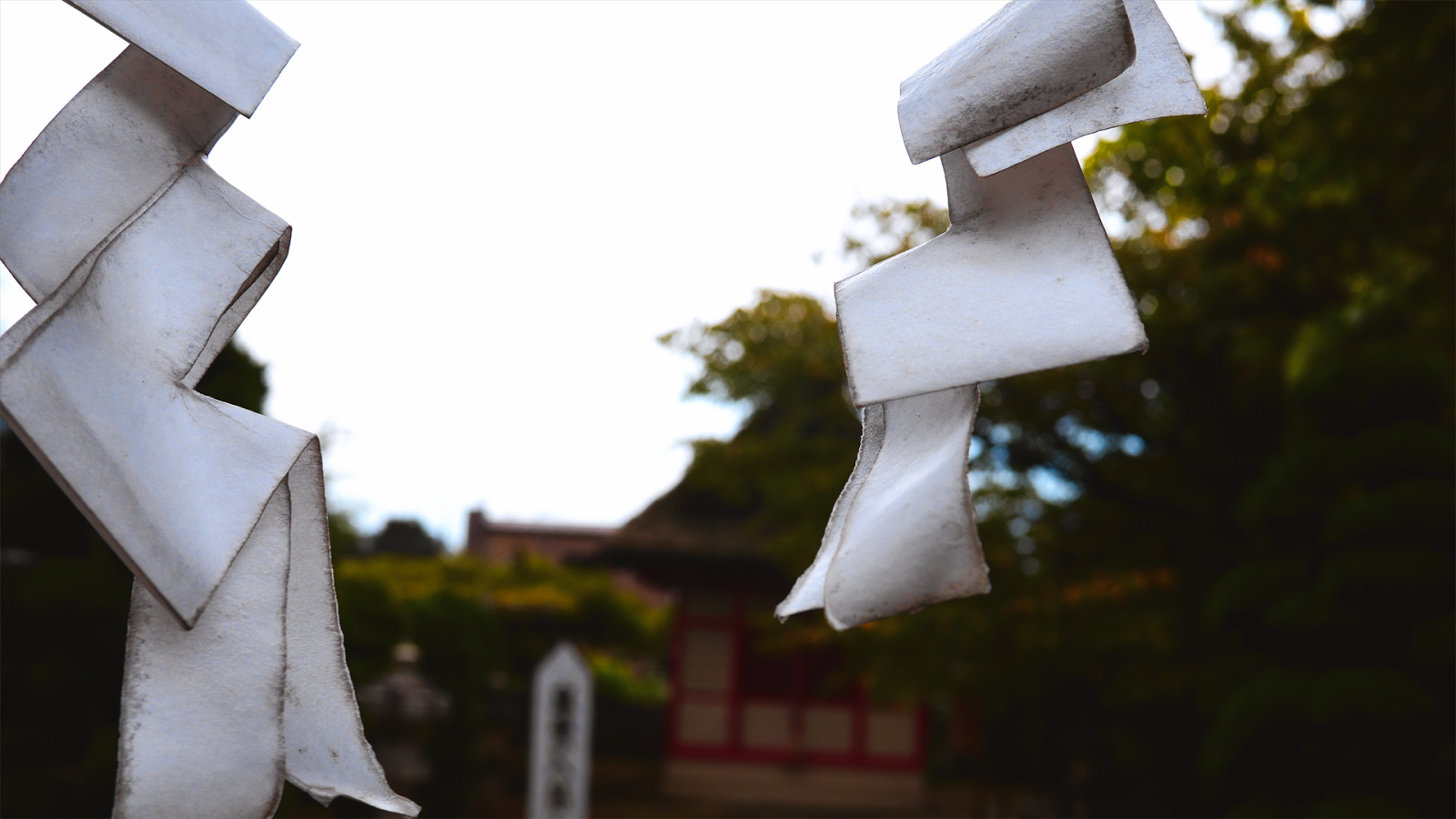
Rainy Day Gassho at 霊巌寺 Reigan-ji, Koto, Tokyo. photo by Michael Glenn
In one of my classes we were studying a Gyokko ryu kata that begins from 天略 宇宙合掌 Ten Ryaku Uchū Gassho. Maybe you’ve studied this in your Bujinkan class. But even outside of Bujinkan training, if you are human, you have used gassho at some point in your life. It transcends cultures.

That night, as I recorded a training video about this for Rojodojo.com, I wanted to share even more about gassho with everybody. So what I show in the video is that there is much more to this humble kamae then you might think. But if you want to know what mysteries are bound up with this stance, keep reading.

Gassho is a general term that describes any form that brings the hands together, often in a form of prayer or reverence. In the Bujinkan the symbolism of this kamae runs deep. And the position is even sometimes called 金剛拳 kongo ken and it is used to strike or even conceal weapons.

In Buddhism the right hand represents the Buddha, and the left represents you (or all sentient beings). They come together, and one becomes the other. Some different types of gassho include 堅実心合掌 steady heart gassho, 虚心合掌 relaxed, open minded gassho, and 金剛合掌 kongo gassho (vajra, diamond thunderbolt of indestructible truth).

Each finger represents an element. Gassho no kamae holds the unity of chi, sui, ka, fu, ku in your hands. Then you rip that unity apart as the attacker enters. This feels like a void opens and the attacker falls in. But you are really expanding the unity to engulf the opponent until he is no longer an adversary.

If he continues to fight in this space, he will not survive.

You may not know that one form of gassho often shown in Bujinkan kata is called Baku-in 縛印  or 縛拳 baku ken and it comes from Mikkyo. This is a form of “binding,” tying a spirit body or physical body down so they become trapped in a form of paralysis. But it is also for collecting yourself to bind or set your own resolve.

Then the kamae becomes 子持虎の構 komochi-tora no kamae. Hatsumi Sensei told us to start with kongo gassho, where you are unified with the whole universe. This is not a fighting stance. It is the tiger protecting her cubs. Your opponent will see it in your eyes.

Set your mind on perseverance. But if the attack comes, watch out! It can flip like the child holding the tiger.

Gassho no kamae unifies all of the universe within you. Then when you receive the attack, you tear this unity apart into a duality. Like ripping apart yin and yang, or 陰 in and 陽 yo. And that is the large void that the attacker is sucked into.

But you cannot really divide yin and yang. They cannot ever be ripped apart. That is like making the sound of 忍び手 shinobi te, a type of silent clapping, or bringing the hands together without making a sound. What do you hear in silence?

What really happens from gassho no kamae? It expands the unity within yourself to include even more. The attack, the defense, nature, even Kami… All included within the space. This is Shingin Budo.

As you expand like this, all of your ego, strategy, preconceptions, muscle or force, and technique grow smaller and smaller. The more you expand and allow into yourself, the less important and useful they are. You empty yourself more and more to make room.

During all of my trips to Japan last year, Hatsumi Sensei asked us to allow Shingin Budo to fill up this empty space in the void, in the kukan, and in ourselves. But even Soke cannot show you how. Each person has to find their own path to get to that open place.

Clap your hands everybody, and everybody just clap your hands.

Hatsumi Sensei Explains 師逢和瀬 Shiawase

From Bujinkan Santa Monica by Michael

Masaaki Hatsumi Sensei Explains 師逢和瀬 Shiawase. photo by Michael Glenn
I had a simple plan to teach 片腕遁走型 Kata Ude Tonsō Gata. But during my preparations for class that night, I was overcome with gratitude toward my teachers. It seems there was a secret power bound up in this kata.

It can be described as 師逢和瀬 Shiawase. Let me tell you how I discovered it.

The Bujinkan has made my life rich. I have made so many friends all over the world. Thank you to my students who come to class and allow me to study with them. Thank you for reading this and for watching my videos or subscribing to my training website. Thank you to everyone who invites me to teach seminars.

I prepare for every class I teach. I feel I owe it to my students to do my home work. But I don’t just owe it to them, I owe something more to my own teachers.

I have studied the kata I was planning for this class with many teachers over the decades. But one of my favorite moments was studying this with Hatsumi Sensei under the Japanese maples during the year of the rat. I wrote a 5 part training series about this for Rojodojo members that begins:
In the ’50’s Hatsumi Sensei met Takamatsu. One rainy morning under the maple trees, Soke bound that connection to all of the Bujinkan… (linked)

師逢和瀬 Shiawase is a play on words. Normally it uses different kanji and means しあわせ shiawase: happiness;  good fortune;  luck;  or blessing. But with the kanji Soke uses it suggests that by meeting a master teacher you will find good fortune and happiness. Or even, that simply finding a master teacher is good fortune in itself.

As Soke told us that day under the Japanese maples, don’t sever your connection with the kukan or you’ll suffocate. His playful admonition is really telling us that the kukan is full of mystery, and it holds all the history, teachings, and connections that I share in the 5 part training series published on Rojodojo. I don't know why anyone would choose to break away from this rich heritage.

For me and my students, the circle is full when I teach something like 片腕遁走型 Kata Ude Tonsō Gata. My own students can trace their introduction to this fundamental form of ninjutsu from me directly to Hatsumi Sensei, and then to Takamatsu, back through the generations. This is the secret power hidden in a simple kata.

We are very fortunate to have these insights available to us. I have to humbly thank my teachers and my students for keeping this connection alive so we can receive this treasure and great history of our art.

If you do not understand what you are missing, then get connected. This is how you cultivate good heart and spirit. Then the Bujinkan will be better with you in it.

Hatsumi Sensei’s 道祖神 Dōsojin NSFW Except in Japan

From Bujinkan Santa Monica by Michael

The 道祖神 Dōsojin at Hatsumi Sensei's House, photos by Michael Glenn
Last month in Japan, I gained a deeper understanding of genitalia. It started with the male form. But luckily Hatsumi Sensei paired it with the female for me.

Before I describe what Soke shared, let me explain my first phallic encounter.  A local guy from a certain neighborhood told me about 鬚神社 hige jinja (beard shrine). I was intrigued because I thought I had seen all the shrines in this neighborhood.

He took me to 聖天島 shōtenjima where (土俗の神様 dozoku no kamisama) a local folk kami is enshrined on the island. The island was surrounded by brown, dried out lotus plants in their ugly fall phase.

I followed him to the edge of a moat. There, across the water, was what appeared to be old ruins. We walked across a small footbridge. He pointed at one statue that looked like a giant penis.

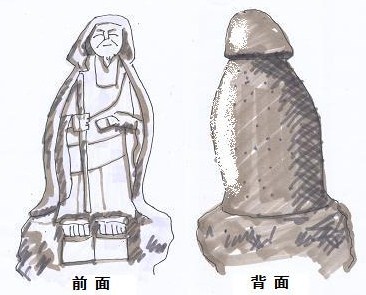
But why was it called hige? He told me I had to look at the back of it. I shimmied on the tips of my toes along the edge of the moat to get a look. The ura side of the statue was a depiction of 役行者 En no Gyōja who usually has a beard.
Phallic 役行者 En no Gyōja statue, photo by Michael Glenn


En no Gyōja is the founder of 修験道 Shugendō. In this statue, his pilgrim's cloak is wrapped around his head and shoulders in such a way that from the omote side he looks like a large cock!
Phallic 役行者 En no Gyōja drawing from here
This made me and my guide laugh out loud among the wilting lotus leaves.

He told me that back in the Edo jidai, the neighborhood was known as a place for lovers. There were lots of 出会い茶屋 deai chaya or teahouses that offered sexual services, or where people could have a secret rendezvous with a lover. People may have prayed at the shrine for virility, fertility, or even to protect themselves from disease.

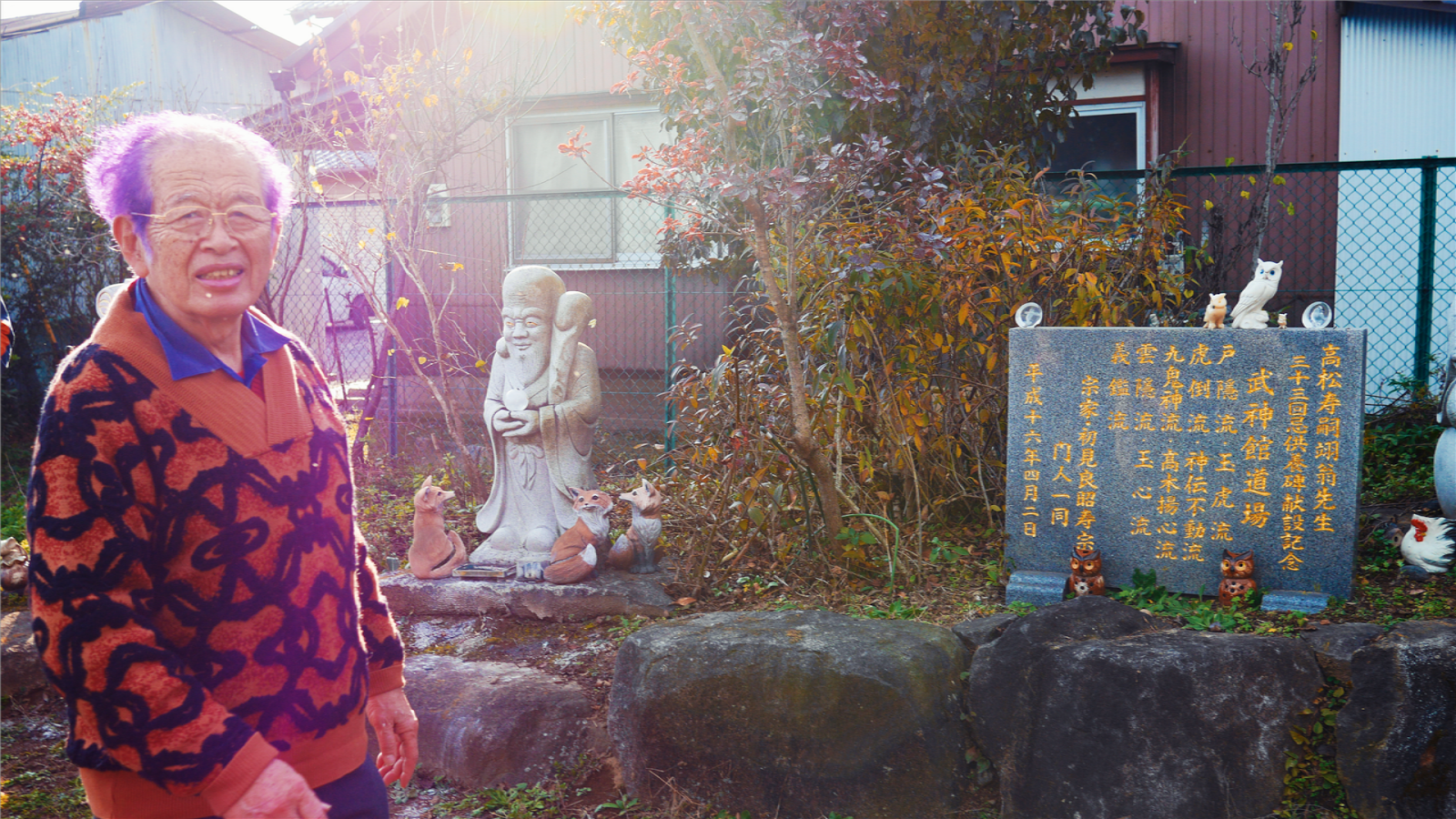
A few days later I went to Soke's house. He showed me the far corner of his yard where there were stones representing male and female genitalia (see top picture). These were examples of 道祖神 Dōsojin, a traveller's guardian deity. You can find these monuments throughout Japan. They often portray a couple in embrace or even lovemaking. But often the stones are in the shape of phallus and vagina.

There is an interesting connection with En no Gyōja. First of all, he was a legendary traveller. Second, he had two servants named  前鬼 Zenki  and 後鬼 Goki. They started out as demons but En helped them become human and now they are a married couple representing yin and yang.

When I look at portrayals of Dōsojin that are of the embracing couple, I am reminded of Zenki and Goki. 前鬼 Zenki means front demon, the yang, like the phallus image I was greeted with on the island. 後鬼 Goki is the behind demon, ura, yin and maybe represented by the parted and open robe or cloak.

So next time you are training with Soke and he paints a big phallus, or a kunoichi with a red vagina on your scroll, maybe he is wishing you safe travels! If you are lucky, no one will ask whose bed you sleep in during those lonely nights in Noda.

潜在意識 Senzaiishiki: Enter Into Subconscious Bujinkan Training

From Bujinkan Santa Monica by Michael

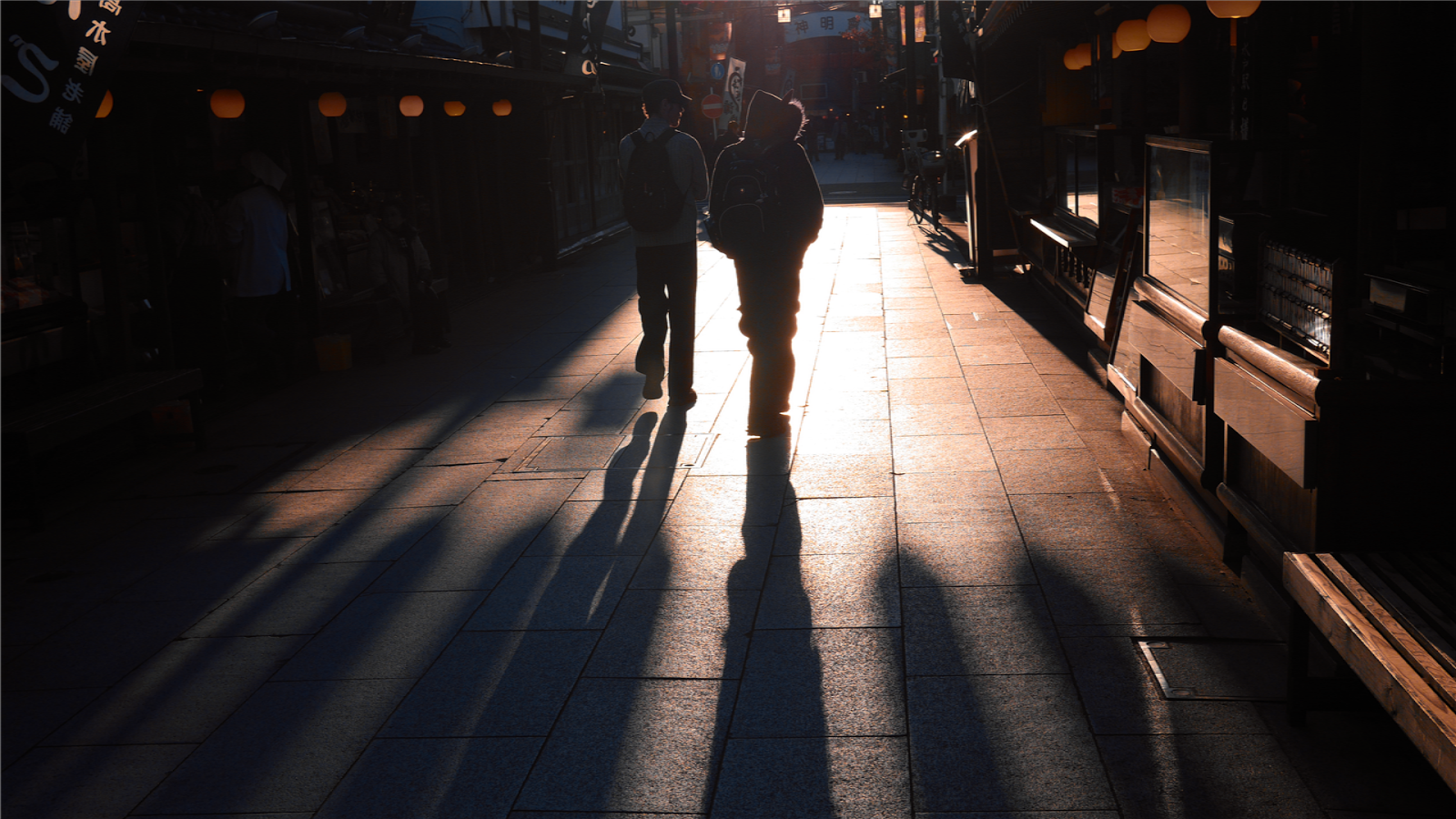
My friends walk into the Shibamata Sun, photo by Michael Glenn
Tuesday night I was in a class with Hatsumi Sensei at Ayase. I watched him throw somebody without touching them. Then he taught us an aspect of toate no jutsu, or striking from a distance.

These things are extraordinary to witness. But it is important to look past the miracles. Because it is the way he taught us these things that holds the key to understanding them.

Soke asked one student to explain what it felt like. The student said that he didn't understand what was happening to his own body. Soke replied that if you could figure it out he would be troubled by that. And then Hatsumi Sensei addressed us all,
"We're studying these things which can't be understood. Although you don't understand it, you might understand in your subconscious. 潜在意識 senzaiishiki, the subconscious, is the most natural part  of your consciousness. Since it's the most natural part it connects to juppo sessho."
Our unconscious training is like an iceberg. The conscious part is the small bit you see above the surface. The 氷山の一角 hyouzannoikkaku, the tip of the iceberg. But what is hidden beneath?

Conscious learning cannot possibly hold all of the Bujinkan, all of the 9 schools, all of the kata, even more henka, all of the knowledge from previous Soke, hundreds or even thousands of years of human experience.

This is why Hatsumi Sensei told us, "I'm not doing technique, I'm changing it into the subconscious. I'm teaching in a way that will be absorbed by the subconscious."

So how do you unlock the subconscious learning of the Bujinkan? One key was repeated again and again over my last two weeks here in Japan. Seno Sensei called it 分散 bunsan during one morning class when he showed my training partner Mats Hjelm and I how to receive a sword cut.

分散 Bunsan means to scatter or disperse.

In another class, during an attack, Hatsumi Sensei said to dissipate each other's strength and power. And another time during a throw he said, get rid of your body. in the middle of it just throw yourself out. It is important to dissipate your body and create this space. This is a type of 体変術 taihenjutsu.

This kind of scattering or breaking up in all directions is like safety glass. Safety tempered glass has outer surface in compression and the inner surface under tension. When this balance is broken, it crumbles and shatters in a web of small pieces. This is much safer than the splintering shards of plate glass.

Doing this in combat makes your opponent crumble and his attacks become harmless. But more importantly, you do this to your own intention or consciousness. You scatter it and dissipate it. Then you will have access to the huge unconscious ability that you have inherited from Soke and the Bujinkan.

How to Throw Air With 体変術 Taihenjutsu

From Bujinkan Santa Monica by Michael
Hatsumi Sensei Throws a Look at Michael Glenn
I was training with 手塚 Tezuka-san in Hatsumi Sensei's class at the Bujinkan Hombu dojo, when Soke did something funny to him. He threw Tezuka without touching him. Tezuka came back to me and asked, how did he do it? I said I saw it, but I can't explain what I saw. Tezuka said it felt like magic.

The throw happened in the air. In the space of a breath. Soke refers to 空気浮き kuuki uki when you float your opponent in the air. But then he said to throw him like 空気の投  kuukinotou, throwing air.

The day before I was on a quest for an effigy of 役行者 En no Gyōja that I had heard about. He is considered the  father of Shugendō. Shugendō followers are on a "path of training to achieve spiritual powers." This involves transforming their bodies through harsh physical endurance.

The 役行者 En no Gyōja I was seeking is one that is not well known and hidden from public view. I literally had to use 体変術 taihenjutsu to get there. As soon as I did, I was mysteriously greeted by a guide that appeared from nowhere. I wrote more about that here: Hatsumi Sensei's 道祖神 Dōsojin NSFW Except in Japan.

Hatsumi Sensei has been training us to understand taihenjutsu. This goes beyond taijutsu and technique. The 変 hen that occurs is mysterious. It comes from a different place than technique. It can be the same source as Shingin and this year's theme.

体変 taihen is an interesting word. It can mean changing the body or changing reality, or, even a strange body or reality. This is what it felt like to witness my training partner Tezuka being thrown by Soke. Reality changed in front of my eyes, and Tezuka experienced something that confused his mind and body. He was disconcerted for the rest of that class and I couldn't help him get grounded again.

Shugendo followers seek to transform their bodies through physical endurance to gain spiritual power and enlightenment. But Soke said you can go directly there without sitting under freezing waterfalls. This is the kind of 体変術 taihenjutsu that Soke is sharing with us here in Japan.

Sunday Afternoon at the Bujinkan Takamatsu Memorial

From Bujinkan Santa Monica by Michael

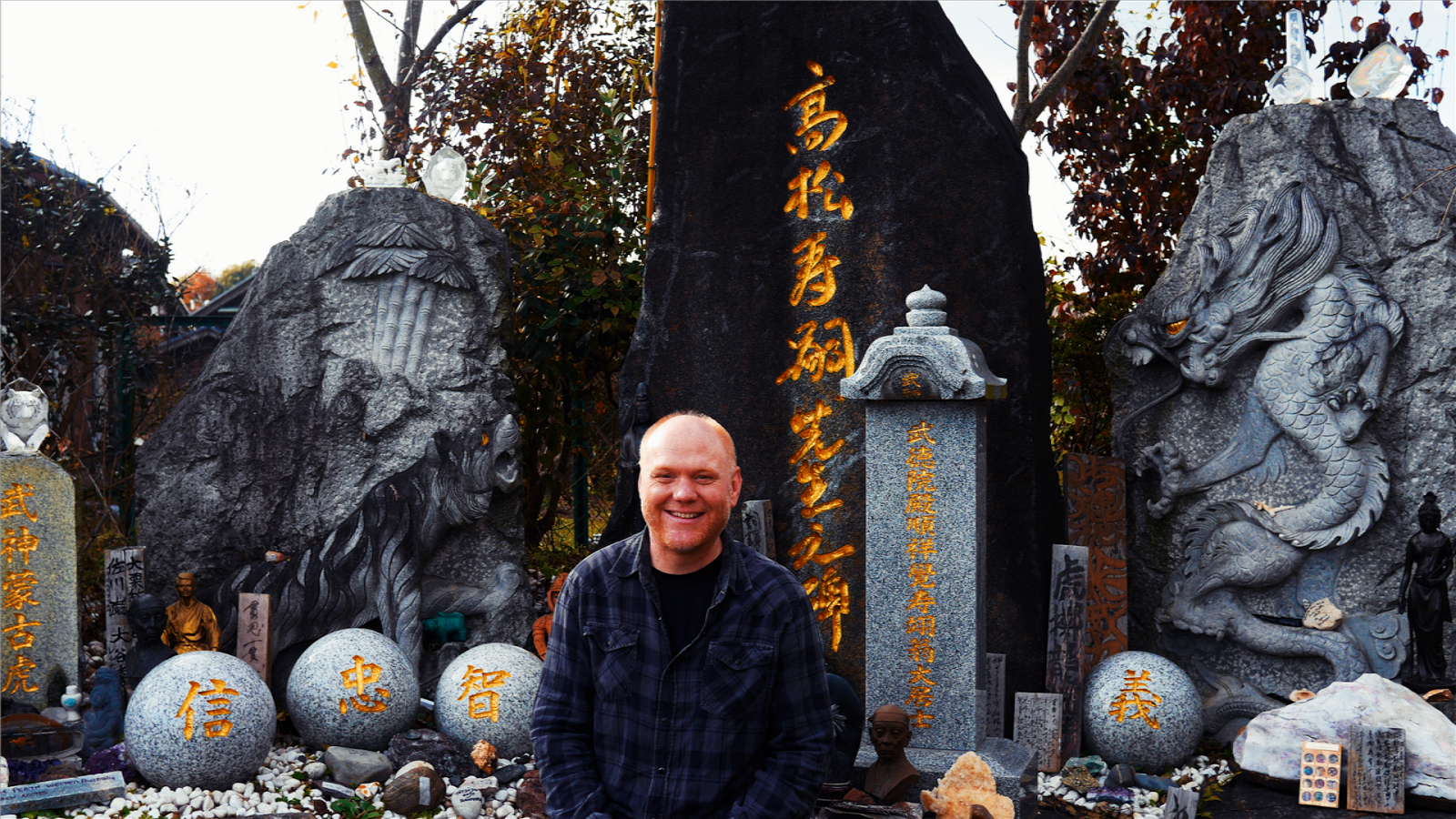
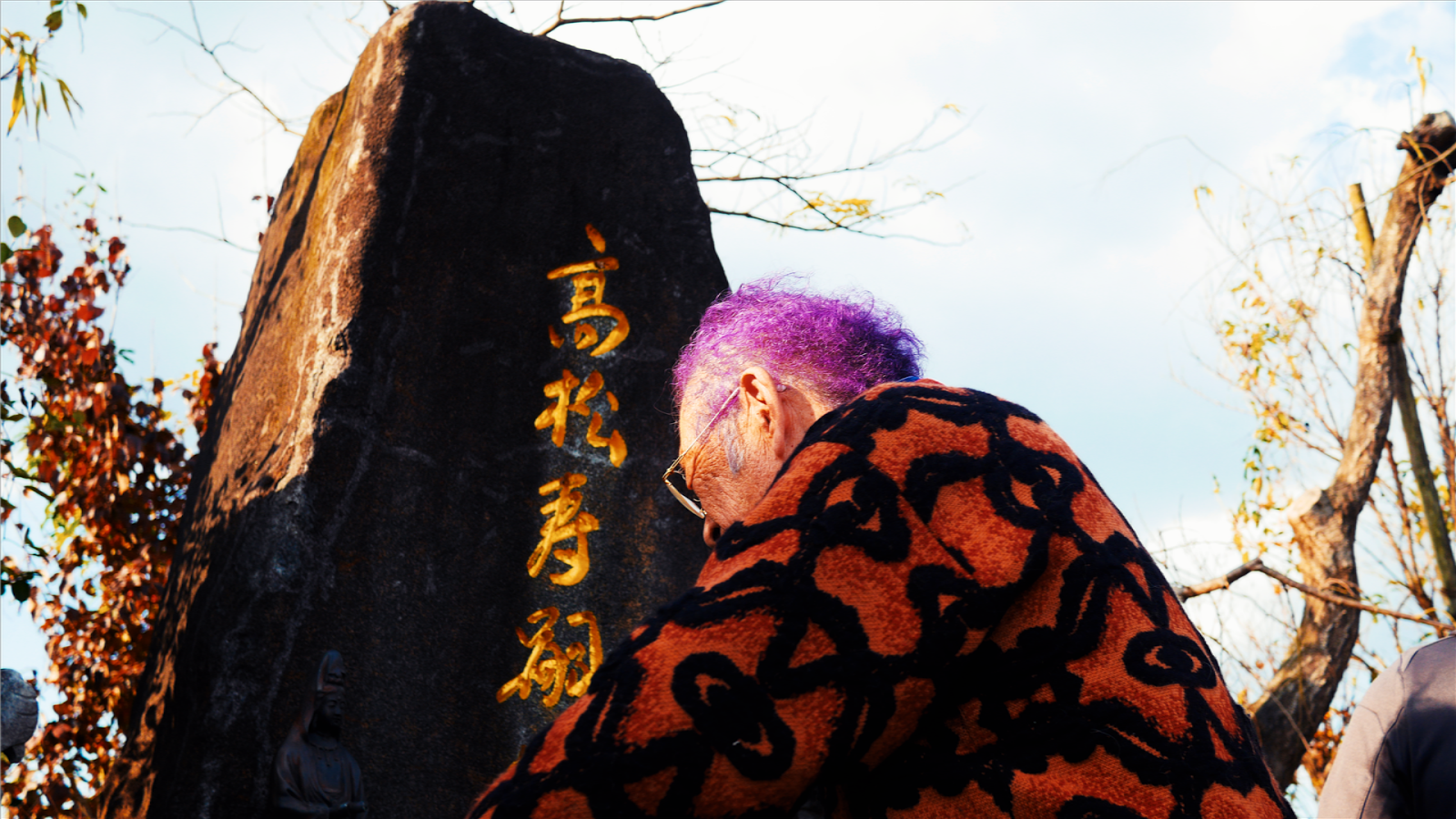
Michael Glenn at the Bujinkan Takamatsu Memorial
The fall weather has been beautiful and the training very rich. More about that soon, but this afternoon Hatsumi Sensei invited as many as we could caravan over to his country house.

driving to Hatsumi Sensei's country house
After an pleasant drive, we arrived to be greeted by Soke.
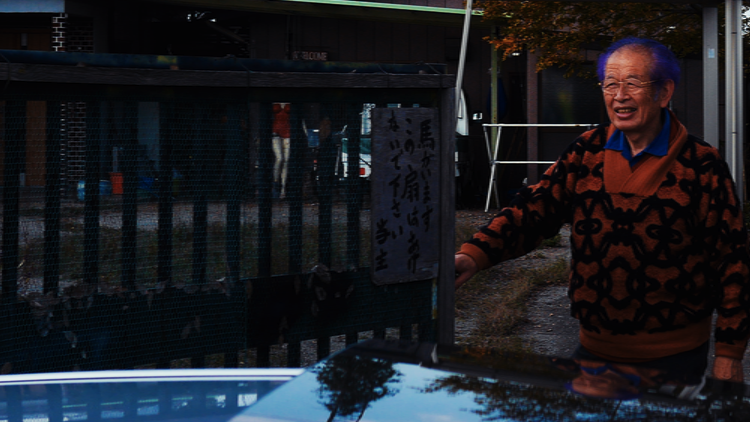
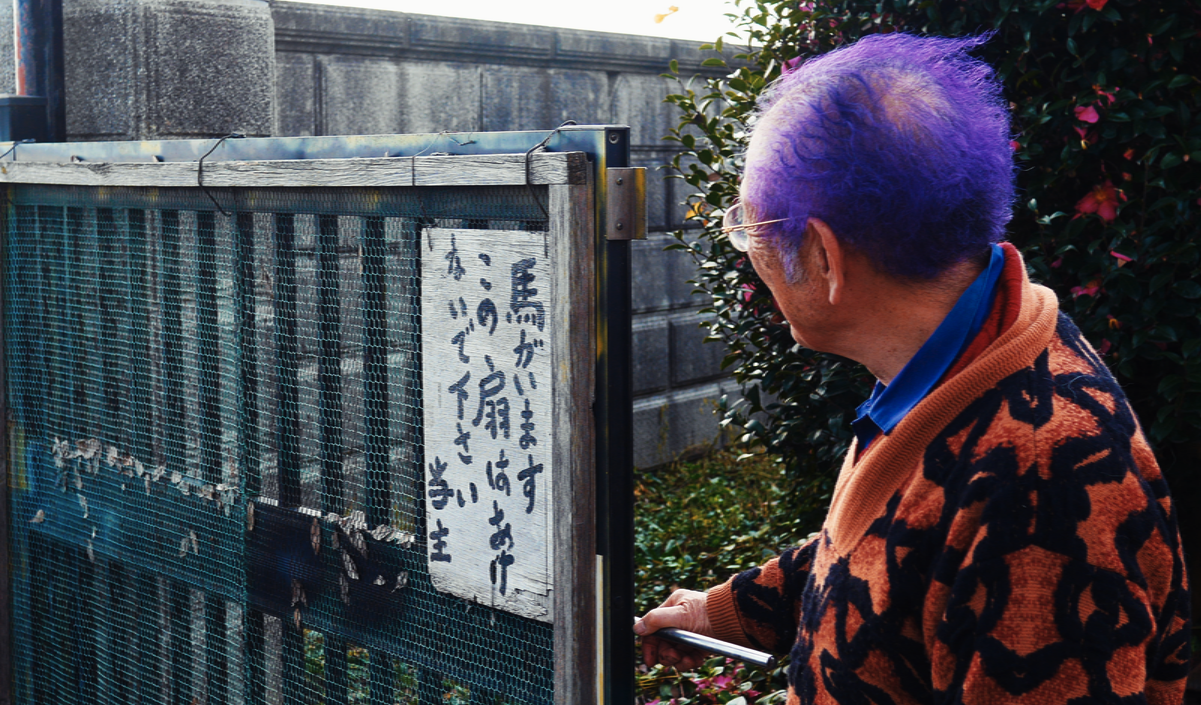
Hatsumi Sensei opens the gate
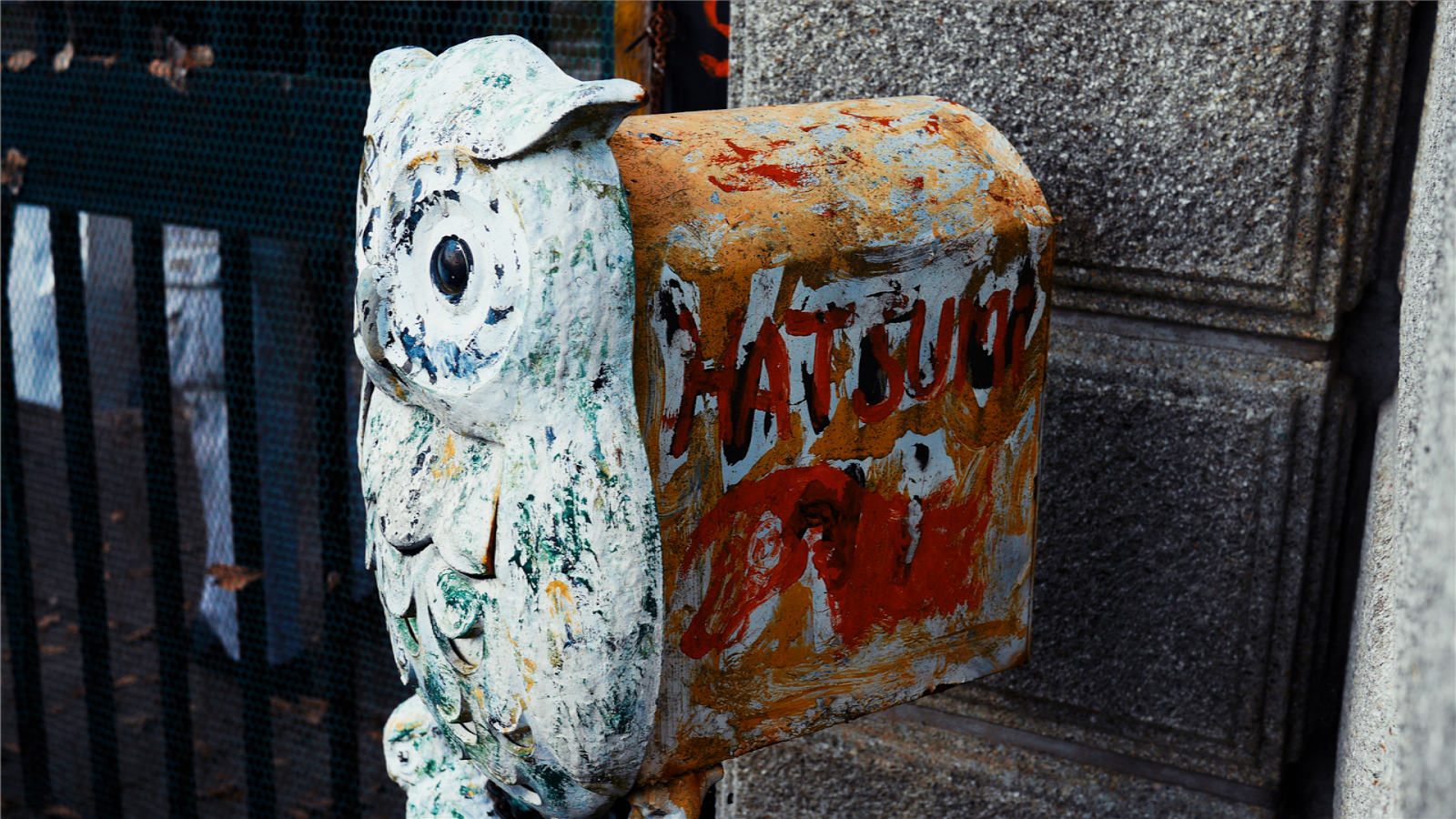
It says Hatsumi

Hatsumi Sensei is very welcoming
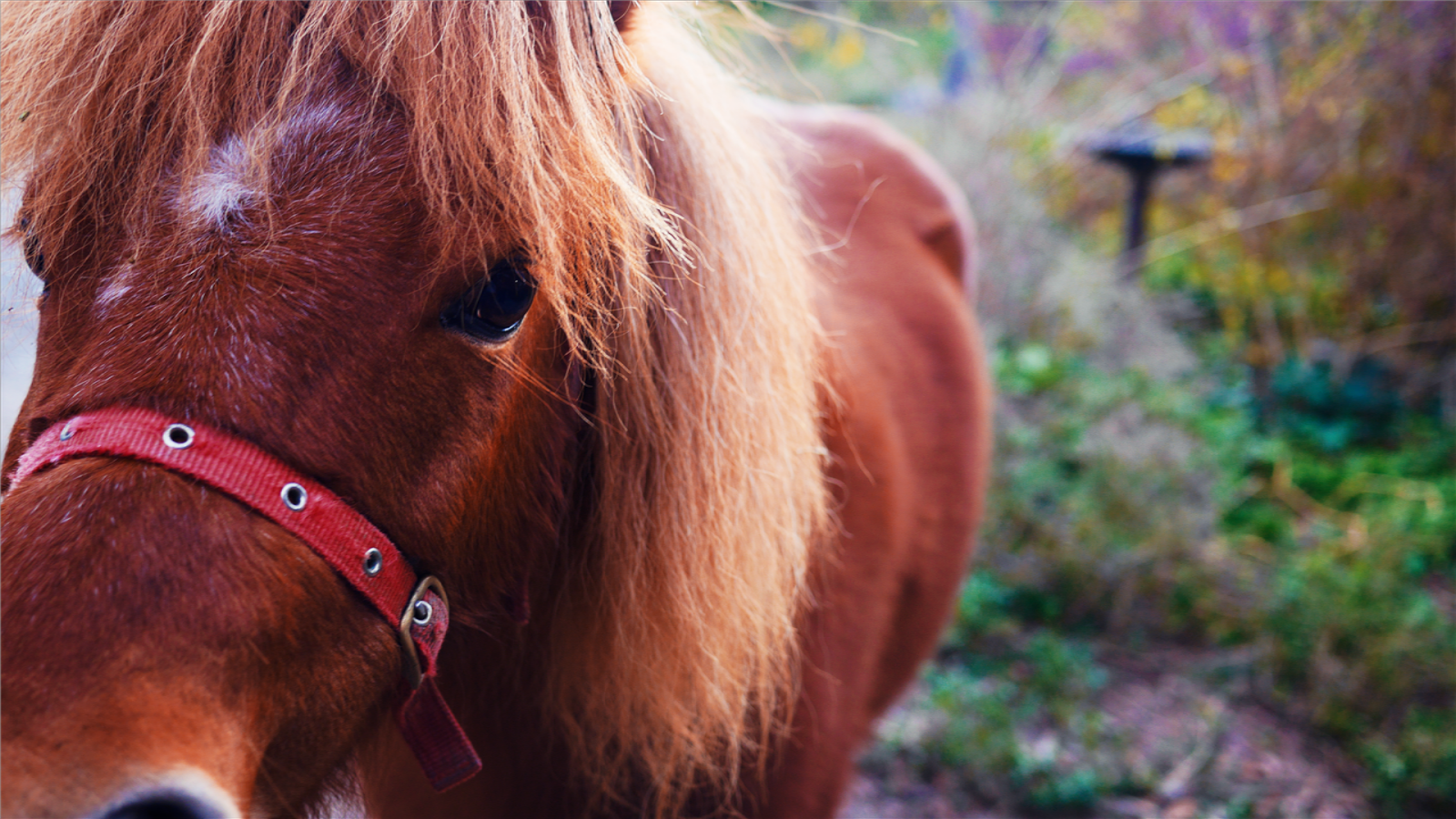
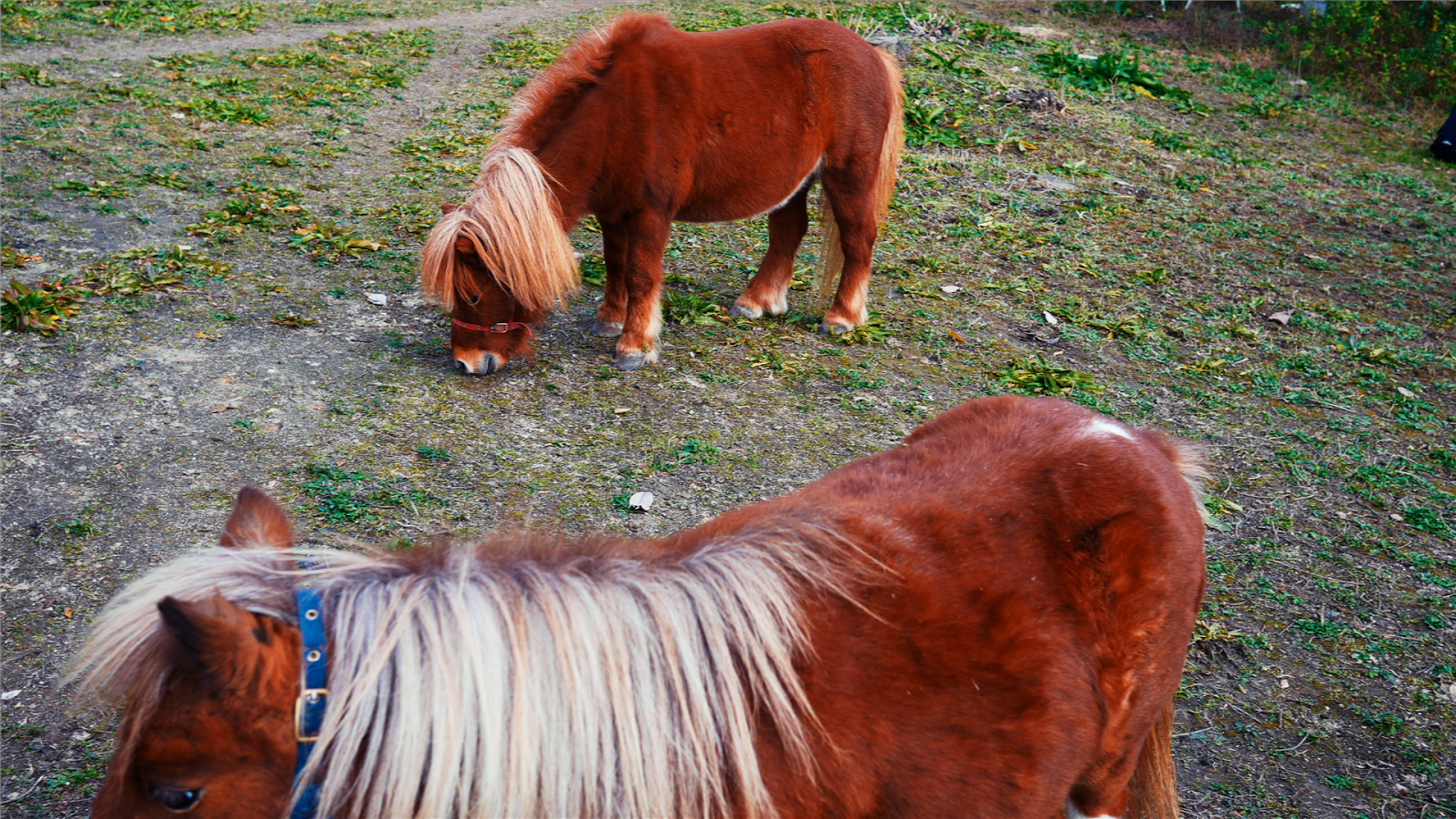
We also were welcomed by his horses.

Hatsumi Sensei's horse
Hatsumi Sensei's horses were always searching for food
Soke really enjoys describing all the statues and monuments to us.

Hatsumi Sensei tells us about the monuments
a gorinoto
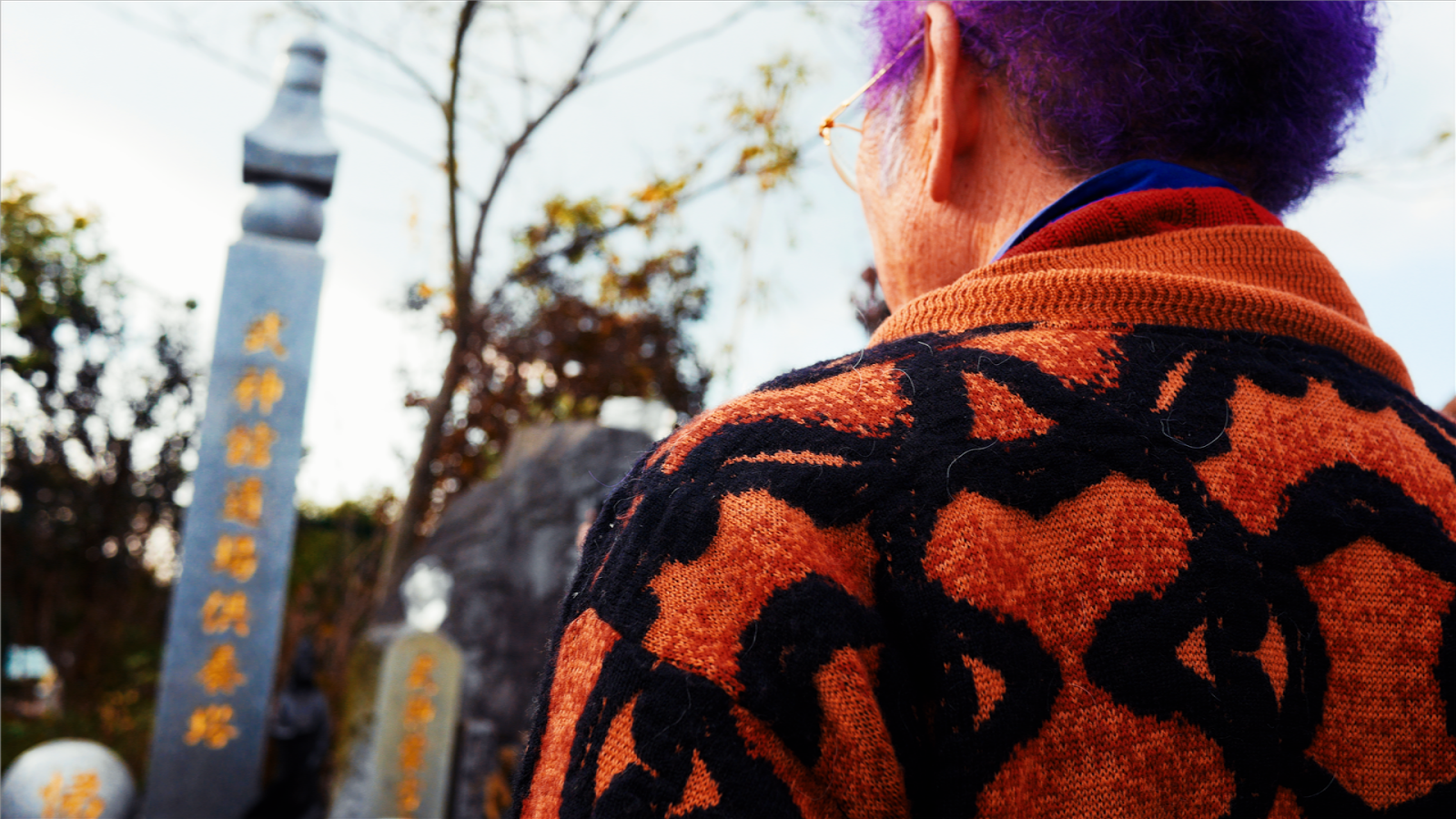
Hatsumi Sensei examines the Takamatsu memorial
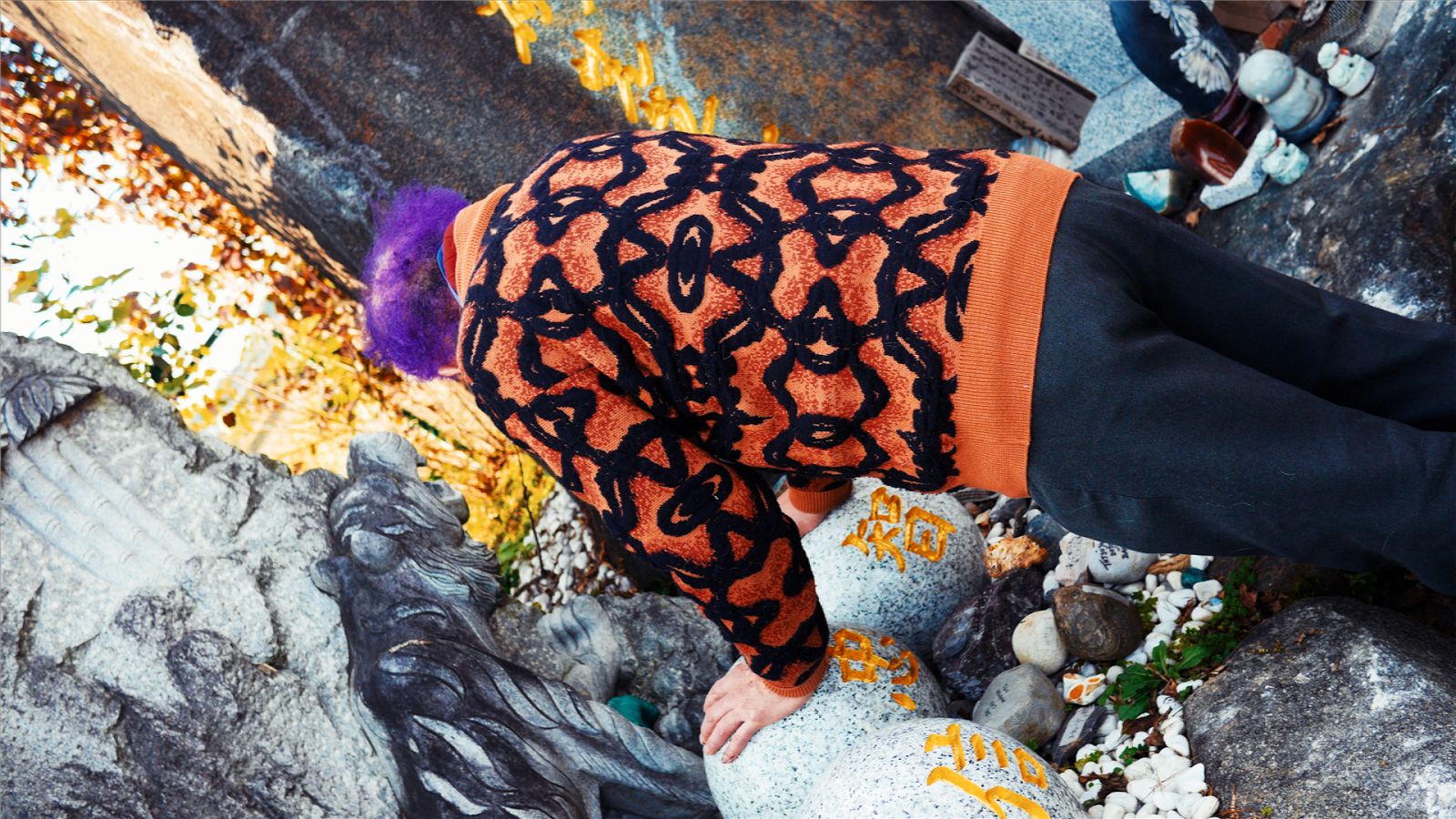
Then Hatsumi Sensei made sure that everyone found a place for their stones.

Hatsumi Sensei looks for a stone
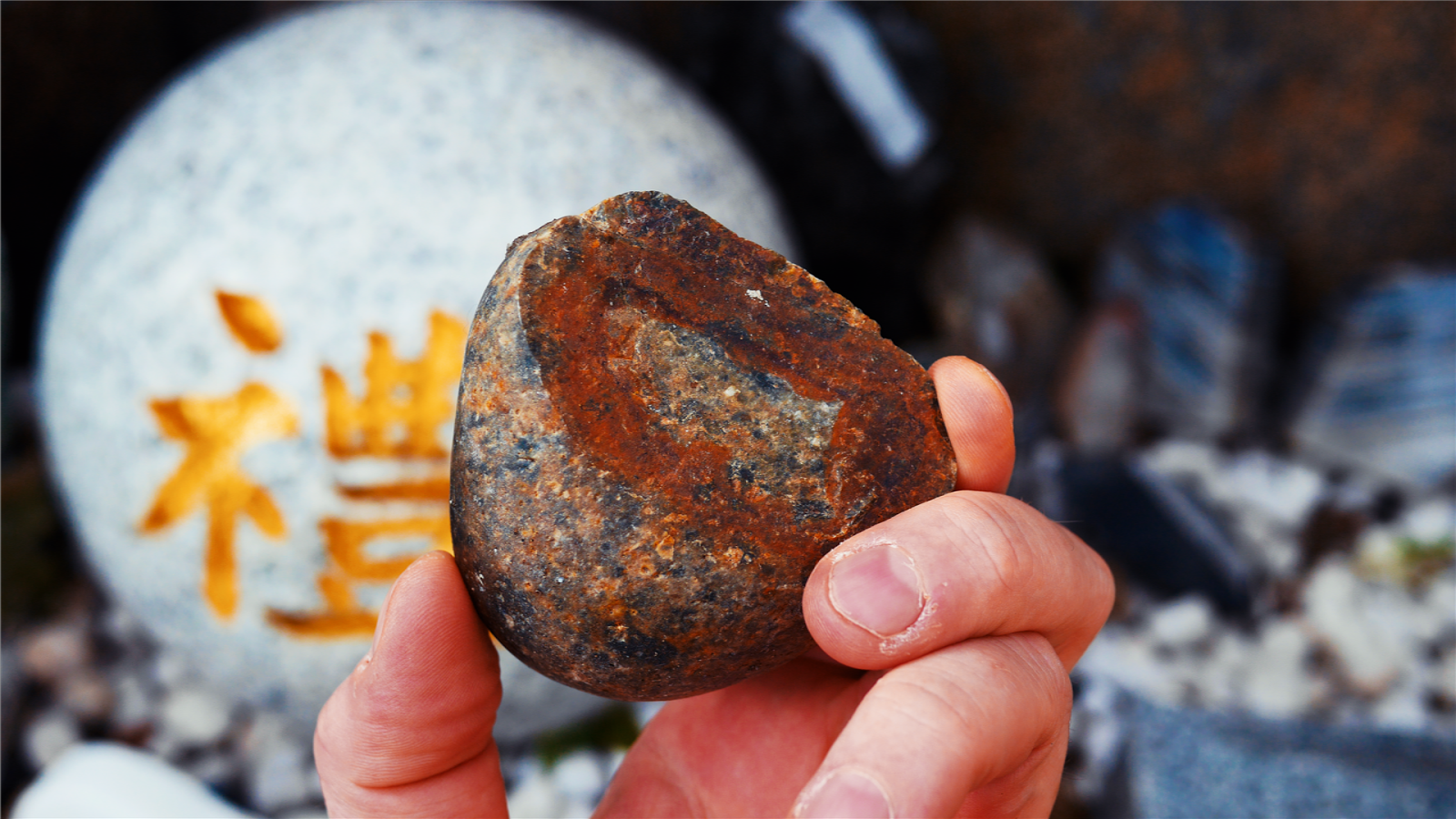
I brought a stone from Santa Monica during my trip in September and Soke had placed it just to the left of Takamatsu's bust.

A rock from Santa Monica Mountains now in Japan at the Bujinkan Takamatsu Memorial
The horses meanwhile found where I left my backpack and were about to tear it open... Hatsumi Sensei thought this was very funny.

My backpack (in the back) is discovered by Hatsumi Sensei's horses
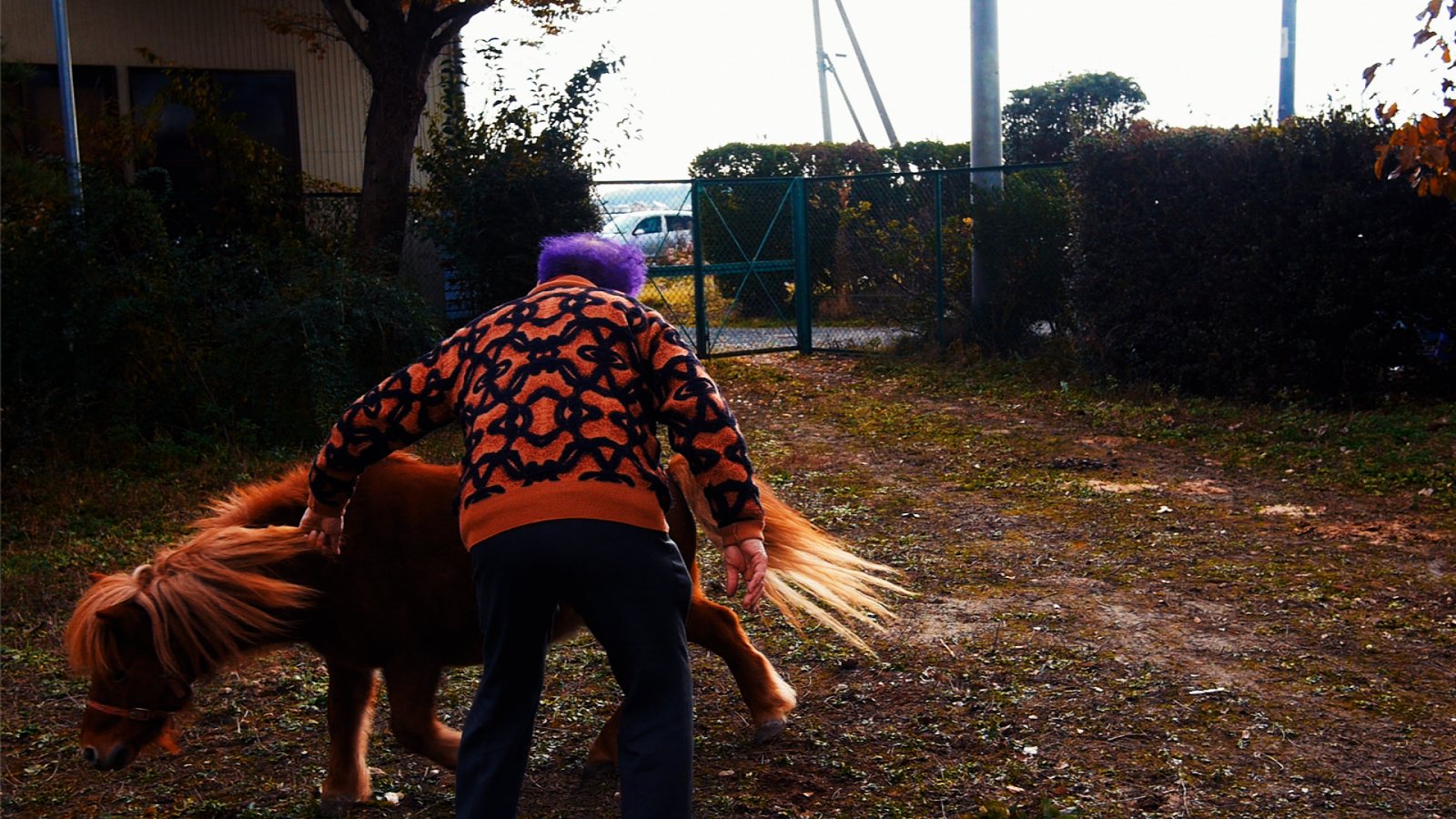
Hatsumi Sensei couldn't get his horses to stay still. It was funny watching him chase them.

Hatsumi Sensei tries to hold his fleeing horse
Hanging out with Sensei is always relaxed and full of humor.

Hatsumi Soke sharing the Takamatsu memorial
Hatsumi Sensei and Marilyn Monroe welcome us
I feel very lucky to be part of the Bujinkan with such a generous Soke.

Guarding the gate at Hatsumi Sensei's house
Hatsumi Sensei's giving nature informs our Bujinkan training like a connecting thread through the generations. I will write more about my training here in Japan soon.

The Call of Bujinkan Training Takes Many Forms

From Bujinkan Santa Monica by Michael

I return to Japan again in two weeks. (if you can't see the video above, it is here: http://youtu.be/BGPhYFcs_cU )

A little more than one month ago I had an interesting experience there. I was walking around minami-shin ozakimachi neighborhood.

Just wandering...

Then I heard a sound. It was a clear soft chime in the warm breeze. I followed the sound down an alley.

There it was. The chime came from two 江戸風鈴 Edo fuurin. Edo fuurin are are glass wind chimes from edo, or old Tokyo.

I stood in the alley admiring their sound. They chimed from a back window of a restaurant kitchen.

A woman came out to see what I wanted. I told her I was listening to the furin. She went back inside.

I didn't want to bother her so I walked back down the alley.

I heard a yell. A man had come out. He took the bell down from the window and chased after me.

Then he gave me the furin! I said thank you and tried to give him some money but he refused.

The sound of the bell had struck on my heart and I followed it. Now it is with me across the pacific ocean.

That is why I return to Japan in two weeks for training. The sound of the dojo has struck on my heart so I must follow it.

自然力 Shizenryoku in San Francisco

From Bujinkan Santa Monica by Michael

San Francisco from Alamo Square, photo by Michael Glenn
I was preparing for my seminar in San Francisco this weekend, and I wondered, what is the best way to share the feeling I have gotten from Hatsumi Sensei this year?

I have told my own students that I don't know how to teach this year's theme. But that is no longer true. After my trips to Japan this year and a lot of study in my home dojo and elsewhere, I have had some breakthroughs and insights.


Damion tabi shopping in Noda, photo by Michael Glenn
My friend Damion was very gracious to help organize a day of training in San Francisco.  To help people who were there to connect in a deeper way to their experiences, here are notes about what I shared on Saturday. But these notes can also be useful to any of you studying the 2014 Bujinkan theme.

We can start with the basic concept, "don't use your own power or technique." But if not, what do you use?

It is best to approach this question from various paths. For each person and moment there is an effective path. When I help students explore more than one path we may find it together. And if we are lucky we can stumble to a path Soke has pointed out to us, 神の道 kami no michi.

I wrote previously about 神韻武導 Shin Gin Bu Dou and creating space for it in your training. But there is a natural progression for this that students of different levels may take. The first is moving from technique to 自然力 shizenryoku or the path of natural power.

1. Power in combat is not what you deliver, but rather what is felt.


The forces of nature are far greater than any of your muscle. What natural forces do you have at your disposal? Which powers of nature can you summon to your aid? The first that we all learn about is gravity.

It seems that nothing needs to be said about gravity. But far too many martial artists use muscle where gravity can do the job and do it better. Good technique, leverage, and bio-mechanics all address this. If you only study these, you can go far.

2. Power in combat is greatest when the source is not perceived.


Hatsumi Sensei told us that training after godan is mienai keiko. Unseen training, invisible training. Some other natural paths in combat are psychology, strategy, and kyojitsu.

The fastest strike is the one that is not seen. The scariest enemy is invisible. And the toughest combat of our lives is with ourselves. Bring all of that to bear on your opponent.

Strike in ways that cannot be perceived. Disappear or make yourself zero so he doesn't even know to fight you. And reflect back or magnify his internal struggles. Give him no easy choices.

3. Real power cannot be understood.


Soke continued by telling us that after mienai keiko we pass into wakaranai keiko. This is training that cannot be understood. He has been saying this all year.

In class, he says if we don't understand something, that is good. It is purposely not understandable. He said things that are understood will get you killed.

Think of a natural disaster or even random violence like a bombing. Why some survive and others do not is incomprehensible. No sense can be made of it.

This is the path Soke wants us to find in our training.

So it is with Shingin, you connect to this incomprehensible force. You get on the same path with it and invite it into the kukan. Live in that place where you've found it or created it.


A big thanks to Damion and my friends in San Francisco. It was fun training with you. I look forward to the next one!

虚実 Kyojitsu: A Path to Natural Power

From Bujinkan Santa Monica by Michael

Soke is a Trickster, photo by Michael Glenn
Hatsumi Sensei swung the bo across the line of the swordsman's cut. In the dojo we hear a sawing or zipping sound. The bo is hollow!

A weight from the 忍び杖 shinobi-zue swings through the air, barely missing the overhead lights. It continues wrapping around Soke's attacker until he and the sword are wrapped up. But Soke doesn't appear to move at all!

He finally drops the bo, and his attacker collapses in a tangled heap. What just happened? How can any of us in the dojo use that same feeling?

Soke called this 自然力 shizenryoku, natural power or the power of nature.

One of the secrets to this type of natural power is understanding power itself. Power that is not from your own effort or what you put out. It is how you are felt, or the effect you have. The perceptions of the opponent are what matter.

This is the heart of 虚実 kyojitsu.

I go to Japan to study the yearly themes and more. But I never know what I will learn when I arrive. During my trip last month, I learned about some of the paths that the power of 神韻武導 Shin Gin Bu Dou may take. 

You may be lost about this year's theme. Then lighting strikes in the night. In that brief flash, you see a path. Then darkness again. Hatsumi Sensei encouraged us to follow a path of natural power.

Soke describes this 自然力から神の力 shizenryokukara kami no chikara. This power of kami that arrives from the force of nature. That's the path or channel by which we experience this power. There's a natural power or strength from kami, a non-physical power. That power channels down from above and you should follow it.

But tonight in the dojo, Hatsumi Sensei was talking about skipping stones across water. And the moments between skips, The 間 Aida of Skipping a Stone Across Water . He said we should alternate between small kyojitsu and big kyojitsu in this very small moment or aida in the kukan. And each moment is connected in this continuation.

He added that this year is about 自然力 shizenryoku or the power of nature like a stone skipping across water. We should apply kyojitsu in this way. After Soke wrapped his opponent up with the chain and bo, he said,
"This year's theme is to not use our weapons. Or not to beat up the opponent. Just let the opponent become bound up (or bounded)  by his own technique."
He told us that to be able to apply kyojitsu tenkan you have to separate yourself from your own desire. And then follow the path of natural power. Maybe it's the path you see in a flash of lightning.

Hatsumi Sensei said that the very survival of the Bujinkan is because it has been passed from one Soke to the next in this way. Down through the path of the Kami. Along this natural line of power.

This is the lineage and how it is inherited.

The 間 Aida of Skipping a Stone Across Water

From Bujinkan Santa Monica by Michael

Michael Glenn Shares a Stone from the Santa Monica Mountains with Hatsumi Sensei
My punch at Soke left me hanging over the depths. Beneath me was the profound moment of life or death falling into darkness below. I felt I could sink with it.

Above was Hatsumi Sensei, who had just bounced me off the surface of this pond like skipping a stone across the water. I looked at him, he laughed. He wasn't going to let me sink. Not today.

Not today because he is sharing the idea of skipping a stone across the water with the whole class. Last week he used this image again and again in his classes. And right now I was the stone.

When I heard him talk about this in previous classes, I nodded my head. The concept made sense to me. It reminded me of another image he had used last year of 乗換 norikae. Changing trains, going from one track (or technique, kyusho, etc…) to another.

But now when I experienced what it felt like to be the skipped stone, I realized there was so much more. There is the stone, the person throwing, and the surface across which you fly. But there is also the entire body of water. What lies beneath?

If you've ever skipped stones across a pond, you may recall the rhythm. If you have a nice flat stone and a good throw (angle and speed), the stone will skip or bounce off the surface a few times. The first bounce is long, the second shorter, and each one after has less space between bounces. You may even get 6 or 7 before the stone sinks.

But the stone does sink. Just as the opponent is defeated. The final result is the sinking of the attacker into the depths.

Hatsumi Sensei wants us to focus on 間 aida. This is the space between, or the interval from one time the stone contacts the water to the next. During this moment, the stone flies through the air, but falls again toward the water.

Today, in this class as Hatsumi Sensei's uke, I am powerless to stop myself from hitting the surface again.

In this moment, this aida... I skim across the surface and I glimpse something that really surprises me, and that I don't know how to explain. I realize my fate is in the depths below. I am going to sink. But when I look down at the water I also see Soke's reflection, smiling at me.

When he describes to the class a stone skipping across the water, it is easy to think of a stone, of throwing, and watching it bounce across the water. But that is the training that exists above the surface. That is beginner stuff. When you pass Godan you may glimpse below the surface.

He was not just skipping a stone. He was drawing on the power of the depths below without sinking into them himself. And even more, he had decided that he was not going to let me sink either. I felt that at the end. He let me see deeply into the depths of our training by protecting me from what was beneath.

I'm sure this all sounds crazy, but describing what I felt is difficult. So I offer you the metaphor of the skipping stone that Hatsumi Sensei gave us. It is up to you if you want to pick up the stone for your own training.