Skip to content

鯉口 Koiguchi: Cutting the Carp’s Mouth in a Sword Draw

From Bujinkan Santa Monica by Michael

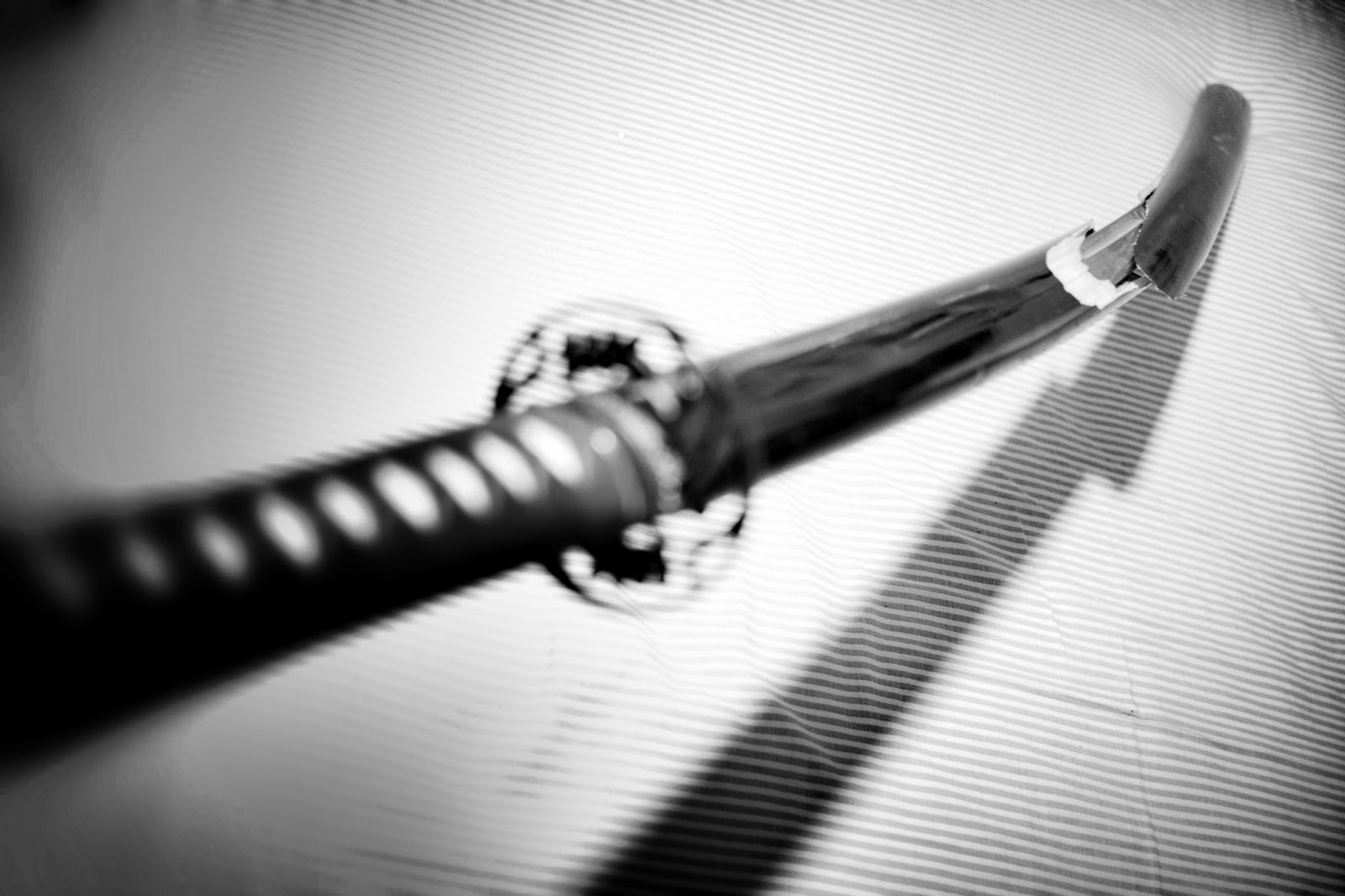
Michael's Broken 鞘 Saya, photo by Lisa Peters
Here is an excerpt from my training notes I send every week to subscribers. I thought more people should read about this, so >subscribe here< or keep reading:

Tonight my class focus was 鯉口の切り方 Koiguchi no kirikata. This is "cutting the carp's mouth," or freeing your sword from the "mouth" of the saya. There are many great techniques to do this. But sadly, most sword schools obsess on only one or two.

Tonight I showed 8 methods. This opens the door for infinite secrets.

I used the kata 撥倒 Hatto to give us focus as we practice this iai. First the opponent cuts while my sword is still sheathed. Here I am at an immediate disadvantage. To begin to address this we need the fundamentals of iai.

The first two I shared were 外切り sotogiri and 内切り uchigiri. These are very common. You probably have already studied these. The first has the thumb on the tsuba as you push forward the break the seal. The second has the thumb push from behind the tsuba.

The main advantage of uchigiri is that it is more concealed.

Next we looked at 控切りhikaegiri. In this version you are holding your sword back. Protecting even your opponent from being cut. This done with both the index finger and the thumb. In the version I showed, just because you are protecting the opponent from being cut, doesn't mean you protect him from pain or being defeated. But his life is spared today.

My sword had other ideas though. It even split my saya in two trying to get out!

The next secret I showed was like holding onto the wing of a bird to hold it back from flight. In this method that I won't detail here, you hold the flight of the tip just long enough for target acquisition. Then you let it fly like an arrow.

Now I switched tactics and used the index finger both as a safety to hold the sword, but also to break the seal of the habaki. I learned this one straight from Hatsumi Sensei and I like the hidden factor.

Another one that is useful when your grip is not ready, is 鍔元ギリギリ tsubamoto girigiri. I showed this without even having the sword in my belt. You might just be standing there holding it when you are attacked. Or maybe you just grab it off the floor or table. Whatever the situation, just by squeezing the koiguchi, the flex of your hand against the tsuba releases the habaki.

Then I fought using my saya and my sword as they both slice through the kukan.

Next I did some unarmed taijutsu to expose some of the principles of the kata 撥倒 Hatto that we were using as our foundation. If you can't get it without a weapon, with a sword your errors are magnified.

Returning to the sword, I went into some advanced methods of drawing that I learned from Hatsumi Sensei. They are things I doubt you will see from most sword teachers. They are unorthodox and even potentially hazardous to the user! For this reason I won't share them in print.

I did make a video of tonight's instruction, so if you want to be first to know when it comes out, sign up to my mailing list >subscribe here<.

In one class Hatsumi Sensei said,
"This is a secret of ninja drawing. One part of koppojutsu is having the knack for drawing. Anyone can grab a sword handle and pull it. But you have to bring it out like it's a mist."
This advice will transform your sword draw. But it is also a transcendent insight into our ninja weapon strategy.

That one idea was worth going to class that night. Or, if you are already getting my training notes, doesn't that one tip make you glad you subscribed?

Bujinkan Rank from the Heart

From Bujinkan Santa Monica by Michael

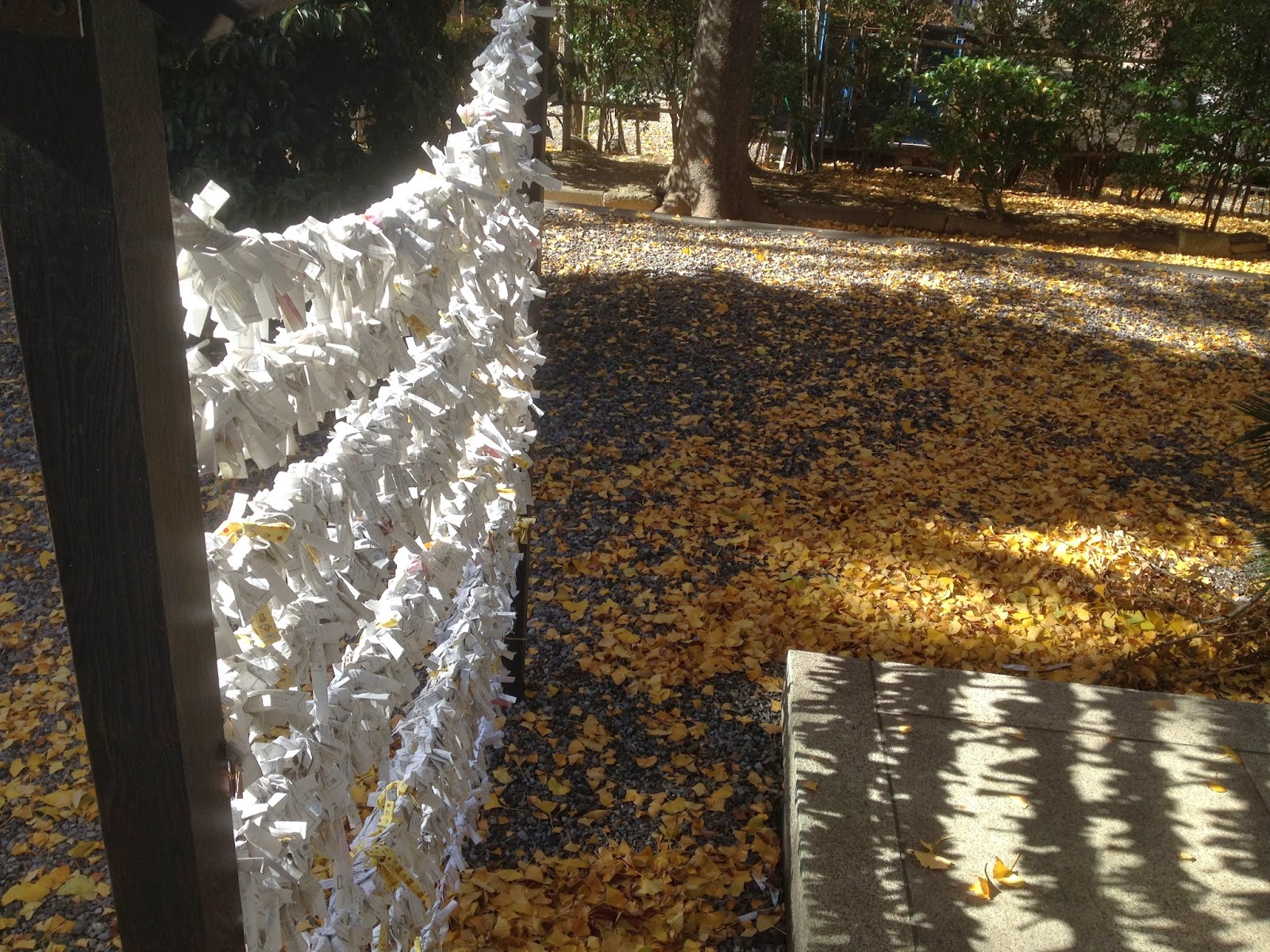
御神籤 omikuji, 道祖神社 (Doso jinja) Katsushika, photo by Michael Glenn
One day you learn there are no Bujinkan ranks… only people you can choose to invest in.

We form many relationships in this world: Family; friends; coworkers; parole officer; guy who works at the sandwich shop… It's obvious not all of them have the same value.

One thing I really love about the Bujinkan, is that it is possible to develop some of the most meaningful relationships of life with people you meet in training.

I have made lifelong friends. I have seen others do so. I have watched people date and get married after meeting in training. I have witnessed children start training at a young age and grow up to become amazing adults with an entire Bujinkan dojo looking out for them.

I have also lost friends who have died. I have my own personal way of honoring their life in my training. But the whole art is richer for the life they shared with us. And many of us feel this deep in our hearts when we bow in for each class.

There are people who have fallen away from the Bujinkan part of their life for some reason. We never forget them. And when they return, we welcome them like family.

At these times, no one thinks of rank or politics.

We are only thankful.

Hatsumi Sensei shared with us that the Samurai who became a Zen Buddhist... Shōsan, had the feeling of "The heart that thinks of oneself, suffers. The heart that thinks of others, is free."

I choose to invest in people on this path with me. My students, my teachers, my family.

How do you invest in yourself and others? Is Bujinkan training a choice for you?

The 奇翻 Kihon of 宝剣 Hōken

From Bujinkan Santa Monica by Michael

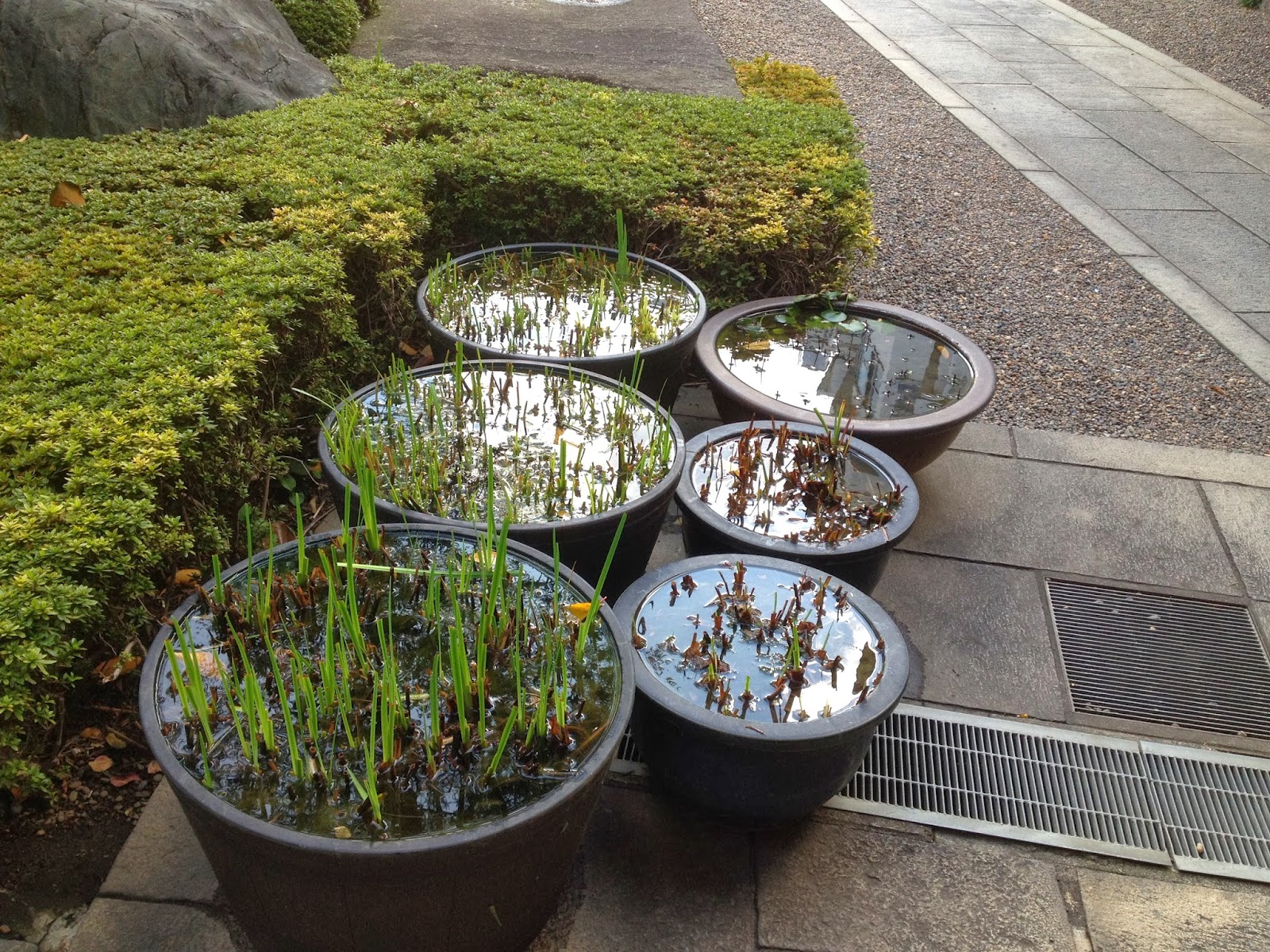
sky pots, at 赤門勝専寺浄土宗 photo by Michael Glenn
There are mysterious and strange surprises when studying the Bujinkan and what it means to be ninja. But the deeper you go, the more you find it is all connected. The mysterious evolves from the not so mysterious. Like kihon.

Let's consider the kihon of muto dori. On its surface, it seems simple. Evade when the sword cuts.

But this is reasoning from analogy. You know that when you don't move you will get hit or cut, because that has happened in the past or in other situations. But what is so amazing about the teaching Hatsumi Sensei has shared with us, is that we don't reason from analogy. We don't do things because that is the way they've always been done before. That produces a dead and lifeless art.

Hatsumi Sensei has written kihon as 奇翻, which suggests an odd turn, or a tricky mind with wondrous power. So, maybe we should reason from first principles instead.

So again, with muto dori, what is the first principle? The sword cut? Or the person cutting?

Why are they cutting? It is their mind or spirit that has made this decision. Their will controls the blade. While our spirit is in danger from it. All are linked and connected.

This kind of thinking will get you in trouble in a fight. But in training, it shines light on strategies that we can actually work on. So when the time comes, we do not sever the connection as Soke often advises.

Let's flip it. You hold the sword. How do you cut?

In our training we study how to cut with good taijutsu. Your taijutsu comes from your own mind, will, life force, or spirit… whatever you wish to call it.

Then we target our opponent and cut. You see how an inanimate object like a sword is connected through your will to cut the opponent and his will to survive? Everyone in the fight is connected this way.

Soke sometimes calls this 繋がり tsunagari, which is a connection, link, or relationship. He always tells us not to cut this connection. In fact, we train to use it for many amazing results in combat or in our lives.

Hatsumi Sensei has also shown us how to do muto dori this way. He calls this 影の無刀捕秘剣。I won't say more about this here, but...

If you hold a sword in your hand with this feeling, that sword becomes something much more than an inanimate piece of metal. It becomes 宝剣 hōken. With this you can cut away the illusion of all obstacles.

The Art of Hidden Change

From Bujinkan Santa Monica by Michael
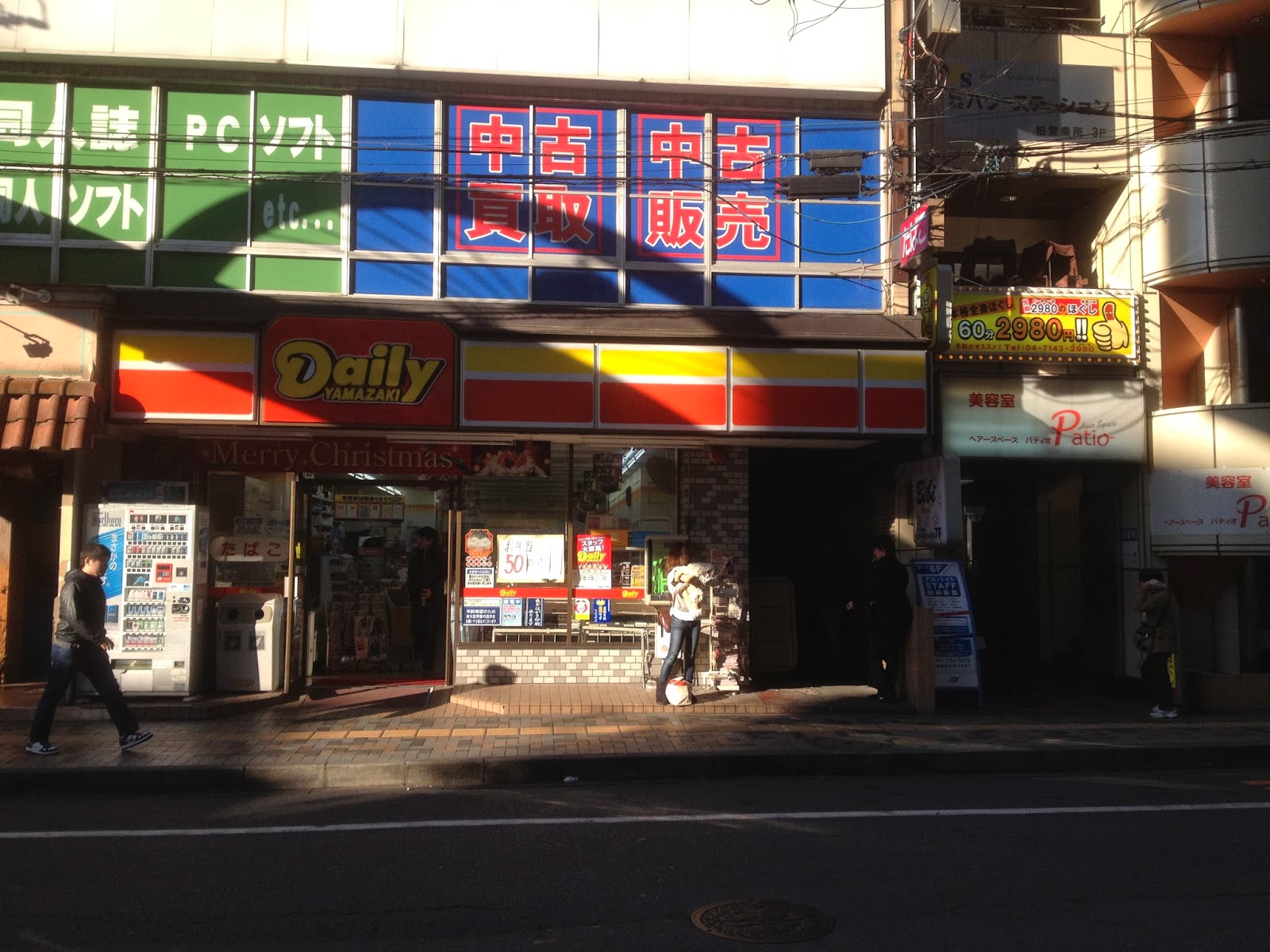
Hidden Convenience, Kashiwa. photo by Michael Glenn
I saw the way Hatsumi Sensei hit the guy in the neck. But his victim fell down like he had been shot. I tried the technique with my training partner. Not the same result.

People sometimes ask, when do we study Ninjutsu? I answer, every class.

Here is one of the lessons of the Bujinkan. There is more to it than what you can see. This makes it hard to study unless you experience it in person with a qualified instructor. Even then, you will miss most of it.

What is happening underneath the surface techniques are what Soke calls 小さな chiisana henka  and 見えない mienai henka. These are small, hidden changes where the real art comes alive. You won't find them in technique descriptions or even in the densho.

These are best taught through kuden or even better through 以心伝心.

This is why the same kata done by different instructors can appear so completely different.

It is also what allows you to win no matter what your opponent does to counter. This 技術 gijutsu is the skill or art of adapting in an invisible way. Soke says 小手を返す kote o kaesu. Meaning the skill of adapting to these small changes.

This kind of 手業 tewaza is something I experienced directly that day in Soke's class. He showed me on my own hand which bone he was striking with. Then he hit me.

Sure it hurt. But it was the small hidden thing that stuck with me all day. Somehow the strike seemed to clack the vertebrae in my neck together. This caused an alert up my spinal column to my brain that I couldn't shake easily.

Had he done the strike for real, this hidden effect might have dropped me. It sure got my attention. But the lesson was hidden from anyone watching us.

It is these small hidden changes that make us ninja. Find a teacher that knows this and study well.

Are Ninjas on Santa’s Naughty or Nice List?

From Bujinkan Santa Monica by Michael

Santa Claus in 浦和 Urawa, photo Michael Glenn
Dear Santa,

I've been a good Ninja. I don’t bite my nails. I won't ask you for much, but I just want to see if these letters work. Some other Ninjas are getting smarter people to write their letters, but I write my own.

This year I trained really hard, so

I want a grappling hook and a ninja-to and an axe but my mother said that I have to stop throwing rocks and fighting.

Please bring us a new Hombu Dojo, or keep the old one standing.

I would like a throwing star and some nice things to eat. I am very fond of pie.

Please bring a smoke bomb. Uncle Wade said that he would make one but he has not done it yet and I don't believe he will

I want a bank that you can't open so mama won't spend my money.

AND

I was very good and went to train in Japan three times this year, so

Please don't put my axe in my stocking for you might stretch it.

Bring my little brother Andrew something or else he'll punch my cat's eyes out.

Give some Christmas spirit to all of the Bujinkan, so we all can be a great family around the world.

I want you to bring me a sword that won't break when my brother Andrew throws it. You needn't bring Andrew anything. He's bad.


AND

I also completed all of my Ninja missions this year

I have a cat named "Zachy." Please put some chipped beef and waffles in his stocking for he is a good cat.

Please show me how to travel through chimneys so i can visit and train with my Bujinkan friends all over the world.

For Xmas I want a shikomi, a big red set of yoroi, and some boxing gloves so I can whip Andrew.

Please bring me a few of Soke's videos, and a new baby sister--one that don't squall and make a fuss all the time.

By the way, our fire place is all stopped up. Just ring the bell and I will let you in and show you where the stockings are.

These are some of the things I want, too many to list them all. PM me and I can tell you the rest. Don’t pay any attention to those other letters I wrote you.

That is all. Please don't bring us another baby brother.

Your friend,

Michael

inspired by and plagiarized from vintage Christmas letters on @TweetsofOld

反応 映像 Hannou Eizou: Fear on Repeat

From Bujinkan Santa Monica by Michael

Hatsumi Sensei gets into Michael Glenn's head. photo by
Last week in class with Hatsumi Sensei, he remarked that this year's theme is really hard. What he meant was not that it was particularly hard for him, but that it seemed hard for all of us to understand it. During all my classes with him this year, he has provided glimpses, feelings, and filled me with images of what he is leading us to in training. I think this type of imagery is the point in itself and a strategy for fighting.

For many years, Soke has been advising us to move beyond common sense and technique. To do things that can't be understood. Because this type of fighting cannot be countered. It is a very Ninja strategy.

So I was watching him get his ukes to jump this way and that around the hombu tatami. They were filled with pain, but also great mental confusion. In most cases they appeared to be fighting themselves. How do you get opponents to fight themselves? To do the work for you so you can just play?

Soke gave us a tip that night that he described as 反応 映像 hannou eizou. You use the image of your opponent's reaction or response. Use the image that this creates in their mind. So they are fighting a mirage. Their own imagination.

No enemy is more frightening than the one hidden in the dark corners of the mind. This is why Ninjas were so scary. Their invisibility and mystery left only people's imagination to fill in the blanks.

Soke told us that to be able to do this in training you must simulate reality so that you'll be able to face it. Free up your imagination this way. He said that it is crucial that you get to a place where you are not trying to fight. You are not trying to do harm. You just keep going.

Have this relaxed state of mind to keep going in the midst of danger. Not denying reality. But staying calm enough to see images or having this kind of imagination that will carry you beyond danger.

The moment that you decide to fight back, that is where you will fail. Hatsumi Sensei said that if your mind is working too hard, it's just like you are whiting out everything. This kind of blindness to reality will make you the one fighting imaginary enemies. And they are really hard to kill.

Japan Training: I got 無 nothing for you

From Bujinkan Santa Monica by Michael

無 mu near Kitasenju, photo by Michael Glenn
My classes with Hatsumi Sensei for the last week have had an intense energy. Not because he is more intense than usual. His training is of a high level and never fails to surprise. But the intensity comes in the form of my own resistance to what he is sharing.

He has been really emphasizing the 無 mu in muto dori. As some of you may know, muto dori has been a strong theme throughout training this year. After my other visits to Japan this year, I studied this from the feelings he gave us.

But the difficulty for me now is that when he embodies mu, I get nothing. He is not presenting any feeling that I can key in on. This is instructive yet difficult to parse. It cannot be broken down for study.

Soke is removing himself from the equation. He doesn't exist so he cannot be hit. But he seems to be doing this on a personal level too. Sensei made a very intricate and intense painting of a lion. He was asked, how long did it take? He said, "only a couple of minutes. But if I stopped to think about it it would have taken much longer."

There seem to be other things like this at work in the Bujinkan as well. Some key people have passed on. There is no Daikomyosai this year. But the hombu dojo still stands, despite all the other buildings around being dismantled. This is the mystery of mu.

But one day soon it will be gone too. Maybe the natural progression of the Bujinkan leads to this kind of dissolution. 

Soke said last night that the important things in life cannot be seen. This is where the life force or spirit is. When death happens the form is emptied. Where does the unseen go?

This kind of emptiness will never be cut by any sword. This is muto dori.

The Ninja Tourists

From Bujinkan Santa Monica by Michael

Michael Glenn being a good tourist, Bujinkan Hombu Dojo
I am preparing for my third trip to Japan this year. In my preparations I came across some old notes from another trip I made many years ago. Before one class I had with Oguri Sensei, I encountered a common attitude among visitors to the Bujinkan Hombu Dojo.

The Ninja Tourists.

On my way to Oguri Sensei's class, I bumped into one of these tourists from Los Angeles. Since I know him from back home, I stopped to chat a bit. This was his first trip.

He was very happy. Beaming in fact. He showed me some photos he had gotten of himself with various teachers. But then he said something that sounded off to my ears,

"We are part of history!"

I asked, "How do you mean?"

He said, "Being here."

That seemed wrong to me at the time.  To me it was just class, just training.  You would be part of history sitting at home watching TV too.  But for him it was like visiting a holy place.  That's one extreme of the tourist attitude.

The Japanese people and Bujinkan teachers are just normal people with lives. Not Ninja fantasy characters.

No matter how great they are as martial artists, what can anyone learn from them with that attitude?  You'll see what you want to see and learn what you want to learn.  Which may or may not be what is being taught.  More than likely what is being taught will be a little more grounded in reality.

Some foreigners treat the visit like a martial arts mecca.  Meanwhile Hatsumi Sensei is showing various ways to punch somebody in the throat.  It seems like there may be a dangerous disconnect there.

But, all these years later, I've softened my attitude about this. Most of the Japanese teachers seem happy to meet all these excited visitors from around the world. And as Nagato Sensei told me a few months ago, Fate has brought us all together.

What is right for my training is not what is right for anybody else's training or life. And what was right for me that day so many years ago was getting myself to Oguri Sensei's class.

I said goodbye to my friend from LA. Then I sat on the train thinking about how happy he was with his tourism. When I got to the Hombu dojo, Oguri Sensei had a smile for me that I will not forget.

There were only 4 of us in his class that day.

My friend from LA was not there but I guess he was right. We are part of history. I had a great class with lots of personal instruction from Oguri Sensei.

He has passed on, but I shall always value those classes because they are now part of my history.

詒転三転 Iten Santen: Never Ending Change Filled With Deception

From Bujinkan Santa Monica by Michael

Kashiwa Annex Frosted Window, photo by Michael Glenn
Bujinkan fighting is an illusion. You will never find two witnesses of a fight who see the same thing. Even if you haven't seen this in a fight, you have in the dojo. Most of the time, no two students in the dojo witness what Hatsumi Sensei has shown in the same way.

One day Soke said this was like  詒転三転 iten santen. I had no idea what he meant until I realized it was a play on words as he is fond of doing. The standard phrase is 二転三転 niten santen. This means being in a state of flux, a sequence of never ending changes.

The way Sensei said it was to imply that these never ending changes are full of deception. A result of 虚実 kyojitsu. This is why Bujinkan is an art. You might say that art is neither truth or fiction.

Soke told us that the real essence of the technique or of kyojitsu exists in
"The place where one cannot see. It's here where changes to the extraordinary happen."
This is akin to the short story 藪の中 Yabu no Naka by Ryūnosuke Akutagawa. If you haven't heard of it, it is better known as the basis for the movie 羅生門 Rashōmon. The plot has various witnesses to a murder describing what they saw. Of course no one's version of the crime matches.

What happened? What happens in Soke's classes? What did anyone actually see? Something extraordinary that will never be discerned with the rational mind.

The name of that story, 藪の中 Yabu no Naka has become a common phrase to describe an event where no one can really say what happened.

When I train or teach, I am striving for something that cannot be comprehended. Beyond technique and form. When I succeed I have the pleasure of seeing the confused looks on my student's faces.

That part is amusing. But what really is fantastic for me is to see my students do something I myself cannot comprehend! When that occurs it is sublime.

2 Mad 剣 Tsurugi Secrets, Plus 1 Mantra

From Bujinkan Santa Monica by Michael

Michael Glenn at 王子神社 ōjijinja, Mabashi, Matsudo, Chiba Prefecture, Japan
I wrote earlier this year about my experiences in Japan with the iconography of Aka-Fudō holding the 倶利伽羅不動剣 Kurikarafudō ken. Back then I was seeking to understand what felt like a bomb Hatsumi Sensei dropped in the middle of our taijutsu with one part of the Bujinkan theme for 2013, The 剣 Tsurugi/Ken.

This Chinese style sword holds lessons and qualities of movement that challenge what you think you know about Japanese martial arts.

So it was really a sweet surprise that just the other night, after 10 months of study with this weapon, I found a personal breakthrough in my movement with the tsurugi.

If you want to attempt what I discovered, try two things, one difficult, the other absurd. Or even better blend these two for the full madness that is the tsurugi.

剣 Tsurugi Madness Number One:

You see the pointy end of your ken? It is tiny and sharp. Let that one point become immovable. Just like the immovable spirit of 不動明王 Fudō Myō-ō, it will occupy the kukan and expand out from its physical position to embrace all the combatants.

Then you pivot around it. This is like 要 kaname that Soke taught us about last year. The confusing part comes when you learn that this still, immovable point doesn't have to stay fixed in space or time. This feels like a contradiction but isn't.

剣 Tsurugi Madness Number Two:

When you embrace that previous contradiction, then you let the sword shatter stillness. As I wrote recently in my training notes, at that moment, all hell breaks loose when the ken flashes and writhes through the kukan from one point to another. To manage this, you must embody 不動心 fudōshin.

Not many people know fudōshin in the midst of combat. It is hard enough to do just sitting in meditation, without someone fiercely trying to gut you.  But I think the power of the tsurugi doesn't just require it, it causes it.

When Fudō Myō-ō wields the Kurikara ken, he is cutting through ignorance with wisdom. I must really need to swing that sword around a lot. Lucky for me, Fudō Myō-ō is the patron of people born in the year of the rooster. And so I was.

Here is the Fudō mantra if you want to say it while cutting through ignorance with your sword:

なーまくさーまんだーば さらなんかん
Naamakusaamandaaba saranankan

Don't ask me how to pronounce it, I think I need more training.