Your Vote for My Next Video
From Bujinkan Santa Monica by Michael
![]() |
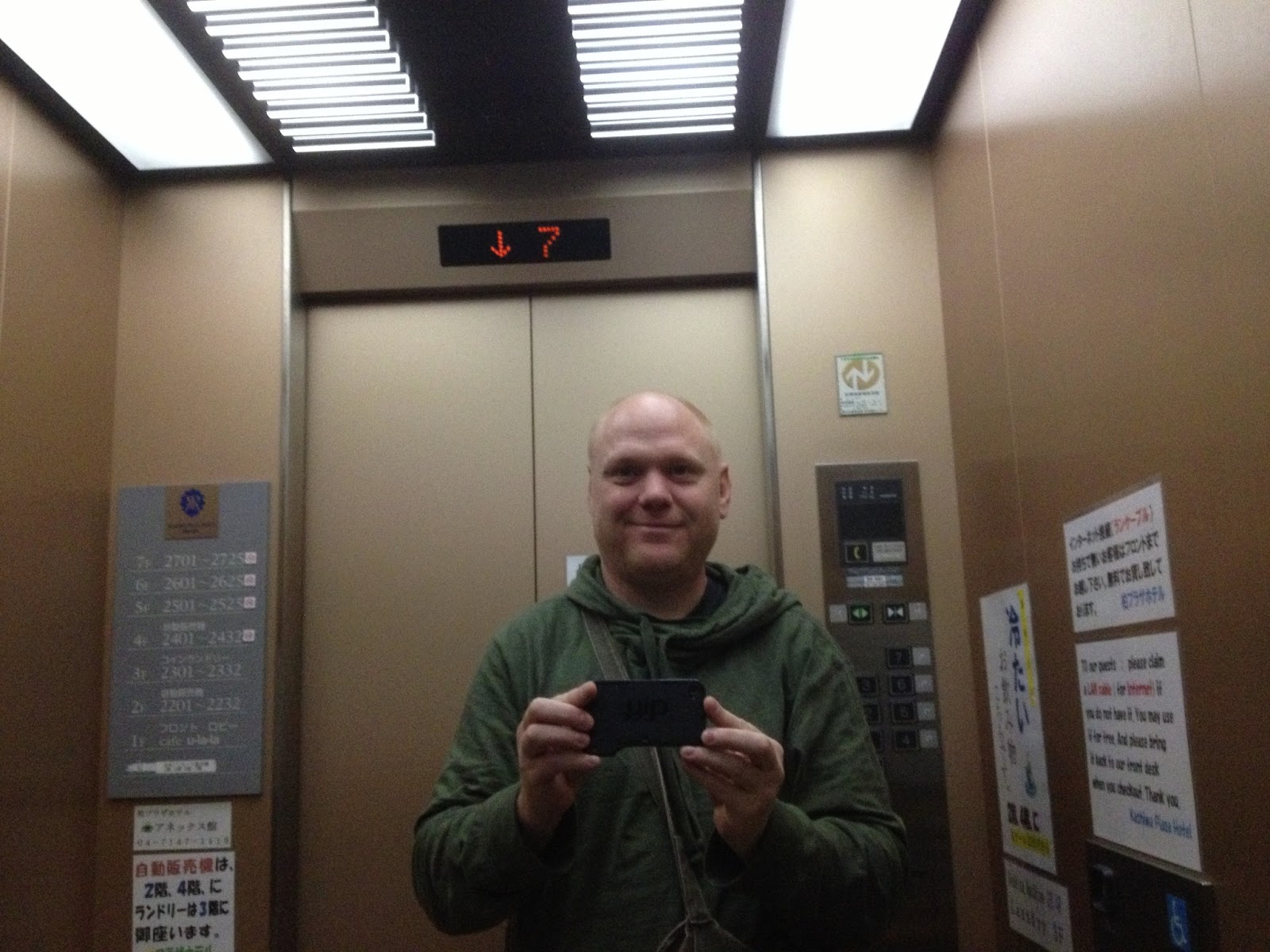
| Michael Glenn Somewhere Below 7th Floor Kashiwa Plaza Hotel |
If you haven't seen any of my videos, you can find them here: Michael Glenn's Bujinkan Videos
I really appreciate all the support and feedback everyone has given me when I travel, or through all the great emails you guys have sent my way.
Your Vote for My Next Video
From Bujinkan Santa Monica by Michael
![]() |
| Michael Glenn Somewhere Below 7th Floor Kashiwa Plaza Hotel |
If you haven't seen any of my videos, you can find them here: Michael Glenn's Bujinkan Videos
I really appreciate all the support and feedback everyone has given me when I travel, or through all the great emails you guys have sent my way.
The Theme for 2013 is Like a Dragon Wrapped Around a 劍 Tsurugi
From Bujinkan Santa Monica by Michael
As part of the theme for 2013 in the Bujinkan we are studying the straight sword 劍 tsurugi or ken. At first, I didn't know what to make of this, since Japanese swordsmanship is largely devoted to curved single edged blades. But after my recent trip to Japan and being exposed to the symbolism AND practical use of this weapon, I am absolutely blown away.
When I first saw Hatsumi Sensei using this weapon this year, it literally seemed to writhe in the space like a snake. This got me thinking. 2013 being the year of the snake, how might these things connect?
As I looked around hombu, and during the kunoichi taikai at Ayase, I saw many types of ken in use during training. Which one are we studying this year? I think the answer is all of them, but Hatsumi Sensei showed up with an impressive example to put on display:
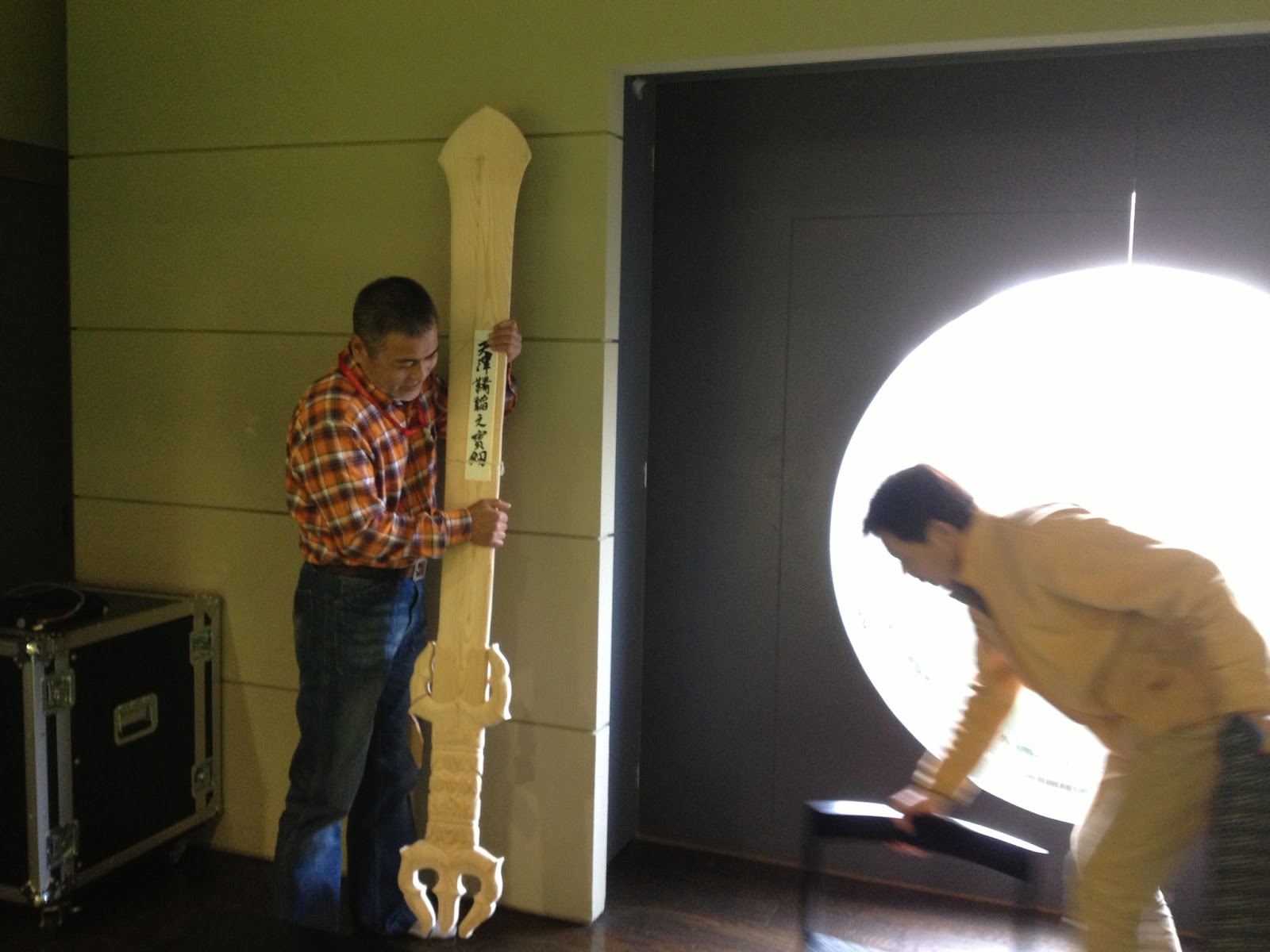
| The Arrival of Hatsumi Sensei's 三鈷剣 Sanko Ken. photo by Michael Glenn |
For example, one of the origin stories of the vajra comes from India. The god Indra used the vajra as his main weapon. In the Vedas, Indra used this weapon to fight and kill a dragon serpent form of Asura Vritra. Indra became known as the slayer of the first born of dragons.
The five pronged vajra symbolizes the five elements. It looks like six, but the central prong is counted as one. Or, in the form of a sword, this blade was used by mountain yamabushi or mikkyo priests to clear a path through weeds and undergrowth. The blade came to represent cutting away illusion.
In the stories of the origins of Japan, the sword came to Japan as a gift from the gods. Amaterasu's brother, Susanoo, killed an eight headed serpent and cut off one of its tails. Inside its body was the 草薙劍 Kusanagi no Tsurugi which is one of the three sacred treasures of Japan.
You will find this blade held by Fudō-myōō 不動明王, Senju Kannon 千手観音, and Monju 文殊 in their depictions. One of the most interesting examples for us this year might be "The Akafudou 赤不動 of Myououin 明王院 on Mt. Kouya, who holds a sword with the dragon Kurikara 倶利迦羅 wound around it." A couple of weeks ago, I watched Hatsumi Sensei paint snakes and serpents on students' swords and scrolls. So this feeling must be on his mind.
I could not help but think of this symbolism and feeling when in one class at the hombu, we were using the ken to do the kata 飛龍之剣 hiryu no ken. As the flying dragon was coiled around my sword in the kukan, my opponent suddenly found himself wrapped around his own delusions. My sword had snaked around between his arms to wrap and slice into a musha dori.
I bet you've never thought about dragons and serpents when doing musha dori! Me neither, until this year. Should be quite a ride. Hope you hang on with me.
The Theme for 2013 is Like a Dragon Wrapped Around a 劍 Tsurugi
From Bujinkan Santa Monica by Michael
If you want to know how to use the ken, do it like you have a dragon wrapped around the blade. That is my advice after studying this weapon in Japan. Let me explain how I got there.As part of the theme for 2013 in the Bujinkan we are studying the straight sword 劍 tsurugi or ken. At first, I didn't know what to make of this, since Japanese swordsmanship is largely devoted to curved single edged blades. But after my recent trip to Japan and being exposed to the symbolism AND practical use of this weapon, I am absolutely blown away.
When I first saw Hatsumi Sensei using this weapon this year, it literally seemed to writhe in the space like a snake. This got me thinking. 2013 being the year of the snake, how might these things connect?
As I looked around hombu, and during the kunoichi taikai at Ayase, I saw many types of ken in use during training. Which one are we studying this year? I think the answer is all of them, but Hatsumi Sensei showed up with an impressive example to put on display:
| The Arrival of Hatsumi Sensei's 三鈷剣 Sanko Ken. photo by Michael Glenn |
For example, one of the origin stories of the vajra comes from India. The god Indra used the vajra as his main weapon. In the Vedas, Indra used this weapon to fight and kill a dragon serpent form of Asura Vritra. Indra became known as the slayer of the first born of dragons.
The five pronged vajra symbolizes the five elements. It looks like six, but the central prong is counted as one. Or, in the form of a sword, this blade was used by mountain yamabushi or mikkyo priests to clear a path through weeds and undergrowth. The blade came to represent cutting away illusion.
In the stories of the origins of Japan, the sword came to Japan as a gift from the gods. Amaterasu's brother, Susanoo, killed an eight headed serpent and cut off one of its tails. Inside its body was the 草薙劍 Kusanagi no Tsurugi which is one of the three sacred treasures of Japan.
You will find this blade held by Fudō-myōō 不動明王, Senju Kannon 千手観音, and Monju 文殊 in their depictions. One of the most interesting examples for us this year might be "The Akafudou 赤不動 of Myououin 明王院 on Mt. Kouya, who holds a sword with the dragon Kurikara 倶利迦羅 wound around it." A couple of weeks ago, I watched Hatsumi Sensei paint snakes and serpents on students' swords and scrolls. So this feeling must be on his mind.
I could not help but think of this symbolism and feeling when in one class at the hombu, we were using the ken to do the kata 飛龍之剣 hiryu no ken. As the flying dragon was coiled around my sword in the kukan, my opponent suddenly found himself wrapped around his own delusions. My sword had snaked around between his arms to wrap and slice into a musha dori.
I bet you've never thought about dragons and serpents when doing musha dori! Me neither, until this year. Should be quite a ride. Hope you hang on with me.
Nagato Sensei: A Very Strong Nurse
From Bujinkan Santa Monica by Michael
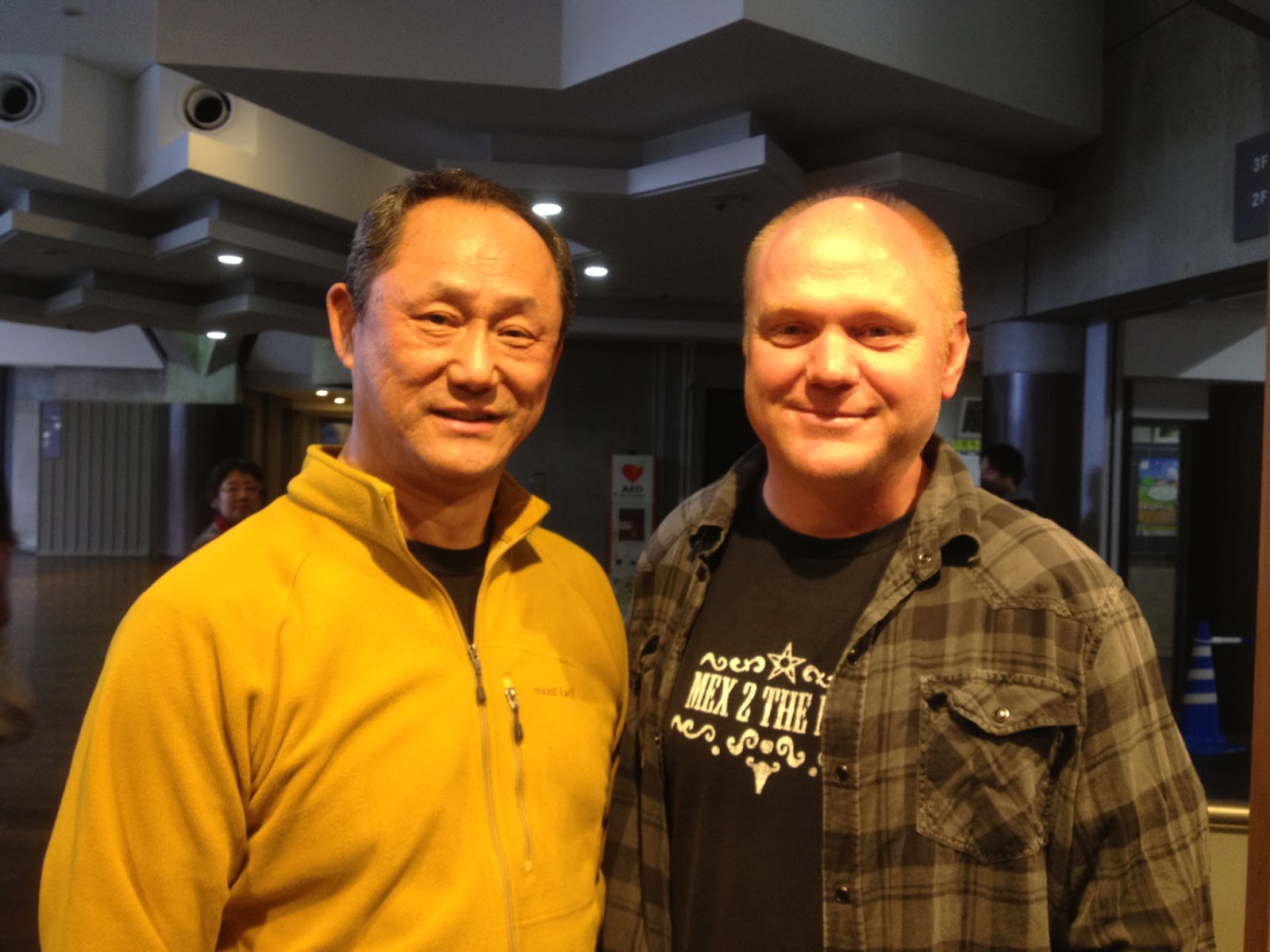
| Nagato Sensei with Michael Glenn |
Patients may act violently and react with aggression. Hatsumi Sensei suggested that we learn to
"Move in such a way that the opponent doesn't resist. He doesn't continue to fight or create more agrression."Of course in these jobs, one of the key challenges is to calm, subdue, or control the patient without injury to them or the staff. This can be difficult in a chaotic situation where accidents may occur. Another strategy Soke gave us was,
"to move in such a way that it doesn't give the opponent any feeling. Once you feel something, you need to be able to change. Otherwise there will be an accident or something will happen. Move in such a way that you're not a catalyst for an accident."Sensei also advised us to use our surroundings. For example using a chair to unbalance or as a barrier between yourself and the opponent. He said,
"This is important, because the obstacle… the chair becomes a weapon."Since there were no chairs on the mats at Ayase, Sensei asked Nagato to be a chair. Nagato crouched down on all fours. This itself was a lesson to everyone.
I've seen Hatsumi Sensei ask his senior students to do things that are somewhat embarrassing or seemingly beneath someone of their stature. Yet, they never seem fazed or unwilling to cooperate. They have so much respect for their teacher, and Sensei always makes these requests without ego or pretense. I don't think Nagato would very likely pose as a piece of furniture for anyone else except Soke.
So Nagato Sensei is posed on the ground as a chair. Soke knocks the "patient" down across Nagato's back and says, "Then the chair picks him up and takes him away."
Nagato stands up with the guy slung across his back and walks away. Hatsumi Sensei says, "he might be a very strong nurse!"
Nagato Sensei: A Very Strong Nurse
From Bujinkan Santa Monica by Michael
| Nagato Sensei with Michael Glenn |
Patients may act violently and react with aggression. Hatsumi Sensei suggested that we learn to
"Move in such a way that the opponent doesn't resist. He doesn't continue to fight or create more agrression."Of course in these jobs, one of the key challenges is to calm, subdue, or control the patient without injury to them or the staff. This can be difficult in a chaotic situation where accidents may occur. Another strategy Soke gave us was,
"to move in such a way that it doesn't give the opponent any feeling. Once you feel something, you need to be able to change. Otherwise there will be an accident or something will happen. Move in such a way that you're not a catalyst for an accident."Sensei also advised us to use our surroundings. For example using a chair to unbalance or as a barrier between yourself and the opponent. He said,
"This is important, because the obstacle… the chair becomes a weapon."Since there were no chairs on the mats at Ayase, Sensei asked Nagato to be a chair. Nagato crouched down on all fours. This itself was a lesson to everyone.
I've seen Hatsumi Sensei ask his senior students to do things that are somewhat embarrassing or seemingly beneath someone of their stature. Yet, they never seem fazed or unwilling to cooperate. They have so much respect for their teacher, and Sensei always makes these requests without ego or pretense. I don't think Nagato would very likely pose as a piece of furniture for anyone else except Soke.
So Nagato Sensei is posed on the ground as a chair. Soke knocks the "patient" down across Nagato's back and says, "Then the chair picks him up and takes him away."
Nagato stands up with the guy slung across his back and walks away. Hatsumi Sensei says, "he might be a very strong nurse!"
Tsurugi: The Divine Sword
From Shiro Kuma's Weblog by kumablog
Inryoku: Attraction
From Shiro Kuma's Weblog by kumablog
Kukishinden Ryū Happō Biken – article translation
From Wanderings in Budo by bujinshugyo
九鬼神伝流八法秘剣
後醍醐天皇の守護についていた薬師丸蔵人隆真を始祖とする。後に功により九鬼姓を賜わった。棒、槍、薙刀、手裏剣、体術などの8法に剣術が加わる。剣が特に素晴らしい。当時は戦争の時代だったから殺人剣が多かったが、後に平和な時代になるとそれが活人剣になる。九鬼水軍が船の上で用いたため、腰を低く落として安定した構えが基本になった。
Kukishinden ryū happō biken
The founder Yakushimaru Kurando Takanao was a military governor (shugo) under Emperor Go-Daigo. The Kuki family name was an honour granted later. Kenjutsu is added to the eight methods that include bō, yari, naginata, shuriken and taijutsu. The sword (technique) is especially wonderful. At this time it was an era of war and many people were killed with the sword. Later in the period of peace it became the life saving sword. The Kuki naval forces worked on board ship so the fundamental became dropping the hips for a low stable stance.
九鬼神伝流八法秘剣 Kukishinden ryū happō biken – nine demons divine transmission style, eight methods, secret sword.
The 鬼 ki of kuki is generally translated as demon, however could also mean spirit or ogre (read Oni), more importantly this does not have the evil connotation that the word demon in English (or Judeo-Christian languages) does.
Shinden can variously be translated as ‘teachings of the gods’ ‘teaching conveyed from the gods’ ‘transmitted to the soul’.
Happō can be eight methods, laws or principles, bearing in mind that eight can imply ‘numerous’.
薬師丸蔵人隆真 Yakushimaru Kurando Takanao
薬師丸 Yakushimaru – medicine man, chemical expert
蔵人 Kurando – keeper of imperial archives or a sake brewer
隆真 Takanao – noble truth – the same kanji can also be read as Takamasa, Takanori, Ryūma, Ryūshin and various others – as there is no furigana in the article to indicate the pronunciation I’ve left it as Takanao.
守護 Shugo – military governor in the Kamakura and Muromachi period
後醍醐天皇 Go-Daigo Tennō – the later or second to bear the name Daigo, equivalent of saying Emperor Daigo II. Tennō – heavenly emperor/Emperor of Japan. Lived 1288 – 1339 and reigned from 1318 – 1339.
Go-Daigo in 1336/7 (transition from Kamakura to Muromachi period) set up the southern court and so began the period of two courts Nanboku-chō (Southern and Northern)
1185 – 1333 鎌倉時代 Kamakura jidai
1333 – 1336 建武の新政 Kemmu no Shinsei
1336 – 1573 室町時代 Muromachi jidai
1336 – 1392 南北朝時代 Nanboku-chō jidai (a subdivision of the Muromachi)
The lineage chart shows Kukishinden ryū, originating with Yakushimaru Kurando, passing through Ōoka Kihei Shigenobu to Ishitani Matsutarō Takakage who then passes it on to Takamatsu Toshitsugu to arrive at Hatsumi Masaaki. Note here that in the Japanese article 大岡鬼平重信 Ōoka Kihei Shigenobu is written – usually this person is 大国 Ōkuni Kihei Shigenobu – this may be typo from when the chart was edited for the magazine…