Skip to content

Ton’ei 遁影: Shadow Shield or Escaped Phantom?

From Bujinkan Santa Monica by Michael
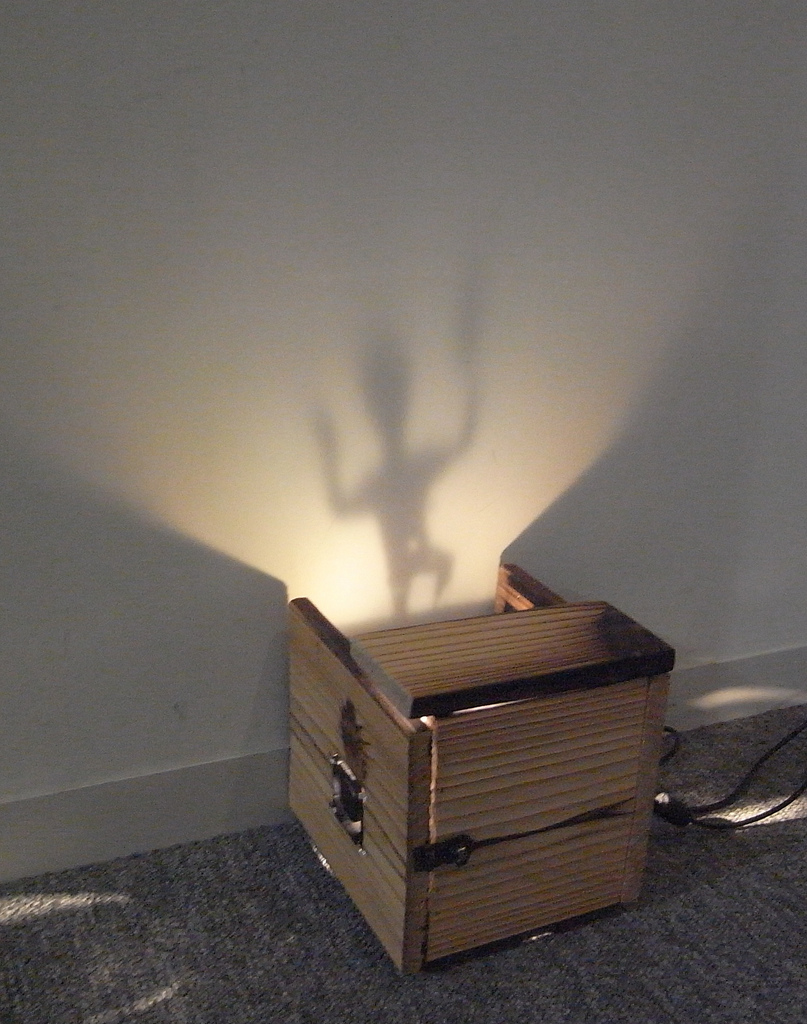
影電話 photo By shokai
Do you know how to use a shadow shield? If you've dropped all your fantasies of being a Ninja and only focus on dojo martial arts, you may have forgotten about what attracted you to being a ninja in the first place. So let's be mysterious Ninja for a moment.

We have a skill, yes, a skill in our training called 遁影 ton'ei. This is sometimes translated as "shadow shield," but there is more subtlety for us to understand. Shadow is not just a nickname for Ninja, it is an aspect of ton'ei no jutsu.

So this is a tactical strategy as well as a mysterious one. For the tactical, you simply fight with the sun at your back so that the opponent is blinded and has trouble seeing you. As Hatsumi Sensei says you are casting your shadow forward. Hiding in the sunlight is the real shadow of budo.

For one mysterious aspect of 遁影 ton'ei, learning this skill can start with kamae. Soke says that even as you stand in any specific kamae, your heart and mind must be in Kage Kamae.  The shadow in this case is what your heart is feeling. From this shadow kamae you may attack hidden targets. One may even use what is called kage no ken or moguriuchi.

In one of the gokui from our Kukishin Ryu Densho we may discover more secrets for this.

月影の いたらぬ里は なけれども 眺むる人の 心にぞすむ
Tsukikage no itaranu sato wa nakeredomo nagamuru hito no kokoro ni zosumu.
 
Though the moon shines all over the world

Leaving no corner in darkness,

Only those who gaze upon the moon

Appreciate its serene light.

This gokui no uta suggests to us that that the shadows and light of the moon exist for everyone whether you gaze on it or not. But only a few appreciate its mystery.

Another version of this poem is
月影の照らさぬ里はなけれども眺むる人の心にぞ住む


"The village, illuminated by the moonlight, exists in the heart of he who looks upon it."

So here is a secret. It exists in the heart. Your kage no kamae exists there. But when you project that shadow forward, it will also exist in the heart of "he who looks upon it."

This shadow projection is like a clone that your opponent perceives as a threat. Then he will be haunted by your shadow as if by 後神 Ushirogami which a type of 妖怪 youkai. One depiction of an Ushirogami shows its front and backside are the same. One of its arms faces forward and the other backwards.

This Ushirogami is connected to 臆病神 Okubyô-gami and will produce cowardice and confusion for your enemy. When he thinks you are in front of him, you are behind. So he turns around, and there is nothing.

As you project this escaped phantom 遁影, your opponent's mind is clouded with regret, anxiety, fear, and anger. This is your shield. It is as easy to hide from his mind as the moon hides behind clouds.

But you may trap yourself if you are not careful. In Japan, some fisherman have a legend of 影ワニ a shark that feeds on shadows. There you are... fishing by moonlight. You see a shadow pass under your boat...

You stand to get a better look. Then you see your own shadow fall across the water. CHOMP! the shark eats your shadow and you are dragged down into the sea or die right there in your boat.
…

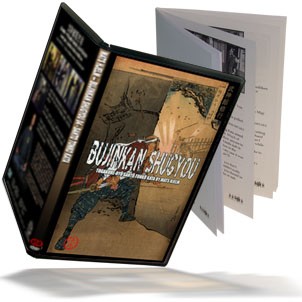
Shugyou#04 TOGAKURE-RYU SANTO TONKO NO KATA with MATS HJELM

From Budoshop by BUDOSHOP.SE

60 minutes, (h.264 M4V/MP4 300p)
20p manual, 499 Mb for $19.99

Available as download or full DVD!

Shugyou, in-depth training and study material. Including video and manual

Santo Tonko no Kata is 9 techniques from Togakure-ryu Ninpo-taijutsu / Ninjutsu. It consists of…

- Three unarmed techniques against an unarmed opponent
- Three unarmed techniques against a sword attack
- Three hidden weapons against multiple opponents

The manual is in Swedish, the instructions on the DVD are in Swedish! The Manual covers the first 8 basic techniques. The manual is 20 pages with 30 pictures and illustrations. All technique names with Kanji. The DVD is 60 minutes

Recorded in Stockholm October 2004

About the instructor

Mats Hjelm started training in Bujinkan for the first time around 1983, but it wasn’t until 1986 he had the opportunity to start training more seriously under a Shidôshi. He attends around 20 seminars, go to Japan 2-3 times every year. Since he started training he never had a training break. He takes his budo training very seriously! If you want to sponsor a seminar or course, please don’t hesitate to contact him. For more information see his web site www.kesshi.com Note!

About the download

Click here for more information about our download files and how it works!…

Shugyou#03 SOJUTSU KAISETSU KATA with MATS HJELM

From Budoshop by BUDOSHOP.SE

54 minutes, (h.264 M4V/MP4 300p)
18p manual, 456 Mb for $19.99

Available as download or full DVD!

Shugyou, in-depth training and study material. Including video and manual

The theme is Soujutsu (Spearfighting), from the level Kaisetsu Kata (Mysterious patterns), some say this is Kukishin-ryu (But I’m not really sure!). However this is the spear forms taught in the Bujinkan system.

The manual is in Swedish, the instructions on the DVD are in Swedish! The Manual covers 8 basic postures, 9 basic techniques, salutations, & articles. The manual is 18 pages with 67 pictures and illustrations. The DVD is 60 minutes

Recorded in Stockholm February 2004

About the instructor

Mats Hjelm started training in Bujinkan for the first time around 1983, but it wasn’t until 1986 he had the opportunity to start training more seriously under a Shidôshi. He attends around 20 seminars, go to Japan 2-3 times every year. Since he started training he never had a training break. He takes his budo training very seriously! If you want to sponsor a seminar or course, please don’t hesitate to contact him. For more information see his web site www.kesshi.com Note!

About the download

Click here for more information about our download files and how it works!…

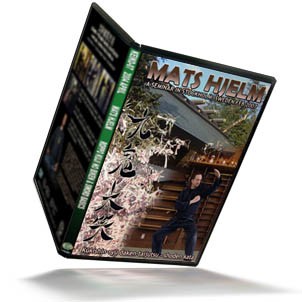
Keiko#18 KUKISHIN-RYU DAKENTAIJUTSU SHODEN KATA with MATS HJELM

From Budoshop by BUDOSHOP.SE

128 minutes, 1.06 Gb for $19.99
(h.264 M4V/MP4 480p format)

Available as download or full DVD!

This movie contains all 12 techniques from the Shoden kata level of Kûkishin-ryû dakentaijutsu. There is also a few sword techniques and drills, plus extra material showing how to put on the yoroi (samurai armor).

Shortly after returning from 3 weeks training in Japan with Soke and the Shihan, Mats held this seminar. He taught the Shoden level, here we learn how to dodge attacks through a series of throwing attempts, grab and punch situations, and defenses against kicks and punches.

Kukishin-ryû is a very complete system, if you study the basic techniques well you will have a good defence system against any kind of attacks. On the Keiko#19 DVD, also the Chuden, Sabaki and Okuden levels is taught but with less details.

Recorded in Stockholm February 2007
The instructions is in English and there is some subtitles explaining things which is not obvious.

About the instructor

Mats Hjelm started training in Bujinkan for the first time around 1983, but it wasn’t until 1986 he had the opportunity to start training more seriously under a Shidôshi. He attends around 20 seminars, go to Japan 2-3 times every year. Since he started training he never had a training break. He takes his budo training very seriously! If you want to sponsor a seminar or course, please don’t hesitate to contact him. For more information see his web site www.kesshi.com Note!

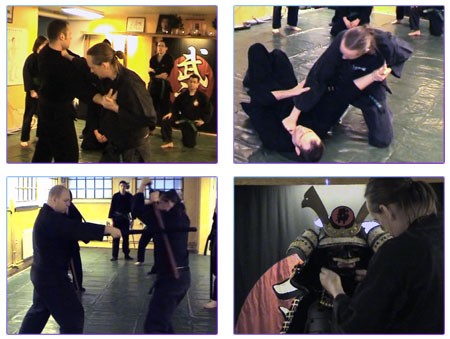
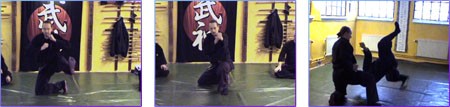
Keiko18Captures

About the download

Click here for more information about our download files and how it works!…

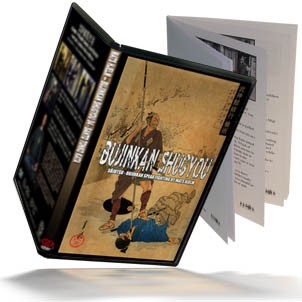
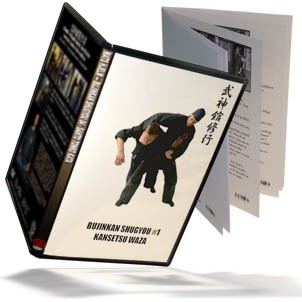
Shugyou#01 KANSETSU WAZA with MATS HJELM

From Budoshop by BUDOSHOP.SE

Shugyou01
35 minutes (H.264, 300p)
20 p manual, 257 Mb for $19.99
Available as download or DVD

Shugyou, in-depth training and study material. Including video and manual

The video is 35 minutes and covers all the basic locking techniques from the manual.

The manual is in Swedish, the instructions on the VCD are also in Swedish! The Manual covers 32 basic locking techniques, fingers, hand, arm, foot, leg, spine and head locks are explained. The manual is 20 pages with 44 pictures.

Recorded in Stockholm, Sweden February 2003

Sample clip

About the download

Click here for more information about our download files and how it works!…

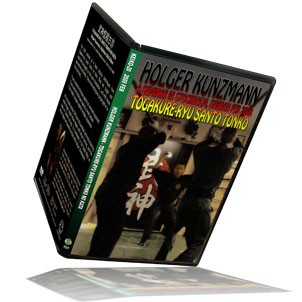
Keiko#20 TOGAKURE-RYU SANTO TONKO NO KATA with HOLGER KUNZMANN

From Budoshop by BUDOSHOP.SE

keiko20
152 minutes, 1.29 Gb for $19.99
(H.264, 480p)
Available as download or DVD

This years theme was Togakure-ryu Ninjutsu/Ninpo-taijutsu and Santo Tonko no Kata

Shortly after returning from training in Japan with Soke and the Shihan, Holger held this seminar in Kaigozan Dojo, Stockholm, Sweden. This movie contains all 9 basic taijutsu techniques from Togakure-ryu Santo Tonko no Kata. They are taught and explained thoroughly as the basic foundation, and with many applications and henka. These nine techniques can be split in to three sections…

- Three unarmed techniques against an unarmed opponent
- Three unarmed techniques against a sword attack
- Three hidden weapons against multiple opponents

The last 30 minutes on this movie Holger went through some sword basics. Basic way of cutting, drawing the sword and more. All these techniques are explained and taught in detail.

Note: The instructions was in English.

Recorded: in Stockholm February 2008

About the Instructor

Holger Kunzmann’s main interest in Bujinkan is the basics. And he has become quite famous for his excellent taijutsu and very good knowledge and skill of the basics in Bujinkan. If you want to sponsor a seminar or course, please don’t hesitate to contact him. For more information see his web site Holger’s web site… http://www.bkd-reutlingen.de

DSC02008 DSC02013 DSC02259 Holger DSC02076

About the download

Click here for more information about our download files and how it works!…

Keiko#17 BUJINKAN SWEDEN SEMINAR with MATS, THOMAS, TOMAS, ANDREW

From Budoshop by BUDOSHOP.SE

keiko17
137 minutes, 915 Mb for $19.99
(H.264, 480p)
Available as download or DVD

This years theme was Shindenfudo-ryu Dakentaijutsu Happobiken, Taijutsu & Sword – (Bujinkan sword basics & advanced).

Thomas Franzén - Shihan 15th Dan Taught Kukishin-ryu dakentaijutsu from his recent Japan trip in January. Instructions in English.

Tomas Andersson - Shihan 10th Dan Taught Shindenfudo-ryu dakentaijutsu from his recent Japan trip in 2006. Instructions in Swedish.

Andrew Young - Shihan 14th Dan Taught Shindenfudo-ryu kenjutsu from his many years of living in Japan. Instructions in English.

Mats Hjelm - Shihan 13th Dan Taught Kukishin-ryu dakentaijutsu from his recent Japan trip in January. Instructions in Swedish.

Note: The instructions was in English or Swedish.

Recorded: in Sundsvall February 2007

Sample clip

About the download

Click here for more information about our download files and how it works!…

Keiko#16 SHINDENFUDO-RYU HAPPOBIKEN (part 2) with MATS HJELM

From Budoshop by BUDOSHOP.SE

keiko16
120 minutes, 1.02 Gb for $19.99
(H.264, 480p)
Available as download or DVD

This years theme was Shindenfudo-ryu Dakentaijutsu Happobiken, Taijutsu & Sword – (Bujinkan sword basics & advanced).

The theme of this DVD is understanding the natural body movement in fighting. Included on this video is taijutsu techniques (unarmed fighting). This video includes techniques from all the levels of Shindenfudo-ryu, Ten/Chi/Shizenshigoku no kata. Unarmed defences against punches, kicks and grappling situations. Tachi-waza (standing techniques) and Chi-waza (ground fighting techniques). Weapons are also included in most of the techniques.

Two techniques from Gyokko-ryu was also studied thoroughly.

Note: The instructions was in Swedish.

Recorded: in Stockholm October 2006

Keiko16Captures

Sample clip

About the download

Click here for more information about our download files and how it works!…

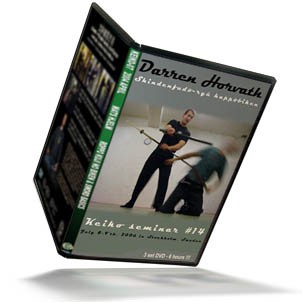
Keiko#14 SHINDENFUDO-RYU HAPPOBIKEN with DARREN HORVATH

From Budoshop by BUDOSHOP.SE

keiko14
380 minutes, 4.6 Gb for $34.99
(H.264, 480p)
Available as download or DVD

This years theme was Shindenfudo-ryu Dakentaijutsu Happobiken, Taijutsu & Sword – (Bujinkan sword basics & advanced).

The theme of this DVD is understanding the natural body movement in fighting. Darren taught many techniques from Shindenfudo-ryu and the feelings of Iken-hassô, Biken-isshun, and much much more. There is three dvd’s in this box set…
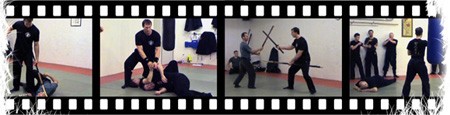
You can buy the download files separately or all three for a good discount.

DVD1 Ten no kata (160 min, 1.98 Gb)
Buy this for $19.99

DVD2 Shizenshigoku no kata (130 min, 1.57 Gb)
Buy this for $19.99

DVD3 Bikenjutsu + Naginata + Q& A (90 min, 1.06Gb)
Buy this for $14.99

Or buy all three for $34.99 and save $19.98

Recorded: Recorded in Stockholm July 2006


About the download

Click here for more information about our download files and how it works!…

Mutô Dori is Butô Dori

From Shiro Kuma's Weblog by kumablog

The last Japan trip during the Sakura season was full of  insights, and I did my best to share them with my buyu in India, France, and Hungary.
Image

Teaching after being taught is always a challenge as we never feel confident after a Japan trip. Will it be good enough? Will the explanations make sense? Did  we really understand what sensei meant? But as always in the Bujinkan, I used the 忍法一環 ninpô Ikkan, the  “keep going” attitude and  I did my best.


In India where I stayed two weeks, I had time to settle down and to “polish ” the feelings stolen in Japan. The group in Bangalore being a mix of beginners and Shidôshi we began with the sanshin no kata that we rapidly adapted to the tsurugi. Shiva and his team had done a nice job by making available enough wooden tsurugi for eveyone. India is incredible* and the buyu here know how to do things correctly.


In France, as the group had been training extensively with Hughes on the tsurugi we spent a more time putting more taijutsu into the sword techniques because taijutsu is the real teaching of this year and we began to okay with the conceit of Mutô Dori . But I come to that later in the text.


Then in Budapest, we did something so different that in fact my whole taijutsu with the tsurugi improved a lot. When this seminar in Budapest was planned by Balazs, he made a funny request: “Arnaud do you think it is possible to cover the concepts that sensei had been doing for the last twenty years during a weekend seminar? “. “Sure” I said and it was the deal…


But to be honest it is only on the week prior to the seminar that I began to be concerned about feasibility and that I understood the complexity of the request. I have been in the Bujinkan for so long that remembering all these yearly themes would not be difficult, but how to make it look like a logical evolution and squeeze twenty years of concepts in only two days?


I think that everything is happening for a reason, and for me sensei unfolded gradually a path that we followed blindly not looking back (if you’re blindfolded looking back is useless anyway). Now as I tried to transmit the logical beauty of sensei ‘s vision, I understood the reason why we are studying the tsurugi this year: we are using the tsurugi because there is no way we can reproduce something we know, or adapt it from another base of knowledge on the things we have already studied. No other weapon we know in Japanese martial art can be used, the tsurugi is the ancestor of everything. The tsurugi is the beginning and the end; the alpha and the Omega of martial art; the A-Un.


I understood that what we do with the tsurugi really doesn’t matter because what is fueling the movement is not a weapon or a waza, what is making it work is the quality of our taijutsu. Only with a good taijutsu can we move correctly with the tsurugi. I exchanged a few messages with Duncan recently and we both agreed on this.


With the tsurugi we move with our guts, our body movements take over the permanent mental analysis giving birth to a subtle way of fighting. The movement works because it is natural and not hindered by any intention. In a way we can say that 劍 tsurugi being our body, our “guts” allow 津 腹鳴, tsurugi (or the haven where everything is processed) to be expressed. Remember that in Japan the XXX hara (belly ) is where the spirit is located.


Taijutsu is the theme for this year and this is why sensei has insisted on the importance of Mutô Dori during in his recent classes. But the problem is that Mutô Dori can, theoretically, only be done when you have no weapon in your hand. This is the key. We do Mutô Dori with the tsurugi in hand because this is only taijutsu and nothing else. The quality of your taijutsu is what gives life to the blade, but the blade is not doing any technique, footwork and body movements do it. There is no thinking it is body (belly) movement.


If you understood me so far then we can dig a little more into a few things that sensei explained in class.


Tenchijin is one – or 3 = 1
Sensei said that we had to keep the Tsurugi at hip level.
Hips are Jin therefore the blade can move freely between Chi (legs/lower body) and Ten (arms/upper body). Taijutsu is foot and finger, and the sword via the spine is linking the three. We move like One by the sword. Like the sword of Fudô, the Tsurugi connects man to the divine.


“Shinshin shingan” the “eyes and spirit of the gods” said sensei during training but Shingan is also 真贋, (authenticity); and Shinshin being also 心身 (body and mind) we can understand that Tsurugi is the way to become fully authentic with our body and mind. Tsurugi is the tool to achieve that. By moving freely in our Taijutsu we clean ourselves from intention. Tsurugi is alive and protects us as if the sword has its own perception of reality, a reality that cannot be perceived by our human senses. This is juppô sesshô.


There is no sword, there is  only natural movement, and this is Taijutsu.
The historical sword was called Kusanagi no Tsurugi: the sword that “cut the grass”. The grass can be seen as our intentions, as well as uke’s intentions. Like the Ken of Fudô Myô, the blade cuts our illusions and help us to get rid of falsehood to stay on the correct path. This is the most beautiful thing that Hatsumi sensei has given us and we should be thankful for it. Training with the tsurugi makes our taijutsu more authentic, more powerful also as we are deprived from any intentions; we are free to move according to nature with no preconceived idea.


Last year sensei said that Budô was Mudô, therefore Mutô Dori is also Butô Dori 
Bu is mu 武, and Tô is 刀 sword or 道 way but Tô 闘 is fight. So Mutô is Butô:  武 道 is 武 闘. Then Mutô Dori (“grabbing” the way of war) is in fact Butô (seizing the fight).


Mutô Dori is the Gokui, the essence of Budô. The Gokui is always simple and formless in its manifestation, but it is difficult to make it simple. When using the tsurugi the movements are the result of taijutsu nothing else. The blade moves by itself following what the body is creating in the Kûkan. As the Zen master Takuan said (see previous entry): “I do not see the enemy, the enemy doesn’t see me” and this is because we do not try to do anything specific. When contact is established we flow like water, as if we were surfing on top of uke ‘s waves of intention. The tsurugi is only the metallic extension of our body. We don’t think the movement, we don’t think the weapon, we don’t think the opponent.


We 突き詰めません tsukitsumemasen, we “don’t think”, we adapt with Mutô Dori as our natural expression.


In the sermon on martial arts Chozanshi says that: ” a teacher can only transmit a technique or enlighten you to the principle, but receiving the truth of the matter is something within yourself. (…) grasping it on one’s  own is always a matter of transmission from mind to mind. It is a special transmission beyond the scriptures. ”


As sensei puts it, we have to learn how to read between the lines and the Mutô Dori of this year is giving us exactly that.


Just do it * *


*This is the motto of the national advertizing campaign. http://www.incredibleindia.org/
* * like in the Nike expression. “Niké” in Greek is the goddess of victory so “just do it (without thinking) and victory will be yours.


…