Skip to content

How to Attack the Kyūsho, 強経 Kyokei

From Bujinkan Santa Monica by Michael

踩上一脚 photo by 大杨
Last night in class the kata I was teaching required you to stomp down on the kyūsho 強経 kyokei. This is supposed to move your opponent and open him up for the rest of the kata. The way most people teach this is to stomp the ground like a Maori tribesman.

Stomping like a polynesian warrior or bratty child is the omote way of doing this technique. This means it is obvious and easily seen or countered. And if this is all you put behind this strike, many opponents will not be moved.

What I have learned from Hatsumi Sensei is to accomplish more with less. Exist inside of nothingness, he says. Be able to move from there.

The Japanese text of the kata we were studying says 強経を強く踏み付けると. This suggests breaking through the strength of the opponent by stomping this 急所 kyuusho, kyokei. First, let's see where this kyūsho is located.

強経 kyokei is above the five toes of the foot. A strike here attacks the strong tendons on top of the foot. This creates an ataxia which will "open up" or cut through your opponent's defenses.

Here is some 要 kaname


This same point is considered 要衝 youshou for acupuncture. 要衝 youshou can also be read as piercing through kaname. It is interesting that the kanji in 経穴 keiketsu, or acupuncture point, may also be read as passing through an opening.

and now some 口伝 kuden


The way I have learned to open up and cut through is not by stomping and relying on ataxia. That is part of it, sure. But a better way is to use the connection through what Hatsumi Sensei calls 玉の緒 Tamanoo.

Soke tells us that this is the lifeline or thread of life and also the same connection that is used when giving the Godan test. This is what moves the person out of the way of the sword. So that is the way I would attack kyokei.

Do you think that would be enough to move your opponent?


PS. this is the type of information I share in my exclusive Keiko Kiroku training notes. To get in on this, sign up here: Keiko Kiroku
…

Mushin is Sanshin

From Shiro Kuma's Weblog by kumablog

Image

Following his logic of Mutô Dori being Butô Dori, Sensei in a recent class said that “Mushin is Bushin (Bujin)”. 

As you know, the word “Bujinkan” is sometimes written as “Bushinkan” (in the old translations form Japan). 
 
This opens up a new series of possible interpretations.
As we know 無 is pronounced Mu or Bu and this allows sensei to play with the words as the sounds are similar.
 
So if Bu 無 replaces Bu 武 in Bushinkan, then the “house of the war god” becomes the “place where we learn to have no intention”. Maybe this is what sensei want us to understand when he speaks about “natural movement”?
 
But as I was not attending this class my guess is as good as yours.
In fact, there are many possible other interpretations with those sounds.
 
Hereafter I wrote the ones that are the most logical for me:
  • Bushin the normal one: 武神 = god of war
  • Bushin the human one: 武人 = military man:
  • Bushin the new one: 武心 = warrior heart/spirit
  • Bushin another one: 無神 = god of nothingness
  • Bushin another one:  無人 = non human
  • Bushin another one: 無心 = no spirit
Funnily “六”, “6″ can also be pronounced Mu, and there are 6 logical interpretations above!  But it is only a chance as Mu has (at least) 13 different meanings, Bu 19 , Jin 18 and shin 36!
If we take the general accepted meaning for Mushin 無心  of “no spirit” we have to understand also that in spirituality it also refers to “innocence” or “(to be) free from obstructive thoughts”. When you reach the state of Mushin, you are like this 3 year old infant acting without preconceived idea. Which is the true Sanshin. 
 
So let’s consider “Mushin” as being “6+spirits”, as “6″ is shiki 識 (consciousness) which is the sixth element, then the objective of the bujinkan is to reach the level of consciousness where natural movement can be expressed without thinking. 
 
All these understandings being possible, this is why we can say that Mushin is Sanshin!
(sorry for the headache)

…

TAIKAI PARIS 2013

From Shiro Kuma's Weblog by kumablog

ImageImage


Like every year since 2004 you are invited to join us and attend the Yûro Shi Tennô Taikai in Paris, the legendary 3 day taikai!

Peter, Sven, Pedro and Arnaud will share, during 3 full days, their insights received this year in Japan.

The main theme of this Taikai will revolve around  the Tsurugi (don’t forget your Chinese sword) but will insist a lot on the following ideas:

  • Natural Taijutsu
  • Mutô Dori (Butô Dori)
  • Bushin (Mushin)

As always sleeping is for free at the dôjô and the meals made by Jean-marie our  ”chef” are included. Read more about it on the website

Don’t miss this fantastic opportunity to train directly with the Shi Tennô!

Registration (mandatory) at budomart


…

Kaigousuru-3 1999 Taikai

From New Products from Budo Shop Store by New Products from Budo Shop Store

Title: Kaigousuru 3 - the third International Bujinkan Training Party!

Instructors: Pedro Fleitas

Theme: Bujinkan Taijutsu & Hanbo Jutsu

DVD/R, Length 160 minutes

Recorded: Recorded in Stockholm, Sweden October 1999

DISCLAIMER!!! The picture and sound quality is not \"DVD Quality\". It was converted from video VHS. Pedro speaks mostly Spanish and it is translated into Swedish, sometimes he speaks English.

The theme of this year was Kukishin-ryu Taijutsu. Mr. Brooks \"Bing\" Ford who was a well known and respected 10\'th Dan in Bujinkan passed away 88 years old sept. 24\'th 1999. Mr. Ford\'s favourite weapon was the Hanbo (short/walking staff). Pedro dedicated this seminar to Mr. Ford and taught a lot of Hanbo techniques. Mr. Fleitas is one of the best teachers in Bujinkan with an astounding flow and timing, here he is in top form. Don\'t miss the special bonus included!

Skr239.00

…

An Authentic 妙法 Myouhou: Transcendence Disguised as Injury

From Bujinkan Santa Monica by Michael

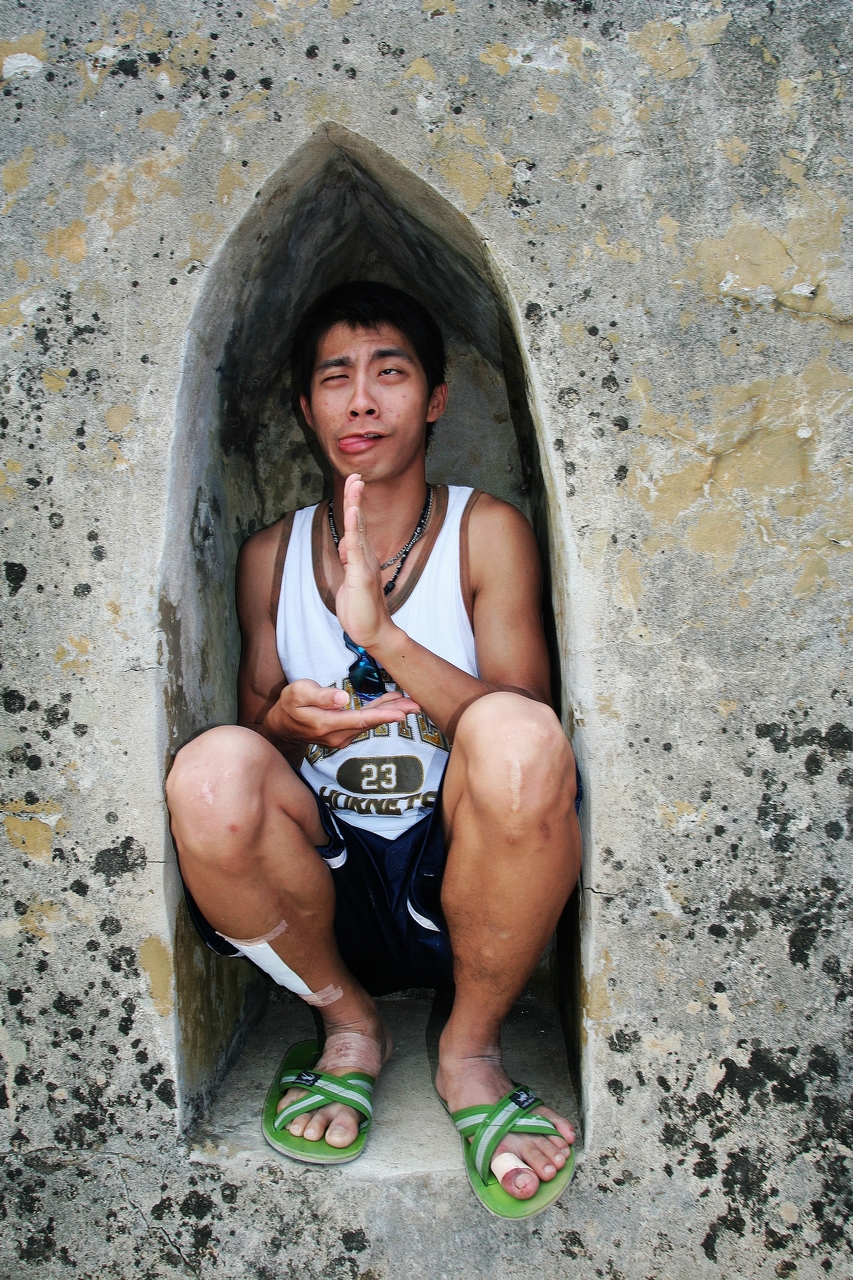
砲台~十八羅漢~猴子( 全身是傷 ) photo by houliuken
If you are athletic, or train hard like I do, you will face the problem of being injured at some point. At first this feels like, why me? Why now?

But then if you are like me, you get to work finding a way to move forward, overcome this obstacle and to heal. You can solve this problem. And maybe, if you approach this problem properly, you will encounter the same wonderful mystery I have. Let me explain.

I train when I'm injured. I do this because the nature of life means there will always be encumbrances to peak performance. I want to be able to adapt when I encounter those obstacles.

But there is another, better reason I have discovered. The kind of discovery that may only occur while training injured. While I was in pain and feeling gimpy one night, I had a flash of inspiration:
Constraints on free movement can open up infinity.
This is an authentic 妙法 myouhou, or mysterious law in life, art, and training. The greatest lives are lived through obstacles. The best art burns through boundaries on expression. And the freest training can be discovered and enjoyed through constraint, injury, disability, or impediments.

If you have experienced this directly, you may know what I mean even though it is difficult to describe. It's like that by adapting, overcoming, or training through the injury will open up new horizons and possibilities you did not know were there before. Without the injury, you would not be forced to find this new path, so it wouldn't even exist for you.

And your world would be smaller. And your training would be stuck on the same path as it usually is.

On this night my struggle was a knee injury. And it forced me to hop about and pivot on one leg. I had to capture my opponent's balance and throw him without great strength or control over my own balance.

Then I remembered something mysterious I had seen from Hatsumi Sensei. He seemed to be throwing his partners around not with physical effort on his part, but by disturbing their psyche or spirit. I held this image in my mind of watching Hatsumi Sensei throw someone using only the smallest gesture of his hand.

Then I began to discover a whole new world of control by playing with how my uke reacted to my strange movement. It began as simple playful distractions. But over time this exploration has led to defeating my opponents through 繋がり tsunagari. And even by a broader connection to the kukan itself.

You see, there was an infinity in training that I discovered hidden behind and through my injury. My knee has healed. A couple of years have gone by, and I still am unwinding discoveries that arose from that night and that constraint that changed the way I train.

In my blog post, Kihon: The Heart of an Infinite Circle, I wrote about this concept. Hatsumi Sensei says that kihon is like thrusting your sword into a point about which there is an Enso or limitless circle (happo) and existing in the space is the kukan.

Do not forget this mystery. Embrace it. Find teachers who embrace it rather than putting training in a box.
Here's a hint: Teachers with VERY  strong opinions about the right and wrong way to train are trapped in a box.
The best Bujinkan training adapts to you. You should not have to adapt to the training. The world doesn't need another Bujinkan teacher. We already have great ones! What the world needs is training that shows people how to truly bring their own authentic self and demonstrate that value in our art.

This is achieved through a depth of self awareness that you may only discover under adverse conditions.

This is the transcendent mystery of overcoming your own limitations.…

Mutô Dori Hiden

From Shiro Kuma's Weblog by kumablog

2013-03-23 09.44.22
In my previous entry I tried to establish that Mutô and Butô were identical. As always I got messages criticizing the article I put online to share with the bujinkan community.
In his books, Hatsumi sensei is often playing with the various possible meanings of a given Japanese term.

Even though I tried to state it clearly, some were very critical about Mutô Dori not being only a technique done when you have no weapon. So here are a few more explanations that might shed some light to my previous explanations.

“Many people think that Mutô Dori is about the opponent wielding a sword while you have none, but this is not the case. Even if you have a sword, Mutô Dori starts with the development of the courage to face an opponent with the preparedness of not having a sword.
This means if you don’t thoroughly train in taijutsu you will not obtain the knowledge of the refined skill of Mutô Dori. Therefore, you must first know the purpose of the path of training. If you are unaware of this and proceed down the path of thinking that sword training is only about cutting and thrusting, then there is a danger that you will go down the path of the evil sword. The sword harnesses a pure essence that is life-giving – one who cannot live the way of the sword saint will foolishly think that the sword is only a tool for cutting. Those who do this can never achieve enlightenment.

The warrior’s heart is ruled by preparedness, and nature’s heart, or god’s heart, is fundamental. The heart also governs the warrior’s physical kamae. Therefore if there is no unity in spirit and body, you will never understand the reason for being a martial artist. You will leave no vulnerability or opening (suki) if you remain consistently prepared.(…)
Many people do not fully understand Mutô Dori, and believe it is simply the knowledge of defending against a sword attack, but I would urge you to understand that it is the mind and skill of disarming the opponent, whether they wield a yari, naginata, bô, shuriken, or gun.

You must understand the mind of “ten thousand changes, no surprises” (Banpen Fûgyô), and attain the knowledge of Mutô Dori in response to infinite variations.
Attaining knowledge of real Mutô Dori means you will earn the protection of the gods.”

I hope that this text clarifies definitely the previous entry of this blog.

The text above is taken word for word from Hatsumi Sensei’s book “Japanese sword fighting”, pages 64 and 65 (published 2005 by Kodansha).
We will cover this aspect of the Chinese Ken and Mutô dori Hiden during the next Yûro Shi Tennô Taikai in Paris. The taikai will be held as usual in Vincennes (Paris) from Friday 12th to Sunday 14th of July. If you feel like joining us, please register here

…

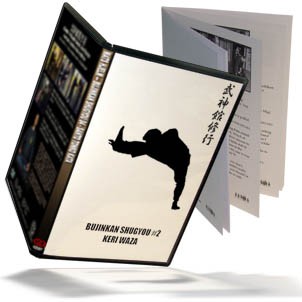
Shugyou#02 KERI NI TAISUKU WAZA with MATS HJELM

From Budoshop by BUDOSHOP.SE

Shugyou02
54 minutes (H.264, 360p)
22 p manual, 658 Mb for $19.99
Available as download or DVD

Shugyou, in-depth training and study material. Including video and manual

The video is 54 minutes and the first section covers 20 Keri Waza (kicking techniques) from the Bujinkan Budo Taijutsu system.

The other section of this video covers 11 Keri ni taisuku waza counter techniques against kicking attacks from the Ten Ryaku no Maki.

The manual is in Swedish, the instructions on the DVD are in English! The Manual covers 20 basic kicking techniques, 11 counter techniques. The manual is 22 pages with 68 pictures.

Recorded in Stockholm, Sweden October 2003

Sample clip

About the download

Click here for more information about our download files and how it works!…

Shugyou#06 BOJUTSU KEIKO SABAKI KATA Vol.1 with MATS HJELM

From Budoshop by BUDOSHOP.SE

BOJUTSU KEIKO SABAKI KATA Vol.1 with MATS HJELM


Keiko Sabaki kata + Bonus (h.264 M4V/MP4 480p)
100 minutes, 1.6 Gb for $19.99
Buy the full DVD, click here!

Or buy them separately


Keiko Sabaki Kata 1-10
80 minutes, 1.2 Gb for $15.99

Bonus material, fighting in Yoroi
20 minutes, 423 Mb for $6.99

Kukishin-ryû Rokushaku Bôjutsu – Keiko Sabaki Kata Vol.1.
Recorded in Eskilstuna, Sweden – April 2005

This is the second seminar about the Rokushaku Bôjutsu (six foot staff fighting) and covers the first 10 basic waza from Kukishin-ryû Keiko Sabaki Kata. First the basics is taught, and then the technique is brought alive with realistic examples and responses from the defending opponent. The material from the seminar is 80 minutes and 10 techniques.

Techniques covered in depth on this video is the first ten from the Sabaki Kata

1 GOHOU
2 URA GOHOU
3 SASHI AI
4 FUNABARI
5 CHOU NO ISSOKU
6 URA NO HITO ASHI
7 SUSO OTOSHI
8 URA SUSO OTOSHI
9 IPPON SUGI
10 TAKI OTOSHI

The remaining 15 techniques is scheduled to be recorded this summer 2013…

Note: The instructions is in Swedish with sub titles in English.

Note2: There is no manual with this video like previously in the Shugyou series.

Note3: The DVD also includes a 20 minutes bonus material from a training with Yoroi (samurai armor). It includes ukemi with yoroi, Bojutsu against the Yoroi, and unarmed fighting against the Yoroi. As download you can buy just this one if you want.


Trailer

http://www.youtube.com/watch?v=m7ZFNmPDL1U

About the instructor

Mats Hjelm started training in Bujinkan for the first time around 1983, but it wasn’t until 1986 he had the opportunity to start training more seriously under a Shidôshi. He attends around 20 seminars, go to Japan 2-3 times every year. Since he started training he never had a training break. He takes his budo training very seriously! If you want to sponsor a seminar or course, please don’t hesitate to contact him. For more information see his web site www.kesshi.com Note!

About the download

Click here for more information about our download files and how it works!…

The Bold Magic of Sutemi

From Bujinkan Santa Monica by Michael

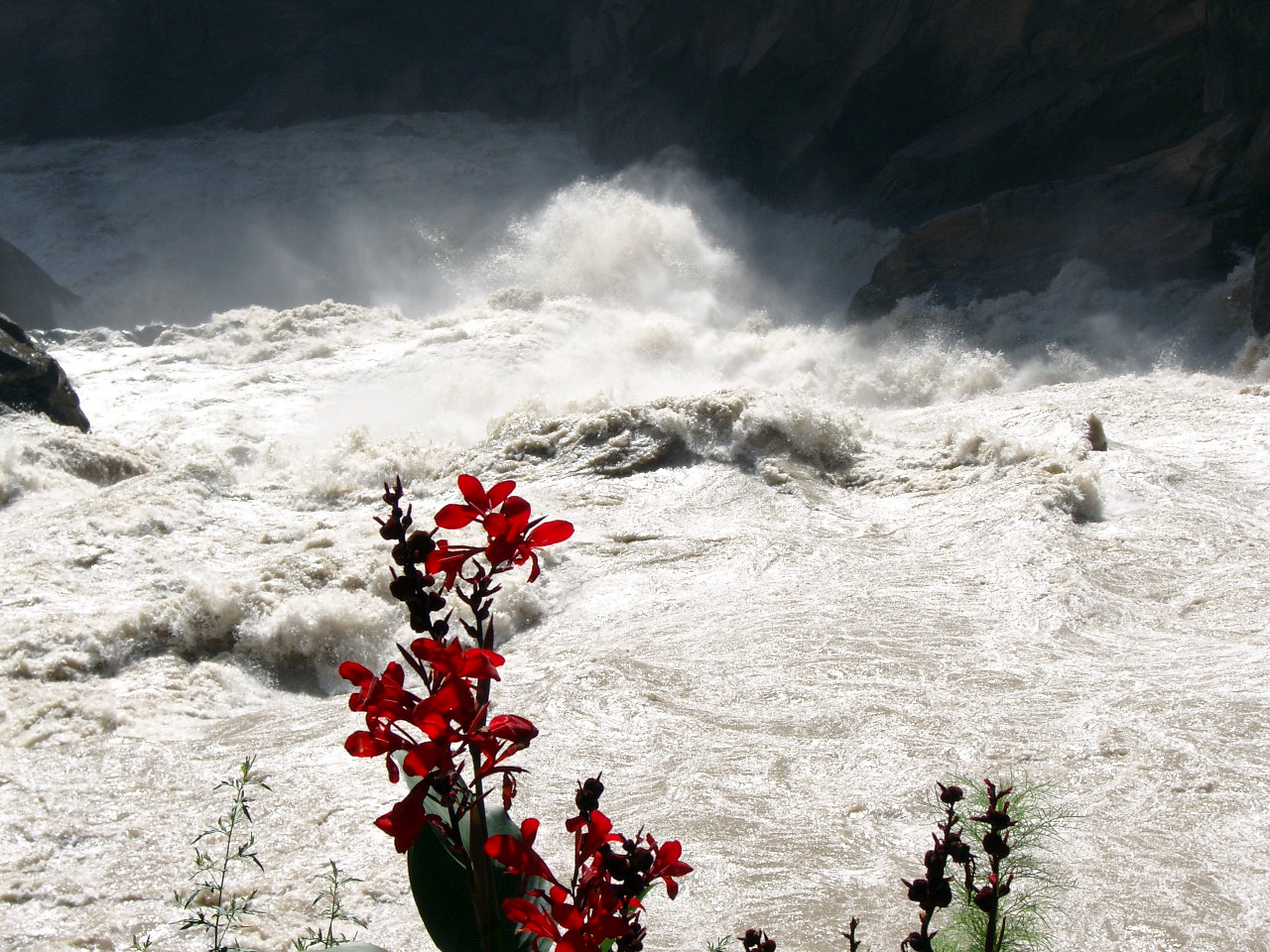
滚滚江水 Torrential photo by livepine
There is a bit of magic in the Gokui we find in the history of our art. This magic can help us with training or in our own lives. One that Hatsumi Sensei has shared with us says,
からまれて何にーっの勝手なし、身を捨ててこそ浮かぶ瀬もあれ
Like many ideas in Japanese, there is more than one way to translate this into English. Two that I've heard are:
When you become entangled, there can be no victory. By sacrificing yourself, you have the chance to be saved;
or, with no thought of one's self, float in the torrent by throwing oneself in.
In English we have similar sayings like: nothing ventured, nothing gained; make your own luck; put your life on the line… commit totally; Risk it all to win it all.

These ideas show the power of being fully committed, but where does the magic enter in? Well some other translations hint around this: When you are ready to sacrifice yourself, you may succeed; by rejecting the body comes opportunity; It is those who sacrifice themselves that will be rewarded with rising currents.

A clue for us can be found in the word 浮かぶ瀬 ukabuse found in the second part of this gokui. This word suggests good fortune or a lucky break when one floats or rises to the surface of the flood. The luck that arises from sutemi! What is this magic source of luck?

I would posit that it is found in the flow of whatever current that you leap into. Whether an actual river, the flow of combat, or the current of events. Consider this famous piece of advice often attributed to Goethe but more than likely by William Hutchinson Murray,
“Until one is committed, there is hesitancy, the chance to draw back. Concerning all acts of initiative (and creation), there is one elementary truth, the ignorance of which kills countless ideas and splendid plans: that the moment one definitely commits oneself, then Providence moves too. All sorts of things occur to help one that would never otherwise have occurred. A whole stream of events issues from the decision, raising in one's favor all manner of unforeseen incidents and meetings and material assistance, which no man could have dreamed would have come his way. Whatever you can do, or dream you can do, begin it. Boldness has genius, power, and magic in it. Begin it now.”
So I'll give you two final bits of 諺 kotowaza wisdom. One for the Bold,

小さな流れも大河となる Small streams too grow into large rivers.

And one for the cautious,

浅き川も深く渡れ Cross even shallow rivers as though they were deep.
…