Skip to content

弁財天 Benzaiten, the Prayers of Prostitutes, and Snakes in a Shrine

From Bujinkan Santa Monica by Michael
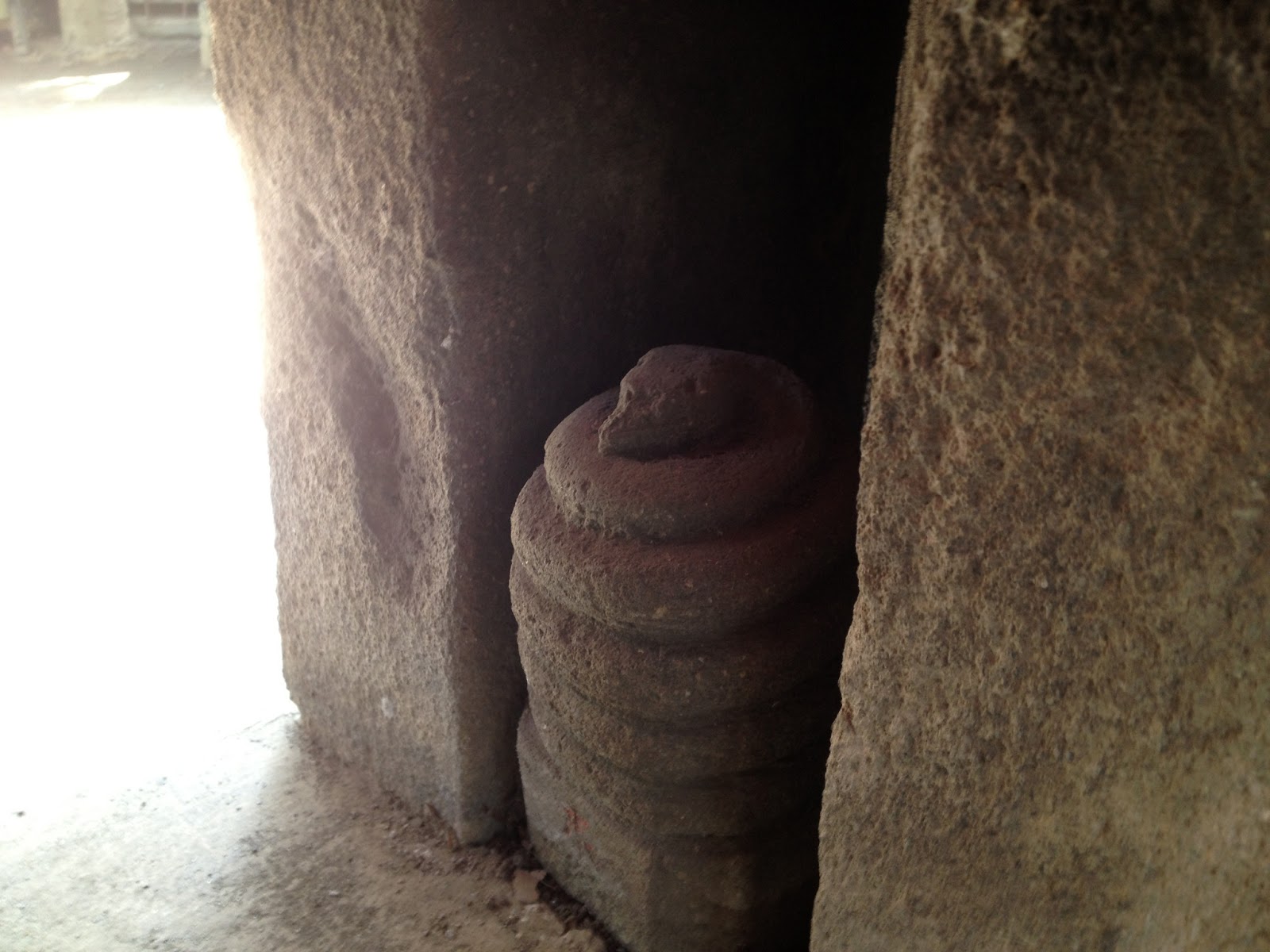
Hidden Underground Snake, 池田弁財天 Ikeda Benzaiten
Today  I went on a search for the underworld that is (not so) hidden in Japan. This search involves prostitutes and their secret shrines. And the furtive 遊女の祈願 prayers harlots say on the day of the snake to stay free of disease and wash their money.

All I had were some clues from a mysterious local who we can call deepthroat. My man on the inside said that there was a place hidden nearby where two snakes would turn piles of shit into gold. What sort of miracle is this, I wondered. Then he went on to explain the miracle of the Hindu deity Saraswati and her Japanese Shinto/Buddhist mutant cousin known as Benzaiten.
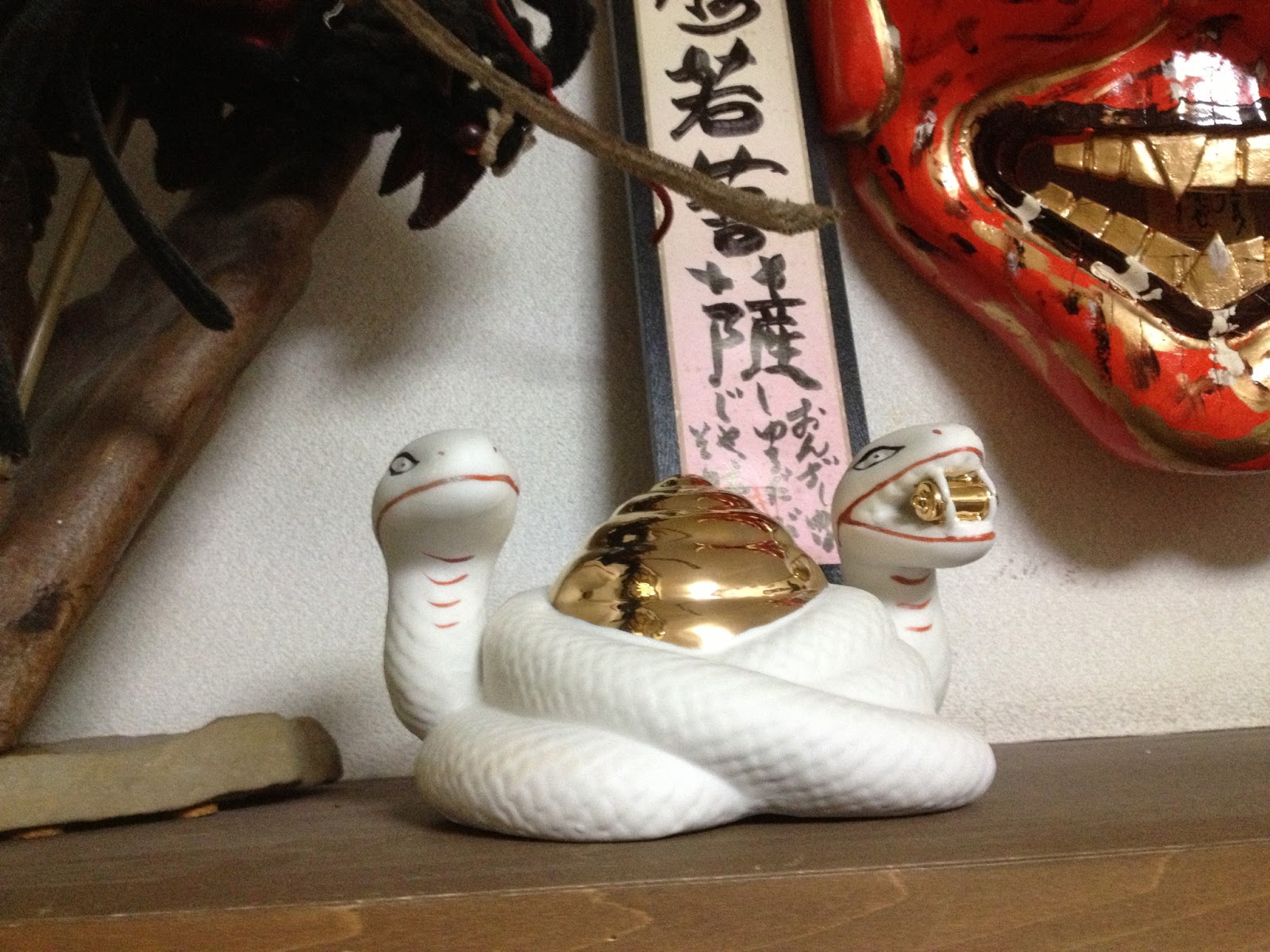
Benzaiten symbol in Bujinkan Hombu Dojo


I didn't know it when i started my search, but Hatsumi Sensei had just added the same symbol to the Hombu dojo a few days ago. And I couldn't turn down a search for evidence of the 平潟 遊郭 Hiragata red light district. Even if people say it no longer existed. Something was leading me to explore.

The train ride was easy, one stop on the 常磐 Jōban rapid. Then I exited the station into the neighborhood. The heat and humidity have been overwhelming. So i wanted to orient myself quickly so as not to add to my trek. Of course I couldn't go around shouting, "Hey, does anyone know where the prostitutes hang out?"

I found the closest landmark on the map my source had given me. The Keiyo gas building. A nice woman told me I was on the wrong side of the tracks. On the other side, a friendly policeman looked at a map with me, but he couldn't help me. I knew I was in trouble when he tried to stop random people walking by to ask them for directions. Doesn't anybody know where the whores are?

You see, the feminine creative energy represented by Saraswati, 弁財天 Benzaiten or her Shinto sister Ichikishimahime, is often an undercurrent in people's lives. And even though this energizes our training, Japanese culture and humanity, it is dangerous to those in power. So it remains in dark, quiet places. Or sometimes in hidden plain sight.

The heat was getting to me. I became distracted with other sightseeing. I let go of trying to find any working girl holy sites today. Then, like a mirage seen through the hot and steamy city, I found myself passing through a crack in the city. Through a love tunnel of 鳥居 torii. To be reborn.

Here I was at 池田弁財天 Ikeda Benzaiten. Surrounded by snakes.
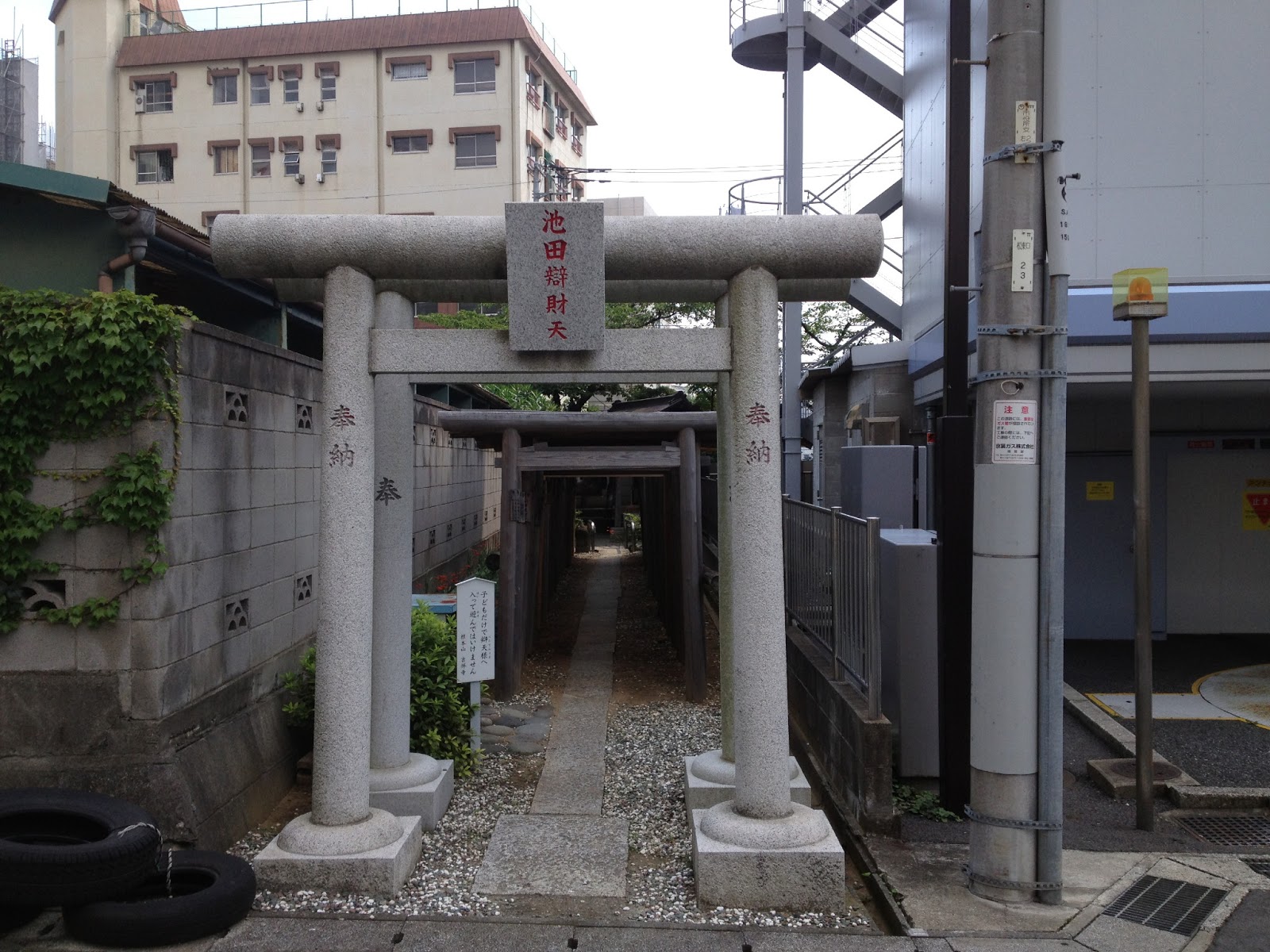
池田弁財天 Ikeda Benzaiten


The tunnel passes tightly between two buildings. The torii are very short so that you must bow as you shuffle along in their shadows. On the other side I could hear flowing water.
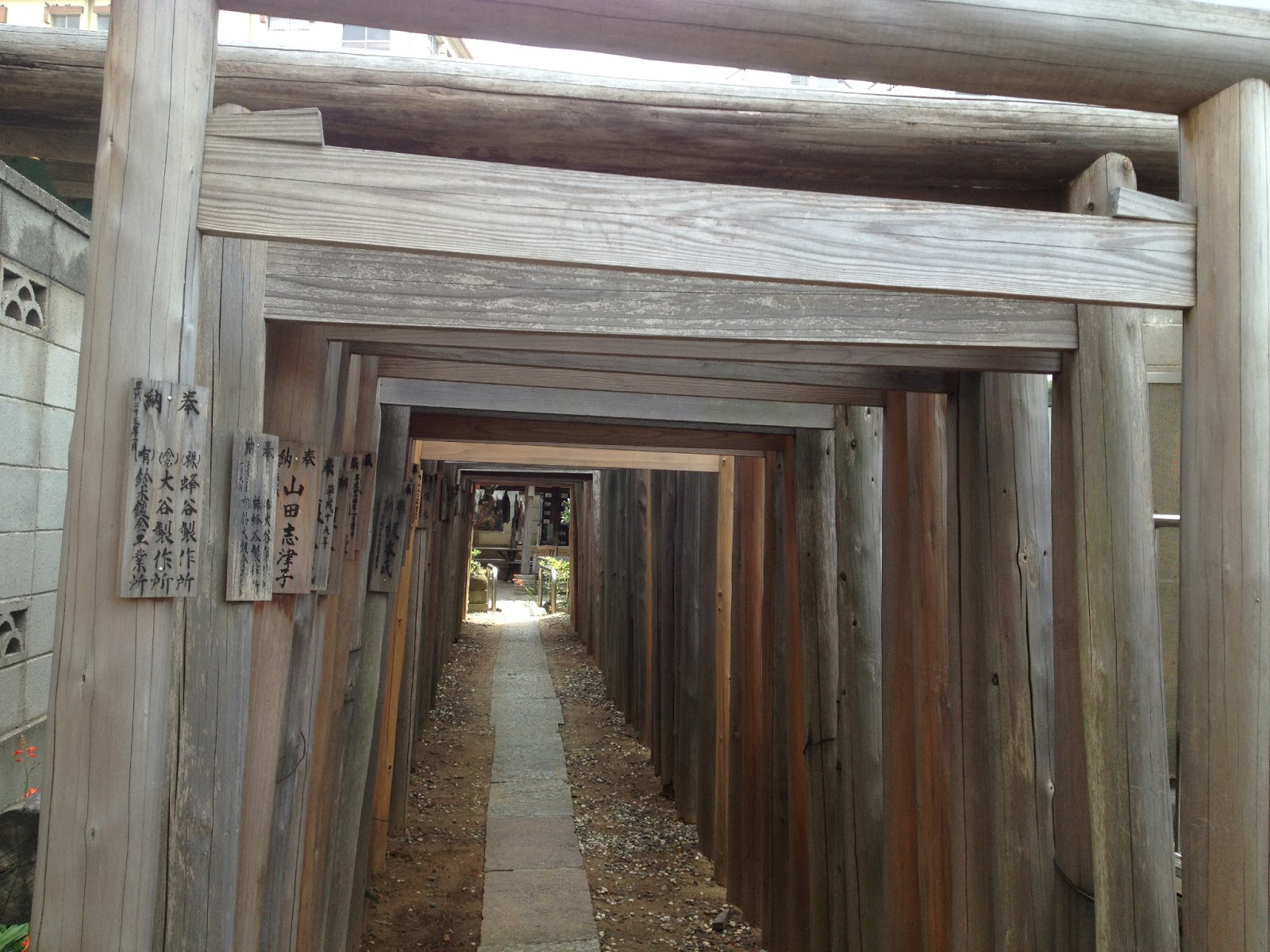
Torii tunnel of love


When I could finally stand upright, I found myself in a sacred space hidden in the city. This hidden garden was surrounded by flowing water and a koi pond. Benzaiten is the only female of the 7 lucky gods of Japan, and she is associated with flowing qualities in water, the flow of music, wealth, or flowing and eloquent speech. Anything nagare.
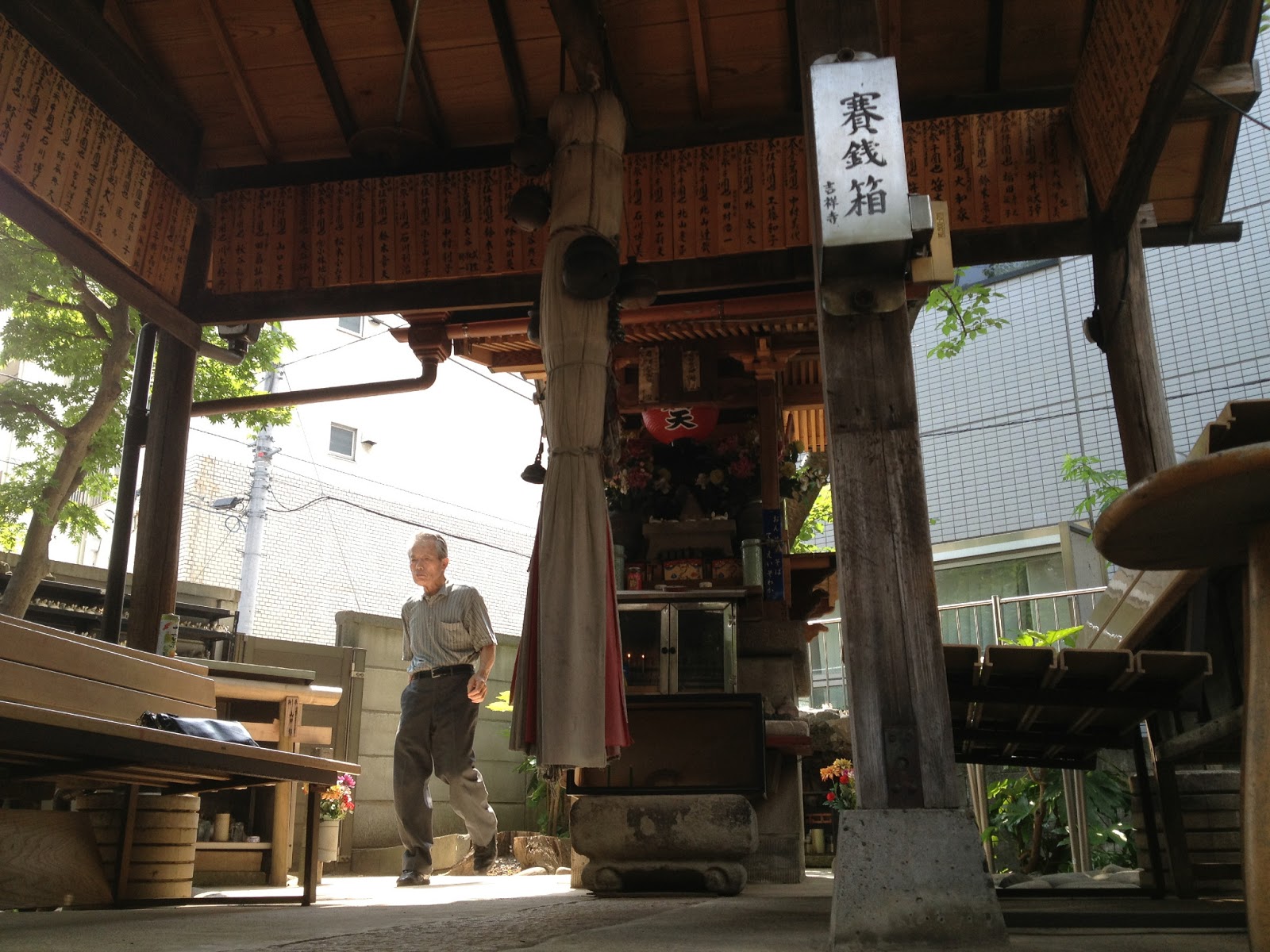
Inner Shrine and Garden


I found an old man named Enemoto tending the fish. He took little notice of me at first. But this place felt like some body's private garden so I asked him if it was OK to enter. He nodded with a smile.
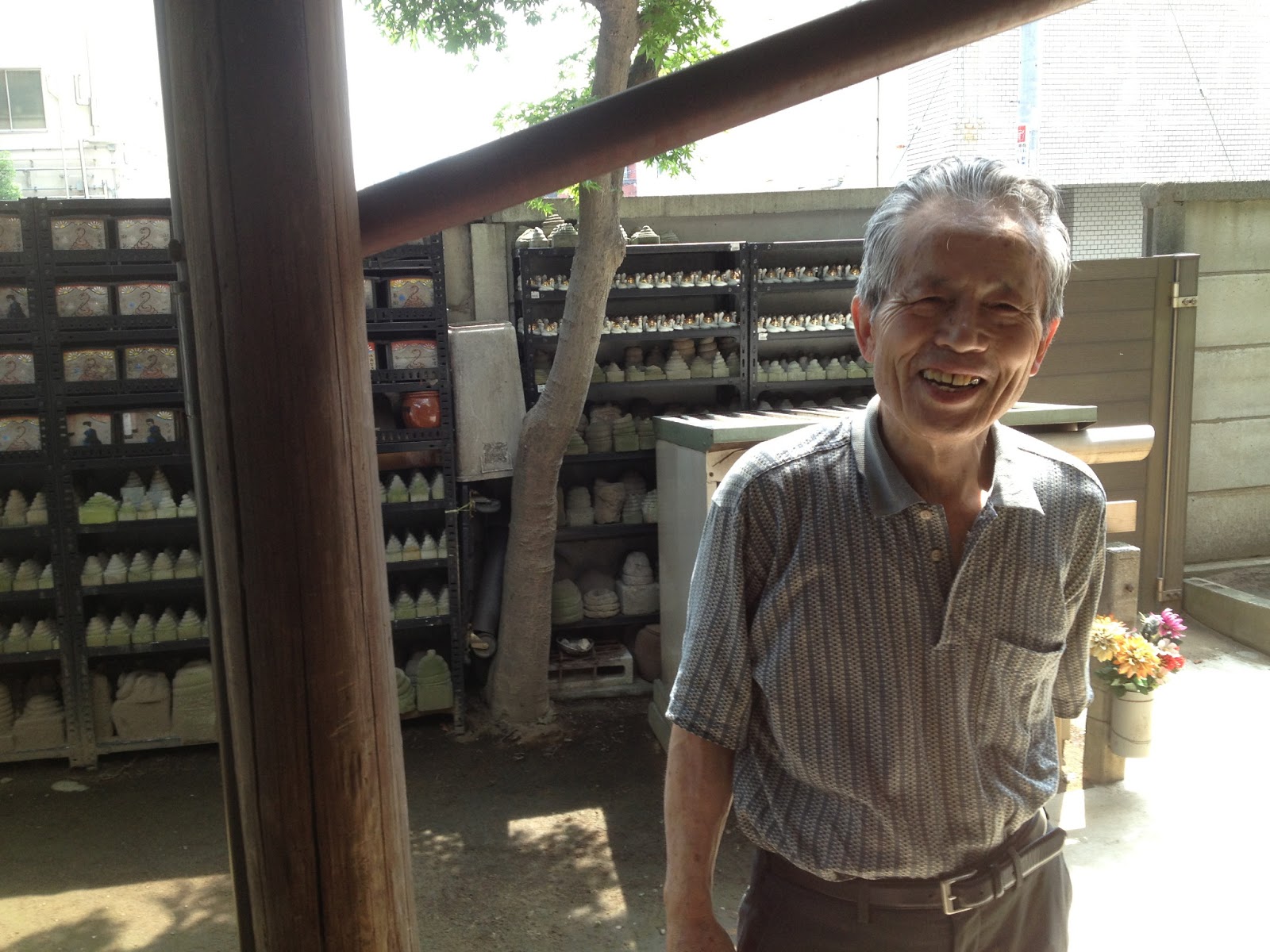
Enemoto san


There isn't much obvious evidence of the red light district remaining. Even though this space could still be in action to help bless prostitutes, keep them safe and free of disease, today it was quiet. I felt at home and I sat on one of the benches.
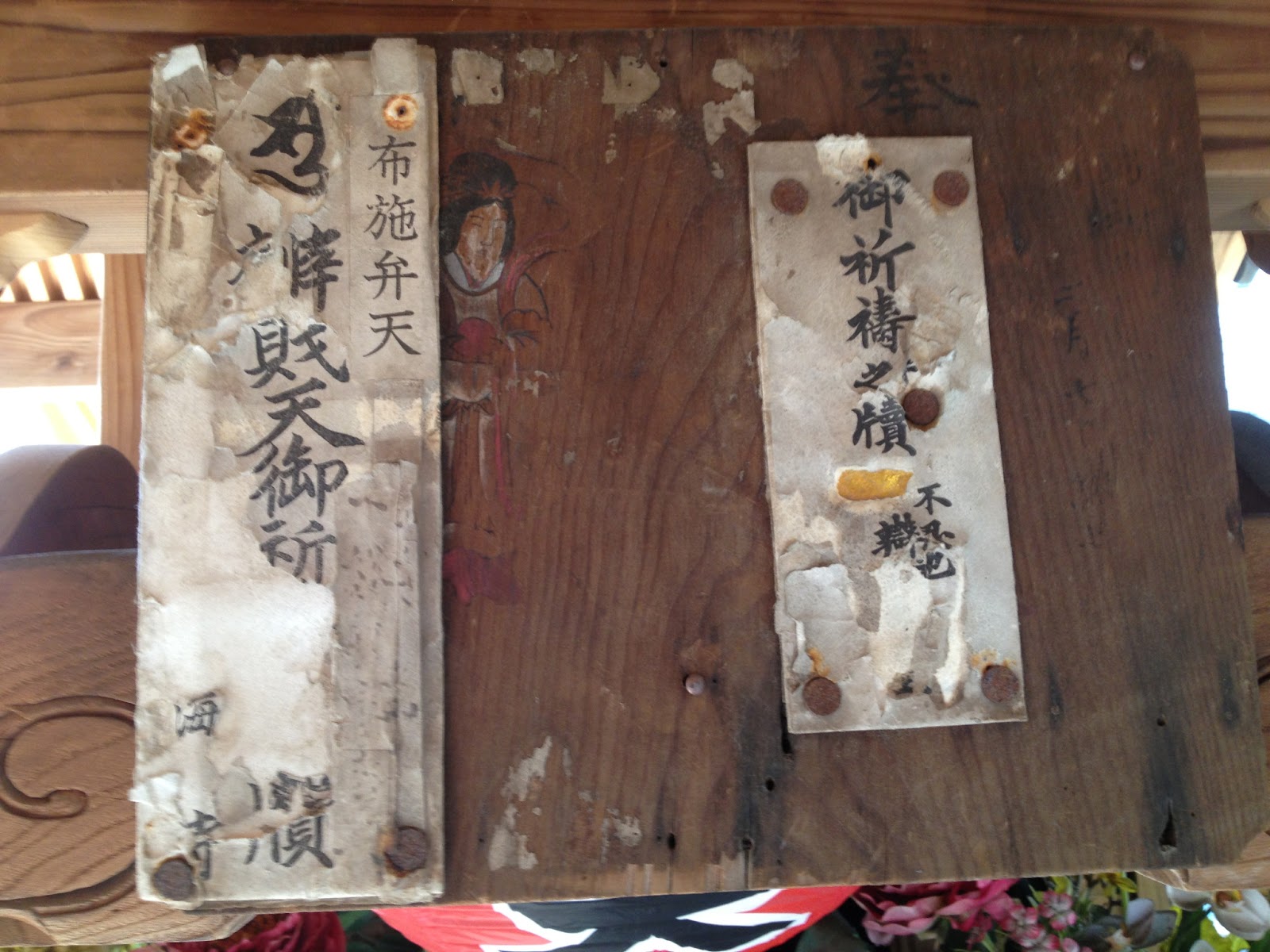
Another Past Hidden Underneath?


Saraswati symbolizes the essential feminine creative act of giving birth to new life and knowledge. She, or the snake symbol associated with her consort are shown with a white color to evoke a pure heart, mind, and character.
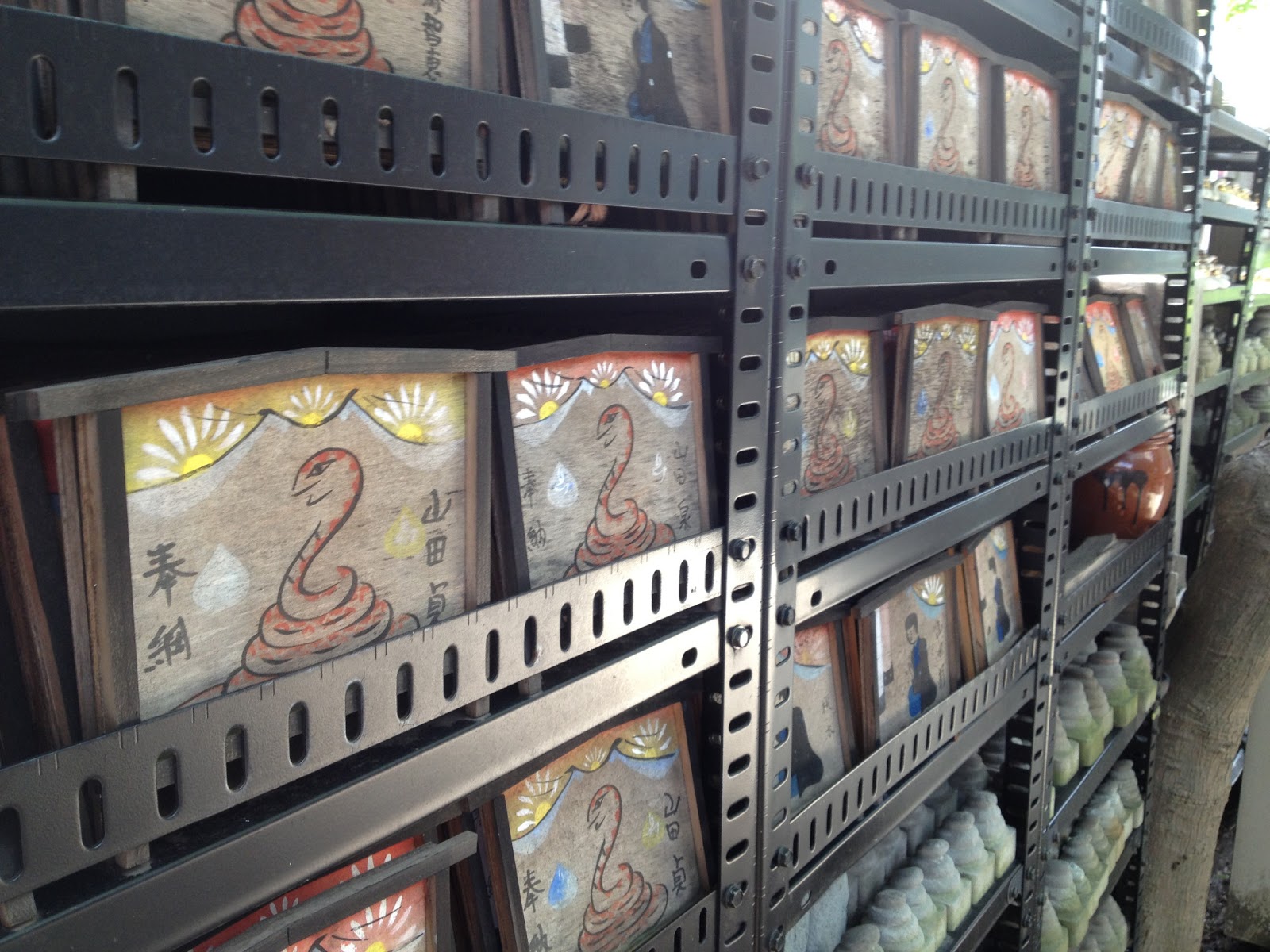
Snakes!


Enemoto san finished his prayers and left me alone. I felt very relaxed like I could sit here all day in this garden of feminine energy and burning incense. The koi splashed in the pond.
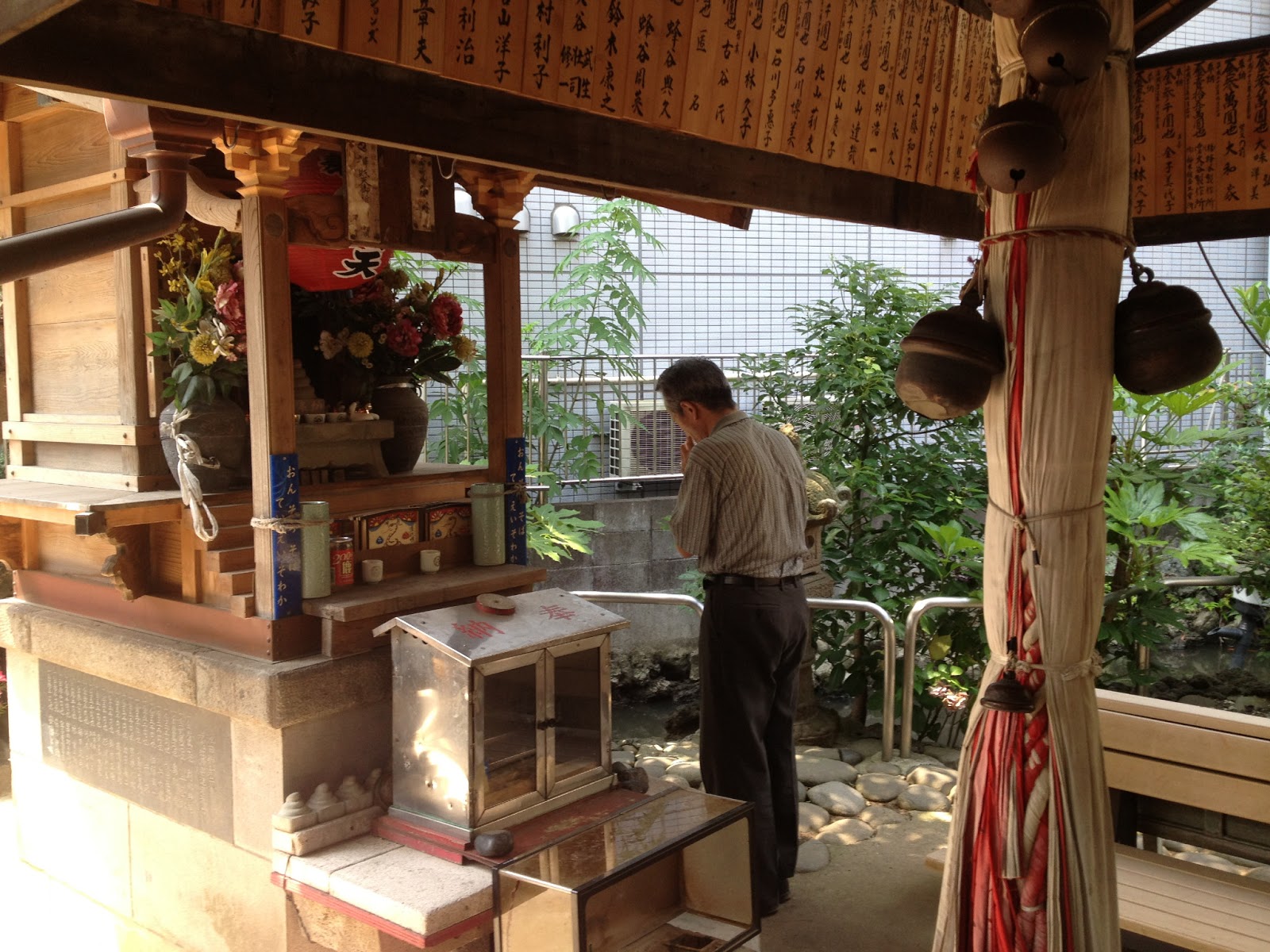
Saying Prayers


A very old woman arrived. She sat on the bench across from me with a big smile and she immediately started talking to me in Japanese. I didn't understand anything she said. I told her that I didn't, but that didn't stop her flow.

She looked hot, so I offered her my fan. She said, no, thank you. This stopped her speech.

She got up and lit prayer candles and incense. I decided to leave the private garden to her and I walked back out of the love tunnel of torii. She looked at me with sparkling eyes as I left, and I bumped my head on one of the low gates.

Benzaiten is a complex symbol in Japan. A mix of Hinduism, Buddhism, and Shintoism all in one. Benzaiten is the elder sister of Enma-ten 閻魔天 lord of the underworld. Like everything I discover here in this culture, there are many layers hidden beneath if you are prepared to look underground.…

Bojutsu vs Kenjutsu vs Bojutsu vs Kenjutsu…

From 8þ Kabutoshimen by admin

20130710-170506.jpg
Cutting against his arm

This summer like most summers we train a lot more with long weapons since the dojo is too small to really use long weapons properly. This summer we train Bojutsu against Kenjutsu (long staff against sword). I think I teach and train a little different than most Bujinkan teachers out there, but I can’t really say maybe there is those who approach the training like I do. Let me explain.

Kote haneage followed by Haneage

First of all you learn how to use the staff, spinning and striking etc, this is mostly solo-training. Then you learn the Keiko Sabaki Kata (movement practice techniques) in my dojo we only practice one technique for the whole two hour class. Some students really have problems with coordination, others capture it quicker. In this first step I don’t mention distance, timing or anything except which strikes and blocks to make. This can also be solo-training and done alone against an imagined opponent.

Second I take the sword and we focus on how to handle the situation the best way with a sword. If he is attacking me with the staff I immediately counter him by stepping forward. I’m not gonna step backwards defending myself all the time, when he steps in to strike me in his preferred distance out of my reach; I boldly step in at the same time and block the staff and get even closer into my preferred distance so I can cut him with the sword. As I see it this is the only chance I have against a longer weapon, there is no point of running backwards.

Catching the staff and Tsuki

Thirdly I take the staff again. I attack the kenjutsu-ka fully (not really, but almost) and make sure he does a good block, and as he block I don’t stay frozen or try to push harder on him. As I strike I’m already prepared for the next movement when he comes in and try to cut me, I move out to my distance and do the next strike.

Then I take the sword again and try to avoid being hit from this point in the technique, by blocking and countering again. I’m not really gonna give up or run away. If I can cut I will cut.

Then again I take the staff and try to deal with this really difficult opponent, I avoid his cut and counter him until the end of the technique where I make it impossible for him to do anything. Then the technique is finished without changing the sequences of the strikes, the only thing that is flexible is the distance and the timing. And this is where the true training comes in.

Then at the end of the class we record a short demo to video which will be available for download later. This is how we spend our two hour trainings at Kaigozan Dojo this summer.

No henka, no variations, true to the technique.

Kote haneage as he try to cut my left arm

I always thought quality is better than quantity. It is amazing how cleverly these techniques is made up, it is so much more than executing the strikes rapidly against a rather passive opponent. If the opponent (sword-guy) is good and understand how to use the sword there is really not many options to change the technique and do something different, the possibility for henka becomes very narrow, what you can change is very small details. For me this is what henka means, you failed your initial technique and need to adapt because of miscalculation.

I know there are those out there only doing henka-training, but how do you do henka training only, henka of what? If you try to train yourself into intuition without basic foundation you are doing something I don’t understand. You weren’t born out from nowhere, someone did something very basic with someone and you was born. How do you henka anything into existence?

Victory ending of the technique

If anyone is interesting I’m doing three more one day Bojutsu mini-seminars this summer.

Happy Training!

/Mats

The post Bojutsu vs Kenjutsu vs Bojutsu vs Kenjutsu… appeared first on 8þ Kabutoshimen.…

Tanren#02 SANSHIN NO KATA TRAINING DRILLS with MATS HJELM

From Budoshop by BUDOSHOP.SE

73 minutes, (h.264 M4V/MP4 360p)
791 Mb for $19.99

Available as download or full DVD!

鍛錬 Tanren (training, forging, hardening, drilling) is a set of videos with simple repetitive training drills, do your work out Bujinkan style – SHUT UP AND TRAIN!

This is the second in a series of SHUT UP AND TRAIN videos guaranteed to make you sweat. If you don’t like getting sweaty during training, then this video is not for you. This DVD is for practitioners who want to learn new training drills which might speed up their skill level if really practiced.

It can also be a very good work out that will get you sweaty. Some exercises is easy and some is more difficult, some you can work out on your own and some you need a training partner.

The theme is Sanshin no Kata, and Hiken/Hoken Juroppo. Watch the video to give you some ideas and then SHUT UP AND TRAIN!

Recorded in Stockholm August 2007

The video below is from Tanren-01

http://www.youtube.com/watch?v=WQu_JbAp3Fs

About the instructor

Mats Hjelm started training in Bujinkan for the first time around 1983, but it wasn’t until 1986 he had the opportunity to start training more seriously under a Shidôshi. He attends around 20 seminars, go to Japan 2-3 times every year. Since he started training he never had a training break. He takes his budo training very seriously! If you want to sponsor a seminar or course, please don’t hesitate to contact him. For more information see his web site http://www.kesshi.com

About the download

Click here for more information about our download files and how it works!…

Tanren#01 KIHON HAPPO TRAINING DRILLS with MATS HJELM

From Budoshop by BUDOSHOP.SE

84 minutes, (h.264 M4V/MP4 360p)
865 Mb for $19.99

Available as download or full DVD!

鍛錬 Tanren (training, forging, hardening, drilling) is a set of videos with simple repetitive training drills, do your work out Bujinkan style – SHUT UP AND TRAIN!

This is the first in a series of SHUT UP AND TRAIN videos guaranteed to make you sweat. If you don’t like getting sweaty during training, then this video is not for you. This DVD is for practitioners who want to learn new training drills which might speed up their skill level if really practiced.

It can also be a very good work out that will get you sweaty. Some exercises is easy and some is more difficult, some you can work out on your own and some you need a training partner.

The theme is Kihon Happo, and many kicking techniques. Watch the video to give you some ideas and then SHUT UP AND TRAIN!

Recorded in Stockholm July 2007

http://www.youtube.com/watch?v=WQu_JbAp3Fs

About the instructor

Mats Hjelm started training in Bujinkan for the first time around 1983, but it wasn’t until 1986 he had the opportunity to start training more seriously under a Shidôshi. He attends around 20 seminars, go to Japan 2-3 times every year. Since he started training he never had a training break. He takes his budo training very seriously! If you want to sponsor a seminar or course, please don’t hesitate to contact him. For more information see his web site http://www.kesshi.com

About the download

Click here for more information about our download files and how it works!…

A Hard Truth About Your Bujinkan Training Schedule

From Bujinkan Santa Monica by Michael

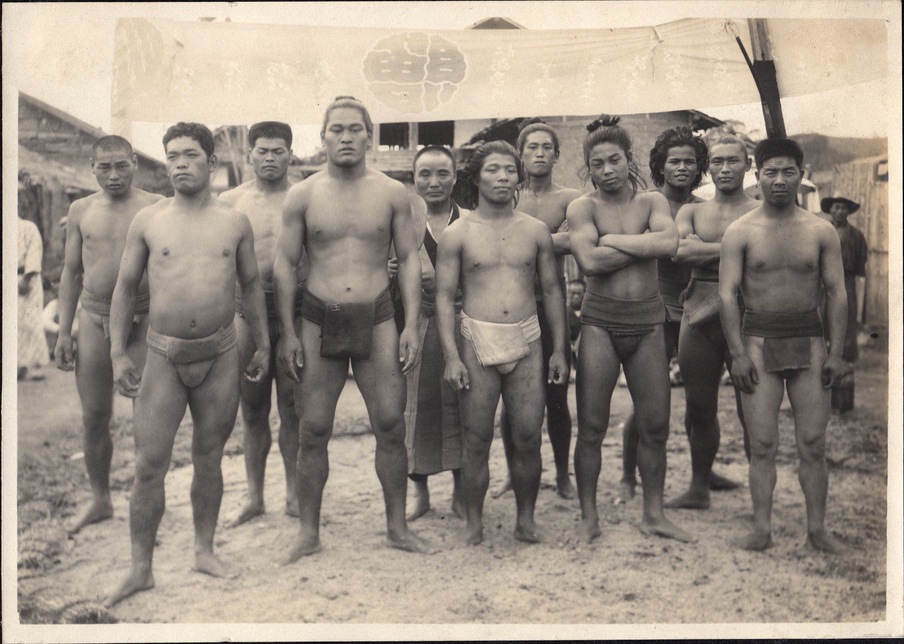
Sumo Wrestlers 1914-18, photo by A.Davey
How long does it take to be a Shihan? What about a Shidoshi? Blackbelt? How about just being good?

These seem like silly questions to ask, but I want to examine some real numbers here. I think we will be surprised at what the numbers reveal.

Let's start at the bottom.

No experience, no classes, pure beginner. How long is it to go from beginner to "not" beginner? Everyone's ideas on what it means to be a beginner are different. So I am asking you.

Is it going to classes for a few months? A year? 3, or 5?

How many ACTUAL classes does it take?

In my own training I teach 3 classes a week. So my own students have the opportunity to show up to roughly 12-14 per month. And if we take off for holidays and such, maybe 150 per year.

Except, almost no one comes to them all.

How long does it take to reach beginner's level? (That's what our black belt level is called: Shodan) How many classes? How many classes did you go to before you got there? I don't force an exact number on my own students, but it is maybe 3-5 years. Not calendar years, but actual class attendance.

So by the math above that means a minimum of 450 classes. who in the Bujinkan will claim they had that many before they reached Shodan?

Don't worry, I'm not talking about you personally, but I will in a minute.

What about Godan? or Shidoshi level? Many people seem to get there in approximately 7-10 years. Of course, I personally took a LOT longer. But  I don't think I am the norm.

So if we use my math above, that is roughly 1500 classes. But I know for a fact, that people have many gaps or lapses in their training schedules. Life gets in the way. So I truly doubt anyone actually reaches that number.

Maybe you think you have. Maybe you train 5-7 days a week for the last  6 years. OK Shihan, what does it take to be a MASTER?

Malcolm Gladwell wrote in his book Outliers about the 10,000 hour rule.  This rule, based on a scientific study says that it takes a minimum of 10,000 hours to become a master at anything.

Let's add it up. My classes are roughly 1.5 hrs long.

That means if you never miss a single class at my dojo, you hit 225 hrs per year. Divide that into 10,000 and you get…

44 years!

How many people who call themselves Shihan have trained 44 years without missing a class? How many think they have mastered training?

Hatsumi Sensei said this to us in one class,
Just because someone's been training for 40 or 50 years, it doesn't mean anything. Even for myself, no matter how long I've been training.. it's nothing special. I'm still walking along behind Takamatsu Sensei. 
Of course, I don't believe rank or skill is all about math and hours. But I do think we should be honest with ourselves. Then we can take steps to do better or supplement our training in other ways.

I challenge you to take a hard look at your own training. Do you invest in yourself? Do you clock the hours? How many hours a week or per month is the right amount for you? What would it mean for your life if you can be dedicated to this training? How much would you grow?

PS. I know. You are different. There was that all day seminar you went to last month. Or that 2 week trip to Japan last year. That should improve the math, right?…

Umu 有無: Something From Nothing

From Bujinkan Santa Monica by Michael

涅槃 photo by Aeternitas.
I train outdoors all year. Traditionally ninja, and many of the founders of the Bujinkan ryuha, all found their inspiration for training in nature. Lately, in every class I am annoyed with mosquitoes. But I also observe the nest of some Cassin's Kingbirds and how they teach their fledgelings to catch those same insects out of the air.

This kind of direct insight is very valuable. Hatsumi Sensei says,
"Training in nature, where there is not only a lack of footing but one is attacked by the wind and rain, is greatly different from training in a dojo with wooden floors or mats, and with air conditioning installed."
He says that to develop higher powers of perception we must train in nature. This is how we develop the ability to produce something from nothing in combat.
必要な無から有を生み出す勘生という知恵を授かったのであろう。
So every class, I start with only the open air, the sky and the earth. Then we bow in.  

This lonely path of the warrior is self reliant. Sensei says it is like the Buddha, who at his birth pointed to the heavens and the earth and said, 天上天下唯我独尊 I alone am exalted in heaven and on earth. In Japan there is an annual ceremony on April 8 to commemorate this moment, it is called 潅仏会 kanbutsu-e.

People think that saying "唯我独尊, Yuiga Dokuson" or, I alone am exalted, means you are conceited or arrogant. But the true meaning of this phrase suggests there is no separation between you and the world. It is all about positioning. In a fight, if you could see things from the position of your enemy, see through his eyes, he would be very easy to defeat. In fact, by walking in the other's shoes, the enemy disappears.

When you retreat, or separate yourself from your enemy, he will only chase you. And you may stumble. When you realize the enemy is yourself, then you have nothing to fear.

Before training outside in nature, nature was outside and you were inside. Before your enemy was separate from you and you could not control him. Take away the enemy's power.  When you realize your enemy is you, you empower yourself.

As a warrior, you must take responsibility for your own victory. So train in nature because you ARE nature. Defeat your enemy, because he is you.…

Shugyou#05 ROKUSHAKU-BO-JUTSU BASICS with MATS HJELM

From Budoshop by BUDOSHOP.SE

105 minutes, (h.264 M4V/MP4 360p)
24p manual, 1.25 Gb for $19.99

Available as download or full DVD & Manual!

Shugyou, in-depth training and study material. Including video and manual

The focus on this video is the basics of Rokushaku Bôjutsu (long staff), included is basic exercises such as Sanshin no Kata with the Bô vs Bô, Taihenjutsu-ukemi, rolling in all directions and using the long staff. The nine basic Kamae (body postures) is covered in detail. Kihon uchi waza, basic striking and thrusting with the staff is explained. Also all the basic Kihon Kata is taught.

This is a good DVD if you want to learn the basics behind the actual Kata techniques.

This download video also comes with a 24 page manual, 55 pictures as a compliment to your training. All the technique names with kanji and romaji, the techniques are briefly described with comments by Mats Hjelm.

We also put in 30 minutes extra “Gyokko-ryu Bojutsu“, filmed in Kaigôzan Dôjô late March 2005, using the Rokushaku-bô in short distance with Taijutsu feeling (Sanshin no kata, and Kihon Happô).

Note: The manual is in English, but the instructions on the DVD are in Swedish! with Swedish & English subtitles. The 24 page manual includes 55 pictures, descriptions and notes of the basics. All techniques with japanese kanji. The DVD is 110 minutes and only available in NTSC.

Recorded in Eskilstuna February 2005

About the instructor

Mats Hjelm started training in Bujinkan for the first time around 1983, but it wasn’t until 1986 he had the opportunity to start training more seriously under a Shidôshi. He attends around 20 seminars, go to Japan 2-3 times every year. Since he started training he never had a training break. He takes his budo training very seriously! If you want to sponsor a seminar or course, please don’t hesitate to contact him. For more information see his web site http://www.kesshi.com

About the download

Click here for more information about our download files and how it works!…

How to Attack the Kyūsho, 強経 Kyokei

From Bujinkan Santa Monica by Michael

踩上一脚 photo by 大杨
Last night in class the kata I was teaching required you to stomp down on the kyūsho 強経 kyokei. This is supposed to move your opponent and open him up for the rest of the kata. The way most people teach this is to stomp the ground like a Maori tribesman.

Stomping like a polynesian warrior or bratty child is the omote way of doing this technique. This means it is obvious and easily seen or countered. And if this is all you put behind this strike, many opponents will not be moved.

What I have learned from Hatsumi Sensei is to accomplish more with less. Exist inside of nothingness, he says. Be able to move from there.

The Japanese text of the kata we were studying says 強経を強く踏み付けると. This suggests breaking through the strength of the opponent by stomping this 急所 kyuusho, kyokei. First, let's see where this kyūsho is located.

強経 kyokei is above the five toes of the foot. A strike here attacks the strong tendons on top of the foot. This creates an ataxia which will "open up" or cut through your opponent's defenses.

Here is some 要 kaname


This same point is considered 要衝 youshou for acupuncture. 要衝 youshou can also be read as piercing through kaname. It is interesting that the kanji in 経穴 keiketsu, or acupuncture point, may also be read as passing through an opening.

and now some 口伝 kuden


The way I have learned to open up and cut through is not by stomping and relying on ataxia. That is part of it, sure. But a better way is to use the connection through what Hatsumi Sensei calls 玉の緒 Tamanoo.

Soke tells us that this is the lifeline or thread of life and also the same connection that is used when giving the Godan test. This is what moves the person out of the way of the sword. So that is the way I would attack kyokei.

Do you think that would be enough to move your opponent?


PS. this is the type of information I share in my exclusive Keiko Kiroku training notes. To get in on this, sign up here: Keiko Kiroku
…

Mushin is Sanshin

From Shiro Kuma's Weblog by kumablog

Image

Following his logic of Mutô Dori being Butô Dori, Sensei in a recent class said that “Mushin is Bushin (Bujin)”. 

As you know, the word “Bujinkan” is sometimes written as “Bushinkan” (in the old translations form Japan). 
 
This opens up a new series of possible interpretations.
As we know 無 is pronounced Mu or Bu and this allows sensei to play with the words as the sounds are similar.
 
So if Bu 無 replaces Bu 武 in Bushinkan, then the “house of the war god” becomes the “place where we learn to have no intention”. Maybe this is what sensei want us to understand when he speaks about “natural movement”?
 
But as I was not attending this class my guess is as good as yours.
In fact, there are many possible other interpretations with those sounds.
 
Hereafter I wrote the ones that are the most logical for me:
  • Bushin the normal one: 武神 = god of war
  • Bushin the human one: 武人 = military man:
  • Bushin the new one: 武心 = warrior heart/spirit
  • Bushin another one: 無神 = god of nothingness
  • Bushin another one:  無人 = non human
  • Bushin another one: 無心 = no spirit
Funnily “六”, “6″ can also be pronounced Mu, and there are 6 logical interpretations above!  But it is only a chance as Mu has (at least) 13 different meanings, Bu 19 , Jin 18 and shin 36!
If we take the general accepted meaning for Mushin 無心  of “no spirit” we have to understand also that in spirituality it also refers to “innocence” or “(to be) free from obstructive thoughts”. When you reach the state of Mushin, you are like this 3 year old infant acting without preconceived idea. Which is the true Sanshin. 
 
So let’s consider “Mushin” as being “6+spirits”, as “6″ is shiki 識 (consciousness) which is the sixth element, then the objective of the bujinkan is to reach the level of consciousness where natural movement can be expressed without thinking. 
 
All these understandings being possible, this is why we can say that Mushin is Sanshin!
(sorry for the headache)

…

TAIKAI PARIS 2013

From Shiro Kuma's Weblog by kumablog

ImageImage


Like every year since 2004 you are invited to join us and attend the Yûro Shi Tennô Taikai in Paris, the legendary 3 day taikai!

Peter, Sven, Pedro and Arnaud will share, during 3 full days, their insights received this year in Japan.

The main theme of this Taikai will revolve around  the Tsurugi (don’t forget your Chinese sword) but will insist a lot on the following ideas:

  • Natural Taijutsu
  • Mutô Dori (Butô Dori)
  • Bushin (Mushin)

As always sleeping is for free at the dôjô and the meals made by Jean-marie our  ”chef” are included. Read more about it on the website

Don’t miss this fantastic opportunity to train directly with the Shi Tennô!

Registration (mandatory) at budomart


…