Skip to content

Human Bonsai!

From Kasumi An Study Center  霞庵 スタディセンター by Kasumi An Study Center

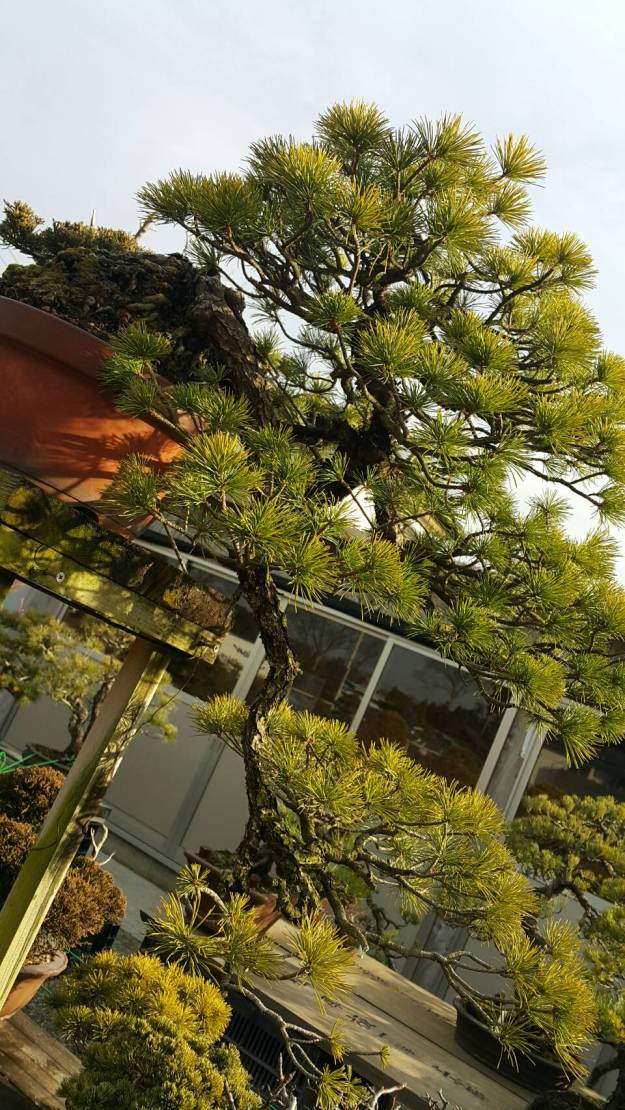
bonsai1Over the last twenty three years here in Japan, I often have the pleasure and honor to translate for my teacher Masaaki Hatsumi Soke. Often a student has a question that he would like to ask. It is a always a delight to be able to help facilitate communication between teacher and student. So many questions and so many unexpected answers! One episode comes to mind.

A student asks, “Why are some people friendly to your face but then are hurtful and mean behind your back?”.

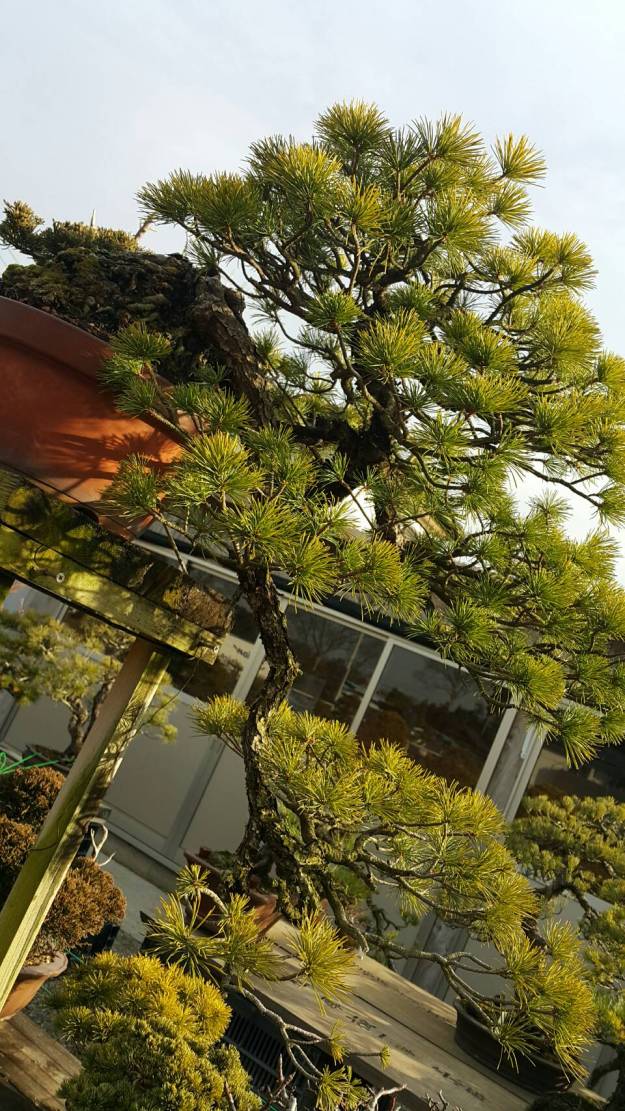
Sensei replies nonchalantly, “that is just how people are made.”. As I translate, I can see the look of confusion cross the students` faces. I too am at a bit of a loss. So the question is asked again and once again the answer is the same,”that is just how people are made.”.  Then Sensei looks up into space and asks me, “Paul, have you ever seen a bonsai?”. (small miniature Japanese art trees)I nod my head “yes”. In fact, I had just taken some friends to a bonsai garden the day before so I was a bit surprised by the sudden question about bonsai. He continues, “it is like a bonsai, people are made. You can make a person any way. But it is not natural. You would not go to a forest and find a bonsai. It is not a natural state. But you can twist a bonsai into any shape you want. People are the same.”

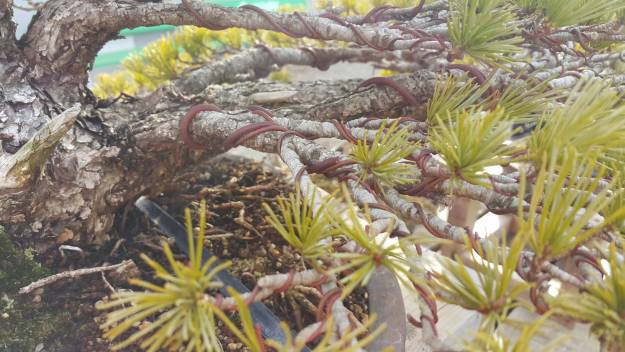
How true! Just the prior day I was remarking on the branches of the bonsai. Each branch wrapped with wire and forced to go this way or that way. Every branch! bonsai3Each branch wrapped in wire and forced to take a seemingly natural posture or kamae. And how unnatural it really is. We, too, as humans, each being wrapped in the culture, politics, education, religions and beliefs of those around us and society. Some people wrapped as capitalists, some marxists, some Christians, some Muslim. But all are being bound by the conditioning of the environment and society. Then what you think are your own thoughts can betray you.  In a tragic conclusion, we often we take a kamae or stance for or against another wrapped up in a different shape. Both unaware of the wires that trap them in this position.

Unwrapping these wires and constraints is an important step in the practice of Ninjustu. A true ninja will become free and his tree will grow strong and pure into a natural state in accordance with the natural state of his existence. A Ninja is able to explore his true essence in infinite space. That is why in the Go Jou or Five Precepts as taught by my teacher, a constant diligence and watchfulness to your true path is essential. First become aware of where you are now. What shape are you now? When your shape become visible, start unwrapping!

Kan Nin Dokuso (part one)

From Kasumi An Study Center  霞庵 スタディセンター by Kasumi An Study Center

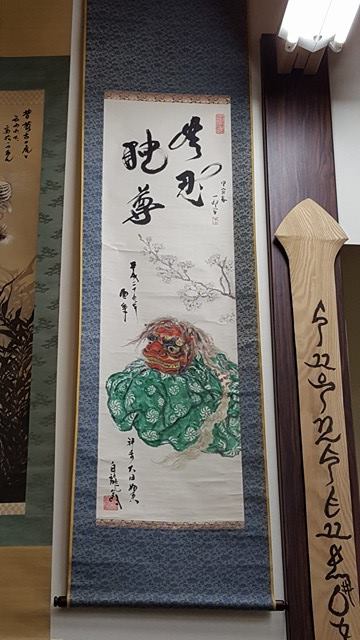
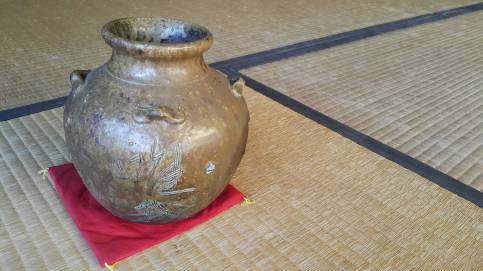
kanninpot

Artist: Paul Masse 2007. Inscription: 天上天下唯我独

“In the all the heavens and earth, only I am exalted!”

Kan Nin Dock Son is a phrase you may hear around the Bujinkan dojo this year. Is it the theme for the year? Maybe, maybe not. Who knows?! But whether it is a theme or not is really not important, it should give you something to ponder and explore this year in addition to your continued practice of the physical movement and techniques. Kan Nin 貫忍, steadfast and single-minded perseverance all the way. Doku Son 独尊、to be revered or exalted. It most likely refers to a story of the Buddha. The story is, when he was born, the Buddha took seven steps and pointed one finger up and one finger down and exclaimed, “In the all the heavens and earth, only I am exalted!”.  What is this elusive I? Some think of it as me, my name, age ect. But you would lose some of the poetry. Who are you when your name, age, social status are stripped away. Going deeper, who are you when the body is stripped away and the mind faded and gone, and even your conscience vanishes like smoke after a fire?Maybe you have heard the Gokui (inner teachings) Persevere the body, Persevere the heart, and Persevere the conscience.

Your body had plopped out of this earth and it will dissolve back into the earth. No matter how good they wrap you like a mummy! But what of a natural energy? A power of nature that drives the seasons, sings thru a myriad of creatures? This power that keeps the clouds drifting and the water flowing, and an infinite number of stars alight? This natural power, the natural power of life is what we must become aware. When you have persevered thru all, this power will shine. Hatsumi Sensei once said to me, “it is like in the movies, when someone opens a treasure box, and their face is lit up by the golden light of the treasure.”. I really like this image. This is the treasure of Nin or Ninpo, 忍宝。 Kan Nin will help to uncover it. Be like Indiana Jones and go treasure hunting. The treasure is so near! When you uncover it, you won’t need to be and air bender or water bender or fire bender. You will know that you have been bending them all the time!

Kan Nin Dokuso (part one)

From Kasumi An Study Center  霞庵 スタディセンター by カスミアン

kanninpot

Artist: Paul Masse 2007. Inscription: 天上天下唯我独

“In the all the heavens and earth, only I am exalted!”

Kan Nin Dock Son is a phrase you may hear around the Bujinkan dojo this year. Is it the theme for the year? Maybe, maybe not. Who knows?! But whether it is a theme or not is really not important, it should give you something to ponder and explore this year in addition to your continued practice of the physical movement and techniques. Kan Nin 貫忍, steadfast and single-minded perseverance all the way. Doku Son 独尊、to be revered or exalted. It most likely refers to a story of the Buddha. The story is, when he was born, the Buddha took seven steps and pointed one finger up and one finger down and exclaimed, “In the all the heavens and earth, only I am exalted!”.  What is this elusive I? Some think of it as me, my name, age ect. But you would lose some of the poetry. Who are you when your name, age, social status are stripped away. Going deeper, who are you when the body is stripped away and the mind faded and gone, and even your conscience vanishes like smoke after a fire?Maybe you have heard the Gokui (inner teachings) Persevere the body, Persevere the heart, and Persevere the conscience.

Your body had plopped out of this earth and it will dissolve back into the earth. No matter how good they wrap you like a mummy! But what of a natural energy? A power of nature that drives the seasons, sings thru a myriad of creatures? This power that keeps the clouds drifting and the water flowing, and an infinite number of stars alight? This natural power, the natural power of life is what we must become aware. When you have persevered thru all, this power will shine. Hatsumi Sensei once said to me, “it is like in the movies, when someone opens a treasure box, and their face is lit up by the golden light of the treasure.”. I really like this image. This is the treasure of Nin or Ninpo, 忍宝。 Kan Nin will help to uncover it. Be like Indiana Jones and go treasure hunting. The treasure is so near! When you uncover it, you won’t need to be and air bender or water bender or fire bender. You will know that you have been bending them all the time!…

Bujinkan Year of the Rooster

From Bujinkan Santa Monica by Michael

Fighting Cock 闘鶏 toukei by Hatsumi Sensei
Today marks the year of the rooster by the lunar calendar. This is significant for me because I was born under this sign. During one of my visits to Japan, Hatsumi Sensei painted the fighting rooster for me as you see above.

I was attacked by mosquitoes earlier that day. It was my own fault because I had gone into a deep meditation in the woods next to a statue of 不動明王 Fudō Myō-ō. I didn’t notice the mosquitoes. But it was very hot and I was sweaty after my long climb, so they definitely noticed me! The next day, I discovered at least 30 very itchy bites.

This year I am 年男 toshiotoko, or “man of the year” since it is my sign. This can be unlucky, but I am protected. 不動明王 Fudō Myō-ō is the protector of people born in the year of the rooster.

The hour of the rooster is at sunset in the zodiac. And the direction of both the rooster and Fudō Myō-ō is west. In fact, there are still Shinto shrines where the monkey and the rooster guard the entrance gates.

I will lead the training in my dojo this year while heeding the expression, 鶏口牛後 keikougyuugo, “It is better to be the beak of a rooster than the rump of a bull.” For me, this means it is better to guide a small group of students who really care about training, instead of a crowd of people who train for the wrong reasons.

I wasn’t there, but reportedly Hatsumi Sensei first met Takamatsu in 酉年 toridoshi, the year of the rooster. I feel lucky to have this connection back to Takamatsu and the previous generations of our art through my studies with Hatsumi Sensei. The Bujinkan is a living art, and the spirits of the warriors of the past are kept alive in our current training.

I will spend some time this year focusing on the 妙音術 Myō-on jutsu that I have experienced from Soke. Since Fudō Myō-ō protects me this year, I will work to cut through my ignorance. Here is the Fudō mantra if you also want to say it while cutting through ignorance with your sword:
なーまくさーまんだーば さらなんかん
Naamakusaamandaaba saranankan
Don't ask me how to pronounce it, I think I need more training.

Kannin Dokuson: First Approach

From Shiro Kuma's Blog by kumablog

kannin-dokuson-2-edited
Sensei introduced us in November to “controlling the space with Mutō Dori”, and last week for the first class of 2017, he said the yearly theme to be Kannin Dokuson, “mutual respect.”
Each time Sensei comes up with a new theme for the year, it is important to read “between the lines” to follow Sensei’s train of thoughts. So, hereafter are a few possible hints to help us get it.
In a few days, we are entering the year of the fire rooster. (1)
Traditionally the fire rooster is called “Hō Ō”, the Phoenix. (2)
When you study the two kanji, you have 鳳 the male phoenix, and 凰, the female Phoenix. In other words, it is a representation of the Taichi, the Inyō (yinyang) of Taoism.
Inyō is represented by “zero” as we established recently in previous posts. Controlling the space means “balancing harmoniously” this complementarity between Uke and Tori during the exchange. This is the essence of Mutō Dori.
At the Shidōshikai meeting, Sensei developed his vision of “Kannin Dokuson”.
From a post by my friend Alex Esteve from Spain, Sensei was referring to “la integración y perseverancia en el respeto mutuo, respetarse y respetar al oponente”.
The way I understand it in English is to: “persevere to integrate Mutual respect, self-respect, and respect for the opponent (in our actions).”
This is the Sanshin of 2017!
But Kannin Dokuson is more than that. (3) And I will write more about it in my next entry.
________________________
1. Each Chinese zodiacal sign is linked to one of the 5 chinese elements (earth, metal, wood, air, fire). Last year was the fire monkey.
2. 鳳凰, Hō Ō, Chinese firebird; Chinese phoenix
3. 貫忍 独貴
KAN
一貫/ikkan/consistency; coherence; integration
貫/kan
NIN
忍/nin/endurance; forbearance; patience; self-restraint
DOKU
独り/hitori/one person|alone; solitary
SON
尊/son/tattobu/to value; to prize; to esteem; to respect; revered; noble

The 虚実 Kyojitsu of Control: Bujinkan Strategies of Control Part 3

From Bujinkan Santa Monica by Michael

渡月橋 togetsukyō at 六義園 rikugien. photo by Michael Glenn
Hatsumi Sensei puffed out his chest. His attacker went to grab with both hands, but then Soke collapsed the target. It was like he shrugged the attack away, tossing his opponent aside.

If you have been following my training notes, then you know that this kyojitsu of offering a target is one of the Bujinkan strategies of control that I have been writing about since my recent training with Hatsumi Sensei. He explained that he was teaching control to the Jugodans. He said he wasn’t teaching technique.

I managed to get a few pictures of the snow around the Bujinkan Hombu dojo that morning before class. A few days later it had all melted away. If you are not careful as a Bujinkan teacher, your own days as a student will melt away too.

Soke said that people in sports do technique, but we are trying to have a flow that can’t be copied. Flow is the most important thing in a fight.. This is why he teaches this way. He told us,
“You have to become the kind of person who cannot be copied.”
When Soke puffed out his chest this way, he was offering his opponent an illusion. The target was not real. He used the word 的 mato and told us to control by creating a target.

The way he moved his shoulders was very loose. And next, he made us all laugh by wiggling his ears. He did this to show how you control the opponent by having this very precise control over your own body first.

When he asked me to grab him, he did this with his shoulder and then I went flying through the air. He said,
“I’m lifting the shoulder with this kind of kyojitsu. You have to be able to move every part of your body.”
You offer the target as the 虚 kyo, or illusion. Then hit him with the 実 jistu or the truth. Another time Soke did this with a sword. He blocked the cut with his own sword. But he left his face right in front of his opponent’s blade. It did not look safe!

But this target was an illusion. As soon as the opponent tried to cut, Soke pivoted and hit him hard with the tsuba in the ribs. He looked around the dojo at our confused faces and said,
“Everyone tries to use the sword and that's why you're missing the kyojitsu. Kyo comes first and then jitsu.”
When you control your opponent with illusion, you don’t even have to fight at all. In fact, you never have to touch him. Hatsumi Sensei said we could feel it in the air. He used the phrase 空気で殺気 kuuki de sakki.

This can be thought of as sensing the intent of the enemy in the air. But it is also projecting your own threat into the air. It is like you strike with the air or the kukan itself! How does that work?

Many of us have felt this from Hatsumi Sensei. He did this to my friend Yabunaka-san. I watched when Yabu hesitated and then froze up. Next he stumbled right before Soke would have broke his arm. Hatsumi Sensei asked Yabunaka to describe this feeling. Yabunaka said that you feel like he is striking you even when he is not.

This is the opposite of presenting a target as an illusion. You strike with illusion! In fact, Hatsumi Sensei told us that this was 遠当之術 tōate no jutsu (or even 遠當之術). This is striking from a distance.

But Soke said he was not using tōate for striking, he was using it for control. For me, that moment was a big key to my whole trip and my efforts to understand Hatsumi Sensei’s current teachings.

I was lucky to be invited to uke for Soke in almost every class. And these experiences were like a gift. Every day that I train in Japan or in my own classes, I feel humbled by the generosity of my teachers and students. I hope you can have that in your training as well.
UP NEXT: Evade Without Evading: Bujinkan Strategies of Control Part 4

Coming this spring… The Hidden Lineage

From Blog – Bujinkan Kokusai Renkoumyo 武神館國際連光明道場 by bkronline

In search of the history of the Togakure Ryu

I definitely do not want to cause an issue with anyone regarding the cover of the book. In fact, the picture that was up was just a temporary one. The final cover is a surprise as I have been given the approval to include photographs of Hatsumi Sensei and the Shihan from the 1960’s that have never been published before. They are from the collection of Anthony Netzler and Steve Tansley. I owe them some big thanks. The pictures were taken for the book on the ninja by Andrew Adams (1970). Steve Tansley’s father was the photographer to that project and left Steve and Anthony with a beautiful collection of never before seen photographs. I will include a few of the best and hopefully one will don the cover.

The previous photo, the “Kama Mon” is the symbol of the divine at Suwa Shrine (諏訪神社) in Shinshu. It is the symbol of the “Bujin” (武神) enshrined at Suwa. Yes, the same “Bujin” as in the Bujinkan. Due to the close proximity and tribal relationships, the shrine at Togakushi where our Togakure Ryu comes from also uses the “Kama Mon” as its shrines symbol. The “kama” or a sickle is a farmers tool that held high spiritual importance in the rice-based communities. Once the harvest was over each year, the Togakushi region would hold “kama” festivals 「鎌祝い」, to celebrate and give thanks to the shrine’s deities for a good harvest and to pray for another next year.

Also, please enjoy my clip from yesterday’s Taijutsu session


Let’s know in the comments. Please, if like what we are doing, click “Like,” “Fellow”, give us “Feedback” “comments,“ and get a notification about a new post.…

勝負いなく Shōbu Inaku: Bujinkan Strategies of Control Part 2

From Bujinkan Santa Monica by Michael

Hatsumi Sensei's dynamic kamae. Photo by Michael Glenn
In the first article on Bujinkan Strategies of Control, I described one of the times I attacked Hatsumi Sensei. Anyone who has been Soke’s uke can tell you the same thing. What it looks like and what it feels like are very different!

One common thing we all feel from him is that he disappears. I know that sounds odd, but it’s like he’s there in front of you, then he’s not. In fact, last week he explained how this is one of his strategies for control. He told us to,
“Move naturally like this as they're coming in. Move naturally without making a fight of it.”
That was the English translation but Soke used the the words 勝負いなく shōbu inaku meaning that there is no fight or the fight disappears. Shōbu implies a contest or a match where victory or defeat is decided. Since we don’t study sports martial arts, we are not attached to either of these outcomes.

いなくなる inakunaru means to disappear. Or, in a definition that will help us understand this strategy, it means “to stop being". Any fight, match, or contest requires at least two combatants. What happens if one disappears?

This starts internally. You have to remove yourself from the idea of winning or losing. Or even that there is any fight to win or lose. When you step outside of that small world where the fight exists, you will find it very easy to control the situation.

Hatsumi Sensei watched all of us trying to do that. He likes to stand in the back of the dojo on the wood floor and observe us. Sometimes I will even see him stand right in the middle of the room watching. He saw that many of us were still trying to fight, so he said we should leave that attitude at home…
“In your own training it’s ok to punch and fight like this, but here we’re studying control.”
He told us we are not learning to exchange blows. That is what happens in sports martial arts, people exchange blows until victory or defeat is decided. Sometimes by judges! But there are no judges in real combat.

Instead Hatsumi Sensei told us to play in the space. It’s not fighting. This is how we learn how to control in the space.

When you understand this at a deep level, two critical changes happen in your training:

First, by not showing that you're fighting, you disappear from the fight. This is not just a psychological trick. You can learn to physically disappear from the fight.

I felt this when I tried to grab Hatsumi Sensei’s arm. He was teaching tehodoki. When I went to grab he just disappeared. He reappeared after I flew through the air and landed on my back.

And second, you make the fight itself disappear. This causes the opponent to lose strength and ability to fight. Hatsumi Sensei showed me this aspect another time when I stabbed at him. The way he smiled at me, and his kiai in that moment, caused my attack to just deflate because he was not fighting me.

Hatsumi Sensei said again and again that コントロール kontorooru is this year’s theme. Not fighting... just controlling. It’s not a waza or technique that can be taught.

In fact there is only one clear way to learn it. That is through direct experience with Hatsumi Sensei or with a teacher who has had that experience. Then you can learn what Soke means when he tells us that he is not fighting. He says he is just following the path of kami (神の道 kami no michi). We would be smart to follow his lead.

UP NEXT: The 虚実 Kyojitsu of Control: Bujinkan Strategies of Control Part 3

Bujinkan Strategies of Control

From Bujinkan Santa Monica by Michael

雪吊り yuki zuri at 六義園 Rikugi-en. photo by Michael Glenn
The train rattled by the Bujinkan Honbu dojo. I looked down at the knife in my hand. I looked up at Hatsumi Sensei who called me to stab at him. I plunged the knife toward him. He made a kiai that came out like the creaking, groaning sound of an old iron gate.

It was not a human sound. And he was in my face, laughing. I fell to the floor. He asked me to speak and share what I just felt with all of the students in the dojo. All I could say was that his smile made me drop.

It has been difficult to write about my training with Soke during this trip. Not because I don't have anything to share. But because writing or talking about it is a distraction from the experience itself.

I didn't want my own thoughts or preconceptions to intrude on the direct transmission of the teaching that Soke is giving us. So I waited. Just absorbing as much as I can. And now I feel I can begin to share.

In every single class, Hatsumi Sensei tells us not to fight, but to control. In fact, he says that this is the theme that he is teaching from. He uses the 外来語 gairaigo (borrowed from English) pronunciation of the word control. In the Japanese pronunciation this becomes コントロール kontorooru.

He tells us that what he is showing us cannot be taught. He says,
"I'm not teaching how to fight. I'm showing control. If you try to fight then it's a very low level of budo. Please learn to control."
Why can't this be taught? Because it's control, not waza. Waza (techniques) can be taught. But this is not waza. It's control.

Soke says he's not teaching technique anymore. He told us to have this control of あも一寸の玉 虫 amo issun no tama mushi.  In a real confrontation, this "amo" is very important.

Hatsumi Sensei's classes are all about control. But first you have to control yourself, only then can you control the opponent. He demonstrated this over and over by controlling his opponents without even touching them. It happened to me every time I faced him. He explained it like this:
"You have to be able to not do a technique yet have it happen anyway. This is the theme for the 15 dans this year."
One of the ways he does this is kukan no コントロール kontorooru… to control the kukan or use the kukan to control. But here is a warning: Any method you use to try to do that will probably not work! That is the mystery of this strategy.

Since I cannot possibly share everything I am experiencing here in Japan in just one article, I will write a series of articles. Maybe I will call them Bujinkan strategies of control. If you want to receive all of them, make sure to subscribe here.

When I attacked Hatsumi Sensei with the knife, he asked me to share the feeling I got from him. In that moment it was overwhelming, so I couldn't say much except that his smile made me drop to the mat. But now that I've had some days to consider what happened, my feeling is that he used one of the strategies I will write about next. 次次次… The next one is the best one!
UPDATE and here it is: 勝負いなく Shōbu Inaku: Bujinkan Strategies of Control Part 2

Thank You For The Gift!

From Shiro Kuma's Blog by kumablog


The Daikomyō Said is always a magic moment in the life of the Bujinkan. This year was no exception.
The format has evolved over the years. Training halls have changed many times until there were no halls and no training sessions.
The formal dinners at the Hilton or the Noda Park hotel, replaced the open party at the Honbu until there was no more dinner.
Today, there are regular classes followed on Sunday by a small lunch party. And this is fine because the feeling is still the same.

Daikomyō Sai is not only about Budō, but it is also more about respect Kumite. Apart from the techniques taught during this period of the year, this is the chance to spend some quality time with friends from all over the world, around our Sōke, for his birthday.

Every year the group gathering in Atago is about the same. Sensei has created a formidable group of friendship where borders don’t exist anymore. This is really a very special moment for all of us. This year again, many made the trip for Sōke’s birthday.
Moti from Israel; Sheila, Jack, Jay, Michael, Phil, Par, Ed, Doug from the USA; Juan-Manuel, José and Rosa from Spain; Peter from the UK; Laszlo from Hungary; Oliver, Stefen and Jacqueline, Michael, Alexander, Raphaëla, Simon from Germany; Christian from Argentina; Lubos from the Tchech Republic; Lauri from Finland; David from Colombia; Harry and Adonis from Greece; Faraji from Iran; Jorge from Chile; Ole from Denmark; and many others. Sorry for the many names I forgot, and for the students that made the trip to the Honbu this year. But thank you all for being there.

During his birthday speech, Sensei said the Bujinkan has spread a lot in the last 42 years of its development. Today the Bujinkan regroups more than 500000 practitioners worldwide.
Sensei went back on the “42” cycle. When Takamatsu Sensei told him “I taught you everything” back in the seventies, Sensei said that he had no clue at all. But after “teaching for 42 years what he didn’t understand, I now know what he meant at that time”.

We are beginning the third part of the Sanshin. And he is confident that the next 42 years will be good. (1)

Being now 85 years old, he has covered two “42-year cycles”. The third period of this Sanshin cycle is beginning, and that it is our responsibility to take over, and to bring it to the next level.

Later, he added that “we now have over 450 Jûgodan and 4200 Shidōshi (another 42) in the Bujinkan, I’m confident that within this vast group, many good men and women will continue to walk the path initiated with Takamatsu Sensei”.

“Ichigo Ichie” (2) he added, “it’s not an issue of time, but moments in time, a continuation of moments. I have a happy life. Enjoy your life, enjoy those moments, and don’t think so much”, were his words of conclusion.

Thank you Sōke for the gift!

__________________
1. Sensei likes to play with numbers. He was 42 when Takamatsu Sensei passed away. He taught us for 42 years since. Now that he is 85, the third “42-year cycle” begins. For the twisted like myself I would add that 42 = 6. 3 x 6 = 18. 18 = 9. Everything is in order.
2. 一期一会/ichigoichie/once-in-a-lifetime encounter (hence should be cherished as such)

Visit KUMA HUB

Only a few days left to get your 25% discount. Go HERE to know how to get it!