Mumei And Yokenai
From Shiro Kuma by kumablog
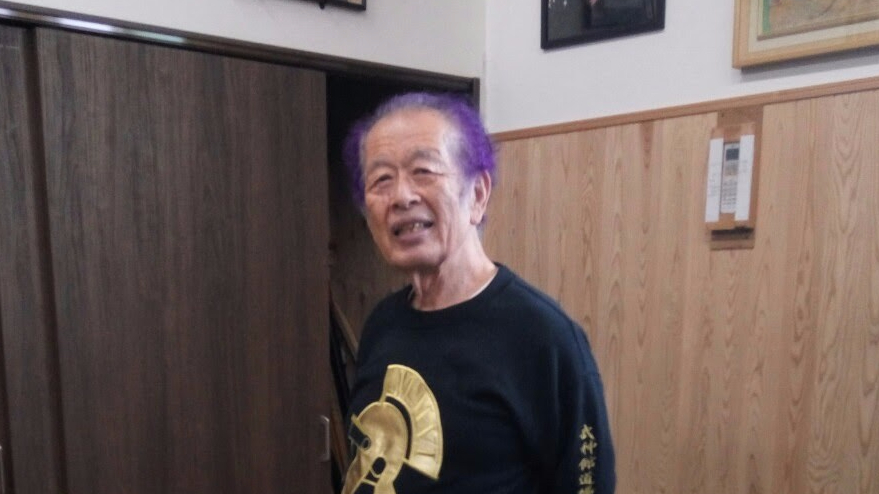
Hatsumi sensei is getting deeper, every class, into the world of Mutō Dori.
The majority of you is now familiar with the vast complexity os this concept that we have been training on and on for nearly a year and a half now.
As he explained here, Mutō Dori is not only the “unarmed defence against a weapon. It is much more. In “Japanese sword fighting”, sensei writes that “(…) Even if you have a sword, Mutō Dori starts with the development of the courage to face an opponent with the preparedness of not having a sword.” (2)
My dragon name being Yūryū, it resonates with me. (3)
Courage is to face the enemy even if you risk to lose your life.
The Mutō Dori of 2017, the way I understand it now, goes beyond this bravery. And he explained it during class when he said “Yokenai”, don’t protect yourself! (4)
Not concerned by the outcome you go straight to the opponent with no intention and ride the wave of his intention. Fear is not at play, you do your best and watch the result. As you have no plan of action, it is Uke that defines your reactions. Not frozen in the “I want to”, your body adapts to the situation.
But this detachment finds its origin in another concept that Sensei mentioned the other night. This concept is Mumei. (5)
At dome point during the class, Sensei did a particular grip on the sword, and I went to ask for its name. “There is no name for it” he answered. Maybe I looked puzzled, so he added “at Mutō Dori level many techniques have no names. You do them naturally.”
Kacem late told me that these techniques have no name (even if they have) because a name would limit them. I thought of Plato saying that “knowing the words led to the understanding of the world.”
It means that when you name something, you define it. You set limits to what it is, and what it is not.
Therefore, you are trapped by its definition. And this is where the Oriental philosophy have invented Mumei, the “no-name” concept, so familiar to Zen practitioners. Mumei doesn’t limit things to a single reality. Things are not “de-fined”, they have no boundaries, no finitude.
In Mutō Dori, as you don’t name the technique you stay away from the limits of the definition.
This is why Sensei moves naturally. On a few occasions, he dodged easily the sword and knife attacks of Shiraishi sensei, he kept walking towards him as if nothing would touch him. Strangely, nothing cut or stabbed him, his distance was always perfect. Because in the “un-limited ” world of Mumei and Mutō Dori, there is nothing to fear.
“Courage knows what not to fear,” said Plato. When you face your opponent with no fear, you cannot be defeated. So, you don’t need to protect yourself, Yokenai!
_________________________
1. 無刀捕, Mutō Dori
2. “Japanese sword fighting”, by Hatsumi sensei, pages 64 and 65 (published 2005 by Kodansha). Read here. More on Mutō Dori here
3. Yūryū: 勇竜, Dragon of bravery; courage; heroism. At the beginning of the 90s, Hatsumi Sensei gave us, Yūro Shi Tennō, “dragon names.” Today people don’t bother receiving them; they only add a dragon name to look cool. (sic)
4. Yokenai: 除け無い, yoke/protection + non-existent, not being there
5. Mumei: 無名, nameless, anonymous
Paris Taikai 14th to 16th of July. 3-day seminar with Sven Bogsater, Peter King and Arnaud Cousergue. Registration opened here

 …
… Don’t be selfish!
 …
… This year Mutō dori is about controlling Funiki, your environment.
 …
…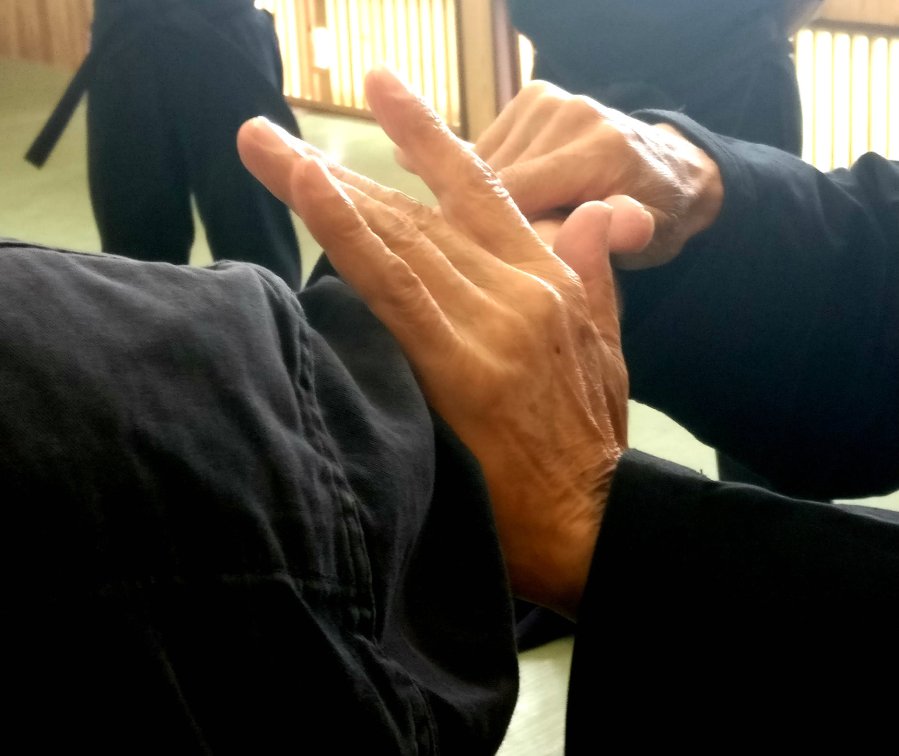 Senō sensei’s class was very technical, even more than usual. Luckily my partner was Holger, and we were both very much into learning because it was not easy.
 …
…

 …
… “I cannot teach anybody anything. I can only make them think” Socrates
 …
…

 …
…

 …
…

 …
…