Skip to content

Why Do You Take Ukemi?

From Bujinkan Santa Monica by Michael
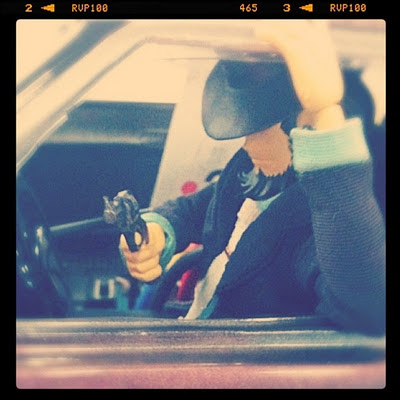
photo by rick manwaring
Bujinkan ukemi doesn't look impressive. It's not supposed to. It has other goals.

In my Tuesday night class we were studying koshi kudaki. There are many levels to studying such a simple looking technique. First you need to understand the attack which is normally a type of hip throw like o goshi or harai goshi. As we were studying the attack, one of the students who also studies Judo was taking proper Judo ukemi. I suggested to him that this was creating a bad habit. His ukemi looked great, so what was bad about it?

It is important when studying any martial art to understand the goal of the study. In many modern arts, the goal is sport. In sport, there are judges to determine points or winners. But the judging gets more insidious. Your teacher naturally judges your form or technique. Your fellow students judge as they watch you. You even judge yourself. All this judging creates an impulse toward pretty form. Clean moves. Flashy kicks or throws. Satisfying slaps on the mat during ukemi. Even tapping out becomes part of the aesthetic.

Then ukemi training becomes very formal and repetitive to develop form and instant response.

None of this is real. It is all set up under false conditions that would likely never occur in combat. Hatsumi Sensei says,
"Don't take ukemi. When you take ukemi you create openings. In the moment you think, "I have to take ukemi here," you're actually open because your mind is occupied with something else. Don't take ukemi. Just let it happen. For example, if you use your hands in taking ukemi, you won't be able to use weapons against your opponent and you'll be killed as a result. You're occupied."
Bujinkan ukemi is more about natural response in the moment. It has few flashy moves and is not a big crowd pleaser at martial arts demos.

The Bujinkan sometimes faces criticism in the martial arts community because it doesn't have this aesthetic appeal. People don't understand what they are looking at. It is often hard even for experienced Bujinkan students to understand what Sensei is doing even as he does it right before their eyes.

What are some of the goals with our ukemi?

One is safety for the uke. Being able to survive being kicked, punched thrown, grappled, stabbed, shot at… whatever the situation demands. Survival ukemi isn't showy. And no two incidents look alike. In many martial arts dojos you walk in and find students all falling the exact same way repetitively. In Bujinkan classes, rarely do you see any pair of students falling or taking ukemi the same way. Training cookie cutter, repetitious ukemi can build bad habits that can get you injured.

Another goal of our ukemi is escape or evasion. You won't see this in any competition. So the training that sports martial arts do also has this large gap or absence in their curriculum. And, the ukemi they teach may be corrupted and dangerous because of this.

A third important aspect of our ukemi is countering. Often, the ukemi is the counter. Sports martial arts do have this but their end goal is different: i.e. pleasing judges (or the audience), a tap out or submission, maybe KO). These end goals again corrupt the use of natural ukemi that is a very powerful tool for countering.

Our ukemi has other goals as well like kyojitsu, searching and situational awareness, or accessing weapons.

Natural ukemi rarely looks impressive. It looks sudden, clumsy, chaotic or when done superbly, just blends with the attack to appear like nothing at all. But if it meets any of the above goals, then it was correct ukemi.

Hatsumi Sensei says,
"Those who take ukemi as Budoka are just amateurs."
For those of you who study arts besides Bujinkan, please ask your self next time you hit the mats: Why fall this way? Why be thrown this way? Why slap the mat? What is the purpose of your ukemi?


Jōtai 状態: The Art of the Situational

From Bujinkan Santa Monica by Michael

Making His Move, photo by Petteri Sulonen
Hatsumi Sensei often speaks in English. Of course his accent is Japanese so you may not notice or understand. One English phrase he says often is "case by case." When he says this the translator will often repeat it just because it is hard for ears not accustomed to the Japanese accent to catch the meaning.

What might he mean when he says "case by case?" In English, when someone says to consider something on a case by case basis, it means to judge each situation independently and as unique, even though it may appear similar.

Hatsumi Sensei also uses the word 状態  jōtai which is the current status;  condition;  situation;  circumstances;  or state. This suggests the ever changing state cause by the bufu blowing through the kukan and our connection to this.

When we study fighting in class, our actions often become fixed. The opponent repeats the same attack as we attempt the same technique over and over to study it. This is not real. And students often get confused when they realize this. A question that I often get from them is, "What if?"

What if the opponent changes his attack? What if he had a weapon? What if there are multiple attackers? My opponent would never let me do this, what if he resisted?

So of course, each individual situation is unique. We can't study them all. So we build adaptability and flexibility into our taijutsu. Like a rope.

Jōtai can be written with different kanji: 縄体 meaning rope. Hatsumi Sensei has used the rope as a tool to help us reach this understanding. And I highly recommend this study. In my Sunday classes we are making a thorough exploration of Hojojutsu, Hayanawa, and all flexible weapons. It is challenging indeed.

Here's something you can try. Take any kata. One that you feel you know well. You know you can do every step blindfolded while eating tacos. Then introduce a rope into the movement. Try to use the rope during the kata.

What happens next is that the rope has a mind of it's own. It will do it's own thing. So every time you do the kata it will be unique. Most people's results end up being sloppy and awkward as their taijutsu is abandoned while they try to cope with the chaos of the rope.

One hint is that the effective use of the rope is in connection. Connecting to your opponent through the kukan. The rope can physically represent this connection like in a game of tug of war. Or the connection can just be through your kamae. Or even further, the connection is not just with your opponent. It is like the spider web from heaven in Hatsumi Soke's Daruma painting.

One day in class Soke said that Takamatsu told him,
"What works most effectively is to make the connection and then push. Don't think of doing anything, just think of making that connection there."
Sensei then went on to remind us of our larger connections and responsibilities,
"When you're fighting or  tied up like this, and you think of trying to take a lock or something that doesn't work - these things are very effective. This is martial arts. Therefore don't teach anybody bad. Only good people. Just know budo and teach those people with good hearts and keep going."
Even though I am too young to have met Takamatsu, it's nice to feel that connection from Hatsumi Sensei back through Takamatsu and to all the Bujin that have gone before.


New DVD’s from the Sweden Tai Kai 2011

From 8þ Kabutoshimen by admin

Sveneric Bogsäter from Holland together with Rob Renner, Duncan Stewart and Steve Olsen from Japan was invited to teach at this Swedish Tai Kai organized by Mats Hjelm and Svenska Bujinkanförbundet. There was two DVD’s and two download videos released from this seminar. This Video is one part of this set.

At the Taikai all instructors had three classes each, one class with the whole big group, one class with all Shidoshi (5′th dan and above), and one class with Mudansha & Yudansha (beginners up to fifth dan).

The instructions is all in ENGLISH. The DVD is Region Free and NTSC (US/Japan format, works on modern DVD players)

Available for 239.00 SEK at BUDOSHOP.SE

On this DVD – Sveneric Bogsäter & Rob Renner

This two hour DVD is packed with good demonstrations and instructions from Sveneric Bogsäter and Rob Renner. Sveneric had recently been in Japan, and Rob Renner has lived in Japan for many years, so what they taught was very much the feeling from Japan trainings with Hatsumi Soke and the Japanese Shihan.

Sveneric taught Kihon-happo variations against one or two opponents to the whole group. At the Shidoshi-class he taught Taijutsu and Hanbojutsu. At the Mudansha & Yudansha class he taught Taijutsu

Rob taught how to understand the distance and footwork with unarmed and with a Hanbo to the whole group. At the Shidoshi class he taught how to do the Kihon-happo techniques against someone who is resisting, directions, balance breaking and distance. Against one and several opponents. Rob’s Mudansha and Yudansha class is available on download file only (click here!).

Duncan Stewart & Steve Olsen

Available for 239.00 SEK at BUDOSHOP.SE

On this DVD – Duncan Stewart & Steve Olsen

This two hour DVD is packed with good demonstrations and instructions from Duncan Stewart and Steve Olsen. Both Duncan and Steve has lived in Japan for many years, so what they taught was very much the feeling from Japan trainings with Hatsumi Soke and the Japanese Shihan.

Steve taught Taijutsu to the Shidoshi class and to the class with the whole big group. The Mudansha and Yudansha class is available only as download video (click here!).

Duncan taught drills how to learn the correct distance to the opponent, and Taijutsu techniques with or without small concealed weapons. To the whole big group he taught and demonstrated Taijutsu with devastating efficiency. Unfortunately there was no footage of his Mudansha and Yudansha class.

On This video – Steve Olsen

20 minutes, 243 Mb for $6.99
Only available as download

This video is 20 minute where Steve Olsen taught the Mudansha and Yudansha class (ranks below 5′th dan). He taught a little sword cutting technique but mostly Taijutsu.

On This video – Rob Renner

32 minutes, 388 Mb for $6.99
Only available as download

This video is 32 minute where Rob Renner taught the Mudansha and Yudansha class (ranks below 5′th dan). He taught footwork, distance, taijutsu and unarmed training drills that will make you understand the basics better.

The post New DVD’s from the Sweden Tai Kai 2011 appeared first on 8þ Kabutoshimen.…

Tai Kai DVD from 2011 is ready to be shipped

From Sweden Taikai 2012 by Sweden Taikai 2012

Sveneric Bogsäter from Holland together with Rob Renner, Duncan Stewart and Steve Olsen from Japan was invited to teach at this Swedish Tai Kai organized by Mats Hjelm and Svenska Bujinkanförbundet. There was two DVD’s and two download videos released from this seminar. This Video is one part of this set.

At the Taikai all instructors had three classes each, one class with the whole big group, one class with all Shidoshi (5′th dan and above), and one class with Mudansha & Yudansha (beginners up to fifth dan).

The instructions is all in ENGLISH. The DVD is Region Free and NTSC (US/Japan format, works on modern DVD players)

Available for 239.00 SEK at BUDOSHOP.SE

On this DVD – Sveneric Bogsäter & Rob Renner

This two hour DVD is packed with good demonstrations and instructions from Sveneric Bogsäter and Rob Renner. Sveneric had recently been in Japan, and Rob Renner has lived in Japan for many years, so what they taught was very much the feeling from Japan trainings with Hatsumi Soke and the Japanese Shihan.

Sveneric taught Kihon-happo variations against one or two opponents to the whole group. At the Shidoshi-class he taught Taijutsu and Hanbojutsu. At the Mudansha & Yudansha class he taught Taijutsu

Rob taught how to understand the distance and footwork with unarmed and with a Hanbo to the whole group. At the Shidoshi class he taught how to do the Kihon-happo techniques against someone who is resisting, directions, balance breaking and distance. Against one and several opponents. Rob’s Mudansha and Yudansha class is available on download file only (click here!).

Duncan Stewart & Steve Olsen

Available for 239.00 SEK at BUDOSHOP.SE

On this DVD – Duncan Stewart & Steve Olsen

This two hour DVD is packed with good demonstrations and instructions from Duncan Stewart and Steve Olsen. Both Duncan and Steve has lived in Japan for many years, so what they taught was very much the feeling from Japan trainings with Hatsumi Soke and the Japanese Shihan.

Steve taught Taijutsu to the Shidoshi class and to the class with the whole big group. The Mudansha and Yudansha class is available only as download video (click here!).

Duncan taught drills how to learn the correct distance to the opponent, and Taijutsu techniques with or without small concealed weapons. To the whole big group he taught and demonstrated Taijutsu with devastating efficiency. Unfortunately there was no footage of his Mudansha and Yudansha class.

On This video – Steve Olsen

20 minutes, 243 Mb for $6.99
Only available as download

This video is 20 minute where Steve Olsen taught the Mudansha and Yudansha class (ranks below 5′th dan). He taught a little sword cutting technique but mostly Taijutsu.

On This video – Rob Renner

32 minutes, 388 Mb for $6.99
Only available as download

This video is 32 minute where Rob Renner taught the Mudansha and Yudansha class (ranks below 5′th dan). He taught footwork, distance, taijutsu and unarmed training drills that will make you understand the basics better.

死門 Shimon: Gates of Death

From Bujinkan Santa Monica by Michael

Old City Gate photo by cliff1066™
Hatsumi Sensei tells us that we should awaken to the fact that we are only living in the space between life and death.

I've had a lot of death in my life recently. Every year that goes by, it seems that I know more and more people who are no longer around. That is natural as I grow older I guess. But in noticing this I also determine that death is always there, I just am not aware of it.  This awareness is an important quality in Budo.

People can misunderstand the famous quote from Hagakure, "The way of Bushi is the way of death." I think Soke is leading us to different understanding of that phrase. He says,
"All worldly things are impermanent; life and death are but one. Bushido is what runs through the Wabi and Sabi (transient beauty) of nature. Yet I feel compelled to say that enduring to the end no matter what happens, persevering with life despite being prepared for death at any time, is actually the secret of Bushido."
This "secret" has opened up important lessons for me in my training and my life. That space between life and death exists in the kukan. One day in class Soke told us to make space in the kukan where we could live. It confused me at the time. But I'm beginning to discover how to use that in the midst of danger. This is one aspect of the idea 九死一生 (kyuushi isshou, nine-deaths-one-life), meaning “a narrow escape from death,”

Sensei quotes the famous Zen Samurai Suzuki Shōsan,
"Knowing life and death; therein resides enjoyment."
Being aware of death in this way can get us intimately aquainted with the effects of impermanence. Shōsan taught that no one should forget their own mortality. But how does one find enjoyment in that?

As I write this, the founder of Apple, Steve Jobs just passed away. Here is his take on death awareness,
“Almost everything–all external expectations, all pride, all fear of embarrassment or failure–these things just fall away in the face of death, leaving only what is truly important. Remembering that you are going to die is the best way I know to avoid the trap of thinking you have something to lose. You are already naked. There is no reason not to follow your heart.” – Steve Jobs’ Stanford Commencement Address
If you take this lesson to heart you won't waste time being a 八方美人 (happou bijin, eight-directions-beautiful-person) or someone who tries to be all things to all people. You may quickly find yourself at the 死門 shimon gates of death. In buddhism this is the gate, or border of death, leading from one incarnation to another.

As I think of all my friends and family that I have lost recently, I try to remember that there is a connection from birth, through life to that 死門 shimon. I cannot honor the joy that their lives brought me without also accepting their death. Or that my own path will follow theirs. Sensei says,
"Life and death are connected. Like In-Yo. Like a magnet and metal, life and death are attracted to each other, always getting closer."
So if you truly want to understand our training, it won't be morbid or wrong to do as Shōsan suggested: "Make the one character "death" master in your heart, observing it and letting go of everything else."


STEVE OLSEN from SWEDEN TAI KAI 2011

From Budoshop by BUDOSHOP.SE

20 minutes, 243 Mb for $6.99
Only available as download

Sveneric Bogsäter from Holland together with Rob Renner, Duncan Stewart and Steve Olsen from Japan was invited to teach at this Swedish Tai Kai organized by Mats Hjelm and Svenska Bujinkanförbundet. There is two Tai Kai DVD’s and two download videos released from this seminar. This Video is one part of this set.

At the Taikai all instructors had three classes each, one class with the whole big group, one class with all Shidoshi (5′th dan and above), and one class with Mudansha & Yudansha (beginners up to fifth dan).

On This video – Steve Olsen

This video is 20 minute where Steve Olsen taught the Mudansha and Yudansha class (ranks below 5′th dan). He taught a little sword cutting technique but mostly Taijutsu.

Sample clip

Later…

About the download

Click here for more information about our download files and how it works!

ROB RENNER from SWEDEN TAIKAI 2011

From Budoshop by BUDOSHOP.SE

32 minutes, 388 Mb for $6.99
Only available as download

Sveneric Bogsäter from Holland together with Rob Renner, Duncan Stewart and Steve Olsen from Japan was invited to teach at this Swedish Tai Kai organized by Mats Hjelm and Svenska Bujinkanförbundet. There is two Tai Kai DVD’s and two download videos released from this seminar. This Video is one part of this set.

At the Taikai all instructors had three classes each, one class with the whole big group, one class with all Shidoshi (5′th dan and above), and one class with Mudansha & Yudansha (beginners up to fifth dan).

On This video – Rob Renner

This video is 32 minute where Rob Renner taught the Mudansha and Yudansha class (ranks below 5′th dan). He taught footwork, distance, taijutsu and unarmed training drills that will make you understand the basics better.

Sample clip

Later…

About the download

Click here for more information about our download files and how it works!

Paying problems and Facebook comments.

From Budoshop by BUDOSHOP.SE

It has come to my attention that some of you had problems paying and download. I think it has to do with Payloadz credit card gateway only allowing a few countries. If you have problems, please try to use the PayPal option instead. PayPal also allows payment with credit cards, and from a lot more countries. So please use the PayPal as Payment method.

Facebook comments

I also noticed that the comment option was not working (I don’t know for how long because no one said anything since I installed and tested it, and it worked). Please feel free to go and add comments to each video. You need a Facebook account to do it, I know some don’t use FB but this way we will filter out 99% of the spam comments.
We won’t censor the comments, we think that everyone can stand for what they say even when everyone can see who said what (compared to anonymous posts with silly comments). …

Tenchijin University 2011

From Shiro Kuma's Weblog by kumablog

Reminder: Tenchijin University in PAris from October 15th to 19th (late). We will cover all the techniques and fundamentals of the Tenchijin Ryaku no Maki established by Hatsumi Sensei as the prerequisite for the study of the bujinkan martial arts back in 1983.

We will work on the revised structure by sensei from 1987.

Classes will bein French and English and 9 manuals will be given to follow the classes and to take notes.

Trainings will be partly indoor and partly outdoor

Lunches (sandwich) are provided as well as free lodging at night in the dôjô.

If you are interested please visit the website: http://tenchijinuniversity.wordpress.com/