Skip to content

Togakure Ryu and Kukishin Ryu deeper

From Blog – Bujinkan Kokusai Renkoumyo 武神館國際連光明道場 by Toryu

Is the link between the Togakure Ryu and Kukishin Ryu deeper than we thought???

In the middle ages, there was a very serious samurai practice to take written vows when undertaking the study of a military science, especially when the pupil is from outside of the family.

In the case of the Kukishin Ryu, the Kuki family to this day still preserves a document from 1532 CE that has been continuously added to until modern times. The document is the 2nd scroll in a set of two titled “Seiyakusho” (誓約書). It is a written oath that pupils sign upon formally entering the school or “Ryu”. It is a promise to uphold the true meaning and spirit of the martial arts (military arts) and that one promises to cultivate a great sense of justice. The signature is traditionally accompanied by a thumbprint in blood, vowing they will never reveal what they have been taught to others without the master’s permission.

In the book Kukishinden Zensho by Ago Kiyotaka in 1983 he writes that he could hold in his own hands and examine this original 1532 CE document carefully. He notes that the more recent portion of the document leading up to the modern times was re-written by Kuki Takaharu in 1904.

This list is a veritable all-star list of Japanese military commanders and master swordsmen. Including Yamamoto Kansuke (Red Star on pic), known to have studied Togakure Ryu ninjutsu from Fujibayashi Nagato no Kami. The list also includes Sanada Masayuki (Green Star), the father of Sanada Yukimura. Both men are recorded as hiring local shugenja from the Togakure and Iizuna regions as shinobi and “Kamari” commandos in their forces.

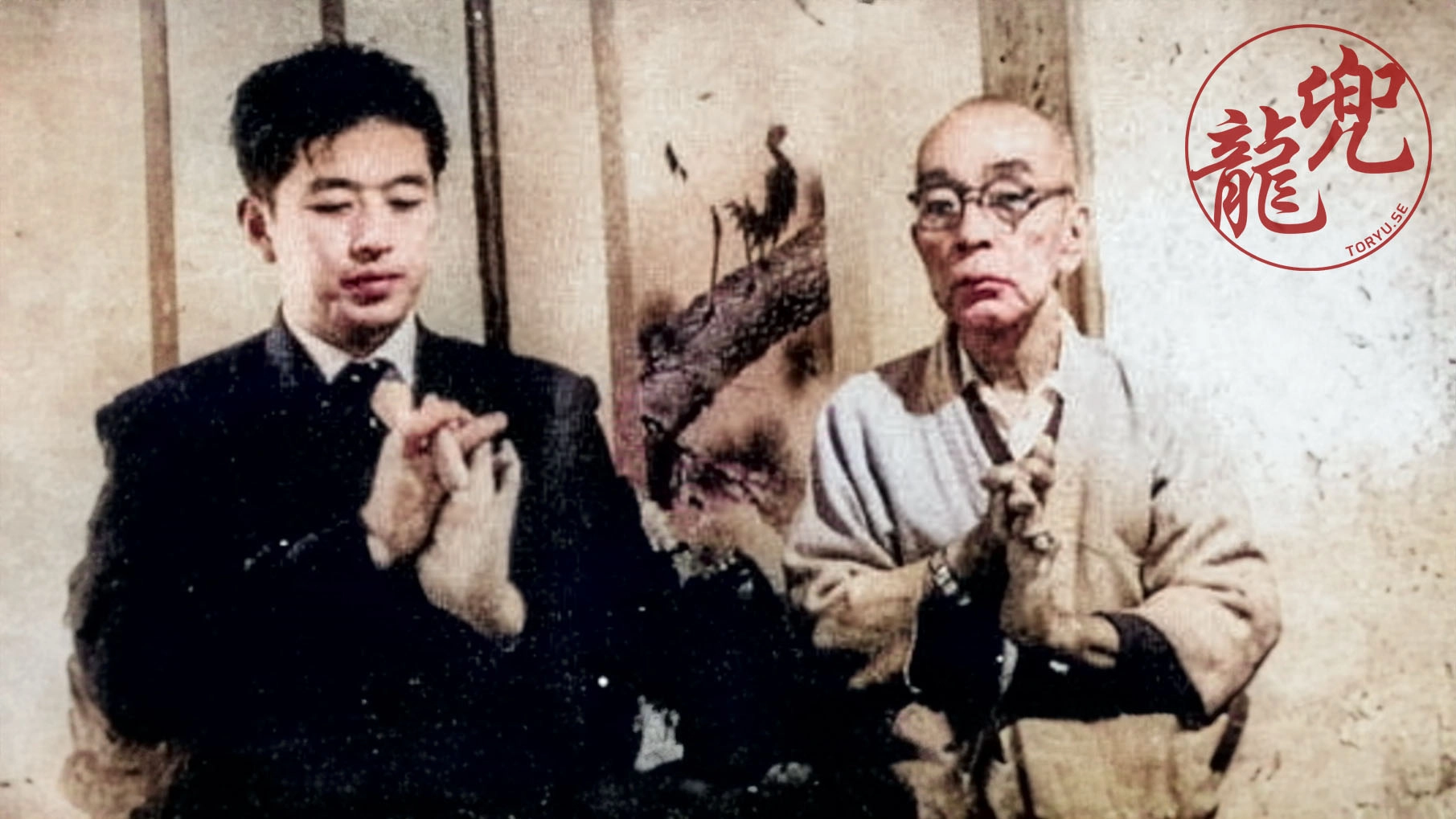
Takamatsu Toshitsugu (Yellow star), our current Soke’s master also signed this list in 1899, vowing his allegiance to the emperor and the nation and to protect the teachings of the Kukishin Ryu. His “Kohai” or junior training partner Iwami Nangaku signed the list in 1922.

As Kuki Takahiro (隆博) died in WWII he was the last signature on the list as the Kuki family has taken vows of peace and no longer are involved in the martial arts. They now run several successful businesses and corporations all over the country and still administrate the Kumano Grand Shrine.

The original document list begins in 1532 with the vows and signatures/stamps of;

Kuki Yagoro, 1532 CE

Yamamoto Kansuke, 1534 CE

Kuki Moritaka, 1573 CE

Kuki Yoshitaka, 1574 CE (Formed the Kuki Navy from various bands of pirates from the Shima region)

1 name omitted

Sanada Masayuki, 1577 CE (Father of the famous Sanada Yukimura who used Shinobi from Togakure)

Bessho Nagaharu, 1576 CE

2 names omitted

Itō Ittōsai, 1573 CE (Famous master swordsman, 2nd to only Miyamoto Musashi, 33 matches, no losses)

Kuki Shigetaka, 1576 CE (Son of Kuki Yoshitaka)

Kuki Takasue, 1597 CE (Son of Kuki Moritaka)

Miyamoto Musashi (Black star), 1494 CE (Here we have an enigma, the date is exactly 100 years too early but it is for the famous swordsman, the Kuki family claims that it is the same Miyamoto Musashi who wrote the book of 5 Rings and fought over 60 duels with only one loss, I think the date may be a typo and should read 1594 putting Musashi at around 10 years old, the normal age of taking these vows)

Chōsokabe Motochika, 1595 (Daimyo of the Chōsokabe Clan)

Takagi Oriemon (Blue star), 1616 CE (Founder of the Takagi Yoshin Ryu)

Kuki Takayuki, 1648 CE (Daimyo of the Tanba Ayabe Domain)

1 name omitted

Kuki Takanao, 1662 CE (3rd Daimyo of the Tanba Ayabe Domain, brought Kito Ryu into the Kuki family)

Kuki Takahide, 1683 CE (Son of Kuki Takanao)

Shibukawa Bangoro, 1625 CE (Founder of Shibukawa Ryu Jujutsu)

Kimura Ittosai, 1649 CE (no information on him at this time)

Kuki Takashin, 1712 CE (Founder of the Shima branch of the Kuki family)

Kuki Taka??, 1743 CE (no information at this time)

Kuki Takanori, 1773 CE (8th Daimyo Lord of the Tanba Ayabe Domain)

3 names omitted

Ishitani Matsutaro, 1868 CE (Takamatsu Sensei’s 2nd master)

Takamatsu Toshitsugu, 1899 CE (Hatsumi Sensei’s master)

Iwami Nangaku, 1921 CE (Takamatsu Sensei’s Kohai under Ishitani Sensei)

9 names omitted

Shiozaki Katsuo, 1923 CE (Student of Iwami Nangaku)

Essay by Sean Askew
Bujinkan Kokusai Renkoumyo
9/6/2018


Let’s know in the comments. Please, if like what we are doing, click “Like,” “Fellow”, give us “Feedback” “comments,“ and get a notification about a new post.…

Bo Munthe, 70 years

photo-1Bo Munthe was the pioneer who brought Bujinkan to Sweden and Europe in. In 1975 Ischizuka Sensei came over for two weeks and introduced Bo to Bujinkan Budo Taijutsu (then simply Ninjutsu), shortly after he went over to Japan and met Hatsumi Soke for the first time. If it wasn’t for him, who knows when someone else would have brought the art to Europe. He recently had his 70’th birthday. Hooray!

Click on over to Svenska Bujinkanförbundet’s web site and write him a few words.…

Web site updates

NinZine-iPadI just updated the quote of the day script by Soke (from the old Ura Omote newsletters). If you want to subscribe to it the rss feed is http://feeds.feedburner.com/BujinkanQOTD A new quote will be generated once daily when someone visits the blog (http://bujinkan.me/ninzine/). It is displayed on the right sidebar on the blog.

Every once in a while the syndication feed go nuts and republish hundreds of articles again. Then I have to go in and delete all duplicates. I don’t know how to prevent it from happening again, WordPress and all plugins are up to date. I even installed a plugin that is supposed to stop duplicates from being posted, but it’s not working all the time.

We’re still working on the community (http://bujinkan.me), if you have any suggestions please join and get active in the forums. There is a really simple password everyone in Bujinkan knows to keep out bots from signing up and start spamming.

Logo(vitBG)

Happy Training!

/Mats…

I cleaned up the database

There was 4700 duplicate postings (some kind of bug a while ago). Now we got nearly 900 posts since October 2005, lots of really good posts to!…

The value of attending a seminar as a “beginner”

Mats Hjelm posted an entry over at taikai.se in Swedish which I thought would be beneficial for non-Swedish speakers to also read (or rather “absorb”). So, I translated it, trying to keep as much of the meanings behind what was stated as possible. The below is this translation.

I would like to note as well that during the weekend, these words proved its worth to me. I went to a seminar teaching Brazilian Ju Jutsu. As someone from a different discipline, it was quite interesting to see that not just those from other arts were doing their best to absorb everything shown, but also those already training in BJJ were absorbing as much as they could. Again, what each one of us brought home with us will be different, we all learned new things. No matter our grade, nor what art we normally train in, we all found new things.

The seminar Mats mentions at the end of his post is the Bujinkan Taikai taking place in Stockholm next weekend. More about that on http://taikai.se

//anders

Sometimes I am asked by beginners wondering if it is worth it going to a seminar, if they will be able to keep up? Will they understand anything? I can understand that it may seem a little frightening or daunting to go to a seminar for the first time when there are so many high ranking buyu there, also training.

But I have to point out that even those that are higher ranking are “beginners” when you go to a seminar! There are perhaps those that take on a “helping instructor” role, warranted or not. But most goes to a seminar to develop, train, have fun and find inspiration.

What you can absorb is of course different depending on earlier experiences. If you have trained for a shorter period you will carry home a lot that can give you many years inspiration for your own training.

I know that there are instructors that rarely or almost never attend seminars, for which there may exist several reasons (I do not wish to judge them). If instructors do not encourage their students to go to a seminar, that may also have its reasons. Maybe they don’t know about the seminar, maybe can’t attend themselves and are worrying about the balance in the dojo will be disrupted if the students learn something new.

What I want to say is that it is you, the beginner, that is the future! It is you that has to look towards your own good. Do not worry about non-training friends wanting to get you out partying this one weekend. If you have good friends they will understand that you will be training this particular weekend. You have to decide on your own over what is important. Neither your controlling instructor or nagging friends can stop you from training if that is what you really want to do.

The instructors you look up to have gotten to their level and proficiency by themselves deciding that their own training comes before controlling instructors, girl friends, boy friends and friends. They too once were beginners and learned to set priorities. Ask them and I can almost promise you that they still see themselves as curious beginners. Which is why they are good practitioners and nothing else.

I remember a discussion about ten years ago with Soke in the Honbu Dojo. Soke was talking about different levels, dimensions etc. in Mikkyo. Someone asked what the highest level was and I remember Soke’s reaction.

He said that he didn’t know, but he was pretty sure that there is always a higher level (than where one is) and that this is why we must keep practising.

It is this which makes me think that the Bujinkan is so wonderful compared to other arts of Budo. Just diving head first into the training, trying to have as much fun as possible, without caring if it is hard or simple.

I hope this has encouraged some beginners to take the step and participate at this fantastic seminar next weekend.

Ganbatte kudasai!

/Mats (translated by Anders Holm)…

Istanbul seminar 2011

From 8þ Kabutoshimen by Toryu

Haburamu dojo

I think this was my 7′th or 8′th time I’ve been invited by Ercan and the Bujinkan Haburamu Dojo in Istanbul. I feel honored to be invited back so many times, I must be doing something right. The organizer hadn’t asked for any special theme so I joked and asked if they wanted chaotic training. And they said yes. Well if you know me I like to have a special theme to go by so I thought I would do the Gyaku-gi from Chi-ryaku no maki, but I would do them all both omote and ura.

Ura oni-kudaki

裏鬼砕 Ura oni-kudaki

逆技 GYAKU GI

  1. 竹折 Take-ori
  2. 表逆 Omote-gyaku
  3. 裏逆 Ura-gyaku
  4. 本逆 Hon-gyaku
  5. 表鬼砕 Omote oni-kudaki
  6. 裏鬼砕 Ura oni-kudaki
  7. 武者捕 Musha-dori
  8. 武双捕 Musō-dori
  9. 大逆 Ō-gyaku

It is said that when you take the opponent on his back you will let him live, you give him the gift of life. And if you take him down on his face you will take his life. When a samurai died on the battle field and was found dead lying with his face down they would say that he died with honor. If they found him dead on his back they would say he died without honor. So if you take the opponent on his back you should let him live and not die in shame.

At the seminar I showed all the above techniques as they should be done (my way!). I did henka, I did them omote and also ura. For example, most of you know that with omote-gyaku and musha-dori you take him backwards. But I also showed how to take him forwards with these techniques. This was the theme I had in mind when starting the seminar, doing an ura technique but taking him omote and the other way.

Henka

I started with the take-ori technique and did many variations, I got lost in time and when it was lunch I realized I had spent half the day on one technique and there was eight more techniques. After lunch I asked what they wanted to do, and someone had asked about musha-dori. So we spent most of the afternoon doing musha-dori, and ended with a simple sword technique.

Istanbul SwordNext day I kept doing the other seven techniques, and later finished with some more simple sword techniques and also hanbo-jutsu. I always enjoyed going to Istanbul for seminars because the students at the Haburamu dojo are so eager and willing to train.

Oh I got a new nick name, “the Bujinkan engineer” from Ercan and his students :-D . Because they said I show so many details in each movement. Well, that is how I look at my own training. I believe this is very important, to look at everything and study it in detail. I’m not satisfied looking at something from only the outside, I want o see how it looks from the inside, under, above, I want to feel the weight, texture, smell, taste, how it sounds and everything else I can think of. Just doing a technique without thinking about it and hope that I someday will understand is just not me.

Of course I can just show 1000 henka on a seminar and let people have fun and maybe not learning anything except moving around, I can do this to, but not too much. Trying to teach like Soke is impossible for me, I’m not technically ready yet. And I’m not doing anyone favors by trying to teach like Soke. But I’m geting there, I like to believe and hope that. I constantly jump between the shu-ha-ri levels; to keep moving, polishing my basics, and also moving freely and let the techniques come naturally. The last part is good for beginners to know about, but they must understand that this can not come easy until the basics have been perfected.

Sultan Ahmed Mosque

Besides from the training I had a good time. On Friday Ercan took me to the Basilica Cistern, this is the largest of several hundred ancient cisterns that lie beneath the city of Istanbul (formerly Constantinople). After this we went to the Topkapı Palace which was the official and primary residence in the city of the Ottoman Sultans for approximately 400 years (1465-1856) of their 624-year reign. We also passed the Sultan Ahmed Mosque. Ercan told me this story; when the Sultan ordered the Mosque to be built he asked for gold minarets, in Turkish language gold is altın. But the architect heard altı which means six. Hence the six minarets of the Blue Mosque. After the sightseeing we had dinner and then the boat back home to prepare for the extra training later this evening.

The food in Turkey is excellent, I especially like Adana Kebab and Şalgam. I was a little disappointed about the pubs, the one that was supposed to be the best had recently closed, “The English Pub” did not even have English beer (not even Guine55 or Ki11kenny), the brewpub turned out to be a loud disco with only one bad pilsener on tap and one slightly better on bottle. But the company of old and new friends was very nice and that is much more important.

After all I had a good time, and look forward coming back soon.

I’d like to say thank you to Ercan for organizing everything! And also to all the people attending the seminar which made all this possible.

See more pictures from this trip, click here.

Ercan filmed the seminar, and he also got film from my camera. Contact him if you are interested in a DVD of this seminar.

Sample video clip

http://www.youtube.com/watch?v=4eDm1UZPOek

Buy the full 75 minute video


75 minutes, 540 Mb for $14.99  

This video is not available as DVD!


The post Istanbul seminar 2011 appeared first on 8þ Kabutoshimen.…

the [youtube] rss feed

The videos to Y*uTub£ did not link correctly for a long time on mobile devices since they changed their API. Now I had some time over to look into it. So from now on I hope all the video links will be correct. I also filtered out [bujinkannice] which have spammed the feed the past months.

I know there are video’s uploaded to YT I wish never was uploaded, computer animated cartoon bears uploaded by an anonymous angry person with an agenda. Mr historian guy who demands answers from Hatsumi Soke who doesn’t even use computers, and when he don’t get an answer within a few hours he calls Bujinkan an fake art based on something he found on the internet. And then there are the persons who doesn’t even train in Bujinkan, but still tag their videos with “Bujinkan” in desperate need to get a bigger audience. So filtering out all this would be impossible unless doing it manually, which I don’t have time to do daily or even feel like. With all this in mind, don’t take the videos posted too seriously.

Happy training!

/Mats…

Bujinkan Hombu NHK Segment

httpv://www.youtube.com/watch?v=JiToAYpEeeI
Bujinkan Hombu NHK Segment

httpv://www.youtube.com/watch?v=ZnuzcC3amkY
棒手裏剣 Bo-Shurikenjutsu. 武神館道場 Bujinkan Dojo, Japan.
Bo-Shurikenjutsu 棒手裏剣 renshu using Bujinkan Budo Taihenjutsu 武神館武道体変術 Hichojutsu 飛蔦術 and Ninja-to 忍者刀.
By Duncan Stewart
武神館道場国際士道師会…