Skip to content

Bujinkan Rokudan 六段: Riding the Bull Home

From Bujinkan Santa Monica by Michael

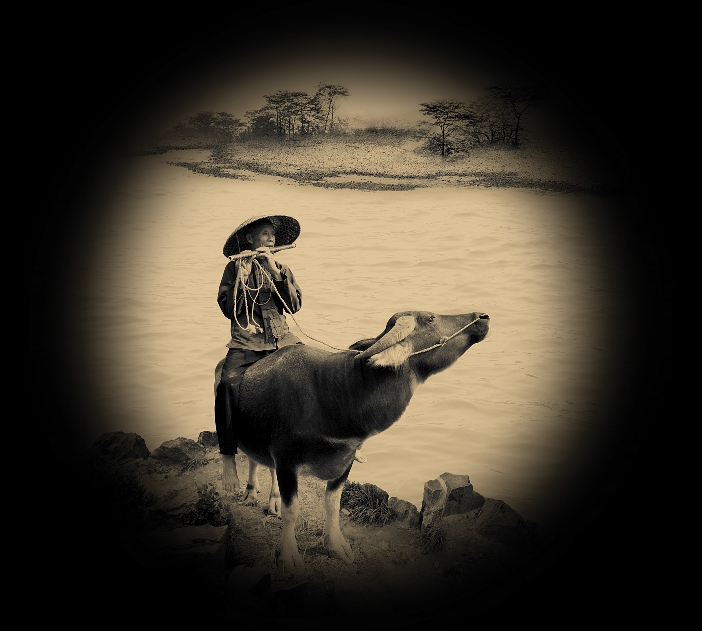
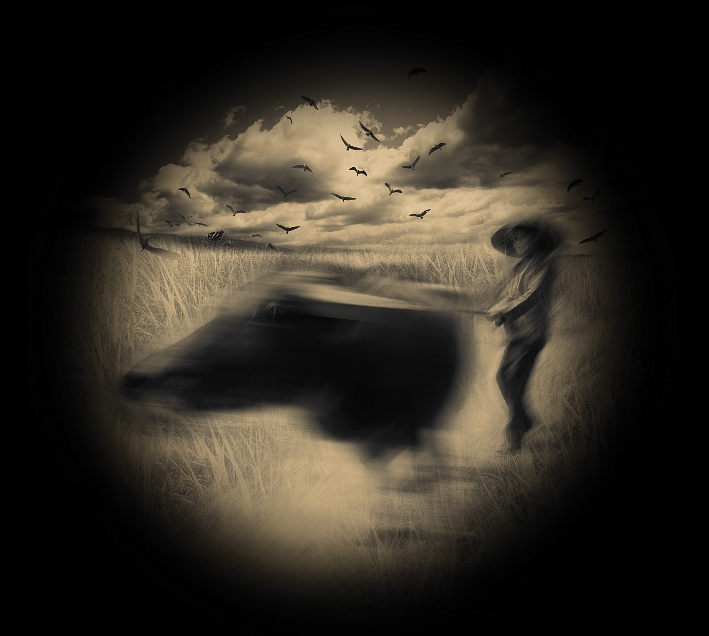
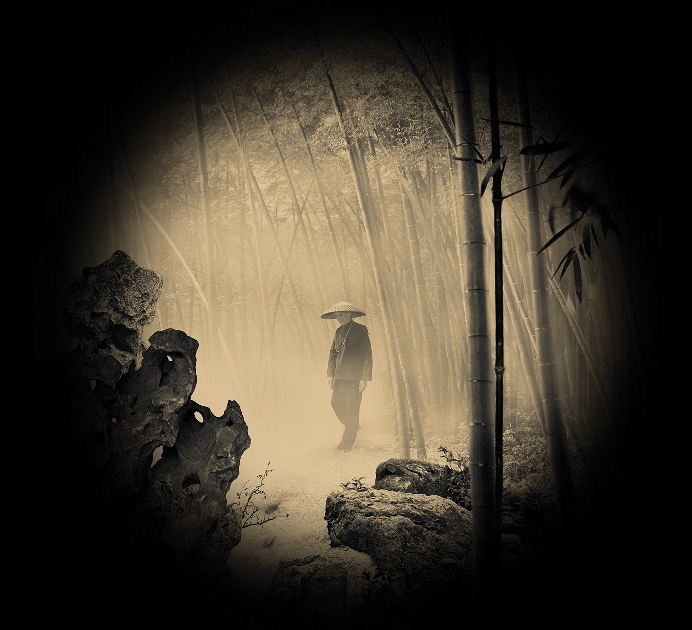
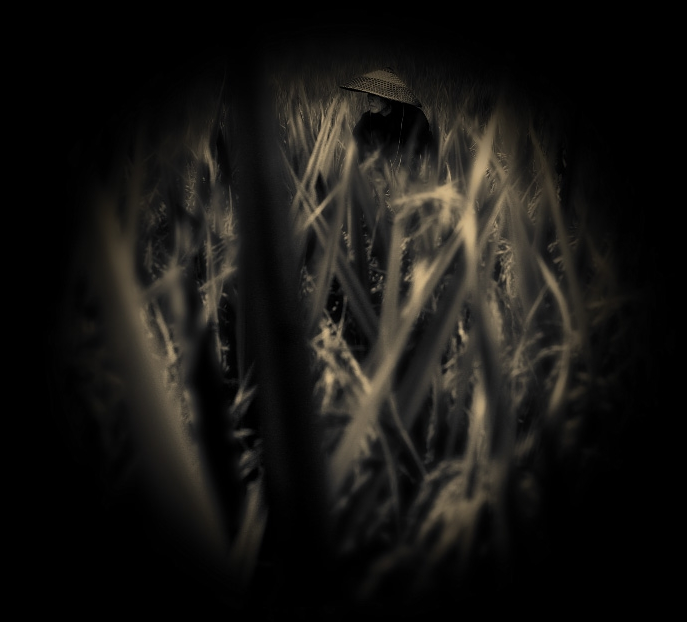
Riding the Ox Home, digital c-print photograph by Andrew Binkley
Hatsumi Sensei describes the journey of a Bujinkan student through the Dan ranks as being akin to the Ten Oxherding pictures in Zen Buddhism. These pictures describe the seekers journey to enlightenment.

If you haven't read my other posts in this series, please check them out. You may find them useful no matter what your rank is:

Bujinkan Shodan 初段: Searching for the Bull
Bujinkan Nidan 弐段: Discovering the Footprints
Bujinkan Sandan 参段: Perceiving the Bull
Bujinkan Yondan 四段: Catching the Bull
Bujinkan Godan 五段: Taming the Bull

Passing beyond Godan brings us to a place of creative play. The Bull (mind) obeys without searching about and we don't need to work to constrain it anymore.
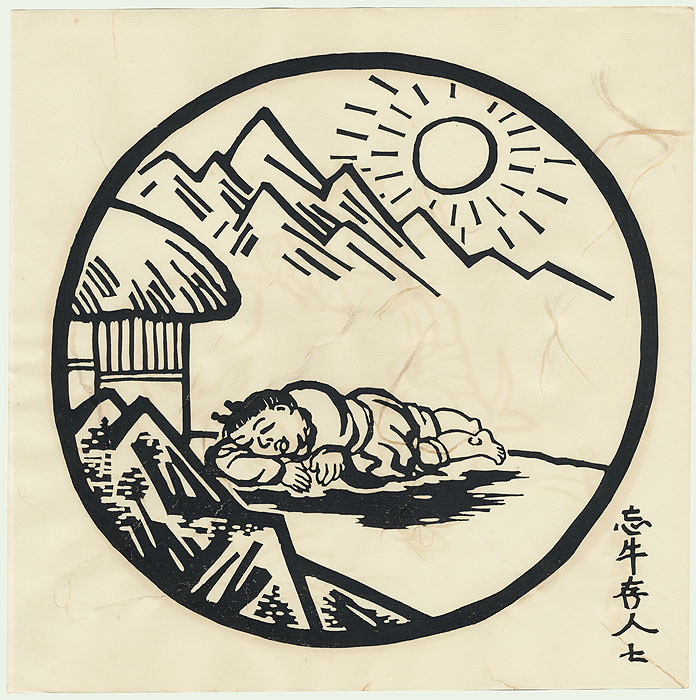
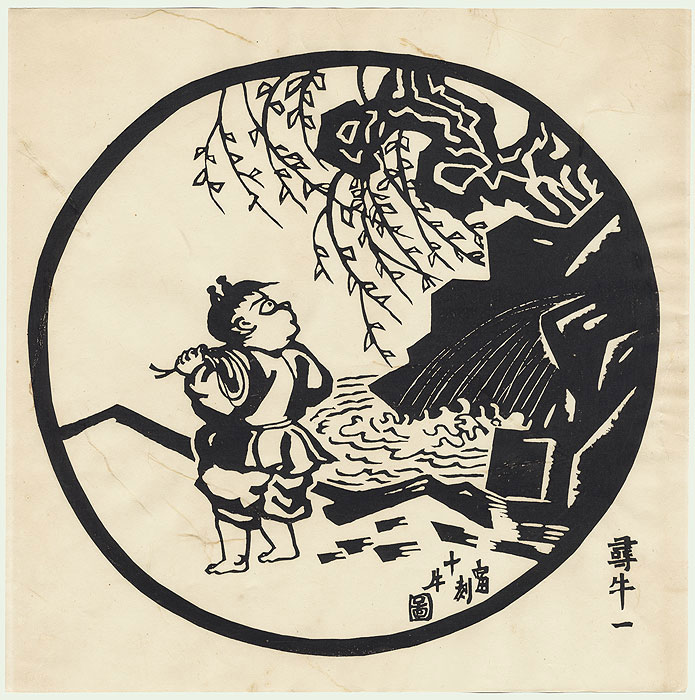
Woodblock print by 德力富吉郎 Tokuriki Tomikichirō

骑牛归家 Riding the Bull Home
Mounting the bull, slowly
I return homeward.

The voice of my flute intones
through the evening.
Measuring with hand-beats
the pulsating harmony,
I direct the endless rhythm.

Whoever hears this melody
will join me.

Sensei says that "When you pass the Godan test, then you realize 無意識 muishiki." This is moving from the unconscious. Once this seed is planted there is nothing to do except allow this state of muishiki to grow. There is no longer any question of trying to prove anything in relation to your rank.

When people first pass Godan, sometimes they continue searching for something in themselves. Some kind of change in ability or looking for more in training and wondering, is this all? At this stage the search comes to rest. The wall between unenlightened/enlightened, strong/weak, soft/hard, good/bad, and win/loss disappears so training follows its own course.

Unhindered, free taijutsu without any blocks.

Here is a trap. You become so free and comfortable and relaxed with training that improvement stops. This is like the middle age of training. People just settle in and enjoy, comfortable in rank and ability. But the real, true polishing of the heart is yet to occur.

Hatsumi Sensei says,
"Just because someone has been training for 40 or 50 years, it doesn't mean anything. Even for myself, no matter how long I've been training.. it's nothing special. I'm still walking along behind Takamatsu Sensei. That's what the tradition means."
Riding the ox home. Where is this home? And why are we not there yet? One experience of home is to be back where it all started, as a beginner. Beginner's mind as they say. Going full circle. We are not there yet because our self is still busy admiring it's own reflection in training or technique. We are not yet able to do taijutsu without observing ourselves in the experience.

Sometimes, like watching the sunset, or listening to the flute, we become nostalgic for the "old" days of training. We tell many stories to junior students about how training used to be. We miss those times.

But every note resonates with us, calling us back to pure training without thought or technique. We can experience the muishiki of the moment of godan anytime in the dojo. And this is like our compass, marking the path ahead.

Here whether we are teaching others, or being taught, we move beyond words and concepts. We can learn so much from a glance of our instructor. Or, a lesson becomes self evident so that when we show a technique, nothing needs to be said.

Hatsumi Sensei uses the word 暗黙的 anmokuteki, which is an implicit teaching. This is a silent, sometimes secret teaching that arises from a natural understanding between teacher and student. The only reason this teaching stays a secret is because the communication is on a level that not everyone is prepared to observe.

We should also teach ourselves in this manner. Then the Ox doesn't need to be led. He knows the way.

Next in this series: Bujinkan Nanadan 七段: The Bull Transcended

Bujinkan Godan 五段: Taming the Bull

From Bujinkan Santa Monica by Michael

Taming the Ox, digital c-print photograph by Andrew Binkley
Hatsumi Sensei describes the journey of a Bujinkan student through the Dan ranks as being akin to the Ten Oxherding pictures in Zen Buddhism. These pictures describe the seekers journey to enlightenment.

If you haven't read my other posts in this series, please check them out. You may find them useful no matter what your rank is:
Bujinkan Shodan 初段: Searching for the Bull
Bujinkan Nidan 弐段: Discovering the Footprints
Bujinkan Sandan 参段: Perceiving the Bull
Bujinkan Yondan 四段: Catching the Bull

In the Bujinkan, Godan is marked by the Godan test. You must be free of doubt to pass through this gate. How do we become free of doubt?


Woodblock print by 德力富吉郎 Tokuriki Tomikichirō
牧牛 Taming the Bull
The whip and rope are necessary,
Else he might stray off down
some dusty road.
Being well-trained, he becomes

naturally gentle.

Then, unfettered, he obeys his master.

Once you have caught hold of the bull, rather than simply hanging on desperately as he bucks and runs around, it is necessary to tame the bull. The Ox or bull in these parables is the mind. In our Bujinkan training, it is the mind, spirit, and body.

Most of us begin training to develop physical skills and abilities. As we search for that elusive quality that our teachers have and seem to create at will, we start to realize we need to develop our minds and spirits equally.

In catching hold of our true nature- our true mind, body, and spirit… we discover where the heart of our training lies. While this is a nice feeling and helpful in the dojo, we may wonder, can we call this essence up at will?

To tame the ox, you must notice, it is not you doing anything. You are not performing techniques. You are not passing the Godan test. You are just sitting.

Having this realization is wonderful. But it is still far from being able to create this and connect to it when needed. The Godan test marks a chance for you to do that. If you pass, there may be a curious sensation of having done something, but not having done anything at the same time.

This is a vital feeling!

A feeling at the root of 虚実 kyojitsu. Truth and Falsehood. In taming the Bull, when you show truth, your taijutsu will be good. When you are mislead by falsehood, the Ox runs away with you dragging behind. To master these two is to understand one is the other. Truth is Falsehood, and Falsehoods are truth. When you can present either one purely the Ox is tamed.

To keep this feeling awake in the dojo requires a renewed focus and disciplined training (whipping the ox). With sincere training that is connected to your true nature, the pure essence of training will be reflected in your heart. This is the polishing of the mirror of our hearts.

The more pure your taijutsu becomes, the less whipping is needed. This will be reflected in your uke's response to your efforts, in your relationships in or out of the dojo, and the naturalness of your taijutsu.

Eventually the Ox is so tame, that you can let him go and he will follow you anywhere. In the dojo, with any uke, on the streets, at work, home, with your family… Your kamae expands to be always present.

When sitting for the Godan test, you should have no doubt about passing. The person giving the test also has no doubt. Their cut is a connection from the heavens down through you into the earth. As Soke often tells us, Don't sever this connection.

We'll see where this leads us with Bujinkan Rokudan 六段: Riding the Bull Home.

Bujinkan Yondan 四段: Catching the Bull

From Bujinkan Santa Monica by Michael

Catching the Ox, digital c-print photograph by Andrew Binkley
Hatsumi Sensei describes the journey of a Bujinkan student through the Dan ranks as being akin to the Ten Oxherding pictures in Zen Buddhism. These pictures describe the seekers journey to enlightenment.

If you haven't read my other posts in this series, please check them out. You may find them useful no matter what your rank is:
Bujinkan Shodan 初段: Searching for the Bull
Bujinkan Nidan 弐段: Discovering the Footprints
Bujinkan Sandan 参段: Perceiving the Bull
So now you've made it to Yondan. For many people in the Bujinkan this is a pivotal moment. This is a moment of getting a hold of yourself… and finding the form of the self is empty.
Woodblock print by 德力富吉郎 Tokuriki Tomikichirō
得牛 Catching the Bull
I seize him with a terrific struggle.

His great will and power

are inexhaustible.
He charges to the high plateau

far above the cloud-mists,

Or in an impenetrable ravine he stands.
I have abandoned the whip and ropes
After some years of training, you go from thinking you know something, to realizing you know very little. Then you might chase various threads and ideas or teachers to see where they lead. At some point you caught hold of something real. But you don't know what to do with it. You've caught the Ox, but you can barely hang on as he stampedes around.

Occasionally you can perform techniques that surprise even you. You feel like, with a little luck you could defeat anyone, no matter their skill level or rank. But this new found ability is uncontrollable. If you reach the point where you can hang onto this feeling, you get taken for a ride. It drags you here and there. But you will not let go.

A large hurdle for martial artists at this stage is being able to transcend aggression. Aggression may have served you in the past. It may have brought victory in certain arenas. For many who don't understand Budo, it is the heart of their study.

But you have caught a hold of something better. And to stay with it requires finesse, precision, and the ability to see. Aggression blinds you from seeing what it is you are holding onto.

Keep your form empty, and empty the self, and you will not lose the Ox.

It is awkward to let go of technique and form that you have trained many years to perfect. This feels like throwing away something valuable. You will still be fascinated by technique and encounter students or teachers that have wonderful technical details to share.

Just because you understand emptiness, doesn't mean you will lose all your habits you have built over years of training. You will still think "you" can discern good and bad technique, good and bad teachers or students, or, the true Bujinkan that you think you are studying. You will put yourself and your ideas forward any chance you get.

The surprising lesson is that all of this is a reflection of the self. If you get mired in form, you will never reach a true understanding of Godan, whether you pass the test or not.
Hatsumi Sensei describes this process:
 "The longer you train you need to be able to ignore things that you don't need.  Things that are unnecessary. And set them aside. 

As you do this, you start to see the bad parts of your own self. And you have to be able to toss those things aside as well. 

Because if you have one bad part of yourself still within you, everything will collapse later.

 So part of what Shugyo is, what training is... is discovering the bad parts of yourself and tossing them aside.

 That's what life is. Not just in the dojo."
A curious thing may happen to you here: you can be trapped in form, but also in no-form.
The opposite of being mired in form is getting lost in emptiness and inaction. As a warrior, if you dwell in the world of formlessness, you cannot fight for anyone including yourself. This is just a flip side of the trap of dualism. But still a trap.

A healthy sign of passing through this stage of "Catching the Bull," is growing humility. There are many Bujinkan teachers and students who have not found humility. Be humble. Release yourself from needing to be good or from feeling inadequate. Throw away form, but also no-form. Have this 生命反射 seimei hansha, or reflection of life as Soke describes it.

From here we will work on, Bujinkan Godan 五段: Taming the Bull


Bujinkan Sandan 参段: Perceiving the Bull

From Bujinkan Santa Monica by Michael

Perceiving the Ox, digital c-print photograph by Andrew Binkley
Hatsumi Sensei describes the journey of a Bujinkan student through the Dan ranks as being akin to the Ten Oxherding pictures in Zen Buddhism. These pictures describe the seekers journey to enlightenment.

In the first post of this series, Bujinkan Shodan 初段: Searching for the Bull, we felt the first inspiration to begin training even though we had no idea where this may lead. In the second post, Bujinkan Nidan 弐段: Discovering the Footprints, we enjoyed getting lost in form and in henka.

Now that we've made our way to Sandan, what are we to make of it?

见牛 Perceiving the Bull
Woodblock print by 德力富吉郎 Tokuriki Tomikichirō

I hear the song of the nightingale.

The sun is warm, the wind is mild,

willows are green along the shore -

Here no bull can hide!

What artist can draw that massive head,

those majestic horns?

Sandan brings us through a phase of hard work and study when suddenly, through no effort of our own, the bull appears! It is there then gone again. It has an ephemeral quality that makes us wonder if it even really exists.

This is discovering the self in taijutsu. All your efforts and senses come together and you open up into a new world where the bull is everywhere. And you find yourself reflected in all of your training.

We are purifying of the senses through 六根清浄 rokkon shoujou. The roku in rokkon are the six senses: sight, sound, smell, taste, touch, and mind.There are also six consciousnesses found in shiki. Any one of theses six contains the whole and is not separate. In this you may find the reward of 禄魂笑淨 rokkon shou jou as Hatsumi Sensei writes it, which suggests the purification of the senses through laughter.

All movement is an expression of the true self. The ox appears openly.

When you come to accept the non-duality of yourself and taijutsu, you relax and just begin to enjoy training. You come to class not for any purpose other than it is fun!
You may find yourself becoming a guide for other students. You don't try to teach, they naturally seek you out for guidance. And you love sharing the enjoyment of training, so the sharing is abundant.

A warning here, some dangers will appear in this stage of training. One is the tendency to boast to others of what you have seen. Another is neglecting your training and chasing the ox everywhere but in the dojo. And a third danger is ignoring or disregarding your teacher because you feel he is no longer necessary to you.

"Each thing in heaven and on earth is itself an expression of 無 Mu," while this is a nice thought it is not real training. What is the essence found in training? Unless you experience training directly you will over think it.

You have clearly seen your real self and you realize its projections are everywhere. It infuses every training experience and interaction. Once you see this, it is almost funny when you discover it in unexpected corners of your experience in the dojo.

The entire way you have been understanding taijutsu now changes completely. It is like a new beginning. You go from the empty self of 忍苦 ninku to also knowing the emptiness of the world in 法句 hokku.

Next we will move into Bujinkan Yondan 四段: Catching the Bull

Bujinkan Nidan 弐段: Discovering the Footprints

From Bujinkan Santa Monica by Michael

Discovering the Footprints, digital c-print photograph by Andrew Binkley
In the first post of this series, Bujinkan Shodan 初段: Searching for the Bull, I mentioned that Hatsumi Sensei describes the journey of a Bujinkan student through the Dan ranks as being akin to the Ten Oxherding pictures in Zen Buddhism. These pictures describe the seeker's journey to enlightenment.

So what does it mean to be 弐段 Nidan?

Discovering Footprints 见迹:
Woodblock print by 德力富吉郎 Tokuriki Tomikichirō
Along the riverbank under the trees,
I discover footprints.
Even under the fragrant grass,
I see his prints.
Deep in remote mountains they are found.
These traces can no more be hidden
than one's nose, looking heavenward.
This stage of training is very interesting because your eyes become open to signs everywhere. You spend as much effort in observing as you do training. You are developing the eyes to see the traces, or footprints of our art.

You begin to recognize these traces in all sorts of people and situations. You will see many previously hidden connections between kata. One technique naturally suggests another leading to 変化 henka. These kata or forms all contain the same traces.
"form is emptiness, emptiness is form."
Depending on your personality, there are two dangers: One is getting lost in the enjoyment of these 変化 henka. Another is becoming what Hatsumi Sensei calls a "technique collector."

If you are thoughtful, you notice that all of these footprints were here all along but you never noticed them before. You might wonder what else is also lying around beneath your feet that you are yet unable to see. As Hatsumi Sensei often says, "enlightenment is beneath your feet."

All of the kata begin to blend together until they seem the same. You start to connect intellectually to the idea that form is emptiness. Even though your own taijutsu rarely shows that.

Because you are finally seeing these things, and with every class you see more, you begin to feel that training more and training harder will certainly pay off. You train with new conviction that with more effort will come more results.

But this stage is also marked by an overwhelming realization that there is so much material to learn. The more you discover, the more there is. While this discovery is fun, it can also be intimidating.

And more than that, the harder you search, the more you pursue the Ox, the further away it runs. The harder you train the more the essence of the Bujinkan may elude you.

The poem above says that the "traces can no more be hidden than one's nose, looking heavenward." This suggests that the footprints if followed to their source will lead back to yourself. The 極意 gokui or essence of training can be discovered here.

Being a Nidan you will sense this, but not yet experience the 極意 Gokui directly.

In the next post we will look at Bujinkan Sandan参段: Perceiving the Bull

Bujinkan Shodan 初段: Searching for the Bull

From Bujinkan Santa Monica by Michael

The Search for the Ox, digital c-print photograph by Andrew Binkley
When I first studied the 十牛圖頌 ten ox herding pictures and poems, I recognized some of my own journey reflected in Bujinkan training. Maybe you will see yourself there as well.

The Ten Ox Herding pictures illustrate the stages of a Zen life in the quest toward enlightenment. In Zen the ox represents the mind which is at first wild and untamed, running from one thing to another. It is said that these stories are trying to express the inexpressible.

Hatsumi Sensei has a favorite teacup with these ten illustrations on it. As he sips his tea, he says he likes to reminisce about the "old days," and he tells us how we have the same ten stages in our journey through Budo: First dan through Tenth Dan.

This will be the first in a series of 10 posts.
Just as a man would tie to a post
A calf that should be tamed,
Even so here should one tie one's own mind
Tight to the object of mindfulness.
What does it mean to be a Shodan 初段 in the Bujinkan? Let's look at this first stage from the Oxherding perspective:
Woodblock print by 德力富吉郎 Tokuriki Tomikichirō
寻牛 The Search for the Bull

In the pasture of the world,
I endlessly push aside the tall
grasses in search of the bull.
Following unnamed rivers,
lost upon the interpenetrating
paths of distant mountains,
My strength failing and my vitality
exhausted, I cannot find the bull.
I only hear the locusts chirping
through the forest at night.
Somehow you find inspiration to start training in the Bujinkan. This may come from a feeling that you are missing something or a need to better yourself. Or maybe that your current training is lacking in some way.

This is known as 初発心 sho-hosshin or the first stirring of the heart.

This goes from first hearing about the Bujinkan all the way through learning your basics so that you start to glimpse that there is an essence to this art that lies beyond technique. These are the footprints you look for while training on the basics. You may not know where they lead, and they remain elusive.

You will be distracted by other styles and many things that are not even related to training. There is so much to absorb that your senses will be confused.

Traps at this stage are thinking you know what is good or bad training, striving to gain rank or prove something, fear that you cannot do things, and giving up the search before you know what you are searching for.

This stage is critical for finding an authentic teacher. You will find the teacher you deserve. If your mind is clouded by what you think is right, you will get a teacher who will only confirm and magnify your ill chosen path.

All of your training will be energetic and have a feeling of really going for it. You get bloody, bruised and sweaty but love the process.

You start to notice that no matter how much you train, there is always more. The Bujinkan seems to expand the more you learn. You never reach the place where you can say, "I've got this."  This can lead to a time of doubt where other paths become tempting. You want to find training that you can master and the Bujinkan rarely supplies this feeling.

After your strength and spirit are drained, you wonder, what now? Where can I go from here? How can I keep training and persevere? Can I even do this?

Every visit to the dojo feels like another wasted effort to learn anything. Frustration will rule your mind.

This is a very important passage in training. Reaching this place means you are ready to begin learning. That is why Shodan is beginner's level. You may recognize you are caught in your own conditioning and seek a way out through taijutsu.

You will feel you are nearing the end of this level when you sense that the ego's efforts to capture the essence of training are not enough.

Next we look at Bujinkan Nidan 弐段: Discovering the Footprints

Budo 武道: Bloodlust, or a Path to Peace?

From Bujinkan Santa Monica by Michael

Memorial Cathedral for World Peace, Hiroshima. photo by scarletgreen
What is the point of Budo? Training in a martial art is a strange endeavor. You learn how to bruise, break, maim, and kill all in the name of peace and love for humanity. At least that's what most teachers would tell you. None ever admit to having a love for violence.

But most martial arts have their roots in violence that was either forced on them by lovers of war, or developed by those who loved war. True peace lovers would never train to do what we do, right? I don't know. I don't think it's that black and white.

武道 Budo means martial way. The character of Bu 武 is composed of three different kanji radicals two 二, shoot or spear 弋, and stop 止. So the essence of Bu is the way of stopping two people from shooting at each other or from fighting! Budo prevents or stops fighting among people. Martial arts are to promote harmony and act to stabilize society.

During the 1860's in Japan, a time marked by bloody infighting among various samurai factions, this meaning seemed lost.

For training to cut human flesh, men were forced to perform executions or to act as seconds for those condemned to commit seppuku. I guess this is how they learned to decapitate. It is said that if the trainee even grimaced or turned a little pale at the sight of the gore, he would fail the test.

They would then skewer the bloodied heads onto bamboo stakes and leave them near bridges with a note attesting to 天誅 Tenchuu or heaven's revenge.

The author Kan Shimozawa wrote about how they bragged of their bloody feats:
"Every day the men would go out and cross swords with the enemy. One corpsman claimed the blood of the man he had killed today splattered on the ridge of the adjacent house. Another said that the blood [of his victim] hadn't splattered beyond the white paneled wall. Still another boasted that the blood of the man he had cut down had reached the roof of the house."
One of the men's mistresses described their bloodlust:
"People would talk about whom they had killed today, and whom they were going to kill tomorrow. It was all so frightful."
One group of hit men even adopted the nickname 人斬 hito kiri which is like calling yourself "the beheaders".

Not all were so enamored of blood. Katsu Kaishū, founder of the Japanese navy said,
"I despise killing and have never killed a man. Take my sword for example. I used to keep it tied so tightly to the tsuba, that I couldn't draw the blade even if I had wanted to. I've always been resolved not to cut a person even if that person should cut me. I look at such a person as no more than a flea. If one lands on your shoulder, all it can do is bite a little. This causes nothing more than an itch, and has nothing to do with life."
I think that whether you have an affinity for violence and martial arts bring you some measure of peace, or you are a peace lover who wants to understand the other side, training taps into some very primal aspects of our dual natures. To be a whole complete human requires knowing the dark and light and gray.

So go ahead and learn how to bruise, break, maim, and kill… all the while embracing the understanding that our training leads us to a place of never needing to use these violent skills. If you have a good teacher they will show you the path from one to the other. Do not neglect the depths of real combat and violence with the power contained therein, nor the heights of love and peace and the great powers that arise from this stillness.

Joukenhansha 条件反射: Reflex Conditioning or a Trap?

From Bujinkan Santa Monica by Michael

正拳 photo by  *嘟嘟嘟*
I love it when I get to spar with a martial artist who has great conditioning. Not only is it a great test for me and what I think I know about martial arts, but I have a secret weapon in our Bujinkan taijutsu that allows me to defeat them even if they have superior conditioning. This weapon is the conditioning itself. I can use it to trap them.

In martial arts, sports, or combat training people strive to develop fast reflexes. Reflexes don't require conscious thought. In fact the action of a true reflex follows the reflex arc to create a near instantaneous response to stimuli.

This is an advantage in dangerous situations where there isn't time to think about your choices. You just pull your hand out of the fire. In our training we are not usually studying true hard-wired reflexes. Instead we are conditioning our muscles and bodies to develop responses that have proved effective in our training and in combat.

Some people call this muscle memory. Or another term is procedural memory. This is where you commit a specific action to memory by training it over and over. This repetition strengthens neural pathways allowing the brain to access these patterns more efficiently. A medical definition for this might be more like the word reflexive as opposed to reflex.

For the most part, this conditioning is useful and good. Unless you are facing a devious and thinking opponent who can turn it against you. Soke calls this 条件反射 joukenhansha which is a conditioned response. He spoke of this while talking about how you should not take ukemi. Which I wrote about here: Why Do You Take Ukemi? So How can this conditioning be turned against you?

Well a reflexive action is a habitual and unthinking behavior; or relating to or consisting of a reflex. It's the habitual and unthinking part that gets you. When I recognize these reflexive actions in your movements, whether they are offensive or defensive, I will seek to trigger them to set a trap.

It's easy to see this in action no matter the style. Test it out on any person (choose someone who will not seek revenge). Stand facing each other, but don't tell them what you are testing. No reach as fast as you can for their ear.

How do they react? People with no training at all act with pure reflex in a startle-flinch response. People who train in a specific style will reveal their training, which is reflexive. In the 1980s the US Army conducted experiments to discover that people can be startled into their favored, trained fighting stances, no matter what those stances were.

Then set a trap so that when they react with their reflexive conditioning again, you will defeat them. All you have to do is trigger that reaction by reaching for their ear. Or you can make some other feint, kyojitsu, or threatening motion.

Hatsumi Sensei says this is like Pavlov's dogs. And he says we all know how easily dogs are controlled by people. So we should not train ourselves to be conditioned like dogs. Don't design reflexive traps into your training program.

Falling Flowers of Fear

From Bujinkan Santa Monica by Michael

恐怖!! photo By *嘟嘟嘟*
How do we overcome fear in combat? Fear can be crippling. It can make us avoid taking actions that need to be taken. It becomes an invisible obstacle to reaching a goal. It can turn our taijutsu into hesitation and clumsiness. It even causes involuntary tension in our muscles so that they will not respond the way they were trained.

I had a teacher in college who defined F.E.A.R. as False Evidence Appearing Real. The idea here is that fear is a construct of our own minds. And since our minds create it, our minds can also release it.

What is this false evidence? In combat, the false evidence is death. You don't want to die so you fear being killed. But while you are fearing, you are not dead. So the evidence is a death that has not occurred and might never occur.

Hatsumi Sensei describes it this way: "If it seems that the blade is not yet positioned at your heart, then both life or death are stopping your heart… You must immediately cast out this mind. Essentially have nothing."

There is a famous section from the science fiction novel, Dune:
"I must not fear. Fear is the mind-killer. Fear is the little-death that brings total obliteration. I will face my fear. I will permit it to pass over me and through me. And when it has gone past I will turn the inner eye to see its path. Where the fear has gone there will be nothing. Only I will remain."
A commonality can be observed here. The power of nothingness. This is what we speak of as Mu. Or a power we can actually harness to our favor with the 空間 kukan. I personally can attest to this power. When you learn to connect to this emptiness there is strength and power beyond any training or physical prowess. But you must discard what you consider to be "empty space."

What do you think Kukan is made of? This very question already takes us away from an answer. Groping about in the darkness of space, we are caught in a fight with our own subjectivity.

Hatsumi Sensei says if you wish to understand the 空間 kukan, then you must ask one of the ten great disciples of the Buddha, Subhūti, who understands the importance of Ku.

Subhūti shows us the potency of emptiness in this story:
"One day Subhūti, in a mood of sublime emptiness was sitting under a tree. Flowers began to fall about him.

'We are praising you for your discourse on emptiness,' the gods whispered to him.

‘But I have not spoken of emptiness,' said Subhūti.

'You have not spoken of emptiness, we have not heard emptiness,' responded the gods. This is the true emptiness.' And blossoms showered upon Subhūti as rain."
Let your fear fall softly as flowers showering down in the Kukan.


潜 Moguri: Diving Into Infinite Courage

From Bujinkan Santa Monica by Michael

Racing Gravity, photo by cmaccubbin
There is a secret to 潜 moguri gata. It is of the deepest importance, yet is not taught. It is expected that the students find it for themselves, yet, how many do?

To confront death and enter. Diving down into the chaos of a moment in combat despite the danger of an upraised sword or hail of gunfire… Soke calls this 沈勇不動 chinyuu fudou, a composed and unwavering courage in diving. He compares it to a bird diving into water (more on waterbirds in moment...).

To nurture this courage we must understand the reality of what we are diving into. If we can grasp this meaning, we will understand it is more than blind faith or courage, but rather a strategy for survival and victory.

When we dive down we are diving into infinity of life and death contained in ourselves, in our opponent, and in that eternal instant. The instant that contains a swinging blade, but also is empty. The instant erupting with gunfire, but also forever silent. We are part of that same space.

One of my favorite poems captures this spirit in a waterfowl:

The Little Duck
By Donald C. Babcock
Now we are ready to look at something pretty special.
It is a duck riding the ocean a hundred feet beyond the surf.
No, it isn’t a gull.
A gull always has a raucous touch about him.
This is some sort of duck, and he cuddles in the swells.
He isn’t cold, and he is thinking things over.
There is a big heaving in the Atlantic,
And he is part of it.
He looks a bit like a mandarin, or the Lord Buddha meditating under the Bo tree.
But he has hardly enough above the eyes to be a philosopher.
He has poise, however, which is what philosophers must have.
He can rest while the Atlantic heaves, because he rests in the Atlantic.
Probably he doesn’t know how large the ocean is.
And neither do you.
But he realizes it.
And what does he do, I ask you.  He sits down in it.
He reposes in the immediate as if it were infinity—which it is.
That is religion, and the duck has it.
He has made himself a part of the boundless, by easing himself into it just where it
touches him.
There is a very big secret in that poem. When you enter with this knowledge, or even, this truth… You make a space for yourself in infinity in which you can be safe. The kukan expands to protect you.

I know this sounds very philosophical… and it is. But it is also what lies behind something as basic as 潜 moguri gata.