Skip to content

Rare Look at the Vital Connections of 殺気 Sakki

From Bujinkan Santa Monica by Michael

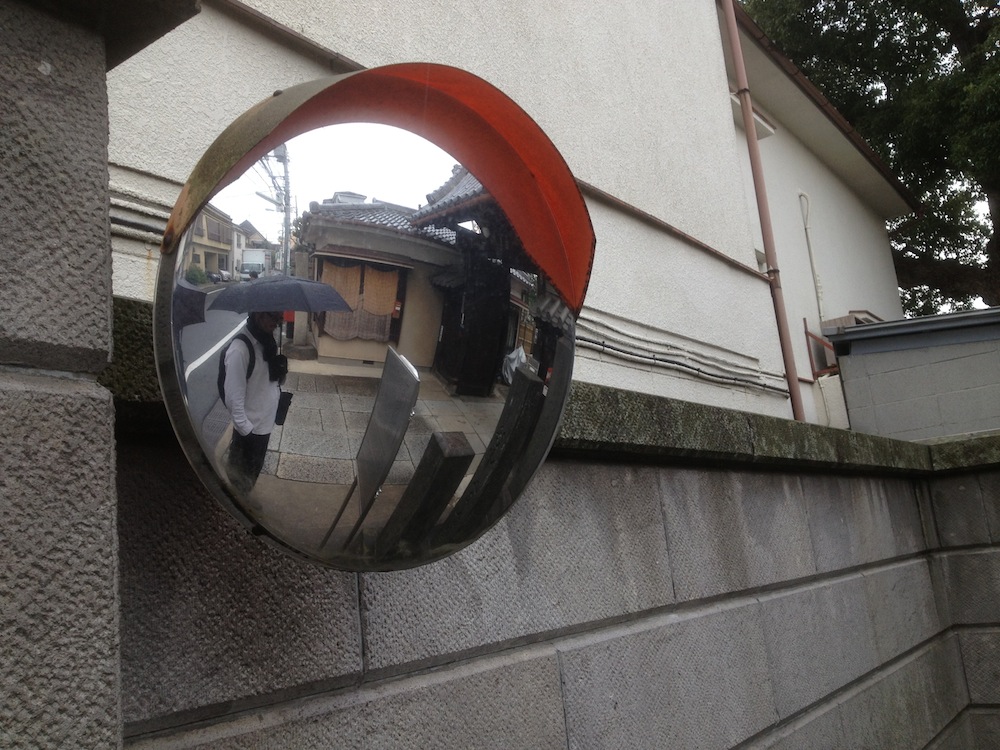
Mirror entrance of Kannon-ji (観音寺), Tokyo, Taito, Yanaka photo by MIchael Glenn
Understanding connection is a survival tactic of the Bujinkan. Even a mystery like Sakki Nage 殺気投 appears from 繋がり tsunagari or vital connections learned in our basics. But to actually do this we must also throw it away. So for students hoping to learn the mysteries of our art, many find contradictions in this concept of connection. These contradictions lead to deadly mistakes. In one class I heard Hatsumi Sensei say,
"Everything is let go, but at the same time is connected. You have to be able to do this. Otherwise you won't become capable budoka."
How do you let go yet stay connected? One answer to this leads to martial abilities that appear supernatural and many people don't accept. Yet I know they exist through my own experience with them.

The thing to remember is that an ability like sakki nage grows from basic kamae and taijutsu in a natural way. To explain, let's consider a mistake many students make when doing a standard nage:

You forget to expand your attention as you do a technique or a throw. You lock your mind and spirit up with the throw. This exposes suki and you aren't even aware of it. Deadly.

So one fix is to go ahead, throw away the self. This is an aspect of sakki nage. This is the flip side of the godan test. Sakki in the Godan test is about sensing the killing intention written by Hatsumi Sensei as 察気.

Once you learn to throw away the self and the ego (which allows you to pass the godan test), then you may develop the ability to emit or mask sakki 殺気, the killing intent. In that order. People often find it easier to emit this intent than to mask it.

But what is even more fascinating is what comes next. Being able to project it! With this ability you can give the Godan test effectively. But also project this ki as an attack!

There we have Sakki Nage. There are 2 ways to consider this:

One is Throwing an opponent with your ki. I've witnessed it. I've done it. People who don't believe it probably haven't learned the steps before: sensing sakki; emitting sakki; masking sakki.

Second is throwing it away! Discarding sakki is and tossing it aside is an amazing defense. Which leads us back to the basic mistake of exposing suki.

What does this have to do with a connection to your surroundings and suki? Well all of these mysterious skills come from basic understanding of kamae and knowing that good kamae only exists through connection. When you are able to connect at the level of sakki nage, your suki will have disappeared.

Let me ask you this: where do you think they go?

Releasing the Power of 力を抜くChikara o Nuku

From Bujinkan Santa Monica by Michael

川蝉 Common Kingfisher photo by yamatsu
I was at a recent class at the Bujinkan Hombu dojo where Hatsumi sensei threw his opponents around all night. But mostly they were thrown. He emphasized, that he was not doing the techniques. How might this be possible?

He used a phrase "刀を抜くkatana o nuku, 力を抜くchikara o nuku." This has many layers but by dropping the power or the intention out of your technique it becomes effective. Even dropping the technique from technique. But there is a trick to this that many students of Sensei apparently neglect to understand.

Many people think they know what Soke means when he speaks. That night in class, one of Sensei's frequent translators came up to me and told me, "That's not what he said!" Meaning that the current translator had gotten it wrong. So then he explained to me what he thought Sensei meant.

I just listened to his explanation and didn't agree or disagree. I brushed this off as a personality conflict between translators. Or maybe it was due to the extreme difficulty of concise translation of Japanese in the dynamic environment of the Hombu. But when more people complained to me about the translation, I figured there might be more to this.

So in order to participate in the confusion, I will offer my own thoughts about what we were witnessing in that class. I haven't yet seen anyone offer the explanation I will make below. But maybe you all know this stuff already.

You cannot have 力を抜くchikara o nuku if you don't first have chikara. Otherwise there is no power to take out of the technique. One common way that I have witnessed Hatsumi Sensei and the other Japanese instructors do this is by going from  力を入れる chikara o ireru (using force, strength or exerting effort) to 力を抜くchikara o nuku.

I myself have had great results using this in my taijutsu. For a simple example, it is like the children's game of tug o' war. Two teams pull on a rope in the opposite direction. Whichever team is stronger pulls the other towards their side and wins. But when I was a kid, we thought it was great fun to 力を入れる chikara o ireru and pull with all our might, then quickly release the rope for 力を抜くchikara o nuku. Relaxing suddenly and letting go of the rope made the other team fall on their asses.

You will see this concept everyday in the Hombu as the uke seem to throw themselves.

So 刀を抜くkatana o nuku is something I have been practicing for quite a few years. I have a visualization that I use to explain the principle. To get the tip of the sword to the target in an effortless and quick motion, it is like releasing a bird from your hand and the bird flies directly to the target as if it is spearing a fish. But first you must be able to capture or hold the bird.

Hatsumi Sensei described this method of drawing to us that night. He said that with katana o nuku, you are not drawing the sword, you are letting it free from the saya (like my idea of releasing a bird). It is very dangerous, with this motion the sword will kill with no effort at all. The blade finds its target.

This is what I understood from Sensei's class that night. Other people who were there may have different ideas that are valid. I hope that sharing my thoughts helps you to discover your own understanding about our art.

過去現在未来之術 Kako Genzai Mirai no Jutsu

From Bujinkan Santa Monica by Michael

Bujinkan Hombu 畳 Tatami photo by Michael Glenn
In one Friday night class at Hombu, Hatsumi Sensei suggested a mode of perception that is at the heart of our training. Sensei used the words 過去 kako, 現在 genzai, and 未来 mirai. This loosely refers to the past, present, and future.

That night on the tatami of the Honbu, Soke was giving us a deep lesson. He said that we should keep the past, present, and future connected. Allowing one to drive the next. This happens with or without our participation.

If you can get with the flow of this connection, then you may ride it to victory. But in order to flow and connect with it, you must be able to see it. What does it look like?

Maybe you've had the experience of looking at a newborn child. You see your parents and grandparents in his or her fresh face. You see yourself and your partner reflected there too. And you also see a newness that is in the process of becoming. A new person with a future life stretched out ahead. Of course you see how these are all connected. Maybe you think about how your parents must have studied your own baby face with the same wonder.

Some people would rather forget the past. They may propose a toast to say, 過去を忘れるために乾杯 Kako wo wasureru tameni kampai, Here's to forgetting the past! Or even something like, The past is vile, the present is barely tolerable, but there's hope for the future.

When Hatsumi Sensei teaches, each technique is like a newborn child. He teaches based on a kata or concept that has been passed down through the ages in a lineage he inherited. If you look carefully, you will see the imprints or DNA of this 過去 kako or past encoded in the movement. All of the Bujin, the past Soke, and the warriors who lived and died with our art are contained there. Hatsumi Sensei has told us this directly.

But you also may see Hatsumi Sensei's living expression of the art in the present. This 現在 genzai is vital. It is what allows the art to stay relevant. Truthfully, it is the only thing protecting you should you need to use the art in combat. Hatsumi Sensei has clearly stated that the way he teaches now is what matters. If you are not connected to this current training, you are studying a dead art.

If you are really connected and observe carefully, you may even bear witness to where the art is leading us. As you watch Hatsumi Sensei teach, there is a palpable experience that anything can happen. And it often does. As he follows the unbroken connection in each moment, you begin to glimpse the path ahead or the 未来 mirai in our training. The sense of wonder this gives me as a student is indescribable.

This explains why nothing Hatsumi Sensei teaches is ever the same way twice. You may have seen him do the same kata years ago and thought what he did was a definitive rendition of this kata. But then he will do it again, entirely different, and this version will feel like the definitive version. If you try to hold onto either technique, you will miss the point and be left behind.

That night in Hombu, some people debated what Soke meant by his statements. But I just took in the spectacle with enjoyment. Because Soke did not care.

He simply told us to take ample space. With the proper use of space the attacker is defeated. But you aren't using the space! You just allow for it, and many wonderful techniques are born.

So when you are in actual combat, if you can connect to the three aspects of 過去 kako, 現在 genzai and 未来 mirai, you may enter the world of 幽玄 yugen. Your opponent will be operating in the fog and you may float outside of his influence.

VIDEO: Michael Glenn from Japan

From Bujinkan Santa Monica by Michael


I'm having a great time in Japan. Hatsumi Sensei is fantastic and the training is great. I thought I would put out a quick video for my Bujinkan blog. 

It's already been a few days since I shot the video and much more has happened. I have a ton of notes and experiences to share. But I have found I don't have time to sit in front of a computer and put out videos!

So this one is very simple. Hope you enjoy.

Jintsu 神通: Mystical Power From Sudden Change

From Bujinkan Santa Monica by Michael
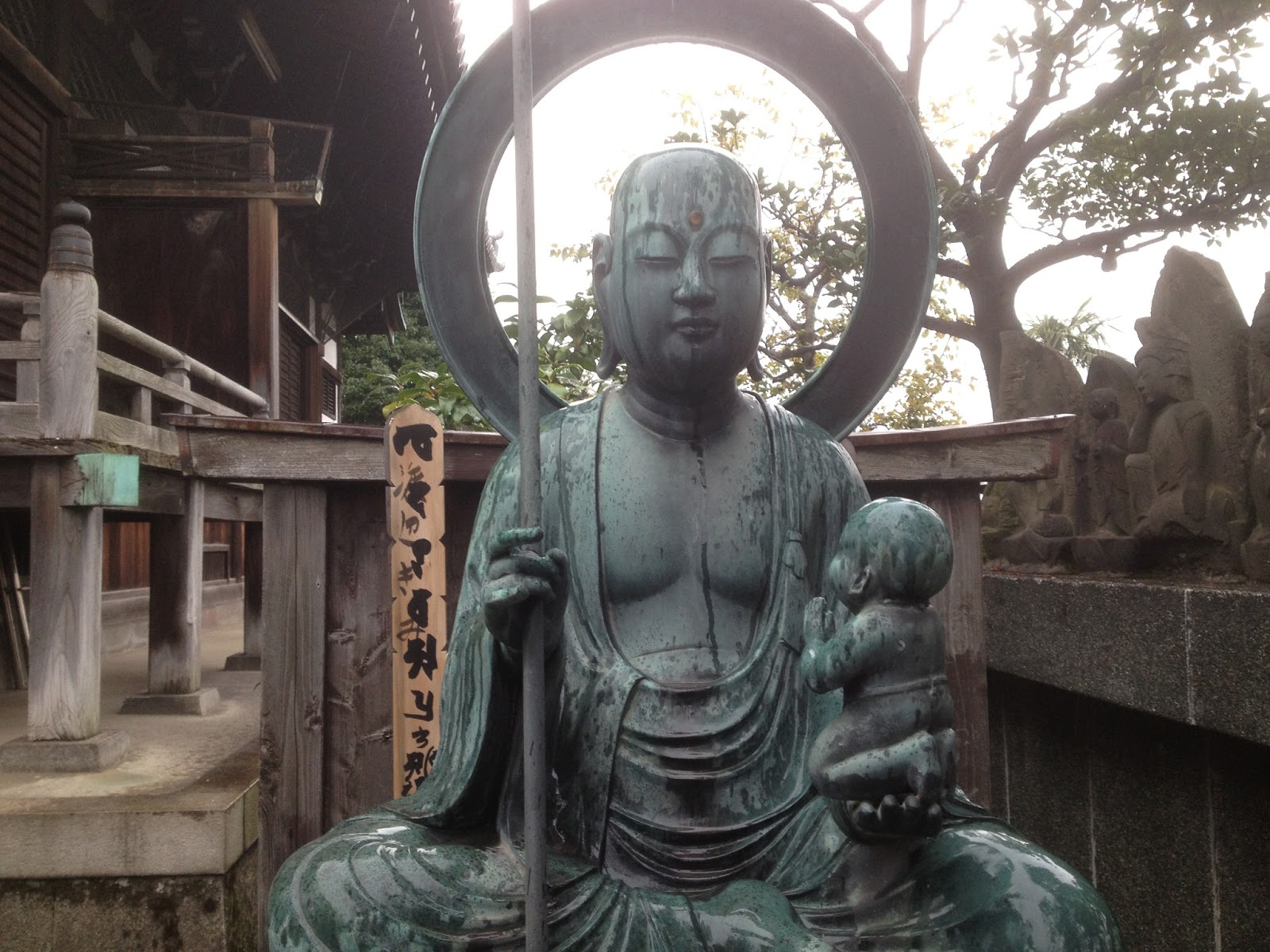
毘沙門天 Bishamonten photo by Satoshi Kobayashi
Some people talk about 要 kaname, one aspect of this year's theme,  like simply translating the Japanese to English explains its meaning. This is a bit shallow. Hatsumi Sensei would probably encourage us to look deeper than that.

My take on kaname is a bit different than other's I have spoken with. For me, one important aspect of kaname is being connected with 神通 jintsu and 神通力 jintsuuriki. These are mystical powers of heaven and earth that are connected to and pivoting through you.
In Buddhism, Jintsu is known as "direct knowledge" or even "supernatural knowledge." This leads to some interesting super powers like: 天眼通 tengentsuu divine eye or clairvoyance; 神足通 jinsokutsuu unimpeded bodily function like walking on water or walking through walls; 天耳通 tennitsuu clairaudience or divine ear; 他心通 tashintsuu or telepathy; 宿命通 shukumyoutsuu remembering past lives; and 漏尽通 rojintsuu which is the extinction of contamination, or a divine clarity of mind.
While these ideas seem impossible, if you broaden your experience to include this type of connection in your training you will experience some interesting results. I cannot teach anyone how to do this. But as an example, the connection we use in both taking AND giving the Godan test must not be severed. If you have experienced this connection, ask yourself, where does it originate? And how do you embody it in training?

Hatsumi Sensei suggests that one way to connect to this power is to repeat one technique a thousand times. The idea here is to cultivate mindlessness. You get the self out of the way and enter a state of 無心 mushin. What happens next is 神運に任せ jiuni makase. Your fate or luck is connected to kami or the divine.  

The resulting power of this connection leads to  変化必然 henka hitsuzen. These inevitable changes have immense power. In the 天津鞴韜馗神之秘文 amatsu tatara kishin no hibun, a secret teaching of ancient war strategies that informs several ryuuha in the Bujinkan, one very important principle is:
豹変して必ず勝つ hyohen-shite kanarazu katsu. Sudden change will always prevail.
This is what I think about with the idea of kaname. But my experience so far this year has also shown me that kaname is a reflection of one's heart.  If you have ever felt the power of this kind of change, ask yourself, where does it originate? How might you embody that in training?

鬼ごっこ Onigokko: Let’s Pretend We Are Demons

From Bujinkan Santa Monica by Michael

鬼ピキ photo by w00kie
One summer day we were having our normal class in the park when something interesting happened. As we were stretching, we watched a team building exercise that some company was doing in the same park as us. There were a lot of pretty women working for this company, so most of my students were riveted.

They began a game of tag. They used the entire park. Most of them were athletic, so it was a very aggressive and and fast paced game. At one point one guy came to stand next to us. We were all lined up on the periphery of the field watching this game. I realized immediately what he was doing.

Hatsumi Sensei tells us that "a person who understands play has life's greatest treasure." He says that in Kukishin-ryu this idea is taught as 鬼ごっこ onigokko (demon play) which is a children's game of tag. In this game the "oni" chases down the other children. As they are caught, they are "infected" and turn into oni. Until they all become little demons!

In 2011, there was a world record setting onigokko game played in a Toyama stadium. There were 1566 participants. It only took 7 minutes for all of them to be caught and turned into oni!

I said hello to the guy standing next to me. I asked him what company he worked for. He said TOMS shoes. I knew this company because my wife likes them and they are popular in the U.S.. I said, so are you hiding over here with us? He smiled and said he was just resting.

We watched as all the workers  ran around the park and got caught. Turning each into another demon. This guy had a great strategy. No one was even looking for him among our group as we stood there watching.

Finally the demons ran out of victims. As they searched the park their attention turned to us. The guy said to me, "I better run!" He took off and sprinted around the park. He dashed between his pursuers until they finally caught him.

Later when I got home, I looked up TOMS Shoes to see where their offices were, since I knew they must be nearby. It turns out that this guy with the great strategy of hiding out with us was the founder of the company, Blake Mycoskie. That day he definitely showed a good understanding of "play."

The Gift of 神輿 Mikoshi

From Bujinkan Santa Monica by Michael

東松山のまつり photo by w00kie
How can I ever support this heavy beam on my shoulder? That's what I remember thinking when I looked at the 神輿 Mikoshi. I was intimidated by the size of it. Of course I was only 10 years old.

When I was growing up, my best friend was Japanese. His mother invited me to go with his family to a festival. Suddenly I was being conscripted to be one of the 担ぎ katsugi or Mikoshi bearers! I didn't understand at the time what an honor that was.

In Japan, not only is it an honor, it is somewhat of a civic duty to carry the Mikoshi. Hatsumi Sensei inherited the 34th Soke of 戸隠流 Togakure Ryū in 1958. He says that in that same month he carried the Mikoshi along the street.

Someone found a Happi coat for me and helped me put it on. My friend's mother also found a karate kid looking head wrap that she tied around my head. Then they lead me over to the Mikoshi where it sat on the saw horses...


I looked around awkwardly at all the strong men who were doing calisthenics, preparing to lift this small house and carry it through the streets. They were all strong looking and Japanese. I was a skinny red headed white boy. I had no idea what I was going to contribute to this effort, but I thought I would try my best.

Even though I felt out of place and had no idea what was going on, the men were very welcoming. Suddenly, they all crouched underneath the beams. I found a gap and pressed my shoulder into the wood. I was preparing to grunt and heave when the whole thing seemed to fly into the air with a shout.

I was left nearly hanging from the beam! The men were all taller than me, so they hoisted the mikoshi onto their shoulders and far above my own shoulder. I looked around confused about what to do. They all encouraged me to stay in my spot. I pushed up as hard as I could with my palms.

Next thing I know we are lurching down the street to the trill of a whistle from our guide. He would give long notes to start or stop us from moving and short beeps to keep us in rhythm. We round a corner and and into the large crowds gathered along the parade route. I had no idea we would have this large audience.

Suddenly I felt so proud. I felt proud of my friend's Japanese heritage. I felt proud to be included. No one I knew in my community had ever even heard of sushi back in those days, even less Mikoshi.

Japanese people were thought of differently back then in my hometown. My Grandfather fought against the Japanese in WWII. His brother died on Iwo Jima. I could say more, but those times have past. I personally felt like a bridge between these two worlds in that moment.

That was truly a gift from the kami inside of the Mikoshi.

How to Read the 徴  Shirushi Taught in 口伝 Kuden

From Bujinkan Santa Monica by Michael

Hachiōji, Tokyo photo by LaPrimaDonna
One morning during training, Hatsumi Sensei gave us an interesting 口伝 kuden, explaining to us the nature of the footwork we were using. He told us,
"There's a reason for this movement of the feet. You're leaving footprints. And it's actually an indication (徴  shirushi sign;  indication;  omen) You're leaving a warning or an indication."
Sensei wasn't just telling us about footwork. He was talking about a larger idea. And this idea is that there are subtle signs and hints everywhere for those who are awake, aware, or sensitive to them.

You could take this at the surface meaning. For example, a hunter can see signs of his prey as he tracks it. So he follows the tracks to catch dinner. Yet someone who is not a hunter would never notice these hints. Or if you were thirsty, the signs would mean something different. You might follow the animal trails that lead to a stream.

But the meaning Sensei was leading us to, was that there are signs left for us by those who have gone before. These are everywhere in the Bujinkan. You find them in what is taught and not taught. They are in the kata. In the kuden. In the densho.

Here is an interesting example: In 九鬼神流打拳体術 Kukishin Ryū Dakentaijutsu there is a kuden:
切紙  急所説明 48穴当込みの場所 , 口伝
Basically it explains the 48 openings for kyusho when striking. But the hint that it leaves us is obscure. It calls this 切り紙 kirigami which is the art of paper cutting.

If you aren't familiar with this art, it is a very advanced craft similar to origami where paper is cut to create artistic expression of nature and life. But the method and rhythm of it is uniquely Japanese. This is a hint.

Another hint or meaning for kirigami is the esoteric notes and oral teachings transmitted from teacher to student. Here the text itself is being cut so that its meaning shifts and is shaped by the teacher. Anyone who has trained with Hatsumi Sensei can attest to this feeling.

Sensei will never just give you the surface meaning of a text. The meaning becomes fluid and dynamic in the moment much like the changing image of paper as it is transformed by kirigami. As Hatsumi Sensei teaches, the 要 kaname of his teaching transforms to suit the moment.

That morning, as we shuffled around trying to emulate Sensei's footwork, we were following in the footsteps of Bujin and the warrior spirit of our ancestors.

The Kaname of Ninja Biken with Peter Crocoll

From Bujinkan Santa Monica by Michael

Peter Crocoll Opening a Door
Friday

I went to Coconino National forest for Peter Crocoll's annual campout. We were up at 7500-8500 feet in elevation in the mountains and the forest was beautiful. After our long drive from Los Angeles, I set up my tent quickly so that I could enjoy the wonderful mountain air and scenery.

After a chilly night under the stars, I took a hike early in the morning. I lived in Arizona for most of my life and spent a lot of time hiking and camping all over the state. Returning to this air, this sunlight, this open sky… always feels like coming home and speaks to my body and spirit on a deep level.

Saturday

Peter's training topic for this event was "The Kaname of Ninja Biken." Training in this mountain terrain connected us to the origins of Togakure ryu in the mountains of Japan. I cannot convey all the details here in these notes. But I will present some impressions.

In the morning, we filled the air and kukan with a swarm of shuriken. The use of shuriken and 目潰し metsubushi is a tactic closely linked to ninja biken. This serves to more than compensate for the length of the 忍者刀 ninja-to by filling gaps in perception and rythm of the opponent. He will never know where to defend and the tip of your 忍者刀 ninja-to becomes just another stinger in the swarm he cannot possibly escape.

Peter then connected the shuriken with sword kamae from Togakure ryu. After a review of the basic kamae, we used these kamae to cut and launch shuriken at our opponent's. Very difficult to do this without gaps in your own movement as you search for shuriken on your body. For me the trick was not to go fumbling for them, not to search. But rather to find them or discover them in the movement. They just appear in your hand as you move.

Peter then focused on kamae no waza with 一之構 ichi no kamae. I discovered early on that it was crucial to control the space with the tip of your sword. If you know how to achieve this, from the initial kamae you have already won. Then as you pressure the uke's arms with your blade, the tip presses into his center.

Peter spoke about the important goal in Togakure ryu is not killing or winning, but survival. That may be why it is still with us today, whilst other ninja schools have been lost to history. One tactic of this survival is finding the "hidden door." This can be the hidden opening on an opponent or in a troop formation, but it is also the hidden door of your escape route. Even if you know where this "door" is, you still have to be able to open it!

Next we looked at 正眼之構 seigan no kamae and 中段之構 chūdan no kamae. For me, the kaname of these all involved the control of space, or rather, connecting in the space so that you may live. As Hatsumi Sensei has said, 中段之構 chūdan no kamae is like kukan no kamae, where the mind and body  "are" the space and the space protects you.  This feeling has interesting connotations that led into our night training.

Saturday Night training

Nighttime in the wilderness of these mountains is exhilirating. We had a bright, nearly full moon, and I could deeply appreciate this idea from Hatsumi Sensei: "There is no village on which the moon does not shine, the moon lives in the mind of the gazer." - from Ninpo and Mu: Waxing and Waning Like the Moon

After some quiet and meditative stealth walking through a moonlit meadow, Peter helped us explore our "other" senses by connecting to threats from our periphery and from behind. At first, I fell into the trap of relying on mechanics.

I used tricks that I know to extend my peripheral vision and relied on sound as a warning device. I also focused on the sensation of absence or presence. This is like when you sense that you are alone, or that someone else is near. The problem with these methods is that they are often too slow. By the time you react, the threat is upon you!

I decided that this was a poor way to use the richness hidden in the dark forest surrounding me, and opened myself up to a larger experience. I cannot explain in words how to achieve this, but it is directly related to the experience of the godan test. Once I connected to the space in this way, I had wonderful results.

After this we had a wonderful campfire courtesy of my friend and twisted firestarter Brian. Brian is well aware of current geopolitical dynamics, and he will never be obsequious. We laughed and told stories late into the night.

Sunday

I crawled out of the coziness of my tent into the chill morning air. I went for a quiet hike to watch the birds and do some light rock climbing. I had a enjoyable breakfast with my friends. Normally the mountain air drives my appetite, but this trip all of my meals were light for some reason.

Peter began training this morning with a quick review of the sword kamae. Then he went further into kamae no waza with 下段之構 gedan no kamae. I was reminded of something that Paul Masse and I discussed recently about the idea that "enlightenment is at your feet." Hatsumi Sensei says to assume this kamae with that feeling. Then the kick in this waza is like kicking open a door for your escape. But that door was always there at your feet.

Peter  transitioned to 八方秘剣 happo biken with 飛龍之剣 hiryu no ken and 霞之剣 kasumi no ken. With both he really emphasized this idea of escaping and highlited this necessity by having us face multiple attackers. The flow of these two kata naturally encircle the opponents in the space in a way that they become entangled. If you disappear into the mist of kasumi, they will be fighting each other or only emptiness.

Now, as I begin my week back in civilization, I have that good exhaustion that leaves me refreshed in spirit. I want to thank Peter and all my friends in Arizona, as well as my own students for sharing this experience in the mountains. We are so lucky to have this ninja heritage that connects us back through the mists of history and place, to the mountains of Japan. Hatsumi Sensei's generosity in sharing this gift with the world is really humbling.

Of Note: Shout out to Eight legged Sal, my Aphonopelma chalcodes tentmate.

Secrets of 歩き Aruki

From Bujinkan Santa Monica by Michael

Takayuki Ishihara photo By CobraVerde
A big "secret" in our training is so basic that it is hidden in plain sight. I can tell you what it is and you will very likely ignore it. People always nod their heads when it is explained to them, as if it were old news, and then begin training on something else. This secret is 歩き aruki or walking.

After typing this I already sense people clicking some other link. Looking for the next flashy blog post or training video. Or worse, being convinced they already understand this "secret." Sensei often reminds us that enlightenment is under our feet. This is like 脚下照顧 kyakkashouko, where the best way to begin to know yourself is to look where your own footsteps fall. So let's start walking.

We have many types of walking in the Bujinkan to consider. Some of these skills are called ashi. I've written about many of these types of walking before: Like a Walk Through Yūgen 幽玄
 
But today I want to explore some ways to make your footwork more dynamic. If you are ready to really learn, here are some drills you can begin with:

  • Use yoko aruki to lead into or out of sanshin striking. This will strengthen both your footwork and give you new insight into sanshin. Now do it in eight directions. 

  • Then yoko aruki evasions (with an attacker!) in eight directions transitioning into all varieties of kaiten, nagare and taihenjustsu. 

  • Then yoko aruki evade and strike before taking evasive ukemi. Striking after the aruki creates interesting distance and angling puzzles. Use many different fists and kicks to target specific kyusho. 

  • Do some 足馴らし ashinarashi walking practice. Focus on ukemi with 膝行 shikko transitions between each roll. I have found nothing as powerful as this to improve your kamae and overall ukemi ability. 

  • To really know how to move effectively, one should practice 膝行 shikko in all directions. Work on forward, backward, and sideways. Do ukemi from shikko with shikko transitions. 

  • Do shoshin gokei from shikko. Prepare for some sore and raw knees, especially with the pivoting required. 

  • Do taijhenjutsu and ukemi using yoko aruki footwork. Practice 3 timings: aruki before the roll, during, and after. Otens are particularly challenging depending on when you yoko aruki. 

  • 骨指基本三法 Kosshi Kihon Sanpō using yoko aruki. Look at the inside cross, then the back cross. And eight directions! Both of these have unique considerations for our kamae and structure in the kukan. 

All of these footwork drills can also be done with happo tenchi tobi. Leaping skills are a unique and fun type of footwork. They come from the basic footwork ability but with increased distance and energy.

  • Next add a grappling component starting with a drill called the Jūtaijutsu shuffle. Starting from kumiuchi, you may begin with a three step variation. for example, right foot forward, left to the side, and right foot back. There are many variations depending on the foot or direction of the steps. Each step breaks the uke's structure a little more till he is thrown. This drill is about setting the footwork to take the uke's balance for the throw. 

All of these drills should also be done with weapons. As Soke often says, it is all based on walking. You can learn the most elaborate sword technique or have the quickest iai, but if you don't know how to walk it will be useless.

  • Train on basic sword kamae kihon. Do walking and drawing drills connected to each sword kamae. You must develop the proper rhythm to draw effectively while walking.

  • Practice all the different types of sword draws while walking in 膝行 shikko. When you have mastered these (:o) move on to aruki variations. Then combine aruki rolling and drawing.

This brief review of some basic walking drills should get you started. Many people walk in a stilted robotic fashion where they pose in the beginning, middle, and end positions of any technique. This is what happens when learned from a book or video or poor teaching. But if your teacher understands the nature of these aruki, then you can be more dynamic.