Skip to content

Shingin Budô? No! Shining Budô!

From Shiro Kuma's Blog by kumablog

Shingin Budô? No Shining Budô!

We had a 1-day seminar in Bonn last Saturday and we studied the “nagare” or how to put flow into the 1, 2, 3 techniques. It was fun and demanding but I really appreciated this day of training. Firstly because students came not only from Germany, but also from Belgium, Spain*, and India**.

So even though the theme of the year is about “Shingin Budô”, I lived that day as Shining Budô, with the good feeling with which we trained during the 6-hour training day.

Thank you all to have joined us! And I hope to see you again for our next seminar at the Kurage Dôjô in Munich on March 15th-16th***

(a special thank you goes also to the “viking” who suffered (see picture) more than any other participant)

*Ralf is a student of Juan Manuel Serrano but lives near Strasbourg.
** Arjun is a student of Shiva but lives in Berlin for a few months.
***kurage seminar


…

Bujinkan Rank from the Heart

From Bujinkan Santa Monica by Michael

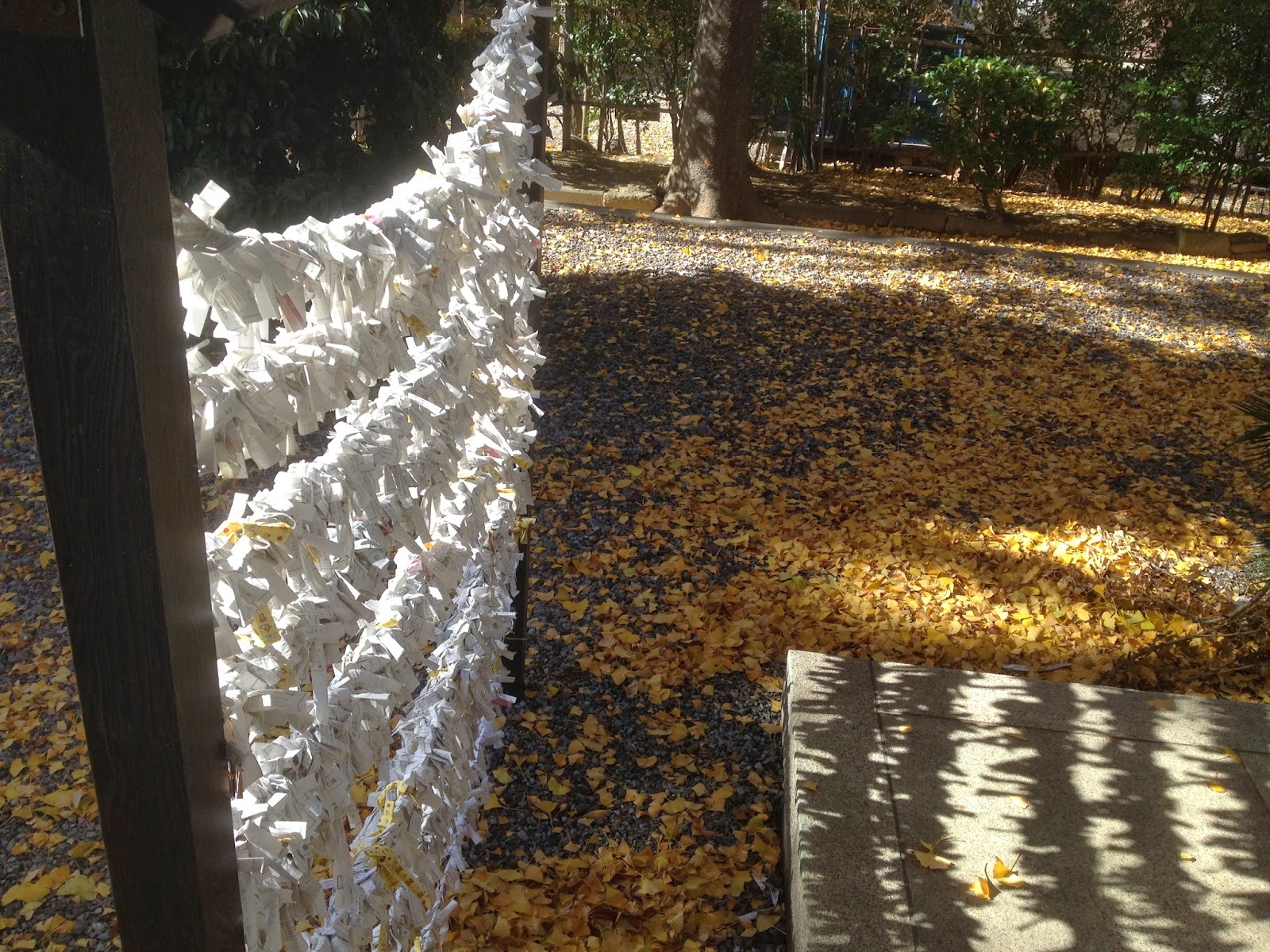
御神籤 omikuji, 道祖神社 (Doso jinja) Katsushika, photo by Michael Glenn
One day you learn there are no Bujinkan ranks… only people you can choose to invest in.

We form many relationships in this world: Family; friends; coworkers; parole officer; guy who works at the sandwich shop… It's obvious not all of them have the same value.

One thing I really love about the Bujinkan, is that it is possible to develop some of the most meaningful relationships of life with people you meet in training.

I have made lifelong friends. I have seen others do so. I have watched people date and get married after meeting in training. I have witnessed children start training at a young age and grow up to become amazing adults with an entire Bujinkan dojo looking out for them.

I have also lost friends who have died. I have my own personal way of honoring their life in my training. But the whole art is richer for the life they shared with us. And many of us feel this deep in our hearts when we bow in for each class.

There are people who have fallen away from the Bujinkan part of their life for some reason. We never forget them. And when they return, we welcome them like family.

At these times, no one thinks of rank or politics.

We are only thankful.

Hatsumi Sensei shared with us that the Samurai who became a Zen Buddhist... Shōsan, had the feeling of "The heart that thinks of oneself, suffers. The heart that thinks of others, is free."

I choose to invest in people on this path with me. My students, my teachers, my family.

How do you invest in yourself and others? Is Bujinkan training a choice for you?…

Taikai 2014 is set to October 2014

From Bujinkan 40 Years in Europe by Mats "Toryu" Hjelm

dragonThe Swedish Bujinkan Federation asked Christer Westberg and Petter Swedin during the Taikai in Gothenburg if they wanted to organize the 2014 Taikai in Sundsvall. We are happy they accepted and soon you will see some updates on this web site with more information.

Start making plans for another great Swedish Taikai in the norther part of Sweden (actually in the middle of Sweden) in October.

This Taikai like all others are sponsored by the Swedish Bujinkan Federation.…

Not Wanting, In Order To Get It!

From Shiro Kuma's Blog by kumablog

collage_glassclockBeing a student of the Bujinkan Martial Arts system is not easy and requires a lot of commitment. You have to keep the connection with everything, learn, memorize, and always be eager to improve your skills. This is a long path but it is worth it.
The life of a Bujinkan practitioner can be seen as a glass of water in which you pour the desired quantity of liquid. The water level in the glass will only depends on you.
If you want to drink water, you will have to define three things:
How much water do you have in the jug.
How thirsty you are.
How big the glass is.
If we compare the glass of water to training, we can see the Bujinkan martial arts like a huge jug of water. First you have to understand that it is your responsibility to “drink” it (and not your teacher’s).
A teacher is like the jug of water. A sensei is an older practitioner who has been thirsty long before you (see the meaning of sensei)*; and who learnt to quench his thirst. Because he “experienced” this, he is now capable of explaining it to you. But if you are not thirsty or committed to learn, you will not drink. Whatever you chose to do is always your choice. Your sensei will not be thirsty for you.
Your brain can “drink” more than you think as long as you believe you can learn and improve. Even if you have a small glass you can learn a lot, you simply have to refill the glass many times until your thirst is satisfied. But to be satisfied requires high expectations. Sadly many students stop training after black belt because this is what they wanted (low expectations). But Shodan is nothing, it is only the beginning. Be thirsty!
This “water sanshin” of  the “jug-thirst-glass” is another way to understand the concept of Sainô Konki (ability-soul-container). The soul wants to drink and prepares the glass (container) to receive the ability (water) through long training because the path is long.
The Bujinkan path follows three steps:
1) learn the basic forms (kihon, waza);
2) turn them into situations (kata),
3) in order to forget them and to be yourself.**
Before forgetting the forms you have to remember a lot of them. Your kamae (attitude) in that respect, is important. If you don’t pay attention to the details and go with the “in ninjutsu we can do anything we want” that we often hear, then you will go nowhere. You have to be curious of everything. As Richard Whately said “Curiosity is as much the parent of attention, as attention is of memory.”
Without curiosity/attention/memory you will simply mimick the movements and never reach the ura of things. What Hatsumi sensei is teaching
us is not a set of techniques but an ability to discover and understand the world by ourself. This is why kokoroe is vital. You have to learn and memorize.
Everyone one of us uses clocks, watches, or a phone to know the time, but when those tools are missing (or more likely when the batteries
are dead) do you know how to estimate the time and direction like a real ninja?*** I guess not: this is what “curiosity” is about, always having a “plan B” for everything you do.
When in the army I learnt those things, and even today where GPS devices are available, we still train with the compass and the map.
This the “just in case Murphy was right” attitude.****
In the Bujinkan we have a huge collection of techniques (our “jug of water”).
The techniques are first taught as basics in the Tenchijin. This is our compass and map. But then the second step is to learn them “anew” in their  original Ryû. Now, even though some of  these fighting techniques are included in the basic Tenchijin that we studied, they change completely when reinserted in their original system. A Ryû presents the waza in a very specific order because in each level the second technique is the evolution of the first; the third of the second etc. Ignoring that will get you misled and you will never get the kokoroe***** of fighting in this specific system.
One you have done that with the Tenchijin and the Ryûha, and with the weapons you are entering the third level of training where things are not decided but come naturally to you. You have learnt to surf the flow of possibilities and became able to survive by your own ability. But until you reach this third level, everything you will try to do will be unnatural, forced and lack nagare. Someone once said: “How is it one careless match can start a forest fire, but it takes a whole box to start a campfire?”. And this is exactly where you will arrive if you forget before studying; think before act; and want before accepting the natural flow of the Universe.
The Universe is there to serve you as long as your ego is not in the way. Stop with the “I want to do a natural technique” and move to “I flow with nature”. Remember the concept of 真如, Shinyô (the ultimate nature of all things)******
_______________________________________________
*先生, sensei means “the (one) born (in the art) before (you).
** do you remember the last glass of water you drank? no, once you drank it, you forgot about it. Techniques are the same, you learn them to forget them more efficiently.
*****kokoroe is knowledge (see previous posts)
******Shinyo (tathatâ in sanskrit).  In “Advanced Stick Fighting”, book by Hatsumi sensei, P38, Kodansha Edition or the definition here http://en.wikipedia.org/wiki/Tathat%C4%81

…

馬 uma

From Shiro Kuma's Weblog by kumablog

image

Be ready for a galloping year of the horse where things might not be as they look like in this Japanese proverb:

“Ningen banji saiou ga uma” is one of the Japanese proverbs. The literal translation is “All human affairs are like Saiou’s horse”. It means, “One can never know what will prove to be lucky or unlucky”.  The meaning came from a Chinese folk tale about an old man called Sai. ( “~ ou”, also read as okina, means “old man”.) Here is the story.

Once upon a time, an old man, Sai, lived near the Chinese Northern Fort. One day his horse ran away. His neighbors commiserated with him over his misfortune, but Sai said “How do you know this is not really good luck?”. A few days later the horse returned, bringing another horse with it. However when his neighbors congratulated him on his good luck, the old man said “How do you know this is really good luck?” Sure enough, some while later Sai’s son fell while riding the horse, and broke his leg. However this turned out to be good fortune when all the young men of the village were ordered to join the Emperor’s army. Sai’s son didn’t have to go since he had a broken leg.

From http://japanese.about.com/library/weekly/aa011302b.htm


…

Year of the horse

From Shiro Kuma's Weblog by kumablog

Year of the horse

This is the year of the horse of wood but hopefully not the “wooden horse”. The horse toy goes nowhere; and the Trojan one is a trap!
Let’s hope that this year will help us understand “Kachimushi”


…

Hatsumi sensei in his office

From Shiro Kuma's Weblog by kumablog

Hatsumi sensei in his office

As the Bujinkan is getting bigger, I understood that there might be a Bujinkan Office working full time in 2014. Maybe is it related with the opening of the new Honbu dôjô in April. We have to be patient a little longer, sensei begins to teach mid January.


…

The 奇翻 Kihon of 宝剣 Hōken

From Bujinkan Santa Monica by Michael

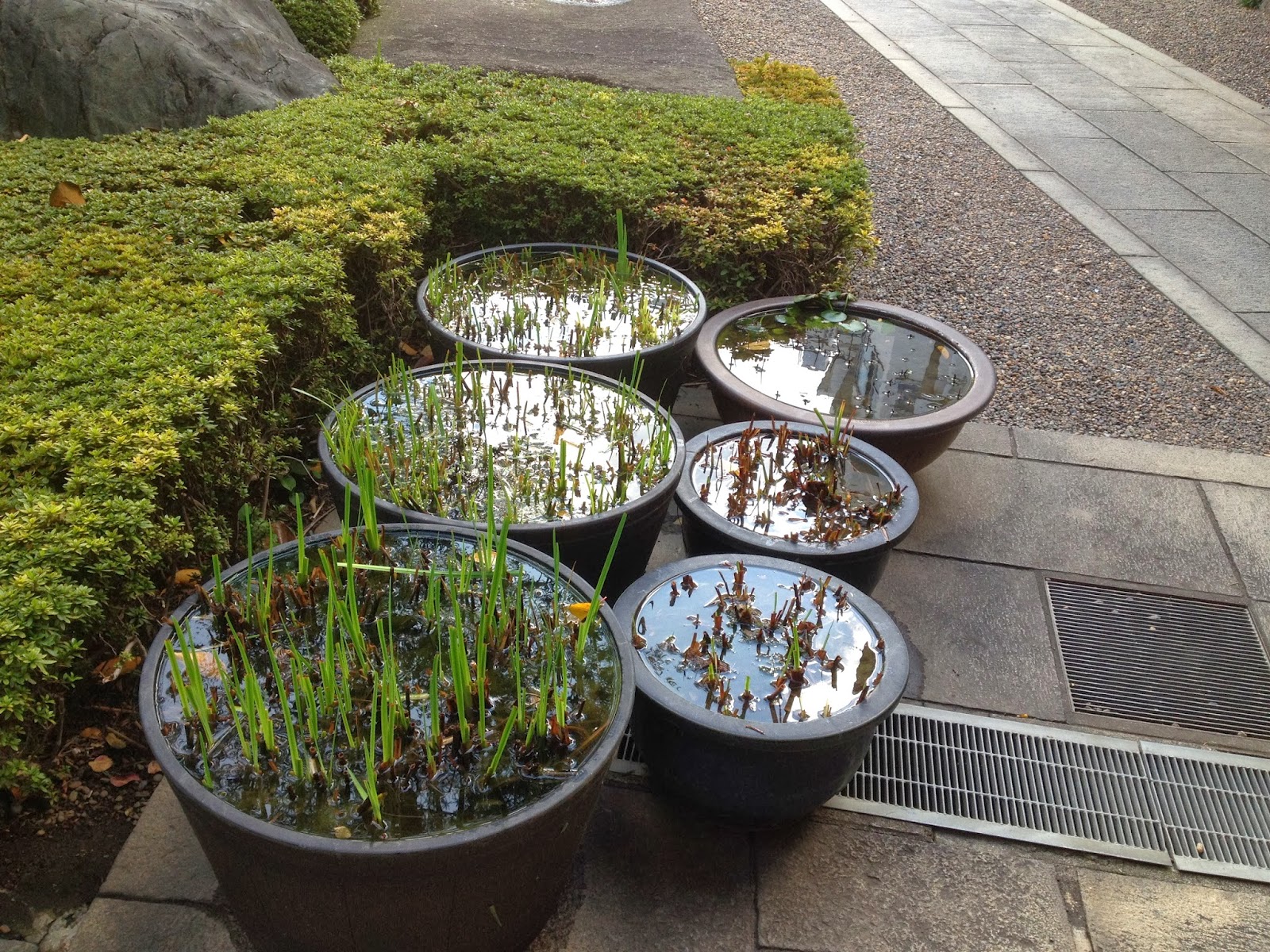
sky pots, at 赤門勝専寺浄土宗 photo by Michael Glenn
There are mysterious and strange surprises when studying the Bujinkan and what it means to be ninja. But the deeper you go, the more you find it is all connected. The mysterious evolves from the not so mysterious. Like kihon.

Let's consider the kihon of muto dori. On its surface, it seems simple. Evade when the sword cuts.

But this is reasoning from analogy. You know that when you don't move you will get hit or cut, because that has happened in the past or in other situations. But what is so amazing about the teaching Hatsumi Sensei has shared with us, is that we don't reason from analogy. We don't do things because that is the way they've always been done before. That produces a dead and lifeless art.

Hatsumi Sensei has written kihon as 奇翻, which suggests an odd turn, or a tricky mind with wondrous power. So, maybe we should reason from first principles instead.

So again, with muto dori, what is the first principle? The sword cut? Or the person cutting?

Why are they cutting? It is their mind or spirit that has made this decision. Their will controls the blade. While our spirit is in danger from it. All are linked and connected.

This kind of thinking will get you in trouble in a fight. But in training, it shines light on strategies that we can actually work on. So when the time comes, we do not sever the connection as Soke often advises.

Let's flip it. You hold the sword. How do you cut?

In our training we study how to cut with good taijutsu. Your taijutsu comes from your own mind, will, life force, or spirit… whatever you wish to call it.

Then we target our opponent and cut. You see how an inanimate object like a sword is connected through your will to cut the opponent and his will to survive? Everyone in the fight is connected this way.

Soke sometimes calls this 繋がり tsunagari, which is a connection, link, or relationship. He always tells us not to cut this connection. In fact, we train to use it for many amazing results in combat or in our lives.

Hatsumi Sensei has also shown us how to do muto dori this way. He calls this 影の無刀捕秘剣。I won't say more about this here, but...

If you hold a sword in your hand with this feeling, that sword becomes something much more than an inanimate piece of metal. It becomes 宝剣 hōken. With this you can cut away the illusion of all obstacles.…