Skip to content

Tsunagari Through Hanpa

From Shiro Kuma's Blog by kumablog

image

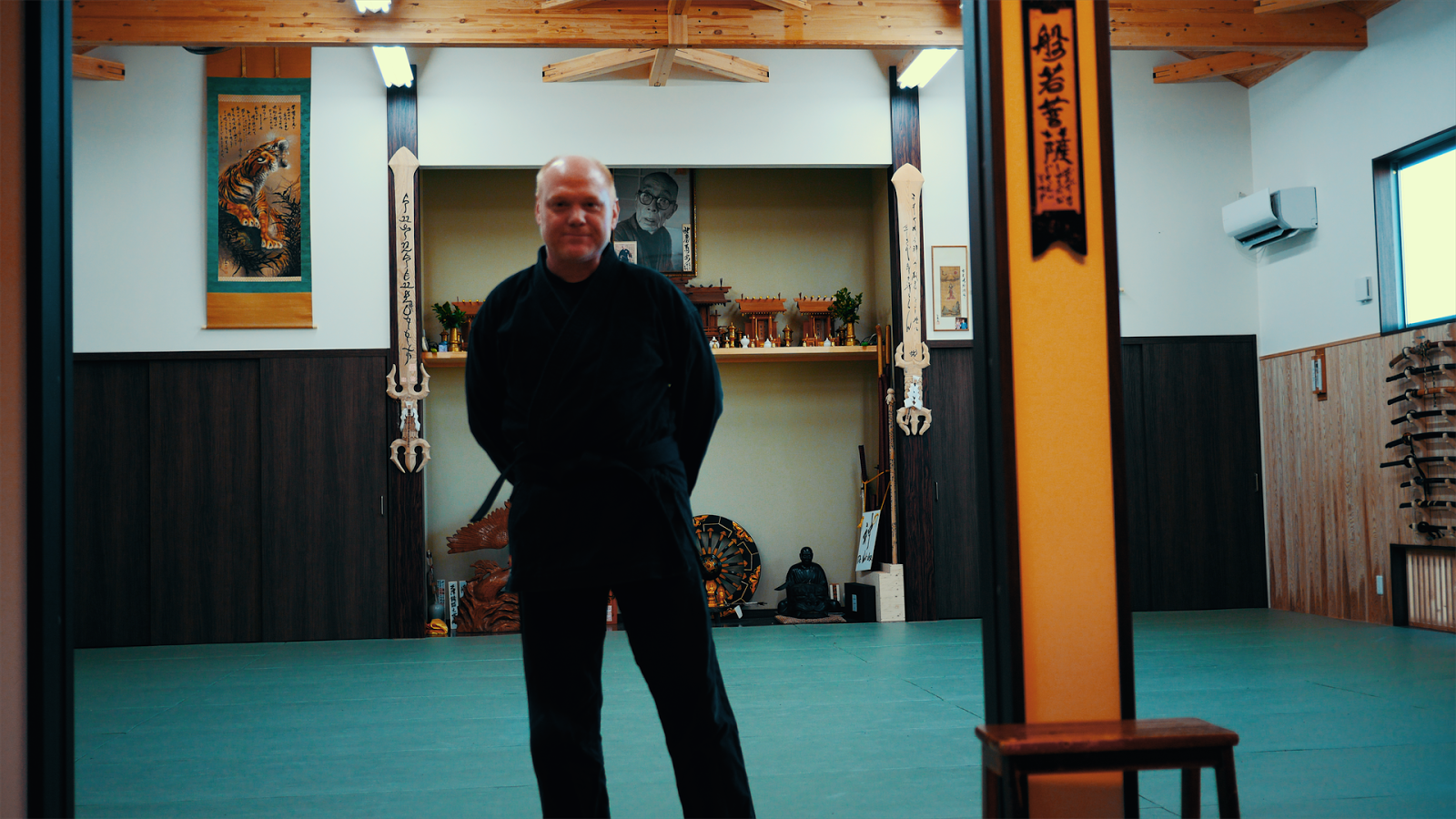
I opened the session with two taijutsu techniques trying to put into life the Ishitobashi 石飛ばし concept I had trained since my last trip in May. (1)
After doing a few variations, sensei applied the same concept to sword techniques. As always I am in awe when he takes whatever is demonstrated and bring it to the next level.
These days, Hatsumi Sensei is insisting on Tsunagari (2), the connection between uke and Tori, and the weapons. This connection is the first step to the Enno Kirinai (3). Once Tsunagari is done, you must keep this connection.

To do so, he said that we must not finish the movements (Hanpa). (4) Hanpa is not new to us; we studied it a few years ago with Chūto Hanpa 中途半端, the half cooked techniques. (5)

Hanpa allows the Tsunagari and we keep the connection with Enno Kirinai. There is no intention; we are “zero” and simply surfing on uke’s movements. Keeping the connection, we can “cut with the leg movement”, Ashi Kiri 足切, and move like a skipping stone. As the sword is a shield and cutting not being the main point, we move the sword with footwork and not with the arms. Sensei said (again) to use no strength Chikara Janai 力じゃない, but only the body movements Karada 体 (body) not Chikara 力 (strength).
To reach this non-action state, he added that mastering Kihon Happō and Sanshin are the prerequisites. He insisted again on the importance of building a strong foundation to our taijutsu. The quality of your taijutsu foundations is the path to understanding what Sensei is doing these days. When you master the basics, they are ingrained, you don’t think about doing a movement. This the “ri” of “Shuhari”. (6)

At the “ri” level, you can now focus on the intention. As Sensei said during class, you have to be Honto 本当 real in your actions, to influence uke’s reactions. (7)
Paradoxically this forces you to alternate the “no intention” with “full intention”. He added that that this is part of human nature “ningensei” 人間性 to feel danger or to expect danger (whether it is real or not). By alternating those two states, you create openings in uke’s atavic reactions and overcome his intentions. This animal reaction is inyō 陰陽, better known as the yin yang.

Strangely, Ashi Kiri 足切 can be written Ashi Kiri 足霧, where “Kiri” means fog. So we can say that bu cutting with the legs, we are also creating a metsubushi like movement that capture uke’s mind and make him react wrong to our non-actions.

________________
1. Ishitobashi 石飛ばし
Skipping stone principle. See previous blog entry “Ishitobashi.”
2. Tsunagari / 繋がり
connection; link; relationship
3. Enno kirinai / 縁の切ない
Do not sever the connection
4. Hanpa / 半端
remnant; fragment; incomplete set; fraction; odd sum; incompleteness
5. Chūto Hanpa 中途半端
For more on this, see blog post https://kumafr.wordpress.com/2014/12/03/consciously-unconscious/
6. Shuhari / 守破離
Shuhari; three stages of learning mastery: the fundamentals, breaking with tradition, parting with traditional wisdom
7. Honto / 本当
Truth, reality


…

Karada Gaeshi

From Shiro Kuma's Blog by kumablog

weaponsThe first class with Sensei felt like the continuation of my last trip two months ago. As it is now common, when there are not so many participants, we do a lot of weapon techniques during the class (yari and sword).

The main point is to use Karada gaeshi 体返し. The body is deflecting the attack through the weapon. The yari or the sword become the natural extension of your body movements. There is no intention in your weapon, uke attacks, and you walk with your sword in front. The weapon is a shield, stabbing or cutting are not the objectives.

You don’t do a technique you simply protect yourself. You do not have to apply a technique because you control uke’s movements, and the distance by using your body. The trick here is to be close enough to prevent us from attacking again, and also to have enough space to use the yari or the sword. The correct distance is important.
In May, Sensei spoke of Kasumi no kaeru 霞の反る, or to put uke in a “fog like” situation. As you don’t try to escape and stay close to uke, he cannot grab the correct distance to maximize the use of his weapon.

On the sword techniques, Sensei also insisted on not cutting but using the air pockets of the ishitobashi* (see previous posts). When you use a sword, you have to understand its potential. You don’t need to cut because uke is using the Yoroi as a protection**.
When he is not wearing the Yoroi, then you have to know that the sword cuts by itself because it is its nature. I remember what my Musō Shinden teacher used to say. It was exactly the same. “The nature of the katana is to cut; the hardest part is to know how to stop it” (i.e. not to create a suki, an opening after the cutting motion). As Nagato sensei said, it is always necessary to keep our body protected. This need to be protected is why Sensei keeps repeating that we have to use the sword as a shield in the Bujinkan.

The sword of 2015 is the evolution of the sword of 1996. In 1996, we learned the forms, today we are learning strategy. If you are not good at doing the techniques (omote), then this pure feeling (ura) might escape you. The biken waza from Kukishin Ryû and Togakure Ryû are the foundation of what sensei is teaching these days.

The weapon being a shield then Karada gaeshi is the only logical answer.
___________________________
*石飛ばし
**Reminder: the Yoroi was designed to protect the Samurai from the Yari.


…

The 骨 Kotsu of Bujinkan 手解 Tehodoki

From Bujinkan Santa Monica by Michael

Michael Glenn is frequently beat up in the Bujinkan Hombu Dojo
A little over a week ago, I was in Soke’s class trying to do 両手解 ryō tehodoki. Normally, this is not difficult for me except there were complications. Hatsumi Sensei showed this double wrist escape while he was being punched by a second attacker. Of course, he destroyed them both with little effort.

Soke looked around the dojo. I think he saw everyone fighting. His main point tonight was not to fight at all. He admonished us, “戦わない tatakawanai.”

Hatsumi Sensei watched me and said to do it without waza, without technique. He offered his wrists so I could grab them. I didn’t feel him move at all.

One of my training partners tried to punch him, but was blocked by my own arms. Then we were tangled. My other training partner attacked Soke, and all three of us ended up in a pile on the floor of the dojo. Hatsumi Sensei stood over us laughing. He told me, don’t do it with waza, but with 繋がり tsunagari or connection.

Then he decided to share this most important idea for the whole group. He said,
“Study this way of connecting one to the other. Don’t show that you’re trying to take something. I’m not taking anything, but still holding. If you put it out there too fast they will feel that with their reflexes. Don’t try to take anything. Release or let go in the middle. Remember that the connection is the reality. It’s the waza, but it’s not the waza.”
Well now my mind was blown. The connection IS the reality. Not the fight or any technique. Wow!

Hatsumi Sensei had me grab him again. He spoke as he tangled me up with my partners,
“Don’t try to attack, just consider the importance of connecting one to the next, and the next. This is the 骨 kotsu (knack or secret) of fighting. Very important in a real situation.”
But Soke didn’t knock me down. He just walked away and left me hanging in mid air, about to fall on one of my training partners. I teetered there like I was in a weird game of twister. I guess that’s what happens when you lose your connection.…

悪い感覚 Warui Kankaku: Use Your Bad Technique as a Strategy

From Bujinkan Santa Monica by Michael

I get the distinct feeling I'm being watched. I wonder if he would approve?
I sat across the dojo from Hatsumi Sensei. He had just thrown his opponent to the ground. Then he kicked him in the skull. I felt the thud in my legs where I sat. The impact vibrated across the entire floorspace.

Then Soke said something that made everyone laugh, but he was quite serious…
"This is a bad feeling."
He used the words 悪い感覚 warui kankaku. He went on to add that you have to take what's bad, and make it good. This idea hits on many levels for our current Bujinkan study.

Of course when someone attacks you it creates a bad feeling. The bad feeling can also arise when you find yourself in a bad situation. It can even help you avoid trouble before it starts. Take the "bad feeling" and turn it to something good by winning the fight, or by escaping before the fight.

But Soke also meant 悪い感覚 warui kankaku on another level. He meant that we should take our bad technique and make it good. Not just to get better as a martial artist, but to use this as an actual strategy in combat. Use your own bad technique to win!

How do you do that? The answer has a big clue for this year's theme. Soke said,
"Don't think of trying to make it work. You don't have to make this work. Don't be tied up in whether it works or does not. No one ever teaches you that it's ok if it doesn't work."
and,
"It's ok if it doesn't work, because you can change. You can keep going."
Hatsumi Sensei even gave us an example of how to do this. First, you may try to do a technique. Maybe you use a technique that you are skilled with. When the opponent senses this, when he thinks you are about to do a technique, you just take that away from him.

Then you do a bad technique. Maybe one that you've never studied. Or a random henka that doesn't even exist in the densho. This kind of "bad feeling" is a way to steal the fighting power away from your opponent.

This leads to 自然力 shizenryoku, or to a power greater than yourself. Soke looked up from his defeated opponent on the mat. Many of us in the dojo were stunned. He said,
"There's no decided outcome, but because of that, there is. You're not deciding the outcome. You let that be decided naturally. This is this year's theme."
This happened during my first class when I got off the plane and went straight to the dojo. After 20 hours of travel, I could have just passed out in my hotel room because I was "too tired" to go to training. But I would have missed this experience. I'm glad that I took that bad feeling and made it into something good instead.…

How to Use 初心 Shoshin to Protect Your Bujinkan Training

From Bujinkan Santa Monica by Michael

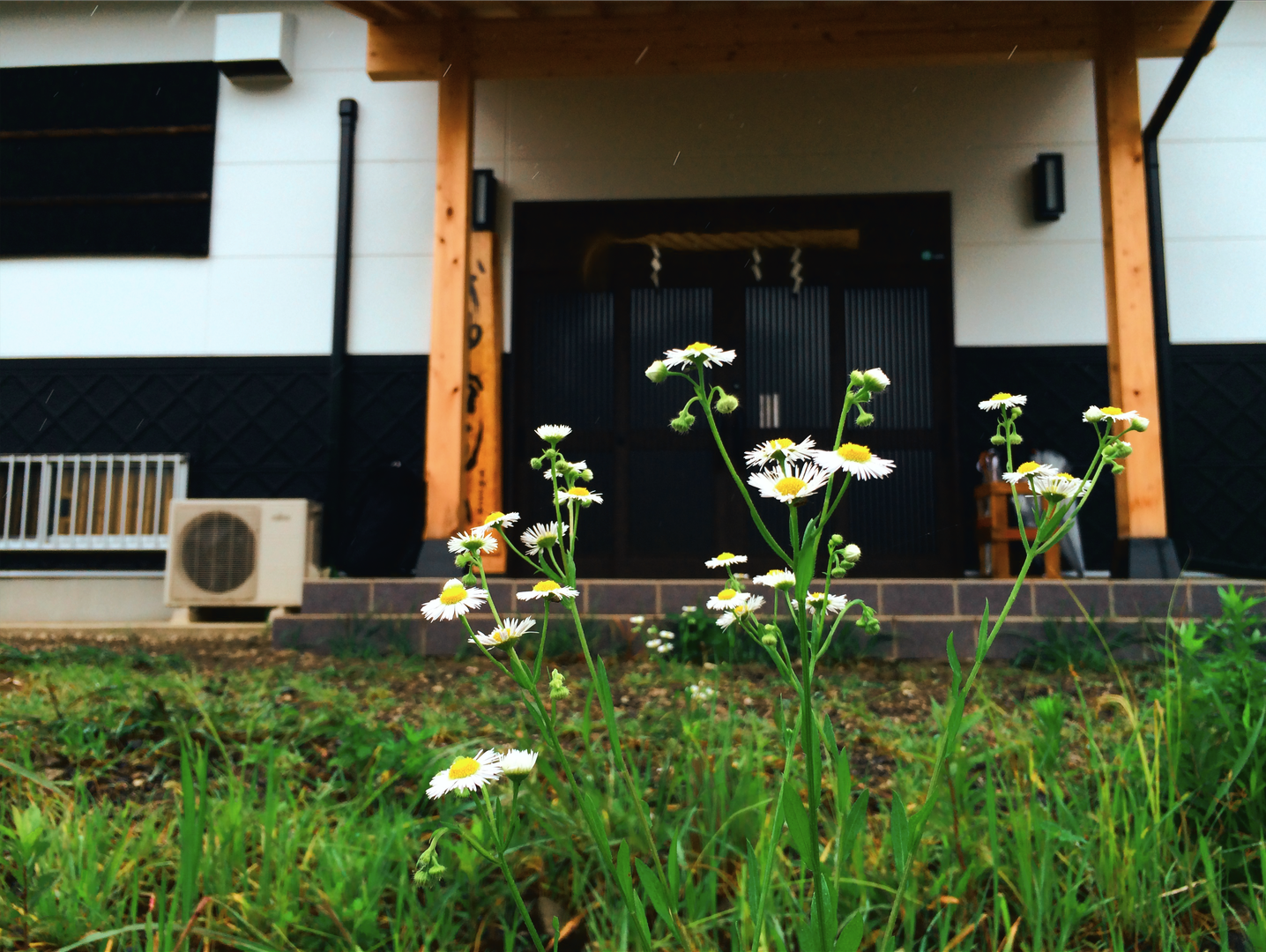
Rain brings Summer Flowers to the Bujinkan Hombu. photo by Michael Glenn
During the tea break today, Nagato Sensei said some profound things. He began by speaking about how Soke has said that we should not teach bad people. Then he gave some examples.

Nagato named names. He listed some of the bad people that have passed through the Bujinkan. He aired some dirty laundry with details I won't write about here. Then he also shared how they are dealt with by Soke and the Japanese instructors.

Nagato commented on the interesting fact that Soke does not eliminate these people from the Bujinkan. He said we need these bad people around to learn from them. They are the devils we know. Keep your enemies closer, as they say.

He said in the Bujinkan, we need to be capable of doing worse than the devil himself. He used the mafia or the yakuza as an example of evil. They may be bad, but we are worse. He said they should be afraid of us.

But then Nagato explained that the most important of all is to protect the goodness in yourself. Don't allow your ability to destroy evil, or to be more terrifying than the devil, color your own heart black. How do you stay clear of the bad around you?

Nagato used the word 初心 Shoshin. This is beginner's mind, or the spirit of a newborn. It can also be your original motivation for training. He said people forget why they began training. Then they lose their way.

They get caught in ideas of rank, power, politics, or building territories. And the purity of budo is lost to them. This purity that can both protect and destroy is a gift. Throw it away at your own peril.…

Yoga Asobi presents Indian BBQ party on June 27th!

From Kasumi An Study Center  霞庵 スタディセンター by Kasumi An Study Center

My Invitation

Yoga Asobi presents Indian BBQ party posted by Tomoe Gozen

Summer is here…Time for Indian BBQ!
Some of my yoga friends will come to Kasumi An Study Center for a yoga retreat on June 27th. We will have a Indian BBQ party which is prepared by professional chef Mr. Tsutsumi of the Ayurveda restrant “Ayurda” in Tokyo. Not only yoga practitioners but also everybody is welcome to join our BBQ Party!

Date/Time:June 27th(Sat) 5PM~8PM
Participation Fee(BBQ):2,500yen
Location:Kasumi An Study Center (http://kasumian.com/access/)
Food provided, BYOB
RSVP by June 25th(Thu)
Dress for Sun and Fun!

*Indian lunch is available on 27th. The fee is 1,000yen. Please let me know if you need a lunch too.

S__4710456 S__4710458 S__471043911194610_852928334773900_6555599901171134202_o(2)

…

New Bujinkan Book, "Dancing Embers" by Sleiman Azizi

From Bujinkan Santa Monica by Michael

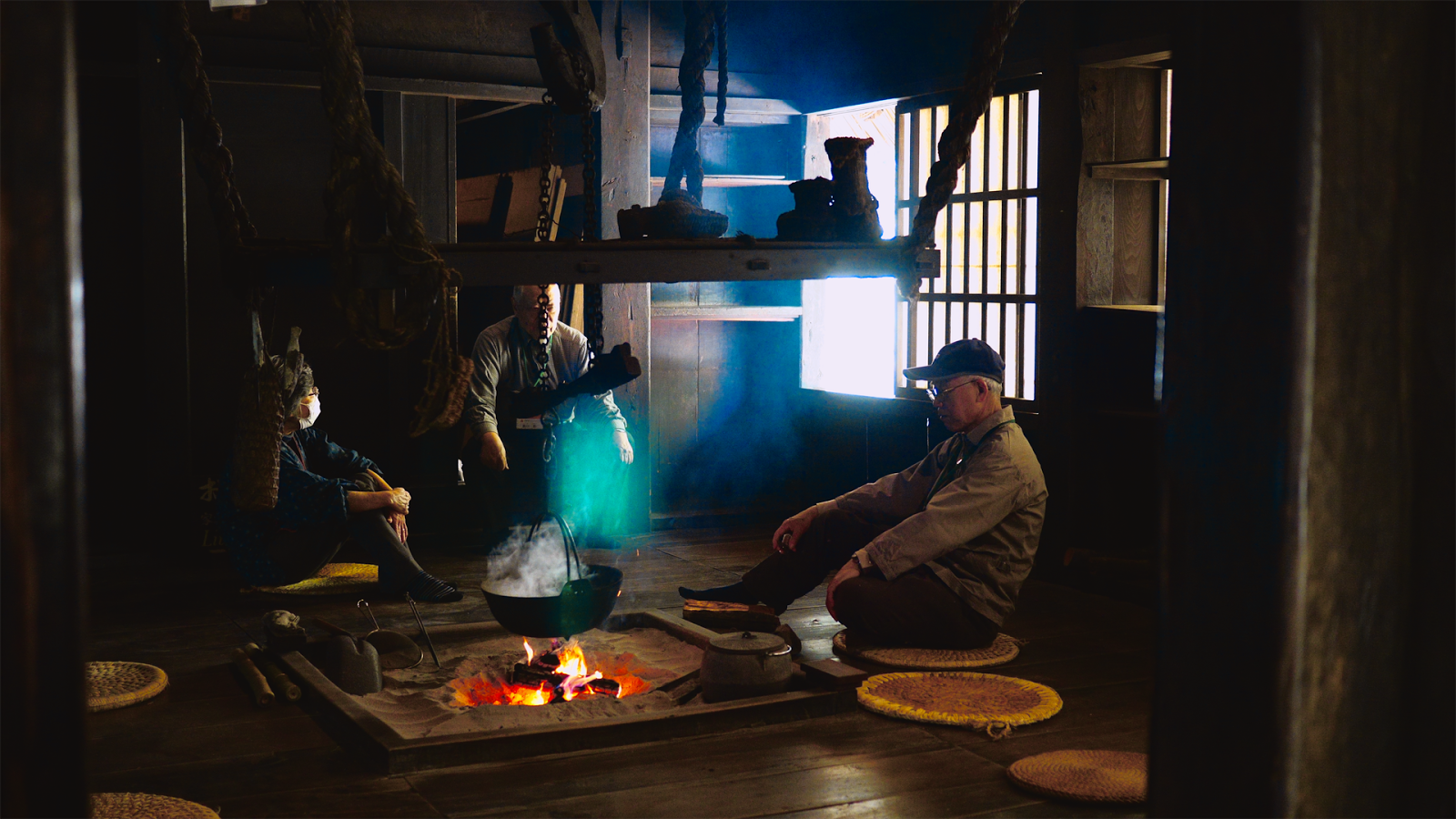
Warm People, 日本民家園 Nihon Minka-en, photo by Michael Glenn

My friend Sleiman Azizi has a new book out called Dancing Embers. I’m not sure if Sleiman wants anyone to know, but besides being a martial artist, he is also a poet. Being a poet myself, that was one of the things that drew me to him.

I met Sleiman many years ago during one of my trips to Japan for Bujinkan training. He was not one of the loud, in your face foreigners that one often enjoys in the raucous atmosphere of the Bujinkan dojo. In fact, I may never have noticed him at all had my teacher not introduced us.

I felt a quick bond because of the subversive twinkle in his eye. I often gravitated towards his corner of the dojo during my many visits. Over the years we continued to trade training ideas along with plenty of dry humor.

One day, without knowing why, I turned to him for advice about a pending complication with my upcoming godan test. My mind had been in turmoil for days because of a premonition I had about it. Sleiman gave me a quick suggestion that immediately felt right. I thought, “ok, that’s what I will do.” My premonition turned out to be correct, and it was Sleiman’s advice that carried me through.

For this I owe him my kansha (gratitude) for being a kansha (person of sense).

But, like so many of the people I meet in training, I never felt I really knew him. This connects with one of the central ideas of his book, that you cannot really know budo because it is not there to be known. Especially with Hatsumi Sensei’s expression of Budo. It is like like the sun trying to find a dark place to hide.

So how did I begin to know the author of this new book, Dancing Embers? One day I discovered his poetry. Poetry can reflect the inner world of the author. Poetry and budo have a long history together. This poetry tries to express the inexpressible nature of life and death. The writer may fail, but in the effort we can find beauty.

And it may bring us the closest to knowing the essence of budo.

The closest I can get to knowing Sleiman is by following his thoughts. Or, as he suggests in the book, his 随筆 zuihitsu are the miscellaneous writings he shares so that we may follow the brush of his thoughts. This is like my own experience riding along with him on the train after a great class at the Hombu dojo.

Remember that subversive wit I mentioned? Well, while applying poetry to thoughts of budo, Sleiman often confronts himself and the reader with the ridiculousness of it all. It is like the sufi story where Mulla Nasreddin was throwing handfuls of crumbs around his house. "What are you doing?" someone asked him. "Keeping the tigers away." "But there are no tigers in these parts." "That's right. Effective, isn't it?

With the teaching methods of a trickster, Sleiman’s thoughts and writings often pass judgement. But it is the judgement of fire that burns both the judge and the accused. No one escapes. Not even the author.

This is a common trickster approach. Some of the deepest lessons in Budo are found in this space. Sleiman writes,

“Just as a good chef can taste the mindset of the person who made the food being eaten, so too a good reader can read the mindset of the person who wrote the words being read.”

If you wish to approach your budo from an oblique angle that will provide insights that cannot be found elsewhere, get a copy of Sleiman’s book, Dancing Embers (Amazon link). You will be included in the private conversations and thoughts of someone who has lived many years in Japan and studied Hatsumi Sensei’s budo with a heart full of reflection.…

A New Beginning and a New Bujinkan Shodan in My Dojo

From Bujinkan Santa Monica by Michael

The Belt Exchange, Michael Glenn promotes Jesse to Shodan
Yesterday a new 初段 shodan was born in my dojo. My student Jesse proved that he has what it takes both with technique and heart. But he also showed something more which proves his understanding of what it means to be a Bujinkan Shodan.

I don’t give out rank easily. As the day grew closer for Jesse’s initiation, I checked my records to see when he started training. I was very surprised to see that he began exactly 5 years ago! I hadn’t planned for his black belt to fall on that anniversary, but sometimes everything lines up just right.

Jesse doesn’t know yet what it means to be a black belt in the Bujinkan. And of course everyone’s experience is different. I wrote an entire series about the black belt ranks that begins here: Bujinkan Shodan 初段: Searching for the Bull

For me personally, It was a new beginning. It took me a lot longer than five years to get my black belt. Getting there symbolized a re-dedication to the passion I had for Bujinkan training that began in my youth. But also a more mature relationship with training and how it fit into my life.

I have watched some of the same things happen for Jesse. But in ways unique to him. The kind of training we do means that Jesse has had to grow as a person to improve with the martial art.

This is because there is an invisible barrier in the Bujinkan. It is found in your own heart. If you don’t find it and discard it, learning (and often training itself) comes to a stop.

I watched Jesse struggle over the past five years to find that and discard it. It was clear when he did. And his training improved. Now he is a strong example for the younger students. He is also a great reflection to remind the senior students where they’ve been and what training is all about.

Shodan means beginner level. As Jesse’s teacher I personally guarantee that Jesse has well begun! Thank you Jesse and Ganbatte!…

What if I Give Everyone in the World Bujinkan Rank?

From Bujinkan Santa Monica by Michael

The Crowded Path to 弁天堂 Benten-dō, photo by Michael Glenn
This could be one of my silly or offensive posts. But, you may already know my personal feelings about Bujinkan Rank. Or, about how long it takes to get a Bujinkan Black Belt.

I remember when Hatsumi Sensei marked the occasion when he awarded the 3000th godan. We all stood and applauded. That was some years ago. He recently said there were 400,000 Bujinkan members worldwide. That seems like a lot.

So what if I just promote everyone in the world? I'll make up my own rank and promote everyone because I think my (fake) numbers may surprise you. I'll call my fake rank the "Rojodojo Bujinkan Level."

Out of an estimated 7 billion people on earth, what is Your Rojodojo Bujinkan level?

(my made up levels are not proven by science, so don’t check my math too close)

Rojodojo Bujinkan level 0


  • about 5 billion people (about 70% of the population)
  • These are people who have never heard of martial arts or don’t care

Rojodojo Bujinkan level 1


  • about a billion people (about 15% of the population)
  • People who like martial arts movies.
  • Maybe learned a technique from their friend.
  • Called a dojo once to check prices.

Rojodojo Bujinkan level 2


  • about 100 million people (about 1.5% of the population)
  • People who took a martial arts class when they were a kid.
  • Or studied a couple weeks at the gym.
  • Maybe they bought a book.

Rojodojo Bujinkan level 3


  • about 10 million people (about 0.15% of the population)
  • Someone who achieved rank in a martial art or studied more seriously as an adult.
  • Still probably never heard of the Bujinkan.

Rojodojo Bujinkan level 4


  • about a million people
  • These people are actively studying a martial art.
  • Some have even heard of the Bujinkan.

Rojodojo Bujinkan level 5


  • about 100,000 people
  • People who actively study the Bujinkan.
Hatsumi Sensei says it’s more than this, but most Bujinkan members haven’t even trained once this month. And to me, once a month is not very active.

Rojodojo Bujinkan level 6


  • about 10,000 people
  • Have reached Shidoshi level or close to it.
  • Some even run their own dojos.
  • Maybe they visit Japan occasionally.

Rojodojo Bujinkan level 7


  • about a thousand people
  • Jugodan ranks.
  • There may be more or less, but it’s growing close to this number. 
  • Some are actively training/teaching. Some are not.
  • Some have died and we miss them.

Rojodojo Bujinkan level 8


  • about 100 people
  • Shihan.
  • People who are top rank and actually know what they are doing.
That’s 100 people in the whole world!

Rojodojo Bujinkan level 9


  • about 10 people
  • the teachers I train with in Japan.

Rojodojo Bujinkan level 10


  • Hatsumi Sensei
(since this is my list, I can put whoever I want on top)

You might notice that if someone is one or two levels above you, they seem cool. Three levels above and they start to seem a bit strange. If you examine someone four or five levels above, they are just crazy. Anybody above that, you should just run away from them.

Going the other direction, people one level below you seem ignorant. Two levels below are assholes. Beyond that, are they even alive? I mean can they fog a mirror?

Do you think my numbers are even close? Where do you fit in there?…