Skip to content

人心看破術 Jin Shin Kan Pa Jutsu

From Kasumi An Study Center  霞庵 スタディセンター by カスミアン

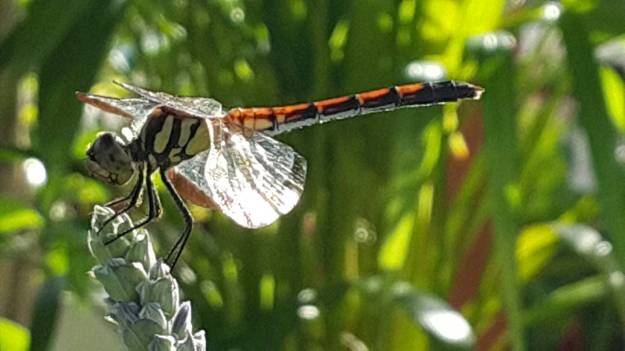
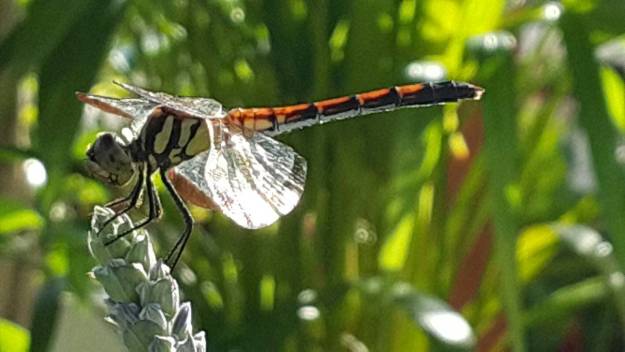
dragonfly

Visitor at the Kasumian.  Even though the dragonfly has two big eyes, They won`t help him with Jin Shin Kan Pa Jutsu.  Which eyes do you see with?

The other day I was in the dojo training when a friend who has not been in Japan came in and greeted me. His boyish good looks still evident but under a layer of new chubbiness. (Hopefully due to a good life overseas) My initial thought was “Wow, he`s gained some weight!”. Of course, as learned etiquette demands, I did not mention it and we began training. About five minutes later Hatsumi Sensei comes walking over and greets him with a hearty “Hello! Good to see you” and “Oh I see you have gotten fat!”. Well I almost fell over and the three of us burst out laughing. As I was catching my breath I hear my friend say to Sensei, “Yes it`s true, I have gained weight and my hair is changing to gray. I wasn`t sure that you would recognize me.”. Sensei replied, “of course I know you!”. What he said next was very interesting. He pulled us together and speaks, ” I may forget a face, and I may forget a name but I never forget the mood or feeling of person. This is important, to understand someone`s mood or the feel of that person.”.

Instantly, I am thrown back in time to last October (2015), Halloween, I had dressed as Harry Potter and came to the dojo early to joke around with my friends. After having a nice laugh with everyone in the dojo and before Sensei arrived, I changed into my dogi but kept the wig and wire rim glasses on; thinking I might fool Sensei. Some Japanese say all foreigners look alike anyways! A few minutes pass and Sensei enters the dojo and barely glances at me as he walks by. Immediately I know he knows. For he would have certainly greeted a new comer more warmly. I ask “Sensei, how did you you know it was me?”. He looks back over his shoulder at me and says “Of course, I know it`s you. I don’t look at the outside, I look at the inside of everyone.”.

A few days later, I am thinking about these two events when again I am thrown back in time to about ten years ago when Sensei used to tell us the importance of the art of Jin Shin Kan Pa Jutsu. The art of reading, seeing, sensing the heart, intent, feel of a person. To know a person instantly, know his intent, his heart, clear or dark. The importance of not being fooled by outwardly appearances. If you are always taken with the outwardly shapes, forms, colors of the people and things around you will often miss their truth, their intent, their nature – good or bad. This can lead a multitude of troubles, from being swindled in love and money, to more perilous, dangerous or even life threatening situations. The ninja often used the opposite of this, henso jutsu (disquise) to hide in plain sight. Often in our training, we enjoy the practice of the more outwardly and sometimes fun henso jutsu practice but forget about the this equally important inner ability. With consistent practice to nurture a calm clear heart, the art will naturally and surely take root. The ninja must endeavor to master both the inner and outer arts to ensure a safe and a happy return.…

Bujinkan Kyūsho: 呼吸 Kokyuu, 指 Yubi, and 目 Me

From Bujinkan Santa Monica by Michael

柴又八幡神社 Shibamata Hachiman Jinja, photo Michael Glenn
In the past few years, Hatsumi Sensei has been exploring more than one theme every year. And some of the Bujinkan yearly themes have actually stretched across more than one year. For example, one Bujinkan theme this year of “skipping stones” I first heard from Hatsumi Sensei during one class back in September of 2014: The 間 Aida of Skipping a Stone Across Water

Another Bujinkan theme that Hatsumi Sensei has been expressing the last few years is the use of 呼吸 kokyuu (the breath), 指 yubi (the fingers), and 目 me (the eyes). These three are not to be taken individually. They must be connected in the same way that the ripples on a pond are connected by the stone that skipped across it.

In one cold December class Hatsumi Sensei described this for us,
"(the eyes and the breath are) connected like skipping a stone. It’s connected together but really you disappear. Take the eyes and the fingers for jissen. In a real situation you don’t want to just go for them, you just kind of let them happen along the way. Take the eyes, the fingers, and stop the breathing."
These three things can be thought of as kyūsho. They are weak points on even the strongest opponent. If you attack the eyes, you destroy his ability to fight. The fingers are very sensitive to pain and break easily. And if you stop or interrupt the breath, the entire body and mind stops with it.

As always, Hatsumi Sensei embeds layers of meaning and wordplay into the things he shares with us. The word 呼吸 kokyuu means breath, but it also can be translated as a knack, a  trick,  or a secret for doing something. Hatsumi Sensei described one of these secrets in another class I went to,
"Don’t grab and hold, just move like this with the body.  The finger hooks on here. With this timing, with this rhythm."
Even though it wasn’t translated directly, Soke actually said 呼吸から愛人 kokyuu kara ai jin, this is the harmony of the breath between lovers. This means you match your movements or your breath to the same rhythm as the breath of your opponent. You harmonize and become one with him. Then when you break that rhythm, it shatters him like a wine glass.

In case you haven’t seen that happen, a wine glass can be shattered by sound (the breath or voice of a singer). This happens because the glass has a natural frequency at which it vibrates. The singer first resonates with this frequency, then breaks that by going beyond it.

Hatsumi Sensei said we can use the finger to attack the rib cage in a way that interrupts the breath. I witnessed this, but since it is a kuden, I would have to show you in person. Don’t be afraid to ask me to hurt you next time you see me!

Hatsumi Sensei added that this is why we don’t have to avoid a strike. Instead we interrupt the opponent's breathing. This becomes like sutemi. Here we find the feeling of being able to control with just one finger.

The word for eyes or eyesight in Japanese can use different kanji as well. One of them is 目 me which can be translated as insight. Another is 明 mei which is a brightness or clarity of vision.

And the finger indicates the connection or link between these things. We must open up to these connections when we train on the Bujinkan themes. Remember the real training happens in your own breath and your own insight.

中今(Naka Ima) Here and now are the only realities.

From Kasumi An Study Center  霞庵 スタディセンター by カスミアン


shinryu-matthew

Enter a caption

This is a work of art for my friend Matthew by Hatsumi Soke. It reads in large characters, Divine Dragon (神龍) and in ancient “Age of the Gods” characters (kamiyomoji), Shiken haramitsu Dai Koumyo. Sensei often writes this for people who are having difficulties with health or as a general Omamori or talisman for protection.


When my good friend Willy Iglesia went to Japan at the tender age of 18 to train with Ninja Master Hatsumi Masaaki, his first lesson was an unexpected one.  Hatsumi Sensei took him to a restaurant and ordered two plates heaping with vegetables for the two of them.  Willy, being a young man from Argentina, (people form Argentina eat a lot of meat! How much? Well, think of a whole hell of a lot of meat and then think even more!) So Willy, looking at the plate of greens, says “Sensei, I don`t eat vegetables.”. The reply from Ninja Master Hatsumi, “First lesson, now eat vegetables!”.

We often forget the foundation upon which our Ninpo is based.  A healthy body/mind organism.  In his very first books on Ninpo, Hatsumi Sensei stresses the importance of proper nutrition and exercise.  Yet often we are controlled by our senses, eating and partaking in activities solely to please the greedy senses. My yogi teachers would say, “you are eating donuts to please the tongue while the liver dies in silence.”. These words I can never forget.  If you look deeply at this one sentence, you may grab the essence  of the Rokon Shojou 六根清浄  (禄魂笑浮)teachings of several years ago as well.

I  train a small Bujinkan group in Yokohama and have had the good fortune to meet Matthew Dons who became an ardent supporter, student and good friend. Matthew was recently diagnosed with stage four cancer having spread to many systems in his body. He is 36 years old with two small children. The prognosis is that he most likely has only a few months to live.  We live our life as if we have an unlimited amount of time.  Once I was speaking with Hatsumi Sensei about the later years of life. He said, “Don`t think about the later years, right now, these are the later years of your life.  live now. this is naka ima! (中今).”. Be in the middle of right now. The Buddha once said, “life is but a single breath.” How deeply can we live and love in this moment.  Often we think, when I get there, I will be happy then.  Remember, there and then are fictions. Here and now are the only realities.

If you are able and would like to help, please click the link below  to help Matthew fund his treatment and other expenses in this difficult time. We are hoping to extend his life for a few more precious moments to be with his family.  Wishing you all health and happiness, Now!

https://www.gofundme.com/2hk6vqk

A side note. We once announced an opening party for Kasumian Study Center a year and a half ago, Matthew is the only one who showed. He came all the way from Yokohama to support us.  I am very grateful for the time we spent together. Thank you for being there Matthew.  Buyu 武友、武祐、武勇。All are pronounced Buyu. Martial friend, martial divine help, martial courage.  They are all of them you and may they continue to be with you!

matthew-hospital


 …

中今(Naka Ima) Here and now are the only realities.

From Kasumi An Study Center  霞庵 スタディセンター by Kasumi An Study Center


shinryu-matthew

When my good friend Willy Iglesia went to Japan at the tender age of 18 to train with Ninja Master Hatsumi Masaaki, his first lesson was an unexpected one.  Hatsumi Sensei took him to a restaurant and ordered two plates heaping with vegetables for the two of them.  Willy, being a young man from Argentina, (people form Argentina eat a lot of meat! How much? Well, think of a whole hell of a lot of meat and then think even more!) So Willy, looking at the plate of greens, says “Sensei, I don`t eat vegetables.”. The reply from Ninja Master Hatsumi, “First lesson, now eat vegetables!”.

We often forget the foundation upon which our Ninpo is based.  A healthy body/mind organism.  In his very first books on Ninpo, Hatsumi Sensei stresses the importance of proper nutrition and exercise.  Yet often we are controlled by our senses, eating and partaking in activities solely to please the greedy senses. My yogi teachers would say, “you are eating donuts to please the tongue while the liver dies in silence.”. These words I can never forget.  If you look deeply at this one sentence, you may grab the essence  of the Rokon Shojou 六根清浄  (禄魂笑浮)teachings of several years ago as well.

I  train a small Bujinkan group in Yokohama and have had the good fortune to meet Matthew Dons who became an ardent supporter, student and good friend. Matthew was recently diagnosed with stage four cancer having spread to many systems in his body. He is 36 years old with two small children. The prognosis is that he most likely has only a few months to live.  We live our life as if we have an unlimited amount of time.  Once I was speaking with Hatsumi Sensei about the later years of life. He said, “Don`t think about the later years, right now, these are the later years of your life.  live now. this is naka ima! (中今).”. Be in the middle of right now. The Buddha once said, “life is but a single breath.” How deeply can we live and love in this moment.  Often we feel, when I get there, I will be happy then.  Remember, there and then are only fictions. Here and now are the only realities.

If you are able and would like to help, here is a link  to help Matthew fund his treatment and other expenses in this difficult time. We are hoping to extend his life for a few more moments to be with his family.  Wishing you all health and happiness, Now!

https://www.gofundme.com/2hk6vqk


Make the Opponent Empty

From Bujinkan Santa Monica by Michael

a rare empty hall in Ameya-Yokochō, photo by Michael Glenn
I've been writing lots of articles for my personal Bujinkan mailing list which you can sign up for here: Bujinkan Training Notes

The other day I wrote about something very important in our Bujinkan training. It starts with a question that everyone forgets to ask:

Who is it that fights? When you are in a fight or an argument, who does the fighting? Is it you? Your opponent? Does it just happen by itself?

Obviously any fight requires at least two participants. Unless you are fighting with yourself. But in that case there are still two because you are divided against yourself.

What if you didn't participate? Remove yourself from the fight. What happens?

The fight dissolves. Almost as if it was never real. Leave the opponent to fight with himself.

In a recent class with Hatsumi Sensei, he told us how NOT to avoid a sword,
"If you evade, you will die. Move without any intention to fight. Make the opponent empty. Make him forget his own intent to fight. Make him forget that he’s fighting or trying to strike you."
Make the opponent empty. Make yourself empty. The fight is an illusion that you have created. You can stop believing in it.

KUKISHIN-RYU JO-JUTSU with MATS HJELM

From Budoshop by BUDOSHOP.SE

  $14.99

Kukishin-ryu Jo-jutsu

  $14.99

All 8 Kukishin-ryu Jo-jutsu techniques in HD quality, total playing time is 20 minutes. 1.08 Gb (H.264, AAC, 1280x720p)

This was filmed at the Bujinkan Kaigozan Dojo during the summer of 2015. The theme was Kukishin-ryu Jo-jutsu.

There is no verbal instructions on this film. Each technique is demonstrated several times from all angles. For more information about this ryu-ha click here! Please notice there is several sub-pages to this page with more information.

杖術 JŌ-JUTSU

The Jojutsu techniques was developed by Ōkuni Kogenta Yukihisa the 11’th Sōke of Kukishin-ryu in the Genna period (1615-1624). The length of the stick is individual, when placed on the ground it should reach up to your armpit.

We use the same Kamae, strikes and blocks as in Rokushakubōjutsu. The first Jojutsu technique is the same as the last technique in Bōjutsu Keiko Sabaki Kata.

型 KATA

1. 十文字 JŪMONJI
2. 六法 ROPPŌ
3. 九法 KYŪHO
4. 龍飛 HIRYŪ
5. 附入 TSUKEIRI
6. 腕掛 UDEKAKE
7. 小手返 KOTE-GAESHI
8. 太刀落 TACHI-OTOSHI

Title: Kukishin-ryu Jo-jutsu with Mats Hjelm
Instructors: Mats Hjelm
Theme: Kukishin-ryu Jo-jutsu
Recorded: Recorded in Kaigozan Dojo, Stockholm July 2015

Kind: Apple MPEG-4 movie
Size: 1 075 472 723 bytes (1,08 GB on disk)
Dimensions: 1280×720
Codecs: H.264, AAC, Photo – JPEG, QuickTime Text
Duration: 20 min…

Inton Jutsu: Don’t Give What They Expect

From Shiro Kuma's Blog by kumablog


Yesterday was my last class with Hatsumi sensei for this trip. 

After the class I had dinner with the CEO of Quest, and we spoke of sensei’s Budō. And that helped a lot because I must admit that I was a little lost after training. 

Hatsumi senseil didn’t reveal any nice philosophical concept to support my understanding (Sasae Nakusu?) 

On the contrary, he mainly taught at the technical level. Except that it was at his technical level, far beyond mine.

His movements are so subtle that it is impossible to get what he is doing. It resembled more to some magic trick, than to Budō moves.

I had the chance to attack sensei a few times. And whether it was with a sword or with a fist, I was unable to attack him properly, as if he was able to erase my intention and my ability to make a decision. That was weird. And I guess that Holger, Yabunaka, Paul, or Armando, who were his UK, would agree with me. 

There are two things that Sensei said during this class,  and that I do remember. Even though they seem paradoxical at first, they are in fact, the two sides of the same reality of Mutō Dori. The Omote and the Ura of Zero. 

He said:

1. “Get hit, in order not to be hit.” 

2. “Stab uke without intenting to stab him.”

“Get hit”. Too often, during training, we move too early, therefore we are not able to get the exact timing for our movements. This is the Omote.

Sōke explained that, to learn the perfect timing, we are in the dōjō, we have to accept moving too late and to get hit. Little by little, we develop the correct timing. This is learning by trial and error. 

“Don’t stab”. On a sword attack, don’t try to stab the attacker, let him come to you, and let him stab himself on your blade. This is the Ura.

Behave as if you’re not aware of him, emit no intent, and walk naturally and slowly past him. 

The Mutō Dori of 2016 is 隠遁術, Inton Jutsu, the art of concealing your escape, or your moves / your intent.

In his last dvd, Sensei writes “it’s Inton, where you don’t give the person the feeling they would normally expect. This is Ninpō.” 

As Uke, I was always stuck in the Kûkan and really couldn’t feel anything. 

He adds that “Ninpō Taijutsu is the highest level of Bujutsu. It means that you’re able to not show things.” Honestly, when I was attacking him, and even though I knew what he was going to do, I got defeated each time. He was Zero, showing nothing.   

Yesterday was my first class of Inton Jutsu, and I don’t know how to get it.

I guess I’ll have to come back next November. 

______________

1. 隠遁/inton/retirement (from the world); seclusion

隠遁術/intonjutsu/Ninja art of escape


Sasai Nakusu: Get Rid Of The Support

From Shiro Kuma's Blog by kumablog


Hatsumi sensei said that we have to 些細亡くす, Sasai nakusu, to “get rid of support”, and that reminded me of what the Buddha said. (1)

Sakyamuni Buddha said that religion is like a wall. We need it to support our growth, but when we know how to walk, we can leave the wall and walk in our own. The same process happens in Budō. 

As a beginner we need a wall, this is the fundamental techniques found in the Tenchijin.

As we grow as a Shidōshi, we need a new wall, this is found in the Ryûha. 

When we know how to do the waza, we need to free ourselves from them. This is what Sensei meant with Sasai nakusu. 

Because we built our taijutsu on these walls, we need to leave them behind and walk alone. 

Waza are supporting our understanding, but it is only intellectual. It is Omote.

We have to interiorize the student Kaname, this is the Ura level. There is no thinking anymore, no preconception. 


A real fight is not about doing one waza or another, a real right adapts seamlessly to what the attacker is doing. This adaptive process is not included in the waza, it is the consequence of it. And it has to be trained.  

Because everything have been integrated in the Sainō Konki, we are able to mix all our knowledge into one body flow. Sensei repeated  many times that waza cannot be used in a real fight. That if you do use waza, you get killed. 

This year, we are entering a new cycle of learning that is beyond the form. The “Zero state” can be achieved only if we learned the waza, and got rid of them. At this level, we do not need the support anymore. 

This is the metaphore of the soup.


Steps to make a good Budō soup

1. You need to get all the ingredients (these are your basics) 

2. You need to get a recipe (this is the Ryûha) 

3. Once cooked, you use the blender, mix everything together and serve it. 

The soup has the flavour of the many ingredients you put in it. You recognise the tastes, but you cannot see them. 

You have to do the same with your training. 

If you don’t do that, your fighting skills are very limited. Natural movement is directly linked to the Sakki. Once you get rid of the waza support, you can develop your intuition, your awareness, and your spirit. Jûgodan should train this to continue their Budō progression. Sasai Nakusu is only that, and this is a lot. 

Receiving the Jûgodan is not the end, this is just the beginning. 

______________

1. 些細/sasai/trivial; slight

亡くす/nakusu/to lose something|to get rid of|to lose someone (wife, child, etc.)


Junban: Is Nagato Sensei Cartesian?

From Shiro Kuma's Blog by kumablog

In 1637, the  famous French philosopher and mathematician René Descartes, published his “Discourse on the Method”. The full name of the book is “Discourse on the Method of Rightly Conducting One’s Reason and of Seeking Truth in the Sciences”. (1)

Nagato sensei in his Sunday class, sounded like Descartes, when he explained that 順番, Junban was important. (2) Junban is doing the necessary steps to do a technique in the proper order. Each movement calls for the next and the order of things is vital to the realisation of the effect. Too often we watch the technique, memorise it wrong, and force it, by using strength and unnecessary power. The Omote looks quite the same, the Ura is missing. 


This is because the techniques we watch are not the technique we do. Our senses perceive reality correctly, but our brain translates it wrong. The attempts we make are not good because even if we have the general idea, we don’t have a clear vision of the details. 

The one thing that is missing is the proper order of things, Junban. We might have memorised all the steps, but they are not executed in the correct sequence. 

If you want to build a house, you need foundations, then walls, then a roof,  in this order. You cannot paint the walls if they are not built yet. There’s an order. 


The same goes for a technique and this is the meaning of Junban. 

In his book, Descartes writes “divide each difficulty into as many parts as is feasible and necessary to resolve it”. This is exactly what we don’t do during class. We see the technique as a whole and don’t pay attention to the details that are necessary for the technique to be alive. 

The lack of understanding of what is displayed in front of our eyes, pushes us to speed up the steps, in the hope that the outcome will be similar to what we saw. It is never the case. Speed and force are useless. 


Nagato sensei often says that “only stupid people train fast”. That we should “train slowly!” and he is right. By training slowly, we are able to see what we didn’t see when the movement was done. 


The trend for MMA, pushed many Bujinkan teachers to add a more “realistic” touch to their Bujinkan moves. This is an illusion. Going fast might work, but will not teach you the true essence of a waza. 

Junban is the key to good taijutsu. When you respect the proper steps of a technique,  slowly, you discover that you don’t need speed nor force to do it. Strangely, it will work with any opponent even if they are fast and brutal. Because the secret is not in learning a technique, but in absorbing and ingraining it, so that the acquired Kaname will be adjusted to the encounter. 

Remember what you hear in Japan: 

Chikara janai: If you use force, you got it wrong (3)

Yukkuri/Yururi: move slowly (4)(5)

Descartes also said “Nothing is more fairly distributed than common sense: no one thinks he needs more of it than he already has.” 

If you remember what Hatsumi Sensei said about the Kankaku of senses, I guess that Descartes is right. We have to connect to Daishizen in order to increase our common sense. (6) It’s a question of survival. Junban is the key to our understanding of natural Budō. 

Japan is always full of surprises. I never expected Nagato sensei to remind me of French philosophy.

So, do you think Nagato sensei is Cartesian? (7)

____________

1. https://en.m.wikipedia.org/wiki/René_Descartes

https://en.m.wikipedia.org/wiki/Discourse_on_the_Method

2 .  順番/junban/turn (in line); order of things; sequential order

3. Chikara janai: don’t use strength. 力/chikara/force; strength; might; vigour (vigor); energy|capability; ability; proficiency; capacity; faculty|efficacy; effect|effort; endeavours (endeavors); exertions|power; authority; influence; good offices; agency|support; help; aid; assistance|stress; emphasis|means; resources + じゃないis not,  negative.  

4. Yukkuri: be slow.

yukkuri/slowly; at ease; restful

5. Yururi: 緩り/yururi/unhurriedly; leisurely; slowly; relaxedly; taking one’s time

6. 大自然/daishizen/nature; Mother Nature

7. René Descartes is also the creator of modern geometry. This is thanks to his works, that we are able to use the GPS today, and find our way easily. 

Proper Bujinkan training is the GPS of your path to become one with nature and not to be lost in the process. 


Is The End Near? 

From Shiro Kuma's Blog by kumablog

This article is for Bujinkan dōjō teacher. It is based on my experience. 

Do you know that your Dōjō might be dying without you being aware of it? 

I began teaching in 1987, and I was not good at it. I learned how to do it correctly,  the hard way. And I’m still learning to teach better thirty years later. 

I made all mistakes possible and did my best to correct them. After doing it for many years, and after visiting many different dōjō, I found a pattern that I’d like to share with you in this post.

There are three level types of dōjō,  I called them Level #1, Level #2, and Level #3 dōjō. This is a type of Sanshin. 

Level #1 dōjō: this is a dream dōjō. At level #1, the group is committed,  and everyone wants to learn. This is often, a new group headed by a young Shidōshi. The students are mainly beginners, but some higher ranks coming from other dōjō, join in, and give the young group some kind of maturity. The teacher is often seen as charismatic, at least by the practitioners of his dōjō. Egos are low, sharing is high. The group is more important than the individual. 

Level #2 dōjō: this is logical evolution of the level #1. The magic of the first years is now gone, the training has turned into  a routine. The teacher is now surrounded by a few Shidōshi. They are the “instructors”. They went at least once to Japan. They share the teaching, and think their students are as motivated as they were, when they began. 

Egos are average, sharing is average. The group is split in high and low ranks. Strong “clanification”. Clans are more important than the group, or the individual. Unity is Omote.  

Level #3 dōjō: the dōjō is now sick  and dying. The high ranks got higher. The “ancient students” left. A new breed has come. The high ranks are turning “grandmasters”, and treat the beginners, as if they had been already training for a few years. Classes are mainly about the “flow”, waza are not taught, or taught badly, by the young unqualified black belts.  New students are clueless, because they were never taught the basics.  The instructors are so much in the illusion of their rank that they don’t train, they only teach their misconceptions to the newcomers. 

Egos are high, sharing is low. The individual  is more important than the group.  The end is near. 

So, figure  out if you are #1, #2, or #3, and react if necessary. 

If you correct your path  now, it’s never too late. 

If you want  to stay at level  #1,  then watch your step!