Skip to content

Yokusei Jutsu: The Art Of Controlling

From Shiro Kuma by kumablog

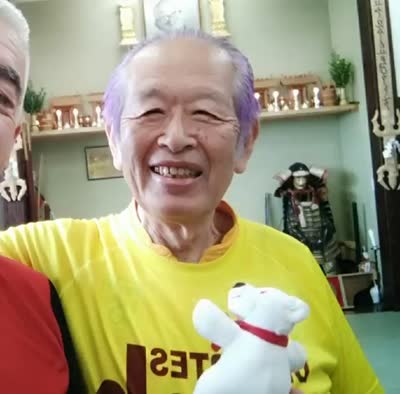
fb_img_1574274943555My friend Philip Pihl wrote from Japan yesterday after class. Hatsumi Sensei expressed his mastery of Mutō Dori using the body, the sword, and the knife. Mutō Dori is still the major training point to learn and understand how to express it with our Taijutsu. We entered the realm of Mutō Dori two years ago in Japan. It looked like the next logical step in our progression on the path of Budō.

During this period, I attended many classes at the honbu. Each time I am puzzled by the simple complexity of Sensei’s movements. It was like he wasn’t there. The Uke seems to be fighting alone. Their attacks were the reason for their defeat. Back in 2017, Sōke introduced a more advanced version of Mutō Dori. Until then, we knew it as being the ability to fight weapons when unarmed. Sensei used two concepts to help us. They should make us able to put into motion, the type of movements Hatsumi is showing.

The first concept is Yokeru Janai (1), or “don’t avoid the attack.” And the second one is Tatakai Janai (2), or “don’t fight.” But it is easier said than done! And I’m still not sure if I can do it today, and there is a reason for that. These concepts are not logical with usual training (except if you are a bodyguard).

In a fight, you want to fight back, while avoiding the attacks of your opponent. Our Budō training has been training us like that for years. When an attack comes, we dodge the fist or the weapon and block it in some way. Then we counter-attack in the openings. With Mutō Dori, we have to do the opposite, that is why it is difficult.

Philip quoting Sensei, wrote: “do not evade. It is easy to kill and destroy, but control is more difficult.” We have been playing with the idea of “control” since last November, but somehow, it makes more sense today. This sentence gives a “way in.” We do not “evade the attack,” but we control the attacker before the attack arrives. I understand it as another manifestation of Yūgen no Sekai. (3)

We move in this invisible, and non manifested moment when Uke takes the decision to attack. During a millisecond, we can control the opponent only if we don’t try to avoid the Tsuki, and do not fight back.

Through my training with Sensei over the past 35 years, I see how he made us walk the path. First, as “ninja kids” with ninjutsu. Then to Budō with Budō Taijutsu. Then with Juppō Sesshō and Ninpō Taijutsu. And now with a smarter version of Mutō Dori.

I like to call it “Yokusei Jutsu” (4), or the technique of controlling Uke body and mind. The goal of the Bujinkan is not war but peace. If our actions can create a state of peace around us. If our presence and our attitude can prevent bad things from happening. Then I guess we have been training correctly.

“We don’t kill or destroy” the enemy; we simply control his actions. We are not warmongers, we are peacekeepers.

_______________________________

1 避けるじゃ無い, Yokeru Janai; Don’t avoid the attack
2 戦いじゃ無い Tatakai Janai; don’t fight; don’t get into a conflict
3 幽玄の世界, Yūgen no Sekai. Yūgen is subtle grace, hidden beauty; mysterious profundity; elegant simplicity. Sekai is: the world, the universe, dimension
4 抑制, Yokusei; control; restraint; suppression; constraint; curtailment; inhibition; check; curb

Visit http://www.koimartialart.com the Bujinkan online streaming platform with 150Gb of videos!

 …

Do You Have A Backpack?

From Shiro Kuma by kumablog

img_20191111_103247-1When you go out for a trek in the mountains, you carry a backpack. Everything you might need during the long hours of walking is inside.

When you pack it, you select the content and organize it. You know precisely where every object is:
socks, clothes, sleeping bag, map, compass, knife, rope, gloves, rain jacket, torchlight, extra batteries, first-aid kit, food, water bottle, etc.
And often, you don’t use all the things you packed for your trek. You carry them in case you might need them

The Bujinkan program is like a backpack, except that often, your bag is half empty! It is half empty because you weren’t given a chance to know what to put into it. What you need is a set of necessary and useful techniques that you can adapt to any situation. This is what the tenchijin is about.

The Bujinkan comprises nine different Ryūha (1), which makes it quite complex to learn.
When you learn a single Ryū, the basics, the technical levels are all given in a somewhat logical system. You have a set of tools to help students to learn the correct way step by step. These tools are called scrolls.

In a Ryū you have the Ten no Maki, the Ryū no Maki, the kotsu (or kurai dori), the taihenjutsu, the kamae, the densho (2), the e-densho, the kudensho, and the Juppō Sesshō. (3)(4) A Ryū details a specific approach to actual combat. But nine Ryū regroups several different methods to fight on the battlefield. They all have their specificity. That is why Hatsumi Sensei has regrouped them in a modern tool that he called the Tenchijin Ryaku no Maki. See the Tenchijin as the first level to get Hatsumi Sensei’s style of Budō. The nine Ryūha are the source for it, and also exercises to understand his way of training, his specific flow. (5)

The Tenchijin is your backpack, and you have to know it so well that you don’t think when you use it. It has to become second nature, like when you are riding a bike or swimming.

You have to use what naturally is in your backpack. To me, the Tenchijin is the expression of the “Hatsumi Ryū.” After reading this, ask yourself: “do I have a full backpack?”

Have a good trek!

Funny note: Did you know that Japanese call the ebooks, “densho”? (6)
_____________________________

1 流派, Ryūha; school (e.g. of ikebana)

2 伝書, Densho; book or scroll that has been handed down through generations; a book of secrets. Depending on the Ryū, there are 3,5, 9, or more densho. They detail the Waza from the beginner to the advanced practitioner

3 I already explained this structure in a previous post on this blog. And what is the purpose of each scroll. But this is not the goal of this article

4 十方折衝, Juppō Sesshō can be understood as the essence of a system. For example, the Juppō Sesshō of Gyokko Ryū is the Sanshin no Kata. That is why it is so hard to master it.

5 流, Ryū; Way; style; manner​. Or school (of thought)​. Or flow; stream

6 電書, Densho; electronic book; e-book; ebook​

Bujinkan Will Not Survive

From Shiro Kuma by kumablog

Bujinkan will not survive, and it doesn’t matter. And here is why.

A few months ago, in Japan, I had the opportunity to speak with Hatsumi Sensei about the future of the Bujinkan. He said that he created the Bujinkan as a shell to gather everyone. To give us a chance to understand the powerful beauty of true Budō.

“After me,” he said, “my successor will name the Bujinkan shell the way he wants, and teach it the way he feels suits the art.” In the West, we are too much attached to the “form.” Instead, we must focus more on the “body flow.”

When you begin your martial arts journey, it is normal (better?) to start by respecting the forms. Then comes a moment where you have to let them go.

Forms are traps. As Sensei puts it, “if you use a Waza from any Ryū, it will get you killed, you have to adapt it to the situation.” A Waza is only a teaching tool to get new knowledge. A Waza is not a checklist of some sort but the visible result of a potential outcome. And only when you can adapt it to the terrain, the weather, and the opponent(s), can you use it. This is the essence of the Tenchijin.

When you grow up in Budō, you go through three phases of learning. The Japanese call it Shuhari (1), and it marks the path to follow. At the “Ri” level, you can express natural movement, not before. You have to get rid of the form. You have to forget everything and to “divorce” from your certitudes so that you can walk your own path.

But to forget, you must, first, learn the forms. It is not possible to overlook something you did not learn in the first place. Forgetting needs learning.

The forms found in the Ryūha are the scaffolding protecting your understanding. That allows your personal evolution in Budō. Without forms, your taijutsu will never grow, it is like a baobab in a small pot!

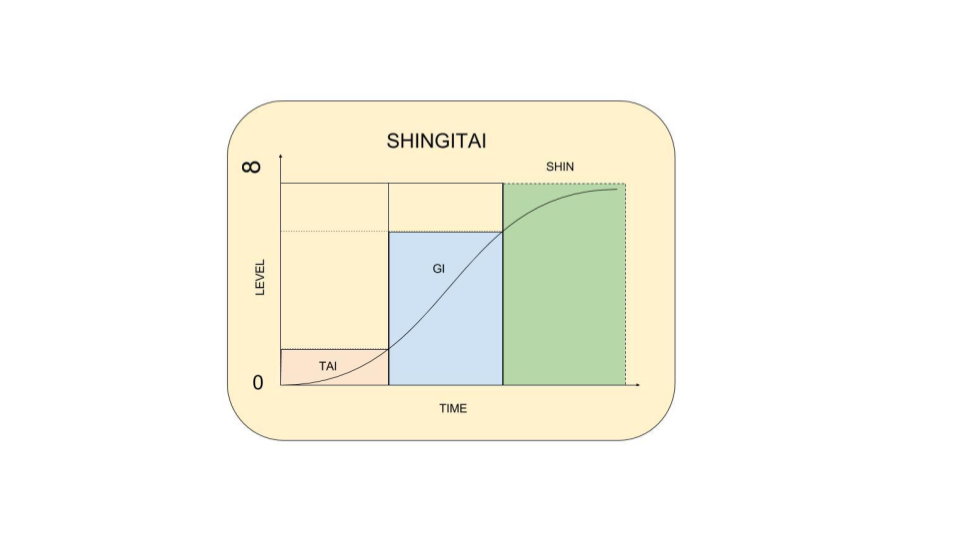
Budō takes a lot of time, you have to develop “Shintai” patience and train hard. (3) In the old days, young Samurai began preparing for battle around six-year-old. After the Genpuku, (4) the young Samurai could join the battlefield. They were fifteen to twenty-year-old. (5) At this young age, they had already train ten to fifteen years. Experience comes with time, and you cannot compress time.

The Japanese created a productive society able to create the warriors it required. From the Kamakura Jidai (1185) to the end of the Azuchi Momoyama Jidai (1600), Samurai rule the country. Through battles, they invent the Waza, test them, and transmit them to the next generation. We have many Ryūha in the Bujinkan today. That is because these techniques were battle-efficient and transmitted. Learning the correct form is essential.

Evolution requires an adaptation to adjust them to the modern world. And this is what Hatsumi Sensei is teaching us three times a week at Honbu. Contemporary martial arts, without knowledge from the past, stays at the Omote level. The Omote is not Budō. The Ura is what matters, Ura is to be able to use natural movement in any situation. With a lot of work, each one can do it.  

The Bujinkan will not survive because it doesn’t have to survive. The Bujinkan is a tool designed to guide us towards the natural movement. We received, receive, and will continue to receive Sensei’s vision of Budō. His teachings will last long after we are all gone. They will nourish future generations of martial arts practitioners.

Transmitting the spirit is the key. Forms are only useful learning tools needed to become natural in the Dōjō, as well as in life. Sensei said to my old friend Pedro Fleitas that “to transmit what I have, I only need one student!” Try to be this “one student,” and stop wasting your time on social media. Keep training, and never give up.

Keep Going!

____________________________________________

1 守破離, Shuhari. The three stages of learning mastery: the fundamentals, breaking with tradition, parting with traditional wisdom

2 離, Ri; It has the meaning of divorce, separate from.

3 忍耐, Shintai; endurance; perseverance; patience

4 Genpuku: https://en.wikipedia.org/wiki/Genpuku

5 WWII cemeteries are full of very young soldiers. In the marine corps, 70% were 18 to 25-year-old, when they gave their real age as many lied on their birthdate. https://www.quora.com/How-old-were-the-soldiers-during-WW2#

vid_167590922_022546_748

Why Do You Train?

From Shiro Kuma by kumablog

Speaking with a friend today, I asked myself, why do people train? In the nineties, it was easy, the ninja boom made the dōjō growing fast. During this golden age, it was not rare to have 60 or 70 students per class. Today when we have 20 students attending, it is good. In the 90s’, many newcomers were there because it was trendy to do Ninjutsu. This is not the case anymore today. Today people want sport martial arts, not learning an art that is a thousand-year-old.

At the end of 2019, the attendance is so low that, sometimes, I am not sure if it is good to keep the dōjō running. In a regular class, only 6 to 10 students of all levels are attending. During the last Tenchijin seminar, in October, only seven students attended.

That is why I want to know, “why do you train?”

For me, training is a part of my life. It is some kind of life hygiene. Without teaching or training, something is missing. But if I understand why I train, I keep wondering why the students come to the Dōjō.

When you already have a black belt, or if you are a Shidōshi, I suppose that training is part of your life. But beginners stay long in the dark before discovering the beauty of our art. The learning process in the Bujinkan is slow. And it doesn’t answer the need for speedy knowledge by our younger practitioners. Young students need fast answers. Everything they do in life is fast and goes through the passive link they have with a smartphone. They have an attention default. They are unable to focus more than a few minutes!

This year, I was hoping to have a new bunch of beginners coming to the Dōjō. I was happy to see that two to four new students were popping up each class to try the Bujinkan arts. Usually, we seduce 4 out of 10 people. Not this year. To give them more chances to join, we let them try for three classes. And they attended the classes, for not coming back.

I analyzed this. I discarded the fact that teacher’s skills were not in cause. And I came up with a non-exhaustive list of the reasons preventing them from learning Bujinkan:

  1. They are not used to pay for things, they want everything for free. This is what I call the “app syndrome”.

  2. They are so used to zap from one thing to another that they are unable to focus. Young people are looking for instant gratification (1)

  3. They “try” many arts to finally stay at home and play with their phones. That is because they are not used to being in charge of their lives.

  4. They come to us because of video games where pain doesn’t exist, where you can revive yourself with a magic potion. And if you die, you start another game. There are no consequences for the actions they take.

  5. If it is a movie that brings them in, then they are surprised not to learn how to fly or to become invisible!

  6. The image of the ninja transmitted by the media is wrong. And this image breaks into a thousand pieces once they enter the Dōjō. They discover that to be good, you have to train a lot. And that goes against their ADD (2)

  7. And finally, they find out that pain exists. What a surprise!

If you experience the same situation, with many tries and no inscriptions, feel better, you are not alone.

This year, I only have 16 registered students in my Dōjō, and I’m a Dai Shihan! But before the rank, I am a Bujinkan student; I follow Hatsumi Sensei’s Budō; therefore, I never give up, I keep going. And you should do the same.

Whatever level you have, I hope this article will motivate you to join and to train more often in your Dōjō. And always keep in mind the reasons why you train!

_____________________________________

1. https://medium.com/@tedwgross/why-we-are-knowingly-raising-a-generation-with-attention-deficit-disorder-add-256d9a078fdb

2. ADD: Attention Deficit Disorder, check (1)

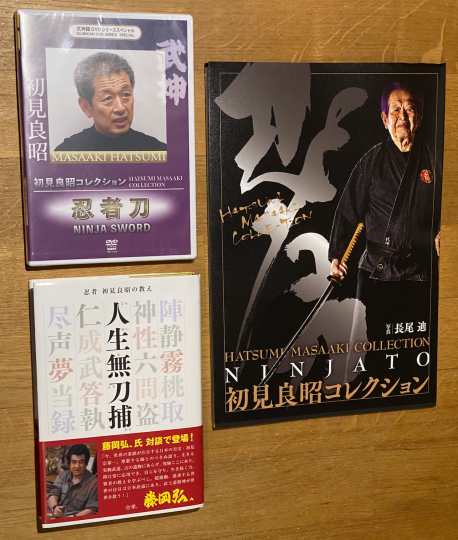
Don’t Rattle Your 忍者刀 Ninjatō

From Bujinkan Santa Monica by Michael

Mt Fuji all the way from Kashiwa, photo by Michael Glenn
Hatsumi Sensei surprises me with his teaching. The night before I left for Japan, we studied 忍者刀 Ninjatō in my own dojo. Then, on Friday night in Soke’s class at the Bujinkan Honbu Dojo, he taught one of the secrets of this weapon.

I try to prepare for these lessons, yet I am still surprised. I suppose the only way is to always be ready. This is the ukemi of being Hatsumi Sensei’s student.

I landed at Narita Airport around 5pm local time. My normal plan is to run through immigration and customs as fast as Japanese bureaucracy will allow. Then catch a two hour train ride straight to Hatsumi Sensei’s class.

One hour into the train ride I began to lose my motivation. Warm trains make me sleepy. That, and the 20 hours of travel that wasn’t over yet.

I stood up to shake off the tired. It was already dark out, and the train cabin was reflected back to us in the window. I leaned my head against the door to watch the lights pass outside.

It looked wet and miserable out. I already felt the cold when I transferred at the last station. But when my eyes adjusted to the dark I couldn’t believe what I saw between the railroad ties. Patches of snow flashed by like a flickering reel of film!

It was only November. Snow in Tokyo is extremely rare this time of year. I already had two shirts on, and now I pulled a hoodie over those.

The old Atago station was dark and quiet. My breath fogged. A patch of snow crunched under my boot. During my walk to the dojo I wondered if class was cancelled.

I came around the corner and I could see the lights were on. I marveled at the snow on the rooftop. I slid open the door… Konbanwa!

A warm crowd inside and many old friends greeted me. I changed quickly into my gi. Was I ready? I don’t know, at least I was there.

Hatsumi Sensei taught at an intense pace. He started off class at the highest levels of training. It was all about letting go and 空間利用 kukan riyō, using the kukan.

The train passed by and shook the building.

"Hai, OK!" Soke called out. Then he started with the 忍者刀 Ninjatō and I paid close attention. Someya Sensei cut in at him...

Hatsumi Sensei was in 棟水之構 Tōsui no Kamae. He lifted his blade softly as if to shield against the katana. Someya tried to cut again. Soke let his sword slip and then smacked it into Someya’s neck without cutting.

He told us one of the themes this year was 一刀万方 Ittō Banpō, which is one sword, many possibilities. It may also be written 一刀万宝 Ittō Banpō which means one sword, many treasures.

There are many treasures in the study of the Ninja-tō.  Hatsumi Sensei wrote
忍者の剣は、闇夜の剣を避けがたし
This can be read many ways. One interpretation is that “the sword of the ninja doesn’t rattle in the dark of the night”. In other words, avoid rattling your sword.

What does that mean beyond being stealthy? Lucky for us Hatsumi Sensei has also shared this gokui in relation to the Ninja-to:
抜かず勝て、抜けば切るなよ、ただ忍べ、命をとるは大事とぞ知れ
Win without drawing the sword
if you draw it, don’t cut
Simply persevere
Know the significance
Of taking a life.
When Hatsumi Sensei smacked the blade against Someya’s neck he was demonstrating this principle. He even told us that night that we were all too quick to use the sword. He said that when we tried to use the sword, we missed the kyojitsu.

I hold onto these memories and lessons from Soke like treasures. During the first hour of my train ride (which you can watch part of here: Ninja True: How to get to the Bujinkan Honbu Dojo) I caught a glimpse of Mt Fuji in the distance. The slope of Fuji Sama seemed to hold the burnt sunset for every last bit of warmth.

Bujinkan 秋修業 Aki Shūgyō 2019

From Bujinkan Santa Monica by Michael

邃渓園 Suikeien at 帝釈天題経寺 photo by Michael Glenn
This fall we will have our 秋修業 Aki Shūgyō on Oct 20. This training event sets the Bujinkan theme for our fall training. The training theme is set to take over the season. We will move from  哀れみ Awaremi to 楽しみ Tanoshimi.

Not for Everyone! Only the most dedicated teachers are willing to go on a 修業 Shugyo. Only the most dedicated students commit to the adventure. Are you in?

text or call: (424) 272-6307 to RSVP

Our theme comes from the clue Hatsumi Sensei gave us when he matched the seasons with 喜怒哀楽 kidoairaku, or human emotions. In fighting, we normally strive to remove emotion, or at least, not let it control us.

But the ura waza, or hidden technique, is to harness the power contained in emotion. We draw it out of our enemy to use against them. Maybe on a deep level, we can even tap the power of emotion from within ourselves.

Hatsumi Sensei told us we must learn 遊びの中真実 Asobi no naka shinjitsu, or the truth hidden within play.

This is training Fresh From Japan. 修業 Shugyo is the pursuit of knowledge. Learn about Bujinkan themes straight from my recent Japan trip. And Get connected to the most current training.

text or call: (424) 272-6307 to RSVP

Can you do the work? A 修業 Shugyo is not supposed to be easy. You get hours of hard training. And inspiration for months of discovery.

A Secret 九字 Kuji for Defeating 100 Enemies

From Bujinkan Santa Monica by Michael

Hidden Alcove at 戸定邸 Tojō-tei. photo by Michael Glenn
Within the 九法の力 Kyū-hō no chikara, or the power of the 9 methods, there is a kuji that holds the 秘技 higi or secret technique to overcoming a hundred enemies:

「護攻虚変争精神不動」GoKoKyoHenSeiShinFudo

This kuji, or gokui, repels any method of capture or defeat. You protect yourself by changing the attack itself with an immovable spirit. This is the time to do or die. You are prepared for death, but you’d rather do the enemy in.

How do you do instead of die? In that single moment of life and death you remain unmoved in the middle. That middle place is the key to ninjutsu.

On a very hot day in June, I learned about this. The air was loud with the harmonic drone of 蝉 semi (cicadas). But we were training anyway. Hatsumi Sensei told us to train in accordance with the temperature.

Two opponents attacked and Soke slipped behind the first attacker. He did this while trapping the second guy in his own attack. Then Hatsumi asked the uke to give his impression of what just happened. The confused student described his inability to get a fix on Hatsumi Sensei as a target.

Soke replied that this is not the movement of sports or the “so called” martial arts. This is something far above that.  This is true ninjutsu. Make your techniques transparent. Make them see through.

Hatsumi Sensei told us not to just punch on the surface, but to strike through the body. He said when your arm goes through their spine it makes the sign of the cross.

Soke gave us a warning
「九字を許すも十字を許すな」kuji are permitted but not juji.
If you go beyond kuji and allow juji then you have “crossed the line.” Maybe you cross the line of life and death. You could end up facing 十王 Jū-ō  the ten judges of the dead.

In Buddhism, there are nine states from Hell to Bodhisattva. The highest level, the tenth level, is becoming Buddha. But the 仏 hotoke (Boddhisatvas) are the souls of the dead, to be commemorated by their descendants.

I toweled the sweat away and scribbled my notes after training. What did I learn that day?
  • Make yourself and your technique transparent;
  • Go to the line but don’t cross it;
  • Remain unmoved by life or death in that spot. 
This is the secret to 心中を突く也 Shinjū o tsuku nari,  piercing the heart of the enemy.

What Happened During Michael Glenn’s Bujinkan Seminar in Québec?

From Bujinkan Santa Monica by Michael

This summer, I was honored to be invited to Québec to teach and share the Bujinkan training I've been doing in Japan. My hosts Bernard and Francine were gracious and wonderful. The students were very skilled, attentive, and curious. And Québec City was an amazing place to visit!

I covered many Bujinkan topics during the seminar. Here is an extended preview video:


The contents of the full Bujinkan training series is available below.

  • Part One: Kamae And Kyojitsu. In this first video I cover some basics of kamae and kyojitsu.
    FULL VIDEO: https://www.rojodojo.com/quebec-bujinkan-kamae-and-kyojitsu/
  • Part Two: Kukan and Tension. In this video I demonstrate how to shape the kukan. Then in this space we create tension that allows us to throw our opponent without strength. I also share some of the training I did with Hatsumi Sensei in Japan last month. FULL VIDEO https://www.rojodojo.com/quebec-bujinkan-kukan-and-tension/
  • Part Three: Draw and Disarm. First I show how to shift the kukan to draw your knife or take the attacker’s knife. Next I demonstrated how to precisely target kyusho with any weapon. Then I shared details about 平一文字の構 Hira Ichimonji no Kamae. I showed how to use 六法の構 roppou no kamae which naturally includes 鷹の舞 taka no mai. I finished the training with knife disarms that I studied with Hatsumi Sensei in Japan. FULL VIDEO: https://www.rojodojo.com/quebec-bujinkan-draw-and-disarm/ 
  • Part Four: Shinbo and Kyusho. We began in 音無し之構 otonashi no kamae with the hanbo. This led into an examination of the principle of 辛抱一貫 Shinbo Ikkan that I learned from Hatsumi Sensei in Japan. Then I continued with 半棒術 hanbōjutsu using 挟み捕り hasami dori. I also shared the Bujinkan Kuden of kirigami as it applies to kyusho. FULL VIDEO: https://www.rojodojo.com/quebec-bujinkan-shinbo-and-kyusho/
  • Part Five: Weapon Retention With 支点 Shiten. We began with hanbo weapon retention from 無念無想の構 munen muso no kamae. The basic forms of this apply the principles of 手解 tehodoki. Then it becomes more advanced using a quality of 支点 shiten that I have learned with Soke. The initial grab provides a place of connection that can become a fulcrum. This captures all of the opponent’s power and focuses it down to one point. This creates some powerful throws while using no strength or force. We did variations from 型破の構 kata yaburi no kamae that drop one side or the other, or even twist about the center. FULL VIDEO: https://www.rojodojo.com/quebec-bujinkan-weapon-retention-with-shiten/
  • Part Six: Kodachi Kihon And 天眼 Tengan. We began by creating structure with our kamae, then dropping away in the kukan. Next I explained Hatsumi Sensei’s idea of あも一寸の玉 虫 amo issun no tama mushi, this is a gokui from 高木揚心流 Takagi Yoshin Ryū. We moved into some secret draws and 小太刀 kodachi kihon that I studied with Soke. These come from the 十方折衝 juppo sessho. Then we wrapped up with a high level strategy called 天眼 Tengan. This came directly from Hatsumi Sensei during my recent Japan trip. FULL VIDEO: https://www.rojodojo.com/quebec-bujinkan-kodachi-kihon-and-tengan/
  • Part Seven: Tachi Dori And Kusari Fundo. We began with the 無刀捕 Mutōdori of 太刀捕 Tachi Dori. I taught two methods that I learned from Hatsumi Sensei in Japan. These are done by feel rather than looking for the sword. I explained some small details about 不動明王の目 Fudōmyōō no me like 天地眼 tenchigan. I added the 鎖分銅 kusarifundō to trap the Tachi. The true skill of Bujinkan students is often revealed with their handling of flexible weapons. I finished by sharing some critical details on how to do 中振 nakafuri with the kusarifundō. It becomes infinite like happō. FULL VIDEO: https://www.rojodojo.com/quebec-bujinkan-tachi-dori-and-kusari-fundo/