Kaigousuru Taikai 1999 with Pedro Fleitas
…
From Uploads by shugyou by shugyou
 |
Kaigousuru 3 -- the third International Bujinkan Training Party with Pedro Fleitas in Sweden. The theme of this year was Kukishin-ryu Taijutsu. Mr. Brooks "Bing" Ford who was a well known and respected 10′th Dan in Bujinkan passed away 88 years old sept. 24′th 1999. Mr. Ford's favourite weapon was the Hanbo (short/walking staff). Pedro dedicated this seminar to Mr. Ford and taught a lot of Hanbo techniques. He also taught Taijutsu and Bojutsu. Mr. Fleitas is one of the best teachers in Bujinkan with an astounding flow and timing, here he is in top form. Recorded in Stockholm, Sweden October 1999 The DVD is 160 minutes and available for purchase here. www.budoshop.se The download files are two files, - Part 1 ; is from Saturday training. www.payloadz.com - Part 2 ; is from Sunday training and the extra training on Friday. www.payloadz.com |
From:
shugyou
Views:
389
 2
ratings |
| Time: 00:52 | More in Sports |
From Bujinkan Santa Monica by Mats "Toryu" Hjelm
 |
| photo by genvessel |
Kyūhen 急変 may remind us of 豹変 Hyōhen from the densho of Shinden Fudo Ryu in the secret writings of Tatara Kishin: "Sudden change will always prevail." 豹変して必ず勝つSensei says that such teachings are passed from teacher to student through ishin denshin (divine transmission). Anyone who has been in a class like that with Sensei will definitely have stories about the feeling in the room.

From Budoshop by BUDOSHOP.SE
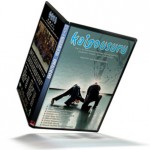
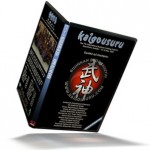 When I go to a seminar I often bring these two DVD’s with me and sell them for a special price without the cover. They are printed from factory and we got hundreds of copies. If anyone is interested in selling these and share the profit 50/50, please contact us
- Kaigousuru Taikai 2005
- Kaigousuru Taikai 2007
So here is the cover for download, so that you can print it out yourself…
https://www.budoshop.se/img/Kaigousuru_2005+2007_Super_Value.pdf…
From New Products from Budo Shop Store by New Products from Budo Shop Store
 | Title: Kaigousuru 2007 - the 11th International Bujinkan Training Party!
Instructors- Ed Martin (USA) - Holger Kunzmann (Germany) - Lauri Jokinen (Finland) - Mariette v.d., Vliet (Holland) - Mats Hjelm (Sweden) - Michael Schjerling (Denmark) - Morten Ostenstad (Norway) - Moti Nativ (Israel) - Sveneric Bogsäter (Holland) Theme: Bujinkan Basics & Kukishin-ryu Dakentaijutsu DVD video, Length 320 minutes Note: This is a factory printed DVD9, NTSC / Region Free. Recorded: Recorded in Stockholm, Sweden April 2007 The theme of this year was Kukishin-ryu Dakentaijutsu. Most of the instructors had already been in Japan this year and got the feeling of this years theme. Many techniques from most Kukishin-ryu Dakentaijutsu levels was taught, the emphazis most instructors taught this year was basics, basics, basics. This was maybe the best Kaigousuru Taikai of all! Regular Price: Skr329.00 Special Price: Skr149.00 |
From Budoshop by BUDOSHOP.SE
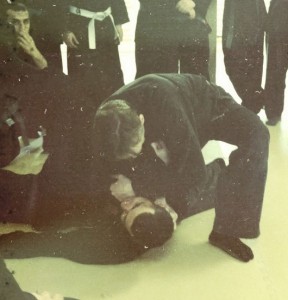
On this video 逆技 GYAKU-GI, all nine reversal techniques from CHI RYAKU NO MAKI level from the Bujinkan Shinden Kihon Kata is taught. First the basic technique is shown and explained, then the jissen feeling and variations.
This video is from a seminar in Istanbul, Turkey in March 19-20th 2011.

This video is not available as DVD!
On this video Mats was teaching the nine 逆技 Gyaku-gi (Gyaku-waza) techniques from the Bujinkan Shinden Kihon Kata, Chi Ryaku no Maki. He taught the basics, and more self defence and real responses. With weapons and without weapons. There is nine different techniques. The techniques is called…
竹折 Take-ori
表逆 Omote-gyaku
裏逆 Ura-gyaku
本逆 Hon-gyaku
表鬼砕 Omote oni-kudaki
裏鬼砕 Ura oni-kudaki
武者捕 Musha-dori
武双捕 Musō-dori
大逆 Ō-gyaku
The video is 75 minutes, and 480 x 272 pixels, h.264 and AAC.
Recorded in Istanbul, Turkey in March 2011
For a longer article about this seminar, see Mats blog.
www.youtube.com/watch?v=4eDm1UZPOek
Click here for more information about our download files and how it works!…
From Bujinkan Santa Monica by Bujinkan Santa Monica
 |
| Kamaishi Search and Rescue By DVIDSHUB |
"to be a light that brightens the surroundings."This phrase was brought to Japan from China by Saicho:
 |
| Operation Tomodachi By DVIDSHUB |
"We should always immerse ourselves in sunlight, and in Budo training, never forget to smile, and never be surprised regardless of what happens."So go light up your corner of the world.

From 8þ Kabutoshimen by Toryu

I think this was my 7′th or 8′th time I’ve been invited by Ercan and the Bujinkan Haburamu Dojo in Istanbul. I feel honored to be invited back so many times, I must be doing something right. The organizer hadn’t asked for any special theme so I joked and asked if they wanted chaotic training. And they said yes. Well if you know me I like to have a special theme to go by so I thought I would do the Gyaku-gi from Chi-ryaku no maki, but I would do them all both omote and ura.

裏鬼砕 Ura oni-kudaki
It is said that when you take the opponent on his back you will let him live, you give him the gift of life. And if you take him down on his face you will take his life. When a samurai died on the battle field and was found dead lying with his face down they would say that he died with honor. If they found him dead on his back they would say he died without honor. So if you take the opponent on his back you should let him live and not die in shame.
At the seminar I showed all the above techniques as they should be done (my way!). I did henka, I did them omote and also ura. For example, most of you know that with omote-gyaku and musha-dori you take him backwards. But I also showed how to take him forwards with these techniques. This was the theme I had in mind when starting the seminar, doing an ura technique but taking him omote and the other way.

I started with the take-ori technique and did many variations, I got lost in time and when it was lunch I realized I had spent half the day on one technique and there was eight more techniques. After lunch I asked what they wanted to do, and someone had asked about musha-dori. So we spent most of the afternoon doing musha-dori, and ended with a simple sword technique.
 Next day I kept doing the other seven techniques, and later finished with some more simple sword techniques and also hanbo-jutsu. I always enjoyed going to Istanbul for seminars because the students at the Haburamu dojo are so eager and willing to train.
Oh I got a new nick name, “the Bujinkan engineer” from Ercan and his students  . Because they said I show so many details in each movement. Well, that is how I look at my own training. I believe this is very important, to look at everything and study it in detail. I’m not satisfied looking at something from only the outside, I want o see how it looks from the inside, under, above, I want to feel the weight, texture, smell, taste, how it sounds and everything else I can think of. Just doing a technique without thinking about it and hope that I someday will understand is just not me.
Of course I can just show 1000 henka on a seminar and let people have fun and maybe not learning anything except moving around, I can do this to, but not too much. Trying to teach like Soke is impossible for me, I’m not technically ready yet. And I’m not doing anyone favors by trying to teach like Soke. But I’m geting there, I like to believe and hope that. I constantly jump between the shu-ha-ri levels; to keep moving, polishing my basics, and also moving freely and let the techniques come naturally. The last part is good for beginners to know about, but they must understand that this can not come easy until the basics have been perfected.

Besides from the training I had a good time. On Friday Ercan took me to the Basilica Cistern, this is the largest of several hundred ancient cisterns that lie beneath the city of Istanbul (formerly Constantinople). After this we went to the Topkapı Palace which was the official and primary residence in the city of the Ottoman Sultans for approximately 400 years (1465-1856) of their 624-year reign. We also passed the Sultan Ahmed Mosque. Ercan told me this story; when the Sultan ordered the Mosque to be built he asked for gold minarets, in Turkish language gold is altın. But the architect heard altı which means six. Hence the six minarets of the Blue Mosque. After the sightseeing we had dinner and then the boat back home to prepare for the extra training later this evening.
 The food in Turkey is excellent, I especially like Adana Kebab and Şalgam. I was a little disappointed about the pubs, the one that was supposed to be the best had recently closed, “The English Pub” did not even have English beer (not even Guine55 or Ki11kenny), the brewpub turned out to be a loud disco with only one bad pilsener on tap and one slightly better on bottle. But the company of old and new friends was very nice and that is much more important.
After all I had a good time, and look forward coming back soon.
I’d like to say thank you to Ercan for organizing everything! And also to all the people attending the seminar which made all this possible.
See more pictures from this trip, click here.
Ercan filmed the seminar, and he also got film from my camera. Contact him if you are interested in a DVD of this seminar.
http://www.youtube.com/watch?v=4eDm1UZPOek
This video is not available as DVD!
The post Istanbul seminar 2011 appeared first on 8þ Kabutoshimen.…
From Uploads by shugyou by shugyou
 |
This video in its whole 75 minutes is available for instant download at budoshop.se On this video GYAKU-GI, nine reversal techniques from CHI RYAKU NO MAKI in the Bujinkan system is taught. First the basic technique is shown and explained, then the jissen feeling and variations. This video is from a seminar in Istanbul, Turkey in March 19-20th 2011. Instant download link... www.payloadz.com |
From:
shugyou
Views:
501
 0
ratings |
| Time: 01:07 | More in Sports |