Skip to content

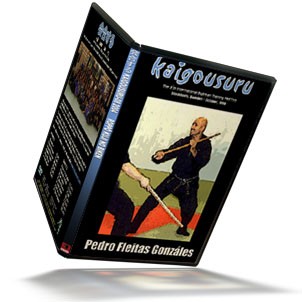
Download the Cover (Taikai 2005 & 2007)

From Budoshop by BUDOSHOP.SE

When I go to a seminar I often bring these two DVD’s with me and sell them for a special price without the cover. They are printed from factory and we got hundreds of copies. If anyone is interested in selling these and share the profit 50/50, please contact us :-)

- Kaigousuru Taikai 2005
- Kaigousuru Taikai 2007

So here is the cover for download, so that you can print it out yourself…

https://www.budoshop.se/img/Kaigousuru_2005+2007_Super_Value.pdf…

Kaigousuru-11 2007 Taikai

From New Products from Budo Shop Store by New Products from Budo Shop Store

Title: Kaigousuru 2007 - the 11th International Bujinkan Training Party!

Instructors


- Ed Martin (USA)
- Holger Kunzmann (Germany)
- Lauri Jokinen (Finland)
- Mariette v.d., Vliet (Holland)
- Mats Hjelm (Sweden)
- Michael Schjerling (Denmark)
- Morten Ostenstad (Norway)
- Moti Nativ (Israel)
- Sveneric Bogsäter (Holland) Theme: Bujinkan Basics & Kukishin-ryu Dakentaijutsu DVD video, Length 320 minutes Note: This is a factory printed DVD9, NTSC / Region Free. Recorded: Recorded in Stockholm, Sweden April 2007 The theme of this year was Kukishin-ryu Dakentaijutsu. Most of the instructors had already been in Japan this year and got the feeling of this years theme. Many techniques from most Kukishin-ryu Dakentaijutsu levels was taught, the emphazis most instructors taught this year was basics, basics, basics. This was maybe the best Kaigousuru Taikai of all!

Regular Price: Skr329.00

Special Price: Skr149.00

GYAKU-GI with MATS HJELM (Istanbul 2011)

From Budoshop by BUDOSHOP.SE

裏鬼砕 Ura oni-kudaki

On this video 逆技 GYAKU-GI, all nine reversal techniques from CHI RYAKU NO MAKI level from the Bujinkan Shinden Kihon Kata is taught. First the basic technique is shown and explained, then the jissen feeling and variations.

This video is from a seminar in Istanbul, Turkey in March 19-20th 2011.


75 minutes, 540 Mb for $14.99  

This video is not available as DVD!


On this video Mats was teaching the nine 逆技 Gyaku-gi (Gyaku-waza) techniques from the Bujinkan Shinden Kihon Kata, Chi Ryaku no Maki. He taught the basics, and more self defence and real responses. With weapons and without weapons. There is nine different techniques. The techniques is called…

竹折 Take-ori
表逆 Omote-gyaku
裏逆 Ura-gyaku
本逆 Hon-gyaku
表鬼砕 Omote oni-kudaki
裏鬼砕 Ura oni-kudaki
武者捕 Musha-dori
武双捕 Musō-dori
大逆 Ō-gyaku

The video is 75 minutes, and 480 x 272 pixels, h.264 and AAC.

Recorded in Istanbul, Turkey in March 2011

For a longer article about this seminar, see Mats blog.

Sample clip from the video

www.youtube.com/watch?v=4eDm1UZPOek

About the download

Click here for more information about our download files and how it works!

一隅を照らす Ichigu wo Terasu: Light Up One Corner

From Bujinkan Santa Monica by Bujinkan Santa Monica

Kamaishi Search and Rescue By DVIDSHUB
Like a lot of Bujinkan members worldwide, I have been watching the earthquake, tsunami and nuclear disaster in Japan from afar. It is a helpless feeling. Reading the news and unable to do anything but hope things improve. If you are like me, you feel like you want to do something. To help in some way. Of course, we can donate money, but Hatsumi Sensei has a suggestion for us that can help in any situation.

He reminds us of the Japanese saying 一隅を照らす Ichigu wo terasu, which means to light up a corner. Hatsumi Sensei says,
"to be a light that brightens the surroundings."
This phrase was brought to Japan from China by Saicho:
From Wikipedia:
Saichō (最澄, September 15, 767 – June 26, 822) was a Japanese Buddhist monk credited with founding the Tendai school in Japan, based around the Chinese Tiantai tradition he was exposed to during his trip to China beginning in 804. He founded the temple and headquarters of Tendai at Enryaku-ji on Mt. Hiei near Kyoto. He is also said to have been the first to bring tea to Japan. After his death, he was awarded the posthumous title of Dengyō Daishi (伝教大師).

Operation Tomodachi By DVIDSHUB
What Saicho meant by “A person who can light up one corner” is the person who can do his best in any situation, wherever he happens to be, to help brighten up someone else and our community.

In the Lotus Sutra, Buddha said to light up one-just one corner. One corner, not the whole world. Just to light up to make it clear just where you are. Ichigu wo terasu. Ichigu is "one corner." Terasu is "to light up" or "to shine" one corner.

Hatsumi Soke says,
"We should always immerse ourselves in sunlight, and in Budo training, never forget to smile, and never be surprised regardless of what happens."
So go light up your corner of the world.


Istanbul seminar 2011

From 8þ Kabutoshimen by Toryu

Haburamu dojo

I think this was my 7′th or 8′th time I’ve been invited by Ercan and the Bujinkan Haburamu Dojo in Istanbul. I feel honored to be invited back so many times, I must be doing something right. The organizer hadn’t asked for any special theme so I joked and asked if they wanted chaotic training. And they said yes. Well if you know me I like to have a special theme to go by so I thought I would do the Gyaku-gi from Chi-ryaku no maki, but I would do them all both omote and ura.

Ura oni-kudaki

裏鬼砕 Ura oni-kudaki

逆技 GYAKU GI

  1. 竹折 Take-ori
  2. 表逆 Omote-gyaku
  3. 裏逆 Ura-gyaku
  4. 本逆 Hon-gyaku
  5. 表鬼砕 Omote oni-kudaki
  6. 裏鬼砕 Ura oni-kudaki
  7. 武者捕 Musha-dori
  8. 武双捕 Musō-dori
  9. 大逆 Ō-gyaku

It is said that when you take the opponent on his back you will let him live, you give him the gift of life. And if you take him down on his face you will take his life. When a samurai died on the battle field and was found dead lying with his face down they would say that he died with honor. If they found him dead on his back they would say he died without honor. So if you take the opponent on his back you should let him live and not die in shame.

At the seminar I showed all the above techniques as they should be done (my way!). I did henka, I did them omote and also ura. For example, most of you know that with omote-gyaku and musha-dori you take him backwards. But I also showed how to take him forwards with these techniques. This was the theme I had in mind when starting the seminar, doing an ura technique but taking him omote and the other way.

Henka

I started with the take-ori technique and did many variations, I got lost in time and when it was lunch I realized I had spent half the day on one technique and there was eight more techniques. After lunch I asked what they wanted to do, and someone had asked about musha-dori. So we spent most of the afternoon doing musha-dori, and ended with a simple sword technique.

Istanbul SwordNext day I kept doing the other seven techniques, and later finished with some more simple sword techniques and also hanbo-jutsu. I always enjoyed going to Istanbul for seminars because the students at the Haburamu dojo are so eager and willing to train.

Oh I got a new nick name, “the Bujinkan engineer” from Ercan and his students :-D . Because they said I show so many details in each movement. Well, that is how I look at my own training. I believe this is very important, to look at everything and study it in detail. I’m not satisfied looking at something from only the outside, I want o see how it looks from the inside, under, above, I want to feel the weight, texture, smell, taste, how it sounds and everything else I can think of. Just doing a technique without thinking about it and hope that I someday will understand is just not me.

Of course I can just show 1000 henka on a seminar and let people have fun and maybe not learning anything except moving around, I can do this to, but not too much. Trying to teach like Soke is impossible for me, I’m not technically ready yet. And I’m not doing anyone favors by trying to teach like Soke. But I’m geting there, I like to believe and hope that. I constantly jump between the shu-ha-ri levels; to keep moving, polishing my basics, and also moving freely and let the techniques come naturally. The last part is good for beginners to know about, but they must understand that this can not come easy until the basics have been perfected.

Sultan Ahmed Mosque

Besides from the training I had a good time. On Friday Ercan took me to the Basilica Cistern, this is the largest of several hundred ancient cisterns that lie beneath the city of Istanbul (formerly Constantinople). After this we went to the Topkapı Palace which was the official and primary residence in the city of the Ottoman Sultans for approximately 400 years (1465-1856) of their 624-year reign. We also passed the Sultan Ahmed Mosque. Ercan told me this story; when the Sultan ordered the Mosque to be built he asked for gold minarets, in Turkish language gold is altın. But the architect heard altı which means six. Hence the six minarets of the Blue Mosque. After the sightseeing we had dinner and then the boat back home to prepare for the extra training later this evening.

The food in Turkey is excellent, I especially like Adana Kebab and Şalgam. I was a little disappointed about the pubs, the one that was supposed to be the best had recently closed, “The English Pub” did not even have English beer (not even Guine55 or Ki11kenny), the brewpub turned out to be a loud disco with only one bad pilsener on tap and one slightly better on bottle. But the company of old and new friends was very nice and that is much more important.

After all I had a good time, and look forward coming back soon.

I’d like to say thank you to Ercan for organizing everything! And also to all the people attending the seminar which made all this possible.

See more pictures from this trip, click here.

Ercan filmed the seminar, and he also got film from my camera. Contact him if you are interested in a DVD of this seminar.

Sample video clip

http://www.youtube.com/watch?v=4eDm1UZPOek

Buy the full 75 minute video


75 minutes, 540 Mb for $14.99  

This video is not available as DVD!


The post Istanbul seminar 2011 appeared first on 8þ Kabutoshimen.…

Mats Hjelm – Gyaku-gi Seminar @ Bujinkan Haburamu Dojo (Istanbul, March 2011)

From Uploads by shugyou by shugyou

This video in its whole 75 minutes is available for instant download at budoshop.se On this video GYAKU-GI, nine reversal techniques from CHI RYAKU NO MAKI in the Bujinkan system is taught. First the basic technique is shown and explained, then the jissen feeling and variations. This video is from a seminar in Istanbul, Turkey in March 19-20th 2011. Instant download link... www.payloadz.com
From: shugyou
Views: 501
0 ratings
Time: 01:07 More in Sports

Kinkyu Jishin 緊急地震: Earthquake Emergency in Japan

From Bujinkan Santa Monica by Bujinkan Santa Monica

Kinkyu jishin 緊急地震 (earthquake emergency). This is a new phrase I learned just one week ago. I had just finished our Thursday night training (Friday afternoon in Japan) where we practiced mawashi dori along with tachi kumiuchi. I had a quick dinner and was just settling into bed when I received the alarm.

Since I live in a high earthquake danger zone here in Los Angeles, I have alerts that are sent to my phone when any large quakes strike. My phone was telling me 8.9 in Japan (revised later to 9.0). I knew that was huge. I got out of bed to check the news.

I sent e-mails to my friends in Japan, hoping they were safe. The news reports were showing me pictures and video of places I had been to many times. I was just there in December. The images of destruction were heartbreaking. My worry for my friends increased. I just had dinner with my friend Craig Olson the week before when he was stopping in LA on his way back to Tokyo. I felt helpless. I wished I could be there to try to help people I've never met who were affected by the tsunami.

I was up all night following the reports.

Once in a class at the hombu, Hatsumi Soke told us,
"lightning, storms and earthquakes are naturally violent and sudden. All you can do is ride them out"
So here I am wide awake trying to understand nai no kami ないのかみ / なゐの神【地震神】or jishin no kami 地震の神 the deity of earthquakes

I found this information from the Dr. Gabi Greve at the afterthebigearthquake blog from Okayama, Japan:

"Takemikazuchi no mikoto (武甕槌大神)

CLICK for original link, djtak.exblog.jp
Tekemikazuchi standing on a catfish

the "rough spirit" (aramitama) of Amaterasu ōmikami


He holds down the God of the Earthquake, here in the form of a huge catfish, and sits on the famous "key stone" "kaname ishi 要石".

A giant catfish (namazu) lived in mud beneath the earth. The catfish liked to play pranks and could only be restrained by Kashima, a deity who protected the Japanese people from earthquakes. So long as Kashima kept a mighty rock with magical powers over the catfish, the earth was still. But when he relaxed his guard, the catfish thrashed about, causing earthquakes."
Hatsumi Sensei once explained to us how old Japanese architecture was designed without fasteners, rather it had joints that were lashed together with rope so they could flex and give.
"Jishin mushi 地震虫 (じしんむし) earthquake bug
http://1.bp.blogspot.com/-prLBmb0F2Ks/TXvpfKvrTpI/AAAAAAAAYCU/PdbC2Yr1n68/s1600/earthquake+bug.jpg

This mythical animal is mentioned in the Nihon Shoki volume about Suiko Tenno 推古天皇紀.
In the year 599 there was a huge earthquake in the region of Nara, so the Tenno ordered the "God of Earthquakes" Nai no Kami「地震神」(なゐのかみ) to be venerated in the country.
The name refers to the attribute of the deity, like the "god of the fields 野の神", or the "god of the sea 海の神".

This deity was later venerated at the shrine Kashima Jingu."

I saw video of the giant stone Torii gate at Kashima toppled over by last week's quake.

In Bujinkan training it is often unwise to meet force with force, because there will always be someone bigger or stronger. I think the earth has made that lesson clear.

Some idiots here in the U.S. are making jokes about Godzilla. They obviously have never watched or understood the tone of the Godzilla stories. Here are a couple quotes from the Godzilla series:
"Just as you distrust us, so we distrust others as well. It's wrong. We're all human. As humans we are responsible for each other. We are related. Refuse us and you abandon your brothers. We must learn to help each other."
--Ichiro Sakai 
“Nature has a way somehow of reminding Man of just how small he is. She occasionally throws up terrifying offspring of our pride or carelessness, to remind us how puny we really are, in the face of a tornado, an earthquake, or a Godzilla.”
Some old wisdom tells us that the best place to be during an earthquake is a bamboo grove. Because bamboo is flexible yet very strong. It will bend and sway without breaking.

Huge earthquake, a deadly and destructive tsunami, hundreds of aftershocks, and a looming nuclear meltdown.  A hellish week has passed, yet my heart and spirit are across the Pacific with my friends in Japan.


Japan: Stop Howling, Act!

From Shiro Kuma's Weblog by kumablog

What happened in Japan a few days ago is a terrible thing but I am sad to see the way things are covered in the media and at the political level.

Japan has suffered one of the biggest earthquakes in the last 140 years and after the destruction caused by the tsunami they expect at least 10000 casualties. But our media in Europe are only speaking about the possible nuclear catastrophe and rarely speak about the people in Japan who lost everything: a parent, a friend, their house, car etc. Some countries are even checking already the level of radioactivity of the Japanese products imported (sent before the earthquake because the Japanese industry is down), others are checking the air pollution even if they are located 3000 km away from Japan and not in the direction of the winds!

This treatment of information is revolting as it only emphasizes the human appetite for cataastrophe.

I am not trying to minimize the nuclear accident but I think that we have to focus primarily on what is important: the people in difficulty trying to survive after the tsunami.

Can we individually do anything about the nuclear problem? Can we seriously howl with the politicians and the media and use this accident as an excuse to stop our own nuclear plants?

We are behaving like a drunk driver blaming a tree for destroying his car after a crash. The nuclear problem is not the cause of the problem but a negative consequence of the tsunami so we must first do whatever we can to help the Japanese people.

Be logical:

  1. The moment it is dangerous to go to Tokyo because of the radiations, the airlines will stop their flights.
  2. The moment it will be risky for your health to go to Japan, the Japanese government and our own governments will prevent us to go there.
  3. The Japanese are the most experienced people to deal with nuclear problems.

So we must redefine our priorities:

  1. While the nuclear specialists (from Japan, the USA, the IAEA) do their best to contain the nuclear risks, our job is to support the victims of the tsunami.

    In the last days I have seen many Bujinkan groups organizing seminars to collect money for Japan and one dôjô is going to give the benefits to the Japanese red cross. This is the Bujinkan I like.

  2. Whether nuclear power is “good” or “bad” is not of our concern. We must only do our best to live a happy life where we are.

    We often have the feeling that our governments are not always telling us the truth, but there is nothing we can do about it. But as Bujinkan members we should listen to Sensei when he stresses the importance of being happy. So let’s recenter our lives to be happy and stop howling with the crowd.

  3. The nuclear catastrophe is only a scapegoat. We are the ones to blame because we were unable to develop (in the 20th century) a society fuelled by nuclear power (80% of the electricity in France). As long as we do not find a real alternative to nuclear power we have to live with it.

    We are responsible. Accept that and move on as the Japanese did, do and will always do. Sensei was still teaching on Sunday (not on Tuesday as the Budôkan was closed) and I guess he will teach on Friday, so keep going!

As far as I am concerned, I will continue to support the Japanese as much as I can and I am still planning to train with Sôke next April.

If you want to actively help Japan, the best support you can give is to continue to travel to Japan as long as:

  1. Sensei is teaching his regular classes,
  2. the airlines are allowed to land at Narita airport,
  3. our governments let us travel to Tokyo.

The Bujinkan is teaching us to be ourselves and not to behave as a flock of sheeps. It is time to show the world that you didn’t train for nothing during all these years.

And remember that “tsunami” 津浪 is a Japanese word!

See you soon on the mats in Noda.