Skip to content

Tsuka Kashira

From Paart Budo Buki by Mats "Toryu" Hjelm

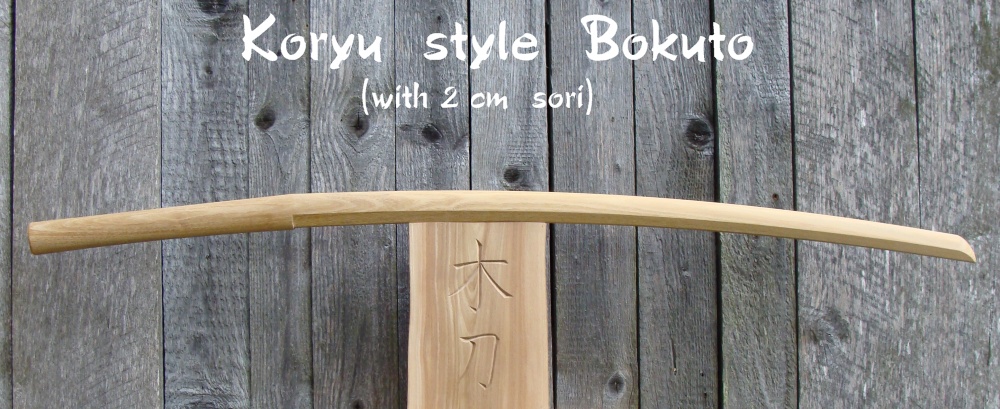
There are various forms of Kashira Tsuka, for start some basic shapes for my bokken.

So when you decide to order production of Bokken from me,  these are four basic shapes to choose from, of course, that could be any other forms of Kashira


…

Kotō Ryū Koppōjutsu – article translation

From Wanderings in Budo by Mats "Toryu" Hjelm

虎倒流骨法術
骨法といっても、今はやりの喧嘩芸との関係は無い。玉虎流を僧玉観から学んだ戸田左京一心斎が16世紀中頃に創始した。もともと骨法とは古代中国から伝わった技で、強法とも呼ばれ、隠し武器を使うのが特長だという。戸隠流とともに伊賀忍者から戸田家に伝えられ、やはり百地三太夫も学んでいる。初見氏によれば骨はの技コツに通じるという。

Kotō ryū koppōjutsu
Present day fighting techniques bear no relationship to what one might call koppo…
Toda Sakyō Isshinsai learned the Gyokko ryū of Sō Gyokkan and founded (this school) in the mid 16th Century. The technique of koppō was originally introduced from ancient China, also known as Gōhō (strong method), its speciality is to make use of hidden weapons. Transmitted to the Toda family along with Togakure ryū by the Iga ninja. Momochi Sandayū also learned this. According to Mr Hatsumi there is the ‘knack’ to understanding the technique of using the skeleton/bones.

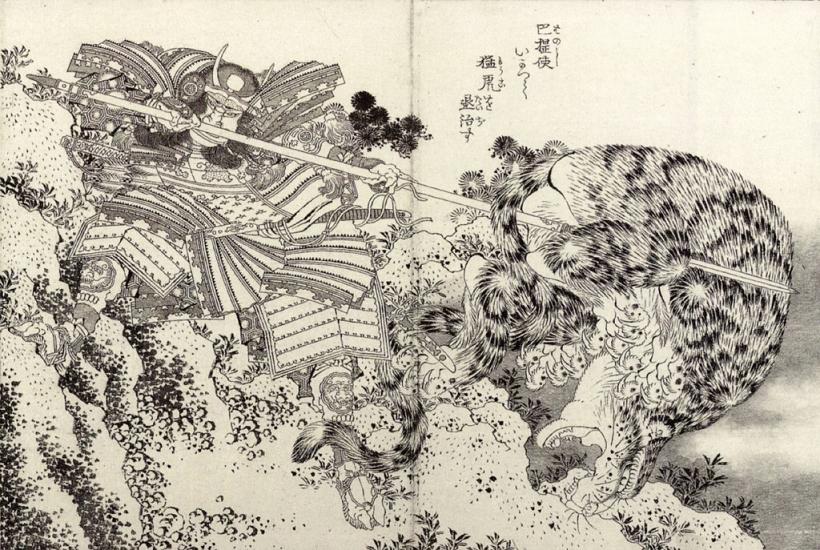
虎倒 Kotō – tiger knocking down, tiger defeating, to fell a tiger.
僧玉観 Sō Gyokkan – a (Buddhist) monk, jewelled appearance. Looking at the Chinese for 玉観 you could also see the name as suggesting that this person is a treasured (possibly imperial) advisor or observer.
強法 Gōhō – strong or powerful method. Pronunciation as gōhō is indicated by furigana alongside kanji in the text.

The first line was particularly vexing to translate into something that made sense in English, after trying out several different versions I am currently happy with the one written above. Similarly with the last line there are various ways to phrase it in English, and thus subtly altering the meaning.

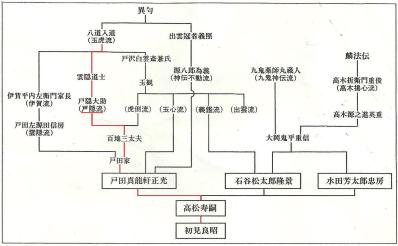
As with Togakure ryū in the genealogy chart, Kotō ryū is descended from the Gyokko ryū of Hachidō Nyūdō, but through Tozawa Hyakuunsai Kaneuji to Gyokkan who is seen as the source of four styles. Kotō ryū is passed on to Hatsumi Masaaki, as with Togakure ryū, through Momochi Sandayū, the Toda family, Toda Shinryūken Masamitsu and Takamatsu Toshitsugu.


…

Togakure Ryū Ninpō – article translation

From Wanderings in Budo by Mats "Toryu" Hjelm

戸隠流忍法
木曽義仲の家臣だった戸隠大助が、12世紀の始め頃、戦いに敗れて伊賀に身を隠し、叔父の霞隠道士から骨指術や剣術を始めとする様々な武術を学んで開いた。最初は戸隠流八法秘剣と呼ばれ、時代によって名称は様々に変化した。伊賀忍者の百地三太夫などが学び、紀州藩の取名家を経は、17世紀頃から戸田家に伝わった。戸隠流は、手甲、施盤投げ、手裏剣、水遁の術に使う四尺のしの竹などに特長がある。戸隠流忍法体術は、骨指術からの分家である。

Togakure Ryū Ninpō
Togakure Daisuke was a vassal of Kiso Yoshinaka in the early 12th century, he hid in Iga after losing a battle, from his uncle Kagakure Dōshi he was taught a variety of martial arts beginning with kosshijutsu and kenjutsu. Though the name was changed depending on the period it was first referred to as Togakure ryū happō biken. In the 17th century the Toda family took over the school. Iga ninja such as Momochi Sandayū learnt from the distinguished family when it moved to Kishū province. Specialities of the Togakure ryū are shuko, senban throwing, shuriken and water evasion techniques including the use of a 4 shaku bamboo tube. Togakure ryū ninpō taijutsu is a branch of kosshijutsu.
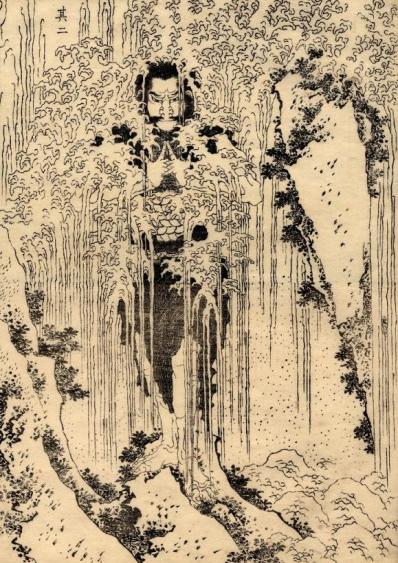
霞隠 Kagakure – mist hiding, hiding in the mist – also read as Kain.
雲隠 Kumogakure – cloud hiding, hiding in the clouds
道士 Dōshi – a moral person or Taoist
Kagakure and Kumogakure are used interchangeably, both can be seen as coming form the from the homeland of Togakure ryū – the mist sheathed mountain slopes of Iga – as well as the use of smoke to escape that is synonymous with the legend of the Ninja. So you can see Kagakure Dōshi as a religious person who is able to hide in the mists and clouds – this also brings to mind the 修験道 Shugendō idea of being able to subsist through eating mist.

百地三太夫 Momochi Sandayū – a famous ninja who’s exploits appears in many stories.
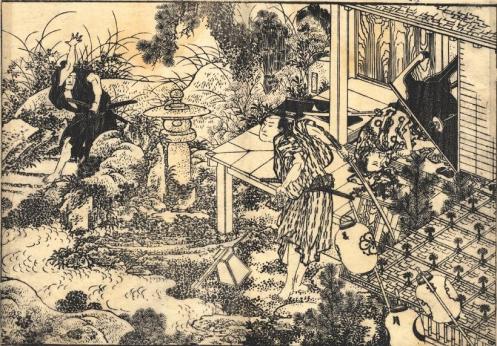
手甲 Shuko – hand spikes. But also be read as Tekko – hand armour or armoured sleeves.
施盤投げ Senban nage – rotating plate throwing. Although the first character used in the text is 施 which refers to begging or alms so reads ‘begging bowl throwing’ bringing to mind the idea of disguise as a beggar in espionage. The characters for rotating plate are 旋盤.
手裏剣 Shuriken – blade inside the hand, small throwing blade
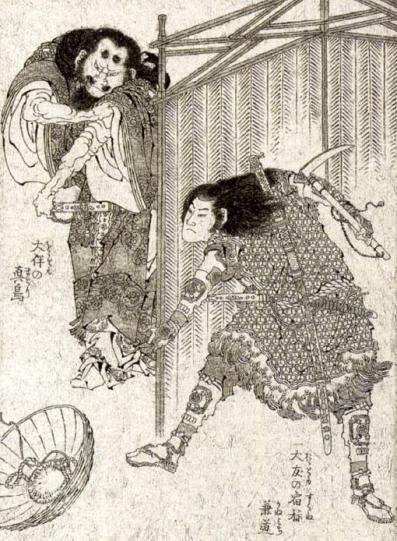
四尺のしの竹 Yonshaku no Shinodake – 4 length or measure bamboo tube. A shaku is 30.3 cm so the breathing tube is around 1.2 meters.
The genealogy chart shows Togakure ryū as coming from the Gyokko ryū of Hachidō Nyūdō through Kagakure Dōshi to Togakure Daisuke. It then passes on though Momochi Sandayū to the Toda family, to Toda Shinryūken Masamitsu, Takamatsu Toshitsugu then Hatsumi Masaaki.

…

Gyokko ryū – Togakure Ryū – article translation

From Wanderings in Budo by Mats "Toryu" Hjelm

Gyokko Ryū Kosshijutsu

玉虎流骨指術
8世紀頃に異匂という唐人が日本に伝えたと言われているが、初見氏によると異国の某とも解釈でき、つまりはっきり誰とはわからないが、唐の拳法が元になっていることを示しているのではないかということだ。骨指術とは指一本で敵を倒せるという意味もあるがむしろ武道の骨子に通ずる。この玉虎流が伊賀の様々な武道のもとになった。

Gyokko ryū kosshijutsu
It is said that a Chinese person called Ibou in the 8th Century brought this to Japan, according to Mr Hatsumi it is correct to interpret that the person was a foreigner, although we don’t know who clearly, there is a clear indication of it’s origin in the martial arts of T’ang China (618-907). To defeat the enemy with one finger is kosshijutsu, it also means to have a better understanding of the essence or essentials of martial arts. This Gyokko ryū of Iga was the source of a variety of martial arts.

In the genealogy chart the characters used are  異匄 Ikai – something like an ‘unusual beggar’, whereas in the Gyokko description 異匂 Ibou is used – which could be translated to something like ‘curious fragrance’ (Furigana, small pronunciation hiragana, are used to indicate the reading as Ibou/Ibō).

八道入道 Hachidō Nyūdō is shown as a successor of Ikai/Ibou in the chart with and Gyokko ryū listed under his name.  八道 Hachidō can mean the 8 feudal districts of Japan, and 入道 Nyūdō is a monk – possibly indicating that he was a widely traveled or itinerant monk.


…

Hiden – Togakure Ryū – errata

From Wanderings in Budo by Mats "Toryu" Hjelm

Thanks to George Ohashi for correcting me on the source of the article – it is not Hiden magazine (as I had always assumed) but Kakutōgi Tsuushin 格闘技通信, unarmed martial arts transmission (magazine), of May 1990.

The full info at the very bottom of the page is:
参考資料 • 武芸流派大事典 (東京コピー出版) 秘伝 • 戸隠流忍法体術 (新人物往来社/提供 • 若林太郎)
Reference material – martial arts school encyclopaedia (Tōkyō publication) Secret – Togakure Ryū Ninpō Taijutsu (Newcomers correspondence society/contributor – Wakabayashi Tarō)

If I have the name right then I am guessing Wakabayashi-san was the interviewer/reporter writing about the ‘Secret art of Togakure ryū’.  So in my defence at least Hiden is written there…

Kakutōgi 格闘技 – describes martial arts that don’t use weapons, fight one-to-one or as sports.

More to follow shortly.


…