Skip to content

Shu Ha Ri: The Japanese Concept of Learning for Martial Artists

From 武神館兜龍 Bujinkan Toryu by admin

Shu Ha Ri is a Japanese concept that describes the process of learning and mastering a skill. It is widely used in martial arts and has been adopted by many other fields, including business, education, and technology. This concept emphasizes the importance of active engagement, spaced repetition, feedback, self-explanation, and personalization to achieve mastery.
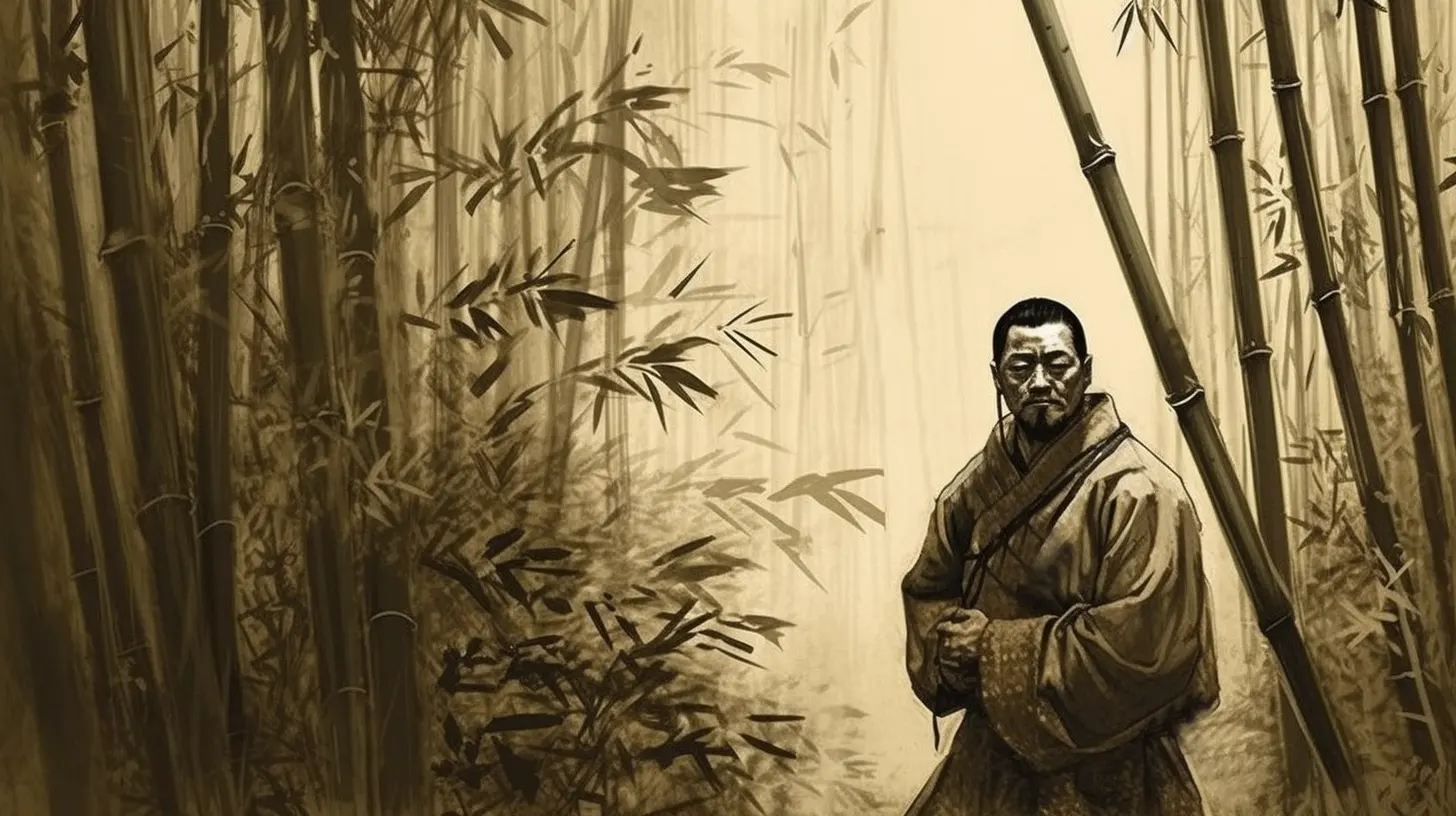
I have a heart that is like the wild flowers of the meadow. And yet as straight and true as the bamboo. Not even ten thousand enemies can cause me fear.
(Takamatsu Sensei – 33’rd Sōke of Togakure-ryū)

守 Shu: Learn the Fundamentals

The first stage of Shu Ha Ri is Shu, which means “protect” or “obey.” In this stage, you learn the fundamentals of your martial art. You follow the rules and techniques established by your teacher or master, and you practice them diligently.

To fully engage in Shu, you need to be actively involved in your learning. You cannot simply go through the motions and expect to improve. Instead, you must focus on each technique, paying attention to the details and making adjustments as needed. By doing so, you build a solid foundation for your martial arts practice.

"The wise warrior avoids the battle" - Sun Tzu believed in avoiding unnecessary battles and instead focusing on preparation and strategy. Similarly, in the first stage of Shu Ha Ri, one should focus on actively learning and paying attention to details to avoid mistakes and unnecessary battles.

破 Ha: Break Free and Explore

The second stage of Shu Ha Ri is Ha, which means “detach” or “break away.” In this stage, you begin to explore beyond the fundamentals you learned in Shu. You experiment with different techniques and approaches, and you start to develop your own style.

To be successful in Ha, you need to incorporate spaced repetition into your learning. This means that you practice techniques repeatedly over a period of time, with breaks in between. By doing so, you reinforce your learning and allow your brain to process and consolidate the new information.

"All warfare is based on deception" - Sun Tzu emphasizes the importance of being unpredictable in warfare. Similarly, in the second stage of Shu Ha Ri, one should break away from the fundamentals and experiment with different techniques and approaches to be unpredictable.

離 Ri: Innovate and Create

The final stage of Shu Ha Ri is Ri, which means “leave” or “separate.” In this stage, you have mastered the fundamentals and have developed your own style. You are now free to innovate and create, using your skills and knowledge in new and creative ways.

To fully embrace Ri, you need to incorporate feedback and self-explanation into your learning. This means that you seek out feedback from your peers and teachers, and you take the time to reflect on your own performance. By doing so, you can identify areas for improvement and refine your techniques.

Personalization is also important in Ri. You need to adapt your techniques and style to your own strengths and weaknesses, as well as the demands of the situation. By doing so, you can maximize your effectiveness as a martial artist.

One quote from The Art of War that aligns with the idea of personalization in Ri is: "Know thy self, know thy enemy. A thousand battles, a thousand victories" - Sun Tzu emphasizes the importance of knowing oneself, which includes understanding one's own strengths and weaknesses. This knowledge is critical in adapting one's techniques and style to maximize effectiveness in battle.

In conclusion, Shu Ha Ri is a powerful concept for martial artists who want to improve their skills and knowledge. By emphasizing active engagement, spaced repetition, feedback, self-explanation, and personalization, Shu Ha Ri can help you become a better martial artist, no matter what level you are currently at.

  • Shu (守): the kanji is composed of the radical 宀, which means roof or protection, and the radical 戍, which means army or defense. It symbolizes the act of guarding, keeping, and preserving.
  • Ha (破): the kanji is composed of the radical 石, which means stone or rock, and the radical 覇, which means conquer or dominate. It symbolizes the act of breaking, detaching, and surpassing.
  • Ri (離): the kanji is composed of the radical 雨, which means rain or dew, and the radical 离, which means separation or divorce. It symbolizes the act of departing, transcending, and liberating.

Yudansha – Bujinkan Black Belt Guide
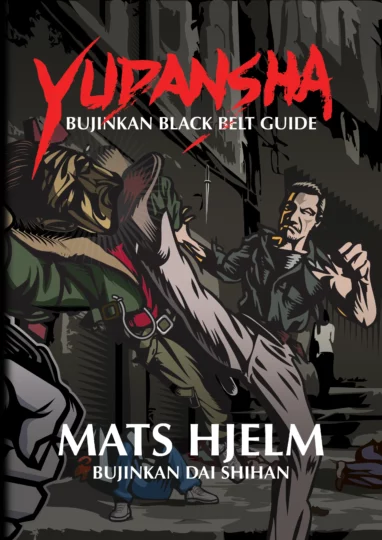
Welcome to the world of Bujinkan Budō-taijutsu! In this book, Mats Hjelm, a seasoned practitioner and teacher of Bujinkan Budo-taijutsu, presents a comprehensive guide to the first stage of learning Budo.

Mats has been working on this project for 35 years. With 184 pages richly illustrated with pictures and illustrations, this English perfect-bound paperback is a must-have for black belts and teachers of Bujinkan system. The book is a collection of techniques that Mats believes every black belt should be familiar with, and every teacher should know by heart.

This book is not a self-study course, and it is necessary to have a qualified instructor to help you with your progress. However, it can be used as a tool to enhance your learning, and you will learn names and principles from this book.

If you are serious about mastering Taijutsu and progressing to higher levels of learning, then this book is for you. It is Mats’ legacy to his students and friends from many nationalities that bought his videos, attended his seminars, and showed interest in his way of teaching over the years. Get your copy today and start your journey towards mastering the art of Bujinkan Budo-taijutsu!

The post Shu Ha Ri: The Japanese Concept of Learning for Martial Artists appeared first on 武神館兜龍 Bujinkan Toryu.…
Martial Arts and the Neuroscience of Free Will

From 武神館兜龍 Bujinkan Toryu by Toryu

Introduction

I will try to explain Japanese martial arts and the Neuroscience of Free Will in this article. The three approaches of Go no sen, sen no sen, and sen sen no sen have been used for centuries to develop effective strategies for both offensive and defensive manoeuvres.

However, the scientific study of human behaviour has challenged our traditional understanding of free will and decision-making, calling into question how much control we have over our actions. In recent years, advances in neuroscience have shed new light on the nature of free will and how these martial arts concepts may relate to it.

The Three Timings in Japanese Martial Arts

Let’s start with the three timings.

後の先 Go no sen is a reactive strategy, where the practitioner waits for the opponent to initiate the attack before countering.

先の先 Sen no sen is a more proactive approach, where the practitioner responds to the opponent’s attack as it is happening.

先先の先 Sen sen no sen is the most proactive strategy, where the practitioner initiates the attack before the opponent has a chance to act.

All three of these strategies require different levels of skill, awareness, and timing. The choice of strategy can depend on a variety of factors, such as the practitioner’s level of experience, the nature of the opponent’s attack, and the context of the situation.

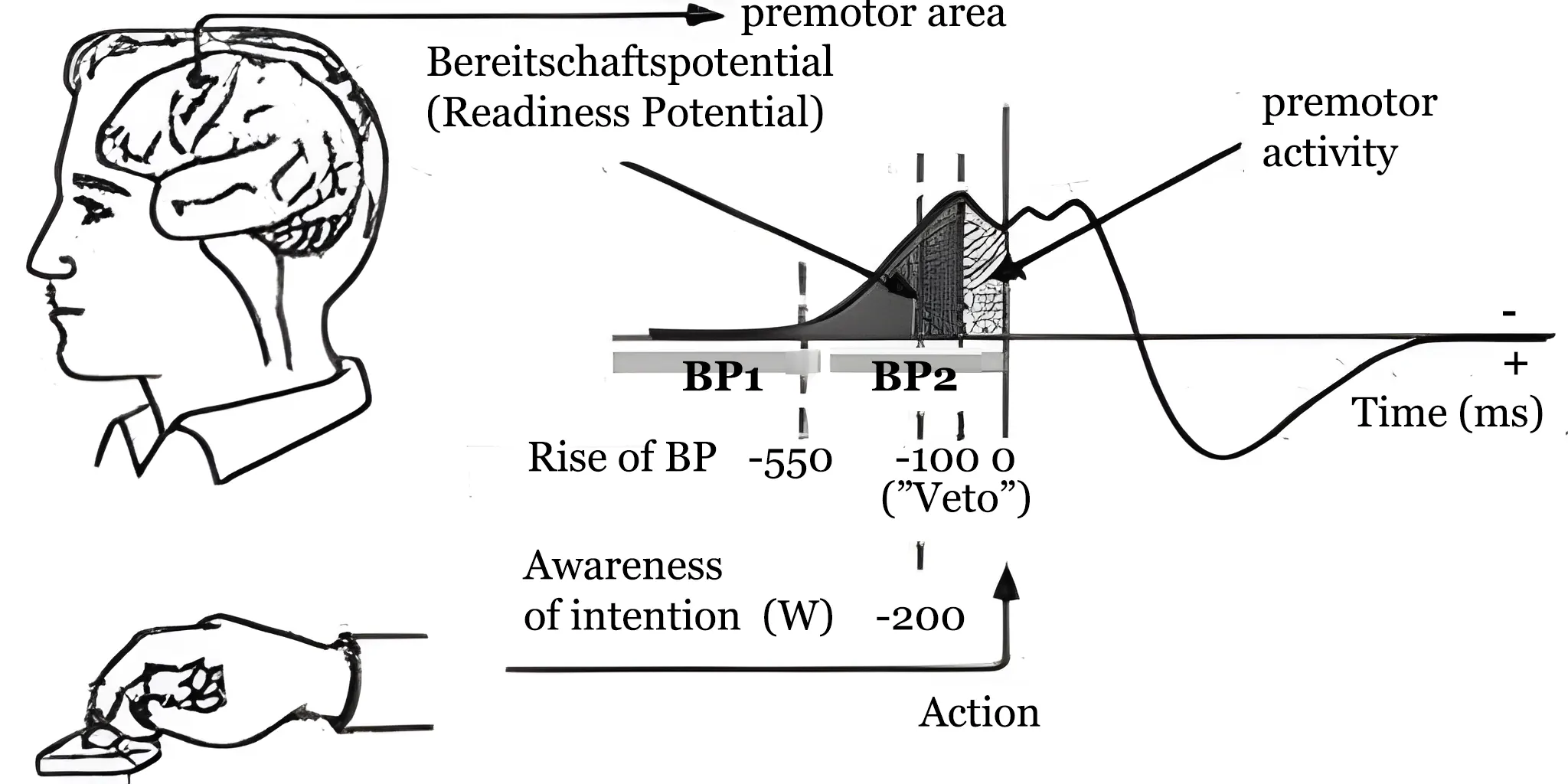
Bereitschaftspotential: Martial Arts and the Neuroscience of Free Will

Neuroscience and Free Will

The question of free will has been a topic of debate among philosophers and scientists for centuries. According to traditional views, we have the ability to make decisions freely, without being determined by outside forces. However, recent research in neuroscience has suggested that our decisions may not be as freely made as we previously thought.

One of the key findings in this field is the Bereitschaftspotential, a phenomenon discovered by Hans Helmut Kornhuber and Lüder Deecke in the 1960s. This term refers to the readiness potential that occurs in the brain before a voluntary movement is made. In other words. The brain shows activity related to a movement before the person is aware of having made a decision to move.

The Relationship Between the Three Timings and Free Will

The concepts of free will and neuroscience may have a relationship with the three timings in Japanese martial arts. One possibility is that the timing choice reflects a decision-making process in the brain. For instance, the decision to use a reactive strategy like go no sen may involve a different neural process than the decision to use a proactive strategy like sen sen no sen. These distinct neural processes might be reflected in the Bereitschaftspotential or other neural signals associated with decision-making.

Another possibility is that the martial arts concepts of timing are not related to free will in the traditional sense. Instead, they reflect a different kind of agency or control over one’s actions. For example, a skilled practitioner using all three timings might respond to an attack in a manner not predetermined by unconscious processes in the brain. They could instead choose a timing that is best for the situation, based on their training and experience.

Personal Experiences

We have all witnessed Hatsumi Soke’s ability to move swiftly when attacked. Without an understanding of the Bereitschaftspotential as described earlier, it may appear as though the opponent is assisting him. Personally, I have also experienced similar situations with Hatsumi Soke and others, wherein I had already made the decision to attack but the person I intended to attack had already begun moving. At that point, it was too late for me to change my plans.

On one occasion, Noguchi Sensei stopped my movement three times in a row by ‘flinching’ at the exact moment when I made the decision to attack. I couldn’t help but stop and freeze in my tracks. He laughed at my frustration, and that was a very valuable lesson.

Conclusion

To conclude, the three timings in Japanese martial arts and the neuroscience of free will are both captivating subjects that offer a glimpse into the human behaviour. Though the relationship between them remains incompletely comprehended, further exploration may help elucidate how our actions are determined and how we can cultivate effective decision-making strategies in various situations.

The post Martial Arts and the Neuroscience of Free Will appeared first on 武神館兜龍 Bujinkan Toryu.…

YŪDANSHA NO AN'NAISHO 2022-11-19 01:41:51

From YŪDANSHA NO AN'NAISHO by YŪDANSHA NO AN'NAISHO

Omote Kote Gyaku Dori Daoshi Waza from the Kihon Happo Toride Kihon Kata Goho of Bujinkan Dojo Budo Taijutsu.…

Hicho no Kata – Ura Waza no 2

From YŪDANSHA NO AN'NAISHO by YŪDANSHA NO AN'NAISHO

Maybe you had problem understanding how I do some of the techniques, well it’s not supposed to be to easy. Anyway we just recorded the second Ura Waza to the Kimon Happo technique Hichō plus a few Henka.

Watch until the end and you will learn how to do Omotegyaku with the ass.

Enjoy!…

KYOKETSU-SHOGE and NAGE-NAWA

From 8þ Kabutoshimen by admin

KYOKETSU-SHOGE AND NAGE-NAWA. This article is about the weapon (actually farm tool). At the end is a video (from Bujinkan Kaigozan Dojo previous week).

KYOKETSU-SHOGE

Kyoketsu-shoge (距跋渉毛) translates as “to run about in the fields and mountains”. It is one of the weapons used in Togakure-ryu and Kumogakure-ryu.

This weapon is believed to be the forerunner of Kusarigama. Wikipedia says it is a double edged blade with a curve edged blade attached. I don’t believe that was true. I think the double edged blade was just as dull as the Kunai. And only the inside of the curved blade was sharp.

The Kyoketsu-shoge was used by the rural peasantry class from the Iga province. If they was caught with something that looked too much like a weapon, they might have been executed on the spot.

KYOKETSU-SHOGE
Kyoketsu-shoge as it probably looked hundreds of years ago. Except the rope, it was made of hair.

I think it was a multi purpose farm tool. You dig the earth, cut the grass, tie up the grass with the rope etc. Why would a farm tool have chain. Rope made of hair was less suspicious. The farmer could stick into his belt and not cause too much attention.

NAGE-NAWA

NAGE-NAWA

Nage-nawa 投げ縄 (rope throwing) is not as easy as it looks. The trick is to throw the loop and make sure the rear end of the loop passes on the other side of the hand.

On the video below I show you two common techniques we in the Bujinkan Dojo use at demonstrations. In the first technique I hit down on his hands to unarm him. Threaten him with the blade and protect the sword (we had no room to do this on camera).

Throw the ring towards his head. He steps to the side and catch it. Yank it out of his grip and prepare for the throwing. Do the first loop around his hand. He grab the rope with his other hand. Make it look like a tug of war. Loop his other hand.

Blind his eyes with the rope (or Shuriken, powder etc), he covers his eyes with the hand. Continue and loop the rope around his hand and neck.

He kicks. You do Kerikaeshi and take him down. Tie him up more with the rope. Put the blade to his neck and cut his neck.

The second technique he is attacking you and you deflect withe the blade and strike with the ring behind you to hit him. Loop the sword and yank it out of his grip. Loop his hands and neck as previous technique.

Do these techniques with good choreography and acting and it will look good in demonstrations.

Yes I know looping around the sword and yanking, the sword would probably just cut the rope. Even looping around his hands he can cut the rope. These techniques is mostly for demonstrations and just fun training.

KYOKETSU-SHOGE and NAGE-NAWA at KAIGOZAN DOJO

Check out my video channel https://www.bitchute.com/bujinkan/

The post KYOKETSU-SHOGE and NAGE-NAWA appeared first on 8þ Kabutoshimen.…

Gikan-ryū Koppōjutsu and my JapanTrip#48

From 8þ Kabutoshimen by admin

On my last trip Noguchi Sensei surprised us by teaching Gikan-ryū Koppōjutsu. I think he just recently decided to start teaching this Ryū-ha. He said he learned the techniques from Hatsumi Sōke four years ago in a private session.

I have trained techniques that was claimed to be Gikan-ryū by western teachers before. I did not see any similarity what so ever, this was completely different.

There is 10 techniques in all, they don’t have any names. He showed us his notes and it was 3-4 pages with descriptions of the techniques. I attended two of the Gikan-ryū trainings he did in November this year. Fortunately I got to train all 10 techniques (I think?) with a lot of henka. It was a blast training with such good friends as Ari (Dai Shihan from Finland) and Philip (Dai Shihan from Denmark).

I’m not gonna give any descriptions here, but Noguchi Sensei said that the characteristics of this school is to attack the opponent from the side. Several techniques you hit his kidney. Many strikes was done with Ura-ken for example.

This inspired me to create a new page to the web site, click the button below.

Nagato Sensei on his first day as Shindenfudō-ryū Sōke

Earlier this year I heard that Ishizuka Sensei had been appointed as the new Sōke of Gyokkō-ryū. Now Nagato Sensei said that he had been appointed as the new Sōke of Shindenfudō-ryū. At the Buyukai I heard rumours about Noguchi Sensei was going to be the next Kotō-ryū Sōke (which now has been confirmed). No one has been appointed Sōke for Gikan-ryū yet, but I have my suspicions.

Sōke is now 88 years old

88 is an important number in Japanese, not only because it is a “double infinity”, but…. The eighty-eighth birthday is the occasion of beiju (米寿), “rice age”, because the Chinese character for rice, 米, looks like the characters for eight tens plus eight (八十八).

https://www.instagram.com/p/B5hqW4wJ-it/
Hatsumi Sōke imitating Frank Sinatra, he looked so cool.

Hatsumi Sōke was in a good mood this trip. His knees are weak so he have trouble getting up and down on the floor so we do standing bow ins and outs in the training now.

Senō Sensei said a few years ago, he felt energised during Hatsumi Sōke’s birthday because there was so many familiar places coming and giving him good energy. I think Hatsumi Sōke feels the same way.

I have added several more pictures on the Kaigozan Dōjō Instagram page.

New Books and DVD
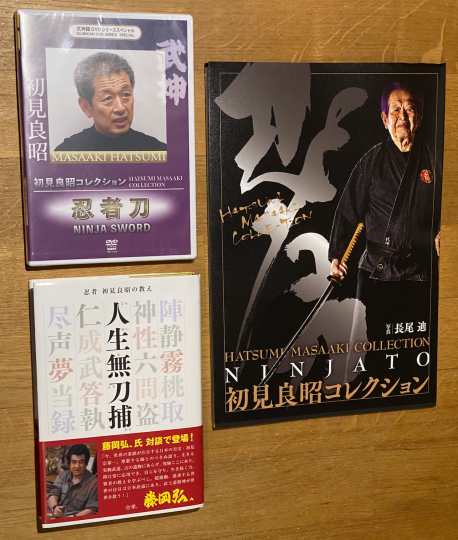
New Ninjatō DVD and Book. Also a relatively new Mutōdori Book now in the collection.

The post Gikan-ryū Koppōjutsu and my JapanTrip#48 appeared first on 8þ Kabutoshimen.…

Gikan-ryū Koppōjutsu and my JapanTrip#48

From 武神館兜龍 Bujinkan Toryu by admin

On my last trip Noguchi Sensei surprised us by teaching Gikan-ryū Koppōjutsu. I think he just recently decided to start teaching this Ryū-ha. He said he learned the techniques from Hatsumi Sōke four years ago in a private session.

I have trained techniques that was claimed to be Gikan-ryū by western teachers before. I did not see any similarity what so ever, this was completely different.

There is 10 techniques in all, they don’t have any names. He showed us his notes and it was 3-4 pages with descriptions of the techniques. I attended two of the Gikan-ryū trainings he did in November this year. Fortunately I got to train all 10 techniques (I think?) with a lot of henka. It was a blast training with such good friends as Ari (Dai Shihan from Finland) and Philip (Dai Shihan from Denmark).

I’m not gonna give any descriptions here, but Noguchi Sensei said that the characteristics of this school is to attack the opponent from the side. Several techniques you hit his kidney. Many strikes was done with Ura-ken for example.

This inspired me to create a new page to the web site, click the button below.

https://www.instagram.com/p/B5SG1MkpKQl/
Nagato Sensei on his first day as Shindenfudō-ryū Sōke

Earlier this year I heard that Ishizuka Sensei had been appointed as the new Sōke of Gyokkō-ryū. Now Nagato Sensei said that he had been appointed as the new Sōke of Shindenfudō-ryū. At the Buyukai I heard rumours about Noguchi Sensei was going to be the next Kotō-ryū Sōke (which now has been confirmed). No one has been appointed Sōke for Gikan-ryū yet, but I have my suspicions.

Sōke is now 88 years old

88 is an important number in Japanese, not only because it is a “double infinity”, but…. The eighty-eighth birthday is the occasion of beiju (米寿), “rice age”, because the Chinese character for rice, 米, looks like the characters for eight tens plus eight (八十八).

https://www.instagram.com/p/B5hqW4wJ-it/
Hatsumi Sōke imitating Frank Sinatra, he looked so cool.

Hatsumi Sōke was in a good mood this trip. His knees are weak so he have trouble getting up and down on the floor so we do standing bow ins and outs in the training now.

Senō Sensei said a few years ago, he felt energised during Hatsumi Sōke’s birthday because there was so many familiar places coming and giving him good energy. I think Hatsumi Sōke feels the same way.

I have added several more pictures on the Kaigozan Dōjō Instagram page.

New Books and DVD
New Ninjatō DVD and Book. Also a relatively new Mutōdori Book now in the collection.

The post Gikan-ryū Koppōjutsu and my JapanTrip#48 appeared first on 武神館兜龍 Bujinkan Toryu.…