Skip to content

Kata, Kuden, and Hiden

From Classical Martial Arts Research Academy by Pertti Ruha

There are two kanji characters for the concept of kata in the battle art, one is interpreted as form [型] and the other structure [形], i.e. what is in the form. Both of these contain a sign for “imitating reality” [幵], i.e. kata has always had the purpose of “reality based” training. 
There is another third character, [方], which is pronounced as kata and means direction or direction, and which can sometimes be used as a related word.

The very earliest martial arts, known as the kaden (family traditions; 家伝), those that were created before the Edo period (1603 – 1868) originally had no kata. These first appeared later in the 17th century.

In the oldest makimono (scrolls; 巻物) known, for kenjutsu, jujutsu, yari etc, the word kata was not used at all. The words used were “uchi tachi” and “shi dachi“. In one of our original documents, Kyussho ratsugi, which is part of the Amatsu Tatara collection of chronicles and described only the very principles and concepts, i.e. what to do. The answer to the question how the principles were put into practice was transferred as the kuden (oral transmission; 九伝) , verbally from teacher to student. It’s a bit like reading Sun Tzu or Sanryaku, the ideas are presented, but not how they can be used in individual situations. We have several hundred kata in our schools, but they are completely useless if you have not learned the kuden that belong to them.

The form of kata used in karate, for example, and similar modern martial arts came much later, only during the end of the 19th century. Then the purpose was to teach large numbers of students new techniques. The schools that changed their pedagogy from transferring quality to managing quantity were already named “shin ryu” (new schools; 真流), a term that is a bit funny because many of these schools are today called “ko ryu” (old schools; 古流).

When kata was created for describing principles and concepts, then the need to name them and the principle it contained also arose. Many names, concepts and ideas come from Buddhism, theater, archery, Noh, ikebana, sado, poetry, etc. In Gyokko-ryu, for example, it is said that the innermost secrets are embedded in the kata name.

Kata can be interpreted as a sequence or modulation of previous masters’ movements. If the student knows how to read the description and has the tools in the form of the kuden to decode the information, there is much to deepen in. The problem with kata is that they can easily become rigid and “die” unless the kuden is properly decoded by the student. Some parts can be lost over the years, such as distance, kukan, juppo sessho, rhythm, breathing or to change the weapon technique or tactics.

By definition, it is not possible to describe a master’s movements, either in writing, image or verbally. There are many aspects that the learner must learn “heart to heart” – this is called hiden (secret transmission; 秘伝). 
It’s like a teenager trying to understand their parents. You probably won’t do this until you have become a parent yourself.
A master’s movements can be likened to a stream running down a mountain side. A kata trying to describe this becomes inevitably rigid and clumsy. A kata can never describe anything spontaneous and natural, but it can describe its various aspects of it, which then the student must juggle in his own body and mind. Many old kata have names that are very poetic, which include concepts such as clouds, fog, running water etc, in order to describe another dimension.

Another problem we have today with kata comes from modern martial arts. When moving from educating a handful of students to mass training of hundreds of students, one had to create standardized techniques that were taught in a ritualized form. And from here, the wrong belief also stems that even in koryu kata is about learning techniques on a ritualized set.

One simple example is our “tsuki kata” (thrust form; 突型). If you consider this as a technology to be used in emergency situations, you are wrong. But if you understand the kuden that is attached to it, namely that it is important to repel the opponent so that he does not, despite being hit and seriously injured, continue his movement path and even manage to meet me with his weapon.
Compare with sword; if the enemy cuts with a sword against the us and hit with “hiki kiri” – pulling cut, then we, after the hit may still complete our chop and thereby seriously hurt us. On the other hand, if you have understood the danger in this and use “oshi kiri” – pushing cut, then the opponent is discarded. In martial arts contexts, it does not matter if you meet with “hiki or oshi“, because it is the one who meets first who gets the score.

One can divide all kata a little loose into two categories; Tanren gata and Shinken gata. 
The tanren gata (鍛錬型) is exercises for “forging and polishing” motor skills and physics in order to use the bio-mechanics of the tradition. Ukemi kata is a typical Tanren. 
Shinken gata (真剣型) is for real combat and represents tactics that of course also include abilities that have been practiced with Tanren gata. 
Kihon Happo is a genric piece made by one of the old masters. For beginners it is a Tanren gata and for the advanced students it is a Shinken gata thanks to the kuden, but for those who have gained insight via hiden, the content is raised another level to also include “kaname” (the deepest principles; 要).

During the Edo period, there was also the Hyoen gata (表厭), techniques shown at public and public demonstrations, to attract students to school and to make money. Many koryu schools of today consist of many Hyoen forms, but it is not always the practitioners of these schools are aware of it because the kuden has been lost over the years. 
An image can be seductive. Below is Hatsumi sensei and kamae. Is it out of the Shinken gata or the Hyoen gata? Just Kuden can reveal the purpose of this and if you have faced Soke when he assumed this position, maybe you even have managed to capture the hiden.

this article originally appears on Pertti Ruha’s blog HERE.…

Kata, Kuden, and Hiden

From Classical Martial Arts Research Academy by Pertti Ruha

There are two kanji characters for the concept of kata in the battle art, one is interpreted as form [型] and the other structure [形], i.e. what is in the form. Both of these contain a sign for “imitating reality” [幵], i.e. kata has always had the purpose of “reality based” training. 
There is another third character, [方], which is pronounced as kata and means direction or direction, and which can sometimes be used as a related word.

The very earliest martial arts, known as the kaden (family traditions; 家伝), those that were created before the Edo period (1603 – 1868) originally had no kata. These first appeared later in the 17th century.

In the oldest makimono (scrolls; 巻物) known, for kenjutsu, jujutsu, yari etc, the word kata was not used at all. The words used were “uchi tachi” and “shi dachi“. In one of our original documents, Kyussho ratsugi, which is part of the Amatsu Tatara collection of chronicles and described only the very principles and concepts, i.e. what to do. The answer to the question how the principles were put into practice was transferred as the kuden (oral transmission; 九伝) , verbally from teacher to student. It’s a bit like reading Sun Tzu or Sanryaku, the ideas are presented, but not how they can be used in individual situations. We have several hundred kata in our schools, but they are completely useless if you have not learned the kuden that belong to them.

The form of kata used in karate, for example, and similar modern martial arts came much later, only during the end of the 19th century. Then the purpose was to teach large numbers of students new techniques. The schools that changed their pedagogy from transferring quality to managing quantity were already named “shin ryu” (new schools; 真流), a term that is a bit funny because many of these schools are today called “ko ryu” (old schools; 古流).

When kata was created for describing principles and concepts, then the need to name them and the principle it contained also arose. Many names, concepts and ideas come from Buddhism, theater, archery, Noh, ikebana, sado, poetry, etc. In Gyokko-ryu, for example, it is said that the innermost secrets are embedded in the kata name.

Kata can be interpreted as a sequence or modulation of previous masters’ movements. If the student knows how to read the description and has the tools in the form of the kuden to decode the information, there is much to deepen in. The problem with kata is that they can easily become rigid and “die” unless the kuden is properly decoded by the student. Some parts can be lost over the years, such as distance, kukan, juppo sessho, rhythm, breathing or to change the weapon technique or tactics.

By definition, it is not possible to describe a master’s movements, either in writing, image or verbally. There are many aspects that the learner must learn “heart to heart” – this is called hiden (secret transmission; 秘伝). 
It’s like a teenager trying to understand their parents. You probably won’t do this until you have become a parent yourself.
A master’s movements can be likened to a stream running down a mountain side. A kata trying to describe this becomes inevitably rigid and clumsy. A kata can never describe anything spontaneous and natural, but it can describe its various aspects of it, which then the student must juggle in his own body and mind. Many old kata have names that are very poetic, which include concepts such as clouds, fog, running water etc, in order to describe another dimension.

Another problem we have today with kata comes from modern martial arts. When moving from educating a handful of students to mass training of hundreds of students, one had to create standardized techniques that were taught in a ritualized form. And from here, the wrong belief also stems that even in koryu kata is about learning techniques on a ritualized set.

One simple example is our “tsuki kata” (thrust form; 突型). If you consider this as a technology to be used in emergency situations, you are wrong. But if you understand the kuden that is attached to it, namely that it is important to repel the opponent so that he does not, despite being hit and seriously injured, continue his movement path and even manage to meet me with his weapon.
Compare with sword; if the enemy cuts with a sword against the us and hit with “hiki kiri” – pulling cut, then we, after the hit may still complete our chop and thereby seriously hurt us. On the other hand, if you have understood the danger in this and use “oshi kiri” – pushing cut, then the opponent is discarded. In martial arts contexts, it does not matter if you meet with “hiki or oshi“, because it is the one who meets first who gets the score.

One can divide all kata a little loose into two categories; Tanren gata and Shinken gata. 
The tanren gata (鍛錬型) is exercises for “forging and polishing” motor skills and physics in order to use the bio-mechanics of the tradition. Ukemi kata is a typical Tanren. 
Shinken gata (真剣型) is for real combat and represents tactics that of course also include abilities that have been practiced with Tanren gata. 
Kihon Happo is a genric piece made by one of the old masters. For beginners it is a Tanren gata and for the advanced students it is a Shinken gata thanks to the kuden, but for those who have gained insight via hiden, the content is raised another level to also include “kaname” (the deepest principles; 要).

During the Edo period, there was also the Hyoen gata (表厭), techniques shown at public and public demonstrations, to attract students to school and to make money. Many koryu schools of today consist of many Hyoen forms, but it is not always the practitioners of these schools are aware of it because the kuden has been lost over the years. 
An image can be seductive. Below is Hatsumi sensei and kamae. Is it out of the Shinken gata or the Hyoen gata? Just Kuden can reveal the purpose of this and if you have faced Soke when he assumed this position, maybe you even have managed to capture the hiden.

this article originally appears on Pertti Ruha’s blog HERE.…

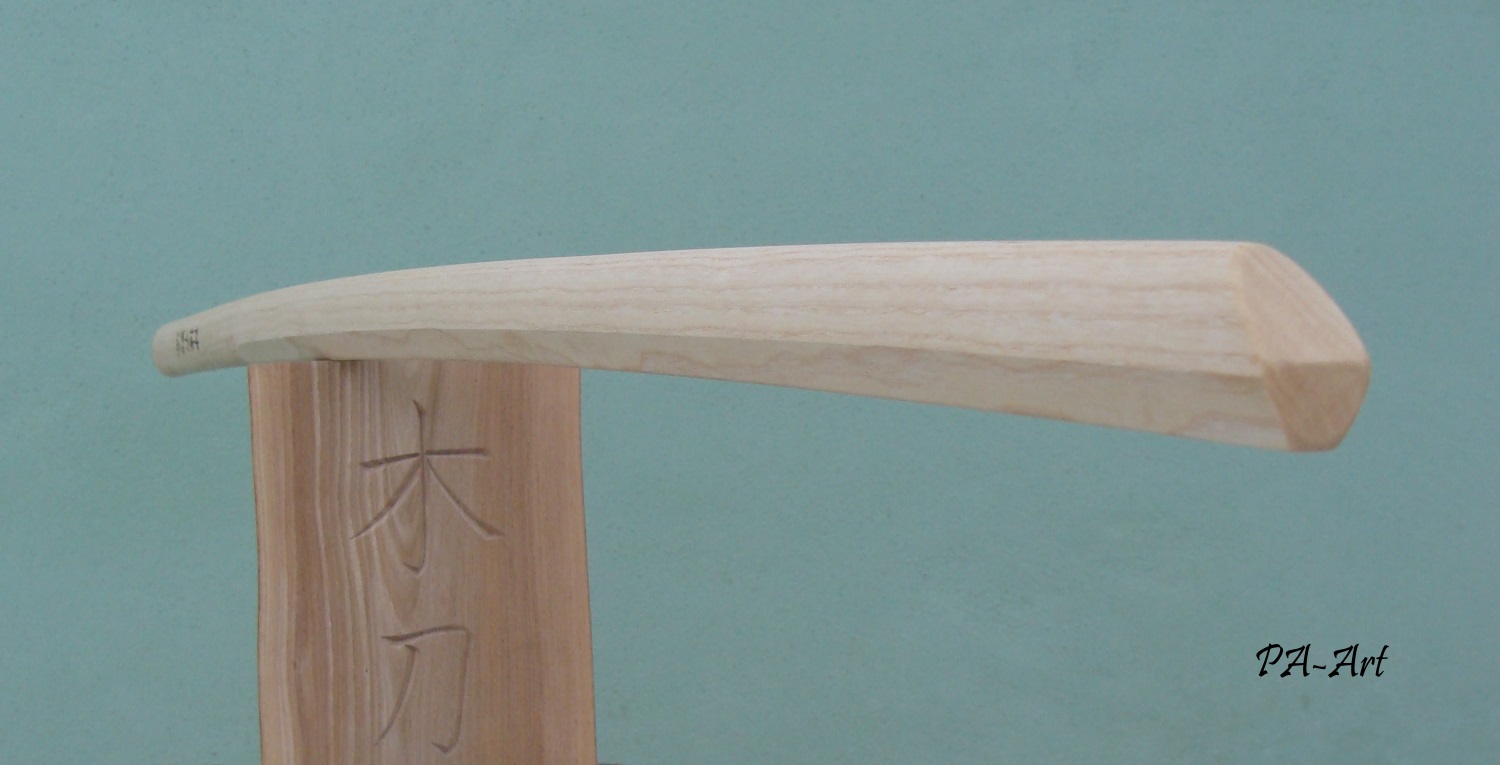
Shinden Fudo Ryu bokken, Koryu style

From paart budo buki by buki stolar

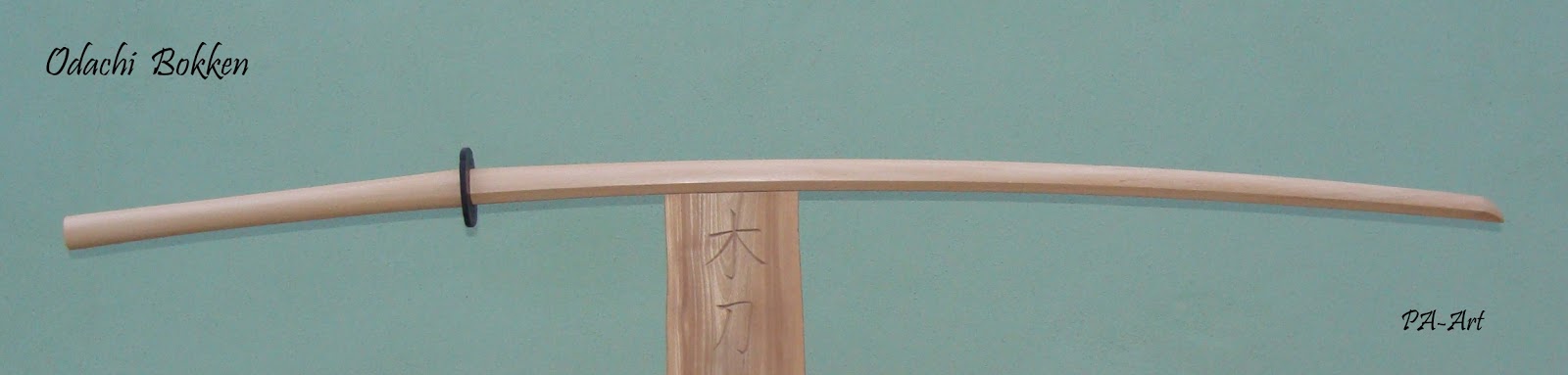
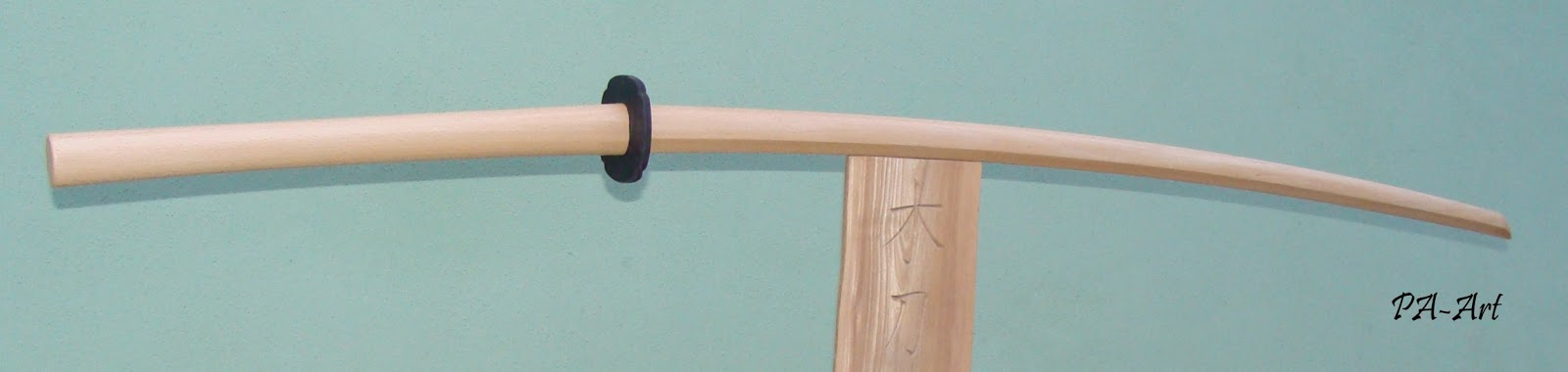
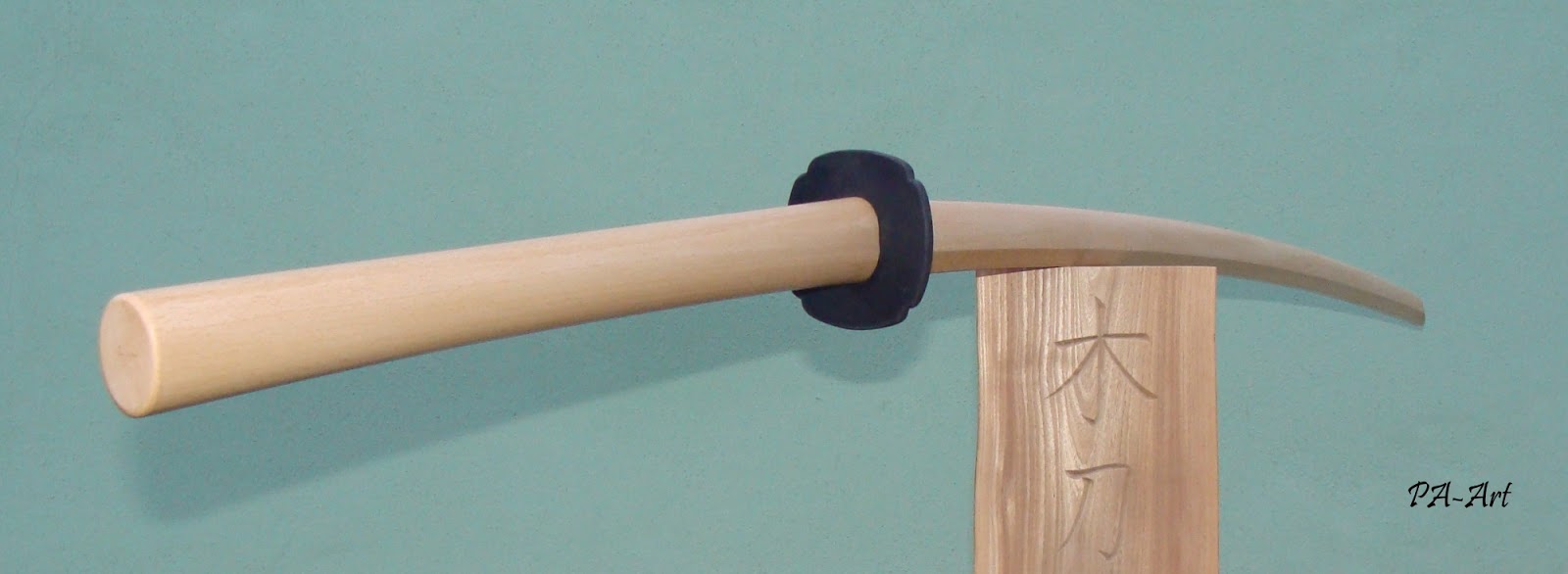
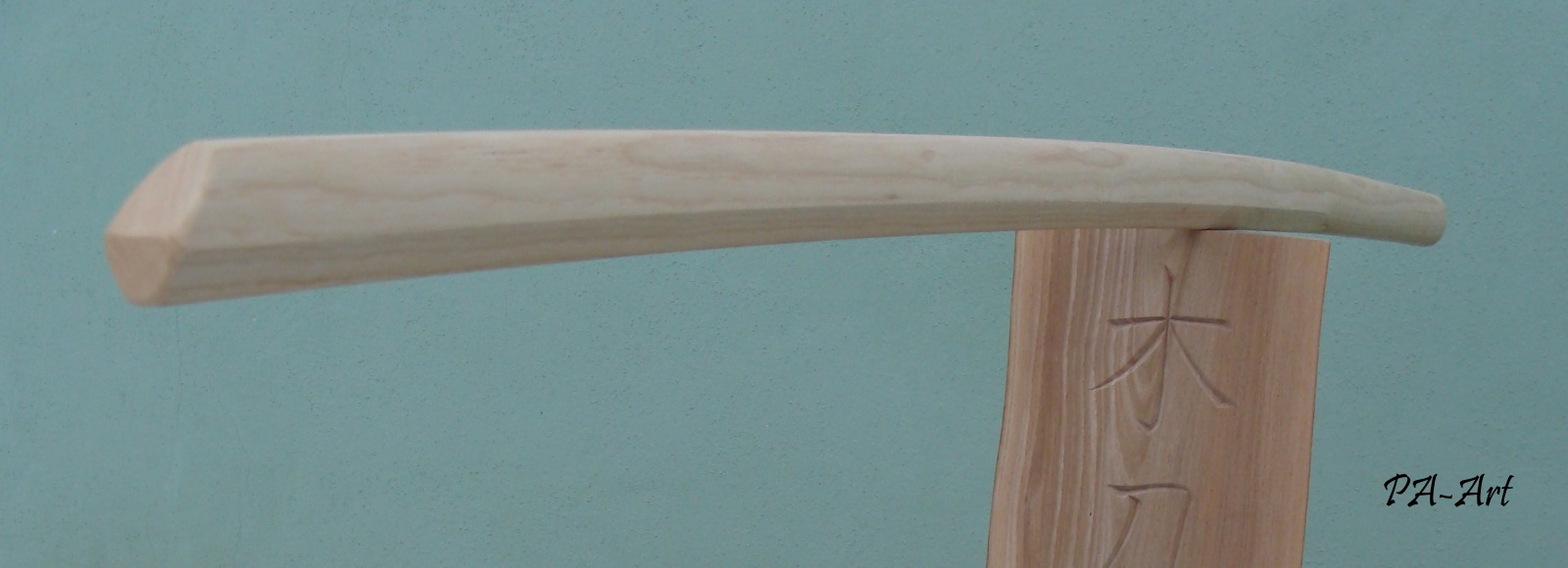
Here it is another Koryu bokutou, this time Shinden Fudo Ryu,

made in original dimension in exchange informations with some people who know a lot about this ryuha. This bokken is from mautin Ash tree, very strong and heavy, comon Ash is not good for bokkens but this one is strong and have nice texture.
In my research of old koryu bokuto's this is this is third Ryuha and first attempt of old Shinden Fudo bokutou, so with new info I may change some details.


They Read My First E-book?

From Shiro Kuma by kumablog

Published in 2014, it was well accepted in the Bujinkan community. Here what some readers thought about it:

If you want to have an insight of the path of one of best student of Soke: Kuma クマ, don’t hesitate, go for it ! it is a kind of privilege as well as a real pleasure to read this book and have the opportunity to get a glimpse of a life of a true master!
Dick O.

I wish I had read it a couple of years back. This book gives some interesting edges to learning and commitment. Be budo, climbing, new language, … Whatever- a truthful approach. Add the budo specifics around the genesis and the motivation, and it makes a very compelling read.
Gilles T.

As a long-time practitioner, teacher and Dojo owner, I was impressed by Arnaud’s experience, sense of humour and ability to translate the many insights that Japanese Budo training offers the world. He embodies the Martial Spirit very well through his stories of Japan and the culture. He also gives many valuable technical points to those who have been on the martial path for either three months or three decades. I highly recommend this book to any student or teacher of Martial Arts!
Todd N.

We are fortunate to have someone like Arnaud write this book. There’s a lot of older texts but nothing really recent. Not only is he one of the foremost practitioners in the art, but the dude can write well. I was afraid I would get bored, but that wasn’t the case.
If you’re in the Bujinkan or even just a practitioner of budo, you should read this book.
Clayton

FULL OF USEFUL INFORMATION. A MUST READ.
Roy P.

E-book en Espanol https://amzn.to/2R6JFgl
Livre en Francais https://amzn.to/2GVAGtF

Happy new year to the Bujinkan!

From Shiro Kuma by kumablog

We did it! A few days ago we began a new year of Bujinkan training.

I wish you all a Happy new year, full of success, good health, and improvement.

To help you all, I give you FREE access to http://www.koimartialart.com.

Click here: https://www.koimartialart.com/p/free-all-access until the 10th of January.

Take this opportunity to review your basics, waza, and weapons. It will not replace actual training, but help you learn faster.

Click today, and get your FREE access:

https://www.koimartialart.com/p/free-all-access

This new year is the chance to make a positive change in your dōjō.

Here are a few “new year resolutions” that you might wish to follow:

  1. In 2019, I want to train more regularly, every week.
  2. In 2019, I want to study more, to understand the beauty and depth of the Bujinkan martial arts.
  3. In 2019, I want to respect my sensei, my many senpai, and be an example to every kohai of my dōjō.
  4. In 2019, I want to be a better practitioner in every aspect possible.
  5. In 2019, I want to do my best to go to Japan and train under Sōke. And if I cannot go to Japan, I will join seminars with people that are training in Japan.

Happy new year to all. Thank you for your endless support.

Shiro Kuma…

original Kukishinden Ryu bokuto, Koryu style

From paart budo buki by buki stolar

Dear Budo friends,

this year comes to end, so here is one of my last projects on which I work for long time. 
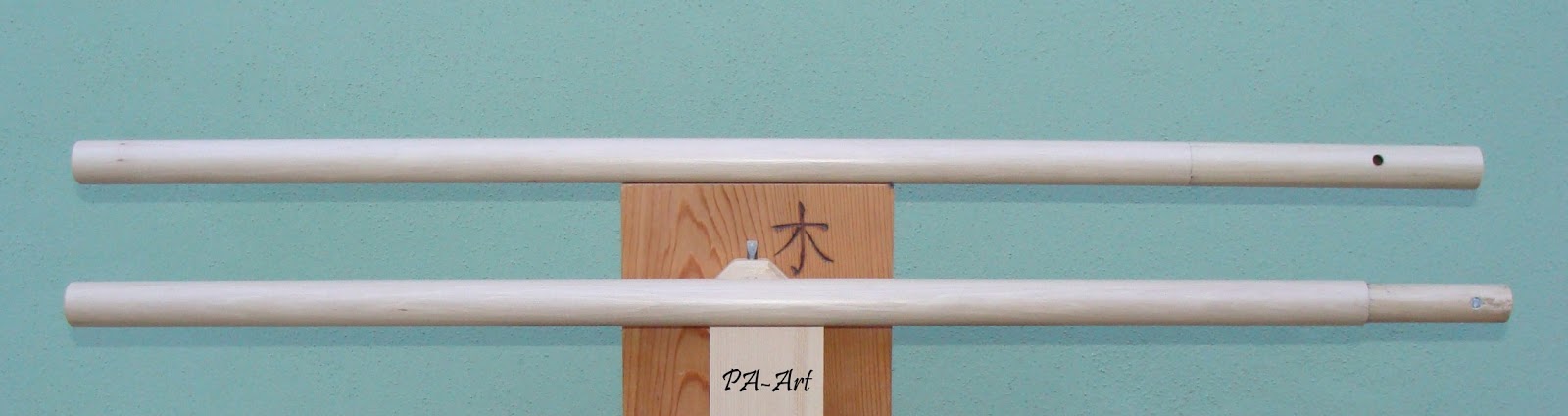
I was try to colect informations about this Kukishinden practice sword and make replica for all who may be interested to have original Kukishinden Ryu bokuto as some kind of conection with old days and this specific Ryuha.

Bokken was made from heavy euroean oak and is traditionaly oiled.


Listen To Your Nuts!

From Shiro Kuma by kumablog

lotus
Dear follower of the Kumablog,
I take this opportunity to wish you all, all the best for the Holiday season. Whether you are a believer or not, this moment of the year is unique for a majority of humans. In Japan, it is a big thing, even though they are not following the same religious beliefs.
I don’t know for you, but in 2018, the year of the earth dog, has seen quite a lot of changes, some good, and others not too much. But that is what life is about.
On the Budō side, the year of the earth dog was about Mutō Dori and control, we learned a lot. This is ending soon and a new year of study with the earth pig is beginning in a few weeks. I see it as a lucky sign for me, as I am an earth pig myself. I wish the best for you and your family. (1)
It was Christmas yesterday. I thought I could share a few ideas around the word “Christmas” seen from a Japanese perspective. It might also help you pave your Budō path for next year.
Depending on the kanji, “kurisumasu” means “Reveal the true self.” And “Dive deeper in emptiness.”
How does the sound “Christmas” which is “クリスマス,” “Kurisumasu” in Japanese, can have those two meanings? Easy!
For a Japanese “Kurisumasu” is also “Kuri + Sumasu.” (2) (3)
We can translate into “Listen to your nuts!” Which I understand as “meet your inner self.” So a new year resolution for 2019 could be “Be more open and don’t only rely on the shell you have built all these years.”
When you read it as “Kū + risu + masu.” It becomes “the growing fracture of emptiness.” (4) (5) (6)
Since we are in Mutō Dori we study the concept of “Zero,” and we keep progressing towards the centre of the centre. It reminds us of the Gyokko Ryū concept of “Kūki no Naka ni no Kūkan.” Or to “find the emptiness in the middle of the empty space.” (7)
In his book (8) (9) Sensei writes that the Gyokko Ryū is the origin of Japanese Budō. It makes sense. So prepare yourself and make 2019, a year of profound transformation and introspection.
In 2019, listen to your nuts! And come back to the training after your holiday break.
Happy Holiday to all!
______________________________________________
  1. https://www.yourchineseastrology.com/zodiac/earth-pig.htm
  2. 栗, kuri: Japanese chestnut (Castanea crenata)
  3. 澄ます, to clear; to make clear, to be unruffled. To look unconcerned; to feign indifference; to look demure; to look prim; to put on air; to strain (one’s ears). To listen carefully
  4. 空, kū: shunyata; emptiness. The lack of an immutable intrinsic nature within any phenomenon. (the) Void
  5. リス, risu: fracture
  6. 増す, masu: to increase; to grow
  7. 空気の中に空間, Kūki no Naka ni no Kūkan: find the emptiness in the middle of the empty space.
  8. Unarmed fighting techniques of the Samurai, Hatsumi Masaaki, Kodansha edition
  9. https://www.amazon.com/Unarmed-Fighting-Techniques-Samurai-Masaaki/dp/1568365322/ref=sr_1_1?s=books&ie=UTF8&qid=1545735722&sr=1-1&refinements=p_27%3AMasaaki+Hatsumi


Hatsumi Sensei Tells Us to Study the 空気 Kūki

From Bujinkan Santa Monica by Michael

My study of 空気 Kūki on the train platform
Advanced Bujinkan training is a mysterious path. It’s not often that Hatsumi Sensei reveals what he himself is studying, or even that he tells us directly what to study. So when he does, we should listen.

In a recent Friday night class at the Bujinkan Honbu Dojo, Soke told us we were continuing to study 真剣白刃捕 shinken shiraha dori. This is catching a live blade. He demonstrated this against various swords, knives, and even the rokushakubo.

But what happened next was a surprise to all of us. Nagase-san stabbed at Hatsumi Sensei with a knife. Without touching him, Soke waved his hand through the air and the knife fell to the floor. Nagase next lost his balance, stumbled, and dropped one hand to the mat to catch himself.

Soke told us, “全体くる意気 zentai kuru iki,” or, that we should take his whole spirit like this. Easy for him to say! But how do we begin to understand this type of training?

From the outside it appears fake. I completely understand someone who watches this thinking that it would never happen to them if they stabbed. But from my own experience, when you attack Soke, he takes away your will along with your weapon.

Hatsumi Sensei knows how critical this is. He told us,
“This moment is important. Because in just one moment you die. It’s kukan. It’s 自然力 shizenryoku."

Shizenryoku is the power of nature itself. What force of nature can we use? What can we draw on inside the dojo or out?

We have the empty space, the 空気 kūki, the mood in the moment, or just the air itself. Hatsumi Sensei uses that in every movement. And the results are always surprising. I wrote before about how to fill that empty space with 空き Aki

After I watched Nagase-san get disarmed without being touched, I assumed this was a one time thing. I felt lucky to witness it. But Hatsumi Sensei did it again in the Sunday class!

He once told us teachers not to teach, and I think he follows that rule himself. But he is working on his own training in every class. So when he told us what to study I was listening closely,

“Wrap him up in the 空気 kūki. That’s everyone’s study from now on. That’s good enough right there. 全体まあね空間でら Zentai mā ne kūkan de ra. The whole has to be in the space. Practice that.”

I think that should give me a lot of homework when I get home to my own dojo. I expect to surprise my students with this. And my own surprise will be in the discovery. I will do my best to follow Hatsumi Sensei’s example.