Skip to content

Shakaiteki no Budô?

From Shiro Kuma's Weblog by kumablog

In the plane to Tokyo I thought a lot about our motivation as budo practitioners. I have been travelling to Japan many times and I did some math and figured out that I spent over 1000 hours to fly there!

These 1000 hours represent 44 days of my life, a month and a half in a tin can. And this is only the travelling to Japan. Every week since 1984 I train/teach for an average of 10 hours a week. This is nearly 15000 hours of training (or about 600 days, 20 months) and this doesn’t include my 17 years doing Jûdô…

So why are we doing that?  We know that the knowledge acquired during those numerous hours of training will never be used in a real life and death situation; but still we keep spending money and time for it. Why?

Honestly I do not have the correct answer or conversely I have many. So even if I see it as some kind of addiction, I trust that this is the best way to develop ourselves and become better humans.

Addictions are bad except if they reveal something extraordinary and this is the case for the Bujinkan arts. This is why I am worried to see that modern practitioners do not seem to have the same commitment I have put in my training. There is nothing wrong about it but then why do they train if they don’t commit fully?

With the spread of those virtual tools such as facebook, tweeter, etc we get more virtual and less real. Maybe is it a trend of our society but if people are more into virtual action why do they come to the dôjô. I have been wondering a lot recently about it. In some dôjô, training is not the main thing, the real thing is the social gathering. Social gathering is always fun and I enjoy it once in a while but never during classes as in the dôjô, training should be the only motivation together with learning an old philosophy of life.

The Bujinkan is not a  ”shakaiteki no budô”  社会的の武道 i.e. a “social budô”, it is a “seimei no budô”  生命の武道 i.e. a “budô of Life”.

In Japanese “shakaiteki” means “social”. It is a mix of “shaka” (public) and “iteki” (barbarians). For the Japanese a “barbarian” is an uncivilized person (cf. gaijin). Therefore and playing with the japanese sounds, I invite you to transform this “shakaiteki” 社会的 into “sha ka iteki” 汝貝夷狄 where sha is “you”; kai is “shell, protection”; and iteki is “barbarian”.

Discard the social budô and train a Sha Kai Teki no Budô, a “budô protecting you from losing your civilized education”.

A “seimei no budô” like the Bujinkan is something that gives more values and more meaning, not less. And this require a true commitment and a lot of efforts (sei is “the nature of a person”; Mei is “clarity”). Recently in a class, speaking about the theme for 2012, Hatsumi sensei said we were learning “jinryû no kaname wo mamoru” which can be understood as “protection is the essential point of human spirit”. So protect yourself and others (kai) and become the man you really are. Through the practice of Bujinkan martial arts unveil your “sei mei” 性明 your “true clear nature” and become able to walk proudly as a human being controlling his destiny (sei, 制 - control; mei, 命 – destiny).

Don’t miss this chance, and train when you are on the mats because if not, everything you have done so far would have been in vain.

PS: Concerning the hours in the “flying tin can”, never forget that time is an illusion and that only the path matters! And it gives me a lot of time to think… ;-)


Path to the Heart of the Flower (II)

From The Magick & The Mundane » Bujinkan by Shawn Gray

In Part I of this article, I wrote about how I became involved in Japanese martial arts and the reasons for my growing interest in all things Japanese. I arrived in Japan in August 1990, the 45th anniversary of the dropping of the atomic bomb on Hiroshima. My 1st month in Hiroshima was a time of adjustment – and many social faux pas (which continue to this day!).  In time, I took over the majority of English classes offered by the small English school where I was working, which was run by an American Christian missionary and his family. In fact, I myself had come to Japan on a “religious activities” visa, sponsored by an American missionary organization and the small country Baptist church in which I spent most of my youth. The church had a history of almost 200 years–and I was its 1st ordained missionary. :-)

I still hadn’t realized at the time what a monocultural environment I had come from. Most of the people who lived in the rural Canadian province where I was raised are of Anglo-Saxon descent-there were very few people of other ethnic and cultural backgrounds (although that has changed a lot in subsequent years, from my understanding). But for me in the 80′s, I knew almost noone who wasn’t a White Anglo-Saxon Protestant. There was one Black girl in my elementary school (who had been adopted by a Caucasian family), and the 1st Asian person I met was when I was around 15 years old. The 1st Japanese person I met in my life was when I was 19 years old, a few months before I left to go to Japan. She had married a French Canadian man in the city where I started college, and keen to talk to our anthropology class about Japan. When she found out I was about to go to Japan, they invited me over to their home for dinner. Wow–a real-life Japanese person! How exotic! (And Buddhism, wow – you mean there’s more than one way to look at the world?? :-)  )

Now I was on Planet Japan. People still had 2 arms and legs, but so many things were so very different from the small country town where I grew up. But I was open-minded and hungry for knowledge and experience -I began to carry around a dictionary and notepad with me wherever I went. When I heard something I did not understand but sounded useful, I would either look it up on the spot, or make a note of it to look up in the dictionary later. I would try to do this with at least one or 2 words per day, and then use those words in real situations as many times as possible that same day. This is how I learned Japanese. I never studied the language in school.

The summer in Hiroshima is unbearably hot-especially for Canadians. I grew up playing ice hockey on frozen rivers. Here, temperatures were in the high 30s centigrade, but the worst thing was that humidity. By 8 or 9 o’clock in the morning, you were already covered in sweat. I got used to walking around with my clothes sticking to me like what felt like “saran wrap.” Not the easiest thing to get used to. The weather very slowly began to improve by September, and since I was now into the swing of things with my work schedule, it was time to get my Japan martial arts training under way.

Through my karate instructor back in Canada, I got the contact details for the closest instructor in my style (Chito Ryu). Kanao Sensei lived 2 hours away by train, in the city of Fukuyama. Since that was too far for me to travel in time for regular weeknight classes, he agreed to meet me on a weekend. His cousin spoke some English, and was the facilitator for our 1st meeting. Kanao Sensei was a 4th Dan at the time, which in our style meant that he was a senior instructor. There were no easy black belts in our style. In fact, if you weren’t Japanese, you weren’t even allowed to get a black belt in Japan in Chito Ryu.

Kanao Sensei graciously agreed to teach me on the weekends. I would take the train two hours to Fukuyama and he would teach me at his home, in the garden behind his house and in his car garage if the weather was bad.  Sometimes I would stay overnight and we would train both days. We did a lot of Kata training, and a lot of Makiwara training, which involves punching a target over and over, and over and over, and over and over, hundreds of times. For untrained fists like mine, the target, a post or tree, was wrapped with rope made of rice straw (Maki = to wrap; Wara = straw – sometimes thin boards were substituted, as shown in the photo below). After a few dozen strikes, my tender knuckles would split and begin to bleed, and after a few hundred repetitions, the straw rope would be covered with blood. Sometimes this was followed by knuckle push-ups on the concrete floor of the car garage. Kanao Sensei didn’t seem to mind getting my blood on the floor of his garage, and I would often go back to Hiroshima with my knuckles covered in bandages, which made for great conversation in my English classes the following week. Call it masochistic if you will, but it certainly did foster a spirit of determination, focus, mental control, and perseverance.

Kanao Sensei worked at the Fukuyama City post office, and without really realizing what was happening, before I knew it I was postmaster-for-a-day, and was interviewed by the local media, appearing in the local newspaper (photo below – Kanao Sensei is on the far left). There weren’t many foreigners around those parts in those days, and it appeared that they found me to be just as exotic as I was finding everything about this new country to be. It was quite an experience for a 19-year-old with only half of a college education, from a town of 3,600 people on the other side of the world, and as life goes, it was shaping my future much more profoundly than I could have guessed at the time.

Having now become used to my work schedule, and having established a relationship and training regimen with Kanao Sensei, the next thing to do on this great adventure was to track down Masaaki Hatsumi, the legendary ninja master. I say “track down” because it was still before the Internet, and ninja masters were not advertising. I had no address, no phone number, no connection with anyone who was training with Hatsumi Sensei. All I had was a couple of books by Stephen Hayes, and the only location mentioned in the particular books that I had was the historical region of Iga, currently known as Iga-Ueno, in Mie Prefecture, about 6 hours by train from where I was living. And so, once my schedule allowed it, in October of 1990, I set out for Iga in search of Masaaki Hatsumi.


Great Kihon

From Shiro Kuma's Weblog by kumablog

When one begins to walk the path of Bujinkan Budô he is often puzzled by the apparent complexity of the system taught by Hatsumi sensei.

This apparent complexity only fools the one believing in the world of manifested illusions. As we know ninjutsu is genjutsu, i.e. an illusion itself or better said an ability to see through the illusions surrounding us.

In fact, from the outside, the Bujinkan is similar to a giant tree with roots hidden in a deep past far away from our daily concerns and understandings. This huge tree digging its roots deep and far has a common trunk which is the Tenchijin but the main branch is the Gyokko Ryû. The other main branches are important, too, but the Gyokko Ryû gives us the Kihon happô and the Sanshin no Kata which are the true fundamental technique of everything we study in the Bujinkan.

The Bujinkan has only one door allowing the practitioners to learn the other branches of the art and this door is the Gyokko Ryû. Back in 2009, sensei asked us to teach the basics to the beginners and this was including an extensive time of training the Ukemi, the Kamae, the Uke Nagashi, the Sanshin no Kata and the Kihon Happô.

In Japanese, the word Kihon consists of Ki – fundamental or 基 and Hon – true, book, main or 本. In fact, in Japanese there is a saying “this is the A B C” (korewa kihon desu) これは基本です。 The Kihon of the Gyokko Ryû are the true fundamental techniques of the Bujinkan.

Many practitioners never had the chance to study these fundamentals from the Gyokko Ryû extensively and at a certain point in their practice this lack of basics shows and prevents them from reaching the next level. This door, if avoided, will not allow you to reach all the branches of the tree.

Today the Bujinkan represents a big group of practitioners but this vast number is only an illusion of knowledge if the basics are not mastered. Training correctly is your responsibility and understanding the whole tree is your sole objective on the path. Many are lost on the path to excellence and no one except themselves can be blamed for that.

Remember what Aristotle said: “A great city is not to be confounded with a populous one.” please help us to make the Bujinkan a great martial art, not a populous one.

Arigato


潜 Moguri: Diving Into Infinite Courage

From Bujinkan Santa Monica by Michael

Racing Gravity, photo by cmaccubbin
There is a secret to 潜 moguri gata. It is of the deepest importance, yet is not taught. It is expected that the students find it for themselves, yet, how many do?

To confront death and enter. Diving down into the chaos of a moment in combat despite the danger of an upraised sword or hail of gunfire… Soke calls this 沈勇不動 chinyuu fudou, a composed and unwavering courage in diving. He compares it to a bird diving into water (more on waterbirds in moment...).

To nurture this courage we must understand the reality of what we are diving into. If we can grasp this meaning, we will understand it is more than blind faith or courage, but rather a strategy for survival and victory.

When we dive down we are diving into infinity of life and death contained in ourselves, in our opponent, and in that eternal instant. The instant that contains a swinging blade, but also is empty. The instant erupting with gunfire, but also forever silent. We are part of that same space.

One of my favorite poems captures this spirit in a waterfowl:

The Little Duck
By Donald C. Babcock
Now we are ready to look at something pretty special.
It is a duck riding the ocean a hundred feet beyond the surf.
No, it isn’t a gull.
A gull always has a raucous touch about him.
This is some sort of duck, and he cuddles in the swells.
He isn’t cold, and he is thinking things over.
There is a big heaving in the Atlantic,
And he is part of it.
He looks a bit like a mandarin, or the Lord Buddha meditating under the Bo tree.
But he has hardly enough above the eyes to be a philosopher.
He has poise, however, which is what philosophers must have.
He can rest while the Atlantic heaves, because he rests in the Atlantic.
Probably he doesn’t know how large the ocean is.
And neither do you.
But he realizes it.
And what does he do, I ask you.  He sits down in it.
He reposes in the immediate as if it were infinity—which it is.
That is religion, and the duck has it.
He has made himself a part of the boundless, by easing himself into it just where it
touches him.
There is a very big secret in that poem. When you enter with this knowledge, or even, this truth… You make a space for yourself in infinity in which you can be safe. The kukan expands to protect you.

I know this sounds very philosophical… and it is. But it is also what lies behind something as basic as 潜 moguri gata.


Keiko#02 TAKAGIYOSHIN-RYU with SHAWN GRAY

From Budoshop by BUDOSHOP.SE

Buy the VideoCD, click here!

76 minutes, 520 Mb for $11.99

Buy the full VCD here!

A seminar in Kaigozan Dojo with Shawn Gray from Japan.

The theme for this video is Hontai Takagiyôshin-ryu and Daishô. Shawn taught Ukemi, Ukemi applications, Takagiyôshin-ryû Oikakedori (Omotegata), Yui Gyaku (Omotegata), Onikudaki (Sabakigata), Fuu Setsu (Shirabegata), Gyaku Dori (Shirabegata), Gokuraku Otoshi (Mogurigata), Onibuse (Mogurigata), Inazuma Dori (Mogurigata) and various henka including wearing the Daishou (short and long sword).

Recorded in Stockholm, Sweden November 2002

Note: The instructions is in English and there is no sub titles on this VCD

About the instructor

Shawn left behing 10 years of Karate and Kendo to begin Bujinkan training in Canada after returning from a 1-year stay in Japan in 1990. After a training visit in 1995, he relocated to Japan permanently in January of 1997. Shawn passed the godan test in January of 1999, and in 2000 at the urging of Hatsumi sensei established a dojo, the first Bujinkan dojo in Japan led by a civilian foreigner. Shawn has regularly served as interpreter for Dr. Hatsumi and has translated much of Senseis writing into english. He has been regularly invited to give seminars in Europe , North America , and Asia.

More info about Shawn http://bujinkan.graycastle.com

Sample clip

About the download

Click here for more information about our download files and how it works!

JUPPO SESSHO with SHAWN GRAY (keiko5)

From Budoshop by BUDOSHOP.SE

Buy the VideoCD, click here!

65 minutes, 460 Mb for $11.99

Buy the full VCD here!

A seminar in Kaigozan Dojo with Shawn Gray from Japan.

This is the 4′th seminar with Mr.Shawn Gray at Kaigozan Dojo in Stockholm Sweden, and the second this year. This time he taught many techniques which he has trained in Japan since his last visit in March. Koteki Ryouda Juppou Sessho no Jutsu (the 2003 Bujinkan theme).

Ukemi, Taijutsu, Kunai, Kodachi and Kyoketsushoge.

Recorded in Stockholm, Sweden June 2003

Note: The instructions is in English and there is no sub titles on this VCD

About the instructor

Shawn left behing 10 years of Karate and Kendo to begin Bujinkan training in Canada after returning from a 1-year stay in Japan in 1990. After a training visit in 1995, he relocated to Japan permanently in January of 1997. Shawn passed the godan test in January of 1999, and in 2000 at the urging of Hatsumi sensei established a dojo, the first Bujinkan dojo in Japan led by a civilian foreigner. Shawn has regularly served as interpreter for Dr. Hatsumi and has translated much of Senseis writing into english. He has been regularly invited to give seminars in Europe , North America , and Asia.

More info about Shawn http://bujinkan.graycastle.com

Sample clip

About the download

Click here for more information about our download files and how it works!

JUPPO SESSHO with SHAWN GRAY (keiko4)

From Budoshop by BUDOSHOP.SE

Buy the VideoCD, click here!
69 minutes, 474 Mb for $11.99

Buy the full VCD here!

A seminar in Kaigozan Dojo with Shawn Gray from Japan.

The theme for this video is Koteki Ryouda Juppou Sesshou no Jutsu – (Kunai, & Basic Taijutsu). Shawn taught the first four Kunai Kata (Kiri no Ichiyou, Mizu-tori, Rakka, Mawashi- dori) from Koteki Ryouda Juppou Sessho no Jutsu (the 2003 Bujinkan theme). He also taught Taihenjutsu Ukemi, Sanshin no Kata and Kihon Happou applications and more. There is a bonus segment with the last and fifth kata, Gorin Kudaki by Mats Hjelm.

Recorded in Stockholm, Sweden March 2003

Note: The instructions is in English and there is no sub titles on this VCD

About the instructor

Shawn left behing 10 years of Karate and Kendo to begin Bujinkan training in Canada after returning from a 1-year stay in Japan in 1990. After a training visit in 1995, he relocated to Japan permanently in January of 1997. Shawn passed the godan test in January of 1999, and in 2000 at the urging of Hatsumi sensei established a dojo, the first Bujinkan dojo in Japan led by a civilian foreigner. Shawn has regularly served as interpreter for Dr. Hatsumi and has translated much of Senseis writing into english. He has been regularly invited to give seminars in Europe , North America , and Asia.

More info about Shawn http://bujinkan.graycastle.com

Sample clip

About the download

Click here for more information about our download files and how it works!

TAKAGIYOSHIN-RYU with SHAWN GRAY (keiko1)

From Budoshop by BUDOSHOP.SE

Buy the VideoCD, click here!

62 minutes, 438 Mb for $11.99

Buy the full VCD here!

A seminar in Kaigozan Dojo with Shawn Gray from Japan.

The theme for this video is Hontai Takagiyôshin-ryu and Daishô. On this video he shares what Hatsumi Sensei had been teaching so far this year. He taught Ukemi, Ukemi applications, Suwarigata, and seven basic techniques from Takagiyôshin-ryû, with various henka including wearing the Daishô (short and long sword).

Recorded in Stockholm, Sweden July 2002

Note: The instructions is in English and there is no sub titles on this VCD

About the instructor

Shawn left behing 10 years of Karate and Kendo to begin Bujinkan training in Canada after returning from a 1-year stay in Japan in 1990. After a training visit in 1995, he relocated to Japan permanently in January of 1997. Shawn passed the godan test in January of 1999, and in 2000 at the urging of Hatsumi sensei established a dojo, the first Bujinkan dojo in Japan led by a civilian foreigner. Shawn has regularly served as interpreter for Dr. Hatsumi and has translated much of Senseis writing into english. He has been regularly invited to give seminars in Europe , North America , and Asia.

More info about Shawn http://bujinkan.graycastle.com

Sample clip

About the download

Click here for more information about our download files and how it works!

Path to the Heart of the Flower (I)

From The Magick & The Mundane » Bujinkan by Shawn Gray

February 9th was the 20th anniversary of my first day of training in the Bujinkan. I mentioned it on Facebook, but was encouraged to write a series of blog articles about a bit of my martial arts history and how I found the Bujinkan and made my way to Japan to train with Hatsumi Sensei – to approach the heart of the flower that is Japanese martial arts, budo. I’ve always found it fascinating to hear stories of the adventures of my Sempai here (Mark Lithgow, Michael Pearce, Mark O’Brien, Andrew Young, and Mike L) and, now in my 17th year in Japan myself, I thought it would be fun to look back over the years, and in remembering, share some of that with the readers of my blog.

Black Belt Magazine – Feb 1984

Like many of us in Bujinkan, I was originally attracted by the ninja image. It was 1984, the same year that I started karate practice. In the small town of 3,600 where I grew up in Eastern Canada, there was a Chito-Ryu Karate club, which I joined after 9 years of ice hockey. I quickly came infatuated with Japanese martial arts and would frequently go to the magazine rack at the local gas station to check for the latest issues of martial arts magazines. It was on one of these visits that I found Black Belt Magazine, Feb 1984 issue. I was young. I was impressionable. I was hooked.

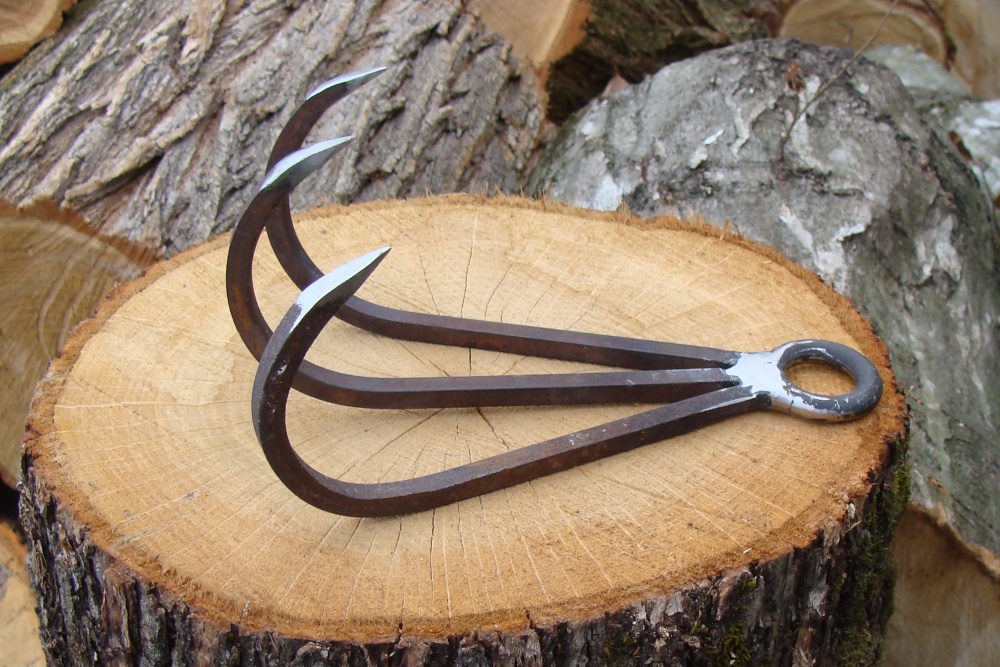
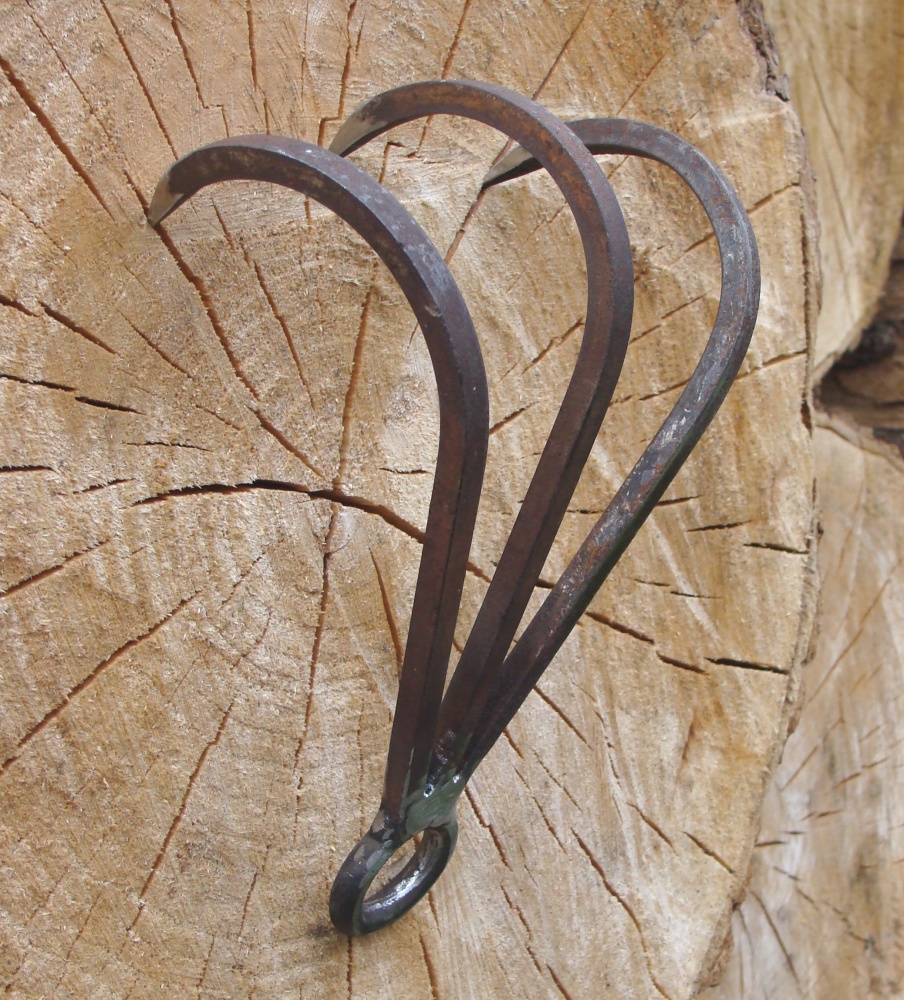
But how was a young New Brunswick lad supposed to access this ninja training? I was in junior high school. I couldn’t go to Japan. I couldn’t even go to Dayton, Ohio. But I could join the Shadows of Iga Society and Robert Bussey’s Warrior International as a correspondence member, so that’s what I did. I also got hold of some Japanese split-soled tabi boots and shuko hand claws and spent a lot of time running around in the woods climbing trees and sneaking up on unsuspecting neighbours and making blowguns from copper pipe. Luckily, I survived. Sometimes that rather surprises me.

I kept up with my karate practice quite seriously, entering and coming home with trophies from a number of provincial tournaments. I was invited to go to the Canadian national championship tournament, but it was held in Vancouver, 4,000km away, and I was in high school. I entered a local college and took liberal arts courses, and in my second year was presented with the opportunity to take a year off my studies and go to teach English in Japan. It was a dream come true, needless to say, and in August 1990 at age 19, I got on a plane and flew to the other side of the world, from a town of 3,600 to a city of 25 million.

I somehow managed to find the people that were meeting me at Narita airport. They had come by car to pick me up, and I remember that traffic was absolutely gridlocked all the way back to Tokyo. A trip that would take an hour by train took us six hours by car. After having already traveled through a 15-hour time difference in 24 hours, it seemed to take forever. We finally arrived at the organization’s Tokyo headquarters in Shinjuku, where I stayed for the first 3 days for an orientation program. Shinjuku is one of the major Tokyo metropolitan centers and one of the biggest train stations in the world, and having come from such a small town it amazed me that I had to look straight upwards to even see the sky. There were so many skyscrapers and so many people and so much concrete and so many wires and lights and sounds – I was at first afraid to even go exploring outside alone because I thought I’d get lost and never be able to find my way back (most of the streets in Japan don’t have names). The city seemed to go on forever. This wasn’t like visiting another city, or even another country. It was like visiting another planet entirely. Planet Japan.

Atomic Bomb Memorial, Hiroshima

After the 3-day program in Shinjuku finished, I boarded a Shinkansen high-speed bullet train bound for Hiroshima, where I had been placed to work as an English teacher. The ride took around 5 hours from Tokyo back then, I think (it might be a little quicker now). The train sailed along so quickly and smoothly it felt like I was riding in an airplane. I was going to be one of the first occupants in a newly-constructed apartment building that was going up near the place I’d be working, 30 minutes out of central Hiroshima by bus. Since construction wasn’t finished yet, I stayed in an apartment in downtown Hiroshima for the first month – right across the street from Peace Park, ground zero for the atomic bomb that had been dropped there 45 years before. I could see the famous bombed dome monument from my kitchen window, and would often go walk through the park to sketch, practice my haiku, or just people and pigeon watch. When I saw something interesting, I’d sketch it or write about it in a journal. (I didn’t blog it. I didn’t Facebook it. I didn’t Twitter it. It was pre-Internet, and life was good.) Peace Park also had an international cultural center where I could get travel and tourism tips in English, and also watch news on TVs with English subtitles. I remember taking the 30-minute bus ride in to Tokyo to keep up with the first Gulf War (the Bush’s first attempt at Hussein) on their TVs. They also had a library with a lot of English books about Japan – but you couldn’t check them out, you had to read them in the library. It was here that I discovered Japanese author, poet, playwright, actor and film director Yukio Mishima, and with my interest in Bushido, the way of the Samurai, I was fascinated to discover that his failed coup d’etat and suicide by ritual disembowelment occurred literally 2 hours before I was born. (The things that fascinate 19-year-old Bushido enthusiasts!) The library also had a copy of Yoshikawa’s Musashi, the life story of the famous samuraiwarrior. It was quite a thick book, and since I couldn’t take it home with me, I went back again and again, gradually working my way through it. I was completely enamored with bushido, the samurai code of honour.

One of my first memories in Japan, while settling into my English teaching schedule and still living across from Peace Park, was of one of my neighbours – an interesting American guy named Richard (no, that’s not him in the photo, that’s me, trying to teach English). After I’d been there some time, Richard announced that he was going on a trip to China and asked me if I’d look after his place while he was away. Turns out while he was in Hong Kong he found out that there was a film production looking for extras and he applied and got a part in the film. The movie was Kickboxer with Jean Claude van Damme. (Richard is the reporter who interviews “the champ” after the match right at the beginning of the film.) I wasn’t much of a movie buff and didn’t realize what a big film it was until later. I later moved out to my apartment in the suburbs and we eventually lost touch, unfortunately. I should look up his name in the movie cast members and see if he’s on Facebook. That would a riot. (I wonder if he signs autographs…) Another interesting memory was the time that he told me that he was going to be away for a couple of days to go talk to someone regarding a misunderstanding that he was having with a gangster who thought he was seeing his girlfriend. I was supposed to call the police if he wasn’t back in 2 days. I hadn’t even been in Japan a month yet and already I was making such interesting friends. :)

I soon got into the swing of things with my weekly schedule of English classes – class size varied, but I think overall I had 90-100 students per week. After the work schedule was sorted, I started getting to know my way around my new neighbourhood bit by bit and began to explore the wonderful, exotic treasures of Japanese culture: go,(the board game), sado (tea ceremony), shodo (calligraphy) and, of course, budo, Japanese martial arts. The first thing on my list for that last activity was to make contact with my karate sensei – and the next was to track down the ninja master Masaaki Hatsumi.

(To be continued in Part II…)