Skip to content

From 無刀捕り(Mu Tou Dori ) to 無闘捕り

From 術心悟 by Mats "Toryu" Hjelm

Having returned to Japan after spending some time training in the yogic arts in India, it is wonderful to see old friends and my martial arts master, Hatsumi Sensei.  How fortunate we are to be able to train with living masters, whose presence can be as a great fire.  In Eastern thought, fire is the element charged with the power of transformation.  It has the power to transmute the other elements and bring vast change.  Perhaps you have felt the fire of a great master?

The common Characters for Mu Tou Dori are 無 (not,no,) 刀 (sword) 捕り(to trap, catch) and is often translated as unarmed sword trapping/defense. It is perfectly reasonable  to translate it in this manner.  And in the beginning of our training journey, it is natural to be concerned with the dynamics and techniques of taking a sword unarmed. But as we progress on our path, and our feeling of the art deepens, perhaps our Mu Tou Dori couldImage transform to 無 闘 捕り。No Fight Catching.  A brilliant play on the Chinese characters by Hatsumi Sensei.

As we progress perhaps we should seek this Mu Tou Dori feeling in not only defense against the sword but as a guiding principle in our art and heart.  This idea of the Mu Tou feeling is essential part of Hatsumi Sensei`s teaching and one that is crucial for all practitioners to aspire.  From “No Sword Trapping” to “No Fight/Struggle” and perhaps we can change trapping to more of an image of enveloping or wrapping your opponent in that intangible yet undeniable presence or spirit.   When this takes root in you, it is as the dew drop that returns to the ocean.  You may start spontaneously dancing!


…

Masaaki Hatsumi: Dojo Art (Kickstarter Project)

From 8þ Kabutoshimen by Mats "Toryu" Hjelm

Masaaki Hatsumi: Dojo Art will be a professionally designed book of paintings and calligraphy by Bujinkan Soke, Masaaki Hatsumi.

This is a book in the planning by Steve Olsen, he is looking for people backing his book on Kickstarter. If he gets enough backers he will make the book, if not it won’t be a book. It is up to you if there will be one.

BACKGROUND

During break in his martial arts classes at the Bujinkan Hombu Dojo in Noda City, Japan, Hatsumi-Sensei paints for his students. He paints calligraphy and pictures. His art contains advice to his students and historical influence from the nine Japanese martial traditions he is the head instructor of

BOOK DESIGN

7504d495979ea290e9e6588215adb469_largeOur designer, Dan Saal, is a real pro. He’s an award-winning art book designer and he knows how to design beautiful books that bring the essence of topics to life. Dan’s sample layouts already look great and I look forward to working with him to finish the project.

For an idea of the quality you can expect, take a look at some of Dan’s work here:
http://www.studiosaal.com
http://www.studiosaal.com/awards.html

Support the project here… http://www.kickstarter.com/projects/1780878098/masaaki-hatsumi-dojo-art

The post Masaaki Hatsumi: Dojo Art (Kickstarter Project) appeared first on 8þ Kabutoshimen.…

Welcome to the Bujinkan Sweden Taikai 2013 in Gothenburg

From Bujinkan 40 Years in Europe by Mats "Toryu" Hjelm

It is with great pleasure that we announce that the Bujinkan Sweden Taikai of 2013 will be held in Gothenburg, October 19-20th. Especially since it is a sort of anniversary since this year it is 30 years since Bujinkan was established in a more formal way in Gothenburg.

The Taikai will be hosted by the two Bujinkan Dojos in Gothenburg, Bujinkan Seishin Dojo and Bujinkan Dojo Göteborg.

We are very happy to be able to present these great instructors to you.

instructors2013


 …

Kukishinden Ryū Happō Biken – article translation

From Wanderings in Budo by Mats "Toryu" Hjelm

九鬼神伝流八法秘剣

後醍醐天皇の守護についていた薬師丸蔵人隆真を始祖とする。後に功により九鬼姓を賜わった。棒、槍、薙刀、手裏剣、体術などの8法に剣術が加わる。剣が特に素晴らしい。当時は戦争の時代だったから殺人剣が多かったが、後に平和な時代になるとそれが活人剣になる。九鬼水軍が船の上で用いたため、腰を低く落として安定した構えが基本になった。

kukishinden 6

Kukishinden ryū happō biken

The founder Yakushimaru Kurando Takanao was a military governor (shugo) under Emperor Go-Daigo. The Kuki family name was an honour granted later. Kenjutsu is added to the eight methods that include bō, yari, naginata, shuriken and taijutsu. The sword (technique) is especially wonderful. At this time it was an era of war and many people were killed with the sword. Later in the period of peace it became the life saving sword. The Kuki naval forces worked on board ship so the fundamental became dropping the hips for a low stable stance.

Kukishinden 1

九鬼神伝流八法秘剣 Kukishinden ryū happō biken – nine demons divine transmission style, eight methods, secret sword.

The 鬼 ki of kuki is generally translated as demon, however could also mean spirit or ogre (read Oni), more importantly this does not have the evil connotation that the word demon in English (or Judeo-Christian languages) does.
Shinden can variously be translated as ‘teachings of the gods’ ‘teaching conveyed from the gods’ ‘transmitted to the soul’.
Happō can be eight methods, laws or principles, bearing in mind that eight can imply ‘numerous’.

kukishinden 2

薬師丸蔵人隆真 Yakushimaru Kurando Takanao

薬師丸 Yakushimaru – medicine man, chemical expert
蔵人 Kurando – keeper of imperial archives or a sake brewer
隆真 Takanao – noble truth – the same kanji can also be read as Takamasa, Takanori, Ryūma, Ryūshin and various others – as there is no furigana in the article to indicate the pronunciation I’ve left it as Takanao.

kukishinden 4

守護 Shugo – military governor in the Kamakura and Muromachi period

kukishinden 3

後醍醐天皇 Go-Daigo Tennō – the later or second to bear the name Daigo, equivalent of saying Emperor Daigo II. Tennō – heavenly emperor/Emperor of Japan. Lived 1288 – 1339 and reigned from 1318 – 1339.
Go-Daigo in 1336/7 (transition from Kamakura to Muromachi period) set up the southern court and so began the period of two courts Nanboku-chō (Southern and Northern)

1185 – 1333 鎌倉時代 Kamakura jidai
1333 – 1336 建武の新政 Kemmu no Shinsei
1336 – 1573 室町時代 Muromachi jidai
1336 – 1392 南北朝時代 Nanboku-chō jidai (a subdivision of the Muromachi)

kukishinden 5

The lineage chart shows Kukishinden ryū, originating with Yakushimaru Kurando, passing through Ōoka Kihei Shigenobu to Ishitani Matsutarō Takakage who then passes it on to Takamatsu Toshitsugu to arrive at Hatsumi Masaaki. Note here that in the Japanese article 大岡鬼平重信 Ōoka Kihei Shigenobu is written – usually this person is 大国 Ōkuni Kihei Shigenobu – this may be typo from when the chart was edited for the magazine…

hiden togakure kukishinden genealogy


…

Tanjo

From Paart Budo Buki by Mats "Toryu" Hjelm

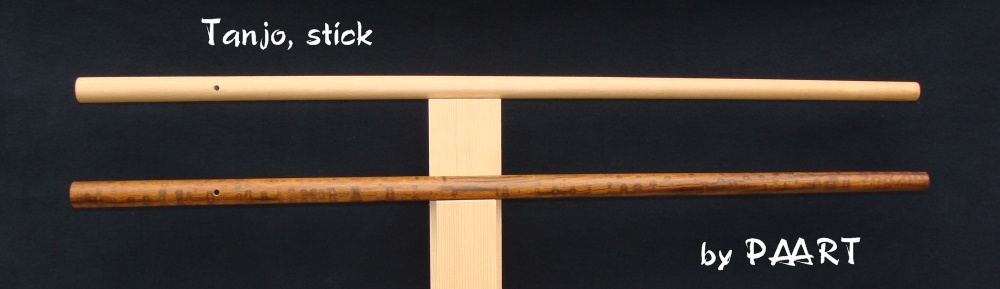
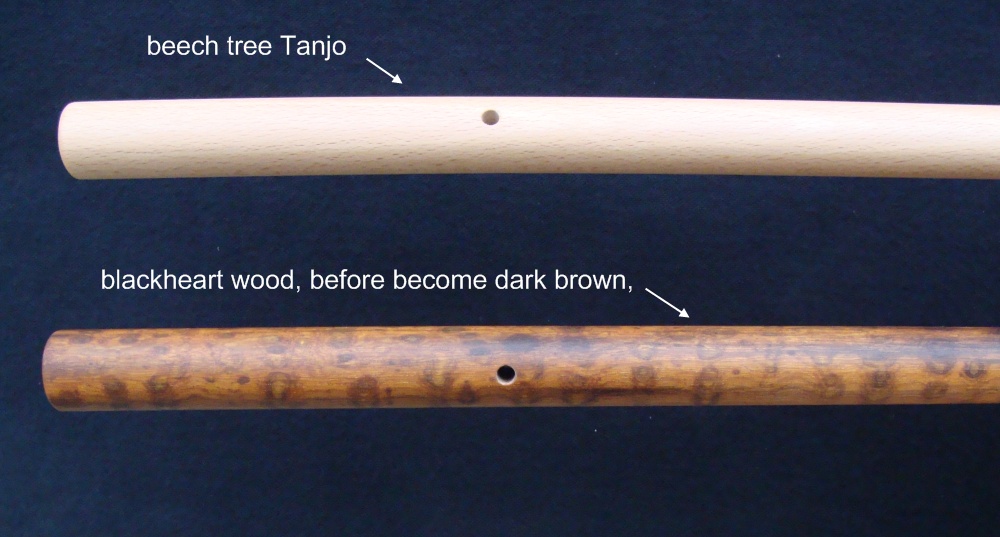
Tanjo stick,

tanjo is something between walking stick and police baton, I think, 
if you have more info about it you could send me, I will publish it here,


may look like Hanbo, but those who know more about it, say that this is the original look, 
tapered shape with a hole in the handle area


…

Bu Jin Ken

From Paart Budo Buki by Mats "Toryu" Hjelm

Hi to all,

instead to replace pictures on older post,  here is new post ;-)

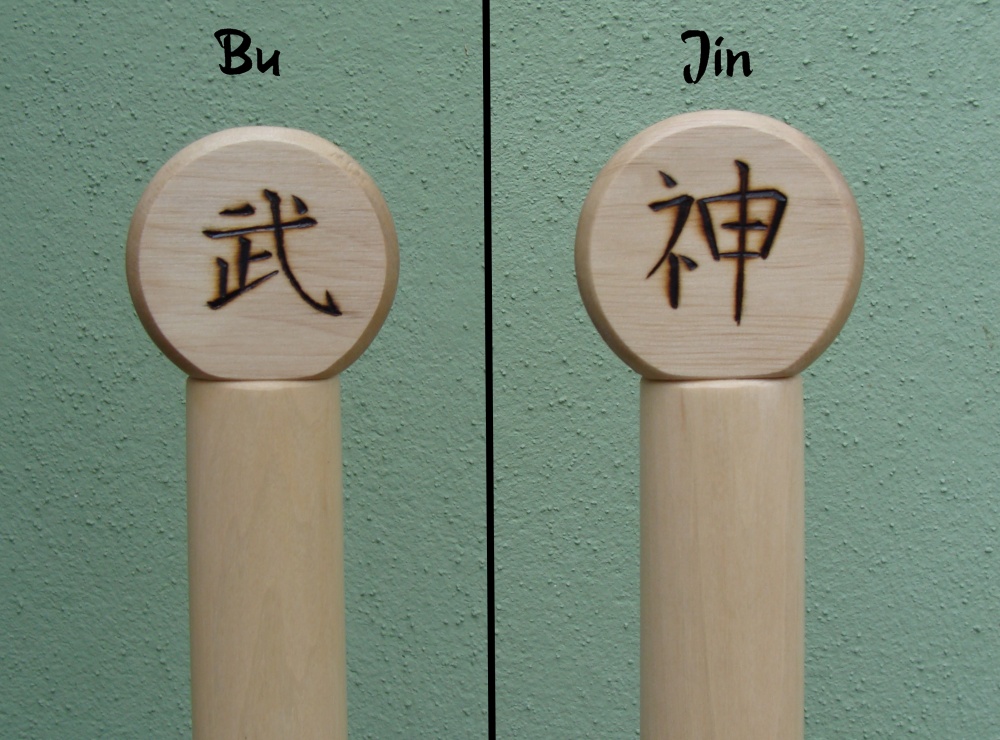
this is final look of Ken below,
sens this is Soke's design I put Bu Jin Kanji on it, hope that you love it

it is same Ken from Tachi Ken bokken post but this was final touch


…