The specialties of the historical Togakure Ryu was the use of a four-pointed throwing blade known as a SENBAN shaken (shuriken) Size of this rubber Senban is identical to my metal one, also come in two different thickness of rubber plate for now few pics
Here is new pics of my Hira rubber shuriken's to satisfyeveryone'schoice, it is possible to get them inseveral thicknesses(size is also possible to change), my standard 4 mmthickareenoughifthrow them onyourUke, but if you docertain techniquesof hittingorstabbingwithShurikenthenyou need somethingthicker, such as6 to 6.5mm thick, this thicker are also good for longer distance or more realisticfeelingevasionofshurikenflyingtowards you, perhaps evenmetalbutblunt. My recommendationis always, get yourself adifferent (if not size)thicknessfor alltypes of training, only one speciesis not enough. so here they are,
One of the rareandsimpletools from theNinja's arsenal isTeppan, which translated meanssquare plate. I have notin detailinvestigatinginformation aboutthistool, but when Ilearnedmore, I'll put all info about them here. For now,I know itcan be used asShaken(Shuriken), meansto throw, used forhittingandblockingblades. Couldbeused whileclimbing(inserting into small cracksorgaps on stone or wood), if you knowthe properway, it can be tiedtoend of the rope, ora belt, and soyou geta toolsimilarKusarifundo, but Idid not say that toyou, right : )
but generally,onlyyour imaginationlimitsthe use of thistool, ANY TOOL,
if you are real Budoka remember that.
Below is few picture ofTeppanmade of black rubber, for training, normally. I recently found themina box inmy workshop, so if someone like to have it, could contact me by e-mail, likeall other equipment whichIusually do,hereisalsothe option of customize, by your needs anddimensions, Dimensionsvary,because of this I make them intwo sizesandtwo thicknesses, you'll be ableto seethat on pictures.
In this way,everyonecanadapt to his needsduringtraining.
This summer like most summers we train a lot more with long weapons since the dojo is too small to really use long weapons properly. This summer we train Bojutsu against Kenjutsu (long staff against sword). I think I teach and train a little different than most Bujinkan teachers out there, but I can’t really say maybe there is those who approach the training like I do. Let me explain.
Kote haneage followed by Haneage
First of all you learn how to use the staff, spinning and striking etc, this is mostly solo-training. Then you learn the Keiko Sabaki Kata(movement practice techniques) in my dojo we only practice one technique for the whole two hour class. Some students really have problems with coordination, others capture it quicker. In this first step I don’t mention distance, timing or anything except which strikes and blocks to make. This can also be solo-training and done alone against an imagined opponent.
Second I take the sword and we focus on how to handle the situation the best way with a sword. If he is attacking me with the staff I immediately counter him by stepping forward. I’m not gonna step backwards defending myself all the time, when he steps in to strike me in his preferred distance out of my reach; I boldly step in at the same time and block the staff and get even closer into my preferred distance so I can cut him with the sword. As I see it this is the only chance I have against a longer weapon, there is no point of running backwards.
Catching the staff and Tsuki
Thirdly I take the staff again. I attack the kenjutsu-ka fully (not really, but almost) and make sure he does a good block, and as he block I don’t stay frozen or try to push harder on him. As I strike I’m already prepared for the next movement when he comes in and try to cut me, I move out to my distance and do the next strike.
Then I take the sword again and try to avoid being hit from this point in the technique, by blocking and countering again. I’m not really gonna give up or run away. If I can cut I will cut.
Then again I take the staff and try to deal with this really difficult opponent, I avoid his cut and counter him until the end of the technique where I make it impossible for him to do anything. Then the technique is finished without changing the sequences of the strikes, the only thing that is flexible is the distance and the timing. And this is where the true training comes in.
Then at the end of the class we record a short demo to video which will be available for download later. This is how we spend our two hour trainings at Kaigozan Dojo this summer.
No henka, no variations, true to the technique.
Kote haneage as he try to cut my left arm
I always thought quality is better than quantity. It is amazing how cleverly these techniques is made up, it is so much more than executing the strikes rapidly against a rather passive opponent. If the opponent (sword-guy) is good and understand how to use the sword there is really not many options to change the technique and do something different, the possibility for henka becomes very narrow, what you can change is very small details. For me this is what henka means, you failed your initial technique and need to adapt because of miscalculation.
I know there are those out there only doing henka-training, but how do you do henka training only, henka of what? If you try to train yourself into intuition without basic foundation you are doing something I don’t understand. You weren’t born out from nowhere, someone did something very basic with someone and you was born. How do you henka anything into existence?
Victory ending of the technique
If anyone is interesting I’m doing three more one day Bojutsu mini-seminars this summer.
I’m doing a series of focus trainings on ROKUSHAKU-BO-JUTSU this summer. Four trainings is scheduled from June to September. For more information see the Kaigozan Web site, and the Facebook event page.
If you have problems with the Swedish and want to attend, please contact me :-).
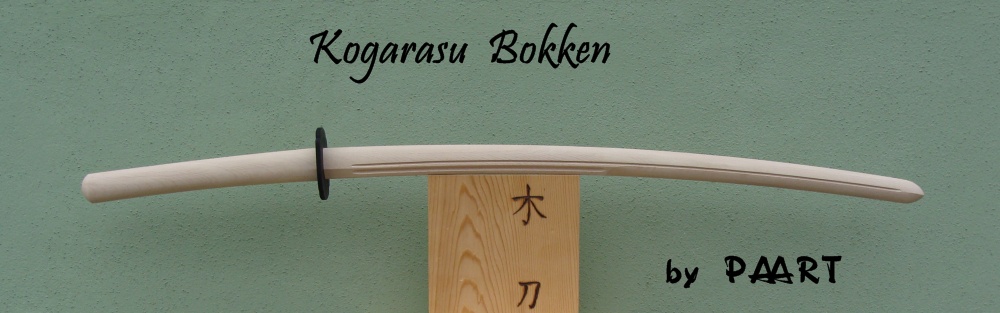
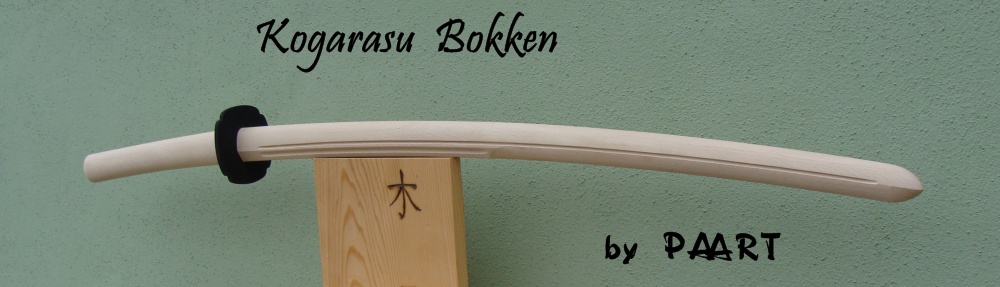
this isone of my last experiments, this year's Kensworda major theme in Bujinkan and forKogarasumaruswordsay it's kind of a"bridge" betweenKenandTachi, so if you're interested,what is the feeling, let me know
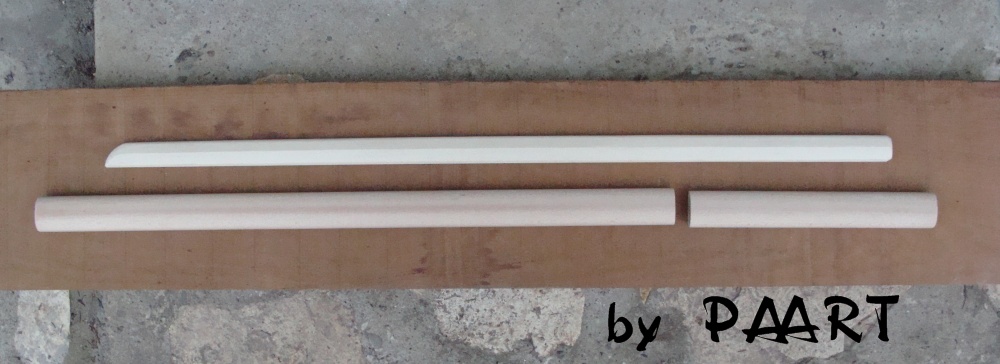
here is basic Shikomi katana, in natur version, this is not version in classic round stick, is made from beech wood and blade is made ofverydurablehornbeam wood, for more info send me e-mail
If you don’t understand this, I question your whole reason for training martial arts! We are supposed to be role models and smarter than common people, at least that is what we are telling each other with varying confidence. Most people in Bujinkan seems to be caught up is some kind of romanticised imagination of being some kind of ninja warrior, far from today’s reality. It is fun dreaming away fighting with swords and shurikens. We talk about defending against what can not be seen, but have you even thought about what that means?
I don’t like to bring in politics and religion into training because we are all free to believe what we want. But when the politics stray from democracy and becomes tyranny I have to speak up against it. It is easy to see what is happening in USA with all these crazy events. I’m not talking about the two brothers bombing the Boston marathon, I’m talking about the media blowing things out of proportion scaring people and 9000 police army closing a whole town busting into innocent people’s homes taking away their constitutional rights. At the press conference the police say that we should not look at any other pictures than those they approved, telling us to only trust them. Now media is criticising themselves for jumping into conclusions and imply that in the future they will stick only to the official story without questioning. To me that is a strong sign on tyranny taking over.
You must understand that there is a lot of money to be made keeping people scared, just follow the money and you will understand.
And now we got CISPA coming, Obama said he will veto it, we’ll he said that about NDAA (indefinite jail without court or jury!) to and then signed it anyway New Year’s Eve 2011/12 in “secrecy”…
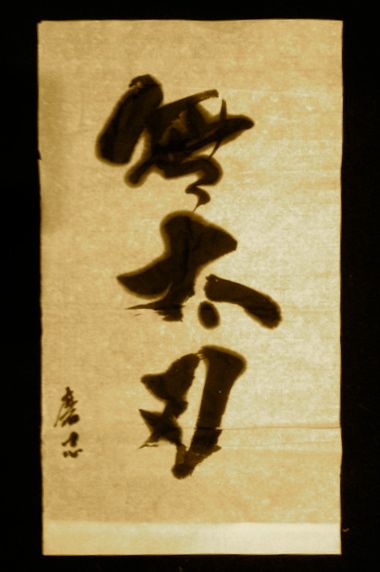
If you practiced martial arts or zen, perhaps you recognize these Chinese characters. The first one, Mu is a negative and can mean among a vast array of meanings, nothing, not, no, nothingness and more. The second and third characters are a pair, pronounced Tachi, meaning just that, a Tachi is a type of curved sword usually worn hung at the waist blade down that was used during the warring periods in Asia.
This year in our martial arts training we are exploring movement while wielding a Tsurugi, another type of double edged sword that predates the Tachi. But notice the emphasis is on movement and not on the using the tsurugi itself. This is a very important point. Perhaps related to another recent post, Mu Tou Dori, you will enjoy this pun (which was originally painted by Hatsumi Sensei but I did not photograph it. So you must suffer my brush!). It is a simple pun but made thru the use of three different languages! The characters are Chinese, the expression itself is a Japanese expression based but based on the English language!
At first glance it looks like Nothing Tachi. But when we change the Nothing to No, it becomes “No Tachi”. Pronounced this way in the Japanese accent it becomes English, “No Touch”! This Japanese expression is use for situations that are perhaps dangerous, so “No Touch”, or maybe we distance ourselves from them. Perhaps it can imply a lightness of approach. What does it mean to you? If you have been training for a long time or even just beginning your journey, may this pun, in conjunction with the prior post, Mu Tou Dori, inspire and enlighten.







 …