Skip to content

New DVD’s from the Sweden Tai Kai 2011

From 8þ Kabutoshimen by Mats "Toryu" Hjelm

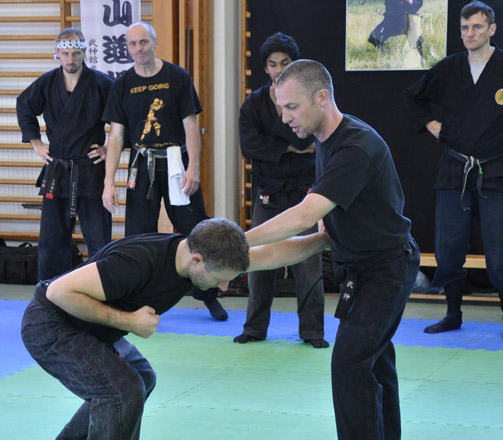
Sveneric Bogsäter from Holland together with Rob Renner, Duncan Stewart and Steve Olsen from Japan was invited to teach at this Swedish Tai Kai organized by Mats Hjelm and Svenska Bujinkanförbundet. There was two DVD’s and two download videos released from this seminar. This Video is one part of this set.

At the Taikai all instructors had three classes each, one class with the whole big group, one class with all Shidoshi (5′th dan and above), and one class with Mudansha & Yudansha (beginners up to fifth dan).

The instructions is all in ENGLISH. The DVD is Region Free and NTSC (US/Japan format, works on modern DVD players)

Available for 239.00 SEK at BUDOSHOP.SE

On this DVD – Sveneric Bogsäter & Rob Renner

This two hour DVD is packed with good demonstrations and instructions from Sveneric Bogsäter and Rob Renner. Sveneric had recently been in Japan, and Rob Renner has lived in Japan for many years, so what they taught was very much the feeling from Japan trainings with Hatsumi Soke and the Japanese Shihan.

Sveneric taught Kihon-happo variations against one or two opponents to the whole group. At the Shidoshi-class he taught Taijutsu and Hanbojutsu. At the Mudansha & Yudansha class he taught Taijutsu

Rob taught how to understand the distance and footwork with unarmed and with a Hanbo to the whole group. At the Shidoshi class he taught how to do the Kihon-happo techniques against someone who is resisting, directions, balance breaking and distance. Against one and several opponents. Rob’s Mudansha and Yudansha class is available on download file only (click here!).

Duncan Stewart & Steve Olsen

Available for 239.00 SEK at BUDOSHOP.SE

On this DVD – Duncan Stewart & Steve Olsen

This two hour DVD is packed with good demonstrations and instructions from Duncan Stewart and Steve Olsen. Both Duncan and Steve has lived in Japan for many years, so what they taught was very much the feeling from Japan trainings with Hatsumi Soke and the Japanese Shihan.

Steve taught Taijutsu to the Shidoshi class and to the class with the whole big group. The Mudansha and Yudansha class is available only as download video (click here!).

Duncan taught drills how to learn the correct distance to the opponent, and Taijutsu techniques with or without small concealed weapons. To the whole big group he taught and demonstrated Taijutsu with devastating efficiency. Unfortunately there was no footage of his Mudansha and Yudansha class.

On This video – Steve Olsen

20 minutes, 243 Mb for $6.99
Only available as download

This video is 20 minute where Steve Olsen taught the Mudansha and Yudansha class (ranks below 5′th dan). He taught a little sword cutting technique but mostly Taijutsu.

On This video – Rob Renner

32 minutes, 388 Mb for $6.99
Only available as download

This video is 32 minute where Rob Renner taught the Mudansha and Yudansha class (ranks below 5′th dan). He taught footwork, distance, taijutsu and unarmed training drills that will make you understand the basics better.

The post New DVD’s from the Sweden Tai Kai 2011 appeared first on 8þ Kabutoshimen.…

Modern warrior coming to Stockholm in October

From 8þ Kabutoshimen by Mats "Toryu" Hjelm

Dean with the Bufuikkan menkyo

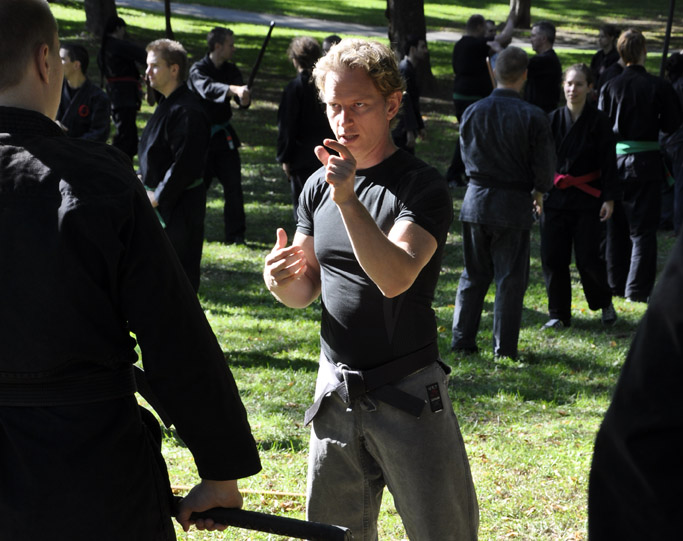
There are many people in the Bujinkan who claim to teach reality based techniques without any real experience. There is however a few people that can do this, and do it very good. And one of the best one I know is my close and good friend Dean Rostohar Shihan from Croatia. With his experience from the civil war in former Yugoslavia, and as a former police officer he certainly knows what he is talking about.

Dean goes to Japan to train with Hatsumi Soke and the Shihan several times per year. He always train three trainings per day, to make out most of his time in Japan. Hatsumi Soke always put him up to teach about his experiences. When he was there earlier this month even more so, Soke used him as Uke often to teach the real feeling. Soke also awarded him with the Bufu-ikkan menkyo which he only give to his top students.

When Dean doesn’t go to Japan he practice in his own Dojo with over 100 students. He also attend many courses and seminars and further his studies in many areas with instructors outside the Bujinkan. He also practice shooting and military tactics with SPECWOG, and teach many seminars and courses.

In October 29-30′th I’m organizing a seminar with him in Stockholm. I can’t emphasize enough how important a seminar like this is for everyone training in the Bujinkan system. Especially if you want to learn self defense and tactics how to defend yourself against a knife or pistol. Running backwards on a flat floor in the dojo all the time until the opponent overextend himself and fall down is fine, but how reality based is the training, really? Your instructor may say this is reality, and then do something pretty stupid and cover it up with a henka and flow so that you don’t see how stupid the first response really was. OK, sorry! The word “stupid” might be a strong word, I know there is good teachers out there, but far from all. Being “stupid” is also a learning process that we all need to go through, but staying on the stupid level is just stupid ;-) .

I know there is many seminars all the time, and find the time and money to all is difficult. All I ask of you is to ask yourself what do you want from the training? If you think it is fun as it is in your dojo and you don’t care much about reality then fine, good luck! If you on the other hand think that being able to defend yourself is important, then you should really try to attend this seminar (or any other Seminar with Dean)! I promise it will be very eye opening, and you will see your training with different eyes.

Both knife and pistol is very scary weapons, defending against them is very difficult. But it is possible if you also know how to use them as weapons. If you don’t know how to use the weapons properly how can you say that you know how to defend yourself against them.

Dean Rostohar together with Noguchi Shihan, Hatsumi Soke and Kan Shihan.

This is the feeling Hatsumi Soke teach in Honbu dojo all the time. All instructors take what they want and do what ever they feel like for various reasons. By Hatsumi Soke using Dean in Honbu dojo so much, and constantly ask him to teach and explain in front of him, as well as being his Uke must mean that Hatsumi Soke appreciate what Dean is doing. I think also that Hatsumi Soke is learning from Dean as he watches.

So with this I really recommend you to come to this seminar! The web site is in Swedish, but there is translation buttons on top of the web site. If you have problem with the language, you can always contact me, I know the translator is not always 100% correct.

Remember to sign up, because the places is very limited!


The post Modern warrior coming to Stockholm in October appeared first on 8þ Kabutoshimen.…

嵐 Arashi: Don’t Get Caught in Your Own Storm

From Bujinkan Santa Monica by Mats "Toryu" Hjelm

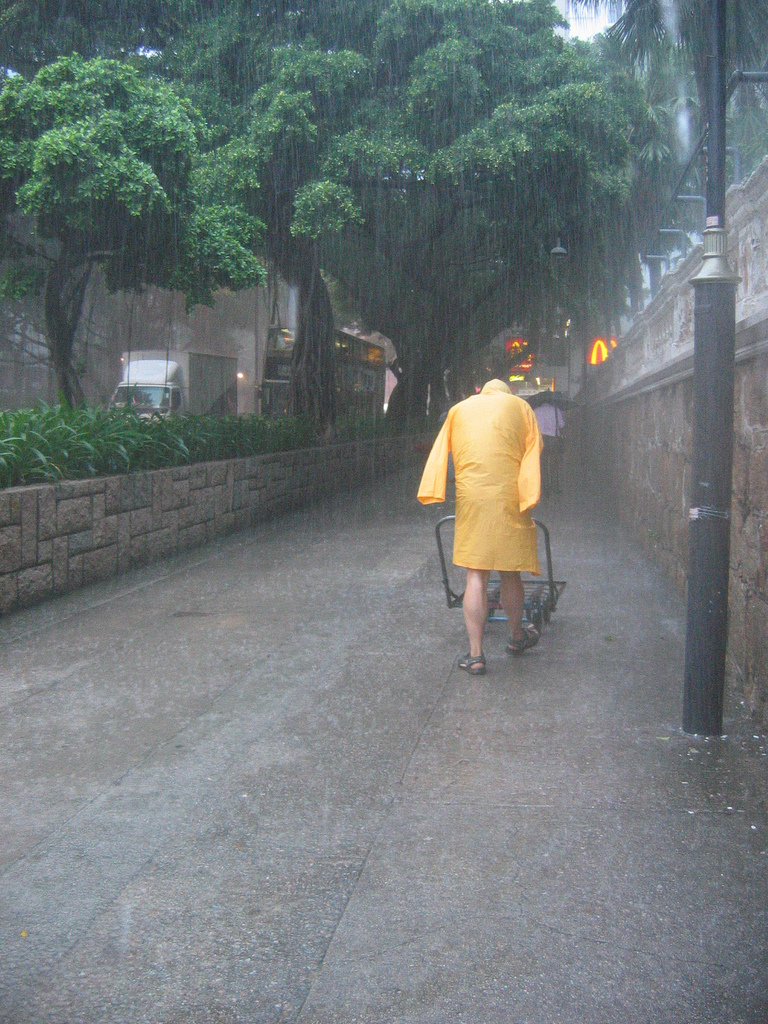
when it rains in HK, photo by rocksee
I read a curious poem this morning in a story from Saigyō.
The Japanese poet Saigyō (1118-1190) was a Buddhist monk and lived most of his life as a traveling mendicant and hermit. His poems often relate the tension he felt between renunciatory Buddhist ideals and his love of natural beauty.
In the story I read this morning, he was caught in a rainstorm during his travels through Osaka. He tried to take shelter at a brothel. Yet he was turned away by a prostitute. But this was no ordinary prostitute. In the legend, she was an incarnation of the Bodhisattva Fugen who symbolizes meditation and practice. Knowing this, Saigyō was frustrated that someone so enlightened would  force him back out into the rain. He wrote:

How difficult I suppose,
    to reject
This world of ours.
    And yet you begrudge me
        a temporary stay.

In his frustration, Saigyō could get angry at this teacher in disguise and miss an important lesson. Do you ever get angry at your teachers? What happens after the storm fades?

I have been angry at my teachers. Or at least, thought they were wrong about something. The worst is when someone shows me something about myself I do not wish to see.

In Bujinkan training I have seen many students get angry. I have seen them quit training over it. I have had my own students angry at me. And Hatsumi Sensei has had many critics and ex students who got stuck on some point of contention.

When we get angry at our teachers, an inflection point occurs where learning stops cold. Or, if we are ready, learning explodes forward from that point to even greater understanding.

Anger at teachers happens for many reasons:
  • The teacher is flat wrong or in error.
  • You think teacher is wrong even though he is right.
  • You want your teacher to be wrong because you don't like what he is showing you.
  • You don't feel acknowledged for how well you are doing.
  • Your teacher focuses only on how badly you are doing.
  • You don't like the way a teacher runs his class or handles other students.
  • Your teacher sets a bad example.
  • The teacher fails at something.
  • What the teacher is teaching doesn't match your view of reality.
  • The teacher reflects something in you that you don't wish to see.
If you get angry at your teacher, first look at these reasons and decide what they say about YOU before you dismiss the teaching. And then, if you still think your teacher is bad, you should try to consider your history with them. Is it a history based on trust and respect? Has the teacher taught you well in the past, and is there hope of learning and growing more in the future?

For Saigyō, the prostitute in his poem responded in this way,

Having heard you were one
    who rejected this world,
My thought is only this:
    Do not stop your mind
        in this temporary stay.

A deep lesson if Saigyō was ready to hear it. Admittedly difficult to hear in the middle of a rainstorm. But the most profound lessons often show up when we are most uncomfortable.

The rainstorm symbolizes something temporary that will not last. In Japanese there is a play on words: a rainstorm - 嵐 arashi, but it will not stay あらじ araji.

For us Bujinkan students, in our training, this means we can't let our minds stop or get stuck on technique. But also, don't get stuck on points of disagreement with teachers. If you stop to argue you might miss the learning that never stops. Keep going.

It doesn't matter if you think your teacher is wrong, because your only teacher is yourself. 


…

training shuko

From Paart Budo Buki by Mats "Toryu" Hjelm

Hello Buyu's, 
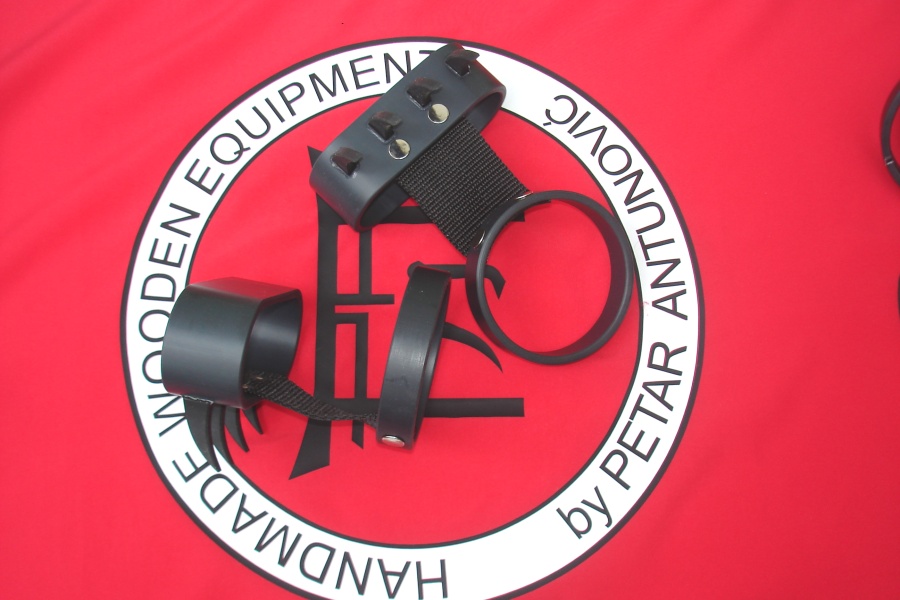
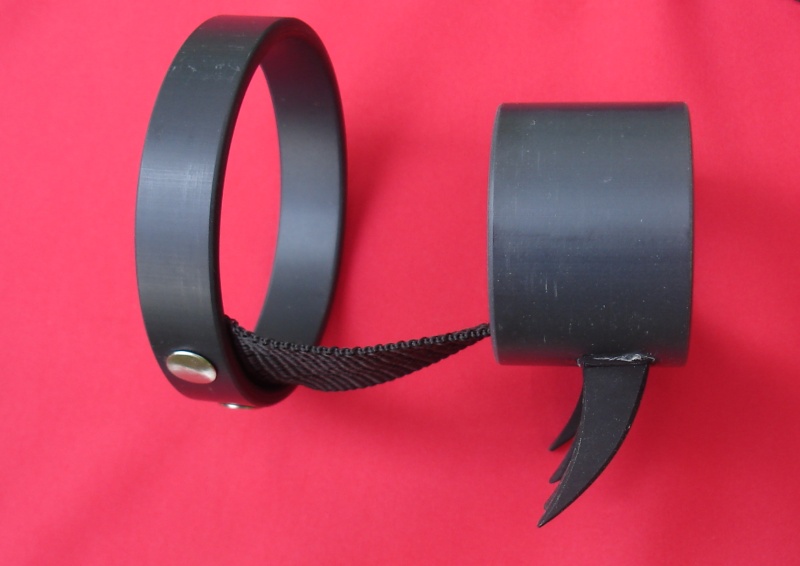
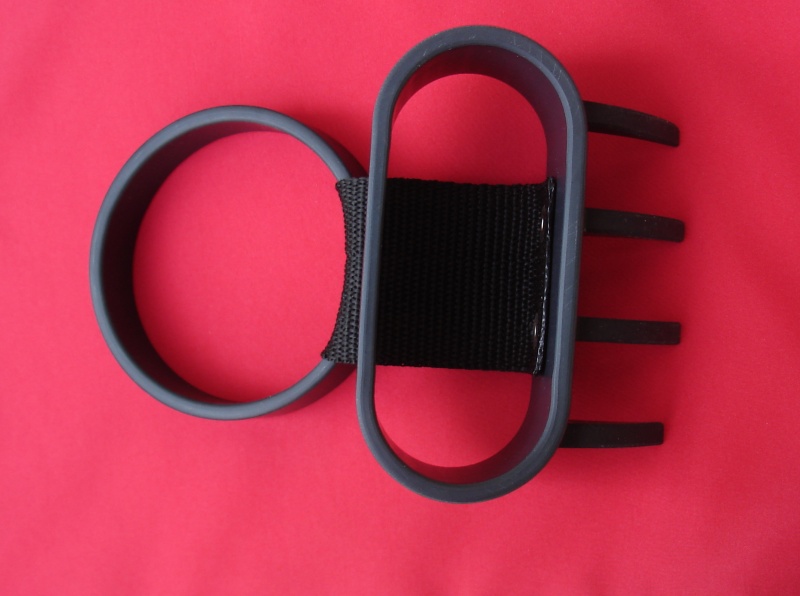
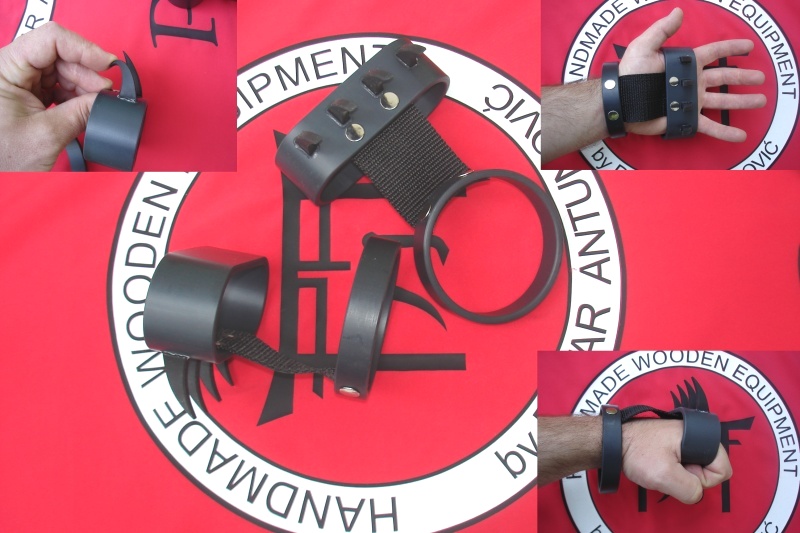
here is older pictures of my new improved Plastic Shuko for training,
tested plastic, rubber spikes, original look, safe for training, 
makes this new Shuko claws ideal 

When I create a weapons for training, the most important to me that this weapon looks like the original as faithfully as possible,
maintaining the original appearance, it is possible to get a realistic feeling during practice, as permitted by technology of making, and characteristics of a material

normally, rubber spikes in this case it would not do what they do steel spikes, but during the practice it is not their purpose anyway.
Since each weapon has a physical aspect, it has also psychological aspect, in this case the mental aspect is met,
if you ask yourself how, in moment when  rubber spikes touch your skin,  
especially facial, 
you will realize that neither the physical (material), aspect is not neglected, because it will be clear to you what would happen to you with metal spikes in this case.
From my humble point of view, meet the  substantive and mental, it is very important in the development of weapons of practice.
Otherwise, it lacks an essential part of practice.
Dose of reality, even an imaginary one, it is important that our training would not be turned into a children's play.
Therefore, equipment designed in this way, helps our awareness during training, because Budo and Sport are not the same thing,
So I hope you understand the difference between cheap equipment, streamlined appearance, mass-made, which some Budoshop's sell,
and this what me and few others are make to improve the quality of practice.


It's also good to know that type of plastic ​​from these Shuko are made, was tested to the pressure of 10 bar=145 psi, which makes them unbreakable

If someone of you visit Hombu Dojo or if you be on Daikomyosai 2009,  you could see that Soke Hatsumi also have one of this shuko, which I gave him as a gift during my visit to Japan 2004, it is one of first versions, but still in one piece

here is video from this Daikomyosai (on 0:30 you could see shuko)


on picture above you could see that wrist ring could be in one piece, or cut it so could fit one anybody's hand, which historically also correct, because there was many variations of this weapon,
also wrist ring could be adapted to your hand if you have bigger hand


…