Skip to content

Nakaima 中 今: a Privileged Moment in Eternity

From Bujinkan Santa Monica by Bujinkan Santa Monica

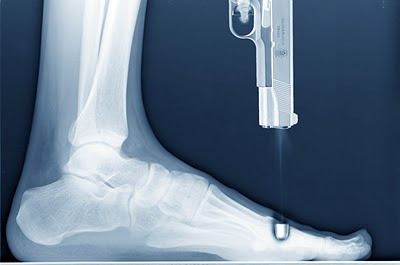
photo by Guitarfool5931
People in the Bujinkan often mention distancing, angling, and timing as part of fundamental taijutsu.  While we train to get these right, there are many subtle nuances to what is "right."  For example, there is early, middle and late timing, but also an entire spectrum in between these measurements.  And there is a way to step outside of this measured time entirely.

The ability to do this can be related to awareness in the moment.  Soldiers in combat are encouraged to keep their head on a swivel so as to maintain situational awareness.  Another simple look at states of awareness in combat can be found from Jeff Cooper, founder of the American Pistol Institute ("A.P.I.") in 1976 in order to teach the Modern Technique of the Pistol as a method of the handgun for self-defense.  He describes this color code:

"In White you are unprepared and unready to take lethal action. If you are attacked in White you will probably die unless your adversary is totally inept.

In Yellow you bring yourself to the understanding that your life may be in danger and that you may have to do something about it.

In Orange you have determined upon a specific adversary and are prepared to take action which may result in his death, but you are not in a lethal mode.

In Red you are in a lethal mode and will shoot if circumstances warrant."

In the Bujinkan, we focus on awareness from the learning of kamae leading to the experience of the Godan test and beyond.  Hatsumi Sensei talks to this point as the secret of winning.  He says,
One never knows when a fight might start.  That is why in Budo one keeps prepared, so that should a fight arise, one can settle it as quickly as possible.  In a dangerous situation, you act swiftly without any hesitation.  That is the secret of winning.
He describes how to do this,
You must KNOW that you can win, and use this energy in your encounter.
In Shinto there is a word, "Nakaima," which literally means "the middle of now."  It teaches us that the current moment embodies the whole of time, and consequently, that how you live the current moment is of supreme importance.
Nakaima 中 今 as described by Shintoists repeatedly appears in the Imperial edicts of the 8th century. According to this point of view, the present moment is the very center in the middle of all conceivable times. In order to participate directly in the eternal development of the world, it is required of Shintoists to live fully each moment of life, making it as worthy as possible.

Hatsumi Sensei may also be referring to this concept with the idea Kanjin Kaname.  This can be translated as "what is truly important," but another reading is "the heart and eyes of the gods."  When you are in accordance with this, you are in accord with the laws of nature or heaven.  You cannot fail.   You may achieve kamiwaza (divine techniques).  Isn't that what you are studying in your dojo?


Neko no Myojutsu – The Cat’s Eerie Skill

From Bujinkan Santa Monica by Bujinkan Santa Monica

People fear their own instincts.  They seek answers outside of themselves when there is a powerful spirit inside that has many abilities that can be tapped.  Animals in nature don't look outside themselves.  And yet many are terrifying fighters.  How do they accomplish this? 

They seem to do this through instinct and play.

We all have instinct.  It is there, waiting for us to make use of it.  You only need to listen.  And to develop the ability and skill to use it, play is a powerful ally.  Hatsumi Sensei uses that word to describe our training.  So is it part of your regimen?

From Neko no Myojutsu by Issai Chozan (1727):
... the cat replied, “Because of the self there is the foe; when there is no self there is no foe."
 When I was a boy, me and my buddies had many mock battles.  Sometimes the whole neighborhood seemed mired in war.  We took it seriously.  But we knew it wasn't.  There was a reality to our play that put us and our personalities on the line.


I see this in the dojo.  Personalities are on the line.  The training we do is serious, yet also play.  How best to take advantage of that dichotomy?
 More from Issai,
"Teaching is not difficult, listening is not difficult either, but what is truly difficult is to become conscious of what you have in yourself and be able to use it as your own. This self-realization is known as 'seeing into one's own being,' which is satori. Satori is an awakening from a dream. Awakening and self-realization and seeing into one's own being – these are synonymous.”

You must become transparent to Bushido, so that your training becomes a transparency through which light shines.  This is the Budo in you, coming out through your training.  Your instincts and natural ability will rise above the ego.  Your eyes may open to see real Budo.

Soke says,
If you persevere in Ninjutsu as I have done, you will come to discern the ocean of difference that lies between things seen with true eyes, observed using the intuitive "feeling" you develop in this art, and those seen through the glass eyes of people who have not trained at all.

When he says "people who have not trained at all," I think that can apply to many people who visit the dojo and put on a gi.  They go through the motions of training, but they are really not training at all.


Weapon Malfunctions Can Turn Into Tactical Failure

From Bujinkan Santa Monica by Bujinkan Santa Monica

Don't malfunction yourself.
What if your gun jams, or you sword breaks, or even worse, you have a complete tactical failure?  The first two are are easy problems, the third is more difficult, but can be dealt with naturally.  Let's consider all three in turn.

If you have any firearms training at all, you already know that you should train for malfunctions.  A malfunction in this case is confined to the weapon or the ammunition itself.  It is a malfunction of the tool you are using.  A stove-pipe, a misfeed, or the worst, a broken firing pin - are all situations that must be trained for.  One common malfunction that we don't even consider as a malfunction is running out of ammo.  Why is this not a malfunction?  The weapon is essentially useless.  We don't see it as a malfunction because this is something that we very naturally expect to happen.  We train to reload.  You should train for those other malfunctions just as you train to reload smoothly and with as little interruption to your defense as possible.

And of course this training must include making a hasty tactical withdrawal (retreat)!

On several occasions I have been training with Hatsumi Sensei and he has used two swords that have red saya.  These swords never draw properly.  He at first blamed it on them being new.  But I saw this occur again years later.  Maybe the saya have a poor fit or something.  The cool thing was, that he didn't let the malfunction slow him down at all.  He made use of the half drawn sword.  In one case he said, 
"It's OK if the sword doesn't draw.  What's important is this aspect of the sword not drawing.  You can't have the idea that the sword is always going to draw.  You must have the expectation that the sword won't always draw."

So lets consider tactical failure.  Whether with a gun, a sword, or with your tactics, use yourself in a way that you don't become an obstacle.  Don't malfunction yourself.

Don't get caught up in the malfunction so that you yourself malfunction.  The failure will spread like a virus.  Soke went on to say something simple yet profound about using weapons,
"All these things are connected and you have to have this connection within the weapon."

So if you want to overcome tactical failure, there is a natural solution to the problem.  If you understand Sensei's kuden up to this point, you will know that having a natural posture and natural heart is the secret. Soke refers to his teacher Takamatsu Sensei who said that nature lies in a sincere spirit.  And that nature will bring about the destruction of your opponent.

If this doesn't help you, remember this is kuden.  It is something I've learned and experienced directly from Soke and my teachers.  You need to find a teacher to experience it from.  You can't learn it by reading about it.


Happo Tenchi: Ten Directions of Truth

From Bujinkan Santa Monica by Bujinkan Santa Monica

Photo by ePi.Longo
In all ten directions of the universe,
there is only one truth.
When we see clearly, the great teachings are the same.
What can ever be lost?  What can be attained?
If we attain something, it was there from the beginning of time.
If we lose something, it is hiding somewhere near us.
Look: this ball in my pocket:
can you see how priceless it is?
Ryōkan Taigu (良寛大愚)


There is nothing wise I can add to the beautiful poetry above.  Just that, I find my inspiration from many sources.  I am constantly amazed at how these inspirations in martial arts and life mirror each other.
Who has heard Hatsumi Sensei utter similar ideas?


Ryōkan Taigu (良寛大愚)  1758-1831, Japanese Zen Master, hermit, calligrapher, and poet; his name means "Goodly Tolerance."  Another Buddhist name that he took for himself means "Great Fool."  Ryokan is one of the most beloved figures in Japanese Literature, and is especially known for his kindness and his love of children and animals; he even used to take the lice out of his robe, sun them on a piece of paper on the veranda, then carefully put them back into his robe.  He used to smile continually, and people he visited felt "as if spring had come on a dark winter's day." 

His most famous haiku was written after a thief had broken into his hut and stolen his few simple possessions:
The thief left it behind:
the moon
at my window. 


How Can You Learn Shinobi Secrets?

From Bujinkan Santa Monica by Bujinkan Santa Monica

Photo by Son of Groucho
Do you think you have a grasp on this art?  Have you done all the kata in the Tenchijin Ryaku no Maki?  Maybe you have memorized all the (known) kata from our 9 Bujinkan ryuha.  Maybe you have even mastered the Togakure-ryu Juhakkei - the 18 forms of the shinobi (is that even possible in the modern era?).  How long have you been training?  3 years? 10?  how about 20? Do I hear 30?  I know someone with over 40 years in this art and he is still learning new material.

Don't miss the train by not showing up.

Recently, I was at a seminar with my teacher, Peter Crocoll.  I was considering leaving early because I had a 9 hour drive back home.  I brought this up to him, and he said, "you can leave if you want, but what I'm about to show has never been shown in North America."  I stayed.  And it was worth it.

I almost missed training with Peter again this month.  It literally was a coin flip whether I made the trip.  Somehow I pulled it together.  And guess what?  He showed material I had never seen before.

Soke says that he intends to live by the words he heard from his teacher Takamatsu Sensei, "However much I study, it is never enough."

I started training in this art in 1988 (officially).  In all these years, there have been many occasions where I was shown something very interesting and important, and then I never saw it again.  Never in Japan, never at a seminar, never in regular classes, and never in a book or on video. 

Our art runs deep.  Many of the skills in our training could be a lifetime of study all by themselves.  It took many lifetimes and the lives of many warriors to develop this art.  So it is unwise for me to think that my 22 years mean very much.

I was training at one of Hatsumi Sensei's Tai Kai, and Oguri Sensei was there.  Soke showed something and Oguri got a funny look on his face.  Hatsumi Sensei noticed this and asked Oguri to share his thoughts.  Oguri said that he had been training over 40 years and this was the first time he had ever experienced this.

This makes me wonder what I miss when I don't make it to class.  Anytime I start to think about missing a trip to Japan, or going to a seminar, I think to myself, "what if I miss that hidden secret in our art that will make a big difference in my own training?"  And then I am very motivated to go to class.  The simple truth is, I am always happy when I go to class, and missing class just feels empty.


Plan For Chaos, Fight Your Plan

From Bujinkan Santa Monica by Bujinkan Santa Monica

by PhillipC
A commonly heard phrase in military circles is,
No plan ever survives contact with the enemy.
This quote was originally uttered by Helmuth von Moltke the Elder, a German Field Marshal during the 1800's.  But Colonel Tom Kolditz, head of the behavioral sciences division at West Point, sums it up this way:
You may start off trying to fight your plan, but the enemy gets a vote.  Unpredictable things happen- the weather changes, a key asset is destroyed, the enemy responds in a way you don't expect.  Many armies fail because they put all their emphasis into creating a plan that becomes useless ten minutes into the battle.
So what do we do as martial artists?  For the most part, martial arts is learning to deal with smaller battles with individual or few enemies.  But the same conundrum confronts us.  All of our training for battle, the years of classes and techniques we have learned, and all the hard work to stay fit- all of this will be upset by this simple truth of battle.

One answer can be found in the Bujinkan training method.  Soke's classes consist of a cascade of henka.  Unending change that teaches us to be very responsive.  But there is something more than that.  By becoming zero or empty we can respond in combat with tactics that can't be understood or defeated.

You can't teach this.  But you can use certain mental constructs to describe it.  One that I sometimes use in my classes is the concept of Past, Present, and Future in a fight.  If the attacker strikes, he is in the present.  If you respond, you are in the past.  Not the best place to be, especially if he is quicker or better than you are.

Better to connect to his rhythm and respond in the present as he attacks.  Real time.  If you are flowing in the present, it gives you the chance to counter if he falters or provides an opening.  But you also have the opportunity to disrupt his rhythm.

Even better is for you to be in the future.  Make him respond to you.  Or know where he is going to strike so you can trap him.

But the best is to do the unexplainable.  Once Hatsumi Sensei was asked,  "What would you do if a sniper shot at you from half a mile away while you were going out your door?  He said, "I would never walk through that door at that time."  We have many ideas to explain this unexplainable core of our training.  Things like Ku, Shizen Shugoku, Hi Jo Shiki and the like remind us that this art is bigger than any of our plans.
Maybe through this you can know Banpen Fugyou.


Bojutsu Gokui: How to Get Hit Over the Head by the Void.

From Bujinkan Santa Monica by Bujinkan Santa Monica

by pusgums
We were in the middle of a bojutsu class and I had an epiphany.  I was trying to explain how to hold the staff.  "You must hold it lightly.  Yet firmly connected to your kamae and spirit."  My words failed me.

Yet, I was feeling something with the rokushakubo I wanted to communicate.  I tried demonstrating various aspects of the movement and grip on the bo.  And none of these things held the idea I felt. Luckily, I remembered a quote from Hatsumi Sensei and I dropped it on the students:

In a verse of the gokui: "striking the void, if there is a response in your hands, that is the gokui."  You must have the enlightenment of the Buddha of the void (koku-bosatsu), whose heart was as infinite as the void itself.  Thrusting the bo into the mist is in truth thrusting one's heart and mind, and this is one method of koku - void training.

Yes!  I was feeling it.  You have to hold the bo very lightly to feel the response from the void.  The response I felt was like creation.

Not long after this exciting insight I was hit on the head by my uke's bo.  If you mess about in the void you might get hurt.   That's one thing I love about training- the immediate feedback that keeps me humble.


Hiding Behind Totoku Hiyoshi No Kamae

From Bujinkan Santa Monica by Bujinkan Santa Monica

Seeing Totoku Hiyoshi No Kamae for the first time can be misleading.  Usually a student's first exposure to this kamae is seeing someone hold a sword out in front of themselves while someone else throws shuriken at them.  Then the instructor hands the sword to you and says, "Next."

by eflon

This aspect of Totoku is often perceived as one of those quirky things in our training that we may try out, but never take seriously.  After all, who has had to dodge shuriken for real?  I'm not counting the dishes your girlfriend threw at you during a recent argument.  Maybe you try this out, maybe block a few rubber shuriken and then forget it.

Totoku forms part of some very rich strategy in our art.  And the more you look for it, the more you will encounter.  I personally have heard Hatsumi Sensei reference it many times, and it wasn't anything to do with shuriken blocking.  It is a running theme in our taijutsu that has to be experienced from a qualified teacher.

Maybe a starting place to understand this kamae can be from the Tachi.  This sword was mainly held in one hand.  There was little tradition of handheld shields in Japanese Budo.  So how do you deal with incoming arrows, spears, or enemy sword attacks?  You use your own sword.  The first use of the sword is to protect yourself before cutting.  It becomes your first line of defense and your shield.

What if you don't have a sword?  The idea of Totoku goes even deeper.  It moves into the idea of hiding yourself behind a shield.  But what is a shield?  Soke speaks about this in reference to Goton No Jutsu:


Examine the character for "Ton" as used above in Tongyo ("hiding one's form"; or alternatively, "the discretion doctrine"), and you can discover it to be a combination of the characters "fleeing" with a "shield" - just as along the path of Ninpo.  The priciple of recognizing the value gained by winning through flight is one of Ninjutsu's cardinal rules.  However it is not simply a question of escaping.  What can one use as a shield?  One can use:
  • the Five Elements (wood, fire, earth, metal, and water)
  • the Five Rings
  • the Five Ways (the way of enlightenment)
  • the Five Arts
  • the Five Teachings
  • the Five Confucian Virtues (benevolence, rightousness, prosperity, wisdom, and sincerity)
  • Nature
  • the shining (or shadowed) glory of the martial ways
  • beliefs
  • politics (or rather policies for life)
the shields are multiple and varied.

Soke says on another occasion,

Everything is a natural shield.  So, anything can be a natural shield.  One should move in a connected way like Juppo Sessho, and Koteki Ryoda which include these teachings.  Such things are written in old Japanese scrolls.

And finally, I watched one day as Soke was demonstrating some of his mysterious muto dori, and he explained, "You must evade by the thickness of air.  Use the air as your shield."


四世界 The four worlds

From Kabutoshimen by Toryu


I learned these stages of development a few years ago from my TCM (Traditional Chinese Medicine) teacher. He taught it as four levels of development in becoming a TCM master, but it goes with any trade or area of study.

The first stage is when you are in an incompetent awareness stage. When you start learning someting new you know that you are a beginner. You are humble and like a sponge, you absorb and learn everything new.

After some years of studying you are entering the incompetent unawareness state. The stage where you think you know it all. Be careful, many people get stuck in this level forever because of their ignorance. People say you are good, it is getting difficult to teach you because teaching can only go to a certain level, next you need experience and guidance. Maybe you heard about the “invisible training”? The more experienced you get the more transparent the teaching will be. Be careful that you don’t stop growing here or feed the ego to much. I’m sure you seen a few people that have some experience in other martial arts and after a few weeks or months they think they know Bujinkan.

When you get competent awared you have passed all the illusions and start seeing clearer. You know what you can do and can’t do. This is the stage when you are skilled in what you do, but hang on you’re not a master of the style yet. You need to always be aware of what you do to do it right.

The fourth level is when you are competent and unaware. In Bujinkan we often say it is the zero state. The art is so deep within us that we don’t need to think or remember any techniques at all. This is the level most people in Bujinkan is talking about. But I strongly believe you need to pass all levels. If you think you are at this level you could still very well be unaware of your incompitence.

You don’t need to think about this and try to figure out what level you are in. It’s no point doing that. Besides I remember Soke answering a question of what the highest level (in mikkyou, I think); he simply said there is no highest level. No matter how far you go you will never reach the end. This is also the 道 DOU, the path you have chosen to walk. …