Shikomi Tessen
From paart budo buki by Mats "Toryu" Hjelm
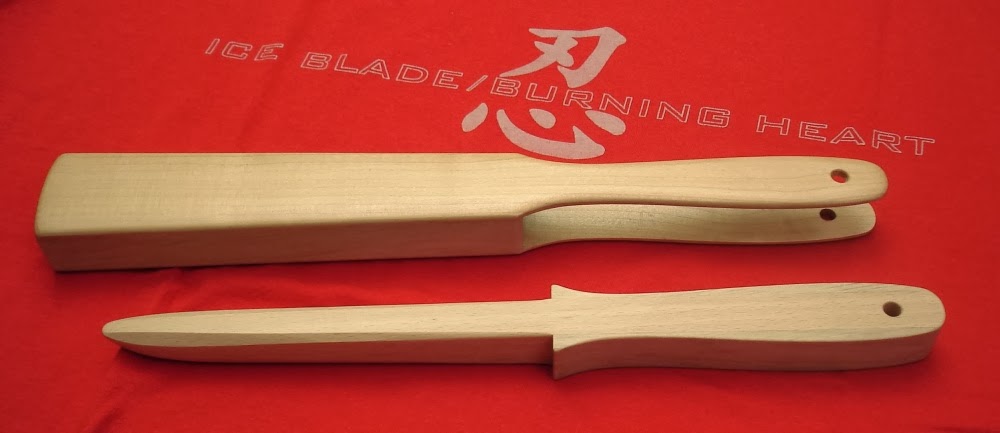
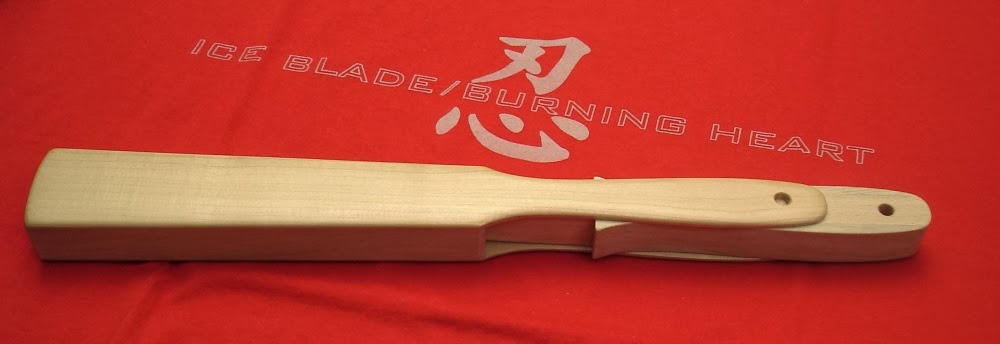
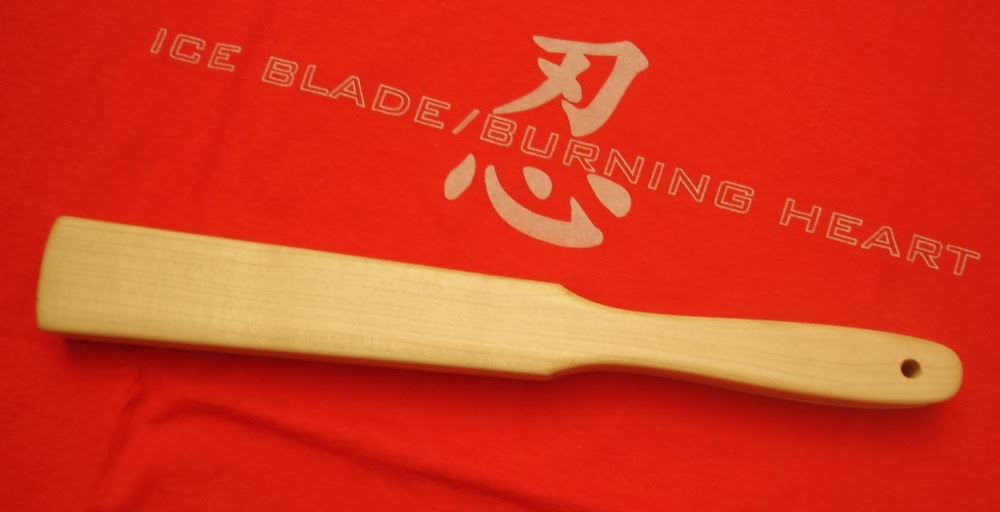
This is one of several versions Shikomi tessen, blade hidden in shape of tessen,I made this one 2008. for present so if you interested let me know
…
From paart budo buki by Mats "Toryu" Hjelm
This is one of several versions Shikomi tessen, blade hidden in shape of tessen,From paart budo buki by Mats "Toryu" Hjelm
The name Te yari may not be correct but makes sense to me (te -hand and yari- spear),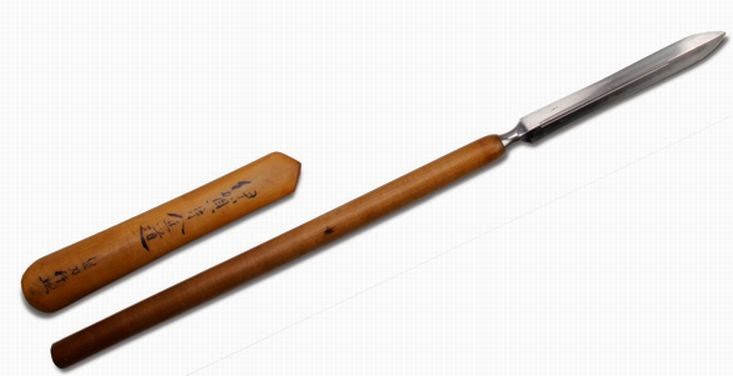
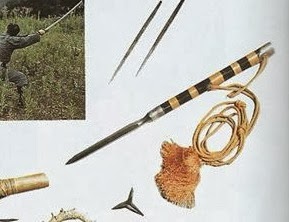

From Bujinkan Santa Monica by Michael
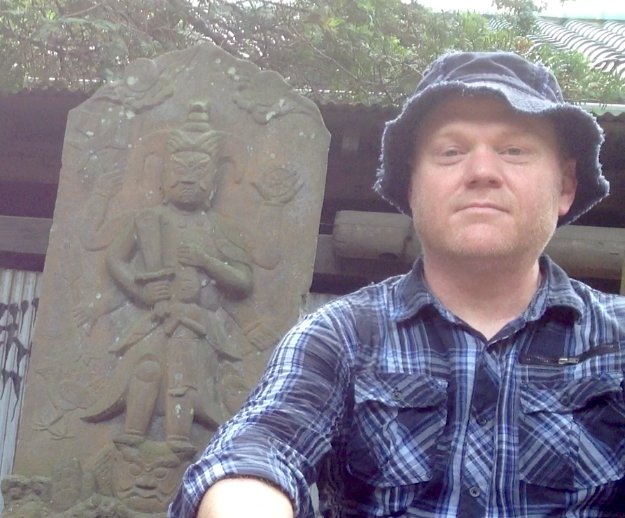 |
| Michael Glenn at 王子神社 ōjijinja, Mabashi, Matsudo, Chiba Prefecture, Japan |
From Budoshop by BUDOSHOP.SE
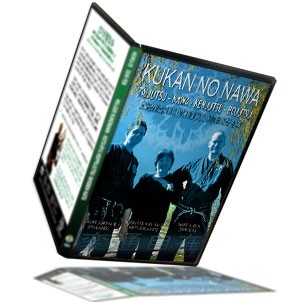

Lauri, Mariette and Mats are all known and respected Bujinkan teachers in their own country and also internationally. Here they taught individually and together at the end of they day.
Title: Keiko26 – Kukan no Nawa (Taijutsu / Nawa / Kenjutsu /Bojutsu)
Instructors: Lauri Jokinen, Mariette v.d. Vliet, Mats Hjelm
Theme: Kukan no Nawa (Taijutsu / Nawa / Kenjutsu /Bojutsu)
Recorded: Recorded in Stockholm May 1-3th 2009 The instruction is in English
Approximately 120 Minutes playing time.
Lauri from Finland taught Taijutsu with the feeling of rope, both with and without the actual rope.
Mariette from the Netherlands taught Bojutsu against sword, Taijutsu and Self defence against knife attacks.
Mats from Sweden taught Iainuki (drawing the sword), Kenjutsu, Bofuri (spinning with the long staff) and Taijutsu.
Mats Hjelm started training in Bujinkan for the first time around 1983, but it wasn’t until 1986 he had the opportunity to start training more seriously under a Shidôshi. He met Hatsumi Sôke for the first time in 1988. He attends around 20 seminars, go to Japan 2-3 times every year. Since he started training he never had a training break. He takes his budo training very seriously!
Lauri – http:/www.shinden.fi
Mariette – http://www.bujinkanbudokai.nl
Mats – http://www.kesshi.com
If you want to sponsor a seminar or course, please don’t hesitate to contact him. For more information see his web site http://www.kesshi.com…
From Budoshop by BUDOSHOP.SE

In this video Mats and Kent taught many basic and advanced techniques they did in Japan during January 2009. Taihenjutsu-ukemi unarmed and with a rokushaku-bo (long staff). Taijutsu techniques, and also taijutsu techniques using a rope. And some kenjutsu, sword training.
Title: Keiko24 – Mats Hjelm & Kent T – Taijutsu-Kenjutsu-Nawajutsu (Kimenbusshin)
Instructors: Mats Hjelm & Kent T
Theme: Taijutsu, Kenjutsu, Nawajutsu
Recorded: Recorded in Stockholm February 7-8th 2009 The instruction is in English!
105 Minutes playing time.
Shortly after their Japan trip this year training with Soke and the Shihan, they held this seminar. In this video many basic and advanced techniques is shown.
* Taihenjutsu-ukemi, rolling with or without weapon
* Kenjutsu, sword techniques
* Nawajutsu, using the rope to entangle the opponent
Mats Hjelm started training in Bujinkan for the first time around 1983, but it wasn’t until 1986 he had the opportunity to start training more seriously under a Shidôshi. He met Hatsumi Sôke for the first time in 1988. He attends around 20 seminars, go to Japan 2-3 times every year. Since he started training he never had a training break. He takes his budo training very seriously!
Kent T has been practing Bujinkan Budo Taijutsu for 20 years and is one of the main instructors at Kaigozan Dojo in Stockholm.
If you want to sponsor a seminar or course, please don’t hesitate to contact him. For more information see his web site http://www.kesshi.com…
From Budoshop by BUDOSHOP.SE
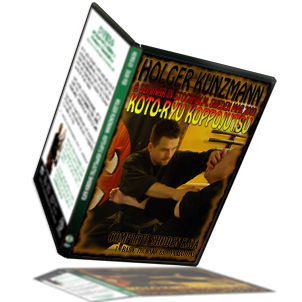
This movie contains all 18 basic taijutsu techniques from Koto-ryu Koppojutsu Shoden no Kata. They are taught and explained thoroughly as the basic foundation, and with many applications and henka.
Title: Keiko25 – Koto-ryu Koppojutsu Shoden Kata
Instructors: Holger Kunzmann
Theme: Koto-ryu Koppojutsu, Shoden kata
Recorded: Recorded in Stockholm March 13-25th 2009 The instruction is in English
Approximately 90 Minutes playing time.
Shortly after returning from training in Japan with Soke and the Shihan, Holger held this seminar in Kaigozan Dojo, Stockholm, Sweden. This DVD contains all 18 basic taijutsu techniques from Koto-ryu Koppojutsu Shoden no Kata. They are taught and explained thoroughly as the basic foundation, and with many applications and henka. The following techniques where taught…
Kurai-dori (kamae). Yokuto, Ogyaku, Koyoku, Shito, Hosoku, Hoteki, Shato, Keto, Sakugeki, Tangeki, Batsugi, Setto, Shihaku, Kyogi, Kakko, Uranami, Tenchi and Katamaki.
Recorded in Stockholm, Sweden March 2009
Holger’s main interest in Bujinkan is the basics. And he has become quite famous for his excellent taijutsu and very good knowledge and skill of the basics in Bujinkan.
Holger’s web site… http://www.bkd-reutlingen.de/…
From Budoshop by BUDOSHOP.SE
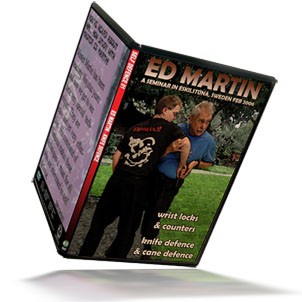
Ed Martin Shihan was taught a series of chi kung breathing exercises for health benefit. Ed says that this have turned out to be very true. Now you to can learn these simple and yet very effective breathing exercises with this video.
At this seminar Ed taught “Gyaku-gi kaeshi-waza”, how to counter the nine basic joint locks and takedowns. Then he proceeded on to teach how to do the same joint locks more effectively and with less effort. He also taught some basic defenses against someone attacking with a knife and much more.
Ed Martin Shihan aka Papa-san is a long time student and master teacher of the Bujinkan Dojo system founded by Dr Masaaki Hatsumi Soke Ph.D. Ed received the Bujinkan Golden Dragon medal, the Bujinkan’s highest award, in recognition of his self defense videos. You can buy these videos at the Budo Shop (see link below). At this seminar Ed taught “Gyaku-gi kaeshi-waza”, how to counter the nine basic joint locks and takedowns. Then he proceeded on to teach how to do the same joint locks more effectively and with less effort. He also taught some basic defenses against someone attacking with a knife. He also taught simple and effective techniques armed with only a simple wooden cane and a smile.
Recorded in Eskilstuna, February 2006
Ed Martin Shihan is a long time student and master teacher of the Bujinkan Dojo system founded by Dr Masaaki Hatsumi Soke Ph.D. He was nick named “Papa-san” by Soke. He earned an award of merit from Masaaki Hatsumi for his Self Defense for Everyone video. …
From Budoshop by BUDOSHOP.SE
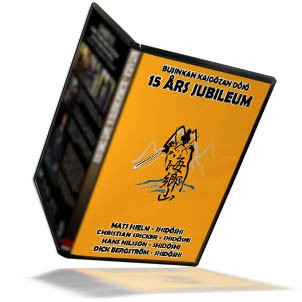
NOTE: All instructions is in Swedish, there is no subtitles on this movie
I oktober 1990 skrev vi på kontraktet för lokalen på Albygatan 117 i Sundbyberg. Femton år senare firar vi jubileum, vi bjöd in några gamla instruktörer och elever för att fira detta med ett träningsläger.
Mats Hjelm – Shidôshi 13 Dan (huvudinstruktör i Kaigozan sedan starten 1990), lärde ut de nio bôjutsu teknikerna från Kukishin-ryû shoden kata, och lite knivförsvar.
Christian Spicker – Shidôshi 9 Dan (huvudinstruktör i Kaigozan ca 1990-1994), nyligen hemkommen från Japan lärde ut bôjutsu, Gyokko-ryû kosshijutsu (Taijutsu).
Hans Nilsson – Shidôshi 9 Dan (huvudinstruktör i Kaigozan ca 1994-2002), körde olika sparringsövningar, mattbrottning, svärdsträning och taijutsu.
Dick Bergström – Shidôshi 5 Dan (en av Kaigozans första elever), också nyligen hemkommen från Japan visade lite tekniker och feeling från träningarna där.
Recorded in Stockholm, Sweden October 2005…
From Budoshop by BUDOSHOP.SE

Ed Martin Shihan was taught a series of chi kung breathing exercises for health benefit. Ed says that this have turned out to be very true. Now you to can learn these simple and yet very effective breathing exercises with this video.
Ed Martin Shihan is a long time student and master teacher of the Bujinkan Dojo system founded by Dr Masaaki Hatsumi Soke Ph.D. Another long time friend of Ed named Charles Daniel have studied many different martial arts for many years. He taught Ed a series of chi kung breathing exercises for health benefit. Ed says that this have turned out to be very true. Now you to can learn these simple and yet very effective breathing exercises with this video.
The ability to take in and store vital energy comes under the general heading of chi kung. There are hundreds of methods of chi kung, including Buddhist, Taoist and Confucian sources in China. India and Tibet both had strong influences on chi kung in China. A great interchange took place between these countries, not only in trade, but also in culture and religious practice. Many Buddhist monks carried the teachings to China, and with them secrets of health and longevity. Since that time the Chinese have adapted and changed all that they have learned, and produced the multifaceted chi kung of today.
The main reasons for people performing chi kung can roughly be divided into three areas.
Recorded in Stockholm, Sweden May 2005
Ed Martin Shihan is a long time student and master teacher of the Bujinkan Dojo system founded by Dr Masaaki Hatsumi Soke Ph.D. He was nick named “Papa-san” by Soke. He earned an award of merit from Masaaki Hatsumi for his Self Defense for Everyone video. …
From Budoshop by BUDOSHOP.SE
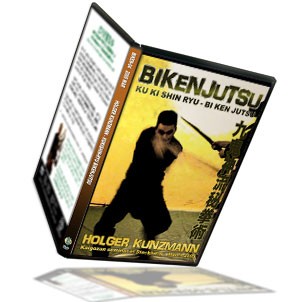
This DVD contains all the nine basic sword techniques from Kukishin-ryu Bikenjutsu Kata plus the Sayugyaku techniques. They are taught and explained thoroughly as a basic foundation, and then with many applications and variations.
Shortly after returning from training in Japan again with Soke and the Shihan, Holger held this seminar in Kaigozan Dojo, Stockholm, Sweden. This DVD contains all the nine basic sword techniques from Kukishin-ryu Bikenjutsu Kata plus the Sayugyaku techniques. They are taught and explained thoroughly as a basic foundation, and then with many applications and variations.
The techniques covered on this DVD is the following.
附込 TSUKI KOMI
突掛 TSUKI KAKE
斬上 KIRI AGE
斬下 KIRI SAGE
銯止 KASUGAI DOME
小蝶返 KOCHOU GAESHI
四方斬 SHIHOU GIRI
八方斬 HAPPOU GIRI
月之輪 TSUKI NO WA
All these techniques are explained and taught in detail.
Recorded in Stockholm, Sweden March 2009
Holger’s main interest in Bujinkan is the basics. And he has become quite famous for his excellent taijutsu and very good knowledge and skill of the basics in Bujinkan.
Holger’s web site… http://www.bkd-reutlingen.de/…
