Skip to content

Kamu, Kamu, Kamu…

From Shiro Kuma's Blog by kumablog

kamu3The last class with Sensei completed the philosophical aspects he began to develop on Sunday.
I opened the class with some taijutsu that he put to another level, insisting on the Mutō dori aspect of everything we do this year. Even though the theme is “Gokōgoshin” (1), the essence of what we do has an intimate relation to the essence of Mutō dori. (2)

Sensei said: “When you think there is something, there is nothing; when you think there is nothing, there is something.” Then added, “this is Kanjin Kaname aka Shinshin Shingan.” (3)(4)

I learned two things during this class:
1) this concept of Kanjin kaname belongs to the Takagi Yōshin Ryū and the Kotō Ryū,
2) The Shinshin Shingan, “eyes and mind of the gods”, belongs to the Togakure Ryū.

Sensei played a lot with those concepts moving from taijutsu to Yari and ninja biken as always. He was manipulating his uke like they were nothing, only with one finger. But he repeated that the finger was simply the extension of body movement. I asked him to do it on me, and it was like hitting a wall. Sensei is relaxed and doesn’t seem to move at all, but you cannot get to him. On the contrary, you fly away without reason. Nothing magic here, it is pure taijutsu.

Often when you watch him doing a technique, you think that his uke is faking it. But when you are experiencing it you understand that nothing is faked. You can collect all the Waza you want, if you do not feel it with him, you cannot know. Sensei’s budō is only about feeling.

To get this feeling you have to train correctly, which means that you have to listen and obey. This is what being a disciple is all about. I wish there would be more disciples in the dōjō.

Funnily, this “being a disciple” echoed what he taught on Sunday. Sensei facing the Shinden during the break spoke about Monju Bosatsu. (5)
As you know, there is a statue of the monk Ganjin in the Shinden, made out of ironwood. (6) Inside the statue, there is a hole where Sensei wants to put a statue of Monju Bosatsu. This Bodhisattva is supposed to be Sariputra, the best disciple of Buddha. (7)

Manjusri (skrt) is the Bodhisattva of calligraphy and represents the archetype of the sincere disciple. Maybe we should become sincere disciples.

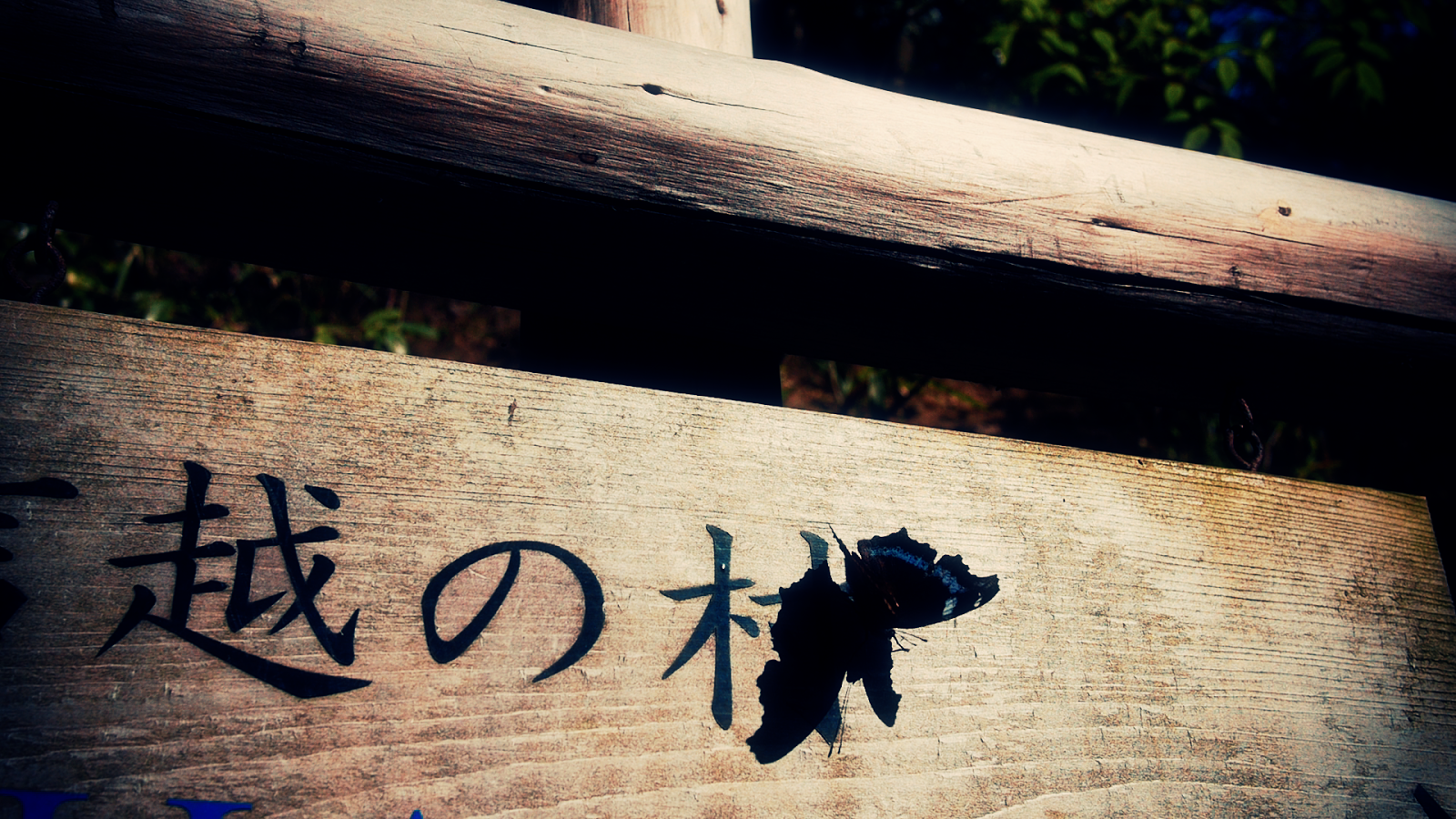
The calligraphy introducing this post reads “Kamu, Kamu, Kamu, Shinyû, Shinmyō, Aun” This is what he said during class last Sunday. (8)
Not sure that I heard correctly, I asked him to repeat. He said that he would make a calligraphy for me. This is the calligraphy.

Sensei said that “divine power” guide our movements. We must not do anything during the fight, but let the “divine” inspire our actions. There is no good nor bad solution, only a natural movement popping up.

So if you want to get this “natural movement inspired by the gods” into your taijutsu, then behave like Monju Bosatsu, and become a sincere disciple of Hatsumi Sensei.
_________________________
1. Gokōgoshin / 悟光護心 / read more here
2. Mutō dori / / read more here then here
3. Sensei in his teachings often speaks of Kanjin kaname. And he is using many different meanings depending on what he wants to convey to us.
Kanjin kaname / 肝心要 / main point
Kanjin kaname / 観 神 要 / to see the truth beyond illusion
4. Christian Petrocello wrote “Sôke tells that 心神 心眼, Shinshin
Shingan (mind and God’s eyes) is called Kanjin Kaname” in https://tenryuenglish.wordpress.com/2011/12/19/shinshin-shingan/
On Shinshin Shingan, I wrote in an older post: “the “eyes and spirit of the gods” said sensei during training. But Shingan is also 真贋, (authenticity); and Shinshin being also 心身 (body and mind) we can understand that Tsurugi is the way to becoming fully authentic with our body and mind. Tsurugi is the tool to achieve that. By moving freely in our Taijutsu, we clean ourselves from intention. From an older post (read here)
5. Monju Bosatsu (jap) aka Manjusri (skrt): http://www.onmarkproductions.com/html/monju.shtml
Bosatsu = Boddhisattva
6. Ganjin: https://en.m.wikipedia.org/wiki/Jianzhen
7. Sensei wants to put a small statue of Monju Bosatsu into the hole of the statue of Ganjin. Monju is the representation of Sharishi (skrt) aka Sariputra (jap) who was the best disciple of Buddha. The Hannya Shingyō Sutra is a discussion between Sharishi and the Buddha.
8. The first three signs are bonji for “god” or “divine power” (Kamu is like kami). There is no Kanji.
神佑 / Shinyû is the heavenly protection; the divine help
神妙 Shinmyō is in a sense showing meekness in the help of heaven (comment thanks to Doug Wilson)
阿吽 / A Un is 1: (Usually written using kana alone) Om; Aun; syllable representing the primordial trinity of Vishnu, Shiva and Brahma; 2: inspiration and expiration; respiration; alpha and omega. Doug Wilson added: ” the a and un are also the balance and the duality of its there its not etc.”


Karada, Yari, Ninjatō

From Shiro Kuma's Blog by kumablog

control is attitude
control is attitude

Sunday class was really interesting and Sensei was in a very good mood. We were only 40 students and we had a few breaks due to the heat outside.

This class was one of the best since a long time. Very technical, very high level and very deep in terms of philosophy. In this post I will only address the waza part, the philosophical aspects will be in a future post.

We did Taijutsu, Yari jutsu, and Ninja biken.

Sensei began with some taijutsu with a kind of Sanken delivered to the back of the ear the neck and the throat, after a fake grab by Tori to the chest. Soft, powerful and very painful.
We also trained a progressive control of the attacking hand. We had to absorb the Tsuki with the hand like; he said, “as if receiving a baseball.” It was about wrapping and redirecting the fist, the whole body was not moving much, but it was the body that was absorbing the hit through the wrapping hand.
While training it and having it done to me by Sensei, it felt like the Taihen Jutsu of 1998. Even though the Shinden Fudō ryū is a Daken Taijutsu fighting system, we used it to discover Taihen jutsu.

Then as it is now common, we moved to train with long weapons.

Personal message to the community: “please continue not to come to training as I need to better my long weapon techniques”.

Sunday was Yari day.

Against Tsuki, you deflect the Yari by stepping first, to the left, and second, by using a full rotative body movement to expel the weapon. Uke is totally off balanced by the power of the control (don’t hit the Yari, match the weapons). As I explained in my previous post on Senō sensei’s class, he insisted on tsunagari (connection) and awaseru (match). The speed of the attack is not relevant as long as you first move your legs. This shields you from the attack and position uke in a perfect angle to be countered by a sweeping with the hirumaki (1) or stabbing with the blade.

Sensei also spoke about the kama yari 鎌槍 (2) application. He explained that the sickle part of the Yari was able to hook the wrist or the neck. You could even “miss” the Tsuki to the head, and then catch the neck with the kama by pulling the pole back to you. Every movement was done with the legs, the Yari following the motions of the body. Everything was connected.

Then we did the same technique with the ninja biken. As it was the case last May, Sensei started with a low Seigan no kamae pointing to the knees of the opponent. (3) Then he was stepping forward and to the right and lifting his arms to intercept the cutting blow of uke at the forearm level.

This was not a cut but a simple hit. The reason to do that, he said is that the ninja biken is mijikai 短い, short. Therefore, the natural flow of the blade is modified, and it has to be used more like a metal rod. He insisted many times on the fact that ninja biken is mijikai.
When shielding himself with the blade supported by the body, the blade would be at a 45-degree angle forward, tip down. This first half of the technique is soft as it is uke’s momentum that does it for you. Then Sensei would pivot slightly towards the blade (his hips and the blade are parallel) and hit with excruciating power on uke’s kote (4).

What I got from this profound lesson is that:

1. legs always move first.
2. legs are cutting or hitting.
3. we have to move in a nonlogical manner.
4. we have to match (awaseru) the attack softly
5. we have to create a connection (tsunagari)

He also spoke about “divine power”, Kami sama, and Monju bosatsu. I will detail this in another post.

_________________
1. https://commons.wikimedia.org/wiki/File:Ishizuki_or_hirumaki.jpg
2. 鎌槍 / sickle + yari / spear with curved cross-blade(s)
3. read this post from May 2015: https://kumafr.wordpress.com/2015/05/25/roppo-kuji-no-biken-again/
4. kote / 小手. The forearm and not the wrist.

Yari downloads HERE


Sanada Yukimura

From Shiro Kuma's Blog by kumablog

Last Friday I arrived quite early at the honbu. Yabunaka San and Kamioka San were there already. They gave me a nice wooden keychain representing Sanada Yukimura, a legendary Samurai of the Sengoku period. Yukimura was revered by the Samurai and considered to be the best amongst them.

(the pictures hereunder detail the 4 sides of the wooden block)

Picture 1

Supposedly, he was the master ninja of the famous ninja Sarutobi.

Picture 2

As I didn’t know him before (and I guess I’m not alone), here is the Wikipedia page detailing his life.

Picture 3


Awaseru

From Shiro Kuma's Blog by kumablog

image

Nobel Prize writer Toni Morrison said: “Not knowing it was hard; knowing it was harder.” (1)
I felt this “hardship” during Senō Sensei’s class last Saturday.

The class regrouped only seven people, so it was nearly like a private lesson. Senō Sensei decided to do some basic Bō movement with the feeling of the Gyokko Ryū. At least this was my interpretation as he was always keeping his hand at the mid-section. (2)

Kamae: Senō Sensei was standing in Shizen with the Bō hold at the center and held by the arm under the armpit. The Bō was pointing in front the end nearly touching the ground at a 45-degree angle.

Waza: When uke attacked, Senō sensei simply walked towards him and slightly to the side with baby steps, turning his body to the left. The movement was natural, no speed, no strength, only footwork. Because of the angle of the weapon, the top end of the Bō placed itself naturally to the inside of uke’s right leg. Once there, he turned his body to the right, trapping uke’s body in a sort of Tsuke iri (3). The Bō then moved into a horizontal position between uke’s legs. Then by simple footwork, Senō sensei bending the legs, grabbed the rear end with his left hand and threw uke to the ground. Uke is trapped in a sort of Jūjiron.
We did many movements based on this first technique: continuing to the left and hitting dō uchi, then reversing; using the back to unbalance uke and finishing with taijutsu, etc.).The movement was so natural that uke was trapped before he knew it.
Impressive, simple, and hard to do. But then things got even more complex.

We did the same feeling but this time by extending the distance using leg movements, then lifting the Bō to meet the attacker’s weapon. This one technique was even more impressive. There was no strength at all but required a perfect understanding of distance and timing to do it.

Because the way he met the weapon of the attacker was so soft that it looked like his weapon was landing softly on the attacker’s Bō. Once the two weapons in contact, they were forming a straight line. Then Senō sensei would deflect the attacker’s weapon by doing a micro rotating action and like by magic, uke’s weapon was going away, leaving uke without defense.

The movement follows four consecutive steps:
1) step back to the right distance;
2) lift the Bō to “land” on the attacker’s weapon (hands after legs);
3) deflect with a very small rotation of the weapon;
4) Then, the upper part of the Bō being nearly vertical he then passed behind and choked uke with it.

Then we applied the same with swords. From Tōsui no kamae with the sword, you let uke cut himself by simply lifting your arms. You don’t try yo cut him; you let uke do it for you. Then he entered with his right leg between uke’s, and turning his back to Uke, used the shoulder to throw him like with a Hanbō (Ganseki Garami). Beautiful, and only based upon precise and soft footwork.
With the sword too, we did many variations from this simple technique.

The reason I quoted Morrison is because I had never seen something so subtle and powerful, Whether we were using the Bō or the sword, this “landing” was the Kaname.

This Kaname is Awaseru, 併せる matching the weapons. (4) When done properly, it looks like the weapons are tied together as if by some magnetic field. Everything is “one”: rhythm, speed, distance, power. I didn’t know this concept before and this it was hard to find it after thirty years of permanent training. In fact since then, I see it in any technique done by Hatsumi Sensei.

I felt like I had a veil blinding me until now. Often people asked me why I continue to go to Japan. I go to Japan because there is always a gem hidden somewhere if you want to find it. It is when you stop training that your level is decreasing. Apparently many high ranks are not interested in this unending quest. Only seven students were training Saturday with him, but we were over forty at Sensei’s class. Where were they all on Saturday?

We train for our development, and the path has no end. Maybe it is about time to reckon it and to go to work!

______________________
1. Toni Morrison biography
http://www.biography.com/people/toni-morrison-9415590
2. We studied the Gyokko no Bō in 2005. The theme was Kasumi no hō. To do that we did all the techniques of the Kukishin Bō by changing the position of the hand in the middle of the weapon.
3. Tsuke iri is one of the basic movement of Hanbō jutsu.
4. Awaseru / 併せる
1: to match (rhythm, speed, etc.);
2: to join together; to unite; to combine; to add up;
3: to face; to be opposite (someone);
4: to compare; to check with;
5: to cause to meet (e.g. an unpleasant fate);
6: to place together; to connect; to overlap;
7: to mix; to combine;
8: to put blade to blade; to fight

Download all the bujinkan techniques,  schools,  weapons
http://budomart.eu/index.php?id_category=54&controller=category&id_lang=1 


Complete KOTO-RYU KOPPOJUTSU with MATS HJELM

From Budoshop by BUDOSHOP.SE

  $24.99

Koto-ryu Koppojutsu

  $24.99

All 60 Koto-ryu techniques on 6 files in HD quality, total playing time is 55 minutes. 2.8 Gb (H.264, AAC, 1280x720p)

This was filmed at the Bujinkan Kaigozan Dojo during the summer of 2015. The theme was Koto-ryu Koppojutsu.

There is no verbal instructions on this film. Each technique is demonstrated several times from all angles. For more information about this ryu-ha click here! Please notice there is several sub-pages to this page with more information, also including an errata for the Densho book published by Hatsumi Soke.

All 60 techniques is demonstrated from several angles including slowmotion speed. There is no verbal instructions, we highly suggest you get the Unarmed Fighting Techniques of the Samurai book (what I call the Densho Book by Hatsumi Soke). This book have all Taijutsu techniques from all the Bujinkan ryu-ha described, it is a must have for all studying the Bujinkan arts.

虎倒流 骨法術
KOTŌ-RYŪ KOPPOJUTSU

1. 五法構 GOHO NO KAMAE (5 techniques) Duration: 04:51 min / 255,3 MB on disk
2. 諸伝型 SHODEN KATA (18 techniques) Duration: 17:14 min / 897,4 MB on disk
3. 中伝型 CHUDEN KATA (12 techniques) Duration: 08:56 min / 471,6 MB on disk
4. 劈刀型 HEKITO KATA (8 techniques) Duration: 05:47 min / 303,6 MB on disk
5. 奥伝型 OKUDEN KATA (14 techniques) Duration: 13:18 min / 680 MB on disk
6. 皆伝型 KAIDEN KATA (3 techniques) Duration: 03:31 min / 191,4 MB on disk

Each file contains chapter markers for all the techniques for easy skipping to the technique you want to study. You can import the files to your iTunes library and sync it to your iPhone or iPad, or stream to the AppleTV. You can import it to any other library that supports the mp4 format and put it on your Android phone or tablet. Or you can play it directly from your hard drive, streaming to your TV etc.

//www.youtube.com/watch?v=Ld4br4JdwhY

Title: Complete Koto-ryu Koppojutsu with Mats Hjelm
Instructors: Mats Hjelm
Theme: Koto-ryu Koppojutsu Shoden, Chuden, Okuden, Hekito, Kaiden
Recorded: Recorded in Kaigozan Dojo, Stockholm July 2015

Kind: Apple MPEG-4 movie
Size: 2 799 357 430 bytes (2,8 GB on disk)
Dimensions: 1280×720
Codecs: 3GPP Text, H.264, AAC, Photo – JPEG
Duration: 55 min…

Tsunagari Through Hanpa

From Shiro Kuma's Blog by kumablog

image

I opened the session with two taijutsu techniques trying to put into life the Ishitobashi 石飛ばし concept I had trained since my last trip in May. (1)
After doing a few variations, sensei applied the same concept to sword techniques. As always I am in awe when he takes whatever is demonstrated and bring it to the next level.
These days, Hatsumi Sensei is insisting on Tsunagari (2), the connection between uke and Tori, and the weapons. This connection is the first step to the Enno Kirinai (3). Once Tsunagari is done, you must keep this connection.

To do so, he said that we must not finish the movements (Hanpa). (4) Hanpa is not new to us; we studied it a few years ago with Chūto Hanpa 中途半端, the half cooked techniques. (5)

Hanpa allows the Tsunagari and we keep the connection with Enno Kirinai. There is no intention; we are “zero” and simply surfing on uke’s movements. Keeping the connection, we can “cut with the leg movement”, Ashi Kiri 足切, and move like a skipping stone. As the sword is a shield and cutting not being the main point, we move the sword with footwork and not with the arms. Sensei said (again) to use no strength Chikara Janai 力じゃない, but only the body movements Karada 体 (body) not Chikara 力 (strength).
To reach this non-action state, he added that mastering Kihon Happō and Sanshin are the prerequisites. He insisted again on the importance of building a strong foundation to our taijutsu. The quality of your taijutsu foundations is the path to understanding what Sensei is doing these days. When you master the basics, they are ingrained, you don’t think about doing a movement. This the “ri” of “Shuhari”. (6)

At the “ri” level, you can now focus on the intention. As Sensei said during class, you have to be Honto 本当 real in your actions, to influence uke’s reactions. (7)
Paradoxically this forces you to alternate the “no intention” with “full intention”. He added that that this is part of human nature “ningensei” 人間性 to feel danger or to expect danger (whether it is real or not). By alternating those two states, you create openings in uke’s atavic reactions and overcome his intentions. This animal reaction is inyō 陰陽, better known as the yin yang.

Strangely, Ashi Kiri 足切 can be written Ashi Kiri 足霧, where “Kiri” means fog. So we can say that bu cutting with the legs, we are also creating a metsubushi like movement that capture uke’s mind and make him react wrong to our non-actions.

________________
1. Ishitobashi 石飛ばし
Skipping stone principle. See previous blog entry “Ishitobashi.”
2. Tsunagari / 繋がり
connection; link; relationship
3. Enno kirinai / 縁の切ない
Do not sever the connection
4. Hanpa / 半端
remnant; fragment; incomplete set; fraction; odd sum; incompleteness
5. Chūto Hanpa 中途半端
For more on this, see blog post https://kumafr.wordpress.com/2014/12/03/consciously-unconscious/
6. Shuhari / 守破離
Shuhari; three stages of learning mastery: the fundamentals, breaking with tradition, parting with traditional wisdom
7. Honto / 本当
Truth, reality


Karada Gaeshi

From Shiro Kuma's Blog by kumablog

weaponsThe first class with Sensei felt like the continuation of my last trip two months ago. As it is now common, when there are not so many participants, we do a lot of weapon techniques during the class (yari and sword).

The main point is to use Karada gaeshi 体返し. The body is deflecting the attack through the weapon. The yari or the sword become the natural extension of your body movements. There is no intention in your weapon, uke attacks, and you walk with your sword in front. The weapon is a shield, stabbing or cutting are not the objectives.

You don’t do a technique you simply protect yourself. You do not have to apply a technique because you control uke’s movements, and the distance by using your body. The trick here is to be close enough to prevent us from attacking again, and also to have enough space to use the yari or the sword. The correct distance is important.
In May, Sensei spoke of Kasumi no kaeru 霞の反る, or to put uke in a “fog like” situation. As you don’t try to escape and stay close to uke, he cannot grab the correct distance to maximize the use of his weapon.

On the sword techniques, Sensei also insisted on not cutting but using the air pockets of the ishitobashi* (see previous posts). When you use a sword, you have to understand its potential. You don’t need to cut because uke is using the Yoroi as a protection**.
When he is not wearing the Yoroi, then you have to know that the sword cuts by itself because it is its nature. I remember what my Musō Shinden teacher used to say. It was exactly the same. “The nature of the katana is to cut; the hardest part is to know how to stop it” (i.e. not to create a suki, an opening after the cutting motion). As Nagato sensei said, it is always necessary to keep our body protected. This need to be protected is why Sensei keeps repeating that we have to use the sword as a shield in the Bujinkan.

The sword of 2015 is the evolution of the sword of 1996. In 1996, we learned the forms, today we are learning strategy. If you are not good at doing the techniques (omote), then this pure feeling (ura) might escape you. The biken waza from Kukishin Ryû and Togakure Ryû are the foundation of what sensei is teaching these days.

The weapon being a shield then Karada gaeshi is the only logical answer.
___________________________
*石飛ばし
**Reminder: the Yoroi was designed to protect the Samurai from the Yari.


The 骨 Kotsu of Bujinkan 手解 Tehodoki

From Bujinkan Santa Monica by Michael
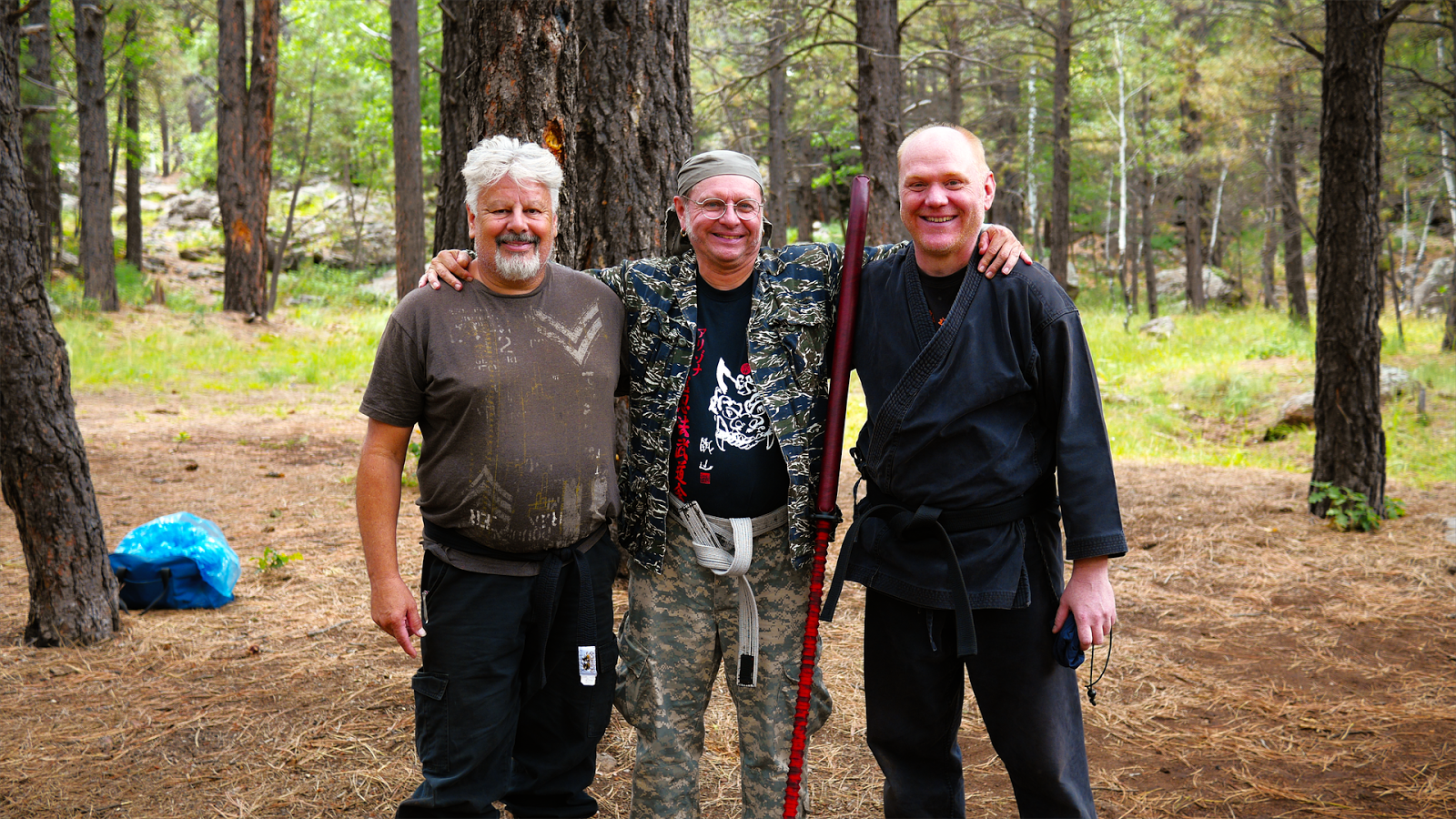
Michael Glenn is frequently beat up in the Bujinkan Hombu Dojo
A little over a week ago, I was in Soke’s class trying to do 両手解 ryō tehodoki. Normally, this is not difficult for me except there were complications. Hatsumi Sensei showed this double wrist escape while he was being punched by a second attacker. Of course, he destroyed them both with little effort.

Soke looked around the dojo. I think he saw everyone fighting. His main point tonight was not to fight at all. He admonished us, “戦わない tatakawanai.”

Hatsumi Sensei watched me and said to do it without waza, without technique. He offered his wrists so I could grab them. I didn’t feel him move at all.

One of my training partners tried to punch him, but was blocked by my own arms. Then we were tangled. My other training partner attacked Soke, and all three of us ended up in a pile on the floor of the dojo. Hatsumi Sensei stood over us laughing. He told me, don’t do it with waza, but with 繋がり tsunagari or connection.

Then he decided to share this most important idea for the whole group. He said,
“Study this way of connecting one to the other. Don’t show that you’re trying to take something. I’m not taking anything, but still holding. If you put it out there too fast they will feel that with their reflexes. Don’t try to take anything. Release or let go in the middle. Remember that the connection is the reality. It’s the waza, but it’s not the waza.”
Well now my mind was blown. The connection IS the reality. Not the fight or any technique. Wow!

Hatsumi Sensei had me grab him again. He spoke as he tangled me up with my partners,
“Don’t try to attack, just consider the importance of connecting one to the next, and the next. This is the 骨 kotsu (knack or secret) of fighting. Very important in a real situation.”
But Soke didn’t knock me down. He just walked away and left me hanging in mid air, about to fall on one of my training partners. I teetered there like I was in a weird game of twister. I guess that’s what happens when you lose your connection.

悪い感覚 Warui Kankaku: Use Your Bad Technique as a Strategy

From Bujinkan Santa Monica by Michael

I get the distinct feeling I'm being watched. I wonder if he would approve?
I sat across the dojo from Hatsumi Sensei. He had just thrown his opponent to the ground. Then he kicked him in the skull. I felt the thud in my legs where I sat. The impact vibrated across the entire floorspace.

Then Soke said something that made everyone laugh, but he was quite serious…
"This is a bad feeling."
He used the words 悪い感覚 warui kankaku. He went on to add that you have to take what's bad, and make it good. This idea hits on many levels for our current Bujinkan study.

Of course when someone attacks you it creates a bad feeling. The bad feeling can also arise when you find yourself in a bad situation. It can even help you avoid trouble before it starts. Take the "bad feeling" and turn it to something good by winning the fight, or by escaping before the fight.

But Soke also meant 悪い感覚 warui kankaku on another level. He meant that we should take our bad technique and make it good. Not just to get better as a martial artist, but to use this as an actual strategy in combat. Use your own bad technique to win!

How do you do that? The answer has a big clue for this year's theme. Soke said,
"Don't think of trying to make it work. You don't have to make this work. Don't be tied up in whether it works or does not. No one ever teaches you that it's ok if it doesn't work."
and,
"It's ok if it doesn't work, because you can change. You can keep going."
Hatsumi Sensei even gave us an example of how to do this. First, you may try to do a technique. Maybe you use a technique that you are skilled with. When the opponent senses this, when he thinks you are about to do a technique, you just take that away from him.

Then you do a bad technique. Maybe one that you've never studied. Or a random henka that doesn't even exist in the densho. This kind of "bad feeling" is a way to steal the fighting power away from your opponent.

This leads to 自然力 shizenryoku, or to a power greater than yourself. Soke looked up from his defeated opponent on the mat. Many of us in the dojo were stunned. He said,
"There's no decided outcome, but because of that, there is. You're not deciding the outcome. You let that be decided naturally. This is this year's theme."
This happened during my first class when I got off the plane and went straight to the dojo. After 20 hours of travel, I could have just passed out in my hotel room because I was "too tired" to go to training. But I would have missed this experience. I'm glad that I took that bad feeling and made it into something good instead.

How to Use 初心 Shoshin to Protect Your Bujinkan Training

From Bujinkan Santa Monica by Michael

Rain brings Summer Flowers to the Bujinkan Hombu. photo by Michael Glenn
During the tea break today, Nagato Sensei said some profound things. He began by speaking about how Soke has said that we should not teach bad people. Then he gave some examples.

Nagato named names. He listed some of the bad people that have passed through the Bujinkan. He aired some dirty laundry with details I won't write about here. Then he also shared how they are dealt with by Soke and the Japanese instructors.

Nagato commented on the interesting fact that Soke does not eliminate these people from the Bujinkan. He said we need these bad people around to learn from them. They are the devils we know. Keep your enemies closer, as they say.

He said in the Bujinkan, we need to be capable of doing worse than the devil himself. He used the mafia or the yakuza as an example of evil. They may be bad, but we are worse. He said they should be afraid of us.

But then Nagato explained that the most important of all is to protect the goodness in yourself. Don't allow your ability to destroy evil, or to be more terrifying than the devil, color your own heart black. How do you stay clear of the bad around you?

Nagato used the word 初心 Shoshin. This is beginner's mind, or the spirit of a newborn. It can also be your original motivation for training. He said people forget why they began training. Then they lose their way.

They get caught in ideas of rank, power, politics, or building territories. And the purity of budo is lost to them. This purity that can both protect and destroy is a gift. Throw it away at your own peril.