Did Sensei Gave The Theme For 2018?
From Shiro Kuma by kumablog
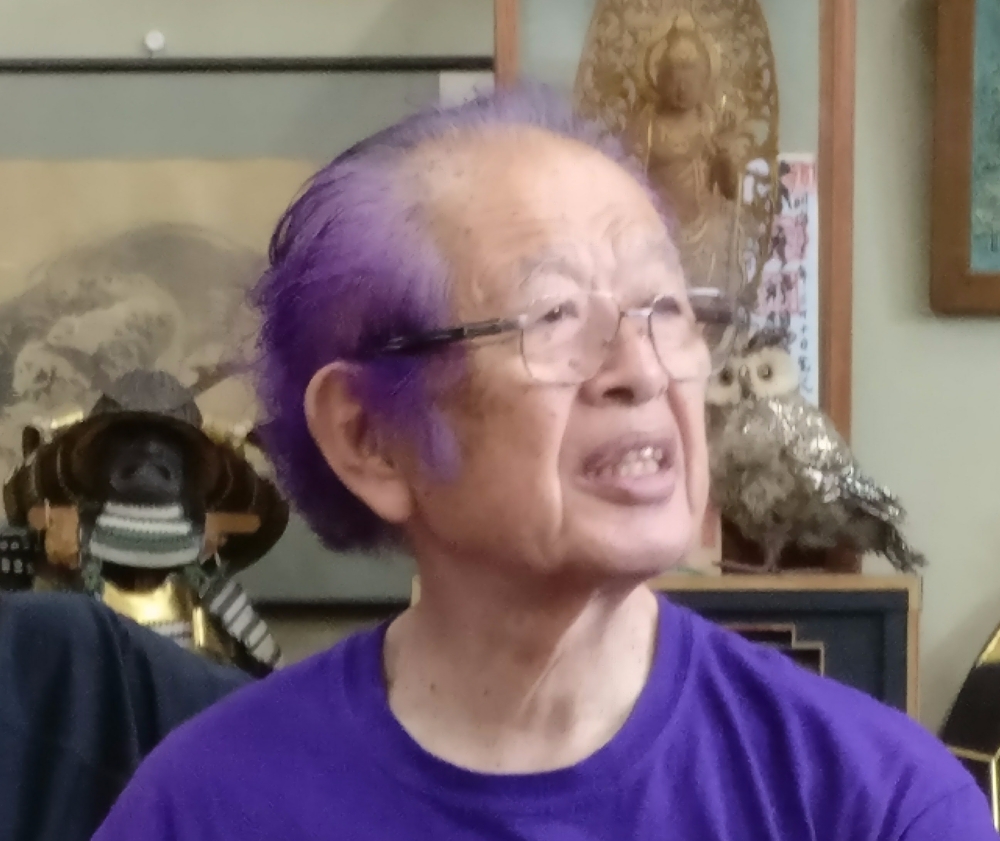
Is Mutō Dori the first step to knighthood?
Is it possible to become a knight in the modern times (Jidai), or was it only possible in the past (Jidai)? (1)
Here is an occidental Knight’s oath that reminded me of the Mutō Dori theme:
Be without fear in the face of your enemies.
Stand brave and upright.
Speak the truth always, even if it means your death.
Protect the helpless and do no wrong.
When you read this oath from the past, you see similarities with what Hatsumi sensei is teaching at the Honbu dōjō. The Mutō Dori of 2017 is to move towards the opponent with no fear even if you might die. And this whether you have a weapon or not. Ethics and values will keep us brave and upright. But this requires physical courage and high values.
How many Bujinkan Shihan and practitioners understand that today?
Sunday after the calligraphy session, Sensei was speaking to us, saying that the next year’s theme would be “Ninkyō”. “There are many meanings for it” he added. In this post, I’d like to share with you some of them.
Ninkyō 任侠 means chivalry. Thence my interrogation about knighthood.
It also carries the ideas of generosity; heroism; chivalrous spirit; and helping the weak and fighting the strong. Aren’t those values what Sensei tried to achieve by developing the Bujinkan during these past forty years?
We all know that the Bujinkan has developed without any “master plan”, as Sensei only follows the path of nature, and adapts his vision permanently to the situation. In fact, Sensei, like the Ishitobashi of 2015 (2), bounces on the surface of life following the changes on the surface of the water. After the Fukushima catastrophe I phoned Sensei, and when I asked about how he felt, he answered: “Banpen Fugyō”, “10000 changes, no surprise”. Change is permanent, and as a Bujinkan member and a follower of Sōke, we have to go with the flow of things. The Bujinkan is not an organization; it is a gathering of people following his understanding of life.
Or it was supposed to be like that. Because these days, things are changing (decaying?) fast, and I am witnessing abroad, and also in Japan, a negative evolution in the Shihan’s behaviors and values. Respect and obedience are disappearing, and I’m concerned that some turbulent times are coming. I hope that Sōke’s dream will prevail, and maybe this is why the next theme might be Ninkyō, chivalry.
Chivalry, knighthood, regroup values that our society has discarded to a more profit-oriented life. If money and power are the only values the majority is seeking, then no wonder why our Budō is not developing in the proper direction. But don’t blame Sensei for that, blame yourself! We are the Bujinkan, and now is the time to stand up and to fight for re-establishing our values.
Ethics and morality might be outdated, but they are the real foundations of the Bujinkan Budō. I’m not referring here to the modern vision of Budō exposed in the Hagakure or the Bushidō, even if some aspects of these books can still be of value today for the serious practitioner. (3)(4)
With Ninkyō, Hatsumi sensei’s Budō is turning us into new knights, and this is our duty to make ours, the values of the old Jidai (時代) to bring them into the Jidai (次代) of the future because the future is now. If we do not act rapidly, all that Toda Sensei, Takamatsu Sensei, and Hatsumi Sensei have created might vanish like a “puff of smoke”.
Toda Sensei showed the correct path:
To know that patience comes first. Know that endurance is simply a puff of smoke.
To know that the path of man comes from justice. Know that the way of men is justice.
To renounce avarice, indolence, and obstinacy. Forget the heart of greed, ease and relying on others.
To recognise sadness and worry as natural, and to seek the immovable heart. One should regard both sadness and malice as natural laws, and just gain the enlightenment of an unshakable heart.
To not stray from the path of loyalty and brotherly love, and to delve always deeper into the heart of Budō.
In your heart, never leave the ways of loyalty and filial piety, and aspire greatly for the ways of the pen and the sword.
Written on New Year’s Day in 1891 Toda Shinryuken Masamitsu
If we don’t take action rapidly to correct our attitudes, follow the guidelines set up by Toda Sensei, and the ethics and values of chivalry, then the Bujinkan will turn into anarchy and tyranny, and prove Plato right. (5)
Ninkyō (任侠), “chivalry” is also our Ninkyō (任今日), our “duty for now” (6); if we do not want to become Ninkyō (仁虚), “evil humans!” (7)
___________________________
1. 時代 vs. 次代, Jidai vs. Jidai: If the first Jidai, 時代 means: 1. period; epoch; era; age ; 2. the times; those days ; 3. oldness; ancientness; antiquity; it is interesting to know that Jidai, 次代, means “the next era “
2. Ishitobashi: 石飛ばし, skipping stones (on a body of water)
3. Hagakure and Bushidō: The Hagakure by Yamamoto Tsunetomo was written by a clerk (?) during peace time in the 18th century, fifty years before Meiji. The author had no clue of the Sengoku Jidai period. https://en.wikipedia.org/wiki/Hagakure
4. The Bushidō by Nitobe Inazō was written even later in 1899 and published in the 2oth century! https://en.wikipedia.org/wiki/Bushido
5. The Plato Republic, book VIII: http://www.mc.maricopa.edu/~davpy35701/text/plato-democ2.pdf
6. Ninkyō (任今日), obligation; duty; charge; responsibility + today
7. Ninkyō (仁虚), human + falsehood

 …
… …
…

 …
… …
…

 …
… …
…

 …
… …
…

 …
… …
…