Kaigousuru 2004 Taikai – Roppo kuji no biken
…
From Uploads by shugyou by shugyou
 |
The theme of this year was Roppo Kuji no Biken. All of the instructors had already been in Japan this year and got the feeling of this years theme. This is a 2 Disc set with total 4 hours of good action! For more information about this video, see budoshop.se |
From:
shugyou
Views:
171
 0
ratings |
| Time: 00:52 | More in Sports |
From Shiro Kuma's Weblog by kumablog
 When in 1993 Hatsumi sensei began to teach the now famous “themes of the year” he decided to begin with the study of bô jutsu. It opened a five year cycle dedicated to the weaons of the bujinkan.Amongst all the weapons of the bujinkan the bô jutsu is the most complete of all with an extensive set of techniques and levels that influences greatly our taijutsu both at the technical and spiritual level.Sensei speaks of “roku shaku bô jutsu” (六尺棒術) and this is the title of his first bô dvd. But many see only the size of the weapon. It is right to say that in the past the roku shaku was the size of the weapon. As you know even if the Japanese government began to follow the metric system at the beginning of the 19th century he kept alive the kanejaku (矩尺), the old measurement system. Even today people refer to the size of a room in number of tatami (疊).One tatami represents the surface of a measurement unit called the “ken” (間) and which has a length of 6 shaku. Until the 19th century all temples, castles, and houses were built with this unit. For more on this please look for “kanejaku” on the net.
 But when it comes to the training we have to keep in mind that Japanese people before the 20th century were not tall (often around 150 cm). So, for us westerners, in order to keep the same ratio size/length in the buki waza (武器), our long staff should have a length of at least 2m. Note that buki (技) means also technique or art…
Now, when sensei speaks of the roku shaku (六尺) he is speaking of shiki (識), consciousness (vijnana in buddhism). Sensei implies that bô jutsu is the key to reach shiki (識) the 6th element of the gogyô, consciousness. By training the many waza of bô jutsu you are in fact developing your consciousness and become able to use it in every aspect of your life. By introducing this concept of shiki back in 2005, sensei forced us to do a major leap in our understanding of the bujinkan arts.
And remember that training the weapon -omote (表)- develop our consciousness of life – ura (裏). This is why bô jutsu is so important in the bujinkan.
 Bô jutsu is the first step to free our taijutsu from the form. But to free yourself from something you must first be “trapped” by it. But how is it possible to achieve formlessness from something you don’t know?
We have to learn and study a lot to get the forms correctly until we can strip the forms off.
The bujinkan is a paradoxical system in which we are looking for something “natural” by studying things that are “not natural”. In fact the bô is the entry gate for the weapons and the necessary step to take in order to improve our whole taijutsu.
Until now no tools were available to review all those techniques this is why we have decided to record them all. We have also added for each technique, the kaeshi waza (返し技) to show you how to win against the bô. It took us four days of recording to do so and many bruises too.
 With www.koimartialart.com (online streaming) or with www.budomart.com (dvds) you can now discover or rediscover the richness of the bô jutsu from the kukishin ryû. We recorded all the techniques (11 dvds) to help you unleash the power of your taijutsu with this fantastic weapon.
The bô (棒) is the link to the ten (天) and the chi (地) to become a real jin (人), a shiki no jin, a conscious human being (識の人間).
By the way did you notice that the kanji for “ken” (間) is identical to the second kanji of human being (間) …


 …
…From Shiro Kuma's Weblog by kumablog
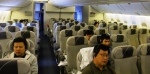
JL408 to Tokyo
On Wednesday night at the airport it seems that the world has changed.
When I entered the boarding gate the room was empty or nearly. This is what one month of media howling have done! The news have been exaggerating so much the radioactive situation here in Tokyo that the whole world has the feeling that Japan is forbidden to go to. Once again I do not try to minimize the gravity of what happened but as Takamatsu sensei said: ”By opening his eyes and his mind, the ninja can responsively follow the subtle seasons and reasons of heaven, changing just as change is necessary, adapting always, so that in the end there is no such thing as surprise for the ninja”. So following Takamatsu sensei’s words please adapt to the misinformation and learn to read where the real dangers are. Fukushima Daiichi is a real problem but the radioactivity in Tokyo is far under the limits. Actually it is well under many other areas in Europe.
But let’s be honest, as a standard Frenchman I love it when I have the feeling that I belong to some privilege group of people. And yesterday it seemed to me that I was belonging to the privileged group of “those allowed to fly to Japan!”
The plane, a Boeing 377-300 – no doubt the best flying machine in the sky these days – also was empty. I could have guessed it, though! and it reminded me of my early business years where I flew back from the Middle East one night with only 13 others persons. I love empty planes.
A B-777/300 can host 272 passengers and needs 13 crew members and 3 pilots to operate. We were 108 passengers traveling which, apart from the Buddhist symbol of 108, represents more than 1 stewardess per person!
The flight with JAL was awesome because:
It was like being a VIP or living in some kind of a dream.

A very quiet flight to Tokyo
Why was that?
Only because of the “nuclear terror auction” spread by the media since the catastrophe. For weeks they were not speaking about the 260000 people that lost everything but about something that sells more: “the terrible nuclear accident”. They got so much our attention that in the plane there were only Japanese people and nearly no one from Europe going to Japan and I guess that it will not change soon.
So if you want to train with a small group of buyu; if you want to enjoy calmness; and if you want to save money on your flight then do not hesitate, come now to Noda as this is the opportunity of a lifetime.
Training bujinkan is about learning to make good choices in life. Did you make a good choice recently?


 …
…From Bujinkan Santa Monica by Mats "Toryu" Hjelm
 |
| Photo from Gifu Prefecture by tallkev |

From Budoshop by BUDOSHOP.SE
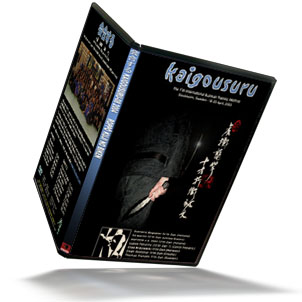
Kaigousuru 7 -- the seventh International Bujinkan Training Party with…
- Dean Rostohar
- Ed Martin
- Elias Krzywacki
- Lubos Pokorny
- Mariette v.d Vliet
- Mats Hjelm
- Sveneric Bogsäter
- Thomas Franzen
Theme was Koteki ryoda juppo sessho no jutsu, Kihon Happou, Kunai, Kyoketsusshoge and much more
Recorded in Stockholm, Sweden April 18-20′th 2003

Elias taught Kihon Happou with Juppou Sesshou feeling. Dean talked about and taught basic principles in combat. Mats taught the Kunai Kata with help from Onni Koskinen and Ed. Thomas taught Taijutsu and Kunai. Ed taught ten breathing excercises and knife defense. Sveneric taught Bajutsu, Kunai and Sanshin no Kata. Lubos taught Kunai and Taijutsu. Michael Clysén taught Ten Ryaku no Maki techniques and Mariette did henka with the Kunai.
There was also a Q&A session, where the instructors talked about this years theme and much more.
www.youtube.com/watch?v=d0OVqwqUsIc
Click here for more information about our download files and how it works!…
From Uploads by shugyou by shugyou
 |
99 people from 8 countries participated at the 7 th Kaigousuru, sponsored by Bujinkan Kaigozan Dojo in Stockholm, April 2003. Elias taught Kihon Happou with Juppou Sesshou feeling. Dean spoked and taught basic principles in combat. Mats taught the Kunai Kata with help from Onni Koskinen and Ed. Thomas taught Taijutsu and Kunai. Ed taught ten breathing excercises and knife defense. Sveneric taught Bajutsu, Kunai and Sanshin no Kata. Lubos taught Kunai and Taijutsu. Michael Clysén taught Ten Ryaku no Maki techniques and Mariette did henka with the Kunai. There was also a Q&A session, where the instructors talked about this years theme and much more. For more information about the full DVD and instant download files, see this web site... budoshop.se |
From:
shugyou
Views:
298
0
ratings |
| Time: 00:52 | More in Sports |
From Bujinkan Santa Monica by Mats "Toryu" Hjelm
 |
| photo by shirokazan |
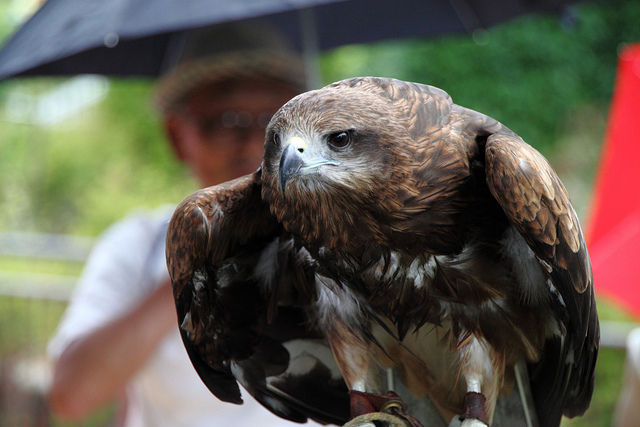
"Not using just your fingertips, but using your whole body here. Doing this with shuko- it becomes even more scary. It's like a hawk catching its prey.What are the talons of a hawk, or the canine teeth for? They are for piercing flesh and tearing it away from bones.
This is not just your fingernails, it becomes like your canine teeth, incisors."
 |
| photo by MJ/TR (´・ω・) |

From Budoshop by BUDOSHOP.SE
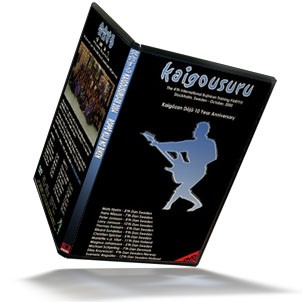
- Sveneric Bogsäter
- Mariette v.d Vliet
- Larry Jonsson
- Elias Krzywacki
- Rikard Sundelius
- Peter Jonsson
- Mats Hjelm
- Michael Schjerling
- Hans Nilsson
- Thomas Franzen
- Christian Spicker
- Magnus Johansson.
The theme of this year was Koto-ryu. This was the 10 year anniversary of Kaigozan dojo. A lot of instructors where invited, and a lot of people came to play and celebrate. This is a very good tape for people that haven’t seen so many instructors move. All the instructors move and teach different, you will get a lot of variety, and a lot of good ideas to play with.
Recorded in Stockholm, Sweden October 2000
www.youtube.com/watch?v=uBK_ICKJIPw
Click here for more information about our download files and how it works!…
