Skip to content

The Demon Motif in Kukishin Ryu: Part I of II

From The Magick & The Mundane » Bujinkan by Shawn Gray

I. Intro

The Bujinkan martial arts training theme for 2007 was the Kukishin Ryu tradition. (There is some debate over which term is best to use, Kukishin Ryu or Kukishinden Ryu, and Hatsumi Sensei uses both of these seemingly at random.  I am going to use “Kukishin Ryu” in this article for the sake of convenience.)

The meaning of the term “Kukishin” is one that causes discomfort for some, as it involves a word usually translated into English as “demon,” – the term “Kukishin” being composed of the characters for “9 – Demon – Spirit[s] (九鬼神)”. Depending on your religious background and upbringing, this can be the source of a certain amount of trepidation. “See?” you’ll hear some say, “What further proof do we need that at the real heart of Japanese martial arts lurks all kinds of darkness and evil?” Unfortunately, the modern English term “demon” has taken on quite a different meaning from the way it was first used in past millennia, and it is this modern understanding of the word which causes some red flags to go up.

This article will first look at early uses of the term “demon” in the West in order to help us more fully understand some of the things that Sensei is referring to when he uses the corresponding Japanese term “oni” in training. We will next look into some psychological principles derived from the demon idea which we can use to make our lives happier and more balanced. (Yes, you read correctly.) In the final part of the article (Part II, separate post), we will look at principles of Japanese geomancy related to the demon motif, and some taijutsu ideas which can be interpreted in light of those principles.

II. From Daemon to Demon – And Back Again

In one of the first classes of 2007, Hatsumi Sensei pointed out that when he is talking about “oni,” he is referring not to an evil spirit, but to a neutral part of the human psyche which can be put to either good or negative use. This is essentially the same concept as that of the Greek term “daemon” (or another Latinized version, “daimon”), from which we get our modern word “demon.” Originally, the Greek term referred to both good and malevolent spirits. In early Christian times, “the usage of ‘daemon’ in the New Testament’s original Greek text caused the Greek word to be applied to a Judeo-Christian spirit by the early 2nd century AD.” In Greece and Rome, daemons could be either good or evil. Socrates claimed to have a daemon that served to warn him against mistakes. The Hellenistic Greeks called the good spirits kalodaemons and the evil spirits kakodaimons. The kalodaemons were a type of guardian angel which would watch over mortals. (“Thus eudaemonia, originally the state of having a eudaemon, came to mean ‘well-being’ or ‘happiness.’”) The Romans used the term genius to refer to the same type of benevolent, guiding and protecting spirit. In Plato’s Symposium, Socrates is taught that love itself is a good daemon. It wasn’t until the end of the 4th century, when Christianity became the dominant force in the Roman world, that the meaning of the word was changed to refer only to forces of an evil nature. Sensei’s definition of “oni (鬼)” is thus very similar to the original neutral meaning of the English word daemon.

Though the word gradually took on an ominous meaning through the Middle Ages and into the 20th century, modern technology has gone back to adopt the original usage in referring to certain pieces of computer software. These are familiar to anyone who works as a system administrator. In a computer server environment, a daemon is a program that runs continuously in the background, ready and waiting for the right conditions for it to begin performing its task. Normally the right condition is met by a request for its service, for example a network connection of some kind. When such a request is made, the daemon automatically goes to work and performs its assigned task, normally an intermediary role between a client and a server. It then switches back into stand-by mode when the task has been completed. The FreeBSD operating system has made use of this motif in the design of its mascot, a cute little red fellow with horns, a pointy tail, and a pitchfork – affectionately named Beastie.

III. Kill ‘Em With a Smile

As training opened for 2007, Sensei hung up a big piece of calligraphy at the front of the dojo, which read, “Kuki Taishou (九鬼大笑)”. The “Kuki” is the familiar “9 Demons,” and the kanji for “Taishou” have the meaning of “Big Smile (or Laugh)”. In explaining the meaning of this, Sensei pointed out that the word taishou can also be written with the kanji for “Commander (or General) (大将)” There were a few confused faces in the dojo – what is the connection between demons, a commander, and a big smile?

From the perspective of psychology, humans have daemons (in the classical neutral sense) as part of their psyche. In a manner similar to the daemons used in modern computer systems, the daemons of the psyche act as intermediaries between the conscious and the unconscious mind. When there is an external request for an internal resource, the daemon goes to work and sees to it that the particular emotional or psychological resource that it is responsible for is provided to the requester – normally an external stimuli of some kind. When someone insults you, a daemon can go and fetch an offended response. When someone compliments you, a daemon can go and fetch a  reaction that is either egotistical or humble. The type of reaction that the daemon returns with will depend on how that daemon has been “programmed.” We could perhaps define a daemon as a kalodaemon (“good” daemon) or a kakodaemon (“bad” daemon) depending on how it has been initially programmed and installed (its condition at birth) or how the program has been altered (by external or internal influences) since then. Daemons will do what they have been programmed to do. They will fetch the emotional reactions that they have been programmed or reprogrammed to fetch. What if one finds that he or she doesn’t like what the daemons are bringing out in response to external requests? A person can at this point choose to reprogram the daemon so that it responds as the person would like it to. Instead of returning an offended reaction to an insult, the daemon can be made to return a peacemaking response. Instead of returning an egotistical response, the daemon can be told to bring out a humble one. How does one reprogram the daemons and bring them under control like this?

The key that Sensei referred to lies in both the reading of the kanji for taishou and also in the design of many traditional Japanese oni masks. The Commander (or General) reading of taishou (大将) tells us that we have to be in charge and in control of ourselves. It is our responsibility to take control of our lives and put our insides in order. Sensei stated that “we should become ten to control the nine.” Ten is a complete, balanced number and crowns the nine below it as a diadem on the head of a monarch. The daemons should be doing what we want them to – which may or may not align with the way they are currently operating. If they are not acting in accord with how we would like them to, it is our right and responsibility to invoke the role of Commander to impose the rule of order on the system of our Selves. Our personalities should work the way we want them to, so that we do not become the victim of our own vices, but so that we can instead live as complete and balanced human beings. This correlates closely to the Qabalistic idea of the 10 Sephiroth, or spheres, in which the flow of energy down to the lower spheres stems from and is, or should be, controlled by the higher spheres. In fact, on the Qabalistic glyph known as The Tree of Life (shown here on the right) , the highest sphere is called Kether, which means “crown”, and the lowest sphere is called Malkuth, which means “kingdom”. In the classic medieval grimoire known as The Book of the Sacred Magic of Abramelin the Mage, now translated as The Book of Abramelin, the aspirant is taught a method of establishing a relationship with a spiritual entity known as “the Holy Guardian Angel”, which some interpret to be the Higher, or Divine, Self. Once this relationship is established, the aspirant is then directed to conjure up a long list of demons and, under the authority of the Holy Guardian Angel, compel them to obedience and servitude. From the point of view of modern psychology, this can be interpreted as the integration of the personality and subsequent processing of complexes, neuroses, etc through the Light of this integration. The “Holy Guardian Angel” is of the same archetype as the Taishou Commander. It is that aspect that knows what our Path, the true course of our life, is meant to be, and which has the authority to bring all aspects of our lives into order and balance under it’s direction. By bringing all under the auspices of the the integrating and balancing forces of the Crown (Kether), the Kingdom (Malkuth) may be ruled with balance and equanimity.

The other reading of the word taishou describes how the role of Commander should be implemented – with “a great smile (taishou, 大笑).” When we look at Japanese oni masks, we most often see that they have big smiles. They thus offer us the key to their management and control. A genuine smile is the sign of a relaxed mind and a calm spirit. It also indicates flexibility in thinking. Conversely, a stern, stiff expression usually indicates inflexibility of thought, whether it is just at that moment or whether it is an indication of a general condition. When we find ourselves responding to things in a way that we don’t really want to, the response is often accompanied by a stress or tension of some kind, because it is in opposition to the way that we would really like to be reacting. When we smile, our expression softens and our mind relaxes, becoming more flexible and open to new ideas and thus more open to new and alternative ways of reacting to a given situation.

A smile gives us a calm heart and allows us to make even, solid, well-balanced judgments. This idea of a calm and tranquil heart in the face of trying circumstances is known in Japanese as heijoushin (平常心). Smiling helps us to achieve and maintain this state. Most often we smile in reaction to something positive. Something has made us happy, so we smile. This is well and good, but in this case the smile is a reactive response to something. Many people forget that we can also use the smile in a proactive way. In Commander mode, we can use a smile to proactively change ourselves in a positive way, both inside and outside. We are so used to smiling in connection with a happy feeling that the two have are inextricably linked. When we are happy, we smile. And so it is also that when we smile, we become happy. Even if something has happened that would cause us to have an adverse reaction, we can change our mental reaction if we smile. The next time something happens where you would usually get irritated, annoyed, or angry, force yourself to smile. You’ll find that the physical act of smiling tends to make you feel calm, balanced, and much more positive. No longer a victim of your own emotions, you have taken the daemon by the horns with your smile and made a proactive decision as Commander about what reaction the daemon is going to give to this particular circumstance. Like all things, it takes time and practice, but the more of a habit you make it, the more you will find your mental state characterized by the heijoushin principle and the more your personal daemons will act in accordance with your will and desired behavior.

This topic will be continued in Part II.

BIBLIOGRAPHY

  1. Wikipedia: http://en.wikipedia.org/wiki/Daemon_(mythology)
  2. Wikipedia: http://en.wikipedia.org/wiki/Daemon_%28computer_software%29

Happiness Tea

From 術心悟 by goshinarts

While in Bangalore,  I had the unexpected pleasure of spending time with Arnaud from France as well as Shiva, our gracious and good natured Indian host.  These delightful times instantly reminded me of a painting done by the monk Sengai.  Three gods of happiness are pictured.   Daikoku Ten, whom some may recognize from the statue outside Hatsumi Sensei`s office, is  originally from India.  He is not only a god of protection, war, and prosperity, but, auspiciously, he is an incarnation of the Hindu god Shiva!   Second is Juroku Jin, or the god of Longevity.  Often pictured leaning on his cane, he is usually in a most jovial mood.  Lastly, there is Ebisu, indigenous to Japan, he is a god of prosperity often pictured with a fishing pole enjoying his fresh catch of the day.


Above them is Sengai`s inscription;  “Three prosperities, make them one and enjoy a big happiness tea!”  As Takamatsu Sensei says, “Cherish your connections…”.  Thru others we enrich and are enriched.  How wonderful it would be to set aside notions of higher and lower, good and bad, and blend one fantastic happiness tea!  The true treasure of Nin lies therein.

sengai_02 IMG00615-20110628-1148

拍手 Hakushu: The Sound of Ninjas Clapping?

From Bujinkan Santa Monica by Bujinkan Santa Monica

Silent Hill, photo by Jon▲
What's with all the clapping when we bow in?

One of the first strange things a new student in the Bujinkan has to do - after putting on a hood and tabi to scale the castle wall on a moonless night to sneak into the dojo - is learning and performing the bow in before class. Hopefully it only takes them a few mumbles to learn the phrase "Shikin Haramitsu Daikomyo," while they clap and bow, even as their face shows the strain of a beginner sitting in seiza.

We all went through this. No matter our age or rank. For me, I remember just trying to fit in during the class. Saying nothing at first, hoping to time my claps with the rhythm of the group. I first learned about one translation of the words when I was trying to learn to pronounce them. I won't go into that now (another post maybe). But what I will say is that the bow in process turned into a habit that lost what little meaning I could give it.

Many years later - maybe when I first had to lead a bow in myself - I gained a deeper understanding of that process.

So how does it go?

Sanpai sahō 参拝作法 The usual way to worship in the presence of the kami (at a shrine) is to bow twice, clap twice, and bow a third time.

This is like a secret for how to jump start 心伎体 Shin Gi Tai.

The body (deeds), mouth (words) and consciousness (thoughts)- are made one and equal in one instant while the concentration is undisturbed.

In the practice of esoteric Buddhism the body becomes the symbol or mudra, the mouth expresses the mystic sound or mantra, and the mind is absorbed in meditation.

So just what does the clapping symbolize? For me it is like light and sound coming together in an instant of Daikomyo! But in Shinto it has different aspects:

It is used to get the attention of the Kami. And to purify with 言霊  otodama - the spirit present in sound or language.

According to the Kojiki 古事記 (Japan's oldest surviving text complied around 712 AD) and Nihon Shoki 日本書紀 (Japan’s second oldest book, compiled around 720 AD), the sound made by clapping hands is the same sound that divided chaos into heaven and earth and gave birth to Japan.

It could be the sound made by the closing of the cave door after the sun goddess Amaterasu came out of the cave where she had been hiding)

Hand clapping is distinguished by the number of claps, such as "short clapping" one to three times (tanhakushu) or "long clapping" of four claps (chōhakushu). 

There are also distinctions based on the manner of clapping, which includes shinobite, raishu, renhakushu, and awase hakushu.

Shinobi te involves silent clapping and is performed at "Shinto funeral ceremonies" (shinsōsai) and other occasions.
Raishu is performed, for example, when presented with a cup of sake. At Shinto ceremonies, "two hand claps" (nihakushu) is generally common. Moreover, according to the conventional explanation for kashiwade as an alternative word for hakushu, kashiwade is a popular name derived from confusion between the character for "oak tree" (kashiwa 柏) and the character haku 拍. Another theory suggests that the name kashiwade is related to the raishu etiquette of hand clapping before "food served on individual tables at a banquet" (kyōzen) following a Shinto ceremony as well as to the fact that both kyōzen and "food served on individual tables" (zenbu) are called kashiwade.

— Shimazu Norifumi

So what does all this mean for you? If you are not a practicing Buddhist or Shintoist, maybe not too much. Maybe it's just one of those odd things you have to do before you start punching your buddies. But I think if you consider it in terms of unifying and bringing together your thoughts, words, and actions - it may develop into something more powerful for you.


News update, June 29′th

From Sweden Taikai 2011 by Sweden Taikai 2011

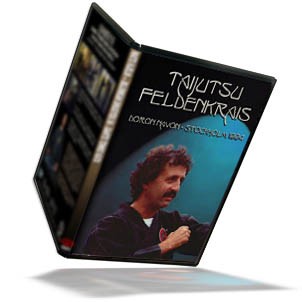
Hatsumi Soke with Shindenfudo-ryu Sword in STHLM 1998

Hatsumi Soke with the Shindenfudo-ryu Sword in STHLM 1998

We updated the web site with a new video of Steve Olsen who will be one of the four Shihan teaching at the Sweden Tai Kai in September.

We have the venue booked now. We wanted the bigger venue, but it was fully booked. But we booked another gym hall we used many times before (same place where most of the Kaigousuru Taikai in the past was). The address is…
Lilla Alby Skola, Humblegatan 19-21, Sundbyberg, Stockholm, Sweden.

Apparently Hatsumi Soke started teaching Shindenfudo-ryu Iai, as a second theme for this year in May. In 1998 Hatsumi Soke taught Shindenfudo-ryu taijutsu and sword, you might want to check out the videos from 1998 to see how Soke used this big sword. However, he might teach with a different sword now (I don’t know). However there is still three more months for the guys in Japan to figure it out. I’m sure the Taikai will be interesting for everyone attending, I hope you can make it.

The sign-up form will be available later in July.

On the Facebook event page we can see that there is 51 attending, 118 maybes, and 776 people who hasn’t made up their minds yet. This is interesting for us to see, but from experience we can’t trust this system. People have confirmed before and never showed up, it is to easy to just say yes without meaning it. The only way to confirm your place is through our sign-up form that will be up later in July.

We also updated the Information page, please read it before sending us questions!

Edit: I also added a new video with Duncan Stewart.

Pictures of Sundbyberg and Stockholm

STHLM, Värtahamnen o Kaknästornet SBB, Albygatan close to the station SBB, Albygatan, KGZ dojo down there SBB, entrance to KGZ dojo SBB, Lötsjön SBB, Train-, Metro-, Bus- station SBB, Vintergatan SBB, Tornparken SBB, Tornparken2 SBB, Vattentornet SBB, Storkyrkan Hatsumi Soke with Shindenfudo-ryu Sword in STHLM 1998

Happy training!

/Mats

Facebook friends and who we associate us with

From 8þ Kabutoshimen by admin

20110625-074959.jpgI just got another friend request from someone who claims to be a “Ninja Sōke” (I only know one and he is not on fb!). I usually say yes to everyone who seems to be a Bujinkan member, or someone I know. This guy probably just want my name to add credibility to what he is claiming. I see we had 37 mutual friends, all (I think) is Bujinkan members. I wonder why do you add people like these as your fb friend, unless you know them?

It’s like saying, hi I’m a ninja master and look at all my high ranking Facebook “friends” from other styles who know and respect me and my style. When in fact they never met each other. His poor students he con might not know this. At least I don’t want my name associated with someone like this.

On the other hand I say yes to all friend invites from people who seems to be a Bujinkan member. We have probably met, and I don’t remember names easily. Or we will probably meet each other in the future, being in the same organisation and travels around frequently.

So what I meant with this rant is that I think we should be more careful on Facebook, and who we associate us together with.

The post Facebook friends and who we associate us with appeared first on 8þ Kabutoshimen.…

平常心 Heijōshin: a Heart Like Clear Water

From Bujinkan Santa Monica by Bujinkan Santa Monica

Water Sunset, Tokyo. photo by xxspecialsherylxx
I don't spend a lot of time in front of a mirror. Those of your who know me may think, "that's obvious." But when I do get in front of a mirror, after I get over the shock of my appearance and really look to see what is reflected there, it makes me smile. The smile comes from a recognition of my own spirit reflected back at me. Thankfully, that is a happy reflection.

In training it is said that we are polishing each other's hearts so they are clear like a mirror. If we get this natural clarity we will have 平常心 heijōshin and reflect the hearts of our training partners (or opponents) back to them.

One of the songs of the gokui says,
"If you possess a heart like clear water, the opponent is reflected as though in a mirror." 
This state of mind is like 無念無想明鏡止水 munen muso meikyōshisui,  "Without worldly thoughts, clear and serene as a polished mirror or still water."

This is very powerful advice. Reflecting your opponent's technique, rhythm, and spirit is a strategy that has many rewards. Not just for battle. It works in sports, business negotiations, and your own personal communications.

One of the primary ways to achieve this is through heijōshin. Just like the cat in the Neko No Myōjutsu story who defeats the furious rat by mastering this principle of life and death.

Hatsumi Sensei wrote that:
"Gokui means to live an ordinary life, to possess an "everyday mind" (heijōshin), and it is naturalness epitomized."
A mirror reflects everything because it has no form of its own and is completely clear. So with heijōshin, If your mind is formless and clear, whatever stands before you is reflected. This will allow everything you do to be effortless.

How can we get to this clear state? Well, it is both simple and easy, yet profoundly mysterious. One answer comes from Zen: 渉念無念、渉着無着 Shonen munen, shochaku muchaku - "Use thought to arrive at No-Thought; use attachment to be nonattached." 

Or, as I heard Hatsumi Sensei suggest to us once in 2009, right after he had dropped three guys into a tangled pile on the floor,
"Humans get caught up in thinking. throw that away, release yourself from it. Cultivate this reflection of life (生命反射 seimei hansha) in your taijutsu."
I guess the strange character staring back at me in the mirror is just a reflection of my life... and I have to smile.


Receiving vs. Avoiding: “Blocking” in Martial Arts

From The Magick & The Mundane » Bujinkan by Shawn Gray

As we all know (or at least, as anyone who has seen the worst kung-fu ninja movie ever knows), martial arts involve not only attacks, but also defenses. Not only kicks, strikes, punches, and throws, but also defensive maneuvers like blocks, evasions, sweeps, and the like. Probably the most common martial arts defense word that we hear is the word “block”. We hear things like “Block the punch” and “Her kick was blocked”, etc. This word “block” is the most common translation for the Japanese word “ukeru (受ける)”. Another common martial arts defense term that we hear is “avoid”. This is a common translation of the Japanese word “sakeru (避ける)”. When we think of blocking, we often think of hitting or clashing with an incoming weapon. Contact is made, and pain is usually a result, whereas when we think of avoiding we normally think of a graceful passing that is by far the preferred approach. One can imagine that if the interaction between attacker and defender is a course of energy, why would you want to “block” it? Would you want to block a pipe or a drain? Why would you want to block an opponent when you could let him just go right on by? The concept of avoiding has come to be viewed by some as superior to blocking.

Seminar in Norway

This is a misunderstanding due to the common mis-translation of the Japanese word “ukeru (受ける)” as “block”. More literally, “ukeru” means “to receive”. Rather than a complete avoidance (“sakeru (避ける)”), ukeru refers to the processing of an attack. It involves the conversion or diversion of an attack into something or somewhere other than the target. This process involves engagement and contact – it is not a hands-off avoidance. The incoming attack is dealt with physically, “hands-on”. This direct contact not only allows you to apply pain or a technique to the opponent the instant that you receive his attack, but it also acts as a bio-feedback loop – you are in physical contact and thus have a kinesthetic awareness of where the opponent is in space, in which direction he/she is moving, how fast, etc. You do not have this kind of instant physical feedback if you don’t have physical contact.

This same principle can be applied to the way that we deal with many things in our daily lives. Do we choose to interact and process, or avoid? It’s interesting to train with people in the dojo – in time you can see the connection between their style of body movement (“taijutsu“) and their personal style of interacting with others outside the dojo. Those who engage with you as a training partner, giving you a realistic attack, going neither limp nor overly tense and rigid the instant that you start applying the technique, are often the ones that you will see actively engaging outside of the dojo as well, taking on responsibilities, not shying from making decisions and commitments. On the other hand, dojo training partners who try to thwart you by not letting you apply the technique correctly, jumping away unrealistically early, falling over when you didn’t do anything, flinching away when you haven’t done anything, quitting their own technique before it’s complete – these people are often the ones outside of the dojo who are afraid of commitment, flaky, indecisive, escapist, melodramatic or passive-aggressive.

Blocking got a bad rap somewhere along the line – it should really be receiving: Engaging, Sensing. Feeling. Responding. Converting. Transforming. Transmuting.

And so on.