This morning in Japan, I got up early to visit 蛇窪神社 Hebikubo Jinja.
“Snake Hollow” shrine was founded during the Kamakura period in 1323.
The white snake has a close association with Benzaiten, and symbolizes
living a life with a pure heart and dedicated to kindness. Since 2025 is
the year of the snake, I thought it would be nice to pay my respects.
I started by taking advantage of the 撫で白蛇 Nade Shirohebi. I’ll let you
translate that one! But this feature of the snake hollow shrine was
supposed to bring good fortune and health, so I held my wife in my
thoughts since she has been struggling lately.
Then I visited the 銭回し Zeni Mawashi and 銭洗い所 Zeni Arai-sho. This is
where you bless your money and wash it to purify. The mawashi helps to
circulate wealth more freely among people. And the washing cleanses in
case there were any ill gotten gains. I guess it is a sort of spiritual
money laundering!
Of course I brought my 集印帳 shūin-chō and received a nice stamp for the
year of the snake. Then I donated to snake hollow shrine in exchange for
some 御守 omamori. I like to bring these home for my students to help
connect them to Japan and share whatever blessings I’ve found there.
Rant at Snake Hollow
At snake hollow, I stumbled across something that was new to me, a 愚痴壺
Guchi tsubo, which is a complaint pot. You lift the lid and complain
into the hole of the jar about whatever troubles you may have. Then
close the lid, leaving them in the jar. Of course I had a lot to yell
into the jar.
BEGIN RANT: The ego in in martial artists! I meet students who come to class, and when presented with a technique, they decide that it won’t work. They decide that there is something wrong with the technique, or even the teacher. Even though the reality is they can’t do it properly.
This always makes me wonder, why are they there? Why did they come to the class? Obviously not to learn.
They say things like, “That would never work on the street.” Or, the
teacher will demonstrate, and the student does something completely
different because they decided the technique is bad. It is a
self-fulfilling prophecy because they never learn how to do what is
being taught. So of course it won’t work. These students have trapped
themselves with their own opinions.
What is an alternative? As Hatsumi Sensei says, “Play!”
If you watch baby animals “play” fight, that is not real combat. But
they are preparing for real life and death situations. Or you can train
like musicians who “play” and instrument and improv with other
musicians.
These Bujinkan methods are the opposite in attitude of those
self-appointed “serious” martial artists. You know the kind who train
formal and stiff and think they know everything. They think everything
should be dressed up as “real” so they can win in the ring or survive on
the street. But they do not understand that their pretend “reality”
training is a trap they put themselves in.
I feel like a playful attitude will help you survive. This is what Soke has always said. And it is a key to training honestly. END RANT
Training with 中川将志 Nakagawa Shōshi
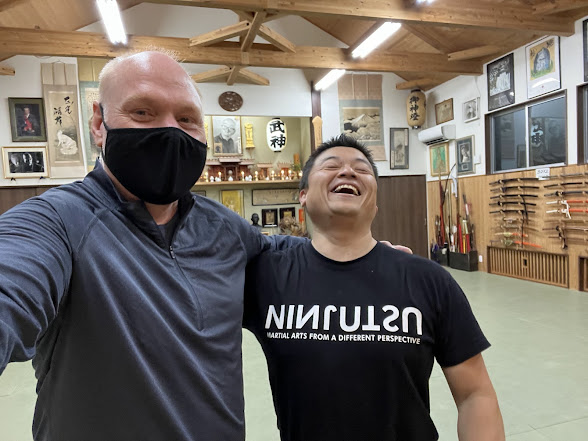
Later that night, I went to Nakagawa’s class. I’ve known him for many
years and used to partner up with him in Hatsumi Sensei’s classes.
Lately, I’ve also trained with him in Furuta’s dojo. So I was looking
forward to his perspective.
I just explained to him what his tshirt meant
The class was small with maybe only eight students. His style of
teaching reminds me of Furuta Sensei. Lots of humor, but he also
embodies the 雲隠流 Kumogakure Ryū
body angling that I have been studying with Furuta. This is great for
me, because it is not a style that I come by naturally. It gives me a
lot to work on.
This feels like exploring new ground. It is very easy as a student to
fall back on what you know. Then when something is not working you can
use tricks that you’ve developed over the years. But the point of going
to class is to learn something new.
He seemed really excited to be teaching. He kept going and going with no
breaks. After two and a half hours he finally noticed the clock.
I really appreciate his love and enthusiasm for training. Some teachers
kind of “phone it in” and just do the bare minimum. I won’t say who, but
maybe you’ve been to one of their classes. It seems like they just show
up to collect money.
But with only eight students, Nakagawa-san was very engaged. It’s great
to see that kind of energy and spirit for sharing. Any student or
teacher would do well to emulate his attitude in the dojo.
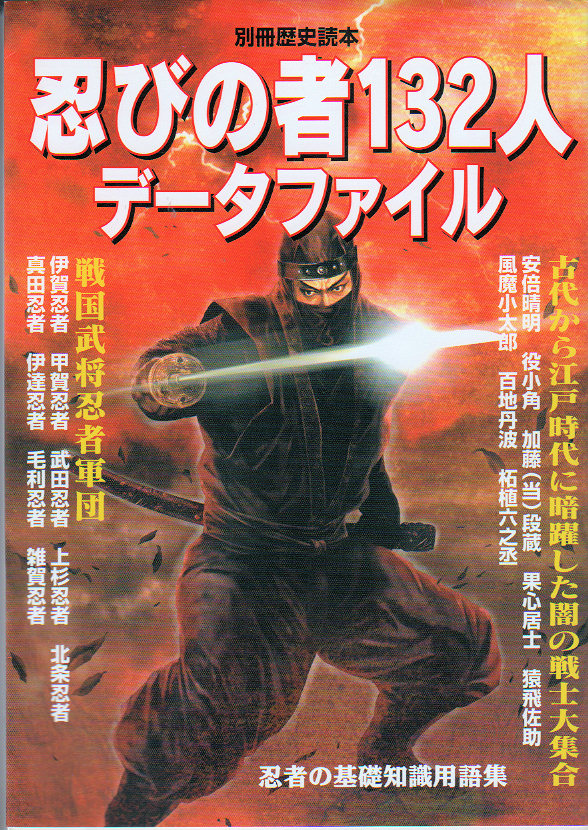
武田忍者 Takeda Ninja (Page 104-106) from the book Bessho Rekishi Dokuhon Vol. 72 – Shinobi no Mono 132-nin Data File. Written by 宗方翔 Munehō Shō (Scenario Writer).
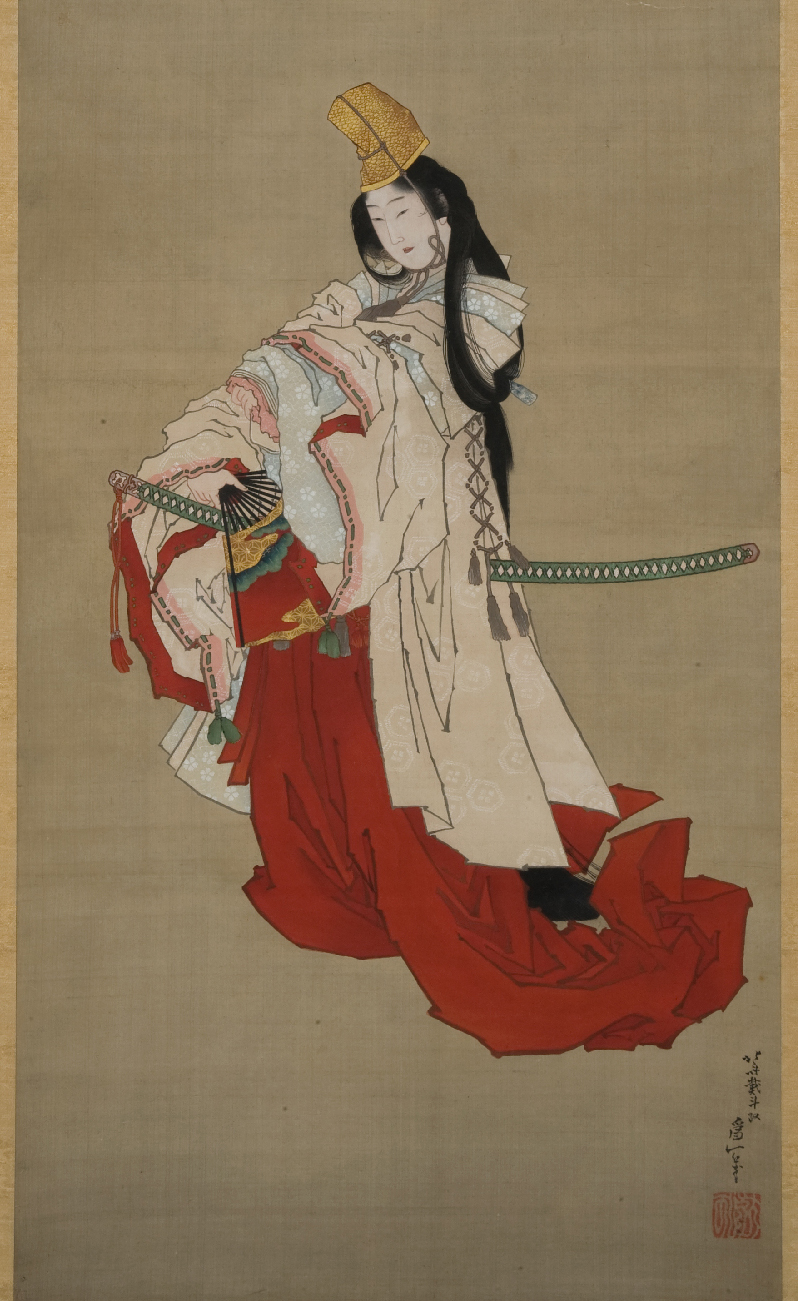
▽ Takeda Ninja – In the Sengoku Jidai, shrine maidens conducted spy activities…!?
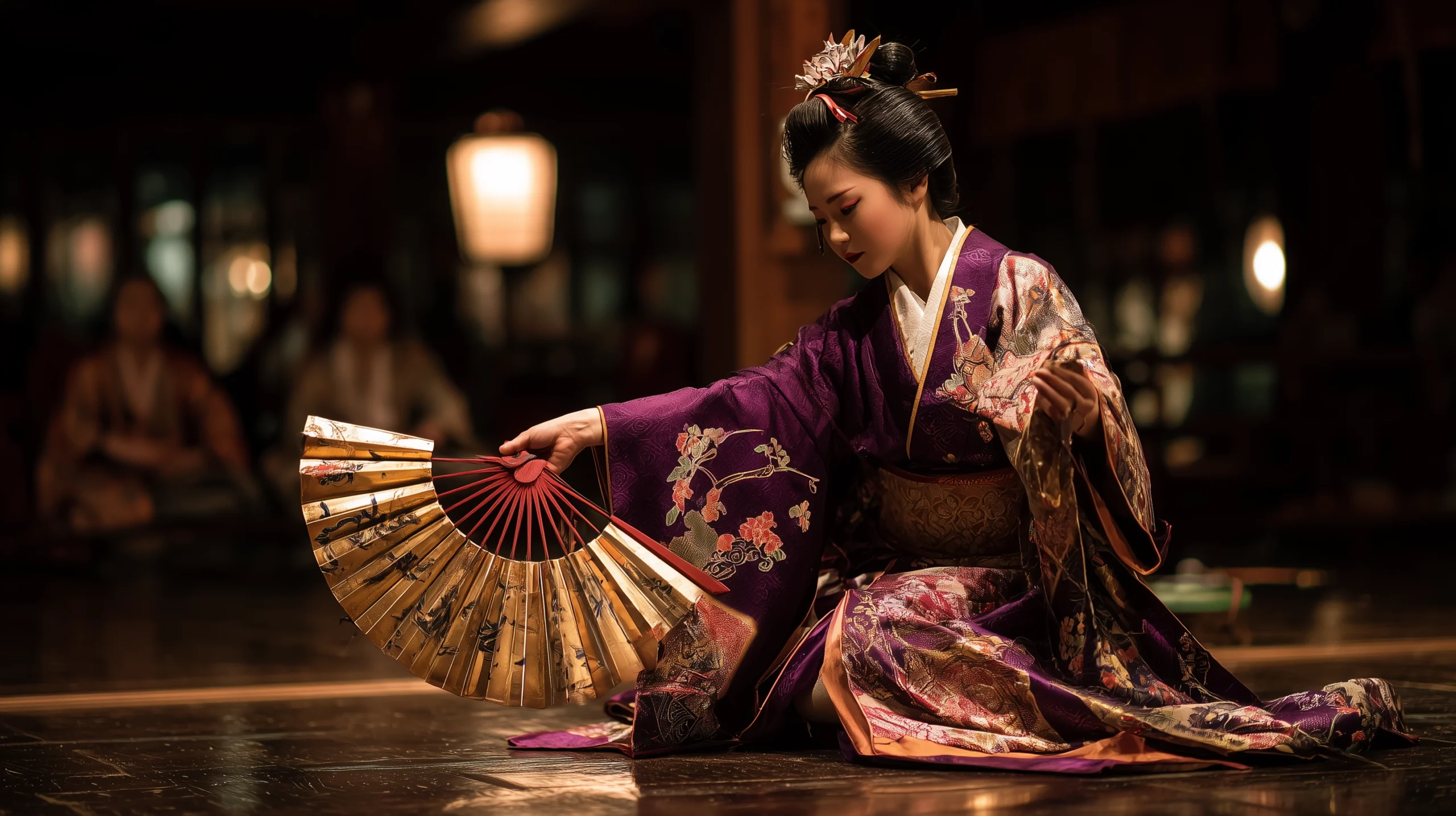
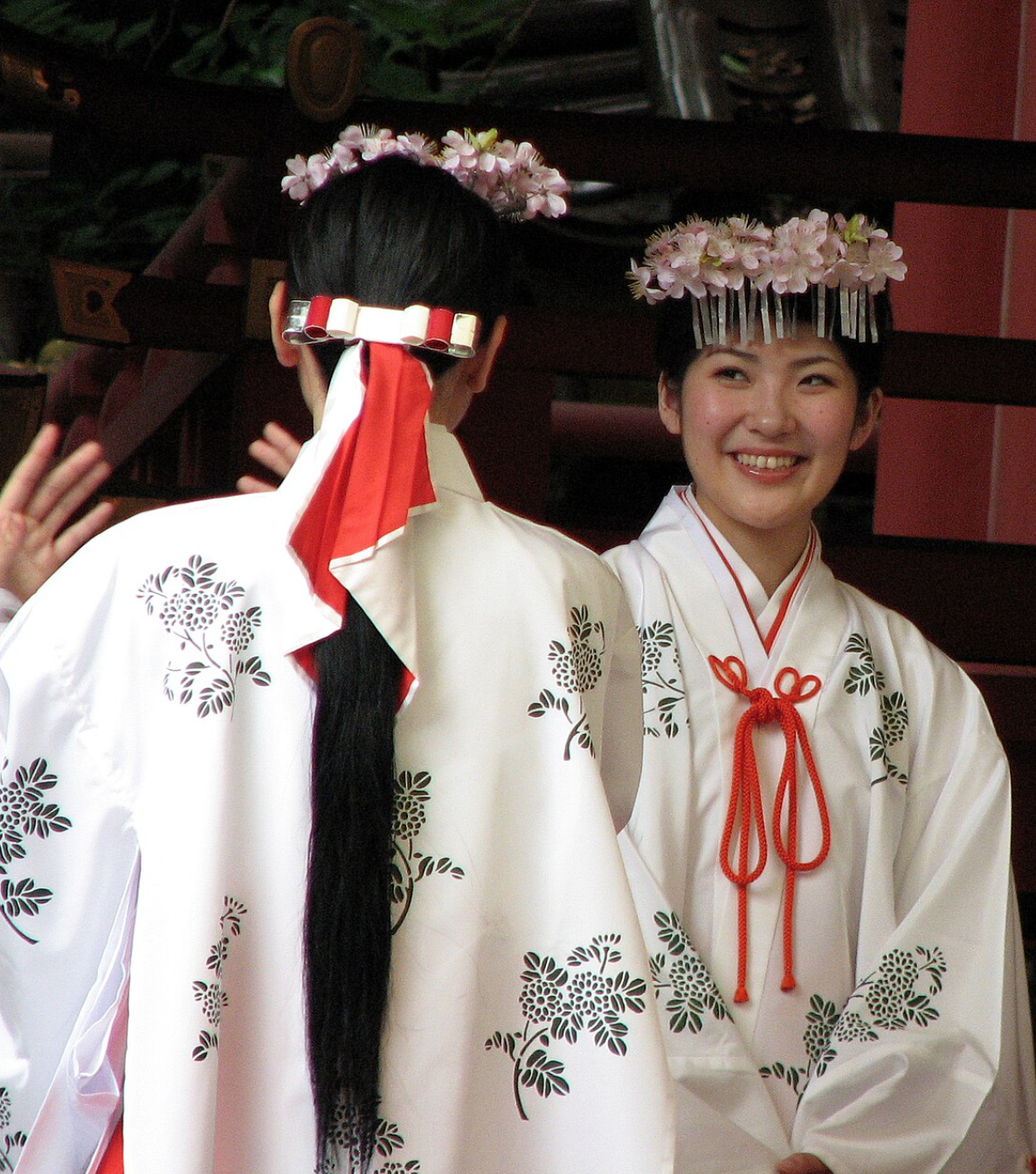
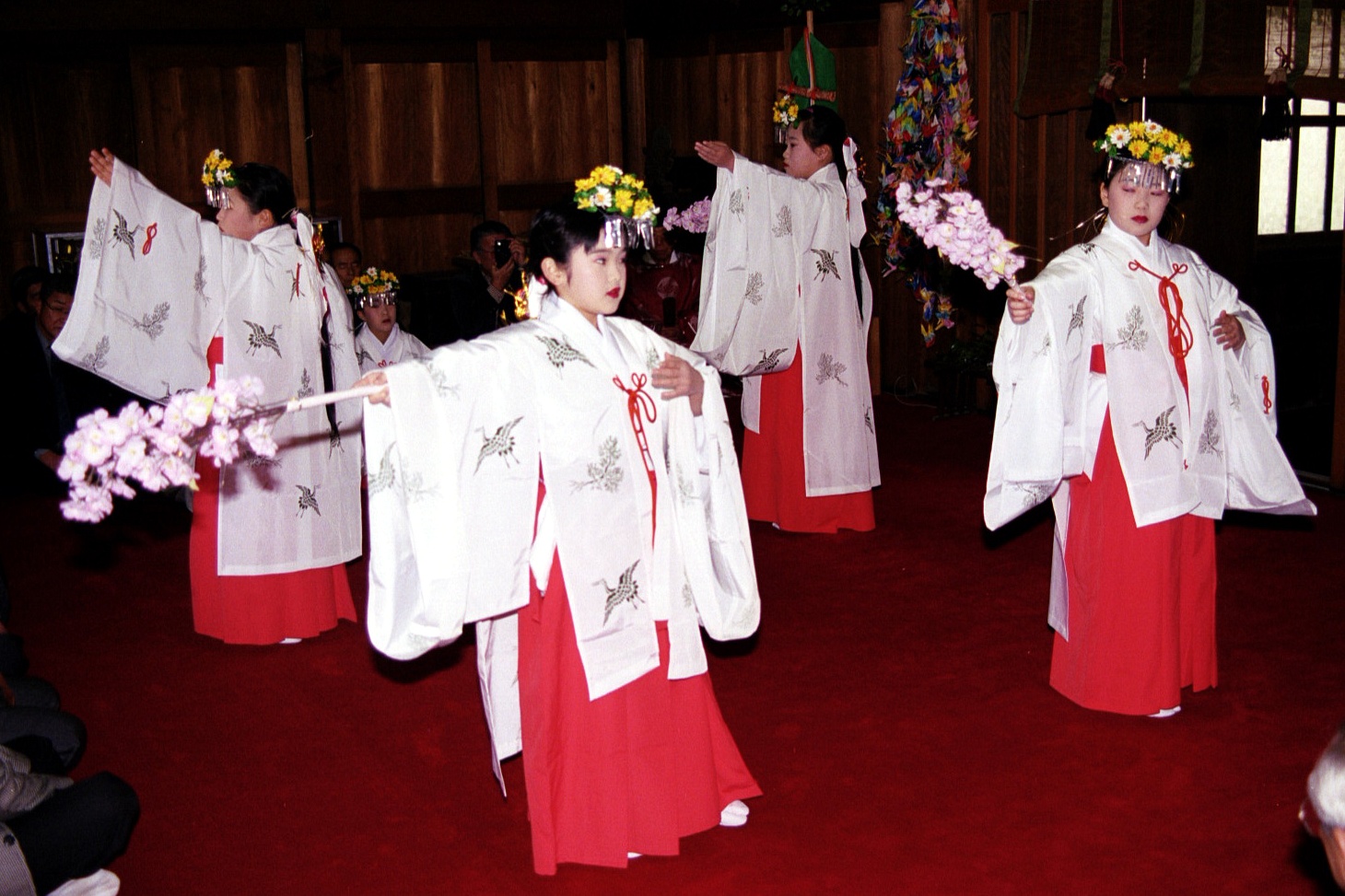
In the 1991 special issue of “Rekishi Dokuhon,” “Definitive Edition: All About Ninjas,” there was a description by 名和弓雄 Nawa Yumio about the female spies 歩き巫女 Aruki Miko nurtured by 武田信玄 Takeda Shingen. For me, who only knew shrine maidens as those in white robes and red hakama or as dubious fortune-tellers, the theory that shrine maidens equaled kunoichi, ninja, was very intriguing, and as I was searching for material for historical novels, I promptly visited Nawa’s residence to hear his story and went to the site.
The training center for these female ninjas, “甲斐信濃巫女道修練道場 Kai Shinano Miko-dō Shūren Dōjō,” was in 信州小県郡祢津村古御館 Shinshū Chikuma-gun Netsu-mura Furumidate (Nagano-ken Tōbu-chō). Now it is 田中駅 Tanaka-eki on the Shin’etsu Line. About thirty minutes from Karuizawa by local train, it is a hilly area along the 千曲川 Chikuma-gawa.
However, the target dojo was already gone without a trace, and even its location could not be identified. Instead, in 古御館 Furumidate, there remained a house said to be inhabited by shrine maidens. A small house built in the style of an old farmhouse, nearly a ruin, but several such houses were clustered along a narrow path.
According to 中山太郎 Nakayama Tarō’s “日本巫女史 Nihon Miko Shi” (History of Japanese Shrine Maidens), this path was once called “ののう小路 Nonō Kōji,” and the surrounding area formed a large settlement of shrine maidens’ houses, called “ののう屋敷 Nonō Yashiki,” bustling with activity.
ののう Nonō is a unique local term for shrine maidens, from the phrase “nō, nō” used when addressing people. Also, it seems to derive from the custom of calling deities “のんのんさま Nonnon-sama.”
In other words, shrine maidens who performed rituals for the sick and divined the past and future for the troubled were considered to exist between gods and humans, thus called ののう Nonō.
“Female” in ancient times entrusted politics to male kin, secluded themselves deep in palaces to serve gods, and conveyed divine oracles to people, like queens of a nation. 魏志倭人伝 Gishi Wajin Den’s 鬼弥呼 Himiko. In the era of 応神天皇 Ōjin Tennō, 神功皇后 Jingū Kōgō (169–269 CE), who long served as regent, is such an example, and this tradition extended to the female emperors 推古 Suiko, 皇極 Kōgyoku, 持統 Jitō. However, as time passed, the nature of “female” changed, and in the 平安時代 Heian Jidai (794–1185 CE), when Shugendō and Onmyōji appeared and the divination techniques of Yin-Yang Five Elements theory became popular, the power of shrine maidens, who mediated divine will, declined.
Then, from the 源平 Genpei battles (1180–1185 CE) to the 戦国時代 Sengoku Jidai (1467–1603 CE), as samurai rose, female power waned, and shrine maidens’ activities transformed into singers of 今様 Imayō or 白拍子 Shirabyōshi, and further into 出雲の阿国 Izumo no Okuni’s female kabuki in later generations.
However, during political or social upheavals, shrine maidens’ divine prophecies captured people’s hearts, always fulfilling some role. For example, in 壬申の乱 Jinshin no Ran (672 CE), the oracles of local shrine maidens allied with the 吉野軍 Yoshino-gun were referenced for strategy, and one oracle included enemy country information, contributing to victory. It is likely that shrine maidens infiltrated enemy territory for espionage. It feels like the origin of the 歩き巫女 Aruki Miko used by 信玄 Shingen for intelligence activities, which is intriguing.
Takeda Ninja (Page 104-106) written by Munehō Shō for the Bessho History Reading Book No. 72 – Data file of 132 Ninjas.
I could not find much information about this book, who wrote it or the publisher. It looks like it was published as a history book/magazine published monthly.
Being the 72’nd book I guess it has been around for many years, the web site jinbutsu.co.jp is dead so I don’t know much about the publisher.
別冊歴史読本❼❷ Bessho Rekishi Dokuhon 72 忍びの者132人データファイル Shinobi no Mono 132-nin Data File
Published May 2001 228 pages ISBN-10 : 4404027729 ISBN-13 : 978-4404027726
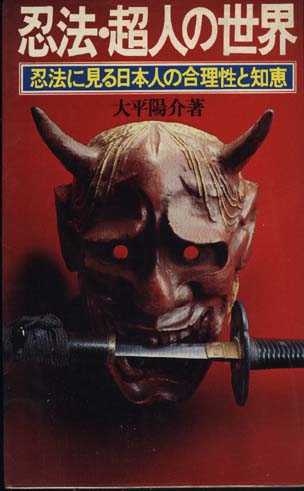
The Esoteric Mantra Secret for Anticipating Disasters: The “Three Pulses Method” (Page 214-216) from the book Ninpō Chōjin no Sekai by Ōhira Yōsuke.
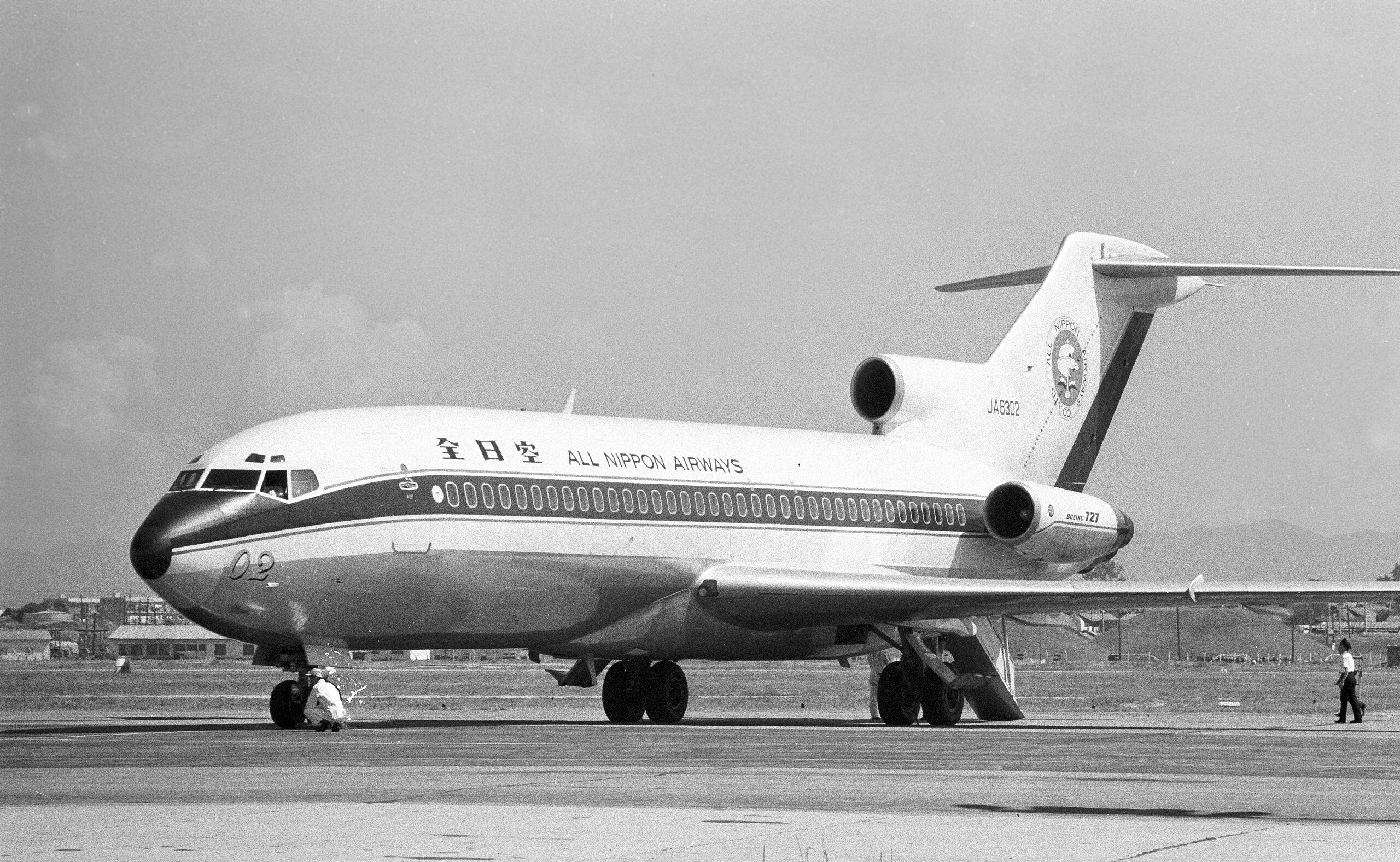
If humans possess precognitive abilities, then in the case of the All Nippon Airways crash, all 133 passengers should have felt an ominous premonition. However, only a few, including Kumada Taizō—who was saved by a “gut feeling”—and a woman named Yamanoe Motoko—who canceled her trip due to an ominous dream—escaped the disaster. This raises the question: why only a handful? The answer lies in individual differences. People vary widely—some are highly sensitive to precognitive sensations, others are less so, and some may feel it but dismiss it. Many, influenced by modern scientific education, tend to deny such feelings outright.
Kumada Taizō’s wife, for instance, was among those who most strongly sensed the danger signal. Calculating the percentage of people who survived this incident due to such premonitions, it comes to 0.003…—or roughly 3%.
Sanmyaku no Hō (Secret for Anticipating Disasters)
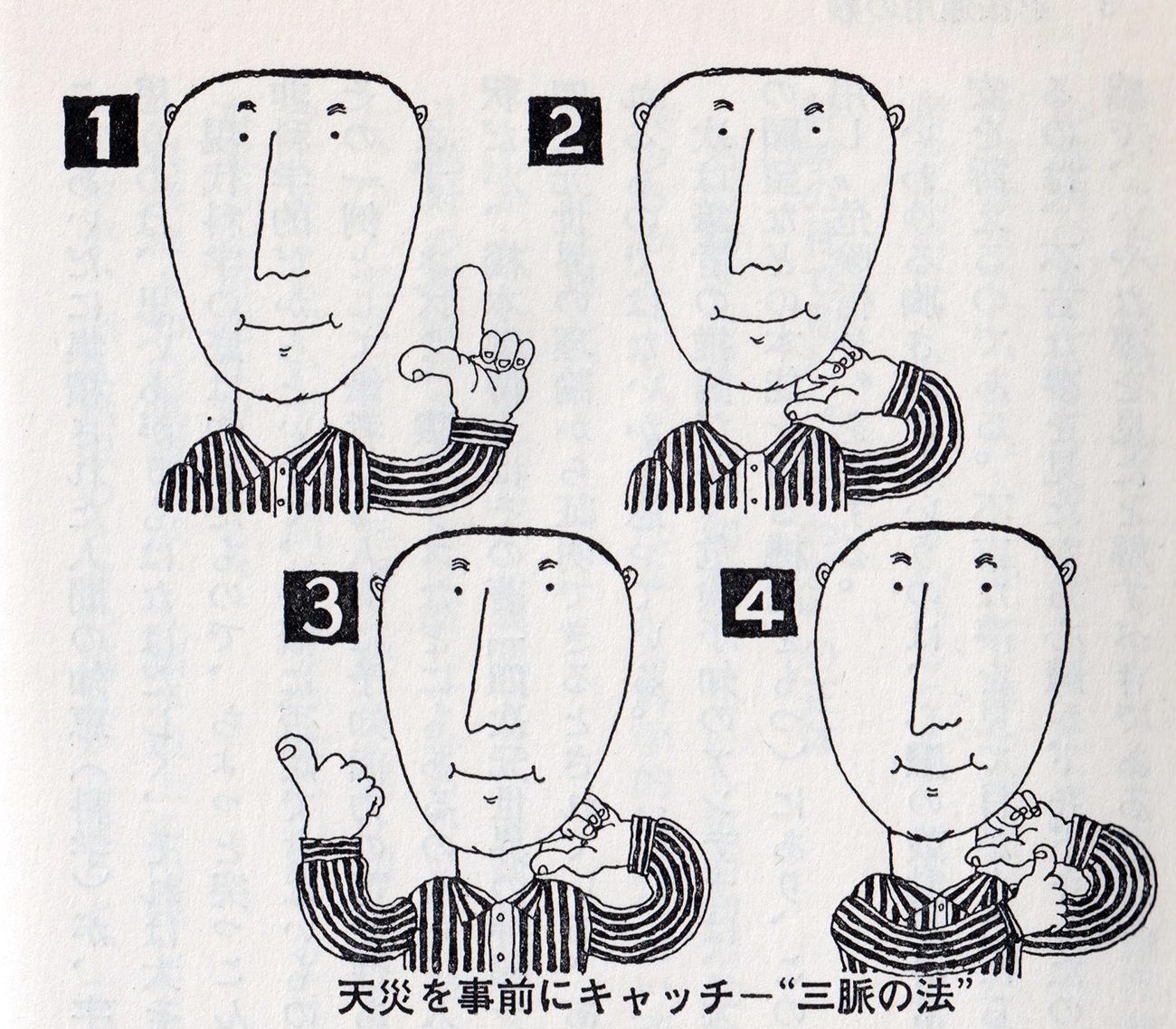
Assuming that everyone has some degree of danger-sensing ability, albeit with varying intensity, is there a way to accurately detect it? If so, it would be a great boon. One ancient method passed down through tradition is known as the “Three Pulses Method” (三脈の方 Sanmyaku no Hō).
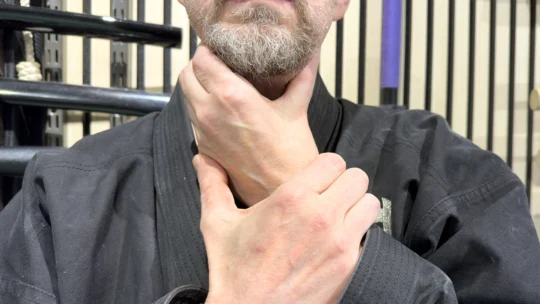
According to Hatsumi Yoshiaki, this method stems from the teachings of Shingon Mikkyō (esoteric Buddhism). When you feel an ominous premonition, open your left hand and lightly press the carotid arteries on both sides of your neck with the tips of your left thumb and index finger. Then, use the thumb of your right hand to press the pulse point (radial artery) at the base of your left thumb (near the wrist).
Press these three arteries simultaneously. If the three pulses beat in perfect unison, with no delay, like a three-beat rhythm, there is no danger. If the pulses are irregular or out of sync, it signals “danger,” and you should promptly take countermeasures.
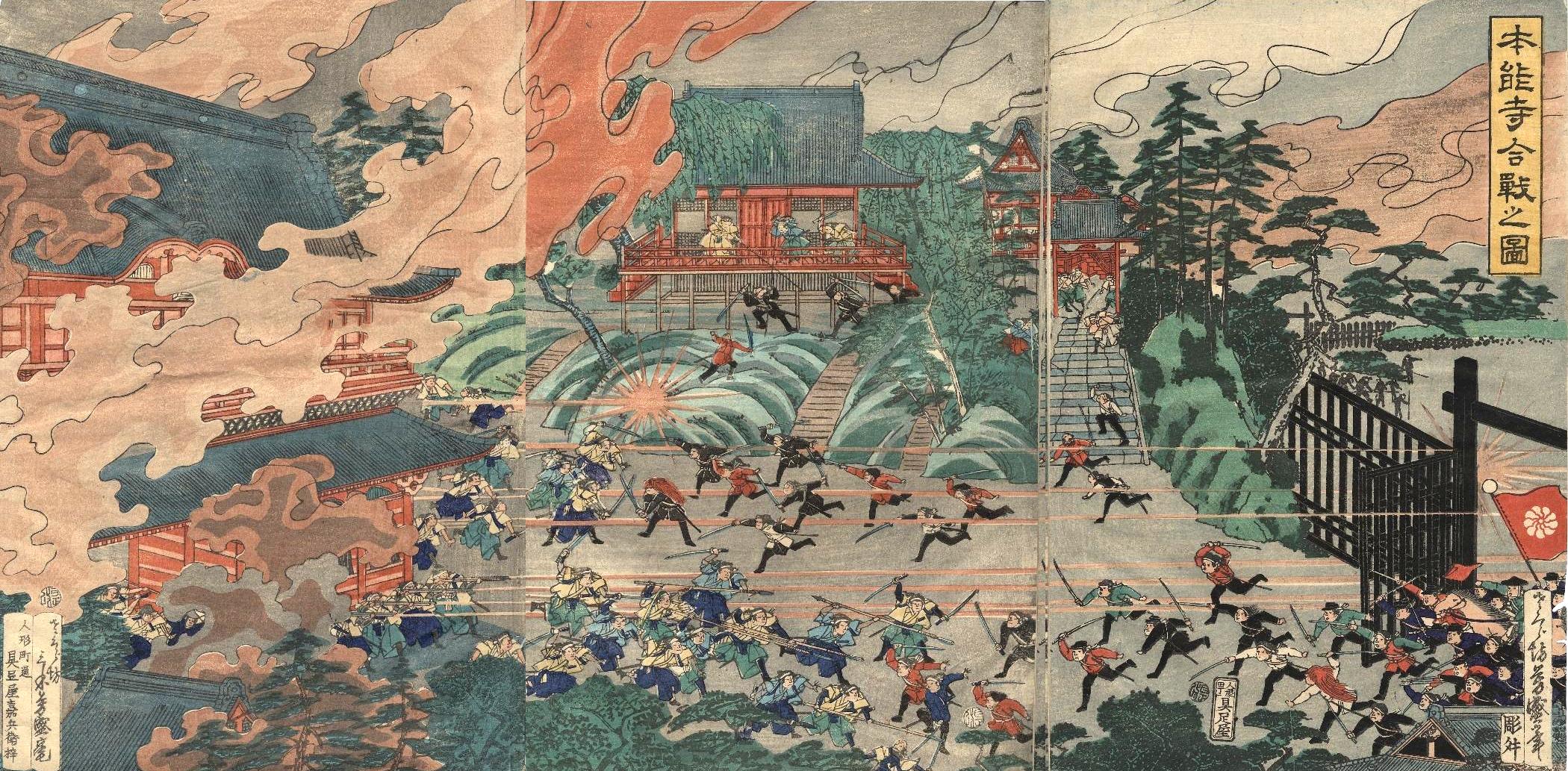
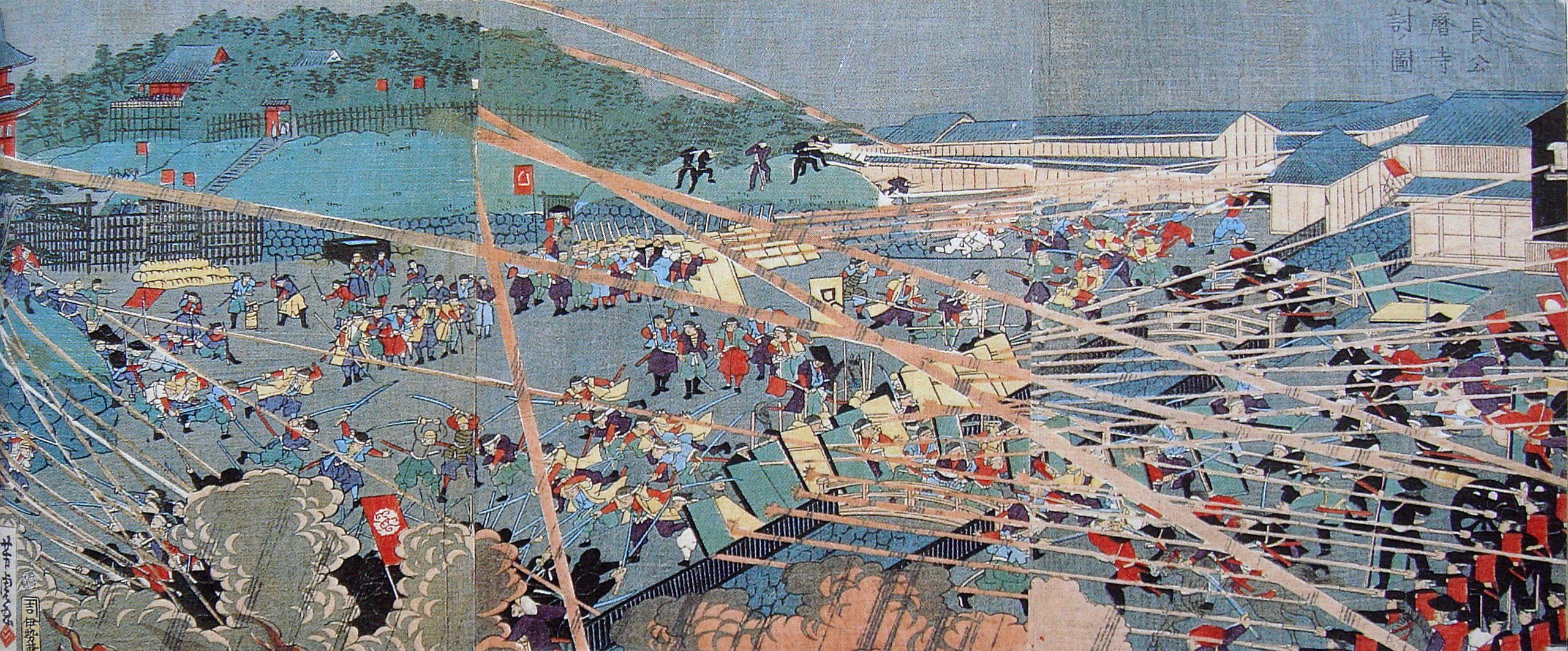
On May 15, 1868 (Meiji 1), during the Battle of Ueno, 榊原鍵吉 Sakakibara Kenkichi, the 14th headmaster of the Jikishinkage-ryū sword school, who ran a dojo at Kurumazaka below Ueno Hill, used the Three Pulses Method to foresee danger. He ordered all his disciples residing at the dojo to evacuate immediately.
Several hours later, the imperial army under the command of Chōshū’s Ōmura Masujirō positioned Armstrong cannons—purchased from Britain—on the roof of the Matsuzakaya store in Hirokōji and fired on the Shōgitai forces entrenched on Ueno Hill, determining the battle’s outcome. A stray shell landed on Sakakibara’s dojo, exploding and reducing it to rubble. Had they not evacuated, the entire school would have perished.
From my hypothesis, the autonomic nervous system (vegetative nervous system) originating in the brain influences the heart, causing “chest unease” (胸騒ぎ munesawagi), which manifests as an irregular pulse. Thus, the Three Pulses Method seems rational.
三脈の方 Sanmyaku no Hō
I have not personally experienced a major disaster, nor have I tested this method, so I cannot assert its absolute reliability. However, ancient traditions often contain wisdom derived from extensive experience or the intuition of geniuses—wisdom that modern science cannot yet explain but has proven effective in practice.
Recently, when I discussed this with Dr. Abe Tsuneo, a prominent young authority in Japanese internal medicine and an associate professor at Tokyo Medical and Dental University, he remarked, “That makes sense,” which I’ll note here for reference.
Living in a modern world filled with dangers like earthquakes, fires, explosions, and hijackings, how should we respond when suddenly faced with a disaster? Below, I will outline emergency evacuation methods step by step.
Excerpt above about The Esoteric Mantra Secret for Anticipating Disasters from the book Ninpō Chōjin no Sekai by Ōhira Yōsuke.
Endorsement by Hatsumi Yoshiaki 34th Sōke of Togakure-ryū Ninpō 28th Sōke of Kukishinden Happō Hiken
Upon hearing that Professor Ōhira was publishing an introductory book on ninjutsu, I was convinced that it would undoubtedly become an exceptional work on the subject. This confidence stems from the fact that Professor Ōhira has dedicated decades to researching ninjutsu—not merely by studying historical texts or research books on the subject, but by forming deep, familial bonds with living ninjas over many years. I am one of those ninjas.
Therefore, Professor Ōhira possesses knowledge of secret teachings (hiden) that a mere researcher could never glimpse.
I believe that ninjutsu is, in essence, a method of mastering the art of living with a spirit of harmony, peace, and joy (kasei waraku). To this end, ninjutsu practitioners have honed their wisdom to live happily by cultivating their body, mind, and spirit through endurance (nin).
In today’s chaotic era, isn’t the proper application of ninjutsu—despite its potentially dangerous nature—precisely what modern society needs? This book, which comprehensively elucidates all aspects of ninjutsu, not only explains the art but also serves as a personal guide for navigating life. This is why I, as a ninja, proudly endorse it to the world (kōko).
Yōsuke Ōhira (大平陽介) Writer and literary critic. Real name: Ryōichi Yahata. Born in 1904 in Fukushima Prefecture. After dropping out of Chūō University’s Faculty of Law, he worked at Shinchōsha before serving as the inaugural editor-in-chief of NHK’s monthly magazine Broadcast and the Freedom Publishing Association’s Reading Outlook (a predecessor to the current Weekly Reading Person). He is currently a standing committee member of the Tokyo Writers’ Club and a councilor of the Japan Children’s Literature Association. His representative work is Full Moon Literature (Shunyō Bunko). Alongside his prolific writing career, he has a keen interest in exploring ancient martial arts (kobudō), and has authored works such as Sword Courage Record (Daidō Inshokan), which incorporates the secrets of martial arts. This book also reflects a portion of his extensive research accumulated over many years.
大平陽介 Ōhira Yōsuke 忍法・超人の世界 Ninpō Chōjin no Sekai
Published January 1, 1975 254 pages ISBN-10 : 4026060314 ISBN-13 : 978-4026060316
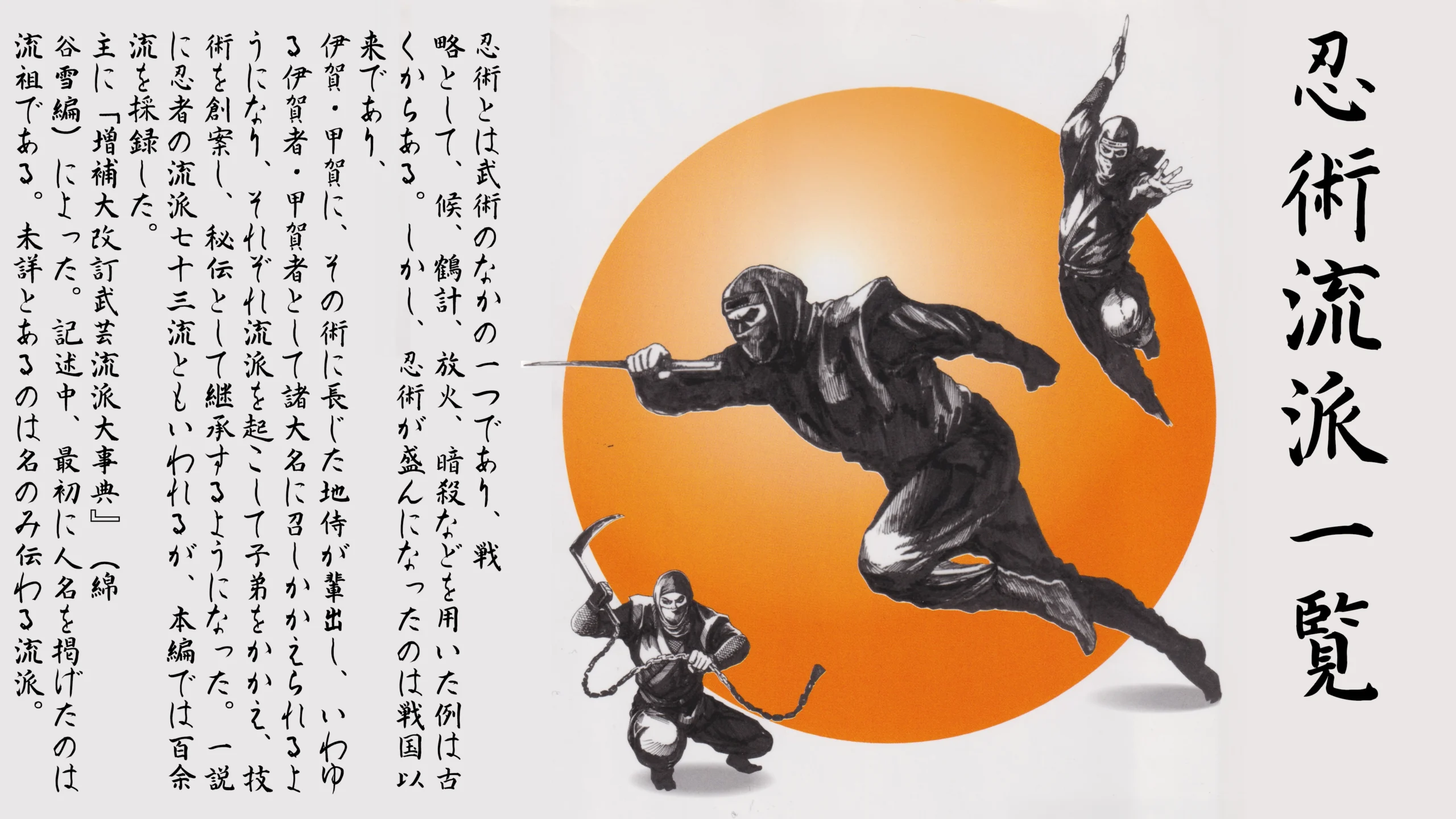
List of Ninjutsu Schools (Page 212-221) from the book Bessho Rekishi Dokuhon Vol. 72 – Shinobi no Mono 132-nin Data File
List of Ninjutsu Schools
Ninjutsu (忍術 Ninjutsu) is one of the martial arts, historically used as a strategy involving espionage (候 Sō), deception (鶴計 Tsuru-kei), arson (放火 Hōka), and assassination (暗殺 Ansatsu), with examples dating back to ancient times. However, ninjutsu flourished particularly since the Sengoku period (戦国時代 Sengoku Jidai, 1467–1615), when skilled local samurai (地侍 Jizamurai) from Iga (伊賀 Iga) and Kōga (甲賀 Kōga) emerged, becoming known as 伊賀者 Igamono (Iga ninjas) and 甲賀者 Kōgamono (Kōga ninjas). They were employed by various daimyō (大名 Daimyō), established their own schools, trained disciples, developed techniques, and passed them down as secret traditions (秘伝 Hiden). One theory claims there were 73 ninjutsu schools (七十三流 Shichijūsan-ryū), but this book records over 100 schools (百余流 Hyakuyo-ryū).
The information is primarily sourced from the 増補大改訂武芸流派大事典 Zōho Daikaitei Bugei Ryūha Daijiten (Revised and Expanded Encyclopedia of Martial Arts Schools) edited by 綿谷雪 Watatani Kiyoshi. In the descriptions, the first name listed is the founder of the school. Schools labeled “unknown” (未詳 Mishō) are those whose names alone have been passed down, with little further detail.
青木流 Aoki-ryū
Associated with the 戸田家 Tōda-ke (Tōda family) of the 信濃松本領 Shinano Matsumoto-ryō (Shinano Matsumoto domain).
秋葉流 Akiba-ryū
Associated with the 尾張徳川家 Owari Tokugawa-ke (Owari Tokugawa family).
芥川流 Akutagawa-ryū
Founded by 芥川九郎右衛門義綱 Akutagawa Kurōemon Yoshitsune, also known as 刑部左衛門義任 Gyōbuzaemon Yoshitake. Part of the 甲賀流 Kōga-ryū lineage, having studied under 楠不伝正辰 Kusunoki Fuden Masatake (南木流 Nanki-ryū). In 寛文十年 Kanbun 10-nen (1670), Yoshitsune served 戸田光永 Tōda Mitsunaga of the 美濃加納領 Mino Kanō-ryō (Mino Kanō domain). As the Tōda family was reassigned, the school moved with them to 伊勢鳥羽 Ise Toba and 信濃松本 Shinano Matsumoto. The fifth-generation 義矩 Yoshinori and sixth-generation 極人 Kyokuto (father and son) were implicated in the 戸田図書事件 Tōda Zusho Jiken (Tōda Zusho Incident), a family dispute during the late 天保年間 Tenpō Gannen (1830–1844).
伊賀崎流 Igasaki-ryū
Founded by 伊賀崎孫太夫道順 Igasaki Magotayū Dōjun, the head of the 49 Iga schools (伊賀四十九流 Iga Shijūku-ryū).
伊賀流 Iga-ryū
Iga ninjas are known for their individual strength over group cohesion, with a particular emphasis on the use of fire. It’s said that if explosives (爆薬 Bakuyaku) were used, Iga ninjas were likely involved. The founder of Iga-ryū is traditionally considered to be 服部家長 Hattori Ienaga from the late 平安時代 Heian Jidai (Heian period). According to 吉田東伍 Yoshida Tōgo’s 大日本地名辞書 Dai Nihon Chimei Jisho (Great Japanese Place Names Dictionary), the Iga group (伊賀衆 Iga-shū or 伊賀者 Igamono) was a faction of low-ranking bannermen under the 徳川氏 Tokugawa-shi (Tokugawa clan), likely due to their service since 徳川家康 Tokugawa Ieyasu’s “Iga crossing” (伊賀越え Iga-goe).
The Iga ninja 服部半蔵 Hattori Hanzō is said to be a descendant of the 秦氏 Hata-shi (Hata clan), immigrants from 百済 Baekje who settled in Iga.
During the 永禄年間 Eiroku Gannen (1558–1570), 11 exceptional Iga ninjas were noted:
新堂の小太郎 Shindō no Kotarō
下柘植の木猿 Shimotsuge no Mokuzaru
同子猿 Dō Kozaru (Mokuzaru’s son)
山田の八右衛門 Yamada no Hachiemon
神戸の小南 Kobe no Konami
音羽の城戸 Otowa no Jōto
甲山の太郎四郎 Kōyama no Tarōshirō
同太郎左衛門 Dō Tarōzaemon (also of Kōyama)
野村の大炊孫大夫 Nomura no Ōisunadayū
上野の左 Ueno no Sō
There’s also a school called 服部流 Hattori-ryū.
伊賀流 Iga-ryū
Associated with the 土佐山内家 Tosa Yamauchi-ke (Tosa Yamauchi family), including 服部正信 Hattori Masanobu and other members of the 服部氏 Hattori-shi (Hattori clan).
伊賀流 Iga-ryū
Founded by 滝野定勝 Takino Sadakatsu, followed by 赤井田重勝 Akaida Shigetake, among others.
伊賀流 Iga-ryū
Also known as 北条流 Hōjō-ryū (listed separately). Based on the guerrilla tactics of the 関東乱波風魔一族 Kantō Ranba Fūma Ichizoku (Kantō Ranba Fūma clan).
一全流 Ichizen-ryū
Founded by 近松彦之進茂矩 Chikamatsu Hikonoshin Shigenori. Shigenori studied 伊賀流 Iga-ryū under 竹之下頼美 Takenoshita Yorimi of 伊賀四日市 Iga Yokkaichi and 甲賀流 Kōga-ryū under 木村康敬 Kimura Yasutake of 近江 Ōmi. He passed away in 安永七年 An’ei 7-nen (1772). The school emphasized rapid horseback travel, aiming for a daily speed of 六十里 Rokujūri (approximately 240 km).
一佐流 Issa-ryū (吉佐流 Kissa-ryū)
Founded by 佐々木三郎兵衛盛綱 Sasaki Saburōbei Moritsune. He learned techniques from a foreign master, 我桂仙 Waga Keisen, and it’s said only three families in Japan used these methods. The sixth-generation successor, 黒見勝五郎 Kuromi Katsugorō, received permission in 元治元年 Genji 1-nen (1864).
伊賀流 Iga-ryū
Associated with the 信濃松本領 Shinano Matsumoto-ryō (Shinano Matsumoto domain).
上杉流 Uesugi-ryū
Founded by 上杉謙信 Uesugi Kenshin, passed down through his retainer 宇佐美定行 Usami Sadayoshi.
内山流 Uchiyama-ryū
Associated with 伊勢 Ise.
越前流 Echizen-ryū
After the 伊賀の乱 Iga no Ran (Iga Rebellion) of 天正九年 Tenshō 9-nen (1581), Iga ninjas served the 前田家 Maeda-ke (Maeda family) and passed down their traditions.
御家流 Oie-ryū
Founded by 東忠次 Azuma Tadatsugu, followed by 東太郎左衛門 Azuma Tarōzaemon, then 城戸長次 Jōto Chōji.
大井流 Ōi-ryū
Founded by 大井孫太夫 Ōi Magotayū, also known as 大炊 Ōi. Said to be from either 伊賀野村 Iga Nomura or 和泉 Izumi.
応変流 Ōhen-ryū
Associated with the 仙台伊達家 Sendai Date-ke (Sendai Date family).
加治流 Kaji-ryū
Founded by 加治遠江守景英 Kaji Tōtōmi-no-Kami Kagehide, a disciple of 宇佐美定行 Usami Sadayoshi under 上杉謙信 Uesugi Kenshin. Possibly part of the 伊賀流服部党 Iga-ryū Hattori-tō (Iga-ryū Hattori faction).
上泉流 Kamiizumi-ryū
Founded by 上泉常陸介秀胤 Kamiizumi Hitachi-no-Suke Hidekane, the legitimate son of 上泉伊勢守信綱 Kamiizumi Ise-no-Kami Nobutsuna. He accompanied his father on martial training journeys across the country, later serving the 北条氏 Hōjō-shi (Hōjō clan) and fighting against the 里見軍 Satomi-gun (Satomi army). In 永禄七年 Eiroku 7-nen (1564), he died from injuries sustained in battle. 信綱 Nobutsuna adopted a successor who took the name 秀胤 Hidekane. The school was passed down to the 岡山池田家 Okayama Ikeda-ke (Okayama Ikeda family) and the 彦根井伊家 Hikone Ii-ke (Hikone Ii family). Its secret manual is 師鑑専要 Shikan Sen’yō.
上柘植氏流 Kamitsuge-shi-ryū
Part of the 伊賀流 Iga-ryū lineage. Details otherwise unknown.
蒲生流 Gamō-ryū
Passed down through the 蒲生家 Gamō-ke (Gamō family) of 伊勢 Ise, 近江 Ōmi, and later 陸奥 Mutsu.
紀州流 Kishū-ryū
According to the 戸隠流口伝書 Togakure-ryū Kuden-sho (Togakure-ryū Oral Tradition Manual), the 白雲流 Hakun-ryū that entered the 熊野三山 Kumano Sanzan (three sacred mountains of Kumano) evolved into 紀州流 Kishū-ryū through 修験者 Shugenja (Shugendō practitioners). Alternatively, it’s said to be a school formed by Iga ninjas who fled to 紀伊 Kii’s 根来 Negoro (雑賀 Saiga) after their defeat in the 伊賀の乱 Iga no Ran (Iga Rebellion) of 天正九年 Tenshō 9-nen (1581).
九州流 Kyūshū-ryū
Passed down through the family of 志賀如見斎 Shiga Nyomisai, the third-generation master of 本心刀流 Honshinto-ryū (a swordsmanship school).
Founded by 戸田左京一心斎 Tōda Sakyō Isshinsai. The school was passed to 百地三太夫 Momochi Sandayū and continued within 伊賀流 Iga-ryū, reaching 戸田真竜軒 Tōda Shinryūken by the end of the Edo period.
楠流 Kusunoki-ryū
Originating from 楠木正成 Kusunoki Masashige of the 南北朝時代 Nanbokuchō Jidai (Nanbokuchō period, 1336–1392). Masashige, a local lord from 河内 Kawachi (eastern 大阪府 Osaka-fu, Osaka Prefecture), used 山伏兵法 Yamabushi Heihō (mountain ascetic military tactics) in various battles. He excelled in guerrilla warfare but later died in battle against 足利尊氏 Ashikaga Takauji during a campaign in the capital.
Founded by 伊賀平右衛門家長 Iga Heiemon Ienaga (雲隠法師 Kumogakure Hōshi). Lineage: 戸田真竜軒 Tōda Shinryūken → 高松寿嗣 Takamatsu Toshitsugu → 初見良昭 Hatsumi Yoshiaki.
鞍馬揚心流 Kurama Yōshin-ryū
Founded by 塩田甚太夫 Shiota Jintayū. Also known as 塩田揚心流 Shiota Yōshin-ryū. In 安永九年 An’ei 9-nen (1780), it was established by combining 揚心流 Yōshin-ryū and 鈴木流 Suzuki-ryū. Passed down in 薩摩飯島 Satsuma Iijima.
黒田流 Kuroda-ryū
Associated with the 筑前福岡藩 Chikuzen Fukuoka-han (Chikuzen Fukuoka domain), founded by 黒田官兵衛孝高 Kuroda Kanbei Takayoshi (如水 Nyosui). The 黒田氏 Kuroda-shi (Kuroda clan) is a branch of the 近江源氏佐々木高綱 Ōmi Genji Sasaki Takatsuna line, originating from 黒田郷 Kuroda-gō in 近江国 Ōmi-koku (滋賀県 Shiga-ken, Shiga Prefecture). Due to their connection with 和田伊賀守惟政 Wada Igamori Tadamasa of the 甲賀五十三家 Kōga Gojūsan-ke (Kōga 53 families), a close associate of the 15th shogun 足利義昭 Ashikaga Yoshiaki, 甲賀流忍術 Kōga-ryū Ninjutsu is said to have influenced Kanbei’s military strategies. A famous story involves 栗山善助 Kuriyama Zensuke, who frequently visited his imprisoned lord in disguise. Later, two ninjas were reportedly dispatched to assassinate 後藤又兵衛 Gotō Matabei.
現実流 Genjitsu-ryū
A branch of 白雲流 Hakun-ryū.
源瀟 Gensō
A branch of 永雲流 Eiun-ryū.
甲賀流 Kōga-ryū
The 武芸流派大事典 Bugei Ryūha Daijiten notes that both 甲賀流 Kōga-ryū and 伊賀流 Iga-ryū have too many speculative theories regarding their founders and lineages. While I’d prefer to follow this stance, it’s not entirely feasible. The distinction between 甲賀流 Kōga-ryū and 伊賀流 Iga-ryū itself is a point of contention, likely beginning in the 戦国時代 Sengoku Jidai (Sengoku period) for several reasons:
甲賀 Kōga and 伊賀 Iga are geographically adjacent.
Both regions are similarly surrounded by mountains.
The characters for 伊賀 Iga (伊賀) and 甲賀 Kōga (甲賀), when written in cursive script (草書 Sōsho), can appear similar.
In 長享元年 Chōkyō 1-nen (1487), when 六角高頼 Rokaku Takayoshi fought against 足利義尚 Ashikaga Yoshihisa, the rural samurai of 甲賀 Kōga sided with the 六角方 Rokaku-hō (Rokaku faction) due to longstanding ties. This marked the origin of the 甲賀五十三家 Kōga Gojūsan-ke (Kōga 53 Families). Later that year, in October, during the battle at 鏡安養寺 Kagami Anyōji, 21 of these 53 families distinguished themselves, earning the designation 甲賀二十一家 Kōga Nijūikkake (Kōga 21 Families) and the privilege to bear surnames and carry swords. The lower-ranking ninjas (下忍 Genin) operated under this organization.
The 21 families within the 53 are:
北山九家 Kitayama Ku-ke (Kitayama Nine Families)
黒川久内 Kurokawa Hisanai
大河原源太 Ōgawara Genta
頓宮四方介 Tongū Shihōsuke
土山鹿之助 Tsuchiyama Shikanotsume
芥川左京亮 Akutagawa Sakyōryō
望月出雲守 Mochizuki Izumo-no-Kami
岩室大学介 Iwanomura Daigakusuke
佐治河内守 Saji Kōchi-no-Kami
神保兵内 Jinbo Hyōnai
南山六家 Minamiyama Roku-ke (Minamiyama Six Families)
大原源三郎 Ōhara Genzaburō
和田伊賀守 Wada Igamori
上野主膳正 Ueno Shuzen-no-Shō
高峰蔵人 Takamine Kurōdo
滝(多喜)勘八郎 Taki (Taki) Kanpachirō
池田庄右衛門 Ikeda Shōemon
庄内三家 Shōnai San-ke (Shōnai Three Families)
鵜飼源八郎 Ukai Genpachirō
三雲新蔵人 Mikumo Shinzōto
内貴伊賀守 Naiki Igamori
柏木三家 Kashiwagi San-ke (Kashiwagi Three Families)
伴左京介 Ban Sakyōsuke
山中十郎 Yamanaka Jūrō
美濃部源吾 Minobe Gengo
The remaining 32 families, making up the 甲賀五十三家 Kōga Gojūsan-ke (Kōga 53), are:
饗庭河内守 Aiba Kōchi-no-Kami
青木筑後守 Aoki Chikugo-no-Kami
岩根長門守 Iwane Nagato-no-Kami
上田三河守 Ueda Mikawa-no-Kami
宇田藤内 Uda Tōnai
大久保源内 Ōkubo Gen’nai
大野宮内少輔 Ōno Kinai-shōsuke
隱岐右近太夫 Oki Ukon-tayū
小川孫十郎 Ogawa Sonjūrō
葛城丹後守 Katsuragi Tango-no-Kami
上山新八郎 Ueyama Shinpachirō
儀俄越前守 Giga Echizen-no-Kami
倉次右近介 Kuraji Ukon-no-Suke
小泉外記 Koizumi Gaiki
高山源太左衛門 Takayama Genta-Zaemon
新庄越後守 Shinjō Echigo-no-Kami
杉谷与藤次 Sugitani Yōtoji
杉山八郎 Sugiyama Hachirō
高野備後守 Takano Bingo-no-Kami
多罹尾四郎兵衛 Tarōbei Taro
鳥居兵内 Torii Hyōnai
長野刑部丞 Nagano Gyōbu-no-Jō
中山民部丞 Nakayama Minbu-no-Jō
夏見大学 Natsumi Daigaku
野田五郎 Noda Gorō
服部藤太夫 Hattori Tōtayū
八田勘助 Hata Kanpachirō
針和泉守 Hari Izumi-no-Kami
平子主殿介 Hirako Shuden-no-Suke
牧村右馬介 Makimura Uma-no-Suke
宮島掃部介 Miyajima Kamonnosuke
山上藤七郎 Yamagami Tōshichirō
Under these 53 mid-ranking ninjas (中忍 Chūnin), there were lower-ranking ninjas (下忍 Genin) from branch families. During the 戦国時代 Sengoku Jidai (Sengoku period), it’s said that 300 to 400 Kōga ninjas were employed by various domains across the country.
甲賀流和田流 Kōga-ryū Wada-ryū
和田伊賀守惟政 Wada Igamori Tadamasa. One of the 南山六家 Minamiyama Roku-ke (Minamiyama Six Families) within the 甲賀五十三家 Kōga Gojūsan-ke (Kōga 53 Families).
郷家流 Gōke-ryū
Refers to the Wada faction within 甲賀流 Kōga-ryū.
高山流 Takayama-ryū (甲山流 Kōyama-ryū)
Founded by 高山四郎右衛門 Takayama Shirōemon.
甲州流 Kōshū-ryū
Also known as 信玄流 Shingen-ryū, 武田流 Takeda-ryū, or 甲陽流 Kōyō-ryū. It evolved as an independent espionage division from military strategy (兵法 Heihō). In the 武田氏 Takeda-shi (Takeda clan), ninjas were called 三ツ者 Mitsumono. Additionally, there are 忍光流 Ninkō-ryū and 忍甲流 Ninkō-ryū, both of which are in the same lineage as 武田流軍学 Takeda-ryū Gungaku (Takeda-ryū military science).
上月流 Kōzuki-ryū
Founded by 上月佐助 Kōzuki Sasuke, said to be the model for 猿飛佐助 Sarutobi Sasuke.
甲陽軍鑑的流 Kōyō Gunkan-teki-ryū
A branch of 甲賀流 Kōga-ryū. Founded by 大原数馬 Ōhara Sūma.
甲陽流 Kōyō-ryū
Founded by 武田倉玄 Takeda Sōgen. On the orders of 倍玄 Baigen, 山県三郎兵衛 Yamagata Saburōbei and 武藤喜兵衛 Mutō Kibei jointly taught the techniques to a few individuals, including 山本勘介 Yamamoto Kansuke. A branch of 甲州流 Kōshū-ryū. It was passed down to 禰津数馬 Netsu Sūma of the 松代領真田家 Matsushiro-ryō Sanada-ke (Matsushiro domain Sanada family) under 信濃 Shinano and continued until the end of the Edo period.
五遁十方万流 Gotōn Juppō Man-ryū
A branch of 白雲派 Hakun-ha.
小隼人流 Kohayato-ryū
Founded by 中川小隼人綜貞 Nakagawa Kohayato Sōtei (中川流 Nakagawa-ryū).
雑賀流 Saiga-ryū
Passed down in 紀伊雑賀 Kii Saiga.
西法院武安流 Saigakuin Buan-ryū
Founded by 村田太郎右衛門重家 Murata Tarōemon Shigeie during the 慶長年間 Keichō Gannen (1596–1615). Passed down in the 仙台伊達家 Sendai Date-ke (Sendai Date family).
三刀流 Santō-ryū
Said to originate from 佐々木某 Sasaki Bō of 山城 Yamashiro.
塩田揚心流 Shiota Yōshin-ryū
Founded by 塩田甚太夫 Shiota Jintayū. In 安永九年 An’ei 9-nen (1780), he learned 場心流 Bashin-ryū from 中田元随 Nakada Mototsume of 肥前 Hizen (佐賀 Saga and 長崎 Nagasaki), combined it with 鈴木流 Suzuki-ryū, and established the school. Later renamed 鞍馬揚心流 Kurama Yōshin-ryū.
神道流 Shintō-ryū
Founded by 飯篠長威斎家直 Iishino Chōisai Ienao or 尊胤 Sontake. Officially called 天真正伝香取神道流 Tenshō Jisshōden Katori Shintō-ryū, often abbreviated to 香取神道流 Katori Shintō-ryū. This school is a comprehensive martial art, with its swordsmanship (剣術 Kenjutsu) passed down through 塚原安幹 Tsukahara Yasutake to 塚原ト伝 Tsukahara Tōden.
神秘洋 Shinpiyō
Founded by 小林妙現 Kobayashi Myōgen. Known as 神仙術 Shinsensjutsu (Taoist immortal techniques), acquired in 昭和十一年 Shōwa 11-nen (1936) from 高野源八郎峰洞 Takano Genpachirō Hōdō. Includes spiritual magic techniques such as rope-breaking (断縄 Dannawa), iron (鉄 Tetsu), needle-walking (針行 Hari-gyō), hand-wax (手蠟 Terō), and tile-breaking (破瓦 Haga).
新楠流 Shinkusunoki-ryū
Founded by 名取三十郎正澄 Natori Sanjūrō Masazumi. Also called 名取流 Natori-ryū.
全流 Zen-ryū
Founded by 徳川吉通 Tokugawa Yoshimichi. Officially called 武道全流道しるべの伝 Budō Zen-ryū Michishirube no Den. Yoshimichi was the fourth-generation head of the 尾張徳川家 Owari Tokugawa-ke (Owari Tokugawa family).
大気流 Taiki-ryū
Founded by 塚田紫雲斎 Tsukada Shiunsai (fifth generation).
滝野流 Takino-ryū
Founded by 滝野半九郎定勝 Takino Hankurō Sadakatsu.
滝流 Taki-ryū
Founded by 滝不雪 Taki Fuyuki during the 貞享年間 Jōkyō Gannen (1684–1688). Said to have been established by combining 伊賀 Iga and 甲賀流 Kōga-ryū.
琢磨流 Takuma-ryū
A lineage of 武田竜芳 Takeda Ryūhō (the second son of 勝頼 Katsuyori, of the 海野氏 Umino-shi).
武田流 Takeda-ryū
A lineage of 甲州流 Kōshū-ryū.
多羅尾流 Tarao-ryū
Founded by 多羅尾四郎兵衛光広 Tarao Shirōbei Mitsuhiro. One of the 甲賀五十三家 Kōga Gojūsan-ke (Kōga 53 Families).
忠孝心貫流 Chūkō Shinkan-ryū
Founded by 平山行蔵 Hirayama Gyōzō, an 伊賀同心 Iga Dōshin (Iga agent). He mastered 心貫流 Shinkan-ryū and established this school. He set up a dojo in 四谷伊賀町 Yotsuya Iga-chō, training unique disciples such as 吉里香敵斎 Yoshisato Kateki, 相馬大作 Sōma Daisaku, and 勝小吉 Katsu Kogichi.
柘植流 Tsuge-ryū
Refers to the ninjutsu of the 柘植党 Tsuge-tō (Tsuge faction) within 伊賀流 Iga-ryū.
天幻流 Tengen-ryū
Founded by 大月八兵衛 Ōtsuki Hachibei, a retainer of the 甲斐武田家 Kai Takeda-ke (Kai Takeda family).
Said to originate from 戸田真竜軒 Tōda Shinryūken. During the 養和年間 Yōwa Gannen (1181–1182), it branched off from 白運道士 Hak’un Dōshi’s 白雲流 Hakun-ryū. It passed through 百地三太夫 Momochi Sandayū (of 丹波 Tanba), merging into both 甲賀 Kōga and 伊賀流 Iga-ryū. From Momochi’s lineage, it entered the 紀州藩名取流 Kishū-han Natori-ryū (Kishū domain Natori-ryū), and after 信綱 Nobutsuna, it was passed down to the 戸田氏 Tōda-shi (Tōda clan).
戸田流 Tōda-ryū
A manual exists from 黒塚十太夫 Kurotsuka Jūtayū.
頓宮流 Tongū-ryū
Founded by 頓宮四方介之祐 Tongū Shihōsuke no Suke. A lineage of 甲賀流 Kōga-ryū.
永井流 Nagai-ryū
Passed down in 伊勢 Ise.
中川隼人流 Nakagawa Hayato-ryū
Founded by 中川小隼人綜貞 Nakagawa Kohayato Sōtei. Same as 中川流 Nakagawa-ryū.
中川流 Nakagawa-ryū
Founded by 中川小隼人綜貞 Nakagawa Kohayato Sōtei. Sōtei served 津軽倍政 Tsugaru Baisei of 陸奥弘前 Mutsu Hirosaki, acting as the head of the 早道之者 Hayamichi no Mono (scouts) with a stipend of 200 koku. A lineage of 甲賀流 Kōga-ryū. The 早道之者 Hayamichi no Mono also captured 相馬大作 Sōma Daisaku, the mastermind of the 津軽侯暗殺事件 Tsugaru-kō Ansatsu Jiken (Tsugaru Lord Assassination Incident, also known as the 山騒動 Yama Sōdō), in his hideout in Edo.
中山流 Nakayama-ryū (忍 Shinobi)
Associated with the 津軽藩 Tsugaru-han (Tsugaru domain), under 津軽政 Tsugaru Masa’s retainers, with ninjas following the 甲賀伝 Kōga-den (Kōga tradition). The head of the 早道之者 Hayamichi no Mono (scouts) managed 200 members. Founded by 中川小隼人綜貞 Nakagawa Kohayato Sōtei. His original name was 小源太 Kogenta, changed to 小隼人 Kohayato in 天和元年 Tenna 1-nen (1681), and later to 次郎太夫 Jirōtayū in his final years. He passed away in 禄元年 Roku 1-nen (1688). The 早道御役 Hayamichi Goyaku (scout role) was abolished during the 宝暦年間 Hōreki Gannen (1751–1762) but was reinstated a few years later (Ōkufuji Monogatari). The scouts were central to espionage during peasant uprisings and internal conflicts among senior vassals over the lord’s succession. They also searched for the hideout of 相馬大作 Sōma Daisaku, who failed to assassinate the Tsugaru lord, and were referred to as 早道之者 Hayamichi no Mono ninjas dispatched from the domain.
名取流 Natori-ryū
Emerged from 甲州流 Kōshū-ryū. Founded by 甲州先手の士 Kōshū Senkō no Shi (Kōshū vanguard samurai) 名取余市丞正俊 Natori Yoichijō Masatoshi. In 元和五年 Genna 5-nen (1619), he died of illness in 信州 Shinano under the 真田 Sanada clan. The second-generation 三十郎 Sanjūrō studied 楠流軍学 Kusunoki-ryū Gungaku under 楠不伝 Kusunoki Fuden, and further learned various schools under 島田潜斎 Shimada Sensai and others. He revised Yoichijō’s teachings into 真補流 Shinpo-ryū and served the 紀州藩 Kishū-han (Kishū domain).
南木流 Nanki-ryū
A lineage of 楠不伝正辰 Kusunoki Fuden Masatake. In 寛文十二年 Kanbun 12-nen (1672), 木村奥之助久康 Kimura Okunosuke Hisayasu, a retainer of the 尾張徳川家 Owari Tokugawa-ke (Owari Tokugawa family), adopted this name. Hisayasu was originally a 山伏 Yamabushi (mountain ascetic) from 甲賀 Kōga. His younger brother, 木村久種 Kimura Hisatake, served as a leader of 50 men in the 遠江横須賀藩 Tōtōmi Yokosuka-han (Tōtōmi Yokosuka domain).
忍光流 Ninkō-ryū
A lineage of 武田流 Takeda-ryū.
忍甲流 Ninkō-ryū
Same as 忍光流 Ninkō-ryū.
根来電光流 Negoro Denkō-ryū
Founded by 根来電光 Negoro Denkō (of 紀伊 Kii).
根来流 Negoro-ryū
Founded by 杉之坊明算 Suginobō Meisan. His secular name was 津田明算監物 Tsuda Meisan Kanmotsu. Together with his older brother 津田算長監物 Tsuda Sanchō Kanmotsu, they created 根来流忍法 Negoro-ryū Ninpō from traditions passed down through generations. Sanchō introduced firearms (鉄砲 Teppō) from 種子島 Tanegashima, commissioning blacksmiths in front of 根来寺 Negoro-ji (Negoro Temple) to produce them. Since then, Meisan and the monk-soldiers of Negoro-ji possessed a significant number of firearms and excelled in marksmanship.
野間流 Noma-ryū
Founded by 野間半左衛門重直 Noma Hanzaemon Shigenao. A lineage of 甲賀流 Kōga-ryū.
白雲流 Hakun-ryū
Founded by 白雲道士 Hak’un Dōshi during the 養和年間 Yōwa Gannen (1181–1182).
羽黒流 Haguro-ryū
Passed down in 出羽久保田 Dewa Kubota to the 佐家 Sa-ke (Sa family).
波多野流 Hatano-ryū
Passed down in 丹波 Tanba.
服部流 Hattori-ryū
The ninjutsu of the 服部党 Hattori-tō (Hattori faction) within 伊賀流 Iga-ryū.
備前流 Bizen-ryū
Founded by 香取平左衛門 Katori Heizaemon. A branch of 伊賀流 Iga-ryū. Passed down in the 岡山池田家 Okayama Ikeda-ke (Okayama Ikeda family).
福島流 Fukushima-ryū
Founded by 野尻次郎右衛門成正 Nojiri Jirōemon Narimasa. Passed down among the retainers of the 広島藩福島 Hiroshima-han Fukushima (Hiroshima domain Fukushima). Derived from 伊賀流 Iga-ryū. Here, ninjas were reportedly called 外聞 Sotobun.
福智流 Fukuchi-ryū
Founded by 福智有勝 Fukuchi Arukatsu (of 下野宇都宮 Shimotsuke Utsunomiya). His disciple was 木村知氏 Kimura Tomouji during the 享保年間 Kyōhō Gannen (1716–1735).
藤林流 Fujibayashi-ryū
Founded by 藤林長門寺 Fujibayashi Nagatoji (of 伊賀塚田 Iga Tsukada). The ninjutsu of the 藤林党 Fujibayashi-tō (Fujibayashi faction) within 伊賀流 Iga-ryū. Served the 藤堂家 Tōdō-ke (Tōdō family).
扶桑流 Fusō-ryū
Founded by 武内宿解 Takeuchi Sukukai. The revitalizing founder was 藤田麗斎 Fujita Reisai.
不動真徳流 Fudō Shintoku-ryū
A manual exists from the 文政年間 Bunsei Gannen (1818–1830).
北条流 Hōjō-ryū
Said to be founded by 乱波の風魔小太郎 Ranba no Fūma Kotarō. Also called 風魔流 Fūma-ryū due to their elusive, ghost-like nature. This likely stems from the 風魔一党 Fūma Ittō (Fūma clan) being a nomadic group of hunters (猟師マタギ Ryōshi Matagi) and mountain dwellers (山窩 Sanka). Ninja designations were standardized as 草 Kusa, かまり Kamari, 物見 Monomi, 突破 Toppa, and 乱波 Ranba.
北条流無楽派 Hōjō-ryū Muraku-ha
Same as 氏隆流 Ujitaka-ryū and 上泉流 Kamiizumi-ryū (military strategy). The manual 土鑑専要 Dokan Sen’yō exists, which includes ninjutsu techniques.
堀内小隼人流 Horiuchi Kohayato-ryū
Founded by 大津育亮 Ōtsu Ikusuke.
松田流 Matsuda-ryū
Founded by 松田金七郎秀人 Matsuda Kinshirō Hideto, a man from 大和 Yamato, and a disciple of 小幡勘兵衛 Obata Kanbei. He first served 前田利家 Maeda Toshiie, then 浅野光晟 Asano Mitsutake of 安芸広島 Aki Hiroshima. Passed down in the 水戸徳川家 Mito Tokugawa-ke (Mito Tokugawa family).
松元流 Matsumoto-ryū
Passed down in 下野 Shimotsuke.
美濃流 Mino-ryū
During the era of 斎藤道三 Saitō Dōsan, ninjutsu was practiced by the 黒川党 Kurokawa-tō (one of the 甲賀五十三家 Kōga Gojūsan-ke, Kōga 53 Families) and 美濃透破 Mino Suppa’s 稲田九郎兵衛 Inada Kurōbei.
名映流 Meiei-ryū
Passed down in 紀伊 Kii.
無極量情流 Mukiryōjō-ryū
Passed down in 駿府 Sunpu during the 万治年間 Manji Gannen (1658–1661). Founded by 浅見忠勝千葉河内 Asami Tadakatsu Chiba Kōchi.
百地流 Momochi-ryū
Founded by 百地三太夫泰光 Momochi Sandayū Taikō, an 上忍 Jōnin (high-ranking ninja) of 伊賀流 Iga-ryū. The lineage is recorded as: 百地泰光 Momochi Taikō → 百地泰久 Momochi Taihisa → 百地泰遠 Momochi Taien → 百地保好 Momochi Yasutake → 百地保理 Momochi Yasutake → 百地保重 Momochi Yasushige.
森川理極流 Morikawa Rigoku-ryū (理極流 Rigoku-ryū)
A branch of 甲賀流 Kōga-ryū.
森流 Mori-ryū
The ninjutsu of the 森組 Mori-gumi, covert agents of the 江戸幕府 Edo Bakufu (Edo Shogunate).
山形流 Yamagata-ryū
Founded by 山形将監 Yamagata Shōkan, a man from 尾州 Bishū, in 寛永十二年 Kan’ei 12-nen (1635). Passed down in the 仙台伊達家 Sendai Date-ke (Sendai Date family).
大和忍法 Yamato Ninpō
Founded by 矢野剛秀 Yano Takeshide.
山中流 Yamanaka-ryū
Founded by 山中山城守長俊 Yamanaka Yamashiro-no-Kami Nagatoshi, a man from 甲賀 Kōga. He initially served 六角義賢 Rokaku Yoshikane, then 織田倍長 Oda Baichō, and was favored by 豊臣秀吉 Toyotomi Hideyoshi, leading him to join the Western Army at the 関ヶ原の合戦 Sekigahara no Gassen (Battle of Sekigahara). However, he later served the 徳川氏 Tokugawa-shi (Tokugawa clan). Two volumes of a 術書 Jutsusho (technique manual) have been preserved.
義経流 Yoshitsune-ryū
Said to be founded by 源九郎義経 Gen Kurō Yoshitsune. He trained in 修験道 Shugendō at 鞍馬山 Kurama-yama, excelling particularly in jumping techniques (跳躍術 Chōyakujutsu), with 伊勢義盛 Ise Yoshimori’s 伊賀流忍法 Iga-ryū Ninpō incorporated. Passed down through generations in the 福井藩 Fukui-han (Fukui domain). Ninja designations were 隠忍術 Inninjutsu and 志能便 Shinōben.
理極流 Rigoku-ryū
Same as 森川理極流 Morikawa Rigoku-ryū. A branch of 甲賀流 Kōga-ryū.
黄門流 Kōmon-ryū
A branch of 白雲流 Hakun-ryū.
和田流 Wada-ryū
Founded by 和田伊賀守惟政 Wada Igamori Tadamasa. A lineage of 甲賀流 Kōga-ryū. Refers to the 甲賀流和田派 Kōga-ryū Wada-ha (Kōga-ryū Wada faction).
Bessho History Reading Book No. 72 – Data file of 132 Ninjas.
I could not find much information about this book, who wrote it or the publisher. It looks like it was published as a history book/magazine published monthly.
Being the 72’nd book I guess it has been around for many years, the web site jinbutsu.co.jp is dead so I don’t know much about the publisher.
別冊歴史読本❼❷ Bessho Rekishi Dokuhon 72 忍びの者132人データファイル Shinobi no Mono 132-nin Data File
Published May 2001 228 pages ISBN-10 : 4404027729 ISBN-13 : 978-4404027726
Qualifications for Becoming a Ninja (Page 43-47) from the book Ninpō Chōjin no Sekai by Ōhira Yōsuke.
Akimoto (left), 33rd Head of Togakure-ryū, Elder Takamatsu (center), and the 34th Head, Hatsumi Masaaki (right), who inherited the school.
Returning to the main topic, becoming a ninja required specific innate qualities. Even those born into a shinobi family were not automatically chosen to inherit the tradition if they lacked the necessary aptitude. Instead, a suitable candidate would be sought out, rigorously trained, and granted formal certification (inka). Hatsumi Masaaki of the Togakure-ryū trained for 15 years under the 33rd Head, Takamatsu Toshitsugu, before inheriting the position as the 34th Head. If no suitable successor was found, the secret manuals and ninja tools would be completely destroyed, leaving no trace. Fujita Seiko explained that this practice is why so few authentic secret manuals have been passed down to later generations.
Fujita Seiko himself was born into the Wada Igamori lineage, one of the 53 Kōga samurai families. His grandfather, the 13th Head of Kōga-ryū, recognized Seiko’s (real name: Isamu) aptitude and, bypassing Seiko’s father, designated him as the 14th Head. From the age of six, Seiko underwent intensive training for this role.
What does “aptitude” mean in this context? The following five criteria were considered essential:
A person with strong mental and physical endurance.
A person of upright character.
A person indifferent to all desires.
A person who is meticulous yet bold, with quick thinking.
A person with an unremarkable physique and appearance.
Mental strength and moral integrity were particularly emphasized, likely to prevent the misuse of ninjutsu. Once a candidate’s aptitude was confirmed, they underwent tests to assess their motor skills, patience, and lung capacity, such as the following:
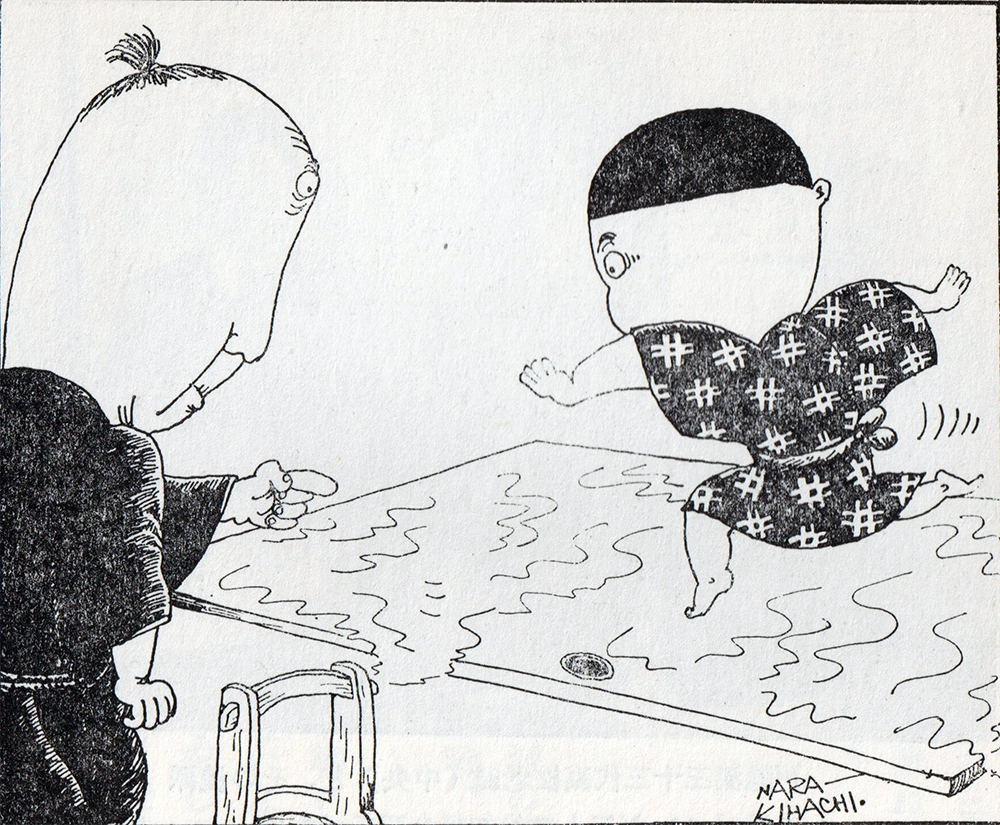
Crossing Wet Sliding Doors (Fusuma): Water was sprinkled on sliding paper doors, and the candidate had to walk across them. Those who tore the paper by stepping through failed, while those who crossed quickly without damaging it passed.
Submersion Test: A candidate’s head was submerged in a barrel filled with water. Those who quickly pulled their head out due to discomfort failed, while the test measured how long they could endure submersion.
Running Test: Candidates were made to run a set distance. Those who ended up panting heavily failed.
Upon passing these tests, candidates began practical training, starting with jumping exercises. For this, hemp seeds were planted in the ground, and once they sprouted, the candidate had to jump over the growing plants every day for three years. Hemp grows rapidly, reaching heights of over two meters, and the candidate had to keep pace with its growth, practicing forward, backward, sideways, and lateral jumps daily—rain or shine—for three years.
There were various jumping techniques, but traditional ninjas adhered to specific standards: a 50-shaku (approximately 4.5 meters) drop for descending from heights, a 9-shaku (2.7 meters) high jump, and a 3-ken (5.4 meters) long jump. Remarkably, to safely descend from a 50-shaku (15 meters) height, a parachute-like ninja tool was devised as early as 500 years ago.
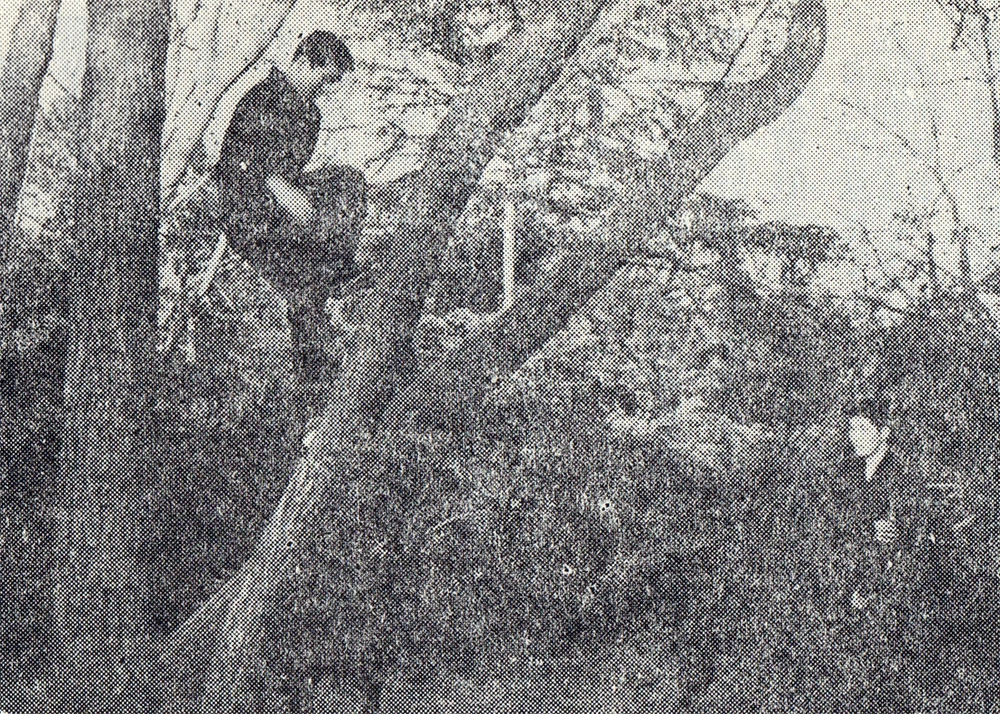
A modern ninja training, inheriting a 500-year tradition. On the right, a ninja is climbing a near-90-degree inclined tree at high speed.
Other training included diving, tree climbing, cliff scaling, sprinting, and endurance without sleep. Ninjas would wear deer-tanned leather clothing directly against their skin to train themselves not to sweat, and they avoided eating strong-smelling foods to maintain an odorless body.
In terms of martial arts, they had to master swordsmanship, spearmanship, staff techniques, jujutsu, and fist techniques, as well as chain techniques (kusarijutsu), fire techniques (kajutsu), horseback riding, and swimming. Additionally, they needed expertise in performing arts (yūgei), disguise techniques, pharmacology, astronomy, geography, and humanities. They also studied skills like rope escape, lock-picking, forging documents and seals, and mimicking sounds and voices—a seemingly endless array of techniques.
Looking at this list, becoming a full-fledged ninja seems like an immense challenge, almost superhuman. On this matter, Okuse Heijirō, previously mentioned, commented:
“Mastering even one of the skills listed would take several years, and completing all of them would be impossible even in a hundred years. It’s likely an ideal rather than a realistic expectation.”
In practice, there were specialists—those skilled in diving, fire techniques, jumping, or throwing shuriken—who would form teams based on their strengths to accomplish assigned missions.
Living in a modern world filled with dangers like earthquakes, fires, explosions, and hijackings, how should we respond when suddenly faced with a disaster? Below, I will outline emergency evacuation methods step by step.
Excerpt above about Qualifications for Becoming a Ninja from the book Ninpō Chōjin no Sekai by Ōhira Yōsuke.
Endorsement by Hatsumi Yoshiaki 34th Sōke of Togakure-ryū Ninpō 28th Sōke of Kukishinden Happō Hiken
Upon hearing that Professor Ōhira was publishing an introductory book on ninjutsu, I was convinced that it would undoubtedly become an exceptional work on the subject. This confidence stems from the fact that Professor Ōhira has dedicated decades to researching ninjutsu—not merely by studying historical texts or research books on the subject, but by forming deep, familial bonds with living ninjas over many years. I am one of those ninjas.
Therefore, Professor Ōhira possesses knowledge of secret teachings (hiden) that a mere researcher could never glimpse.
I believe that ninjutsu is, in essence, a method of mastering the art of living with a spirit of harmony, peace, and joy (kasei waraku). To this end, ninjutsu practitioners have honed their wisdom to live happily by cultivating their body, mind, and spirit through endurance (nin).
In today’s chaotic era, isn’t the proper application of ninjutsu—despite its potentially dangerous nature—precisely what modern society needs? This book, which comprehensively elucidates all aspects of ninjutsu, not only explains the art but also serves as a personal guide for navigating life. This is why I, as a ninja, proudly endorse it to the world (kōko).
Yōsuke Ōhira (大平陽介) Writer and literary critic. Real name: Ryōichi Yahata. Born in 1904 in Fukushima Prefecture. After dropping out of Chūō University’s Faculty of Law, he worked at Shinchōsha before serving as the inaugural editor-in-chief of NHK’s monthly magazine Broadcast and the Freedom Publishing Association’s Reading Outlook (a predecessor to the current Weekly Reading Person). He is currently a standing committee member of the Tokyo Writers’ Club and a councilor of the Japan Children’s Literature Association. His representative work is Full Moon Literature (Shunyō Bunko). Alongside his prolific writing career, he has a keen interest in exploring ancient martial arts (kobudō), and has authored works such as Sword Courage Record (Daidō Inshokan), which incorporates the secrets of martial arts. This book also reflects a portion of his extensive research accumulated over many years.
大平陽介 Ōhira Yōsuke 忍法・超人の世界 Ninpō Chōjin no Sekai
Published January 1, 1975 254 pages ISBN-10 : 4026060314 ISBN-13 : 978-4026060316
The Dainichi effect happened around midday, but first this morning I
went to the 大江戸骨董市 Oedo Antique Market with Peter Crocoll. This market
is quite large with many collectibles, art, and weapons. Many people
bought and even wore vintage clothing. Peter found a book of 春画 shunga
full of erotic woodblock prints as an amusing gift for one of his
students back home.
From there we made a visit to 美術刀剣松本 Bijutsu Tōken Matsumoto.
Peter brought another tsuka from home to be wrapped and restored. You
may remember my trip last year when he had his first tsukamaki from
Matsumoto. While we were there, a koshirae for a dagger caught his eye.
The fittings had a rare decorative 海老鞘 ebisaya and Peter couldn’t resist
adding it to his collection.
The Dainichi Effect
Later, seeking some inspiration, I returned to ponder the copy of Dojo
Giga at the bookstore. When I randomly opened the pages, it fell open to
Hatsumi Sensei’s painting of 大日如来 Dainichi Nyorai. Dainichi represents
the center, and is the sun Buddha in Japanese esoteric Buddhism such as
密教 Mikkyō.
Depictions of Dainichi often show the hand gesture or mudra of 六大
rokudai. Each finger is part of the 五大 godai: chi, sui, ka, fu, and ku.
They enclose the sixth element, 識 shiki, which is consciousness.
In the text of the painting, Soke wrote the name of 運慶 Unkei
(1148-1224), who was a famous sculptor among the warrior class during
the Kamakura era. Soke did this because in the year he painted, a new
sculpture of Dainichi had been discovered and attributed to Unkei.
Hatsumi Sensei’s painting was influenced by this discovery. This
sculpture sold at Christie’s Auction house for an unprecedented
$14,377,000 US dollars.
Hatsumi Sensei’s Dainichi painting hangs in the Bujinkan honbu dojo
Hatsumi Sensei’s Dainichi painting is currently hanging in the Bujinkan
Honbu Dojo. The text on the painting is a sort of memorial. It has the
posthumous Buddhist names of both Takamatsu Sensei and Hatsumi Sensei. I
first learned of these names some years ago when I climbed a ladder to
help install shelves for the gold 位牌 ihai, which are Buddhist mortuary
tablets displaying the names above the Kamidana.
I have an emotional memory related to Dainichi in the Dojo. It was the
day Hatsumi Sensei had to move his wife into a care home. They had been
married for many decades and Soke provided care for her in recent years.
But he couldn’t manage it anymore.
When he entered the Dojo, he skipped his usual, jovial conversation, and
walked straight to the altar of Dainichi under the Kamidana. He sat
with his back to all of us and spent many minutes in private prayer.
Afterwards, he began to quietly describe some items,
I bought that green tengu when Takamatsu Sensei passed away. At the end
of 42 years, I got the one below it here. And here is Dainichi Nyorai. I
was born in the year of Dainichi. At this 50 year anniversary maybe
it’s some kind of divine message that these things come. This 50 year
anniversary just came very suddenly, and next year with this completion
of mutō dori, everyone will become a Daishihan and start teaching for
themselves. That’s why all of the Daishihan should become friends and
have a close community.
While Hatsumi Sensei was talking, I sat maybe a meter behind on his
right side. I listened carefully since his back was to me. All of the
sudden he asked the entire room who should be the next Daishihan.
Several people pointed at me. Hatsumi Sensei turned to see who they were
pointing at and he instantly agreed, exclaiming “Ok, ok!”
Senou Sensei reads Michael Glenn's Daishihan for presentation by Hatsumi Sensei
The very next class he called me up to the front of the Dojo to sit
before him. Senou Sensei read the new certificate and passed it to Soke,
who then bestowed it on me. I bowed and everyone applauded. Hatsumi
Sensei said, “There is a time for these things and when the time is
right they should be given.” That this happened on the same day Hatsumi
Sensei experienced a very personal life change makes me very humble and
reflective. Maybe this is the Dainichi effect.
Training with Furuta Sensei
After these moments of reflection, I went to class with Furuta Sensei.
Of course he gave me a ride from the train station. Training was in the
school gymnasium, which is very large and has nice mats set up for Jūdō.
During the drive, he explained that he had just come from a meeting with
Hatsumi Sensei and all of the new Soke. He wanted to share details, but
I think he felt he couldn’t tell us everything. But he did share a few
things.
He said that there was a new website (bujinkanhombuoffice.com)
in the works for the Bujinkan. It will have official rules and rank
order forms in an effort to streamline this process. There is also a new
Daishihan lapel pin if you feel like showing off. Furuta Sensei also
said that for someone to be recommended for Daishihan, they need letters
from at least 3 current Daishihan.
Furuta started class with Ukemi, Sanshin, and Kihon Happō to warm up. He
began to focus on the details of the 表逆 omote gyaku. He used some of
his characteristic 雲隠流 Kumogakure Ryū angles. He showed this against a
resisting opponent. Whereupon he emphasized how even one finger can
break the resistance like a “push button.”
Furuta Sensei explains details of Oni Kudaki
Pushing the button transitions into 裏逆 ura gyaku. And even further into
手枕 temakura, which he also showed as 袖枕 sode-makura. Then the last henka
was 鬼砕 oni kudaki.
He changed to 半棒術 hanbōjutsu against a knife stab. He grew very
energetic during this portion of the class. I think the Starbucks caught
up with him. He yelled, jumped, and charged at opponents using very big
swings of 八文字振りhachimonji furi. It was very funny and we had a lot of
laughter. He described this energetic feeling as 気魄 kihaku, which is a
fighting spirit.
Furuta Sensei next gave us a lesson about making mistakes. When you try
to hit 小手 kote with only the tip or edge of the hanbō, you might miss.
This is very natural. But you don’t want this mistake to be your defeat.
Instead, you embrace the mistake and turn it into something useful.
Furuta Sensei uses a Hanbo against two knives
He said that people don’t train for mistakes. They try to do perfect
technique (which is impossible), but we should train for mistakes
instead. Because we will always make some. Real combat is a clumsy,
chaotic affair, so we should train for that reality. As Furuta Sensei
said in his blunt English, “Mistake is good.”
The class had a lot of laughter and a good feeling. I think that is
really the spirit that Hatsumi Sensei has given us. People try to be so
serious, but training with a good heart and lots of laughter is best.…
Tenshō Iga War (Page 193-1199) from the book Ninjutsu Sono Rekishi To Ninja by Heishichirō Okuse.
As previously noted, the Iga ninjutsu practitioners harbored deep resentment toward 織田 信長 Oda Nobunaga, viewing him as an irreconcilable enemy, primarily due to the Tenshō Iga War.
What Was the Tenshō Iga War?
Throughout the Sengoku period (1467–1615 CE), 伊賀 Iga was largely a leaderless region. Toward the end of the Sengoku period, Niki Danjō Tomoume briefly held the nominal title of lord of Iga, supported by local chieftains, but, dissatisfied with a mere titular role, he was driven out and forced to flee—a rare event in Iga’s history.
織田 信雄 Oda Nobukatsu (1558-1630)
The one who set his sights on this leaderless Iga was Kitabatake Nobuo (also known as 織田 信雄 Oda Nobuo), who had been adopted into the Kitabatake family, orchestrated the murder of his adoptive father, and seized control of the family to become the lord of Ise. Nobuo was the son of Oda Nobunaga. When Nobuo became the lord of Kitabatake, Iga suddenly found itself directly bordering Oda-controlled territory.
Nobuo noticed that a sturdy mountain castle at Maruyama in Shimogōbe, Nabari District, Iga Province—originally built by his adoptive father, Kitabatake Tomonori, as a base for attacking Iga—had fallen into disrepair. He ordered his vassal, Takigawa Saburōbē, to repair and restore the castle.
Realizing that Nobuo’s actions marked the beginning of Oda Nobunaga’s invasion of Iga, the Iga local warriors (Jizamurai) gathered at Heirakuji Temple in Ueno Castle to discuss the situation. They resolved to set aside past grievances, uniting the northern and southern Iga warrior groups to resist the external threat. Consequently, the Iga forces launched a surprise attack on the nearly completed Maruyama Castle, burning it down and driving Takigawa Saburōbē back to Ise. This occurred in July 1578 CE (Tenshō 6).
The First Tenshō Iga War
Upon receiving Takigawa’s report, Nobuo was enraged and vowed revenge. The following year, in September 1579 CE (Tenshō 7), he led an army of over 8,000 from his castle at Matsugasaki toward Iga. This marked the First Iga War. Nobuo, commanding a large army, aimed to conquer Iga in one swift campaign, splitting his forces into three routes. However, the Iga army (a coalition of local warriors), having received prior intelligence of this plan, skillfully used the mountainous terrain to block Nobuo’s advance.
From the morning to the afternoon of September 17, the Iga forces, with all ninjutsu practitioners mobilized, pinned down Nobuo’s army on the mountain paths. At night, they employed their signature night raids and surprise attacks, striking Nobuo’s forces. As a result, all three routes of Nobuo’s army suffered heavy losses, and by the morning of September 18, Nobuo himself was forced to flee for his life with his remaining troops. The outnumbered Iga army had triumphed over Nobuo’s large force.
When Nobunaga heard of Nobuo’s defeat, he reprimanded him, saying, “What a fool to cause trouble at such a critical time!” He ordered Nobuo to stand down and prohibited further military action against Iga. For Nobunaga, who was focused on unifying Japan, Nobuo’s attack on Iga was an unnecessary distraction—an example of “a child not understanding a parent’s intentions.” However, Nobunaga likely made a firm resolve at that moment: “Iga, you’ll pay for this! As soon as I have the chance, I’ll crush you completely!” His subsequent actions—the Second Iga War—reveal this intent.
The Second Iga War
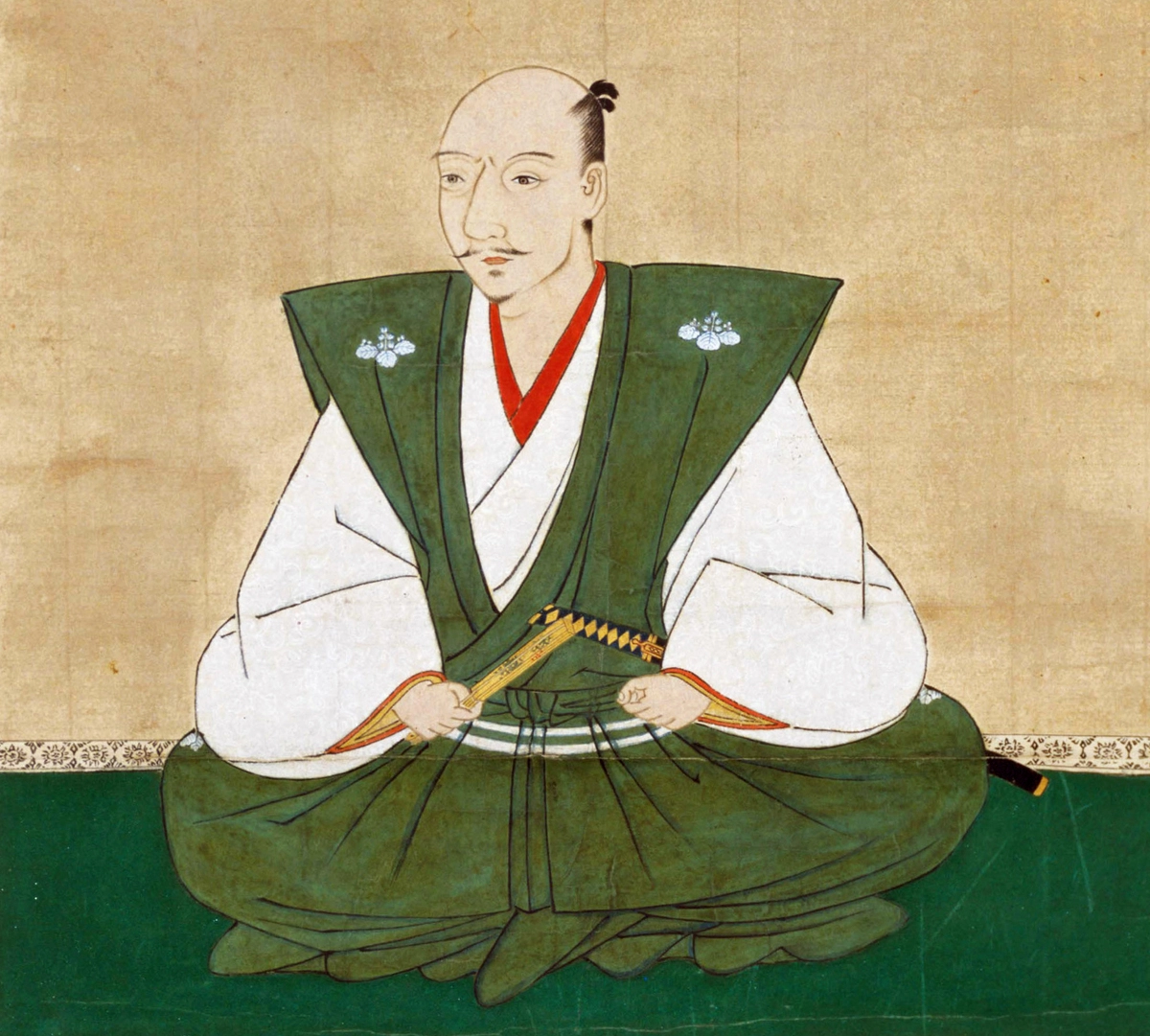
織田 信長 Oda Nobunaga (1551-1582)
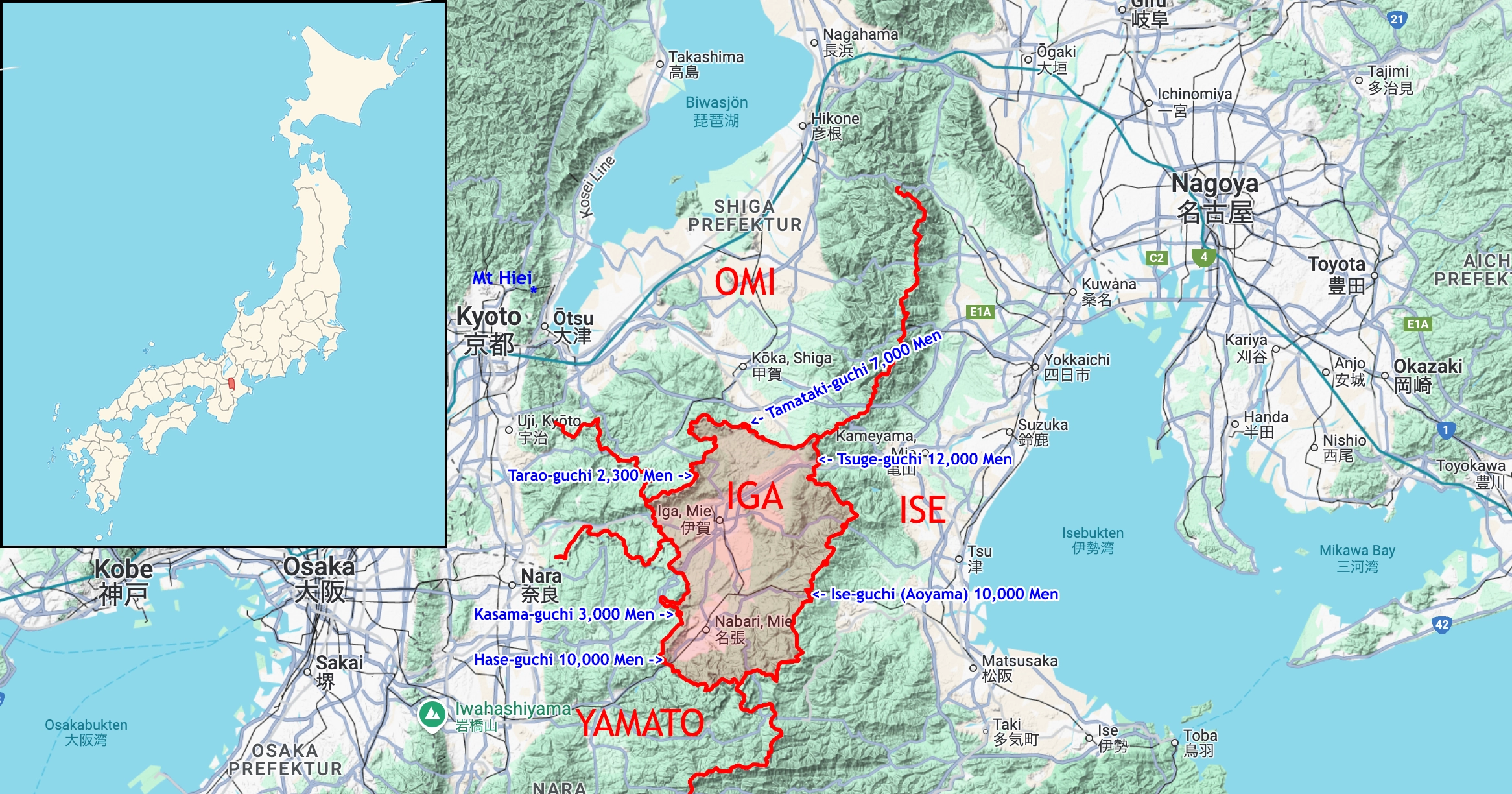
Two years later, in September 1581 CE (Tenshō 9), when the tides of national power had begun to stabilize, Nobunaga suddenly gathered his generals at Azuchi Castle and ordered an immediate attack on Iga.
The announcement was so abrupt that the summoned generals were reportedly taken aback. (Nobunaga likely took great care to prevent Iga and Kōga ninjutsu practitioners from gathering intelligence, which would have given the Iga warriors time to prepare.) The invasion plan was as follows:
Asano Nagamasa, Shinjō Suruga-no-Kami, Ikoma Uta-no-Kami, Mori Ichikigami, Toda Danjō-Shōsuke, Sawa Genjirō, Akiyama Sakon-Dayū, Yoshino Miyauchi-Shōsuke 〇
10,000
6. Tarao Route
Hori Hidemasa, Tarao Mitsuhiro 〇
2,300
Total Routes: 6
23 Generals
Total Troop Strength: 46,300
伊賀惣国一揆 Iga Sokoku Ikki “Iga ikki” (1460–1581)
This was an enormous army for the time. Iga’s population during this period is estimated at around 90,000, meaning the invading force was over half the region’s entire population. Nobunaga instructed his generals to thoroughly exterminate the Iga warriors and implement a scorched-earth strategy.
On September 27, the invasion forces attacked Iga from all six routes simultaneously, descending like an avalanche. The Iga coalition army, numbering fewer than 4,000 across the entire region, stood to resist them. Despite the ninjutsu practitioners leading their得意 mountain warfare, night raids, and guerrilla tactics, the outcome was predetermined by the sheer disparity in numbers.
The battle, which began on September 27, ended after seven days with a complete victory for the Oda forces, except for a few remaining pockets of resistance. Kashiwara Castle, where southern Iga warriors made their last stand, fell on October 28, marking the end of the Iga War in both name and reality.
Excerpt above about Ninjutsu History from the book Ninjutsu Sono Rekishi To Ninja by Heishichirō Okuse.
Heishichirō Okuse (奥瀬 平七郎, おくせ へいしちろう) was a Japanese novelist, researcher, and politician born on November 13, 1911, in Ueno, Japan. He passed away on April 10, 1997.
Okuse graduated from Waseda University and studied under the renowned author Masuji Ibuse. He developed a particular interest in ninjutsu (the art of stealth and espionage), contributing to its study and preservation. Professionally, he worked for the Manchurian Telephone & Telegraph Company.
In addition to his literary and research endeavors, Okuse served as the mayor of Ueno from 1969 to 1977. His multifaceted career reflects a deep engagement with both traditional Japanese martial arts and public service.
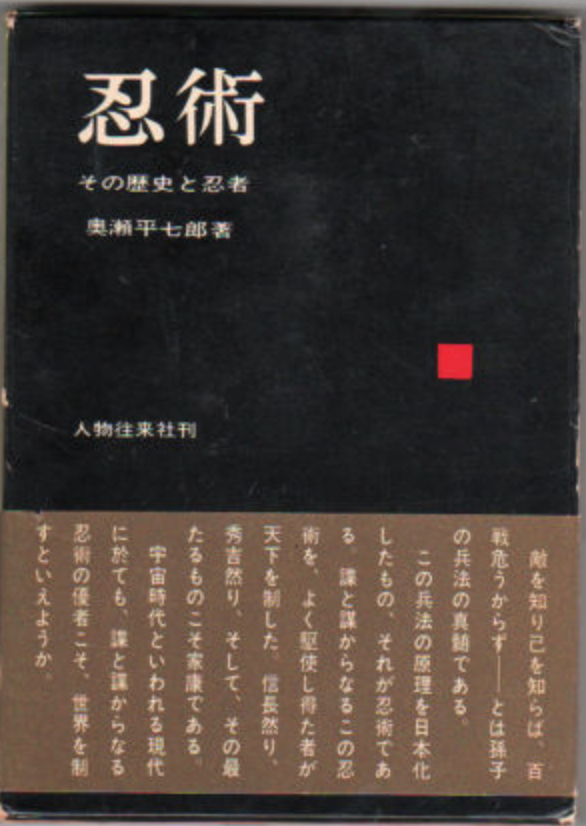
Ninjutsu Sono Rekishi To Ninja 318 pages was published Showa 38 (1963) by Shokusando
During the class, we began with taijutsu and ended with hanbō jutsu. In both cases, the Kaname, or key point, was Mawari, to turn around the opponent softly but without stopping. (1)(2)
This permanent motion around him prevents uke from answering to a specific action. When Nagato sensei was walking around the attacker, you could see the opponent gradually losing his balance.
There were too many potential attacks coming in succession; it was, therefore, impossible for the attacker to take back the initiative. Uke could only react defensively. In a way, Nagato sensei’s movements trapped him in a spiderweb of possibilities.
Once again, he stressed the importance of having proper basics. When adequately executed, each fundamental technique of the Tenchijin acts as an excuse to “play” with the attacker. Each basic movement is like a title on a blank page. Then, your creativity kicks in, and you destroy the opponent’s initial intent. Sensei was also switching sides continuously, going from left to right and back, while turning around uke (mawari). This was confusing uke’s attacks.
When moving around the attacker, Nagato sensei emphasised the importance of matching the distance to the uke’s attacks. He added that there could be a knife hidden in the other hand. Therefore, he was always out of reach during the attack and then stepped in once the attack ended. While consistently positioning his elbows in the process and using them as leverage. (3) This use of a fulcrum and leverage, teko shiten, is a major kaname of the Kukishin and Takagi Yōshin. (4)
By transitioning from one basic to another, but always staying in a basic kamae, you can apply any technique. Nagato sensei was like a cat playing with a mouse. He never finished a movement but used the uke’s reactions to apply another basic. In the process, Nagato sensei did various versions of Ganseki (Nage, Oshi, Otoshi), Oni Kudaki, Musō Dori, and Gyaku Musō Dori. Going from one to the other in a permanent flow, he was always well-positioned to do one waza or another. That was nice to watch, maybe less nice for the uke.
During the break, my friend Peter Meden reminded me of another interesting technical point that I missed. Nagato sensei showed him that, depending on the angle of the grip of the attack, the angle of the grip determines one or more basic waza. The c-shaped grip can be a wrist grab in Ura or Omote, or it can even be a direct grab of the fist. This can be done from above or from below (U-shape). These multiple soft ways of controlling the uke, in combination with a Mawari action of the legs, make it easy to overcome the attacker.
This technical approach (Mawari and grip) was applied in the last part of the class dedicated to Hanbō jutsu. Nagato sensei said, “Hanbō jutsu is simple; don’t overthink it!”
The only difference when using a hanbō is that you have to increase the distance to stay out of reach. I was surprised that many practitioners that night, and some with high ranks, had no clue about the hanbō basics. I had the feeling that Hanbō jutsu was new to them! (5)(6)
Nagato sensei said that you have to “dance with uke and the weapon”, and the Mawari motion looks similar to some demonic dance. To improve your taijutsu, don’t have preconceived ideas; wait for the attacks and unfold the possibilities as they appear before you. Watching Nagato sensei dancing with his partner, I was happy that we were friends and not enemies.
Kaname, 要, key point, pivot, vital point; cornerstone; keystone
Mawari, 周り, circumference, perimeter
Hiji, 肘, elbow: The use of the elbows in every technique is Nagato sensei’s “signature move”. It took me years to acquire it, but once you have it, it becomes a great aid to your taijutsu.
Teko, 梃子, lever and Shiten, 支点, Fulcrum are important concepts taught within the Kukishin and the Takagi Yōshin.
In the past, the Hanbō was the only weapon Hatsumi Sensei taught. This weapon, invented in the 19th century, is the best to introduce buki jutsu (weapons) to our beginners.
You can get all Hanbō basics on www.koimartialart.com, an Online streaming platform in English with 160 GB of videos.
During Paul’s calligraphy session mid-class, he wrote “Tōgi ku ni tamotarete iru” the way Hatsumi Sensei wrote it in the past. (1)
Imagine a world where every possible outcome, every attack, every event—already exists, shimmering just beneath the surface of the present moment. That is not just the stuff of science fiction or mystical poetry; it’s a concept deeply embedded in Japanese thought and, surprisingly, echoed in modern psychology.
As I couldn’t find the same kanji, I used the romaji instead of the beautiful calligraphy. The sentence became 透義句に保たれている (Tōgi ku ni tamotarete iru).
Paul, after reading it, said three things: a) The AI explanation is excellent. b) The characters are not so great. c) It is better to use Sensei’s characters. (2)
The calligraphy suggests that all meanings, actions, and events are “preserved” or “maintained” within the same space and time. Imagine a pond: every ripple, every reflection, every possibility is already there, waiting to be seen from the right angle. Like every ancient culture, the Japanese language conveys not only meaning but also a distinct way of perceiving the world. That is not just “linguistic artistry”; it has roots within the fabric of Japanese spirituality. All religions know that and teach it. Whether it is Buddhism, Shintō, or Zen, all things are interconnected at some level. Visible or invisible. (3)
So, if everything is interconnected, then it makes sense that when you are facing Sensei, you get the feeling that “he knows” what you will do next. In a way, he is cheating!
Surprisingly, this ancient wisdom, or its modern application in budō, finds a contemporary echo in Malcolm Gladwell’s book, “Blink.” Gladwell explores the phenomenon of “thin-slicing” – our ability to make split-second decisions based on seemingly minimal information. Experts, he argues, don’t consciously analyse every detail; instead, they tap into a vast reservoir of experience and intuition, arriving at the correct answer almost instantly. (4)
Think of an art expert who knows a painting is a forgery at first glance, a martial artist watching a fake movement, or a firefighter who senses a building is about to collapse without knowing why. In these moments, all possibilities and outcomes are, in a sense, “already available.” The expert doesn’t calculate; he accesses what’s already there, much like the master who responds to an attack without thinking. This ability to read “between the lines” of reality is what makes the difference between a good Budōka and an excellent one.
What unites these perspectives is a profound trust in the fullness of the present moment. Whether through the lens of Japanese spirituality or the science of intuition, mastery is not about controlling every variable or predicting every outcome. It’s about recognising that, beneath the surface, all possibilities already exist. The art is to access them. That was the theme in 2004 when Hatsumi Sensei taught us Yūgen no Sekai to “see the dimension of the non-manifested”. (5)
Next time you find yourself hesitating, caught between choices, remember: the answer may already be within you or in the Kūkan around you, preserved in the infinite potential of now.
Read the air, trust your intuitions, develop your Budō skills and be happy.
Because all is there already!
Personal note: Thank you, Paul, for your help and the class. To all Bujinkan members, when in Japan, come and train with him as he has great taijutsu and a deep understanding of Sensei’s philosophy.
_____________________________
The computer gave me 透義句に保たれている (Tōgi ku ni tamotarete iru), but the picture is the real calligraphy by Paul, copying Sensei’s choice of kanji.
Paul told me that Hatsumi Sensei often uses kanji that the majority of Japanese people rarely understand. On that subject, check his latest YouTube video: https://www.youtube.com/watch?v=aAV1wN7Nzvk
a) Buddhism: the concept of 縁起 (Engi, or Dependent Origination) teaches that nothing exists in isolation. Every event is the result of countless interwoven causes and conditions. The present moment, then, is not just a fleeting second; it’s the culmination of all that has come before and the seed of all that will come after.
b) Shintō: Japan’s indigenous spirituality speaks of 結び (Musubi), the sacred force that binds all things together. In this view, the universe is a living web where past, present, and future are not separate threads but a single, ever-unfolding tapestry.
c) Zen Buddhism takes this even further with the idea of 一如 (Ichinyo, Non-Duality). Here, the boundaries between time and space dissolve. In deep meditation, practitioners experience the “eternal now”—a state where all outcomes are already present, and the mind is free to move without hesitation.
Yūgen no Sekai, 幽玄の世界, the dimension of things that are there, invisible and not manifested yet. Hatsumi Sensei also referred to it as “the dimension of ghosts”. But I prefer this quote by Sensei: “Ninpō is the art of rendering the invisible visible”.
After the Kotō ryū of the other day, Noguchi sensei began the study of the Chūden no Sabaki Gata from the Takagi Yōshin ryū, starting with Katamune Dori.
A group of 20 students gathered to attend the class, and I was happy to see many “old-timers”. There is nothing disrespectful here. People at Noguchi sensei’s classes are mainly practitioners who have been attending his classes for ten or twenty years (in my case, thirty-five years) because his vision of Budō is brilliant, based on knowledge rather than brute force. (1)
Even though he is now Sōke of the Kotō ryū, he is still teaching the “Noguchi ryū”, his understanding of the Bujinkan arts.
After this last class, I’m no longer sure Noguchi sensei only does what he has been doing for decades. There is no change; he is still destructuring each waza (grab, one-fist attack, double attack, inside, outside, locking with the head, etc.) in the same way.
But last night, we saw a Kotō tiger in the branches of the willow tree. There is a Kotō ryū tiger hidden in the tree. (2)(3)
After training with Noguchi sensei for so many years, I could easily spot this significant change in his taijutsu. They say that a Sōke embodies the spirit of the fighting system (ryū) he represents. After last night, I think there is some truth about it.
Now, don’t get me wrong, Noguchi sensei is still the same perfect gentleman; nothing differs from his regular taijutsu, but there is a new “presence” in his movements. Some feline vibe. His actions have always been unreadable; this new quality makes it even more difficult for uke not to die.
From that class and apart from this “felinity”, here are a few valuable tips we got during class:
Tsukame janai: Do not grab firmly; maintain contact and let uke think he is free, even though he is not. Be like a cat -or a tiger- playing with a mouse.
Chikara janai: Do not use strength; use movement instead. Here, you can relate to the willow tree. Branches move with the wind, and when there is a burst of wind, it looks like à wave going through the leaves.
Ritsudō: Rhythm is everything. Don’t follow a repetitive pattern of movement. Variation is important. If you don’t, the giant worms from Dune will get you. (4)
Turn your whole body during the movement to balance your weight and increase efficiency. The direction of the feet is key to applying the waza.
Kamae: As he did last time, use the kamae not as a rigid, unhealthy stance but rather as a suggestion. It is a more relaxed kamae, less formal.
Basics: Whatever the complexity of the waza we studied, Noguchi sensei was always able to cut it down into basic moves from the Tenchijin (Ura Gyaku, Yoko Nagare, Ō Soto Gake, Musha Dori, etc).
As demonstrated by Noguchi sensei in class, mastering your basics is vital to understanding what you see here at honbu. After class, Paloma, a young teacher from Valparaiso, told me that the Koi Martial Arts videos helped a lot in improving my basics. (5)(6)
If you have weak basics, you cannot become the tiger hidden in the branches of the willow tree; you are only a harmless “paper tiger”. (7)
Thank you, Noguchi sensei, for another excellent moment.
Strength is necessary at some point, but if you can apply the waza softly in the training hall, you might be more capable of using strength when facing à real attack by multiple opponents.
The Kotō refers to a tiger (see previous post), and the Takagi Yōshin refers to the willow tree.
Yōshin ryū (“The School of the Willow Heart”) is a common name for several different martial traditions founded in Japan in the Edo Period.