From the Budoka's perspective a weapon can actually be deemed as limiting and dangerous, and we therefore must strive to cultivate the mindset and freedom that allows us to not be bound by the concept of a weapon, or controlled by its ...…
Ten Ryaku no maki is the first level of taijutsu basics. Including,
Hajutsu kyuho – nine techniques to break down the opponent,
Gyaku gi – reversed techniques
Nage kata – throwing techniques
Ryusui iki – sacrifice throws
Shime waza – strangulation techniques
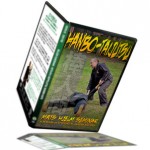
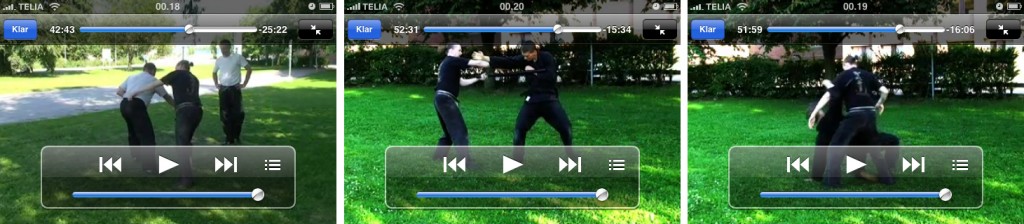
This movie was filmed May 30’th 2009 at Kaigozan Dojo. This training was a walk through of the second Taijutsu level by Mats Hjelm, Bujinkan Shihan Kugyo Happobiken. This is the basics recommended especially for beginners and students between 6 Kyu and 4 Kyu in the Bujinkan Dojo system.
On a Windows PC you can watch it in iTunes or Quicktime player (these programs is available for free on apple.com. VLC is another good program that can play these files.
Ten Ryaku no maki is the first level of taijutsu basics. Including,
Hajutsu kyuho – nine techniques to break down the opponent,
Gyaku gi – reversed techniques
Nage kata – throwing techniques
Ryusui iki – sacrifice throws
Shime waza – strangulation techniques
This movie was filmed May 30’th 2009 at Kaigozan Dojo. This training was a walk through of the second Taijutsu level by Mats Hjelm, Bujinkan Shihan Kugyo Happobiken. This is the basics recommended especially for beginners and students between 6 Kyu and 4 Kyu in the Bujinkan Dojo system.
On a Windows PC you can watch it in iTunes or Quicktime player (these programs is available for free on apple.com. VLC is another good program that can play these files.
The theme for this seminar will be NINPO/NINJUTSU and SHINKEN KATA. Dean will bring together and teach true Ninpo combat from his experience of trainings in Japan with Hatsumi Soke. And also his personal experience as a Police Officer, from the Croatian civil war as a member of the SJP Alpha, and SPECWOG (SPECcial Warriors Operation Group).
Dean has been practicing Martial Arts for 35 years, he is a former Police officer a member of the SJP Alpha (Special Police Force – SWAT) in Croatia. Dean Rostohar is Director, Chief instructor of SPECWOG and a founder of Tactical Technic Combat System T.T.C.S. For his full resume, check out his web site or the SPECWOG web site.
Ten Ryaku no maki is the first level of taijutsu basics. Including,
Taihenjutsu ukemi – break falling and rolling,
Hiken juroppo – 16 strikes and kicks,
Kamae – body positioning and angles,
Sanshin no kata – five basic movement kata,
Kihon happo – eight basic fighting techniques
Shinken taihenjutsu – three basic evasions from sword attacks.
This movie was filmed May 30’th 2009 at Kaigozan Dojo. This training was a walk through of the first Taijutsu level by Mats Hjelm, Bujinkan Shihan Kugyo Happobiken. This is the basics recommended especially for beginners and students between 9 Kyu and 7 Kyu in the Bujinkan Dojo system.
Note: Although the instructions is in Swedish it is very visual and obvious what to do. All techniques comes with names in the subtitles.
On a Windows PC you can watch it in iTunes or Quicktime player (these programs is available for free on apple.com. VLC is another good program that can play these files.
Recently, a Budo inspiration came to me. I realized that when playing and wrestling with a two year old child, I had to be extra present with my hands in order to avoid inflicting injury. I noticed that from my training it seemed that ...…
The first boom was in Japan during the 1960’s, they produced a lot of ninja movies then. The producers asked Takamatsu Sensei and Hatsumi Soke for advice and help. The first “Shinobi no mono” movie had Hatsumi Soke as advicor, it turned out to be really cool movie, they made eight movies between 1962-1968. There was also many other ninja movies.
Then in the beginning of the 1980’s the second Ninja boom cam, and it became really big in the west. The Swedish “Ninja Mission” hit big in the US, it was more popular than the new Clint Eastwood movie at the time. It had Bo Munthe who then was a 4′th Dan in Bujinkan (the highest ranked in Europe at this time), and many of his students did stunt work.
There was also plenty of ninja movies and TV series from Hollywood at the time. People came from everywhere and wanted to study this mysterious art Ninjutsu. In Stockholm the dojo had several hundred meters of people lining up to start training. In other countries which hadn’t so well established Bujinkan dojo’s there was charlatans who saw the opportunity to make money. The choice of American filmproducers how they displayed the art was not in favour for true Ninjutsu practitioners. It was often kung fu, tae kwon do, karate, kendo practitioners who got the stunt cordinator job for these movies, the biggest star of this era was probably Sho Kosugi.
He claims he learned Ninjutsu from a “strange neighbour” when he was 7 years old. I believe the neighbour was strange, but I don’t think he knew much about Ninjutsu. How the film industry portaited the Ninja was not good! I wish they (Hollywood industry) spent more time on research than listen to someone who was taught Ninjutsu by a crazy guy when he was seven years old.
Now 54 years later Kosugi still have too much influence in Hollywood, who apparently decided that there will be a third Ninja boom to cash in money on. They still prove they are too lazy to do proper resarch. The forth coming Ninja Movies (see below) this summer and autumn of 2009 will probably not be as successfull as in the 80’s, but they will certainly enforce the stereotype of what a Ninja and Ninjutsu is, which is not true at all.
He previously worked with films such as Matrix, V for Vendetta, and is currently working on the new X-Men to be released in 2011. In this movie the old star Sho Kosugi is playing Lor Ozunu. The main character Raizo in this movie is played by Rain, who is a big pop star in Asia.
The film stars Scott Adkins as a westerner named Casey, who is studying Ninjutsu in Japan when he’s asked by the Sensei to return to New York to protect the legendary Yoroi Bitsu, an armored chest that contains the weapons of the last Koga Ninja. Somehow, cops, the mob, and a rival ninja enter the picture. Much death, sword slashing, and ninja ass kicking ensue.
A Japanese Ninja movie, the ninja movie boom never really went away in Japan.
Recommended reading
If you as an practitioner or teacher in Bujinkan Dojo is getting interviewed by journalists, this article “Ninjutsu and the media” by Mike Hennessy is really good.
For people who doesn’t know much about Ninjas and Ninjutsu apart from what is portrayed on movies, comic books, and games, there is a few things you should know.
There was a Ninja master who died in the 60’s, his name was Seiko Fujita. He wrote books about Ninjutsu (only available in Japanese, and if you are lucky). There is many people who claims that they was taught by him. As far as I know they are all lying. Fujita died without a successor. Basically everyone that claims to teach from the Koga-ryu are all fakes, so please be careful about who to trust.
There was another Ninja master called Takamatsu Toshitsugu had many students in his life time, but at the end when he died in 1972 he only had one true student, and this was Hatsumi Masaaki. Before the first Ninja boom in the early 1960’s there was no other known master of Ninjutsu other than Seiko Fujita (who died without a successor), Takamatsu Toshitsugu and his student Hatsumi Masaaki (Yoshiaki at the time).
Hatsumi Soke is still alive today, he has many, many students all over the world. Hatsumi Soke is the last true Ninja…
Hatsumi Soke had two older students that only once met Takamatsu Sensei that broke off and formed their own organizations, namely Genbukan and Jinenkan. Hatsumi Soke still have students that still trains with him weekly in Honbu Dojo that also meet Takamatsu sensei on the same occasion. Anyone else living than Hatsumi Soke claiming to have been a direct student to Takamatsu Sensei is not telling the truth at all. Unfortunately there is people claiming this.
Organisations that is more or less still teaching Ninjutsu is the following…
- Bujinkan Dojo (headed by Hatsumi Masaaki)
- Genbukan (headed by mr. Tanemura Shoto formerly student of Hatsumi Soke)
- Jinenkan (headed by mr. Manaka Unsui, formerly student of Hatsumi Soke)
- Toshindo (headed by mr. Stephen Hayes, formerly student of Hatsumi Soke)
Unfortunately there is bad examples everywhere, so please don’t judge a whole martial art based on a few rotten apples. Keep an open mind.
There is also a few Japanese Ninja Museum’s, some of them also have coreographed demonstrations (rarely with no authentic Ninjutsu training at all). Please keep in mind these are Museums, and they are not Martial Artists!…
Sorry for not posting anything for a while. The trainings here in Japan is great, at least for those who have been training for a while. For beginners it might be hard and difficult. It is not said right out but I guess it’s expected that you know the basics well before you come to training in japan. There is plenty of good teachers everywhere, somewhere around 150 “true” master instructors in Bujinkan Dojo. You don’t need to go to Japan for good basic training if you are under 4′th dan!
Soke says that it is time for us to throw away the basics. He said we should throw away Sanshin no kata, Kihonhappo and everything else we know at the moment. This reminds me of a famous story about a zen master, I will quote the story from memory (so please don’t take it literally)…
Once an experienced samurai visited a zen master and said that he knew everything about the martial arts, but he have not yet reached enlightenment. So he is coming here for advice about how to reach it. The zen master offered him to sit down and have a cup of tea and talk about this. He put a cup on the table and started to pour into the cup. The cup was filled but the master kept pouring. The samurai said, can’t you see that the cup is already full?
The master said yes, and it is the same about you! You have to empty the cup (mind) before you can fill more into the cup. The samurai understood and later on finally reached enlightenment.
This is the meaning of 器 UTSUWA. It can mean a bowl, vessel or container. But it can also mean ability, capacity or caliber. When you have learnt all the basics and all the techniques there is the cup will be full. In order to pass beyond this stage you need to empty the 器. See other posts about the theme of this year and 才能魂器 (sainou kon ki / sainou tamashi utsuwa).
Everytime you go to training you should throw away everything you know, “empty the cup”. Then eagerly try to take everything in like a sponge with a playful and artistic kind of mind. This is the 極意 GOKUI essential point passed on through many generations in Gyokko-ryu that we study in Bujinkan Dojo. Keep the mind of a three year old kid that want to learn everything. Even if you think you know everything (see my previous essay) throw it away. The one who gives away everything has it all.
Keep this in mind when training. Also keep in mind that there is 20 years of 面 omote-training and then 20 years of 裏 ura-training. I might come to this in a later post. …