Skip to content

雨遁 Uton no Jutsu: a Rainy Day Escape.

From Bujinkan Santa Monica by Bujinkan Santa Monica

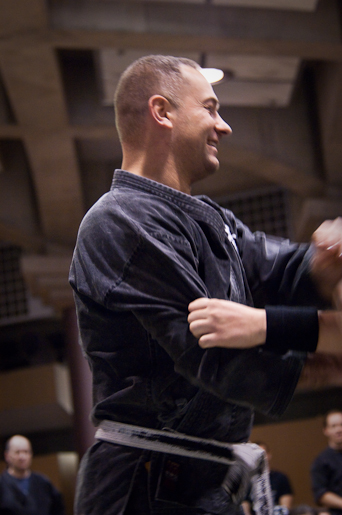
photo by J.J. Verhoef
Tuesday night my class was training on an aspect of Ongyojutsu 隠形術. This topic is vast and one not often covered in most Bujinkan dojos. We have the fortune of training outdoors in an area that is part urban and part natural so we were able to explore.

Out of the 30 methods of escaping, let's look at one that is contained in the tenton juppo section: 雨遁 Uton no jutsu (Rain Evasion). Using the elements of weather to aid in escape and evasion is a very natural technique, but that same weather can work against you. The trick is to be in harmony with nature's laws. As Hatsumi Sensei says, "... everywhere in the world, the trees are growing towards the sky and the rain falls towards the ground." Bearing this in mind, remember that Soke has also stated that modern military stealth methods may supersede the old densho and that we should keep up with the times. But there is still much to learn in our tradition.

To begin to use the rain, it helps to know if it is coming. Forecasting is an old and honored tradition, one that is sometimes filled with pseudoscience but will work when paired with observation skills. This is what is known as tenmon. Soke says that in the old days people observed closely the natural cycles:
"they studied the animals and plants and found ways to make predictions. For example, if sparrows enter the thicket or stay high up in their trees after busily eating food, or if insects start to enter buildings, or carp jump out of the water, or frogs start to croak, it is a premonition that rain is going to fall."
Of course modern weather forecasting and meteorology gives us some advantage, but there is still no substitute to sticking your head out the window or being in tune with the weather patterns of your region. Sensei says it is "natural to be alert."

Here's what the National Geospatial-Intelligence Agency says about a product they designed for evasion and survival:
"When Air Force Captain Scott O'Grady was shot down over Bosnia during June 1995, one of the items he acknowledged that assisted in his survival was the Evasion Chart (EVC) he carried in his vest pocket. In addition to using the chart to pinpoint his exact location, he used this unique product in a seemingly unusual way, but in fact one way that it was designed for--as a protection against the elements.  Sized specifically to fit in aircrew flight suit pocket, the EVC can be used:To catch rain for drinking water; As a shade from wind and rain, and as a shelter, cape and blanket; As a bag to haul and purify large quantities of water or food; As a liner in a hole to serve as a wash basin; As ground cloth on moist ground, or as camouflage when sleeping; To wrap clothing in when swimming or fording streams; To wrap torso with as an extra layer of clothing; To wrap sleeping gear in it during foul weather; To splint a broken wrist..."
Once the rain starts, we can use it in many ways, practical and mysterious.
  • The sound of the rain can mask the noise of your movement. Even the soggy leaves and twigs become quiet when we step on them. Be careful of splashing and slipping!
  • People tend to stay inside and off the streets. The rain can cause patrols to change. Guards are maybe not as alert while they try to keep dry. Some may abandon their normal posts to seek refuge indoors. Of course, that means you are also getting wet. Your gear and clothing may not function as well. And your stamina or immune system may become weakened.
  • Rain can be caught for drinking. This may make you lighter if you don't have to carry your own water, or just save your butt if you didn't have any. But rain does make your clothing and gear heavier.
  • Rain affects vision. Visibility decreases and at night and heavy rain reflects light back to it's source, creating a blinding effect. Umbrellas are also useful cover against cameras and being identified.
  • Another aspect of rain is that it changes geography. Large puddles or flooding washes make areas inaccessible or impassible. This creates opportunity for evasion or escape into areas where you will not be pursued. Don't drown or get trapped!
Here we come to some mysterious effects. Rain creates a definite feeling of yugen. Places and activities that would seem normal in the sunlight can take on another quality in a gloomy rain. This can be used for psychological effect.

Observing how rain and water itself falls, or human and animal behavior in the rain gives many lessons for evasion. Sensei says that rain takes on different aspects and a Ninja makes use of each phase.
"Rain becomes water vapor, rises into the skies, turns into clouds, and then becomes rain again, or a heat haze. Turning and turning, it is in a perpetual, cyclical motion."
Being rained on by the 幸雲 Cloud of Happiness (Good Fortune)
Hatsumi Sensei says that "one can perform uton no jutsu using cigarette smoke." and "If a ninja detected a stimulus from the outside world, no matter how slight, they would respond immediately."

Soke describes this feeling of gokui as that of being a jellyfish floating in the ocean. And he says that,
Takamatsu Sensei used to call himself senile and then drift about in the air of Kashiwara City, drawing and painting, and finding joy in it. This is to drift and feel the existence of the world, empathize with flowers and enjoy the harmony, and to reach heaven as a live human being."
Perhaps like smoke rising among raindrops.


Shawn Gray gästade Norrköping

Daniel Bodin och Shawn Gray

Bujinkan Dojo Norrköping hade tagit initiativ och bjudit in Shawn Gray för att hålla ett träningsläger igen efter ett mycket uppskattat läger 2009. Shawn har tidigare instruerat i Kaigōzan dōjō många gånger förut, så han är välkänd här i Sverige redan.

Den här gången var vi tre stycken från Kaigōzan dōjō. Det var endast en till från Stockholm, de flesta övriga kom från Norrköping, Linköping och Trollhättan. Det var totalt ca 25 deltagare under båda dagarna.

Shawn var med på Sōke’s tre första träningspass i Januari innan han åkte till England, Belgien, sedan till oss i Sverige. Nästa helg håller han läger i Norge, för att sedan åka hem till Japan igen.

Han har bott i Japan sedan 1997 och tränat och tränat med Hatsumi Sōke och Shihan. Han gick igenom hela Kihon-happō. Först visade han grunden, sedan variationer och slutligen kontringar mot dessa tekniker.

Träningen var avslappnad och lekfull. Alla fick gott om tid att träna på den visade tekniken. Medan Shawn gick runt och hjälpte alla.

Årets tema är ju som ni säkert redan vet 季翻初崩 Kihon-happō. Det första tecknet betyder “säsong” och används oftast för att beskriva olika säsonger. Det tredje tecknet betyder “först” eller “ny”. Det andra och fjärde tecknen betyder “att ändra”, “vända” eller “blicka bakåt”. Man skulle kunna säga att vi reflekterar tillbaka genom åren och ser på det som om det vore första gången. Gör om gör rätt ;-) .

Shawn påpekade flera gånger att han bara tränat med Sōke tre gånger i år och att det var lite för tidigt att dra några slutsatser om hur temat utvecklar sig. Nu var inte Bujinkan enda anledningen att han åkte till Europa, han hade andra ärenden också och det var många som tyckte att det var ett bra tillfälle att arrangera träningsläger med honom samtidigt.

Om någon trodde att Sōke helt plötsligt skulle visa grunderna på ett grundligt sätt lär nog bli besvikna. Min personliga åsikt till varför han inte gör det är för att då skulle många kopiera exakt och tro att det är det enda rätta. Enligt min och många andras uppfattning är att det finns flera olika sätt som är korrekt, vad som blir korrekt är vad omständigheterna (motståndarens karaktär, balans, humör, omgivning etc) runt utförandet skapar. Det finns många fler dimensioner och omständigheterna är aldrig exakt likadana två gånger i rad.

Åter till lägret, jag tyckte det var bra för att man fick gott om tid på sig att träna. Oftast så har instruktören lite för bråttom att visa någon ny variant så att ingen hinner prova mer än ett par gånger. Det blir lätt mer en show och förvirrande situation än lärofylld träning, vilket naturligtvis kan vara bra ibland också, speciellt för de som tränat 10+ år.

Tack till Daniel Bodin, Hans Månsson och Bujinkan Dojo Norrköping för ett bra arrangerat träningsläger!

Jag har lagt upp bilder från lägret på min hemsida.

/Mats…

Kaigōzan dōjō bjuder på gratis prova-på-träningar

From Uploads by shugyou by shugyou

Vi bjuder på gratis provträning hela Januari under vårterminen, eller Augusti under höstterminen. Övriga månader bjuder vi på två provträningar, sedan måste du bestämma dig om du vill fortsätta och då betala medlems- och träningsavgiften. kaigozan.se Åldersgräns Man ska vara minst 15 år gammal! Tyvärr, vi har inga barn/ungdomsgrupper för tillfället. De flesta medlemmar i klubben är 20-40 år. OBS Ni behöver inte anmäla er, vi finns alltid på plats och det är bara att komma 10-15 minuter innan träningen börjar och fråga efter instruktören. Välkomna! kaigozan.se
From: shugyou
Views: 317
5 ratings
Time: 01:16 More in Nonprofits & Activism

Dissipate Your 隙 Suki With 正願 Seigan

From Bujinkan Santa Monica by Bujinkan Santa Monica

Ginza Rat photo by OiMax
Suki are strange vermin. You think you see one, then it's gone. You train your ass off to get rid of them, then find they are all over, and in places you never looked! And if you ignore them, they seem to multiply.

What are these intransigent vermin and what can be done about them? 隙 "Suki" is the Japanese term for "opening" or "gap" and refers to a weakness in your or your opponent's defenses. Suki can present opportunities to attack or be presented to draw an attack. These suki can be found in the timing, distance, angle, mind, or even spirit. This is partly what Soke Hatsumi means about being Zero. He says,
"If one reaches to a higher rank, he need only eliminate his faults. It may sound easy, but eliminating faults is very difficult to accomplish, because we tend to think we are faultless. Faults can be translated into something different in Budo. They can be suki (unguarded points), or carelessness, presumption, arrogance, etc. - they all become our fault. No fault, zero condition is the best."

Suki 好き can also mean likes or preferences. So the things you like and your desires or attachments can become suki. The kamae seigan when done properly gives no easy opening. To defeat this kamae maybe you look for an opening of desire. This is why seigan is sometimes written as 正願 "correct desire," to help you purify your desires and give no 隙 suki.

We first try to learn about suki through kamae. An ideal kamae has no suki. No openings or opportunities for attack. It also means no wasted or futile movement.

Next we learn about suki through ukemi. Paraphrasing Jim Vance: we learn more through assuming the role of uke, the focus on receiving techniques or sutemi allows the uke to feel the connection between them and their partner, or how a particular technique affects them. The uke is feeling suki (openings) in the connection; the body can feel suki through ukemi, it is aware of suki through sutemi (there is no self and other, only the connected unit).

Hatsumi Sensei describes this:
Takamatsu-sensei often told me, 'Mr. Hatsumi, to receive techniques is to take a person in, to take in their whole being--in other words, if a person's capacity for generosity and courage are not great, they will not be able to do it.
' An uke who selfishly tries to escape is not an uke.

Suki discovered through kamae and ukemi are the basic suki. They appear during regular and consistent training. Suki such as "a weakness of the mind” or “a weakness of the spirit" are more difficult to ascertain. And more esoteric still are the suki of the kukan or the universe.

Ueshiba (the founder of Aikido) wrote: As your Bujutsu training approaches perfection you will be able to detect the [weakness in the enemy's technique], the suki, even before he can, and as if to satisfy some deficiency in him, you can fill the opening [weakness] with your technique."

There is a feeling when you take your opponent's suki as if you are filling a void. Just be careful not to be sucked in by the emptiness!

The Zen monk Takuan Soho wrote about avoiding “suki” by means of the “mind abiding nowhere.” 

Hatsumi Sensei describes this as a point where there is no difference between attacker and defender. It is all one. The suki or opening is between your mind and his mind. Your body and his body. As you close that opening, you may sense his weakness and your own... and surely you know how to exploit that!

Soke also suggests to us that being shielded or having suki ultimately are inseparable concepts.  He says that being connected in the Kukan can create Kukan no tate, where the kukan itself protects your openings. Further, there is Kukan no suki whereby your life is in the kukan and you open up a space (suki) for you to live.

Or, as Doug Wilson describes it, you "allow your shield to protect your openings and your openings to lower the shield of the opponent."


KAIGOUSURU 1999 TAIKAI with ARNAUD COUSERGUE, PETER KING and SVENERIC BOGSÄTER

From Budoshop by BUDOSHOP.SE

Buy the VideoCD click here!

Kaigousuru 2 -- the second International Bujinkan Training Party with Arnaud Cousergue, Peter King and Sveneric Bogsäter in Sweden.

The theme of this year was Kukishin-ryu Taijutsu. All three teachers teach various aspects of Kihon Happo and Sanshin no kata. Arnaud taught Sword basics at the Shidoshi class for example.

Recorded in Stockholm, Sweden July 1999


70 minutes, 470 Mb for $14.99
Buy the full VCD, click here!


Sample clip from the video

www.youtube.com/watch?v=st9QB8ZoD2Q

About the instructors

Hehe… the Shi-tenno needs no introduction. Arnaud, Peter and Sveneric are famous Shihan in the Bujinkan. See their own web sites for more information about them…
- Shi-tenno web site

About the download

Click here for more information about our download files and how it works!

KAIGOUSURU 1997 TAIKAI with PEDRO FLEITAS and ARNAUD COUSERGUE

From Budoshop by BUDOSHOP.SE

Buy the VideoCD click here!

Kaigousuru 1 -- the first International Bujinkan Training Party with Pedro Fleitas & Arnaud Cousergue in Sweden.

The theme was Jo Jutsu and Taijutsu. They taught many Jo Jutsu techniques and henka from Kukishin-ryuu Jo jutsu. They also taught Taijutsu, unarmed fighting techniques.

Recorded in Stockholm, Sweden September 1997


72 minutes, 480 Mb for $14.99
Buy the full VCD, click here!


Sample clip from the video

www.youtube.com/watch?v=tr-i7MeDMgQ

About the instructors

Hehe, both Pedro and Arnaud are famous Shihan in the Bujinkan. See their own web sites for more information about them…
- Arnaud Cousergue web site
- Pedro Fleitas web site

About the download

Click here for more information about our download files and how it works!

TEN-CHI-JIN RYAKU NO MAKI with MATS HJELM

From Budoshop by BUDOSHOP.SE

Buy the VideoCD click here!


40 minutes, 480 Mb for $14.99
Buy the full VCD, click here!
Ten Chi Jin Ryaku no Maki is the absolute foundation of Bujinkan Budo Taijutsu, unarmed fighting and self defence techniques.

Recorded in Stockholm, Sweden September 2002 -- February 2003

Kaigozan dojo and many other use these techniques as a base for ranking beginners up to 1′st degree black belt.

Ten ryaku no maki: 9 kyu -- 7 kyu (yellow belt)
Chi ryaku no maki: 6 kyu -- 4 kyu (green belt)
Jin ryaku no maki: 3 kyu -- 1 kyu (brown belt)

All these techniques is demonstrated on this video 1-3 times. It is not a self study course, it should rather be seen as a reference material and a compliment to your studies with a good teacher.

There is no verbal instructions or speaking on this video. So it doesn’t require that you know English or any other language.


Sample clip from the video

www.youtube.com/watch?v=i2LN9ZiBHTM

This is one of the first videos we made. It was filmed between 2002 and 2003. The movie quality is not very good. But it has been our best seller since we opened our web shop. Many people like to know the basics :-) .

Note: Not all teachers use this curricullum exactly for their ranking. But the techniques are the most fundamental and basic techniques in the Bujinkan Dojo system. So it is worth studying anyway!

Techniques covered in this video

TEN (first level, usually 9 kyu to 7 kyu)
- Taihenjutsu Ukemi (breakfalling),
- Kamae (9 basic positions),
- Hiken Juuroppou (16 basic strikes),
- Sanshin no Kata (5 basic movements),
- Kihon Happou (8 basic techniques),
- Shinken Taihenjutsu (escaping sword cuts),

CHI (second level, usually 6 kyu to 4 kyu)
- Hajutsu Kyuhou (9 methodsd to free oneself),
- Gyaku Gi (9 joint manipulations),
- Nage Kata (9 basic throws),
- Ryusui Iki (5 sacrificing throws),
- Shime Waza (5 basic strangulation methods),

JIN (third level, usually 3 kyu to 1 kyu)
- Suwari Kata (3 defenses from a seated position),
- Katate Dori (5 defenses from a single hand grab,
- Ryoute Dori (7 defense techniques from a double lapel grabs),
- Haibuyori (5 defense techniques from attacks from behind),
- Tsuki Uchi (9 defence techniques from a punch),
- Keri Ni Taisuru (5 defense techniques agains kicks),
- Tsuki to Keri ni Taisuku (4 defense techniques from kicks and punches),
- Nage Kaeshi (8 defense techniques against throws),
- Muto Dori (1 defense technique from a knife stab),
- Zanto Tonko no Kata (7 methods of fleeing from the attack).

About the instructor

Mats Hjelm started training in Bujinkan for the first time around 1983, but it wasn’t until 1986 he had the opportunity to start training more seriously under a Shidôshi. He attends around 20 seminars, go to Japan 2-3 times every year. Since he started training he never had a training break. He takes his budo training very seriously! If you want to sponsor a seminar or course, please don’t hesitate to contact him. For more information see his web site www.kesshi.com

About the download

Click here for more information about our download files and how it works!