Skip to content

Shoninki books

From 8þ Kabutoshimen by admin

20121030-125323.jpg

I got a question today about these books, if they are important for Bujinkan practitioners.
http://www.coloradospringsninjutsu.com/Shoninki.html
http://www.shoninki.com/home/Welcome.html
For what it’s worth here is my answer.

Hello. I don’t think it is very important today, but probably very interesting in historical view. I know Don lived in Japan for many years and probably discussed the book with the Shihan when he run into problems in translation. I don’t know who the other person is, he might be better in Japanese, but if he haven’t been training he might have missed some things. Both books probably have errors, why not get both?
But I don’t believe it is that important, the knowledge is old. There is better modern books about survival skills, medicine, tools etc today.

Thanks for the links, I didn’t know Don also had a translation.

Happy training!

Mats

The post Shoninki books appeared first on 8þ Kabutoshimen.…

鬼ごっこ Onigokko: Let’s Pretend We Are Demons

From Bujinkan Santa Monica by Michael

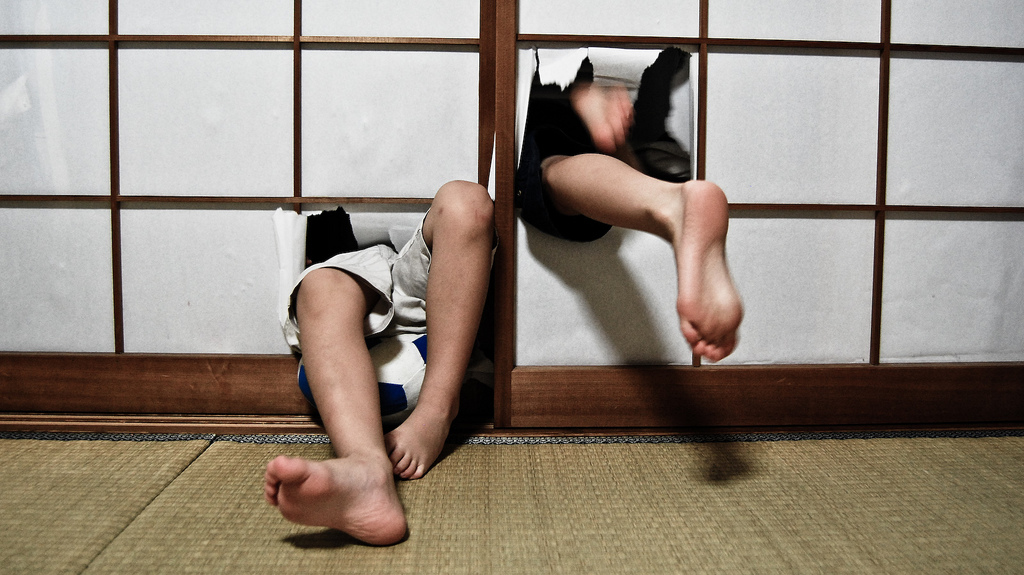
鬼ピキ photo by w00kie
One summer day we were having our normal class in the park when something interesting happened. As we were stretching, we watched a team building exercise that some company was doing in the same park as us. There were a lot of pretty women working for this company, so most of my students were riveted.

They began a game of tag. They used the entire park. Most of them were athletic, so it was a very aggressive and and fast paced game. At one point one guy came to stand next to us. We were all lined up on the periphery of the field watching this game. I realized immediately what he was doing.

Hatsumi Sensei tells us that "a person who understands play has life's greatest treasure." He says that in Kukishin-ryu this idea is taught as 鬼ごっこ onigokko (demon play) which is a children's game of tag. In this game the "oni" chases down the other children. As they are caught, they are "infected" and turn into oni. Until they all become little demons!

In 2011, there was a world record setting onigokko game played in a Toyama stadium. There were 1566 participants. It only took 7 minutes for all of them to be caught and turned into oni!

I said hello to the guy standing next to me. I asked him what company he worked for. He said TOMS shoes. I knew this company because my wife likes them and they are popular in the U.S.. I said, so are you hiding over here with us? He smiled and said he was just resting.

We watched as all the workers  ran around the park and got caught. Turning each into another demon. This guy had a great strategy. No one was even looking for him among our group as we stood there watching.

Finally the demons ran out of victims. As they searched the park their attention turned to us. The guy said to me, "I better run!" He took off and sprinted around the park. He dashed between his pursuers until they finally caught him.

Later when I got home, I looked up TOMS Shoes to see where their offices were, since I knew they must be nearby. It turns out that this guy with the great strategy of hiding out with us was the founder of the company, Blake Mycoskie. That day he definitely showed a good understanding of "play."

The Gift of 神輿 Mikoshi

From Bujinkan Santa Monica by Michael

東松山のまつり photo by w00kie
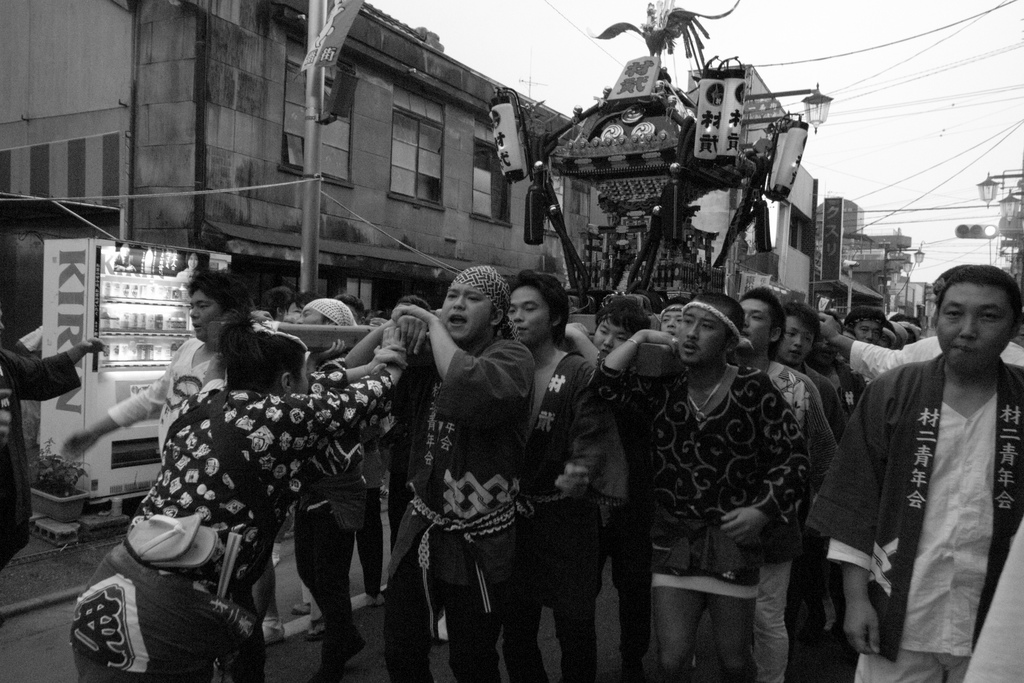
How can I ever support this heavy beam on my shoulder? That's what I remember thinking when I looked at the 神輿 Mikoshi. I was intimidated by the size of it. Of course I was only 10 years old.

When I was growing up, my best friend was Japanese. His mother invited me to go with his family to a festival. Suddenly I was being conscripted to be one of the 担ぎ katsugi or Mikoshi bearers! I didn't understand at the time what an honor that was.

In Japan, not only is it an honor, it is somewhat of a civic duty to carry the Mikoshi. Hatsumi Sensei inherited the 34th Soke of 戸隠流 Togakure Ryū in 1958. He says that in that same month he carried the Mikoshi along the street.

Someone found a Happi coat for me and helped me put it on. My friend's mother also found a karate kid looking head wrap that she tied around my head. Then they lead me over to the Mikoshi where it sat on the saw horses...


I looked around awkwardly at all the strong men who were doing calisthenics, preparing to lift this small house and carry it through the streets. They were all strong looking and Japanese. I was a skinny red headed white boy. I had no idea what I was going to contribute to this effort, but I thought I would try my best.

Even though I felt out of place and had no idea what was going on, the men were very welcoming. Suddenly, they all crouched underneath the beams. I found a gap and pressed my shoulder into the wood. I was preparing to grunt and heave when the whole thing seemed to fly into the air with a shout.

I was left nearly hanging from the beam! The men were all taller than me, so they hoisted the mikoshi onto their shoulders and far above my own shoulder. I looked around confused about what to do. They all encouraged me to stay in my spot. I pushed up as hard as I could with my palms.

Next thing I know we are lurching down the street to the trill of a whistle from our guide. He would give long notes to start or stop us from moving and short beeps to keep us in rhythm. We round a corner and and into the large crowds gathered along the parade route. I had no idea we would have this large audience.

Suddenly I felt so proud. I felt proud of my friend's Japanese heritage. I felt proud to be included. No one I knew in my community had ever even heard of sushi back in those days, even less Mikoshi.

Japanese people were thought of differently back then in my hometown. My Grandfather fought against the Japanese in WWII. His brother died on Iwo Jima. I could say more, but those times have past. I personally felt like a bridge between these two worlds in that moment.

That was truly a gift from the kami inside of the Mikoshi.

Shikomi zue

From Paart Budo Buki by buki stolar

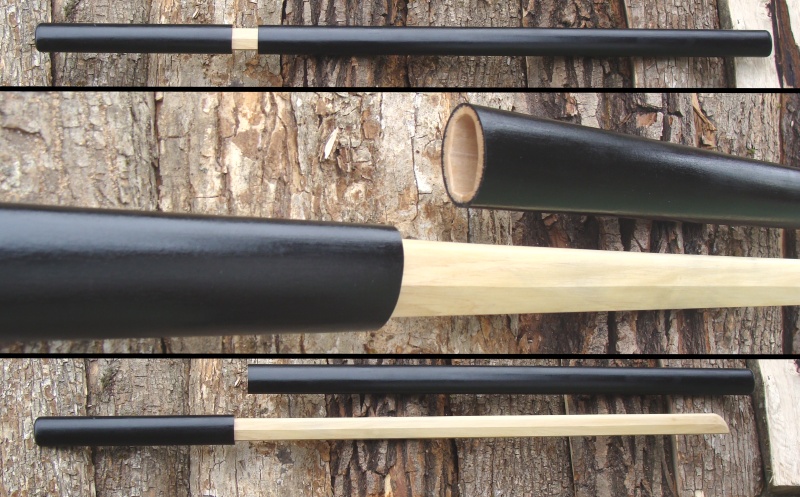
here is one of my older works,  full wooden Shikomi Zue, 
but not as some standard hidden blades, more like walking stick from Zatoichi movie, from Takeshi Kitano 

this one is with black finish, but as all what I make you have choice


Shikomi zue

From Paart Budo Buki by buki stolar

here is one of my older works,  full wooden Shikomi Zue, 
but not as some standard hidden blades, more like walking stick from Zatoichi movie, from Takeshi Kitano 

this one is with black finish, but as all what I make you have choice


How to Read the 徴  Shirushi Taught in 口伝 Kuden

From Bujinkan Santa Monica by Michael

Hachiōji, Tokyo photo by LaPrimaDonna
One morning during training, Hatsumi Sensei gave us an interesting 口伝 kuden, explaining to us the nature of the footwork we were using. He told us,
"There's a reason for this movement of the feet. You're leaving footprints. And it's actually an indication (徴  shirushi sign;  indication;  omen) You're leaving a warning or an indication."
Sensei wasn't just telling us about footwork. He was talking about a larger idea. And this idea is that there are subtle signs and hints everywhere for those who are awake, aware, or sensitive to them.

You could take this at the surface meaning. For example, a hunter can see signs of his prey as he tracks it. So he follows the tracks to catch dinner. Yet someone who is not a hunter would never notice these hints. Or if you were thirsty, the signs would mean something different. You might follow the animal trails that lead to a stream.

But the meaning Sensei was leading us to, was that there are signs left for us by those who have gone before. These are everywhere in the Bujinkan. You find them in what is taught and not taught. They are in the kata. In the kuden. In the densho.

Here is an interesting example: In 九鬼神流打拳体術 Kukishin Ryū Dakentaijutsu there is a kuden:
切紙  急所説明 48穴当込みの場所 , 口伝
Basically it explains the 48 openings for kyusho when striking. But the hint that it leaves us is obscure. It calls this 切り紙 kirigami which is the art of paper cutting.

If you aren't familiar with this art, it is a very advanced craft similar to origami where paper is cut to create artistic expression of nature and life. But the method and rhythm of it is uniquely Japanese. This is a hint.

Another hint or meaning for kirigami is the esoteric notes and oral teachings transmitted from teacher to student. Here the text itself is being cut so that its meaning shifts and is shaped by the teacher. Anyone who has trained with Hatsumi Sensei can attest to this feeling.

Sensei will never just give you the surface meaning of a text. The meaning becomes fluid and dynamic in the moment much like the changing image of paper as it is transformed by kirigami. As Hatsumi Sensei teaches, the 要 kaname of his teaching transforms to suit the moment.

That morning, as we shuffled around trying to emulate Sensei's footwork, we were following in the footsteps of Bujin and the warrior spirit of our ancestors.

It’s over!

From Sweden Taikai 2013 - Sweden Taikai 2013 by alexander

Tai Kai Sweden 2012 is over, and I’ve had a few days to cool my brain down. It was quite a lot of work, and between Anne’s cold and my busted knee, we couldn’t participate in training all that much. It did give us time to circle around and get a feel for the whole event, and it would seem that the consensus is that Tai Kai Sweden 2012 was a smashing success!

We are working on the DVD as fast as we can, and I’m just about ready with the pictures I took. I shot 750 frames during the two days so it has taken some time to go through them and decide which to keep and which not to. They will be up in a day or three!

Once again a huge thank you to the instructors and all our participants, and I hope we will meet again at a future Tai Kai!

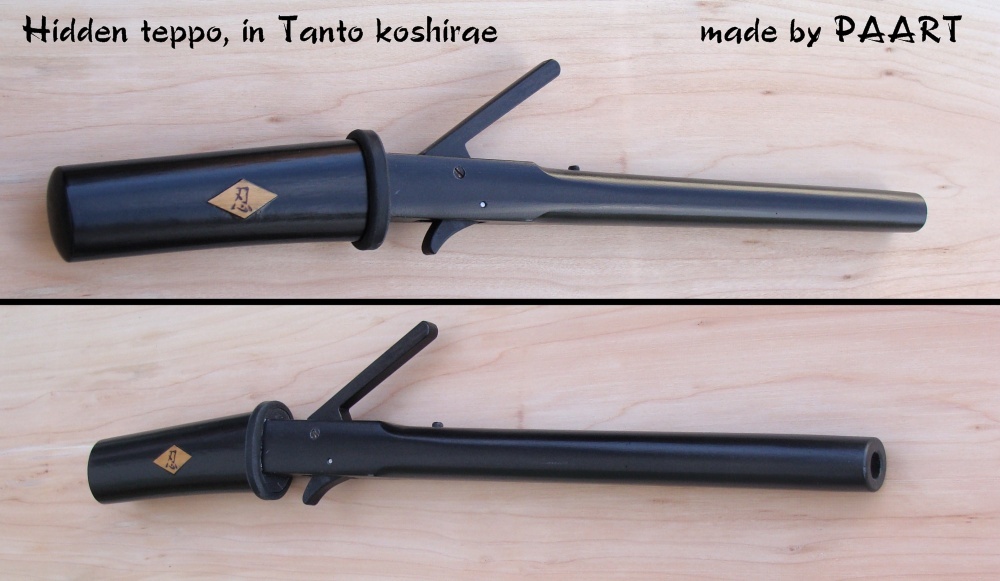
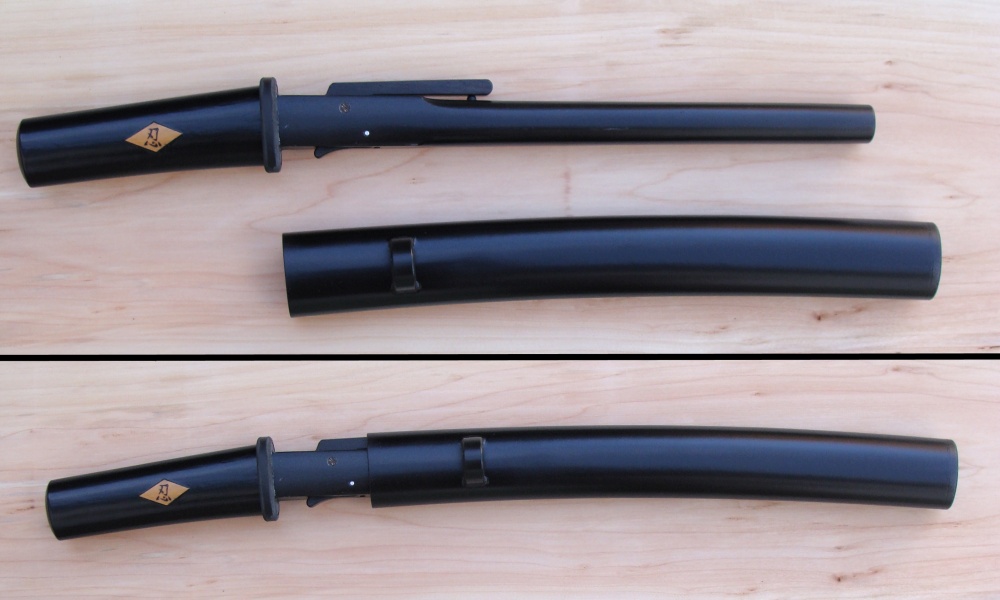
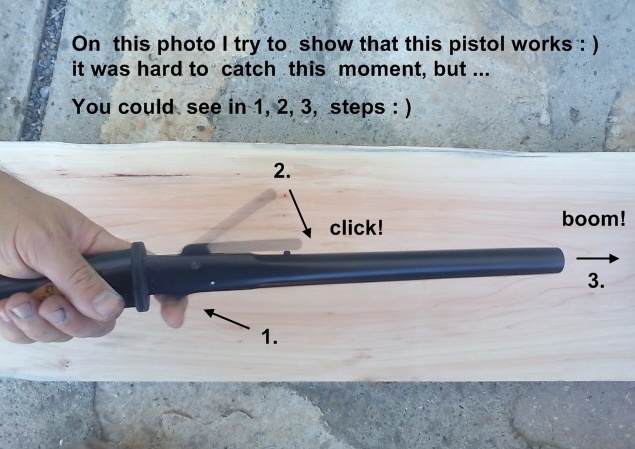
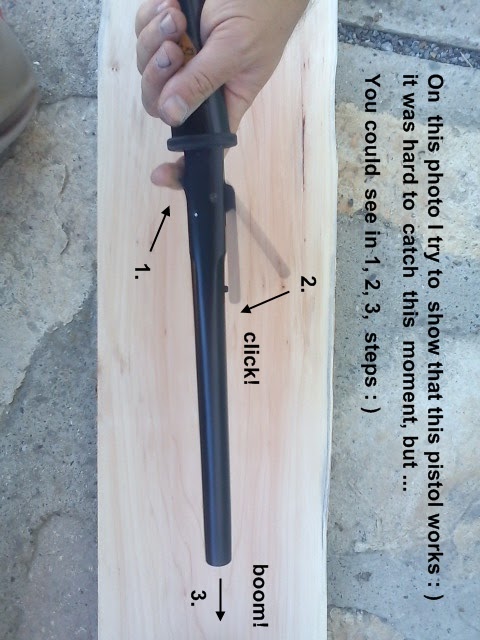
Hidden Teppo

From Paart Budo Buki by buki stolar

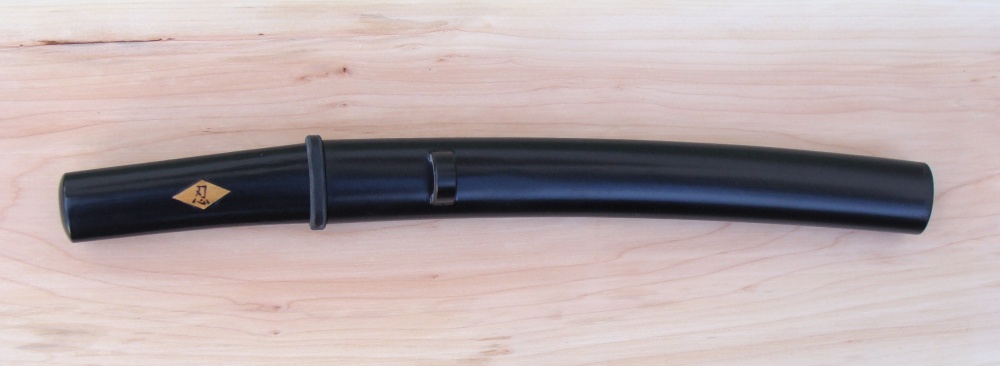
The other night when I brought this new " toy" to training, everyone was surprised,
 which is my main goal, a comment was again "you're crazy", perhaps the best compliment you can get,
only Sensei said, "I thought that was a real gun, but by the smell of lacquer I known that is not"
What to say, for now, this is about the highlight of my armorer skill,
after all, during my military service I was trained as a mechanic of infantry weapons, gunsmith.

So you are looking at Hidden Teppo wooden wersion made for practice.

Profession says that it's actually Tanju Aikuchi, or Tanto (depends on the length),

 although you would think that it is really a ninja weapon, but it seems that's not the case.
It was known that Samurai's have rejected the idea to replace their swords with firearms, so it seems that "some" were later accepted the firearm but packed in a familiar look.
By the number of this firearms that can be found in antique shops, it seem to be exactly what was happened, normally they never ​​mass manufactured, but still ...

Ninja like that idea too, for his undercover mission, and probably the only one who has used this tool fully, why?
Because after you use this single shot, you could use it like Jutte too, there were also cases that Jutte was conceal to look like Tanto (I make one too, pic. will be in new topic)

But what is really this?, 
it is Japanese made single shot percussion pistol, disguised in Tanto koshiare,

usually it was Caliber 31,

history of this weapon goes in the middle of 19th Century, after Japan has been open to foreigners, the common types of European pistols types of Curiosa percussion pistols.(according to "The Gun Report")

Some other say that  this is rare tanto pistol was used during the political turmoil in Japan, following the arrival of Commodore Perry's black ships in 1854, political assasinations were so frequent that Daiymo began carrying concealed pistols, giving them some protection
against visiting opposing Daiymo.
Most of these special order pistols are unsigned (but find some which is signed) 
Profession says that this percussion firearm is particularly rare because Japanese firearm technology was suppressed until the mid-1850’s, which is about the time that metal cartridges began to achieve commercial success.

Whatever that was the reason for the development of this weapon, for those of us who practice ninjutsu, is essential idea of hidden, unexpected and element of surprise, which gives us the advantage, in the battle for survival.
So if you ask me why this? here is my answer:
As you all know, Ninjutsu legacy is huge, because it grows in parallel with another great power, Samurai,
means that ninja need same knowledge with additions and special equipment to survive in combat against the Samurai, real number of that equipment we will newer know :-(

There is many Dojo's around the world, but they equipment for training is poor, mostly, you will know better.

So my mission is to create authentic equipment for training, yes today is time of new and modern weapons, but "root" is the same.
I that time it was Tanto pistol, today is cell phone pistol, again idea is same.
Soke used to say,  "explain the feeling", so yes it is all about "the feel", 
 but how can you explain the feeling when you do not have the real thing in your hand?
 it's true you could try  to imagine it, but is it same feel?

I had luck (or bad luck) to spend my best years of life around war and in war (Croatian independent war 1990. -1995.) so I see many things. 
Today's young people who come to train at our Dojo do not know almost nothing about the weapons of that time, twenty years after war,
we, the older ones that train ninjutsu not know much about weapons from the Samurai time, 
all that because we not have the opportunity to see real one and take in hand "to feel".

So now I ask you, how you will learn from history, how you will explain to other that history?
Miyamoto Musashi in "Go rin no sho" book in one chapter  say;
 "it cannot be clearly explained in writing, You must practise diligently in order to understand"


and yes, it will be some more for sale, for lucky on's : )