Skip to content

横砂の器 Empty the cup

From Kabutoshimen by Toryu


Sorry for not posting anything for a while. The trainings here in Japan is great, at least for those who have been training for a while. For beginners it might be hard and difficult. It is not said right out but I guess it’s expected that you know the basics well before you come to training in japan. There is plenty of good teachers everywhere, somewhere around 150 “true” master instructors in Bujinkan Dojo. You don’t need to go to Japan for good basic training if you are under 4′th dan!

Soke says that it is time for us to throw away the basics. He said we should throw away Sanshin no kata, Kihonhappo and everything else we know at the moment. This reminds me of a famous story about a zen master, I will quote the story from memory (so please don’t take it literally)…

Once an experienced samurai visited a zen master and said that he knew everything about the martial arts, but he have not yet reached enlightenment. So he is coming here for advice about how to reach it. The zen master offered him to sit down and have a cup of tea and talk about this. He put a cup on the table and started to pour into the cup. The cup was filled but the master kept pouring. The samurai said, can’t you see that the cup is already full?
The master said yes, and it is the same about you! You have to empty the cup (mind) before you can fill more into the cup. The samurai understood and later on finally reached enlightenment.

This is the meaning of 器 UTSUWA. It can mean a bowl, vessel or container. But it can also mean ability, capacity or caliber. When you have learnt all the basics and all the techniques there is the cup will be full. In order to pass beyond this stage you need to empty the 器. See other posts about the theme of this year and 才能魂器 (sainou kon ki / sainou tamashi utsuwa).

Everytime you go to training you should throw away everything you know, “empty the cup”. Then eagerly try to take everything in like a sponge with a playful and artistic kind of mind. This is the 極意 GOKUI essential point passed on through many generations in Gyokko-ryu that we study in Bujinkan Dojo. Keep the mind of a three year old kid that want to learn everything. Even if you think you know everything (see my previous essay) throw it away. The one who gives away everything has it all.

Keep this in mind when training. Also keep in mind that there is 20 years of 面 omote-training and then 20 years of 裏 ura-training. I might come to this in a later post. …

Japanese beer test #5

From Kabutoshimen by Toryu


On the left is still my favourite so far, Yona Yona Ale from Karuizawa Nagano.

On the right was an alcohol free beer from Kirin. Pretty lame compared too good alcohol free beer like Jever and Klausthalle. It had some weird taste which reminded me of sweatty shoes.

The middle one is with alcohol 5%, Sparkling Hop from Kirin breweries. It has hops from New Zealand. This beer is also without bite :-( . It taste almost like all their other beers. Kirin have thousands of different beers and they are all the same more or less. What a boring brewery! That is why I didn’t include them in the earlier tests.
It will probably take some time before I write about Kirin again. Same goes for Asahi and Sapporo. It seems to be as difficult to introduce dark bread as ales in this country. It will change, I know!…

四世界 The four worlds

From Kabutoshimen by Toryu


I learned these stages of development a few years ago from my TCM (Traditional Chinese Medicine) teacher. He taught it as four levels of development in becoming a TCM master, but it goes with any trade or area of study.

The first stage is when you are in an incompetent awareness stage. When you start learning someting new you know that you are a beginner. You are humble and like a sponge, you absorb and learn everything new.

After some years of studying you are entering the incompetent unawareness state. The stage where you think you know it all. Be careful, many people get stuck in this level forever because of their ignorance. People say you are good, it is getting difficult to teach you because teaching can only go to a certain level, next you need experience and guidance. Maybe you heard about the “invisible training”? The more experienced you get the more transparent the teaching will be. Be careful that you don’t stop growing here or feed the ego to much. I’m sure you seen a few people that have some experience in other martial arts and after a few weeks or months they think they know Bujinkan.

When you get competent awared you have passed all the illusions and start seeing clearer. You know what you can do and can’t do. This is the stage when you are skilled in what you do, but hang on you’re not a master of the style yet. You need to always be aware of what you do to do it right.

The fourth level is when you are competent and unaware. In Bujinkan we often say it is the zero state. The art is so deep within us that we don’t need to think or remember any techniques at all. This is the level most people in Bujinkan is talking about. But I strongly believe you need to pass all levels. If you think you are at this level you could still very well be unaware of your incompitence.

You don’t need to think about this and try to figure out what level you are in. It’s no point doing that. Besides I remember Soke answering a question of what the highest level (in mikkyou, I think); he simply said there is no highest level. No matter how far you go you will never reach the end. This is also the 道 DOU, the path you have chosen to walk. …

The Rope-Joint

From Blog by Blog

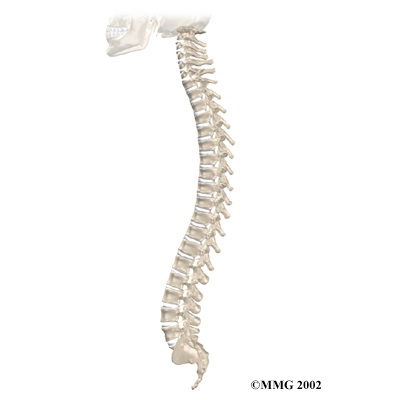
Last week Sensei spoke again of the importance of connection, using the examples of the joints in the body. The body has many joints which both connect all the parts together and allow it to move smoothly. The fewer joints, or connections, we have, the less smooth our movement will be. Demonstrating a technique, he said that he could do it this way because he was using all of the joints in his spine together, as if it were a rope.

The rope is an important tool in this years’ training theme as it demonstrates the connectedness of things. Sensei also mentioned that the rope is like one big joint working as a whole - it has no links or joints in it, such as a chain does for example, so it can be used in a supple and fluid manner. Perhaps another way of looking at it is viewing the rope as being composed of a billion tiny joints which have been amalgamated into one thing which works as a single unit. All of the separate parts have been united to create a new thing - and the whole is greater than the sum of the parts, as they say.

The word for joint in Japanese is ‘kansetsu’ (関節), and it is also interesting that the word for ‘indirectness’ is also pronounced ‘kansetsu’ (官設). I certainly felt both aspects of this when he allowed me to feel the technique. He was controlling me so lightly that it felt like I was being held in place by a single sheet of paper. It was the indirect manner in which he responded to my punch that allowed him to do it.…

The Rope Joint

From The Magick & The Mundane » Bujinkan by Shawn Gray

The reason I can do the technique this way is that I’m using my spine as if it were a rope.
– Hatsumi Sensei

Last week Sensei spoke again of the importance of connection, using the examples of the joints in the body. The body has many joints which both connect all the parts together and allow it to move smoothly. The fewer joints, or connections, we have, the less smooth our movement will be. Demonstrating a technique, he said that he could do it this way because he was using all of the joints in his spine together, as if it were a rope.

The rope is an important tool in this years’ training theme as it demonstrates the connectedness of things. Sensei also mentioned that the rope is like one big joint working as a whole – it has no links or joints in it, such as a chain does for example, so it can be used in a supple and fluid manner. Perhaps another way of looking at it is viewing the rope as being composed of a billion tiny joints which have been amalgamated into one thing which works as a single unit. All of the separate parts have been united to create a new thing – and the whole is greater than the sum of the parts, as they say.

The word for joint in Japanese is ‘kansetsu’ (関節), and it is also interesting that the word for ‘indirectness’ is also pronounced ‘kansetsu’ (官設). I certainly felt both aspects of this when he allowed me to feel the technique. He was controlling me so lightly that it felt like I was being held in place by a single sheet of paper. It was the indirect manner in which he responded to my punch that allowed him to do it.


The Schlog returns…

From Blog by Blog

Back after a long hiatus!

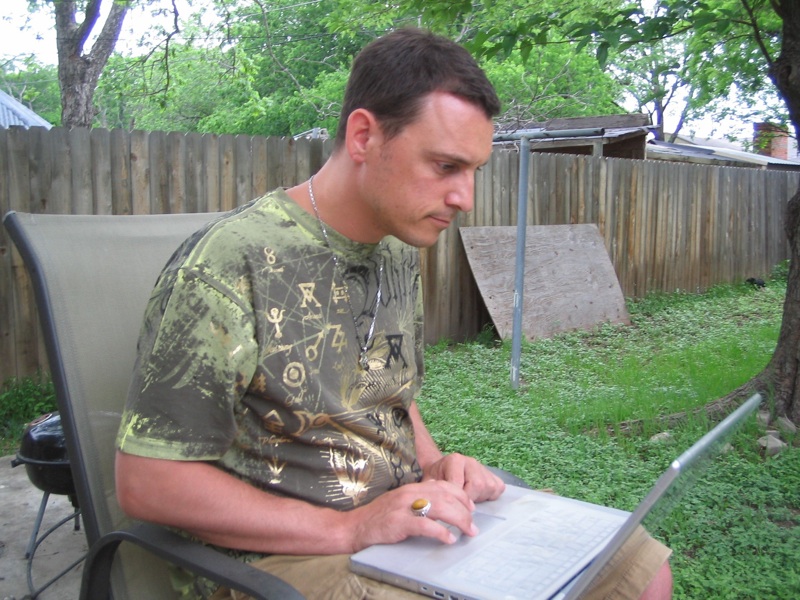
I got a Mac (again) in January, and since iLife comes with iWeb its pretty hard *not* to come up with a website of some sort. Unless you constantly flit from project to project like the guy in the photo.

It’s late so this won’t be a long one, but just thought I’d let you know I’m back! More to come - hopefully! (I always say that and then get busy and before I know it 6 months have passed before I’ve made an entry. Hopefully that won’t happen this time - hopefully. )

Just thought I’d get this one out while the Sun is still in 11 degrees Gemini. ‘Cause the Gemini symbol looks like an eleven. Yes, that could be relevant - if you wanted it to be.…

New swords from our supplier

From Budoshop.se by budoshop

Our sword supplier have the Kukishin-ryu Shinken sword back in stock. We have not so much money at the moment so we can buy swords straight off right now. But if you can order and pre-pay it will speed things up. This also goes for the Iaito sword.

We have three Togakure-ryu shinken swords in stock, and one Shindenfudo-ryu shinken sword.

Please contact us if you have questions!…